
- Education
- Care, Repairs & Remodelling
- A Diamond Fell Out of My Ring: What to Do
Care, repairs and remodelling
A Diamond Fell Out of My Ring: What to Do
It is a horrible moment, and a common one. Here is what to do in the first hour, how to search properly, what not to do, and how the ring is put right.
 Reviewed by Raj Sood, Graduate Gemologist (GIA), AJP (GIA)Founder and Graduate Gemologist (GIA) · reviewed 17 November 2026
Quick answer
If a diamond fell out of your ring, stop wearing the ring, search the last places you used your hands, and keep the stone in a sealed bag if you find it. Do not glue it back. Then have a jeweller check why it fell out. GemTrove, at Unit 903/125 Swanston St, Melbourne VIC 3000, repairs the setting and resets or replaces the stone.
What should you do first if a diamond falls out of your ring?
- Take the ring off. Whatever let one stone go may be about to let another go. Put the ring in a small sealed bag.
- Stay where you are. If you have just noticed, the stone may be within arm's reach. Do not walk around or shake out your clothes yet.
- Check yourself. Look in cuffs, pockets, gloves, the folds of your clothes and your hair.
- Search the last places you used your hands. The sink, the car, the bed, your bag, your desk.
- If you find it, bag it. Keep the stone in its own sealed bag, away from the ring so the two cannot scratch each other.
- Photograph the ring. Take clear photos of the empty setting, for your jeweller and for any insurance claim.
- Book a jeweller. The setting has to be checked and repaired before any stone is put in.
If you are in Melbourne, our lost stone replacement service does exactly this: we find the cause, repair the setting, and reset your stone or match a new one.
How do you find a diamond that has fallen out?
A diamond is small, clear and bounces. It rarely stays where it lands. These methods find most stones that are still in the house or the car:
- Use a torch at floor level. Darken the room, lie the torch on the floor and sweep the beam slowly. A diamond flashes back from metres away.
- Put a stocking over the vacuum nozzle. Hold it on with a rubber band and vacuum the area. The stone is caught on the fabric instead of going into the bag.
- Check the sink trap. If the stone may have gone down a basin, do not run the water. The U-shaped trap under the sink can be unscrewed over a bucket.
- Empty the vacuum cleaner and the dryer filter onto a sheet of dark paper.
- Strip the bed one layer at a time and shake each layer over a clear floor.
- Search the car seat rails, the gap beside the handbrake and the floor mats.
Start with wherever your hands were working hardest in the last day: the gym, the garden, the washing, the dishes. A knock usually loosens the stone, and it drops out some time later.
What should you not do?
- Do not glue the stone back in. Superglue does not hold a diamond in metal, it clouds the stone, and it has to be cleaned out before a proper repair.
- Do not keep wearing the ring. Bent or worn claws catch on things and wear further, and the remaining stones are at risk.
- Do not push the claws back yourself. A claw that has been bent and bent back is weaker than before, and pliers chip stones.
- Do not carry a loose stone in your pocket or purse. Use a sealed bag or a small container.
- Do not clean the ring in an ultrasonic cleaner before it is repaired. Vibration shakes loose stones out. See which stones can go in an ultrasonic cleaner.
Why do diamonds fall out of rings?
Diamonds are held by a small amount of metal, and metal wears. A stone falling out is nearly always the end of a slow process, not a sudden fault.
- Worn claws. The tips that hold the stone thin out with daily wear. See when ring claws need retipping.
- A knock. One hard hit against a bench, a door or a weight can bend a claw enough to free the stone.
- A stone that was already loose. A stone that clicks or shifts is on its way out. See loose stones and stone tightening.
- A bent ring. When the band goes out of round, the seats holding small stones open up. See why rings go out of round.
- A thin band or worn setting on an older ring. See re-shanking a ring.
Small stones in pavé and halo settings are lost more often than centre stones, because each is held by very little metal: see pavé settings explained and halo engagement rings. Pointed shapes are vulnerable at their tips: see protecting the point of a pear diamond and princess cut corner protection.
Not sure what your piece needs?
Bring it in, or send us clear photos, and our gemologist will tell you what needs doing, what can wait and what we would leave alone.
Is it normal for a diamond to fall out of a ring?
It is common, but it should not be thought of as normal. A well-made ring that is checked now and then should hold its stones for decades. Stones are lost when wear goes unnoticed, when a ring takes a hard knock, or when a setting was too light for the life the ring leads.
If the ring is new, speak first to the jeweller who made it. If it is older, wear is the likely cause, and it can be repaired. Either way, the setting should be inspected under magnification before the ring is worn again. The parts of a ring that hold a stone are explained in our guide to engagement ring anatomy.
How does a jeweller fix a ring that has lost its diamond?
- Inspection. The empty setting, every claw or bead, the other stones and the band are checked under magnification.
- The cause is repaired. Worn claws are retipped or replaced, a bent band is reshaped, a worn channel is rebuilt. See our claw retipping service.
- The stone is reset or replaced. If you found the stone it is checked for chips and set back in. If not, a replacement is matched by size, cut, colour and clarity.
- Every other stone is tested and tightened where needed.
- The ring is finished: cleaned, polished and, for white gold, rhodium plated.
At GemTrove this work is done by our master jewellers, with the stone matching done by Raj Sood, a Graduate Gemologist (GIA). Full detail is on our lost stone replacement Melbourne page and our ring repair and restoration page.
How much does it cost to replace a diamond that fell out?
It depends almost entirely on which stone was lost and what state the setting is in. GemTrove quotes after seeing the ring, and nothing is done until you agree. These are the things that decide the cost:
- Whether you found the stone. Resetting your own stone costs far less than replacing it.
- The size of the stone. A small pavé diamond is a minor cost. A centre stone is priced by carat weight, cut, colour and clarity. See why two similar diamonds can be priced differently and the diamond price guide.
- Natural or lab-grown. The replacement should match what the ring already holds. See lab-grown vs natural diamonds.
- The setting repair. One claw tip is a small job; a rebuilt head is a larger one.
- How many other stones need tightening at the same time.
Is a lost diamond covered by insurance or warranty?
Sometimes. Check before you assume either way.
- Home and contents insurance may cover jewellery, often up to a limit per item unless the ring is listed separately. Some policies cover loss away from home only as an extra.
- Specialist jewellery insurance usually covers a lost stone, subject to its conditions.
- What the insurer will ask for: photos, a valuation or receipt, any grading report, and a jeweller's quote to repair or replace.
- The jeweller who made the ring is the first call if the ring is new.
Read your policy's product disclosure statement or call your insurer before authorising a repair, because some insurers want to approve the quote first. See how jewellery insurance works in Australia, jewellery valuations for insurance and our insurance jewellery replacement service. A diamond with a grading report can be identified by its details and any laser inscription: see how to verify a GIA report number.
How do you stop it happening again?
- Have the ring checked once a year. A jeweller can see wear long before you can.
- Do the tap test. Hold the ring near your ear and tap it gently. A rattle means a loose stone.
- Take the ring off for the gym, gardening, moving furniture and swimming. See whether to sleep or work out in your ring and wearing your ring in the shower, pool or at the beach.
- Clean it gently. A clean ring shows you its claws. See how to clean a diamond ring at home.
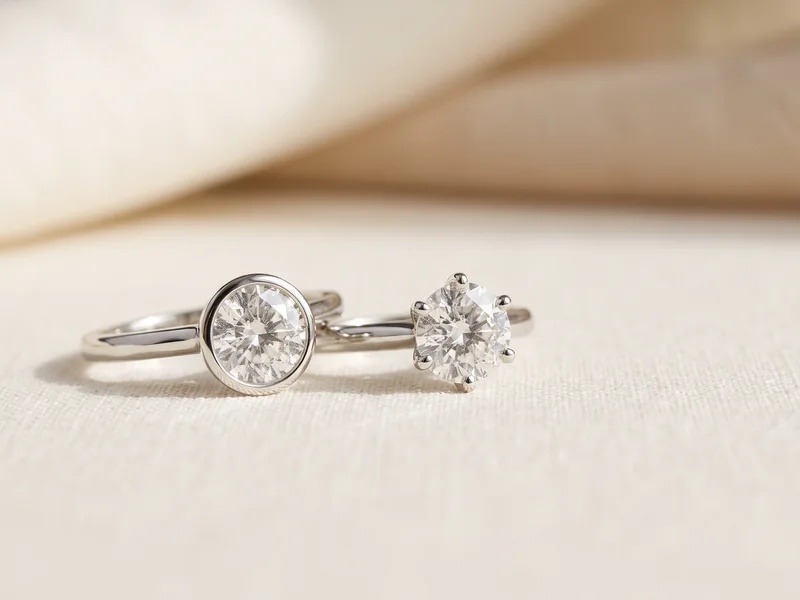
- Choose the setting for your life. If you work with your hands, see bezel vs claw settings for everyday wear.
Our engagement ring care guide covers the full routine.
Where can you get help in Melbourne?
GemTrove's showroom is on Swanston Street, opposite Melbourne Town Hall. Our family has been in the jewellery trade since 1984 and GemTrove has been in business since 2008. Bring the ring, and the stone if you found it, and we will tell you what happened and what it will take to put right.
- Showroom: Unit 903/125 Swanston St, Melbourne VIC 3000 (Level 9), opposite Melbourne Town Hall, by appointment.
- Hours: Monday to Friday 9:30 am to 5:30 pm, Saturday 11:30 am to 1:00 pm, Sunday closed.
- Phone: 0488 878 000.
- Book: book a visit. Carry the ring and the stone in separate sealed bags.
Free consultation
Talk to a gemologist
Compare stones in person or online with Raj Sood, Graduate Gemologist (GIA), AJP (GIA).
Book a consultationFAQ
Common questions
What should I do if a diamond falls out of my ring?
Take the ring off, search the places you last used your hands, and keep the stone in a sealed bag if you find it. Do not glue it back. Then have a jeweller find out why it fell out and repair the setting before the stone is reset.
How much does it cost to replace a diamond that fell out of a ring?
It depends on the size and quality of the diamond and on how much setting repair is needed. If you found the stone, resetting it costs far less than replacing it. GemTrove quotes after seeing the ring.
Is it normal for a diamond to fall out of a ring?
It is common but not normal. Stones fall out when claws wear, when a ring is knocked, or when a setting is too light for daily wear. A yearly check catches most problems before a stone is lost.
Can I glue my diamond back in?
No. Glue does not hold a diamond in a metal setting, it clouds the stone, and it has to be removed before a proper repair. Keep the stone in a sealed bag and take both to a jeweller.
Can the same diamond be put back in my ring?
Usually, yes. The stone is checked for chips first, the setting is repaired, and the stone is set back in. See lost stone replacement.
Will my insurance cover a diamond that fell out?
It depends on the policy. Some home and contents policies cover it, some only for listed items. Check your policy and ask the insurer what they need before the repair. See how jewellery insurance works in Australia.
Can I still wear my ring without the diamond?
It is better not to. The remaining stones may be held by the same worn metal, and bent claws catch on clothing. Keep the ring in a sealed bag until it has been checked.

Ask a gemologist
Not sure whether to repair, restore or remake?
Raj Sood is a Graduate Gemologist (GIA) who works alongside our master jewellers. Bring the piece in and he will tell you honestly what it needs, what it does not, and what we would advise against.
Keep learning
Related guides
 Care, Repairs & RemodellingLoose Stones and Stone Tightening
 Care, Repairs & RemodellingWhen Do Ring Claws Need Retipping?Care, Repairs & RemodellingEngagement Ring Care Guide
 Buying Knowledge & Custom ProcessHow Jewellery Insurance Works in Australia
 Engagement Rings & SettingsBezel vs Claw Settings for Everyday Wear
 GemstonesCan Every Gemstone Go in an Ultrasonic Cleaner?Care, Repairs & RemodellingCan You Sleep or Work Out in Your Ring?Care, Repairs & RemodellingCan You Wear Your Ring in the Shower, Pool or at the Beach?
Explore more
More guides on this topic
Education