
- Education
- Diamond 4Cs & Grading
- Diamond Cut Grade: The Complete Australian Guide
Diamond 4Cs & Grading
Diamond Cut Grade: The Complete Australian Guide
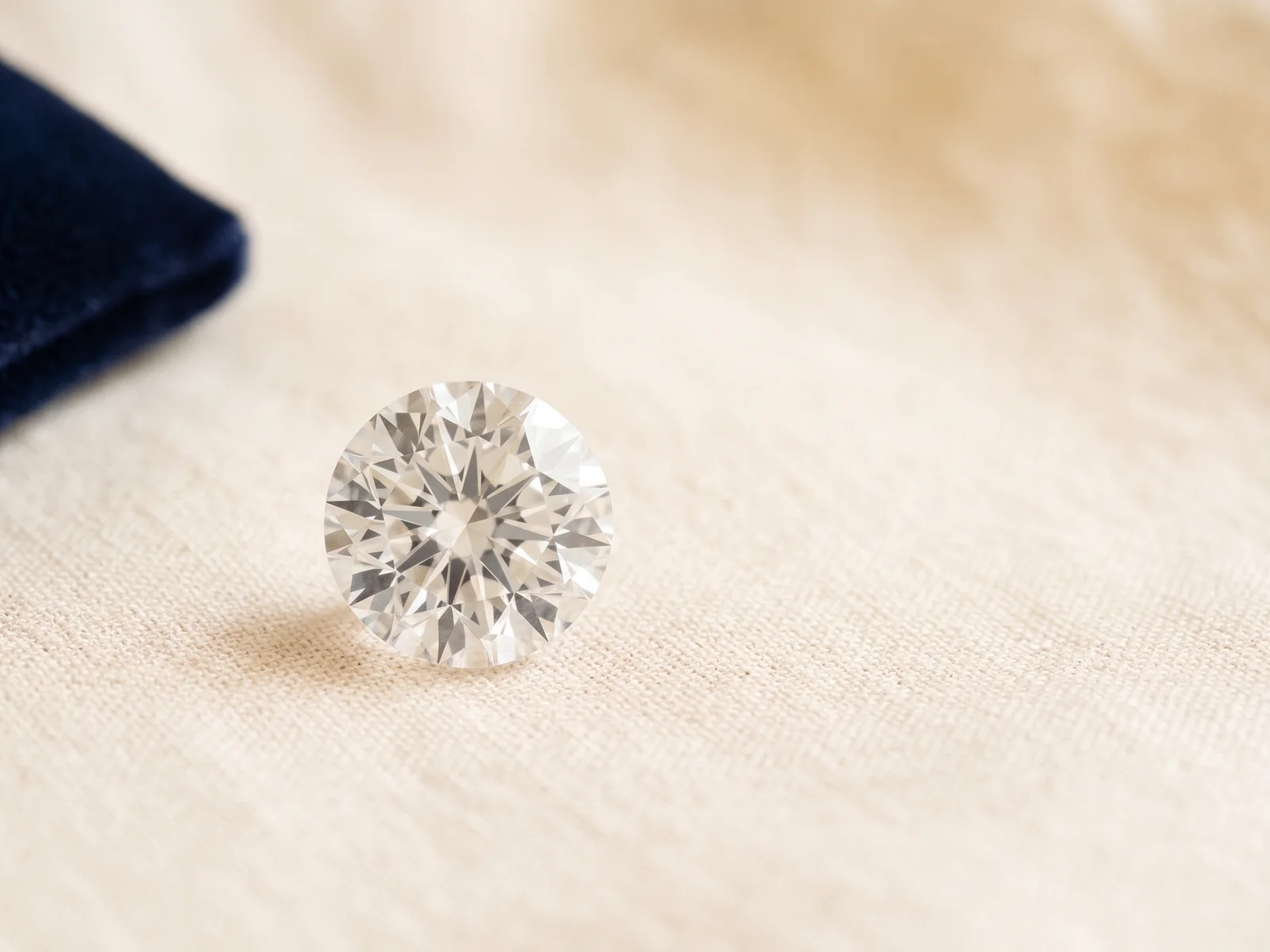
The diamond cut grade has more effect on how much a diamond sparkles than colour or clarity. Here is what each grade means, how the lab decides it, and when a lower grade is still a sensible choice.
 Reviewed by Raj Sood, Graduate Gemologist (GIA), AJP (GIA)Master jeweller and Graduate Gemologist (GIA) · reviewed 4 November 2026
Quick answer
A diamond cut grade rates how well a diamond's proportions, symmetry and polish return light as brightness, fire and sparkle. GIA grades round brilliants Excellent, Very Good, Good, Fair or Poor. For most buyers, Excellent or a well-proportioned Very Good gives strong sparkle for the money; fancy shapes get no overall cut grade, so judge them by eye.
What is a diamond cut grade?
Cut is the only one of the 4Cs of diamond quality that a person controls. Colour, clarity and carat come from the rough crystal; cut is the work of the cutter. The cut grade is a laboratory's judgement of how well that work was done, based on how the finished diamond handles light.
A lab looks at three kinds of light return. Brightness is the white light reflected back to your eye. Fire is the flashes of rainbow colour created when light splits as it passes through the facets. Scintillation is the pattern of light and dark sparkle you see when the stone, the light or your eye moves. A well-cut diamond balances all three.
The cut grade is not the same as the shape. 'Round', 'oval' or 'princess' describes the outline; the cut grade describes the quality of the faceting within it. The term also does not apply to older styles such as the rose cut, which was designed for a soft glow rather than modern brilliance; how rose and brilliant cuts differ explains why. Any unfamiliar word on this page is also defined in our jewellery glossary.
What are the diamond cut grades from Excellent to Poor?
GIA (the Gemological Institute of America) introduced its cut grade for standard round brilliant diamonds in 2006, and it is now the scale most Australians see. Other labs use similar but not identical scales:
| GIA | AGS (older reports) | IGI | What it means in practice |
|---|---|---|---|
| Excellent | Ideal (0) | Ideal / Excellent | Top light performance; proportions in a tight window |
| Very Good | Excellent (1) / Very Good (2) | Very Good | Slightly outside the top window; often hard to tell apart by eye |
| Good | Good (3–4) | Good | Visibly less bright; often cut to save weight from the rough |
| Fair | Fair (5–7) | Fair | Noticeable dark areas or light leakage |
| Poor | Poor (8–10) | Poor | Dull or glassy; rarely used in fine jewellery |
The names line up roughly, not exactly. An IGI 'Ideal' and a GIA 'Excellent' cover similar ground, but the labs set their boundaries differently, so it is worth reading comparing grades from different laboratories before you weigh two reports against each other.
GIA's overall grade also takes in more than light. It considers weight ratio (whether the stone carries extra weight that does not add to its face-up size), durability (mainly how thin the girdle, the narrow edge around the widest point, is), and the polish and symmetry grades. A stone with excellent proportions can still be held back to Very Good if, for example, its girdle is thick.
Excellent vs Very Good vs Good: which cut grade should you choose?
Most diamonds sold for engagement rings in Australia are Excellent or Very Good. Here is how each grade behaves, and when each is a sensible pick:
| Cut grade | How it looks | Relative price | When it's the smart pick |
|---|---|---|---|
| Excellent | Bright across the whole stone, lively sparkle | Highest | Centre stones, especially 1 ct and above, where sparkle is the priority |
| Very Good | Very close to Excellent in most lighting | Usually a little lower | When the proportions are near the Excellent window and the budget is tight |
| Good | Less bright; may look darker in the centre or edges | Noticeably lower | Smaller side stones, or a deliberate trade for a larger size |
| Fair | Dull patches or a glassy 'fisheye' look | Much lower | Rarely; only if a specific look outweighs sparkle |
| Poor | Little brilliance | Lowest | Generally not recommended for jewellery |
The gap between Excellent and Very Good is the one most people agonise over. A Very Good stone that misses Excellent by a fraction of a degree on one angle can look identical; one that misses on several measurements at once can look a little flat. That is why the numbers matter more than the label. Some retailers also sell a tighter 'Ideal' tier above Excellent, compared in Ideal versus Excellent cut diamonds.
How do proportions decide a diamond's cut grade?
A round brilliant has a crown (the top section above the girdle), a table (the large flat top facet), a pavilion (the cone underneath) and sometimes a culet (a tiny facet at the very bottom). The angles and percentages between these parts decide where light goes.
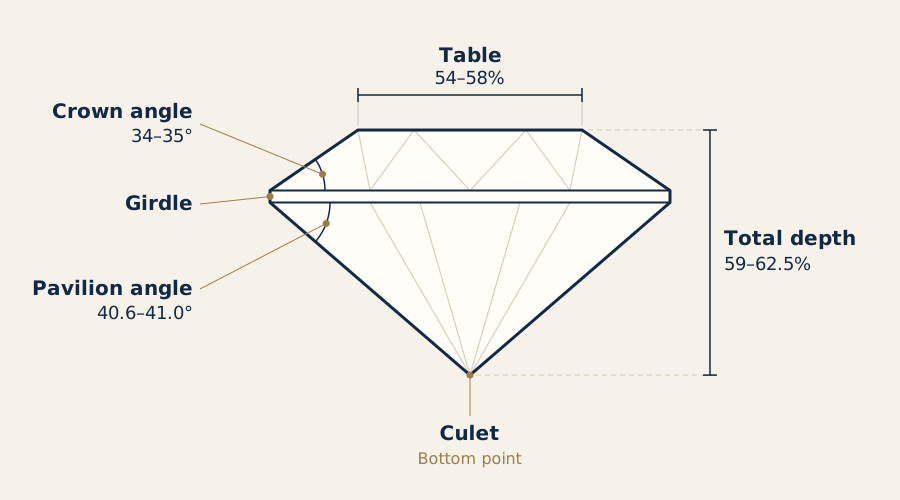
| Measurement | Broad GIA Excellent range (approx.) | Narrower range many gemmologists prefer |
|---|---|---|
| Table | 52–62% | 54–58% |
| Total depth | 57.5–63% | 59–62.5% |
| Crown angle | 31.5–36.5° | 34–35° |
| Pavilion angle | 40.6–41.8° | 40.6–41.0° |
| Girdle | Thin to slightly thick | Thin to medium |
| Culet | None to very small | None |
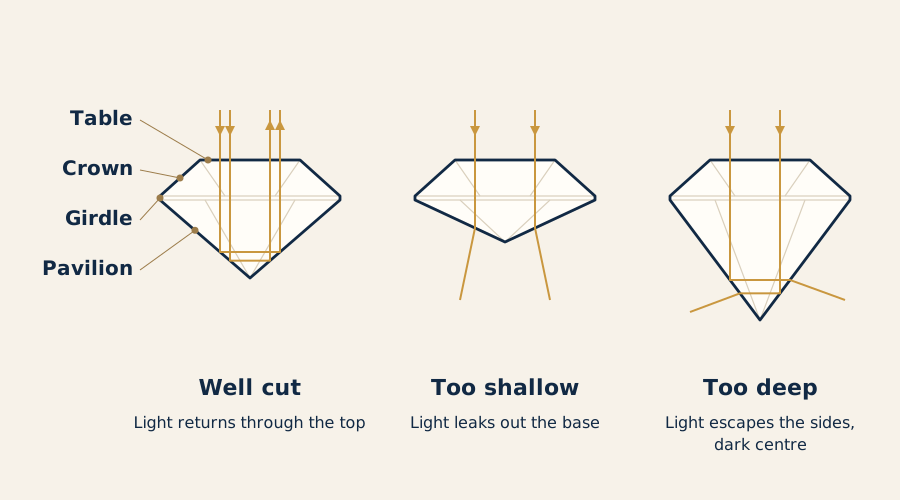
The pavilion angle is the single most important number. Too shallow (well below about 40.6°) and light leaks out the bottom, giving a washed-out ring called a fisheye. Too deep (well above about 41.8°) and light escapes out the sides, leaving a dark centre known as a nailhead. Crown angle and pavilion angle also work as a pair: a slightly steeper crown can balance a slightly shallower pavilion.
Depth affects size too. A 1.00 ct round cut to good proportions measures about 6.4–6.5 mm across. Cut it deep and the same weight may face up at 6.2 mm; cut it shallow and it may reach 6.6 mm but lose brightness. Our guide to round proportions beyond the grade goes into the finer combinations.
Not sure which one is right?
Send us the stones you are looking at and our gemologist will tell you which to choose and why.
What do polish and symmetry grades mean?
Every GIA report lists polish and symmetry separately, each graded Excellent, Very Good, Good, Fair or Poor. Polish describes the surface finish of the facets: fine polishing lines or small burn marks lower it. Symmetry describes how precisely the facets are shaped, aligned and placed: a table that sits off-centre or facets that do not meet neatly lower it.
A round graded Excellent for cut, polish and symmetry is often called Triple Excellent or 3EX. It is a useful shorthand, but it is not a separate lab grade. Small dips in polish (Very Good instead of Excellent) are almost never visible without magnification; symmetry problems are more likely to show as uneven sparkle.
Related guideCan You Compare Diamond Grades From Different Laboratories Directly?Do fancy shapes and step cuts get a cut grade?
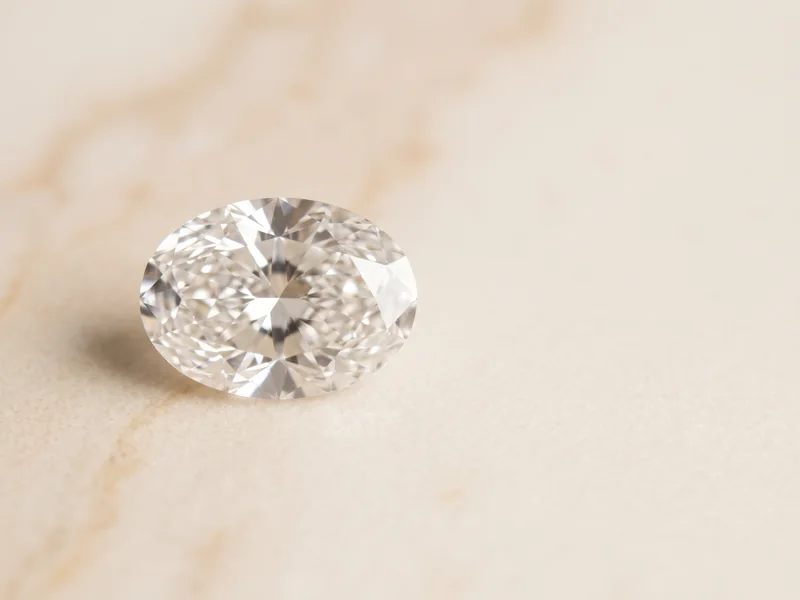
No, not from GIA. GIA gives an overall cut grade only to standard round brilliants. Ovals, pears, cushions, emeralds and every other shape receive polish and symmetry grades only, because there is no single 'correct' set of proportions for them. A long oval and a short oval can both be well cut. Our page on judging cut quality in fancy shapes covers how to assess them without a grade.
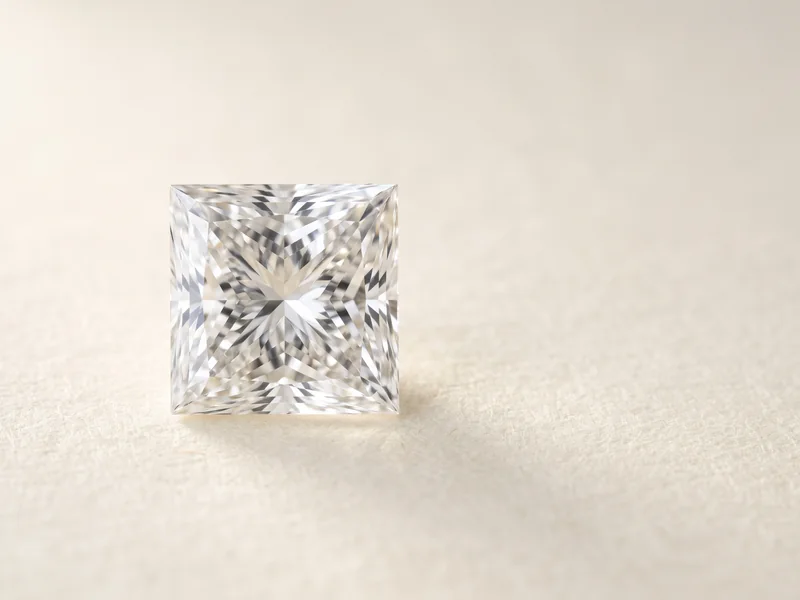
For a fancy shape, you judge cut by its length-to-width ratio, depth and table percentages, the visible outline, and above all how it looks in video: watch for a dark bow-tie, windows (see-through patches) and dead zones. Square brilliants such as the princess cut work best with a depth of roughly 64–75% and a table of about 63–75%.
A rectangular step cut diamond, such as an emerald cut or a baguette, works differently again. Step cuts have long, parallel rows of facets that create broad flashes of light, sometimes described as a hall of mirrors, rather than pinpoint sparkle. They show inclusions and windowing more easily, so clarity and an even depth matter more. Emerald cuts are usually chosen at a ratio of about 1.30–1.50; baguettes range from roughly 1.5:1 to 3:1.
Side-stone and speciality step cuts follow the same logic: look for crisp, even steps and no window in the centre. That applies to bullet-shaped side stones, trapezoid side stones, triangular cuts, five-sided pentagonal stones and six-sided hexagonal cuts. Drop-shaped stones faceted all over, such as the briolette, are judged on even facets and an unbroken outline, since they have no table at all.
What are precision cut and premium cut diamonds?
Precision cut diamonds and premium cut diamonds are retail terms, not laboratory grades. No major lab prints 'precision' or 'premium' on a report. Sellers use them for stones they consider better than the average Excellent, such as a tight 'super ideal' proportion set, strong optical symmetry or a hearts and arrows pattern (eight hearts and eight arrows visible through a special viewer in a precisely cut round).
Some of these stones genuinely perform at the top of the Excellent range. The way to tell is the same for every diamond:
- Ask for the report: a GIA or IGI cut grade plus the full measurements.
- Check the angles: crown and pavilion angles against the proportions table above.
- Ask for light-performance images: ASET or Ideal Scope images show where light is returned or lost.
- Watch a video: even sparkle across the whole stone, no dark centre.
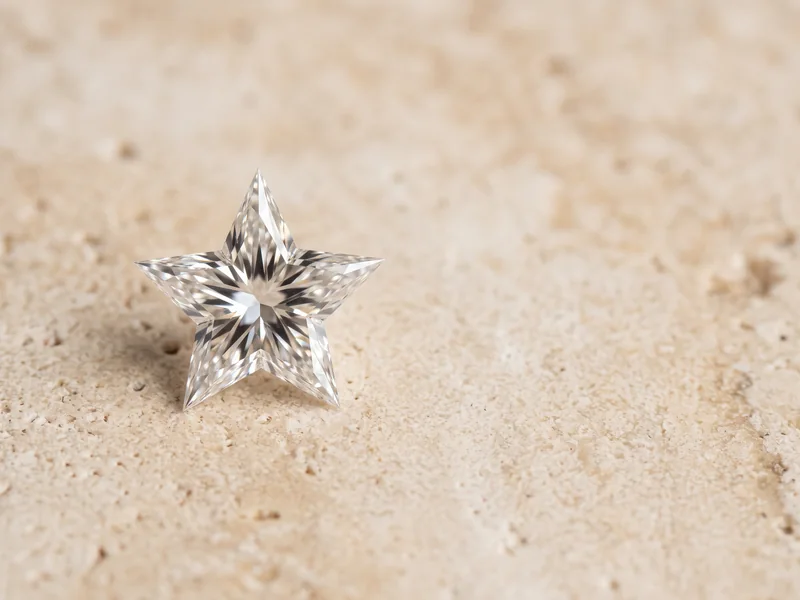
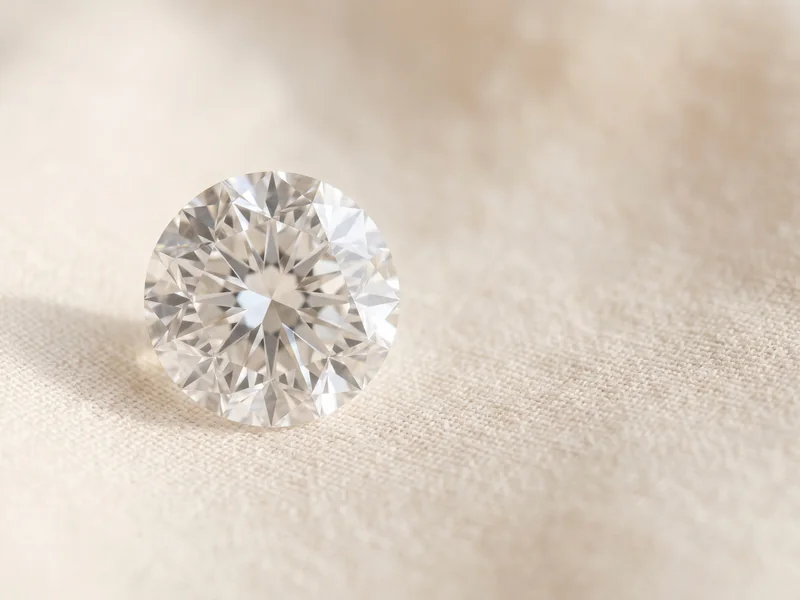
'Precision cut' is also used loosely for modern patented and speciality facet designs, many with extra or rearranged facets. The star cut, the multi-faceted Portuguese cut and the square Flanders cut are examples. These are judged by eye and by polish and symmetry rather than an overall cut grade.
How much does cut grade change a diamond's price?
Cut grade moves price less than carat or colour, but the step is real. As a rough guide for a 1.00 ct round, G colour, VS2 clarity, with a recognised report:
| Cut grade | Natural diamond (approx. AUD) | Lab-grown diamond (approx. AUD) |
|---|---|---|
| Excellent | 9,000–14,000 | 900–2,500 |
| Very Good | 8,000–12,500 | 800–2,200 |
| Good | 6,500–10,500 | Rarely offered |
| Fair / Poor | Rarely stocked for fine jewellery | Rarely offered |
Prices vary with the exact proportions, fluorescence, the lab and the market, so treat these as ranges, not quotes. Laboratory-grown diamonds are now mostly cut to Excellent or Ideal, because growers can choose the crystal size to suit the cut, so a lower cut grade rarely saves much in lab-grown. Natural diamonds are more often cut to keep weight, which is where Very Good and Good stones come from.
Natural and lab-grown diamonds are graded on the same cut scales and look identical to the eye; lab-grown costs much less, natural is rarer. If you are balancing cut against other grades, whether VS1 and VS2 look different and when an SI1 makes sense show where you can save without losing sparkle.
Shop natural and lab-grown diamonds by cut grade
How to check a diamond cut grade before you buy: step by step
- Confirm the lab and the grade. Note who graded it (GIA, IGI or another lab) and the cut, polish and symmetry grades. For a fancy shape, expect polish and symmetry only.
- Read the proportions. Find the table %, depth %, crown angle and pavilion angle on the report's diagram and compare them with the ranges above.
- Check the diameter against the weight. A well-cut 1.00 ct round should be about 6.4–6.5 mm across; much less suggests a deep stone.
- Look at the girdle and culet. Thin to slightly thick girdle and no culet or a very small one.
- Watch it move. In a 360° video or in person, look for even sparkle, no dark centre, no glassy ring and, in fancy shapes, no heavy bow-tie.
- Weigh the trade-offs. Keep the cut high and adjust colour, clarity or carat first if you need to meet a budget.
Free consultation
Talk to a gemologist
Compare stones in person or online with Raj Sood, Graduate Gemologist (GIA), AJP (GIA).
Book a consultationShop this shape
FAQ
Common questions
What is the best diamond cut grade?
GIA's top grade for round brilliants is Excellent; IGI and older AGS reports use Ideal at the top. Within Excellent, the actual angles still vary, so check the proportions rather than the label alone.
Is a Very Good cut diamond worth buying?
It can be, especially when its crown and pavilion angles sit close to the Excellent range. Many Very Good rounds look almost identical to Excellent in normal lighting and cost a little less.
Why doesn't my oval or emerald cut have a cut grade?
GIA only gives an overall cut grade to standard round brilliants. Fancy shapes, including rectangular step cuts such as emeralds and baguettes, get polish and symmetry grades, so you judge the cut by ratio, depth and how the stone looks in video.
Are precision cut diamonds better than Excellent cut diamonds?
'Precision cut' is a retail term, not a lab grade. Some stones sold that way do have very tight proportions and strong optical symmetry; ask for the report, the angles and light-performance images to see for yourself.
What does Triple Excellent mean?
It means a round diamond is graded Excellent for cut, polish and symmetry on its report. It is a common shorthand, not a separate grade.
Do lab-grown diamonds have cut grades too?
Yes. Laboratory-grown diamonds are graded on the same cut scales by labs such as IGI, and most are cut to Excellent or Ideal. GIA now issues simplified, descriptive reports for lab-grown stones.
Terms in this guide

Ask a gemologist
Not sure which diamond to choose?
Raj Sood is a Graduate Gemologist (GIA) and master jeweller. Bring the stones you are considering, or send the reports, and he will tell you honestly which one is better and why.
Keep learning
Related guides
 Diamond 4Cs & GradingIdeal Cut vs Excellent Cut Diamonds
 Diamond Anatomy & LightRound Diamond Proportions Beyond the Cut Grade
 Diamond 4Cs & GradingCut Quality in Fancy Shapes (No GIA Cut Grade)Diamond 4Cs & GradingDiamond 4Cs
 Diamond ShapesPrincess Cut DiamondsDiamond ShapesRose Cut vs Brilliant Cut Diamonds
 Diamond ShapesStar Cut Diamonds
 Diamond ShapesPortuguese Cut Diamonds
Explore more
More guides on this topic
Education