
- Education
- Engagement Rings & Settings
- Engagement Ring Anatomy: Every Part of the Ring and Diamond Explained
Engagement Rings & Settings
Engagement Ring Anatomy: Every Part of the Ring and Diamond Explained
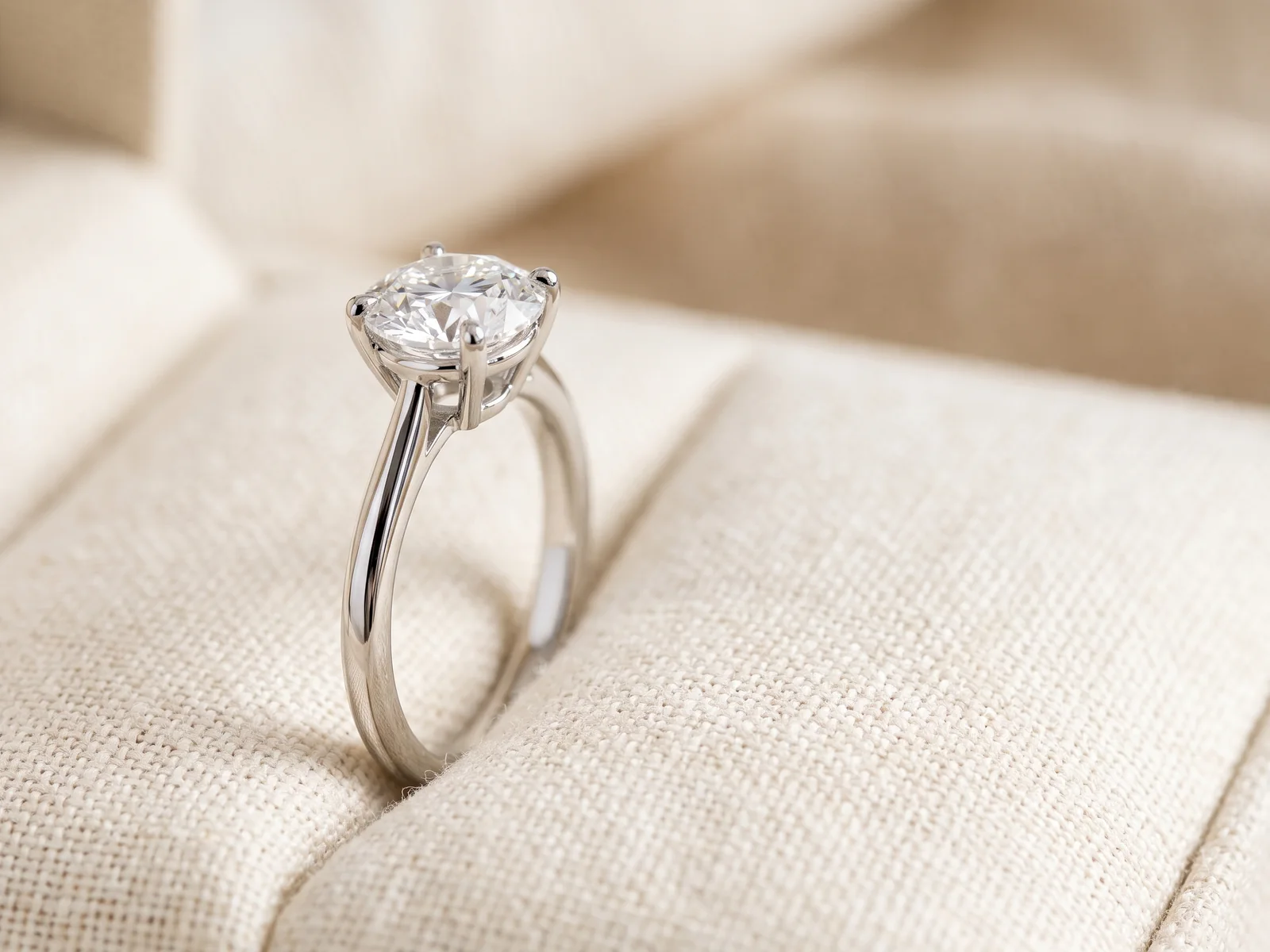
Knowing the parts of an engagement ring, from the claws to the palm side of the shank, makes it easier to compare designs, ask for changes and spot wear before a stone is lost. This guide labels every part of the ring and the diamond, with era details from antique rings.
 Reviewed by Raj Sood, Graduate Gemologist (GIA), AJP (GIA)Master jeweller and Graduate Gemologist (GIA) · reviewed 4 November 2026
Quick answer
Engagement ring anatomy covers the parts of the ring and the stone. The ring has a head (the setting) with claws or a bezel holding the diamond, a gallery and bridge beneath it, shoulders either side and a shank, the band around your finger. The diamond itself has a table, crown, girdle, pavilion and culet.
What are the parts of an engagement ring? Engagement ring anatomy explained
An engagement ring has two main parts: the centre stone and the mounting, which is everything made of metal. Jewellers then break the mounting into smaller parts, each with its own job. Knowing the names helps you read a ring description, compare designs and tell a jeweller exactly what you would like changed. If a word here is new, our A to Z of jewellery terms defines it in plain English.
| Part | What it is | What to check |
|---|---|---|
| Centre stone | The main diamond or gemstone | Shape, size in mm, grading report |
| Head (setting) | The metal structure that holds the stone | Number, thickness and shape of the claws |
| Claws (prongs) | Metal tips that grip the edge of the stone | Even, rounded tips that do not snag |
| Gallery | The side view of the metal under the stone | Height, openwork, how a wedding band sits |
| Bridge | The bar or arch under the head joining it to the band | Solid, smooth, no thin spots |
| Shoulders | The upper part of the band either side of the head | Width, accent stones, how they taper |
| Shank (band) | The circle of metal around the finger | Width, thickness and profile |
| Palm side (base) | The bottom of the shank, under your finger | Thickness; this is where rings wear and are resized |
| Hallmark | The stamp inside the band | Metal purity, such as 750 or 950 |
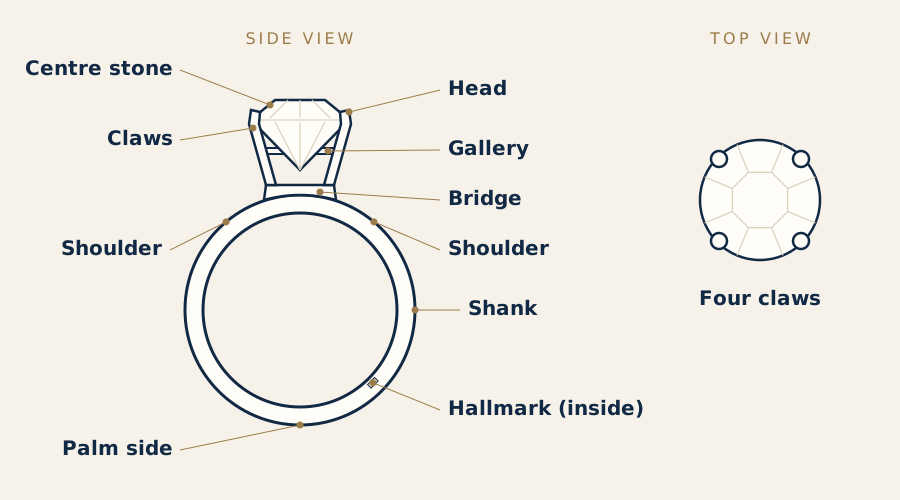
Two terms cause most of the confusion. Setting can mean the whole mounting (as in choosing a setting, then a diamond) or just the way the stone is held (a claw setting, a bezel setting). Prongs and claws are the same thing; Australians and the British usually say claws, Americans say prongs. Our overview of engagement ring setting styles shows how these parts combine into the main designs, from solitaires to halos.
What is diamond anatomy? The parts of the centre stone
Diamond anatomy is the name for the parts of a cut stone. Every faceted diamond has a crown on top, a girdle around its widest edge and a pavilion below. Light enters through the top, reflects off the pavilion facets and returns to your eye. How well those parts are proportioned decides how bright the stone looks, and the girdle decides how the ring is built around it.
- Table: the large flat facet on top, the window into the stone.
- Crown: the angled upper section between the table and the girdle; it spreads light into flashes of colour (fire).
- Girdle: the thin outer edge, where the claws or bezel grip the stone.
- Pavilion: the cone-shaped lower section that reflects light back up.
- Culet: the point or tiny flat facet at the very bottom. Most modern rounds have none; antique cuts often show a large one.
- Facets: the flat polished surfaces. A round brilliant has 57, or 58 if a culet is counted.
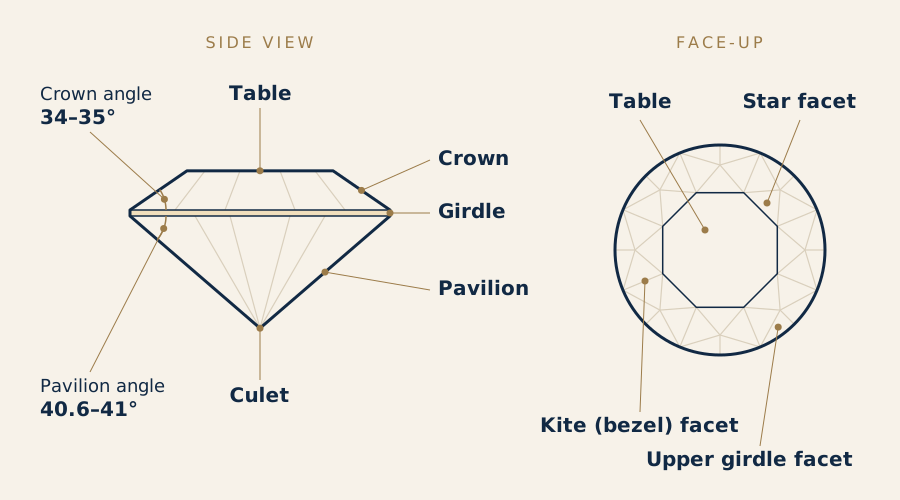
On a round brilliant, the crown carries 33 facets (1 table, 8 star, 8 kite or bezel facets and 16 upper girdle facets) and the pavilion carries 24 (8 pavilion mains and 16 lower girdle facets). Diamond is 10 on the Mohs hardness scale and has a refractive index of about 2.42, the reason brilliant cuts return so much light. Hard is not the same as tough, though: diamond can chip along its cleavage planes, and the girdle is the thinnest edge, right where the metal presses.
| Proportion (round brilliant) | Typical well-cut range | Why it matters in the ring |
|---|---|---|
| Table | about 53–58% of diameter | Affects brightness and how large the stone looks |
| Total depth | about 59–62.5% | A deep stone needs a taller head and sits higher |
| Crown angle | about 34–35° | Balances brightness and fire |
| Pavilion angle | about 40.6–41° | Controls how much light returns to the eye |
| Girdle | thin to slightly thick | Too thin can chip under a claw; too thick adds hidden weight |
| Culet | none or very small | A large culet shows as a dark dot face-up |
The head is made to the stone's measured girdle diameter, not its carat weight. A 1 carat round is usually about 6.3–6.5 mm across, but two 1 carat stones cut to different depths can differ by a few tenths of a millimetre, which is why a jeweller asks for the exact measurements before the setting is finished.
How is the diamond held? Heads, claws and setting types
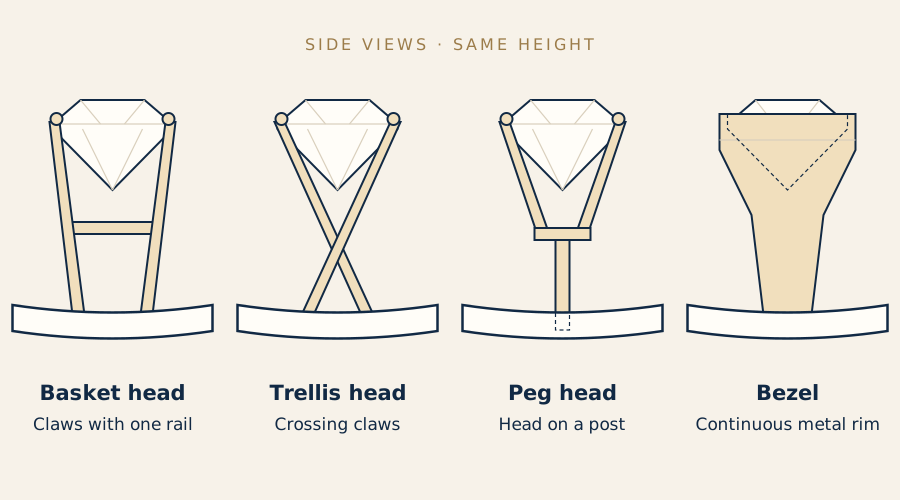
The head is the part that holds the stone. Most solitaire heads are one of three builds: a basket (claws joined by one or two horizontal rails), a trellis (claws that cross over each other in a woven pattern) or a peg head (a pre-made head on a post, fitted into a hole in the band). Each changes how the gallery looks and how easily the head can be repaired; our comparison of basket, trellis and peg head builds goes through the trade-offs in detail.
Claw tips come in several shapes. Round (ball) claws are the most common and the least likely to catch. Pointed or claw-shaped tips look finer and suit vintage designs. Tab or flat claws suit square stones, double claws put two thin claws at each position, and V-claws wrap the points of pear, marquise, heart and princess cuts, which would otherwise be exposed. On a 1 carat solitaire, claws are typically about 0.8–1.2 mm thick when new.
| Setting method | How it holds the stone | Security | How much stone shows |
|---|---|---|---|
| 4 claws | Four metal tips over the girdle | Good; losing one claw puts the stone at risk | Most; square look on a round |
| 6 claws | Six tips spaced around the girdle | Higher; the stone usually stays if one claw lifts | Slightly more metal; rounder outline |
| Double claws | Pairs of thin claws at each position | High | More metal, vintage feel |
| Bezel | A continuous metal rim around the edge | Very high | Hides the girdle; less light from the sides |
| Half-bezel | Metal on two sides, open on the others | High | More side light than a full bezel |
| Flush (gypsy) | Stone sunk into a drilled seat in the band | Very high | Least; table sits level with the metal |
| Channel or pavé | Rows of small stones in a groove or held by tiny beads | Good for small stones | Used on shoulders and bands, not centre stones |
Flush setting is the low-profile extreme, with no head at all. It is common in men's rings and everyday bands; see our explainer on how flush or gypsy settings are cut and set.
What is the gallery on an engagement ring?
The gallery is the metalwork under the stone that you see when you look at a ring from the side. On a simple solitaire it is just the claws and the rail of the basket. On a more detailed ring it can hold filigree (fine openwork patterns), scrollwork, a hidden halo of small diamonds under the girdle, or tiny side-set peekaboo stones. Our page on filigree, hidden halos and other under-gallery details shows examples from plain to ornate.
Below the gallery sits the bridge, the arch or bar that joins the head to the shank. It carries the weight of the head and is often hidden, but a well-made bridge is solid and smooth so it does not trap soap and lotion. On cathedral designs, the shoulders sweep up to meet the head like arches, which lifts the stone and gives a taller side profile.
Gallery height decides whether a wedding band can sit flush. A low-set head, roughly 4–5 mm from the finger to the girdle, often leaves no room for a straight band underneath, so the two rings gap or need a curved band. A higher head, about 6–7 mm, usually lets a straight band slide underneath but catches more on gloves and knits. Our guide to how setting height affects wedding band fit sets out the measurements.
Not sure which one is right?
Send us the stones you are looking at and our gemologist will tell you which to choose and why.
What is the shank of an engagement ring and how wide should it be?
The shank is the band that goes around the finger. The top part either side of the head is the shoulders, and the bottom is the palm side. Most engagement shanks are about 1.8–4 mm wide: under 2 mm makes the centre stone look larger but is more prone to bending, while 2.5–3 mm is a common everyday width. Thickness (from finger to outer surface) matters as much as width, and around 1.5–2 mm is typical for daily wear. Our page on band widths from 1.8 to 4 mm compares each width on the hand.
| Shank profile | Cross-section | How it feels |
|---|---|---|
| Court (comfort fit) | Rounded inside and out | Slides on easily; the usual choice |
| D-shape | Flat inside, rounded outside | Classic, slightly snugger |
| Flat | Flat inside and out, square edges | Modern look, can feel tighter |
| Flat court | Flat outside, rounded inside | Modern look with a comfortable inside |
| Knife-edge | Two sloping sides meeting in a ridge | Looks finer from above; strong for its width |
The shape of the band from front to back changes the look too. A tapered band that narrows towards the head draws the eye to the centre stone, while a reverse taper that widens near the stone adds weight and support to the shoulders. A twisted or rope-style band wraps two strands around each other, and a knife-edge band with its central ridge catches light along its spine. Split shanks divide into two strands at the shoulders, giving the head a wider base.
The hallmark inside the shank tells you the metal. Gold is marked in parts per thousand: 750 is 18ct (75% gold), 585 is 14ct and 375 is 9ct. Platinum is usually marked 950 or PT950, meaning 95% platinum. White gold is often rhodium plated for a brighter white, and that plating wears off over time, most quickly on the palm side.
How do halo, toi et moi and east-west designs change the anatomy?
The parts stay the same, but different layouts rearrange them:
- Solitaire: one centre stone, one head, plain or stone-set shoulders. The simplest anatomy and the easiest to repair.
- Halo: a ring of small diamonds, often about 1–1.5 mm each, set around the centre stone. It adds a second, wider frame to the head and makes the centre look larger face-up.
- Hidden halo: the small stones sit around the girdle on the gallery, visible only from the side.
- Three-stone: three heads joined on one bridge, usually a larger centre with matched side stones.
- Toi et moi: two stones side by side, each in its own head, often of different shapes. See our guide to two-stone toi et moi rings.
- East-west: an elongated stone turned sideways across the finger, which means the head is rotated 90° on the shank. Our east-west engagement ring guide covers which shapes suit it.
Men's engagement rings tend to use a different anatomy again: wider shanks of about 4–6 mm, flush or bezel heads that sit low, and sometimes no head at all. Our page on engagement rings designed for men covers the common styles.
How has engagement ring anatomy changed through history?
Each era built rings differently, and the anatomy is often the clearest clue to a ring's age. When an antique ring is remade or restored, matching those details (the claw shape, the gallery pattern, the shank profile) is what keeps it looking right for its period.
| Era | Approximate dates | Typical anatomy details |
|---|---|---|
| Georgian | 1714–1837 | Closed-back collet settings, foiled stones, rose and old mine cuts, silver tops on gold shanks |
| Victorian | 1837–1901 | Yellow and rose gold, clusters and half-hoop rings, carved shoulders; the high six-claw solitaire appears in the 1880s |
| Edwardian | c. 1901–1915 | Platinum, milgrain edging, lace-like filigree galleries, knife-edge shanks, old European cuts |
| Art Deco | c. 1920–1935 | Geometric heads, step cuts, calibré-cut coloured stones, pierced galleries |
| Retro | c. 1935–1950 | Rose and yellow gold, bold sculpted shoulders, illusion heads that make small diamonds look larger |
| Modern | 1950s onwards | Taller claw solitaires, then halos, hidden halos and thinner shanks |
A few details are worth knowing by name. Milgrain is a row of tiny beads along an edge, made with a knurled tool. Collet settings are small metal cups, often closed at the back in Georgian work, which is why those stones were sometimes foiled to brighten them. Filigree galleries became possible at scale once platinum, strong enough to be worked very fine, came into wider use around the start of the 20th century. Our guide to Victorian and Edwardian ring details goes deeper into both eras.
Related guideEdwardian and Victorian Engagement RingsWhich parts of an engagement ring wear out first?
Rings wear in predictable places, and knowing the anatomy tells you where to look:
- Claw tips: they take every knock, so they thin and flatten over years. Worn claws can be re-tipped (new metal added to the tip) or the whole head replaced.
- Palm side of the shank: it rubs on everything you hold and gradually thins. A worn base can be re-shanked, replacing the lower part of the band.
- Shoulders: small pavé or channel stones here can loosen, especially where the band flexes.
- Inner edge beside a wedding band: two rings worn together rub against each other, more so if one is harder than the other.
- Plating: rhodium on white gold wears first on the palm side and the claw tips.
Where you wear the ring affects this too. In Australia an engagement ring usually goes on the fourth finger of the left hand, next to the wedding band; our guide to which finger the engagement ring goes on explains the tradition and the alternatives. Having the claws and shank checked by a jeweller about once a year is a sensible habit, sooner if the ring starts catching on clothing.
How do you check an engagement ring's anatomy before you choose? Step by step
- Start with the stone. Read the grading report for shape, millimetre measurements, depth and girdle thickness, and whether the diamond is natural or lab-grown.
- Look at the head. Count the claws, check their tip shape and make sure any points on the stone are protected by a V-claw or bezel.
- Check the side view. Note the gallery height and whether your chosen wedding band will sit flush or need a curve.
- Feel the shank. Confirm width (about 1.8–4 mm), thickness (about 1.5–2 mm) and profile, and try a court and a flat profile if you are unsure.
- Read the hallmark. Confirm the metal, such as 750 for 18ct gold or 950 for platinum.
- Plan for wear. Ask how the claws can be re-tipped and the shank resized or re-shanked in future.
Build or browse a ring: settings and create your ring
Free consultation
Talk to a gemologist
Compare stones in person or online with Raj Sood, Graduate Gemologist (GIA), AJP (GIA).
Book a consultationShop this shape
FAQ
Common questions
What are the parts of an engagement ring called?
The main parts are the centre stone, the head (or setting) with its claws or bezel, the gallery and bridge under the stone, the shoulders either side and the shank, the band around the finger. The bottom of the shank is called the palm side.
What is the gallery on a ring?
The gallery is the metalwork under the centre stone that you see from the side. It can be a plain basket rail or decorated with filigree, scrollwork or a hidden halo of small diamonds.
What is the difference between the shank and the band?
They mean the same part, the circle of metal around the finger. Jewellers tend to say shank, and the word band is also used for a separate wedding ring.
How many claws should an engagement ring have?
Most solitaires use four or six claws. Four shows more of the diamond, while six holds it more securely because the stone usually stays in place if one claw lifts.
What is the girdle of a diamond?
The girdle is the thin outer edge around the widest part of a diamond, between the crown and the pavilion. It is where the claws or bezel grip the stone, so a very thin girdle is more likely to chip.
Can you replace part of an engagement ring?
Yes. Worn claws can be re-tipped or the head replaced, and a thin palm side can be re-shanked with new metal, often without changing how the ring looks from above.
Terms in this guide

Ask a gemologist
Not sure which diamond to choose?
Raj Sood is a Graduate Gemologist (GIA) and master jeweller. Bring the stones you are considering, or send the reports, and he will tell you honestly which one is better and why.
Keep learning
Related guides
 Engagement Rings & SettingsBasket vs Trellis vs Peg Head SettingsEngagement Rings & SettingsUnder-Gallery DetailsEngagement Rings & SettingsEngagement Ring Setting Styles GuideEngagement Rings & SettingsSetting Height and Wedding Band Fit
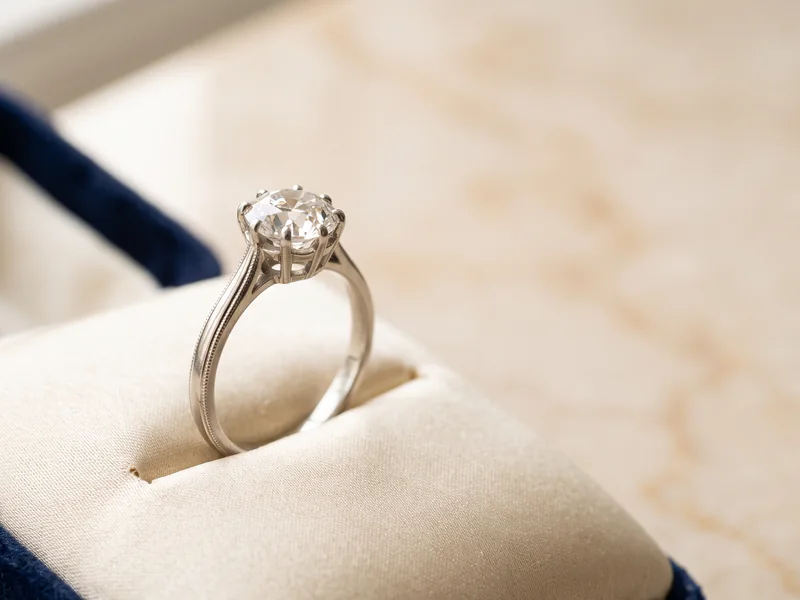 Engagement Rings & SettingsEdwardian and Victorian Engagement Rings
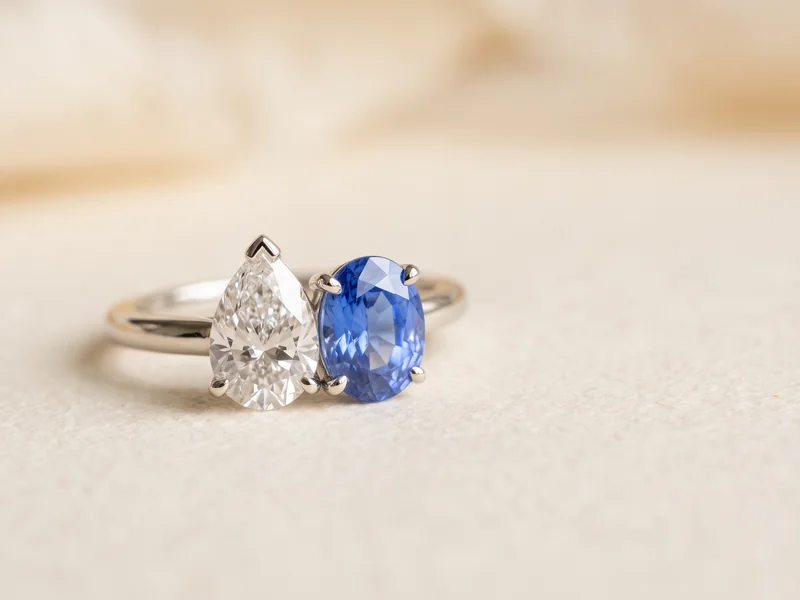 Engagement Rings & SettingsToi et Moi Engagement Rings
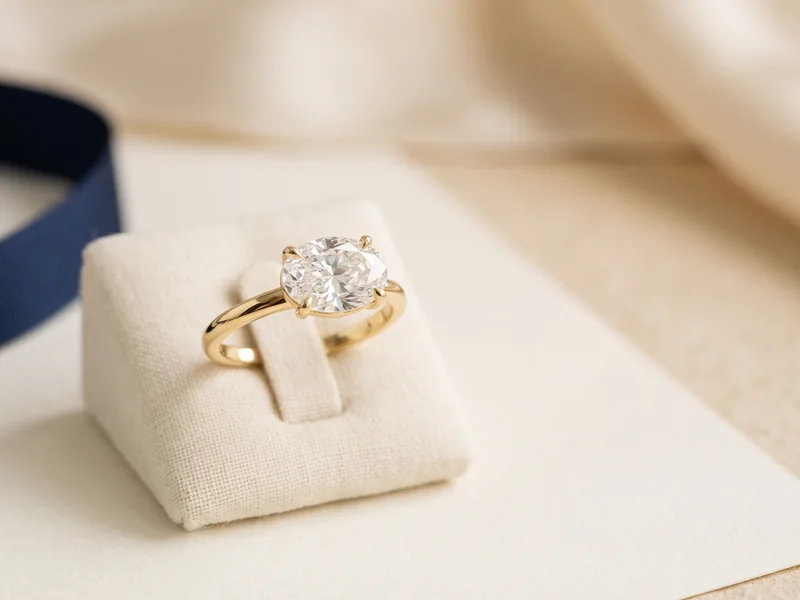 Engagement Rings & SettingsEast-West Engagement Rings
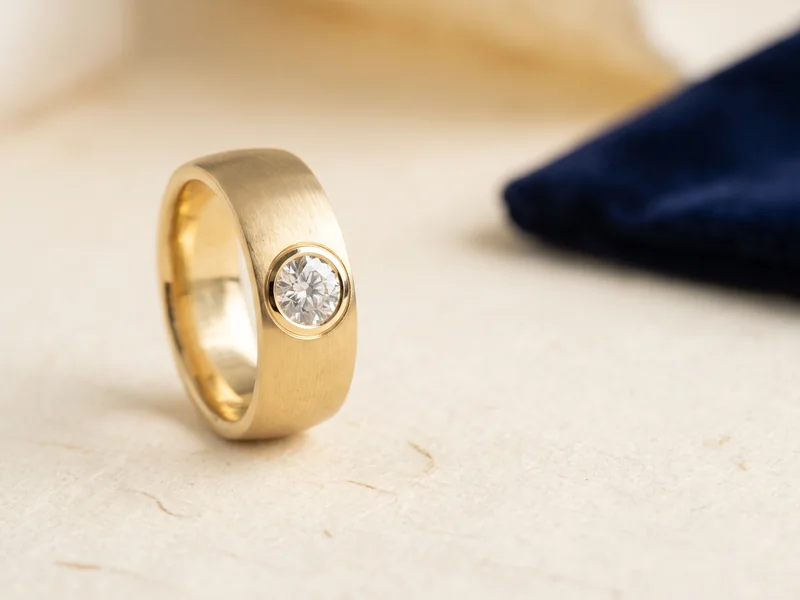 Engagement Rings & SettingsFlush (Gypsy) Settings
Explore more
More guides on this topic
Education