
GemTrove
Explore alexandrite engagement rings, colour-change beauty, natural and lab-grown options, durability, diamond accents and custom setting ideas.
COLOUR-CHANGE GEMSTONE ENGAGEMENT RING GUIDE
Alexandrite Engagement Rings
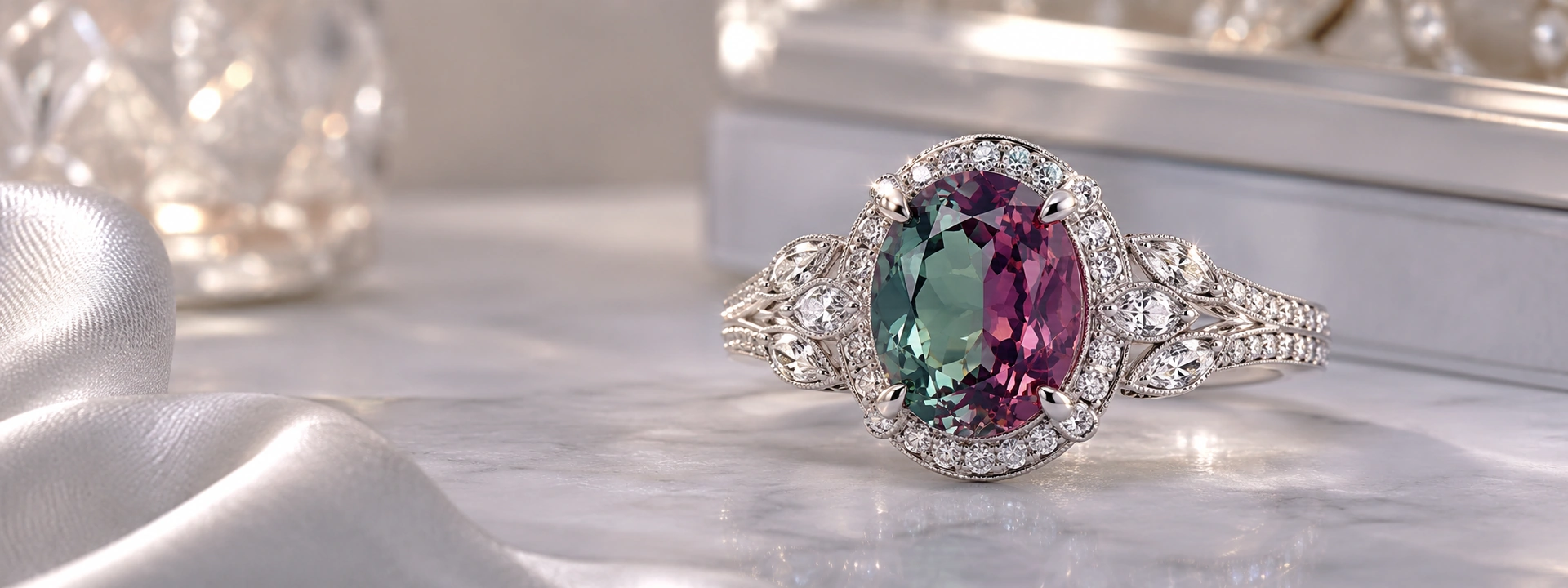
Alexandrite engagement rings are chosen for their extraordinary colour-change effect, shifting from green to bluish-green in daylight toward red to purplish-red tones under warmer incandescent light.
As a rare variety of chrysoberyl, alexandrite can create an engagement ring that feels highly personal, unusual and rich in visual character. The best ring design considers colour change strength, gemstone size, cut, natural or lab-grown preference, setting protection and overall bridal style.
Colour Change
Alexandrite is prized for its shift between cooler daylight and warmer evening tones.
Rare Character
Fine natural alexandrite is uncommon, especially with strong colour change and attractive size.
Ring Suitability
Alexandrite has strong everyday jewellery potential when thoughtfully selected and set.
Custom Design
Shape, setting, metal and side stones should enhance the stone’s changeable beauty.

What is an alexandrite engagement ring?
An alexandrite engagement ring features alexandrite as the centre stone or a major design feature. Alexandrite is the colour-change variety of chrysoberyl, known for appearing green to bluish-green in daylight and red to purplish-red in warmer incandescent light.
Its rarity, distinctive optical character and strong jewellery symbolism make it an appealing choice for couples wanting an engagement ring that feels uncommon and meaningful.
Alexandrite can be designed in classic solitaire rings, diamond halo styles, three-stone layouts, vintage-inspired settings or refined contemporary forms.
Alexandrite engagement rings at a glance
Gem family
Alexandrite is a rare colour-change variety of chrysoberyl.
Visual appeal
Its signature beauty comes from the visible shift between cooler and warmer colour appearances.
Durability
Alexandrite has a Mohs hardness of 8.5 and is considered suitable for rings when well chosen.
Natural rarity
Fine natural alexandrite with strong colour change can be exceptionally rare.
Lab-grown option
Lab-grown alexandrite may appeal to customers seeking colour-change beauty with greater availability.
Custom design
Designing around the exact alexandrite stone helps refine proportions, setting and diamond accents.
What to compare in an alexandrite engagement ring
Alexandrite should be assessed differently from a standard diamond purchase. The quality of its colour change and the appearance of the stone in different lighting are especially important.
| Factor | What to look for | Why it matters |
|---|---|---|
| Colour change | Observe the shift between daylight-style and warmer incandescent-style lighting. | The strength and appeal of the colour shift are central to alexandrite’s character. |
| Colour quality | Look at tone, brightness and how appealing the stone appears in both light environments. | A ring should remain attractive under both cooler and warmer lighting. |
| Natural or lab-grown | Confirm origin and choose according to preference, availability and design goals. | Natural rarity and lab-grown availability support different priorities and design pathways. |
| Cut and shape | Oval, cushion, round, pear and other shapes can each affect visual balance. | The cut influences brightness, colour distribution and how the stone sits in the ring. |
| Size and availability | Fine natural alexandrite in larger sizes can be much harder to source. | Design may need to follow the best available stone, especially for fine natural alexandrite. |
| Setting style | Consider claw, halo, three-stone, bezel-inspired or vintage directions. | The setting should protect the gemstone while supporting its colour-change beauty. |
The alexandrite colour-change effect
Daylight-style appearance
Fine alexandrite is often associated with green to bluish-green tones in daylight or cool lighting. This side of the gemstone can feel fresh, refined and quietly distinctive.
Warm-light appearance
Under incandescent or warmer indoor light, alexandrite may shift toward red, purplish-red or raspberry-like tones. The drama of this change is a major reason collectors and engagement ring clients are drawn to the gem.
Is alexandrite suitable for an engagement ring?
Strong ring potential
Alexandrite is relatively hard at 8.5 on the Mohs scale and is recognised as having excellent toughness and no cleavage. This gives it strong potential for ring use when the gemstone and setting are properly selected.
Still choose thoughtfully
No gemstone is indestructible. A well-designed engagement ring should still consider setting height, exposed points, claw placement, side protection and the wearer’s daily habits.
Natural vs lab-grown alexandrite engagement rings
Natural alexandrite
Natural alexandrite is prized for rarity, natural origin and the difficulty of finding fine material with strong colour change, attractive brightness and suitable ring size. It can be especially appealing for collectors or clients seeking an uncommon centre stone.
Lab-grown alexandrite
Lab-grown alexandrite can offer colour-change character with broader design flexibility and availability. It may suit customers who love the alexandrite look but want a more accessible path for a custom engagement ring.
For a wider gemstone comparison, visit GemTrove’s guide to natural vs lab-grown gemstones.
Best engagement ring styles for alexandrite
Solitaire alexandrite rings
A solitaire design allows the colour-change gemstone to remain the main focus. This style suits customers who want the optical effect of alexandrite to speak clearly without too much surrounding detail.
Diamond halo alexandrite rings
White diamonds can frame the shifting colour of alexandrite beautifully. A halo may add brilliance and face-up presence while retaining the gemstone as the centre of attention.
Three-stone rings
Alexandrite with diamond side stones can create a balanced, symbolic design. Tapered shapes, rounds or pears may all be explored depending on the alexandrite centre.
Vintage-inspired settings
Milgrain, fine halos, engraving and detailed gallery work can pair elegantly with alexandrite’s historic and unusual visual character.
How to choose the right alexandrite ring
- View the colour change carefully. Ask to understand how the stone appears in both cooler and warmer light. A strong and pleasing change is central to alexandrite’s appeal.
- Decide natural or lab-grown. Choose according to personal priorities, rarity preference, availability and the type of engagement ring design being planned.
- Match the setting to the stone. The stone’s shape, dimensions and face-up character should guide the setting, not the other way around.
- Use diamond accents with purpose. Diamonds can sharpen contrast, add brilliance and elevate the ring while leaving alexandrite’s changing colour as the hero feature.
How GemTrove helps with alexandrite engagement rings
GemTrove helps customers explore coloured gemstone engagement rings through appointment-based viewing, gemstone education, custom design planning and professional guidance on natural and lab-grown options where suitable.
Customers can compare alexandrite with other coloured centre stones through the coloured gemstone engagement rings guide, review broader gemstone durability in the gemstone hardness guide, or discuss a fully custom engagement ring brief.
Gemstone comparison
Understand alexandrite colour change, tone, appearance and natural versus lab-grown pathways.
Custom ring development
Design around the selected stone’s exact shape, dimensions and visual character.
Diamond accent planning
Pair alexandrite with halos, side stones or refined bridal detailing where appropriate.
Melbourne showroom appointments
Discuss gemstone and ring directions with personalised guidance in the CBD showroom.
General Case Study: a custom alexandrite engagement ring with diamond side stones
This illustrative example shows how a colour-change gemstone can become the centre of a refined, wearable engagement ring.
An alexandrite three-stone ring designed around colour, contrast and balance
The brief
A customer wants an engagement ring that feels rare, personal and visually different from a traditional diamond centre.
GemTrove’s guidance
Compare alexandrite colour change, ring suitability, setting profile and side-stone proportions.
Design approach
Create a custom centre-stone setting with diamond accents selected to enhance, not overpower, the alexandrite.
Final outcome
A distinctive engagement ring with shifting gemstone colour, refined contrast and tailored bridal presence.
Client confidence with unusual gemstones
Alexandrite is not a gemstone most people compare every day. Clear explanation of colour change, natural and lab-grown options, ring durability and design fit helps customers make a more confident decision.
GemTrove’s gemstone-focused approach supports customers who want a meaningful coloured centre stone while still choosing a ring that feels refined, practical and enduring.
Helpful GemTrove links
Explore related gemstone guidance, engagement ring education and custom design options.
Coloured Gemstone Engagement Rings
Compare alexandrite with sapphire, ruby, emerald and other gemstone centre choices.
Natural vs Lab-Grown Gemstones
Understand how origin, rarity and availability can affect gemstone ring decisions.
Gemstone Hardness Guide
Review how gemstone durability influences jewellery and engagement ring suitability.
Birthstone Jewellery
Explore alexandrite as one of June’s meaningful birthstone jewellery options.
Custom Engagement Rings
See how GemTrove develops engagement rings around personal stone and design briefs.
Contact GemTrove
Discuss an alexandrite engagement ring idea with the Melbourne showroom team.
Frequently asked questions
What is alexandrite?
Alexandrite is the rare colour-change variety of chrysoberyl. It is known for appearing green to bluish-green in daylight and shifting toward red to purplish-red under warmer incandescent light.
Is alexandrite suitable for an engagement ring?
Yes. Alexandrite has a Mohs hardness of 8.5, excellent toughness and no cleavage, giving it strong potential for rings and other jewellery worn regularly when the gemstone and setting are thoughtfully selected.
Why does alexandrite change colour?
Alexandrite interacts with different light sources in a way that changes the colours seen by the eye. This striking optical change is the gemstone’s defining feature and is often called the alexandrite effect.
What colours should fine alexandrite show?
Fine alexandrite is often described as green to bluish-green in daylight and red to purplish-red in incandescent light. The most important consideration is whether the colour change is clear, attractive and pleasing in both lighting environments.
Is natural alexandrite rare?
Yes. Fine natural alexandrite with strong colour change, good brightness and attractive ring size can be exceptionally rare, which is one reason it appeals to collectors and customers seeking an unusual engagement ring.
Are lab-grown alexandrite engagement rings available?
GemTrove can discuss lab-grown alexandrite where suitable and available. This option may appeal to customers who value the colour-change look and want greater flexibility for custom ring design.
What settings work well for alexandrite rings?
Solitaire, halo, three-stone and vintage-inspired settings can all work beautifully. The best setting depends on the actual alexandrite stone, its shape, size, colour change and the level of side-stone detail desired.
Can alexandrite be paired with diamonds?
Yes. Diamonds can add brilliance and crisp contrast around alexandrite. Halo rings, three-stone settings and diamond shoulders are all possible design directions.
Can GemTrove custom make an alexandrite engagement ring?
Yes. GemTrove can design custom engagement rings around alexandrite, including stone-specific setting development, diamond side stones, metal selection and overall ring proportions.
How should I compare natural and lab-grown alexandrite?
Compare origin preference, availability, budget direction, colour-change appearance and the broader engagement ring design brief. Both paths should be clearly disclosed and understood before selection.
Can I view alexandrite or coloured gemstone options by appointment?
Yes. GemTrove offers appointment-based guidance in its Melbourne CBD showroom so customers can discuss coloured gemstone engagement ring options and suitable custom design pathways.
Is alexandrite a birthstone?
Yes. Alexandrite is recognised as one of the June birthstones, which can add another layer of personal meaning to an engagement ring or custom jewellery piece.
Create an alexandrite engagement ring with meaning and confidence
Whether you are drawn to alexandrite for its colour-change beauty, rarity, June birthstone significance or highly individual character, GemTrove can help refine the gemstone choice and custom ring design.