
- Education
- Diamond Shapes
- The Oval Diamond: A Complete Australian Guide
Diamond shapes
The Oval Diamond: A Complete Australian Guide
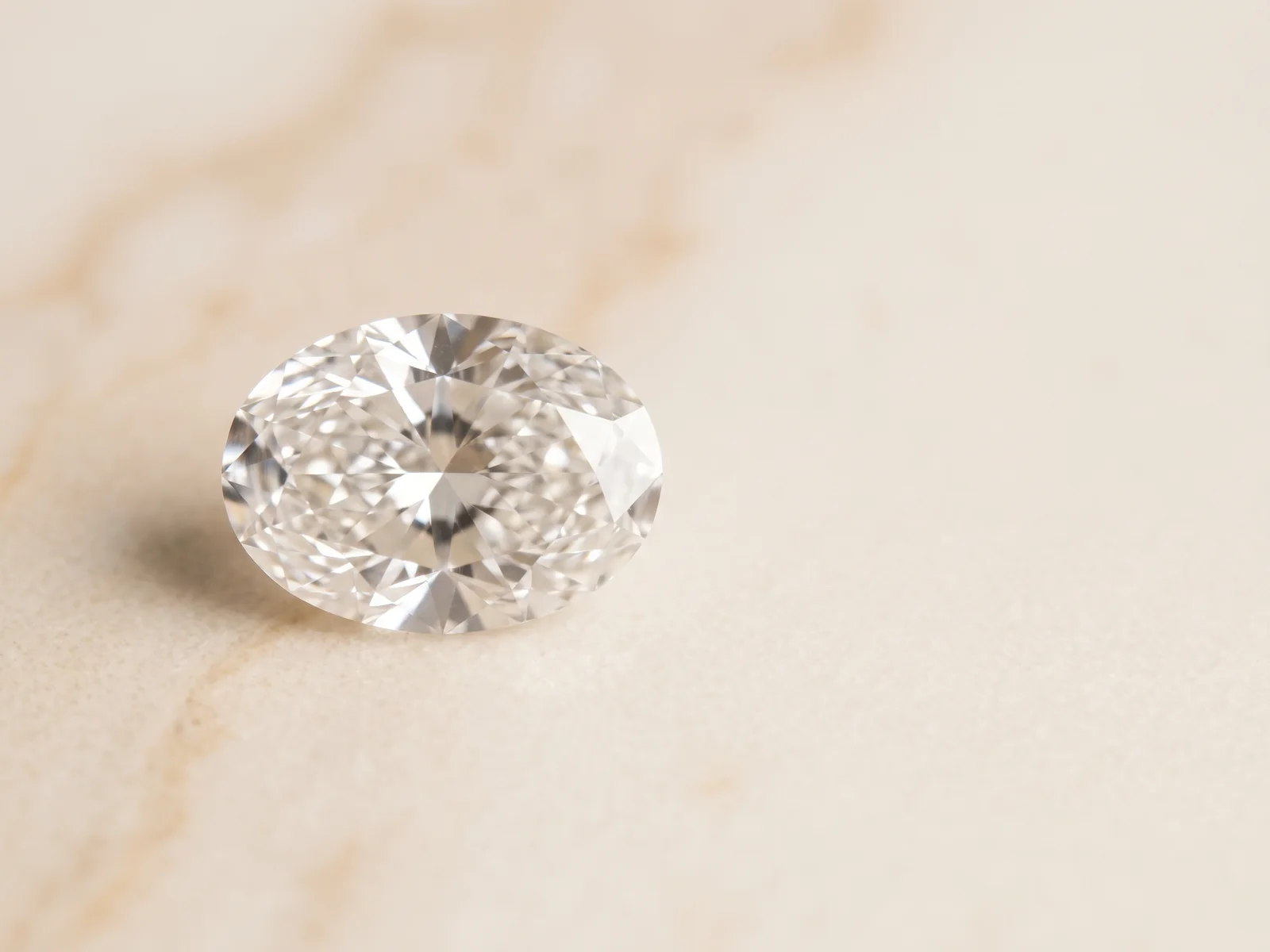
An oval diamond gives you the sparkle of a round with a longer, finger-flattering outline and more size for the carat. It also hides a few traps, from the bow-tie to weight carried in the belly, so here is exactly what to check.
 Reviewed by Raj Sood, Graduate Gemologist (GIA), AJP (GIA)Master jeweller and Graduate Gemologist (GIA) · reviewed 4 November 2026
Quick answer
An oval diamond is a modified brilliant cut with a smooth, elongated outline and usually 56–58 facets. Look for a length-to-width ratio of about 1.30–1.50, a faint bow-tie at most, even shoulders, H colour or better in white metal, eye-clean VS2–SI1 clarity, and a band that sits flush. It looks bigger than a same-weight round.
What is an oval diamond?
An oval diamond is a modified brilliant cut: it uses the same triangular and kite-shaped facets as a round brilliant, stretched around an elliptical outline. Most modern ovals have 56 to 58 facets, depending on whether the cutter adds a culet (a tiny flat facet at the bottom point) and how the pavilion (the lower half of the stone) is arranged.
Because the faceting is brilliant rather than stepped, an oval returns light as lively, scattered sparkle rather than the long flashes of an emerald or baguette. If you are not sure which look you prefer, our explainer on how step cuts and brilliant cuts differ shows the two side by side.
Every oval has the same parts: the table (the large flat top facet), the crown above the widest point, the girdle (the thin edge that runs around the outline), the pavilion below, and the two ends and two sides. How smoothly the outline curves between the ends and the sides, called the shoulders, decides whether a stone looks graceful or slightly boxy.
The oval belongs to the family of elongated fancy shapes, alongside the pear, marquise and moval. It is one of the 34 cuts we explain shape by shape, and if you are still choosing a shape at all, start with our overview of how each diamond shape looks and wears.
What is a modern oval cut diamond?
A modern oval cut diamond is the oval brilliant as it is cut today: a precise, symmetrical facet pattern planned to maximise brightness, with a thin, even girdle and a small or no culet. The modern oval brilliant is usually credited to the cutter Lazare Kaplan around the late 1950s or early 1960s, though oval-shaped diamonds existed long before that.
Older ovals, cut by hand in the 1800s and early 1900s, have broader facets, a higher crown, a deeper pavilion and often an open culet you can see through the table as a small dot. They look softer and more candlelit. Today you will mainly meet them in antique and estate jewellery, or as new stones cut in an old style.
| Modern oval brilliant | Antique or old-style oval | |
|---|---|---|
| Facets | 56–58, fine and evenly spread | Fewer, broader facets |
| Sparkle | Bright, fine, busy sparkle | Chunkier flashes, softer glow |
| Culet | None or very small | Often large and visible |
| Crown | Lower, flatter | Higher, more domed |
| Where you see it | Most new engagement rings | Antique, estate and vintage-style pieces |
Two newer relatives are worth knowing. The moval cut sits between a marquise and an oval, with softly pointed ends; our comparison of ovals and movals covers the differences. An elongated cushion has a similar length but squarer corners and often a "crushed ice" sparkle, explained in how an oval compares with an elongated cushion.
What is the best length-to-width ratio for an oval diamond?
The length-to-width ratio is the stone's length divided by its width, both taken from the grading report's measurements. A stone measuring 7.70 × 5.50 mm has a ratio of 1.40. The ratio decides how slim or full the oval looks, and it is the first number most people filter by.
| Ratio | How it looks | Who tends to choose it |
|---|---|---|
| 1.20–1.30 | Fuller, closer to a round | People who want a softer, rounder look |
| 1.30–1.40 | Balanced, the classic oval | Most engagement rings |
| 1.40–1.50 | Slimmer and more elongated | Long fingers, a more elegant line |
| Above 1.55 | Very long, almost a moval outline | A personal preference; bow-tie can be stronger |
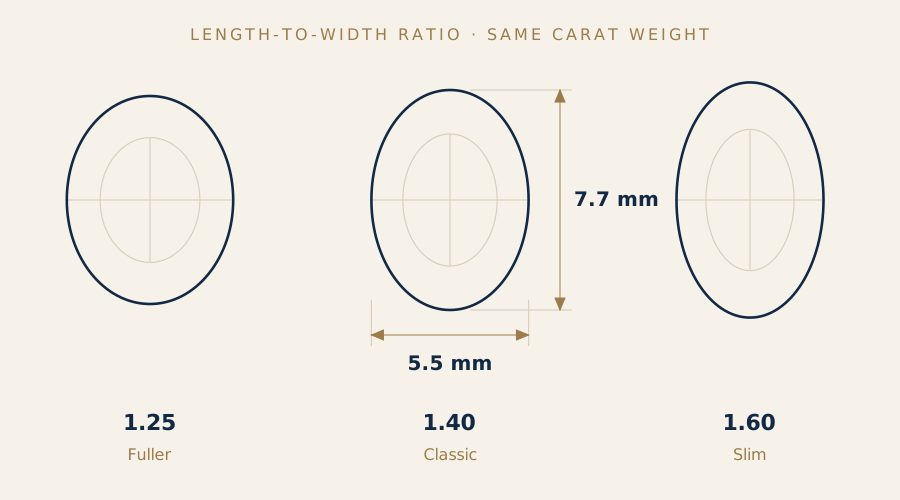
Ratio is a matter of taste rather than quality, and our page on the ideal oval ratio for different hands goes into it. Two stones with the same ratio can still look different because of the shoulders: rounded shoulders give a classic egg-like curve, while flatter, squarer shoulders look closer to a cushion. See rounded versus boxy oval shoulders for examples.
Do oval diamonds have a bow-tie?
Almost all do, to some degree. The bow-tie effect is a dark band, shaped like a bow-tie, running across the width of the stone. It appears where facets in the middle of the pavilion let light leak out or reflect your own head back at you, instead of returning light to your eye.
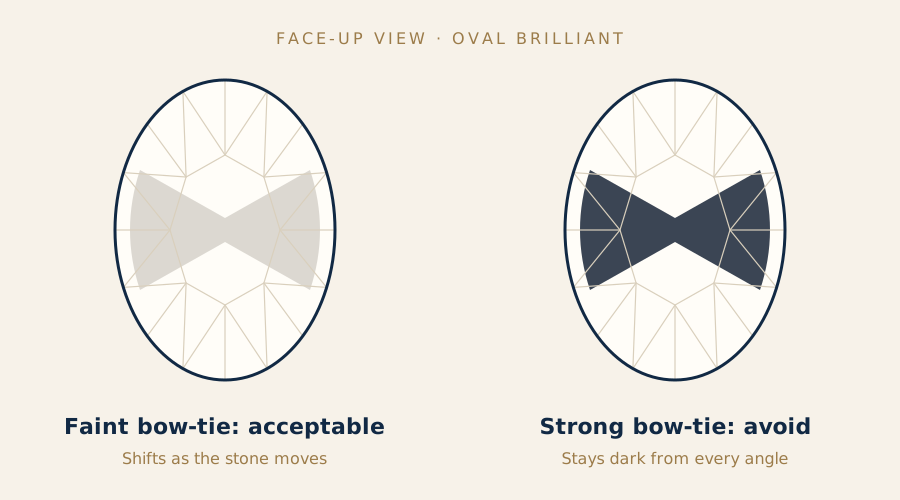
A faint bow-tie that comes and goes as the stone moves adds contrast and is perfectly acceptable. A strong one that stays dark from every angle is a cutting problem. Proportions matter: ovals with a depth of roughly 58–63% and a table of about 53–63% tend to perform well, and our oval proportions chart lists the ranges in detail. Still, numbers do not predict the bow-tie reliably, so you need to see the stone moving.
Related guideOval vs Round DiamondsNot sure which one is right?
Send us the stones you are looking at and our gemologist will tell you which to choose and why.
How big does an oval diamond look for its carat weight?
Ovals have a large face-up area for their weight, so they look bigger than a round of the same carat. A typical 1 carat round measures about 6.4 mm across; a 1 carat oval is usually around 7.7 × 5.5 mm, and the extra length makes it read larger on the hand. Our side-by-side look at ovals and rounds compares spread, sparkle and price.
| Carat weight | Typical size (length × width) at about 1.40 |
|---|---|
| 0.50 ct | about 6.0 × 4.3 mm |
| 0.75 ct | about 7.0 × 5.0 mm |
| 1.00 ct | about 7.7 × 5.5 mm |
| 1.50 ct | about 8.8 × 6.3 mm |
| 2.00 ct | about 9.7 × 6.9 mm |
| 3.00 ct | about 11.1 × 7.9 mm |
These are typical figures only. Some ovals are cut deep, with extra weight in the pavilion or a thick girdle, so a 1.20 carat stone can face up no larger than a well-cut 1.00 carat. You pay for that weight but cannot see it. Our guide on why some ovals carry hidden weight explains how to spot it from the depth percentage and measurements.
What colour and clarity should an oval diamond be?
Elongated shapes hold colour more than rounds, and in an oval it tends to gather at the two ends. For a white look:
- White gold or platinum: most people are happy from H colour or better; choose G or higher if you are sensitive to warmth.
- Yellow or rose gold: I or J usually looks just as white, because the metal warms everything around it.
- Above 2 carats: colour becomes easier to see, so many people move up one grade.
For clarity, aim for eye-clean, meaning no inclusions (internal characteristics) visible without magnification at normal viewing distance. Brilliant faceting hides small inclusions well, so VS2 or a carefully chosen SI1 is usually eye-clean in an oval. Inclusions under the table are usually the most visible, and anything breaking the surface near the girdle deserves a closer look. Our jewellery glossary defines each clarity term.
What is the best setting and oval engagement band for an oval diamond?
An oval has no sharp points, so it is one of the more practical fancy shapes to wear every day. The setting mainly shapes how the stone looks and how a wedding band sits beside it:
- Four claws: the classic choice, showing the most diamond. Claws are usually placed at the shoulders rather than the ends.
- Six claws: a little more security and a rounder look; useful for stones over 2 carats.
- Bezel: a thin rim of metal around the girdle. Very secure and modern, and it slightly masks colour at the ends.
- Halo: a ring of small diamonds that makes the oval look larger. Lab-grown or natural melee can be used.
- East-west: the oval set sideways across the finger for a less expected look.
An oval engagement band (the wedding band worn beside the ring) needs planning, because many oval settings sit low and wide. A straight band fits only if the head is raised enough to clear it. Otherwise a contoured or curved band, or a notched band, sits flush without a gap. Our guides to oval engagement ring styles and which wedding bands sit well beside an oval show each option.
Oval vs round, pear and moval: how do they compare?
| Oval | Round | Pear | Moval | |
|---|---|---|---|---|
| Outline | Smooth ellipse | Circle | One round end, one point | Ellipse with soft points |
| Typical ratio | 1.30–1.50 | 1.00 | 1.45–1.75 | 1.50–1.80 |
| Bow-tie | Common | No | Common | Common |
| Fragile point | No | No | Yes, one | Mild, two |
| Face-up size per carat | Large | Smaller | Large | Large |
| Price per carat | Usually below a round | Highest | Usually below a round | Usually below a round |
If you like the length but want more drama, the pear cut adds a point at one end; our oval versus pear guide goes through ratio, setting and wear. The marquise has two points and the longest look of all, while the heart shape is a more romantic, less common choice. The oval is the gentlest of the elongated shapes and the easiest to set and wear.
Natural or lab-grown oval diamond: what is the difference in price?
Ovals are cut from both natural diamond and laboratory-grown diamond. The two are the same material, carbon in a cubic crystal, with the same hardness (10 on the Mohs scale) and refractive index (2.42), so they look identical to the eye. Only lab testing tells them apart, and the grading report states the origin. Lab-grown ovals cost much less and are easy to find above 2 carats; natural ovals are rarer.
| 1 carat oval, G–H, VS–SI | Approximate price range (AUD) |
|---|---|
| Natural diamond | about $5,000–$11,000 |
| Lab-grown diamond | about $800–$2,500 |
Treat these as rough guides only; prices move with the market, and cut quality, ratio and report lab all shift them. Within ovals, carat, colour and clarity move the price most, followed by how well the stone faces up. An oval usually costs less per carat than a round of the same grades, partly because less of the rough crystal is lost when cutting it.
Shop oval diamonds
How to choose an oval diamond: step by step
- Read the report. Confirm the shape, measurements, carat, colour, clarity, polish and symmetry, and whether the stone is natural or lab-grown.
- Work out the ratio. Divide length by width; aim for about 1.30–1.50, or whatever looks right on your hand.
- Check depth and girdle. A depth well over 63% or a thick girdle can mean hidden weight and a smaller face-up size.
- Watch a 360° video. Look for a bow-tie that stays dark, and for inclusions near the ends.
- Look at the shoulders. Decide whether you prefer a rounded or slightly squarer outline.
- Plan the setting and band together. Choose claws or a bezel, and make sure your wedding band will sit flush before you commit.
Free consultation
Talk to a gemologist
Compare stones in person or online with Raj Sood, Graduate Gemologist (GIA), AJP (GIA).
Book a consultationFAQ
Common questions
Are oval diamonds cheaper than round diamonds?
Usually, yes. An oval typically costs less per carat than a round of the same weight, colour and clarity, and it looks bigger face-up.
What is the best ratio for an oval diamond?
Most people choose a length-to-width ratio between 1.30 and 1.50. Below about 1.30 it looks close to round; above 1.55 it becomes very slim and the bow-tie can be stronger.
How do I avoid a bad bow-tie in an oval diamond?
Ask for a 360° video and look at the stone face-up and moving. A faint bow-tie that comes and goes is normal; a dark band that never lightens is not.
What wedding band goes with an oval engagement ring?
If the oval sits low, a contoured, curved or notched band sits flush without a gap. A straight band works when the setting is raised high enough to clear it.
Is a modern oval cut diamond different from an antique oval?
Yes. A modern oval brilliant has finer, more precise facets and a small or no culet, giving bright, busy sparkle; antique ovals have broader facets and a softer, chunkier look.
Can you get lab-grown oval diamonds?
Yes. Lab-grown ovals are widely available in all sizes, cost considerably less than natural ovals and are graded on the same colour and clarity scales by labs such as IGI (GIA now uses a simplified descriptive system for lab-grown).

Ask a gemologist
Not sure which diamond to choose?
Raj Sood is a Graduate Gemologist (GIA) and master jeweller. Bring the stones you are considering, or send the reports, and he will tell you honestly which one is better and why.
Keep learning
Related guides
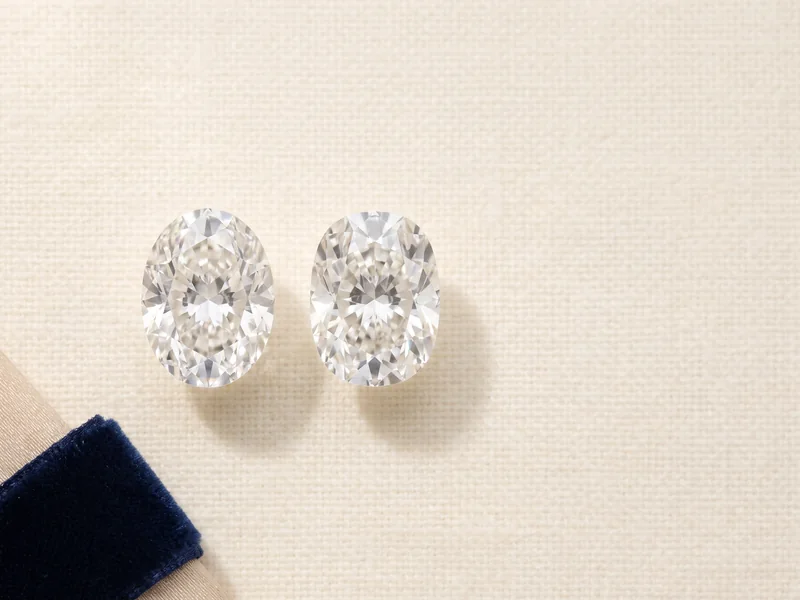
 Diamond ShapesBest Length-to-Width Ratio for an Oval Diamond?
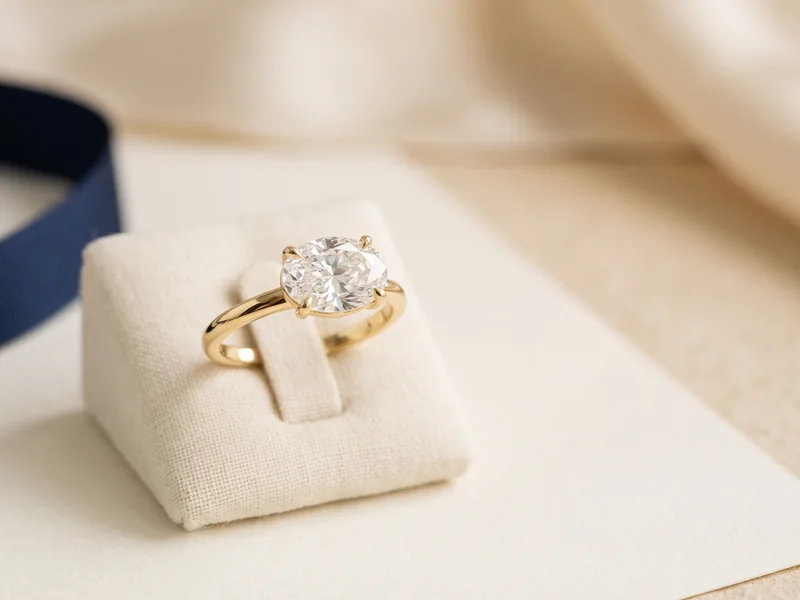
 Diamond ShapesOval vs Round Diamonds
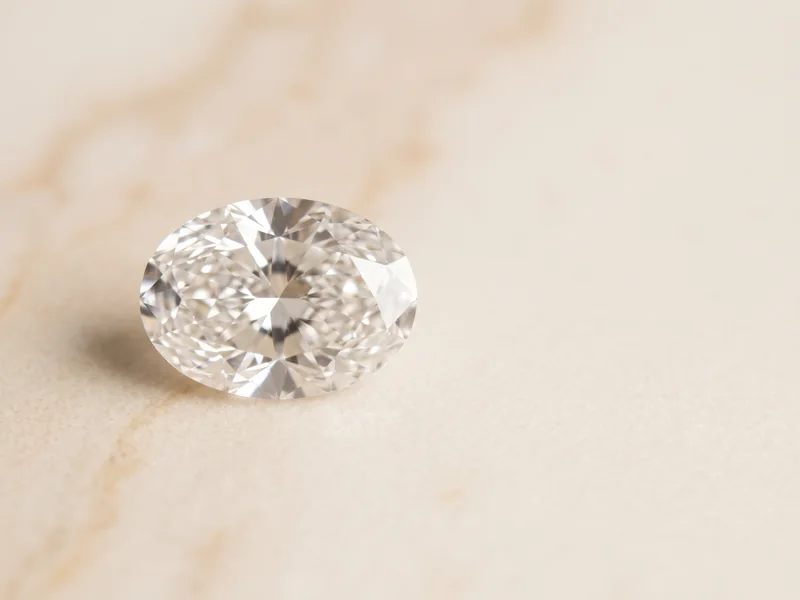
 Wedding Bands & EternityBest Wedding Band for Oval Engagement Rings
 Diamond ShapesWhy Some Oval Diamonds Hide WeightDiamond ShapesUnderstanding Diamond Shapes
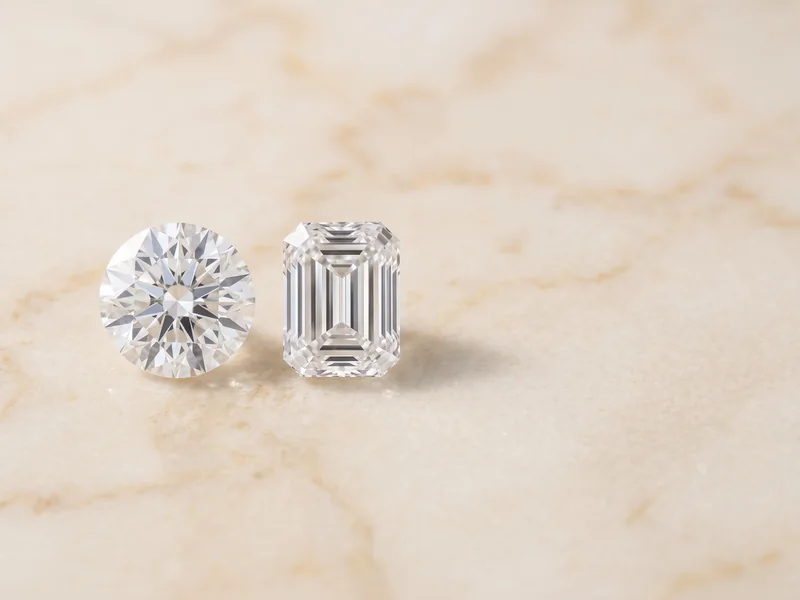 Diamond ShapesAll 34 Diamond Cuts: Every Shape Explained and Compared
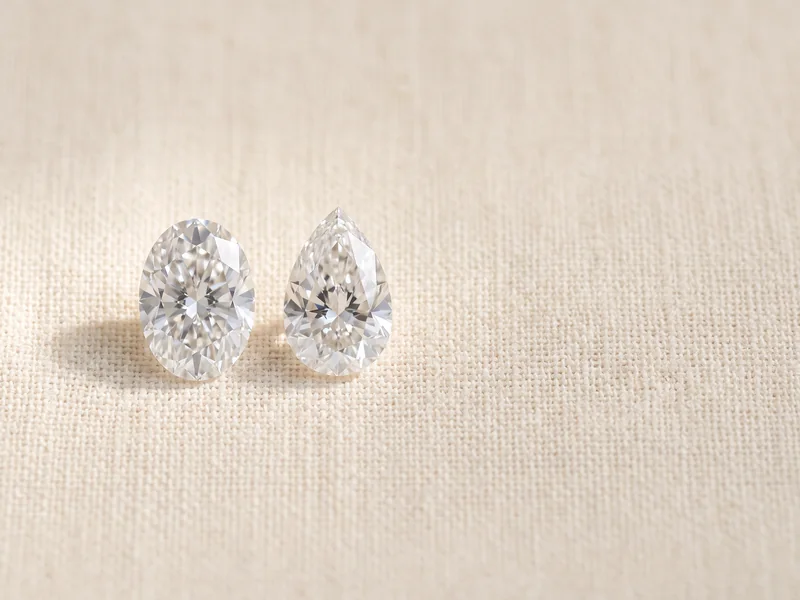 Diamond ShapesElongated Diamond Cuts: Oval, Pear, Marquise, Moval and More
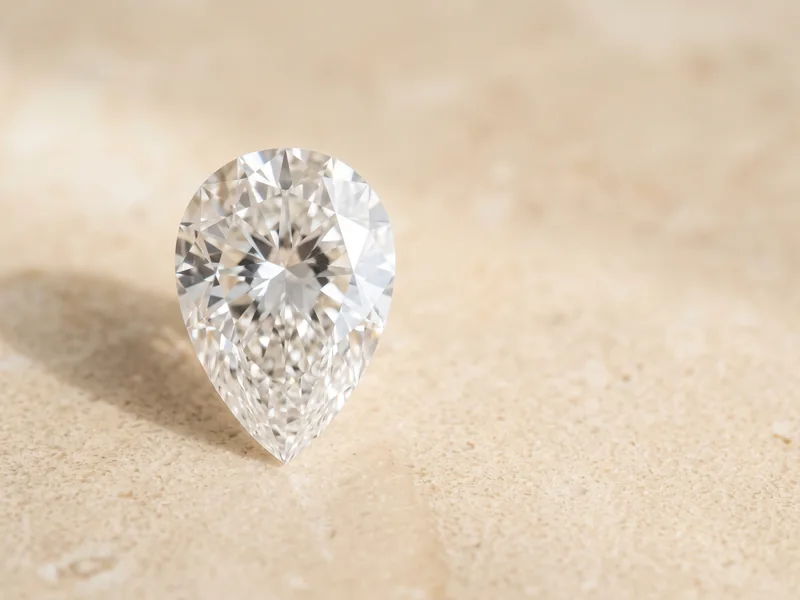 Diamond ShapesPear Cut Diamonds
Explore more
More guides on this topic
Education