
- Education
- Diamond Anatomy & Light
- Diamond Table and Depth Explained
Diamond anatomy & light
Diamond Table and Depth Explained
Diamond table and depth are the two proportion numbers printed on every grading report. They will not pick a diamond for you, but they quickly tell you which stones to look at more closely and which to skip.
 Reviewed by Raj Sood, Graduate Gemologist (GIA), AJP (GIA)Master jeweller and Graduate Gemologist (GIA) · reviewed 4 November 2026
Quick answer
Table percentage is the width of the top flat facet divided by the diamond's width; depth percentage is its height from table to culet divided by its width. For a round brilliant, a table of about 54–58% and depth of about 59–62.5% is a good starting range. Fancy shapes have their own ranges.
What are diamond table and depth percentages?
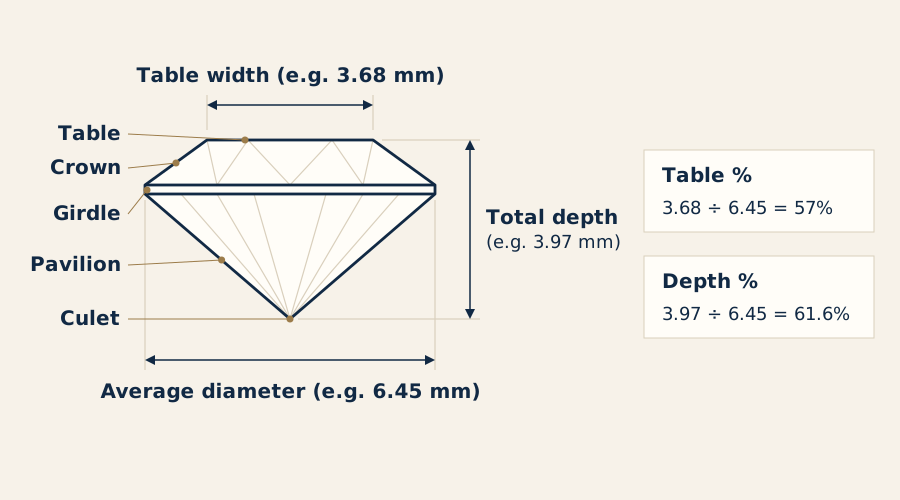
Every polished diamond has the same basic parts: the flat table on top, the sloping crown below it, the thin girdle around the edge, the deeper pavilion underneath and the culet, the point or tiny facet at the bottom. Our guide to the parts of a diamond goes through each one.
Diamond table percentage describes how wide the table is compared with the whole stone. Diamond depth percentage describes how tall the stone is, from the table down to the culet, compared with its width. Both are expressed as a percentage so that a 0.5 carat and a 3 carat diamond can be compared on the same scale.
These two numbers are the quickest proportion check you can make from a report. They do not describe the angles of the facets, which matter more, but a stone with a table or depth well outside the usual range almost always has a problem somewhere.
How are table and depth percentage calculated?
For a round diamond, the lab divides by the average girdle diameter. For fancy shapes such as ovals, pears and emerald cuts, it divides by the stone's width (the shorter side), not its length.
| Measurement | Formula | Worked example (round, 6.45 mm wide) |
|---|---|---|
| Table % | Table width ÷ average diameter × 100 | 3.68 mm ÷ 6.45 mm = 57% |
| Depth % | Total depth ÷ average diameter × 100 | 3.97 mm ÷ 6.45 mm = 61.6% |
| Fancy shapes | Same formulas, but divided by the width | An oval 5.80 mm wide and 3.54 mm deep = 61% depth |
Do not confuse depth percentage with the depth in millimetres in the measurements line (for example 6.43 × 6.47 × 3.97 mm). The millimetre figure is the actual height; the percentage tells you how that height compares with the width, which is what affects appearance. If a term on the report is unfamiliar, our plain-English jewellery glossary defines it.
What is a good diamond table and depth for a round?
The round brilliant is the only shape for which the proportions have been studied closely enough to give a reliable range. GIA's cut grade weighs the full combination of angles, so an Excellent grade is possible across a band of table and depth values rather than at one perfect number.
| Table % | Depth % | What you usually see | |
|---|---|---|---|
| Shallow | Above 60% | Below 58% | Larger face-up, but risk of a glassy ring or watery look |
| Common target | 54–58% | 59–62.5% | Balanced brightness, fire and size for the weight |
| Deep | Below 53% | Above 63% | Smaller face-up for the weight; risk of a dark centre |
These are starting points, not rules. Two diamonds with the same table and depth can still perform differently because of their crown and pavilion angles. That is why the cut grade on a GIA report is a better summary for rounds than either percentage alone.
As a rough guide, a larger table tends to give more white brightness and a smaller table with a taller crown tends to give more coloured flashes of fire. Our guide to fire, brilliance and scintillation explains the trade-off.
What happens if a diamond is too deep or too shallow?
Light enters through the table and crown, bounces off the pavilion facets and should come back out of the top towards your eye. Change the depth too far in either direction and that path breaks.
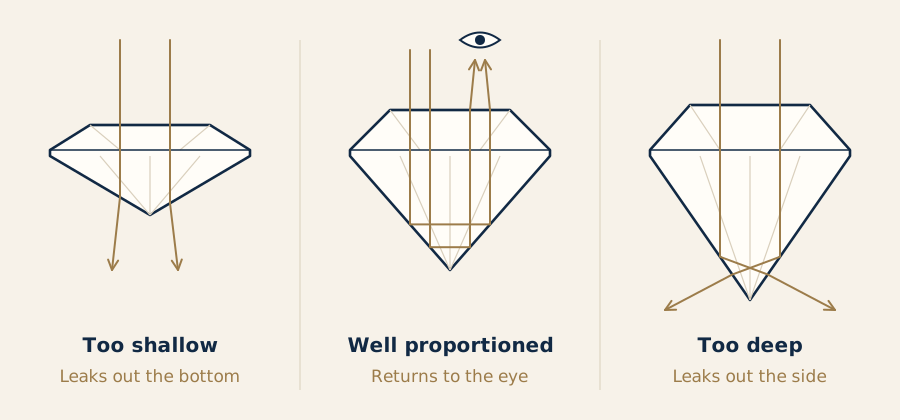
- Too shallow: light passes straight through the pavilion. The centre can look see-through or watery, and in rounds the girdle may reflect as a grey ring inside the table, called a fisheye. In fancy shapes the see-through patch is called a window.
- Too deep: light escapes out the sides of the pavilion. The centre can look dark, which in rounds is called a nailhead, and the stone carries extra weight underneath, so it faces up smaller than its carat weight suggests.
- Uneven depth: a stone can be the right overall depth but have a thick girdle or a deep pavilion and low crown. That hides weight in the girdle or pavilion and can still leak light.
These leaks are all forms of light leakage. In elongated shapes, part of the same effect shows up as a bow-tie across the middle. A watery look from poor proportions is different from a cloudy look caused by the material itself, which our guide to transparency and haziness covers.
Not sure which one is right?
Send us the stones you are looking at and our gemologist will tell you which to choose and why.
What diamond table and depth should you look for in each shape?
Fancy shapes are cut to many different styles and there is no single correct proportion for any of them. The ranges below are the starting points many gemmologists use when shortlisting; a stone just outside them can still look excellent, and one inside them can still disappoint.
| Shape | Table % | Depth % |
|---|---|---|
| Round | 54–58 | 59–62.5 |
| Oval | 53–63 | 58–63 |
| Pear | 53–63 | 58–64 |
| Marquise | 53–63 | 58–62 |
| Heart | 53–63 | 58–62 |
| Princess | 67–74 | 68–75 |
| Cushion | 58–68 | 61–68 |
| Radiant | 61–69 | 61–67 |
| Emerald | 61–69 | 61–68 |
| Asscher | 61–69 | 61–68 |
Step cuts and square brilliants are naturally deeper, which is why a princess at 72% depth can be perfectly normal while a round at 72% would be a poor cut. For the detail on each shape, see our proportion charts for pear diamonds, cushion diamonds, radiant diamonds and emerald cuts.
Why don't table and depth alone tell you how a diamond looks?
Table and depth are averages of a three-dimensional shape. They cannot tell you whether the facets are at the right angles, whether the stone is cut evenly from side to side, or how much light actually comes back to your eye. Four other things fill the gap:
- Crown and pavilion angles: the real drivers of light return in a round.
- Girdle thickness and culet: a thick girdle adds depth without adding beauty; a large culet can show as a dot in the centre.
- Symmetry: both the facet symmetry on the report and how evenly the light pattern looks. See facet symmetry vs optical symmetry.
- Light performance images: ASET and Idealscope images show where a stone returns light and where it leaks.
An ASET (Angular Spectrum Evaluation Tool) image colours the stone by where its light comes from: red for bright light from high angles, green for softer light from lower angles, blue for the contrast created by the viewer's head, and white or black patches where light leaks through. Extinction is the name for areas that stay dark in normal lighting; a little gives contrast, too much makes the stone look dull.
Related guideDiamond Crown & Pavilion Angles ExplainedOur light performance guide explains how these fit together, and why we always look at the stone, or a good video of it, before trusting the numbers.
How does diamond depth affect face-up size and price?
Diamonds are priced by carat weight, but you see them from the top. A deep stone puts more of its weight below the girdle, where it adds nothing to the face-up size. A shallow stone spreads its weight wide but risks looking lifeless.
That is the main reason two diamonds of the same carat weight can look different sizes. When comparing stones, look at the millimetre measurements as well as the weight; our guide to spread and face-up size shows how. Cushions are a common example of hidden weight, covered in cushion depth and hidden weight.
For elongated shapes, depth also interacts with outline: an oval or pear with the same weight can look longer or shorter depending on its length-to-width ratio as well as its depth.
Where do you find table and depth on a grading report?
On a GIA report, depth and table percentages appear in the proportions section and on the profile diagram, with table usually rounded to the nearest whole percent and depth to the nearest tenth of a percent. IGI and other labs show the same two figures, usually beside the measurements line.
Both natural and laboratory-grown diamonds are measured the same way, so the same ranges apply whichever you choose. If you are comparing several stones, we can pull the proportions for each and tell you which are worth seeing.
Compare proportions in our diamond stock
How to check table and depth when choosing a diamond
- Find the two percentages on the report, and note which shape you are looking at.
- Compare them with the shape's range. Use the table above as a first filter, not a final answer.
- Check the measurements. Compare millimetre width and length with other stones of similar weight to spot hidden depth.
- Look at the girdle and culet. Thick or very thick girdles and large culets are worth questioning.
- Watch a video or see the stone. Look for a dark centre, a see-through window or a grey ring in the table.
Free consultation
Talk to a gemologist
Compare stones in person or online with Raj Sood, Graduate Gemologist (GIA), AJP (GIA).
Book a consultationShop this shape
FAQ
Common questions
What is the ideal table percentage for a round diamond?
Many people start with a table of about 54–58%. A stone slightly outside that can still be beautifully cut, because the crown and pavilion angles matter more than the table on its own.
What is the ideal depth for a round diamond?
About 59–62.5% is a common starting range. Much deeper and the stone tends to face up small and dark in the centre; much shallower and it can look glassy.
Is a higher diamond depth percentage better?
No. Higher depth means more of the weight sits underneath, so the diamond looks smaller for its carat weight and can lose brightness.
Why is a princess cut's depth so much higher than a round's?
Square and step-cut shapes are cut with deeper pavilions to return light through their straight-sided outlines, so their normal depth range sits higher than a round's.
Do lab-grown diamonds have different ideal proportions?
No. Laboratory-grown and natural diamonds have the same optical properties, so the same table and depth ranges apply to both.
Is depth percentage the same as depth in millimetres?
No. Millimetre depth is the stone's actual height. Depth percentage compares that height with the width, which is what tells you how the stone will look.
Terms in this guide

Ask a gemologist
Not sure which diamond to choose?
Raj Sood is a Graduate Gemologist (GIA) and master jeweller. Bring the stones you are considering, or send the reports, and he will tell you honestly which one is better and why.
Keep learning
Related guides
 Diamond Anatomy & LightDiamond Crown & Pavilion Angles Explained
 Diamond Anatomy & LightWhy Same-Carat Diamonds Can Look Different
 Diamond Anatomy & LightDiamond Spread and Face Up Size GuideDiamond Anatomy & LightAnatomy of a diamond: table, crown, girdle, pavilion and culet explained
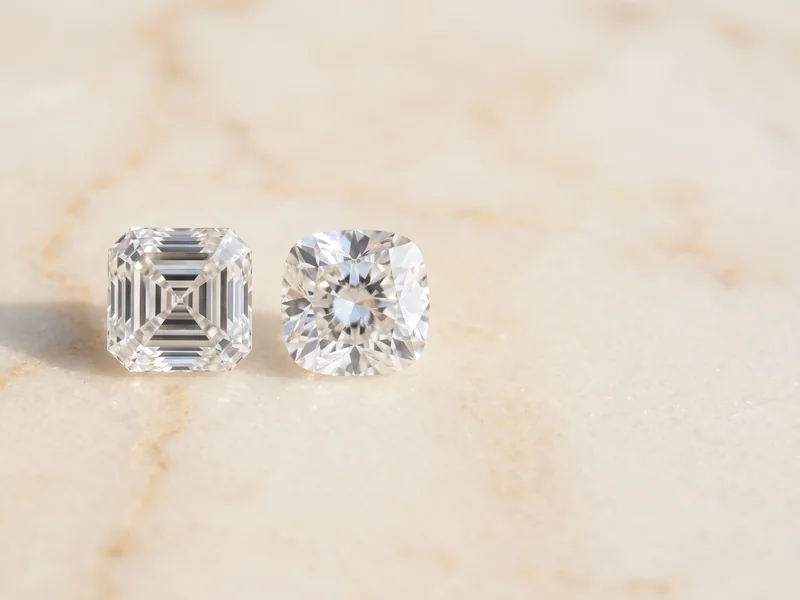 Diamond ShapesCushion Diamond Depth and Hidden Weight
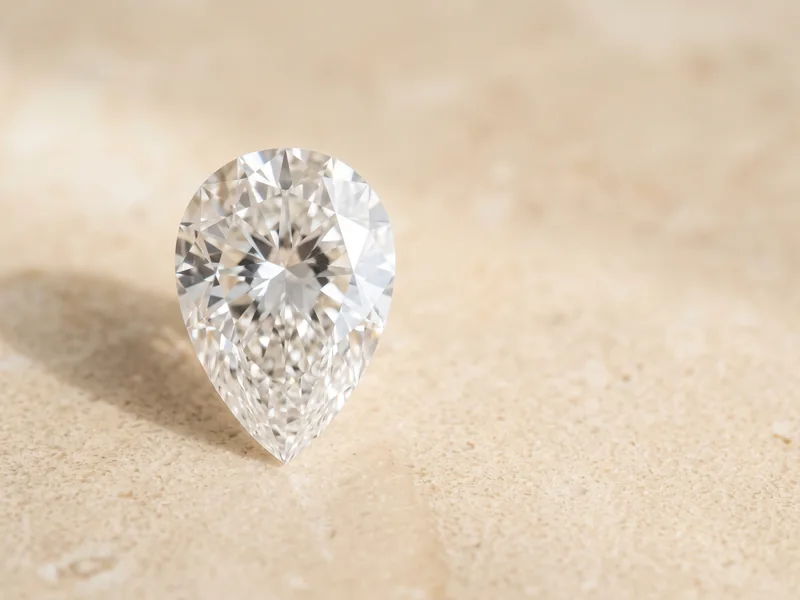 Diamond Anatomy & LightIdeal Proportions Chart: Pear Diamonds
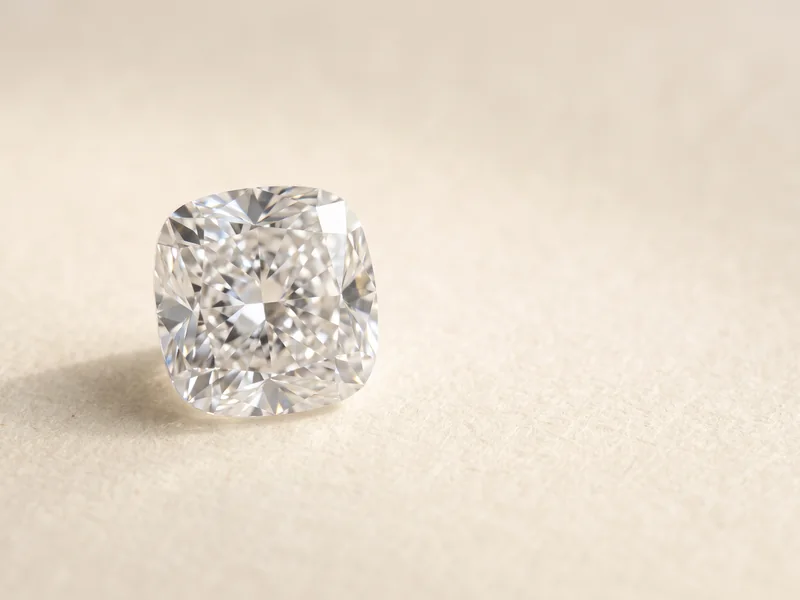 Diamond Anatomy & LightIdeal Proportions Chart: Cushion Diamonds
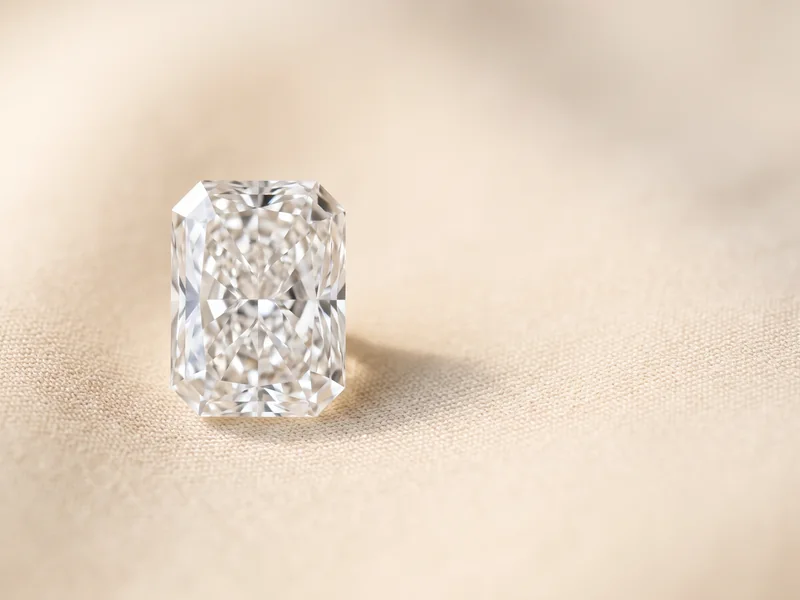 Diamond Anatomy & LightIdeal Proportions Chart: Radiant Diamonds
Explore more
More guides on this topic
Education