
- Education
- Engagement Rings & Settings
- Bezel vs Claw Setting: Which Is Better for Everyday Wear?
Engagement Rings & Settings
Bezel vs Claw Setting: Which Is Better for Everyday Wear?
The setting decides how safe your stone is on a busy hand, how it catches the light and how often the ring needs a visit to the jeweller. Here is the bezel vs claw setting choice explained from the repair bench, not just the shop window.
 Reviewed by Raj Sood, Graduate Gemologist (GIA), AJP (GIA)Master jeweller and Graduate Gemologist (GIA) · reviewed 4 November 2026
Quick answer
In a bezel vs claw setting comparison, a bezel wraps the stone's whole edge in metal, so it protects better against knocks and snags and suits active hands. Claws hold the stone with four to six metal tips, letting in more light for extra sparkle, but they wear thin and need checking and retipping every few years.
What is the difference between a bezel vs claw setting?
The setting is the part of a ring that holds the stone. Almost every engagement ring uses one of two methods. Claws (called prongs in the US) are thin metal posts that rise around the stone and bend over its edge. A bezel is a continuous rim of metal that wraps around the stone's outer edge, the girdle (the narrow band where the top and bottom halves of the stone meet).
That one difference changes nearly everything about how a ring lives on the hand: how secure the stone is, how much light reaches it, how high it sits, whether it snags on knitwear and how much maintenance it needs. Our guide to every engagement ring setting style covers halos, pavé, tension-look and the rest. This page focuses on the two you will meet most often, and on how each behaves after five, ten and twenty years of daily wear, which is what we see when rings come in for repair.
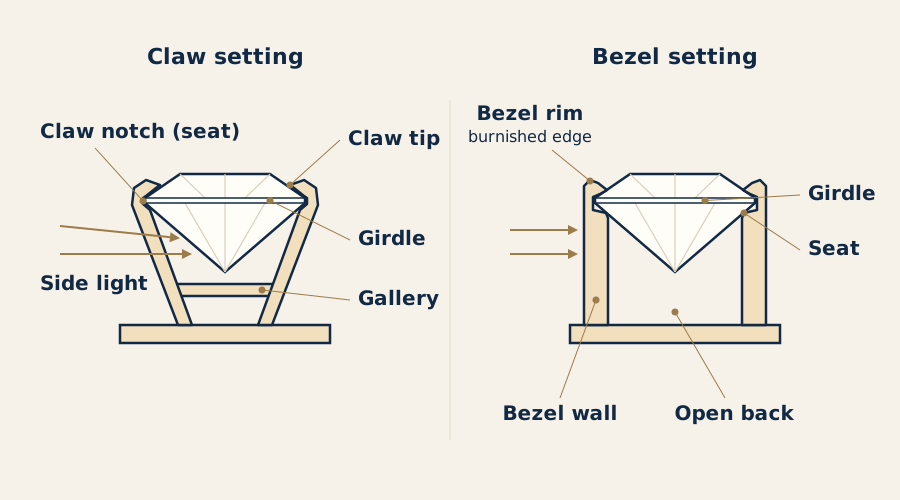
- Claw setting pros: more light into the stone, more of the stone visible, a classic look, easy to repair claw by claw.
- Claw setting cons: tips wear and can snag, a bent claw can release the stone, higher profile is more exposed to knocks.
- Bezel setting pros: the edge is fully protected, smooth with nothing to catch, sits lower, suits softer gems.
- Bezel setting cons: slightly less light and visible stone, more metal and labour, harder to reset or swap the stone.
What is a bezel setting and how does it hold a stone?
A bezel starts as a metal collar, either cast as part of the ring or made from a strip of gold or platinum. The setter cuts a ledge, called a seat, just inside the top of the collar, drops the stone onto it, then pushes the top edge of the metal over the girdle all the way round. Finally the metal is burnished: rubbed smooth with a polished steel tool so the edge sits tight against the stone with no gap. The metal at the rim is usually thinned to somewhere around 0.5–1.0 mm so it can be moved, with thicker walls below for strength.
There are several kinds of bezel, and the differences matter for everyday wear:
- Full bezel: metal all the way around. The most protective option.
- Half bezel setting: metal on two opposite sides only, leaving the other two sides open. More light and a lighter look, with good protection where the hand meets most knocks, usually the sides of the finger.
- Open-back bezel: the base of the collar is cut away so light and cleaning water reach the underside of the stone.
- Closed-back bezel: fully enclosed underneath. Common in antique jewellery and for foiled or opaque stones, but dirt and soap can collect inside and cannot be cleaned out.
- Flush or gypsy setting: a bezel sunk into the band itself, so the stone sits level with the metal. Very hard-wearing for bands and men's rings.
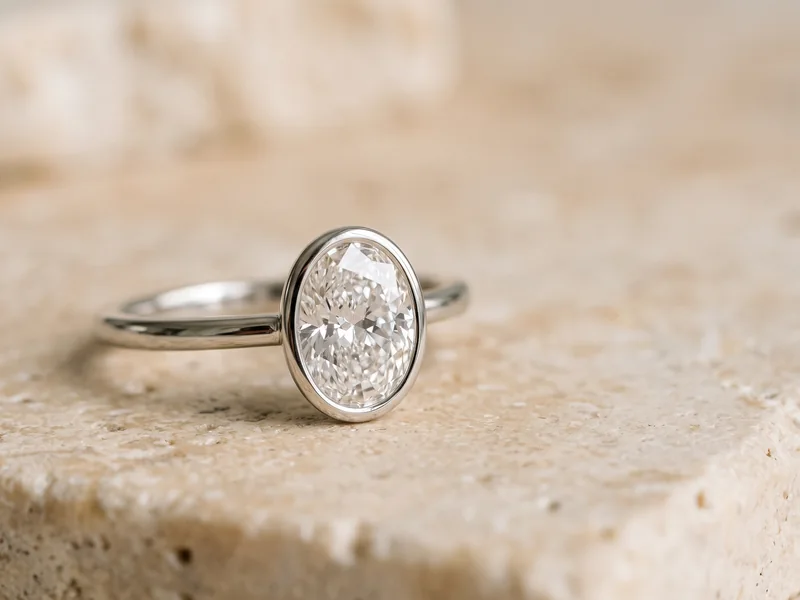
For centre stones, see our collection of bezel set engagement ring designs, from slim modern collars to softly rounded vintage edges. Bezels also suit bands well, because a band takes more knocks than a raised centre stone; our page on bezel-set diamond wedding bands explains how small stones are set into the band itself.
How does a claw setting hold a diamond?
In a claw setting, the stone sits in a head or basket: a set of upright claws joined by one or two rings of metal underneath, called the gallery. The setter cuts a small notch into the inside of each claw at the height of the girdle, presses the stone into those notches, then bends the claw tops over the crown (the upper half of the stone) and files and polishes each tip to shape. On a typical 1 carat centre, each claw is roughly 0.8–1.2 mm across.
Claw count is the first big choice. Four claws show more of the stone and give round diamonds a slightly squarer outline from above. Six claws spread the load, keep a round looking round and leave the stone held even if one claw fails. Our page on four-claw vs six-claw solitaires compares them in detail.
The shape of each claw tip matters too. Round claws are the everyday standard; eagle claws come to a fine point; tab claws are flat and wide; V-claws wrap a pointed corner; double claws pair two thin claws at each position. Each is covered in round, eagle, tab, V-prong and double claws compared, and our page on how claw styles change the look of a ring shows the same stone in each style. If your stone has corners or a tip, such as a princess, pear or marquise, read where claws should sit on pointed shapes before choosing.
Related guideFour-Claw vs Six-Claw Solitaire Engagement RingsIs a bezel setting more secure than claws?
For everyday knocks and snags, yes. A full bezel protects the whole girdle, which is the part of the stone most likely to chip when it hits a bench, a door frame or a dumbbell. There is also no single point of failure: a stone in a bezel cannot be lost because one tip wore away, which is the most common way stones are lost from claws.
It helps to understand how each setting actually fails:
| Claw setting | Bezel setting | |
|---|---|---|
| Most common problem | Tips wear thin and the stone works loose | Rim wears thin after many years |
| Snag risk | A tip catches on wool or hair and lifts | Very low; the edge is smooth |
| Hard knock | Can bend a claw and release the stone | Can dent the wall and press on or loosen the stone |
| Warning signs | Stone moves, tip feels sharp or catches | Visible gap at the rim, stone rattles |
| Chance of losing the stone | Higher if checks are missed | Lower, but not zero |
A bezel is not indestructible. A heavy blow can push the wall inward, and the top of the stone is still exposed. But for nurses, tradies, gardeners, rock climbers, gym regulars and parents of small children, a bezel is usually the more sensible ring setting for an active lifestyle. A half bezel or a six-claw head with thicker claws are middle-ground choices.
Not sure which one is right?
Send us the stones you are looking at and our gemologist will tell you which to choose and why.
Do bezel settings make diamonds look smaller?
A little. A bezel covers a thin margin around the edge of the stone, usually a fraction of a millimetre, so slightly less diamond shows face-up than in a claw setting. On a 6.5 mm round (about 1 carat), that difference is visible side by side but rarely noticed on the hand. In white gold or platinum, the bright rim blends with the stone and can make it read a touch larger from a distance.
Light matters more than size. Most of the light that creates sparkle enters through the top, but some also enters through the sides of the pavilion (the lower half). Claws let that side light in; a full bezel blocks it, so a bezel-set diamond can look a little less lively in some lighting, particularly under soft indoor light. Open-back bezels, slimmer rims and half bezels recover much of the difference.
A bezel in yellow or rose gold also reflects warm colour into the stone. That flatters a warmer diamond (around I–K colour) and coloured gems, but can tint a very white diamond. Claws, being thin, have much less effect on colour. If maximum sparkle is your top priority, claws win; if protection comes first, the trade-off is modest.
How do bezel and claw settings wear over the years?
Every time a ring brushes a desk, a steering wheel or a shopping trolley, a tiny amount of metal is lost or moved. On claws that wear is concentrated on a few small tips, so it adds up quickly. On a bezel it is spread around the whole rim, so it takes much longer to matter.
Metal choice changes how this happens. Platinum tends to move rather than wear away, so claws flatten and spread and develop a soft matte look, called patina. 18ct gold loses metal more readily, and 18ct white gold is usually rhodium plated (a thin coat of a bright white metal), which wears off over one to a few years and needs replating to stay bright white.
| Years of daily wear | Typical claw setting | Typical bezel setting |
|---|---|---|
| 1–3 years | Tips start to round off; polish and check | Light scratches on the rim; polish |
| 3–10 years | Many rings need some or all claws retipped | Usually little more than polishing |
| 10–20 years | Retipping again, or a new claw head | Rim may need re-burnishing or rebuilding |
| 20+ years | Often a new head | Often a rebuilt bezel |
Retipping means adding new metal to a worn claw tip, usually with a laser welder or by soldering, then reshaping it. Our page on when ring claws need retipping shows what a worn tip looks like. As for how often claws should be retipped, there is no fixed number; it depends on your hands, the metal and the claw thickness, which is why a check every 6–12 months is the safest habit.
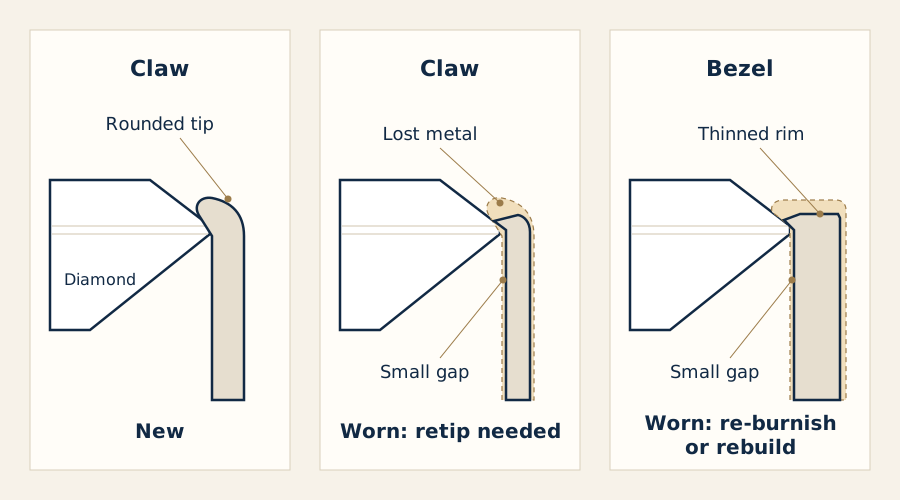
One more repair point: resetting. Moving a stone out of claws is simple, as the claws are lifted and re-closed. A bezel has to be opened up and often rebuilt, so if you think you may upgrade or swap the centre stone later, claws make that easier.
Bezel vs claw setting: which suits your lifestyle and stone?
This comparison of bezel setting vs prong (claw) setting brings the main points together:
| Claw setting | Full bezel | Half bezel | |
|---|---|---|---|
| Protection of the edge | Partial | Full | Good on two sides |
| Snagging on clothes and hair | Possible | Very low | Low |
| Light and sparkle | Highest | Slightly less | Close to claws |
| Visible stone size | Largest | Slightly smaller | In between |
| Height on the finger | Usually higher | Usually lower | Usually lower |
| Cleaning | Easy; open to brush and water | Harder; dirt can sit at the rim | Moderate |
| Routine maintenance | Regular checks and retipping | Mostly polishing | Checks on the open claws or corners |
| Swapping the stone later | Simple | More involved | More involved |
| Suits softer gems | With care | Very well | Well |
| Look | Classic, airy | Modern, sleek or vintage | Modern, open |
If your work or hobbies are hard on your hands, or you wear the ring around the clock, lean towards a bezel or half bezel. If you want the stone as bright and visible as possible and you are happy to keep up with checks, claws are a fine everyday choice. For an overview of every other way stones can be held, including channel, pavé and flush settings, see our diamond and gemstone setting guide.
Which gemstones need a bezel for everyday wear?
Two properties decide how a stone copes with daily wear. Hardness, measured on the Mohs scale from 1 to 10, is resistance to scratching. Toughness is resistance to chipping and breaking. A stone can be hard but brittle, and the girdle is where chips usually start, so tougher protection helps softer or more fragile stones most.
| Stone | Mohs hardness | Everyday note | Setting to consider |
|---|---|---|---|
| Diamond (natural or lab-grown) | 10 | Can still chip along cleavage planes | Claws or bezel |
| Moissanite (lab-created) | 9.25 | Tough and hard | Claws or bezel |
| Sapphire and ruby (natural or lab-created) | 9 | Tough; very good for daily wear | Claws or bezel |
| Spinel | 8 | Good for daily wear | Claws or bezel |
| Aquamarine and morganite | 7.5–8 | Scratches show over time | Claws with care, or bezel |
| Emerald | 7.5–8 | Often included and brittle | Bezel or protective claws |
| Tanzanite | 6–6.5 | Soft with strong cleavage | Bezel |
| Opal | 5.5–6.5 | Soft and can crack | Bezel |
Natural and lab-grown diamonds are the same material, with the same hardness, so the setting advice is identical for both. For coloured stones, our page on how durable each gemstone is for daily wear goes stone by stone, and we explain why a tanzanite usually needs extra protection in tanzanite's trade-off between beauty and everyday durability.
A caution from the setter's side: setting a bezel puts steady pressure on the girdle as the metal is pushed over. With brittle or heavily included stones such as emerald and tanzanite, that work needs a careful, experienced setter. Pointed shapes need thought too, since the tips are thin: a bezel or V-claws are the usual ways of protecting the tips of pear, marquise and princess cuts.
How much do bezel and claw settings cost in Australia?
A bezel generally uses more metal than a set of claws and takes longer to fit and burnish, so it often costs a little more for the same stone size and metal. Over the life of the ring, claws usually need more maintenance. Approximate ranges in Australia, for the setting and work only (no centre stone):
| Item | Approximate price range (AUD) |
|---|---|
| Claw solitaire setting, 18ct gold | about $1,200–$2,800 |
| Bezel solitaire setting, 18ct gold | about $1,400–$3,200 |
| Platinum version of either | usually several hundred dollars more |
| Retip one claw | about $50–$120 |
| Retip all four or six claws | about $150–$450 |
| Replace a claw head | about $250–$600 |
| Re-burnish or tighten a bezel | about $80–$250 |
| Rebuild a worn bezel | about $300–$800 |
These are broad guides only. Prices move with the metal market, the stone size and the design, and a repair can only be priced once the ring has been seen.
Design your ring or book a setting check
How do you choose between a bezel and claw setting? Step by step
- Look at your hands' week. List your work, sport and hobbies. Frequent knocks, gloves or grabbing toddlers point towards a bezel or half bezel.
- Check the stone's toughness. Diamond, sapphire and ruby are fine in claws; tanzanite, opal and emerald are safer in a bezel.
- Decide sparkle versus protection. Claws give the brightest look; a bezel gives the calmest wear. A half bezel sits between them.
- Consider the shape. Any corners or points need V-claws, extra claws or a bezel.
- Choose the metal. Platinum claws wear by moving metal; 18ct white gold may need regular replating.
- Plan the band. Make sure a wedding band sits comfortably beside a bezel's rim or a claw head's gallery.
- Plan the maintenance. Book a check every 6–12 months, and budget for retipping if you choose claws.
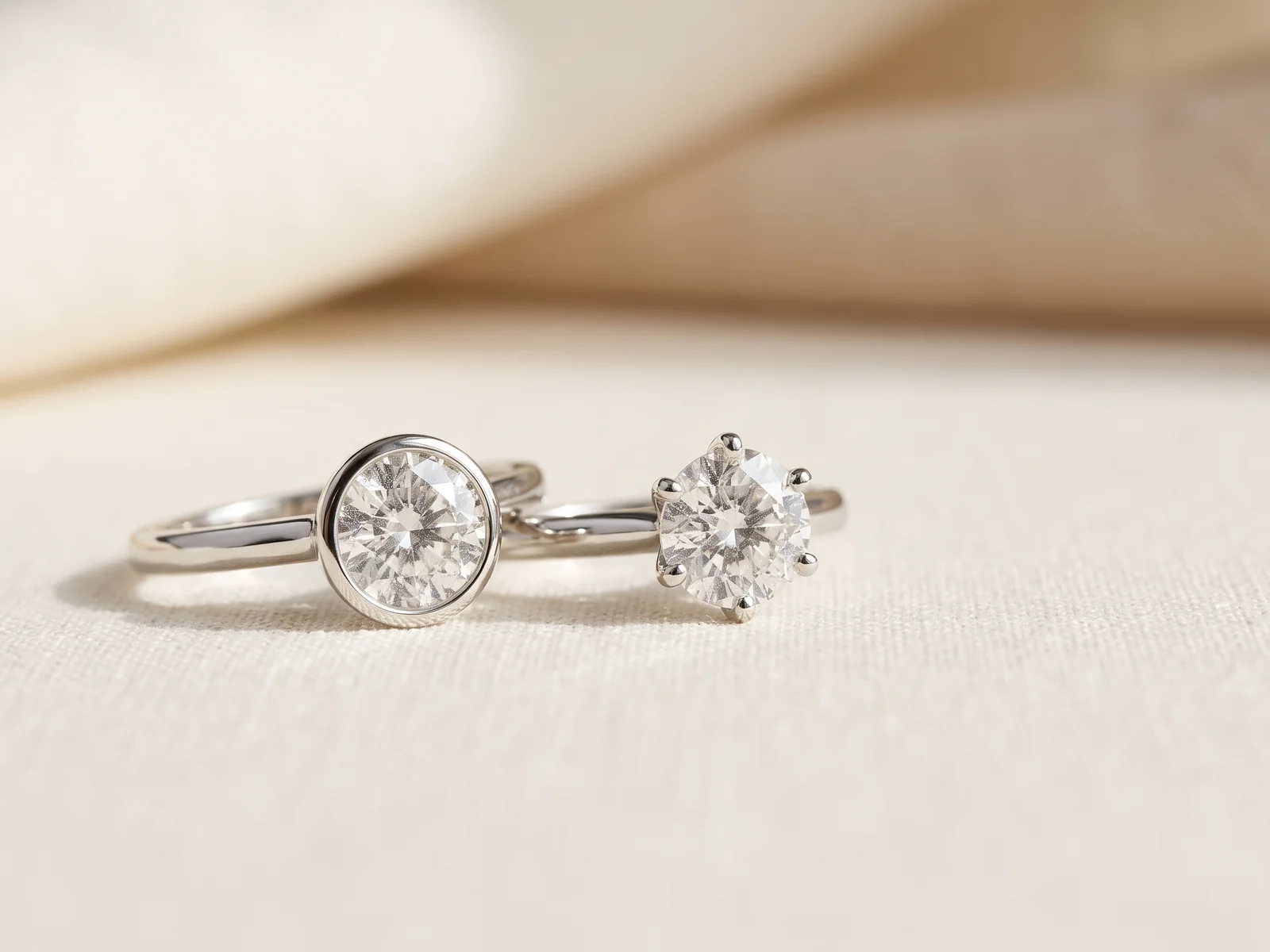
Any term on this page you are unsure of is explained in our jewellery glossary. If you would like to see a bezel and a claw head side by side, a modern bezel solitaire next to a six-claw ring shows the difference in a few seconds.
Free consultation
Talk to a gemologist
Compare stones in person or online with Raj Sood, Graduate Gemologist (GIA), AJP (GIA).
Book a consultationShop this shape
FAQ
Common questions
Is a bezel setting more secure than a claw setting?
Yes, for everyday knocks and snags. A full bezel protects the whole edge of the stone and has no single tip that can wear through, although a very hard blow can still dent it.
Do bezel settings make diamonds look smaller?
Slightly, because the rim covers a thin margin around the edge. In white metal the bright rim blends with the stone, so on the hand the difference is usually small.
How often should claws be retipped?
It varies with your hands, the metal and the claw thickness. Many everyday rings need some claws retipped within roughly 3–10 years, which is why a check every 6–12 months is recommended.
Are bezel settings hard to clean?
Open-back bezels clean easily with warm soapy water and a soft brush. Closed-back bezels can trap dirt and moisture underneath, which cannot be removed at home.
What is a half bezel setting?
A half bezel has metal on two opposite sides of the stone and leaves the other sides open. It gives good side protection while letting in more light than a full bezel.
Which setting suits an active lifestyle?
A full or half bezel usually suits active hands better, because the edge is protected and there is nothing to snag. A low six-claw head with thicker claws is another option if you prefer claws.
Terms in this guide

Ask a gemologist
Not sure which diamond to choose?
Raj Sood is a Graduate Gemologist (GIA) and master jeweller. Bring the stones you are considering, or send the reports, and he will tell you honestly which one is better and why.
Keep learning
Related guides
 Engagement Rings & SettingsBezel Set Engagement Rings
 Engagement Rings & SettingsFour-Claw vs Six-Claw Solitaire Engagement Rings
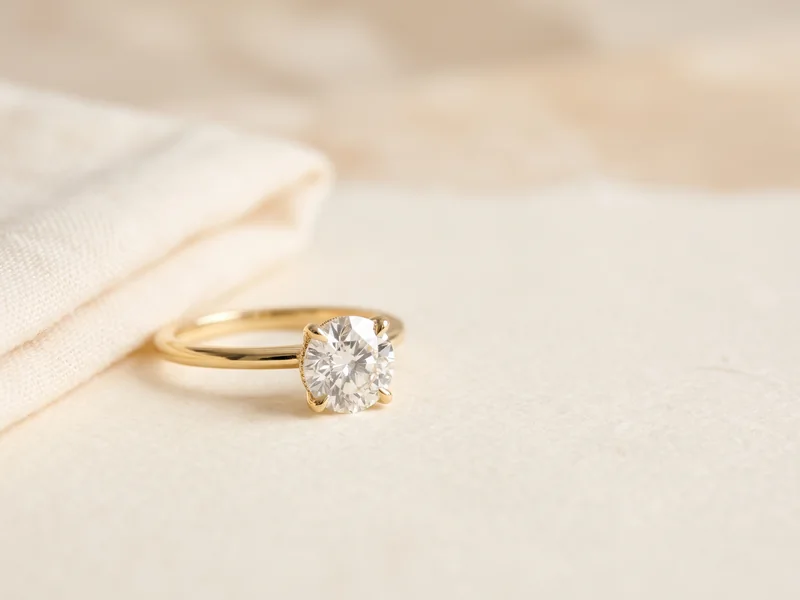 Care, Repairs & RemodellingWhen Do Ring Claws Need Retipping?
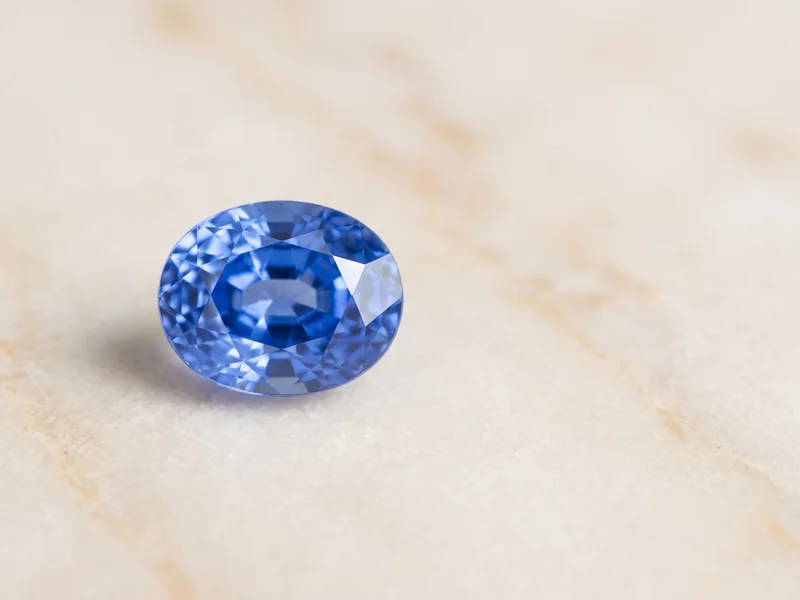 GemstonesGemstone Durability for Everyday RingsEngagement Rings & SettingsEngagement Ring Setting Styles GuideEngagement Rings & SettingsEngagement Ring Claw Styles Explained
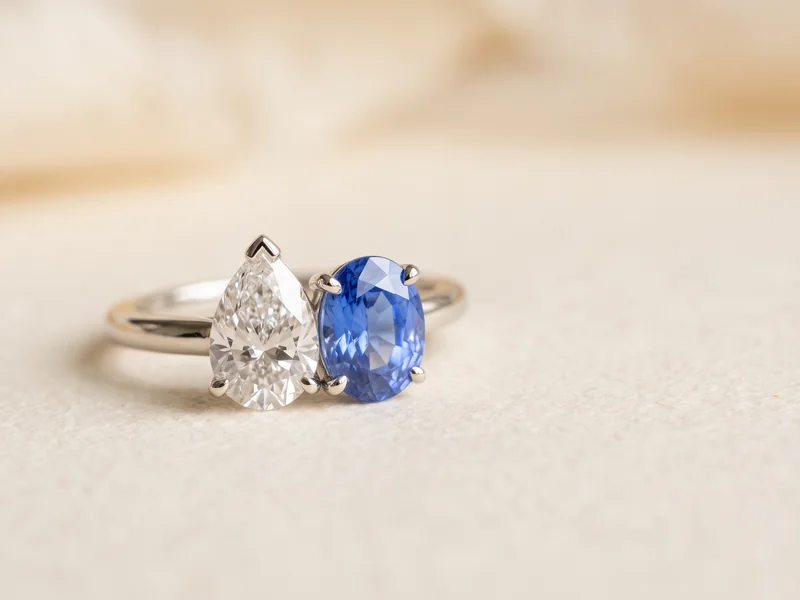 Engagement Rings & SettingsClaw Placement for Pointed Shapes
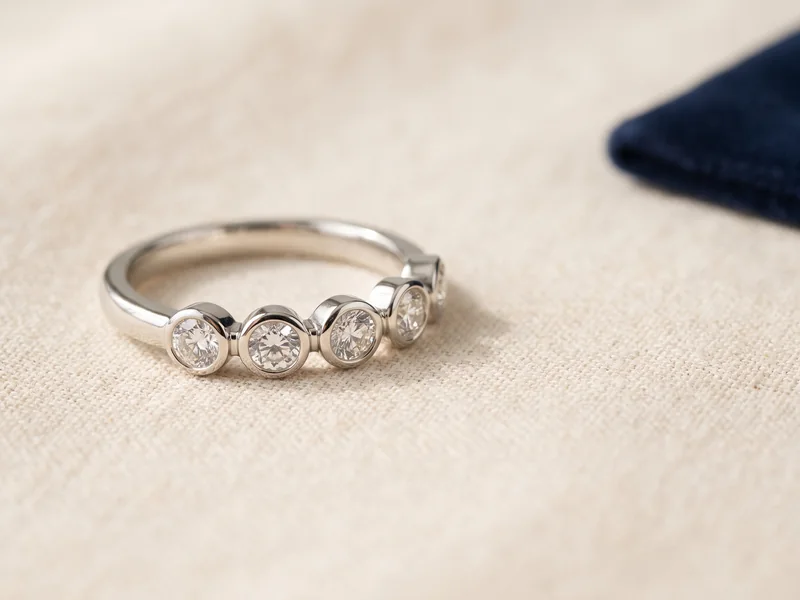 Wedding Bands & EternityBezel-Set Diamond Wedding Bands
Explore more
More guides on this topic
Education