
- Education
- Fancy Colour Diamonds
- Yellow Diamonds and Canary Diamonds: The Complete Guide
Fancy Colour Diamonds
Yellow Diamonds and Canary Diamonds: The Complete Guide
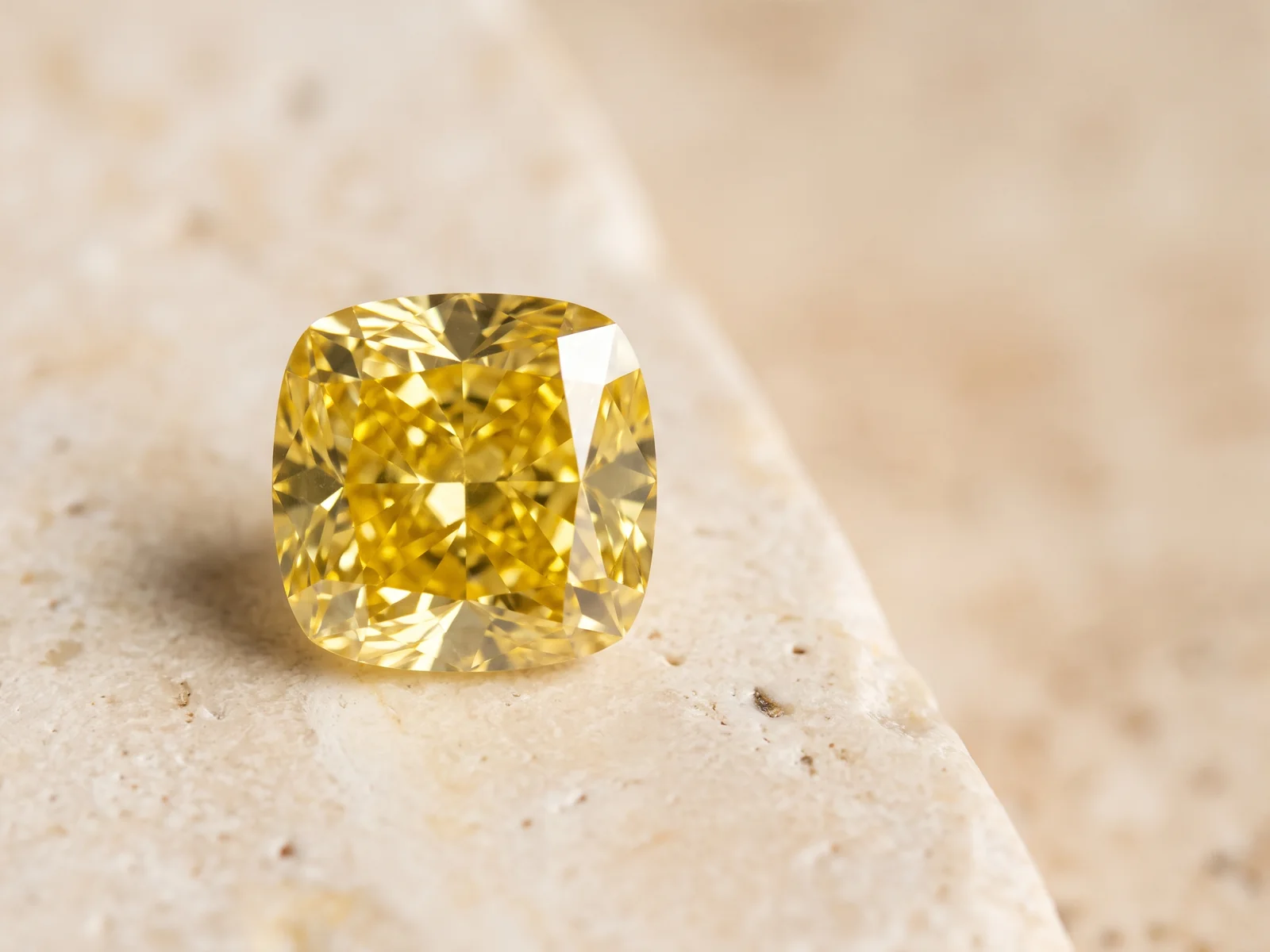
A yellow diamond is the fancy colour most people can actually find and afford, but the word 'canary' tells you nothing on its own. Here is how the colour forms, how it is graded and how to read the report before you choose.
 Reviewed by Raj Sood, Graduate Gemologist (GIA), AJP (GIA)Master jeweller and Graduate Gemologist (GIA) · reviewed 4 November 2026
Quick answer
A yellow diamond gets its colour from nitrogen trapped in the crystal. Past Z on the colourless scale it becomes a fancy colour, graded from Fancy Light to Fancy Vivid. 'Canary' is a trade name, not a grade, usually for Fancy Intense or Vivid yellow. Always check the report for natural, treated or lab-grown colour.
What is a yellow diamond?
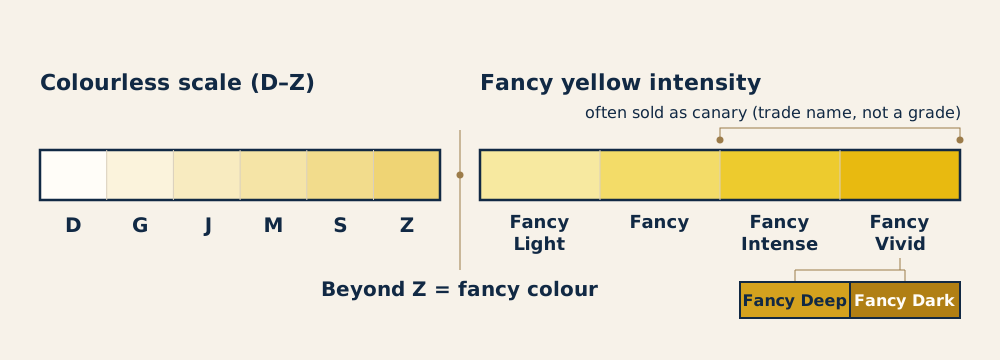
Every diamond is graded either on the colourless scale or as a fancy colour. Most white diamonds carry a faint yellow tint, which is what the D-to-Z scale measures: D is completely colourless, Z is a noticeable light yellow. Once a stone shows more yellow than a Z-colour master stone (a reference diamond the lab compares against), it moves off that scale and is graded as a fancy yellow diamond. Our fancy colour diamonds overview covers every hue in the family.
So a yellow diamond is not a different mineral. It is the same carbon crystal, with the same hardness of 10 on the Mohs scale and the same refractive index of about 2.42, but with enough colour that the colour itself becomes the point. A stone in the faint yellow L and M colour range looks lightly tinted and is priced as a lower white; a Fancy Intense yellow looks unmistakably yellow and is priced on how rich that colour is. The two are judged in opposite directions: in a white diamond less yellow is valued, in a fancy yellow more is.
If any of the grading words in this guide are new to you, our jewellery glossary of grading terms defines them in plain English.
What causes the colour in a yellow diamond?
The cause is nitrogen. Nitrogen atoms replace some of the carbon atoms as the diamond grows, and depending on how they are arranged they absorb blue light. Take blue out of white light and what reaches your eye looks yellow. Gemmologists sort diamonds into 'types' by how much nitrogen they hold and how it is arranged.
- Clustered nitrogen (type Ia): most natural yellow diamonds. They are often called 'Cape' yellows after the Cape Province of South Africa, where many were mined. The colour tends to be a soft lemony or straw yellow, and these stones often show a faint blue glow under ultraviolet light.
- Isolated nitrogen (type Ib): much rarer in nature, well under 1% of natural diamonds. Single nitrogen atoms absorb light more strongly, giving a deeper, saturated yellow, sometimes leaning towards orange diamond territory. Many of the most intense natural yellows are type Ib.
- Lab-grown yellows: laboratory-grown diamonds made by the HPHT (high pressure, high temperature) method often pick up isolated nitrogen from the growth chamber, which is why lab-grown yellows are easy to find.
Other fancy colours have entirely different causes. Natural green diamonds owe their colour to natural radiation in the earth, while red diamonds and pinks get theirs from distortion in the crystal lattice rather than from any trace element. That is part of why yellow is so much more common: nitrogen is the most frequent impurity in diamond.
You do not need to know the diamond type to choose well, but it explains why two stones both called 'yellow' can look quite different side by side: one cool and lemony, the other warm and golden.
How are yellow diamonds graded from Fancy Light to Fancy Vivid?
Laboratories such as GIA grade fancy colour face-up, in controlled daylight, by three things: hue (the colour itself, here yellow), tone (how light or dark) and saturation (how strong or pure). The result is a single intensity grade. Yellows paler than Fancy Light are not fancy colours at all; they stay on the D-to-Z scale.
| GIA grade | What it looks like | Notes |
|---|---|---|
| Fancy Light | Clearly yellow but soft and pale | The entry point to fancy yellow |
| Fancy | A definite, even yellow | Often a good balance of colour and price |
| Fancy Intense | Rich, saturated yellow | Where most sellers start using 'canary' |
| Fancy Vivid | The strongest, purest yellow | Rarest and most valued of the bright grades |
| Fancy Deep | Strong colour with a darker tone | Can look golden or amber |
| Fancy Dark | Dark, often brownish yellow | Less common in jewellery |
Reports also list modifiers, a secondary colour named before the main one: greenish yellow, orangy yellow or brownish yellow. A pure 'Fancy Intense Yellow' is usually valued above 'Fancy Intense Brownish Yellow', while an orangy yellow can look very warm and attractive. If a brown modifier is strong, the stone starts to drift towards brown and champagne diamonds, which are graded and priced quite differently.
The report also records colour distribution: 'Even' means the colour is spread uniformly across the face; 'Uneven' means it gathers in patches or zones. Even distribution is what you want in a centre stone.
What is a canary diamond?
'Canary' is a trade name, not a laboratory grade. You will not see it anywhere on a GIA report. Most jewellers use it for a bright, clean yellow with little or no modifier in the Fancy Intense or Fancy Vivid range, but nothing stops a seller using it for a paler Fancy Light stone. Read the report, not the label.
The step from Fancy Intense to Fancy Vivid is one of the biggest price jumps in yellow, so it is worth seeing both side by side if you can. Many people find a well-cut Fancy Intense looks almost as bright on the hand. The same caution about trade names applies across how fancy colour grading works across every hue: names like 'cognac' or 'canary' describe a look, while the grade describes the stone.
Not sure which one is right?
Send us the stones you are looking at and our gemologist will tell you which to choose and why.
Natural, treated or lab-grown yellow diamond: how can you tell?
Yellow colour can come from three places, and they look alike to the eye. Only a laboratory can tell them apart reliably, using spectroscopy (measuring exactly which wavelengths of light the stone absorbs) and ultraviolet imaging.
| Origin | How the colour forms | What the report says | Relative cost |
|---|---|---|---|
| Natural colour | Nitrogen in a diamond formed in the earth over millions of years | Colour origin: Natural | Highest |
| Treated colour | A natural diamond given its colour by HPHT or by irradiation and annealing | Colour origin: Treated (HPHT-processed stones are often inscribed on the girdle) | Much lower than natural colour |
| Lab-grown | Grown in a laboratory, usually by HPHT, sometimes treated after growth | A laboratory-grown diamond report, with 'laboratory-grown' on the report and usually on the girdle | Much lower than natural colour |
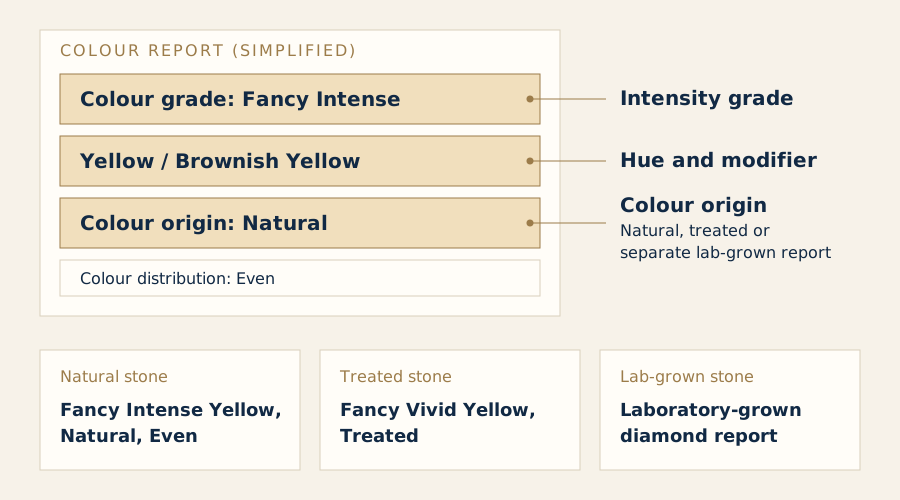
Here is how that looks in practice. A natural stone might read 'Fancy Intense Yellow, Natural, Even'. A treated stone could read 'Fancy Vivid Yellow, Treated', with a comment noting the treatment. A laboratory-grown yellow is issued on a separate lab-grown report entirely, so there is no confusion about what it is. If the colour origin line is missing, or the paperwork is a seller's own certificate rather than an independent lab, ask for an independent report before going further.
Treated yellows are real natural diamonds with man-made colour. Our guide to HPHT and irradiation treatments explains how each method works and how stable the colour is. Lab-grown yellows are real diamonds too, with the same hardness and optical properties, grown rather than mined. Neither is 'fake'; they are simply different products from a natural fancy yellow and are priced as such.
Related guideTreated Colour Diamonds (HPHT and Irradiation)Did Australia's Argyle mine produce yellow diamonds?
Not as its signature. The Argyle mine in the East Kimberley region of Western Australia, which closed in 2020, was best known for Argyle's famous pink diamonds, and by volume most of its output was brown. Argyle's marketing turned those browns into the champagne and cognac colours Argyle made its name on, and it also produced very small numbers of blue, violet and rare purple stones. Yellow was never what Argyle was known for.
Historically, most natural yellows on the market have come from South Africa and other African sources, which is where the 'Cape' name comes from. That matters if someone describes a yellow diamond as 'Argyle'. Genuine Argyle stones of note were sold with documentation, and a claim like that should be backed by paperwork, not just a story.
Geographic origin is a separate question from colour origin. A standard GIA coloured diamond report tells you whether the colour is natural or treated; it does not normally tell you which mine the stone came from. Where origin matters to you, ask what documentation exists for that particular stone.
Are yellow diamonds expensive? What drives the price
Among natural fancy colours, yellow is the most widely available, so it is generally the most accessible in price. Pink, blue, green and red are far rarer and can cost many times more at the same size. At the other end, black diamonds and salt-and-pepper diamonds are often less expensive again. Within yellow, the price is driven mainly by:
- Intensity: each step from Fancy Light to Fancy Vivid is a big jump.
- Modifier: pure yellow is usually valued above a brownish or greenish secondary colour.
- Colour origin: natural colour costs far more than treated or lab-grown.
- Carat weight: larger fine yellows are much rarer, so price per carat climbs with size.
- Clarity: matters less than in white diamonds, as long as the stone is eye-clean (no inclusions visible without magnification).
| Natural yellow diamond | Lab-grown yellow diamond | Yellow sapphire | |
|---|---|---|---|
| Material | Diamond | Diamond | Corundum |
| Hardness (Mohs) | 10 | 10 | 9 |
| Refractive index | about 2.42 | about 2.42 | about 1.76–1.77 |
| Look | High brilliance and fire | High brilliance and fire | Softer sparkle, less fire |
| Relative cost | Highest | Much lower than natural | Usually lower than natural yellow diamond |
Price ranges move with the market and vary hugely by grade and size, so we quote on the actual stone rather than publish per-carat figures.
Which shapes show yellow colour best?
Cutting changes how strong the colour looks. Shapes with many small facets and a deeper pavilion (the lower part of the stone), such as the radiant and the cushion, bounce light around inside the stone for longer, so it travels through more coloured crystal before it reaches your eye. That concentrates colour, which is why so many fancy yellows are cut as radiants or cushions; a cutter can sometimes lift a stone by a full intensity grade this way.
A round brilliant is designed to return as much white light as possible, which tends to dilute the yellow. Rounds in strong fancy yellow are less common and often carry a premium. Ovals, pears and hearts sit in between. If you want the richest colour for the weight, start with a radiant or cushion; if you want maximum sparkle with a gentle yellow, a round can still be lovely.
What are the best settings and metals for a yellow diamond?
Metal touching the stone reflects into it. Yellow gold claws or a yellow gold bezel deepen the colour, which is why a classic yellow diamond engagement ring sets the stone in yellow gold claws on a platinum or white gold band. A halo of white diamonds makes the yellow look stronger by contrast, and can make a Fancy yellow read closer to Intense. White metal claws all round keep the yellow cooler and more lemony. Our guide to the alloys behind yellow gold's colour explains why 18 carat gold suits a fancy yellow so well.
For side-by-side ideas across every colour, see settings and metals for coloured diamonds. If you love yellow gold but want a white centre stone, yellow gold rings set with colourless diamonds covers that look. If you want yellow colour at a lower cost, yellow sapphire as a durable alternative is worth comparing; at 9 on the Mohs scale it is hard enough for daily wear.
How to choose a yellow diamond: step by step
Browse yellow diamonds in our stock
- Decide natural, treated or lab-grown before you compare prices, because they are different markets with very different price levels.
- Read the report. Check the intensity grade, any modifier and the colour origin line. Ignore 'canary' unless the grade backs it up.
- Look at colour distribution. The report should say 'Even', and face-up the colour should not be patchy or gathered in the corners.
- Check it is eye-clean. Clarity matters less in yellow, but avoid inclusions you can see at arm's length.
- Compare shapes. A radiant or cushion concentrates colour; a round shows more white sparkle.
- Plan the metal. Decide whether yellow gold claws or a white diamond halo will help the colour before the setting is designed.
Free consultation
Talk to a gemologist
Compare stones in person or online with Raj Sood, Graduate Gemologist (GIA), AJP (GIA).
Book a consultationFAQ
Common questions
Is a canary diamond the same as a yellow diamond?
A canary diamond is a yellow diamond, but 'canary' is a trade name rather than a grade. It is usually used for Fancy Intense or Fancy Vivid yellow, so always check the grade on the report.
Are yellow diamonds real diamonds?
Yes. Natural, treated and lab-grown yellow diamonds are all diamond, with the same hardness and sparkle. The difference is where the stone and its colour came from, which the laboratory report states.
Are yellow diamonds rarer than white diamonds?
Natural fancy yellow diamonds are rarer than colourless diamonds, but yellow is the most common of the natural fancy colours. That is why it is more affordable than pink, blue or green.
Do yellow diamonds lose their colour?
Natural yellow colour is permanent. Most treated colour is stable in normal wear, but some treated stones can be affected by high heat during repairs, so tell your jeweller if a stone is treated.
What metal goes best with a yellow diamond?
Yellow gold intensifies the colour, especially as claws or a bezel. Many people pair a yellow diamond in yellow gold claws with a white gold or platinum band for contrast.
Is a lab-grown yellow diamond worth considering?
If you want strong colour on a smaller budget, it is a sensible option. Lab-grown yellows cost much less than natural colour and are graded by labs such as IGI and GIA, but they are a different product from a natural fancy yellow.

Ask a gemologist
Not sure which diamond to choose?
Raj Sood is a Graduate Gemologist (GIA) and master jeweller. Bring the stones you are considering, or send the reports, and he will tell you honestly which one is better and why.
Keep learning
Related guides
 Fancy Colour DiamondsTreated Colour Diamonds (HPHT and Irradiation)
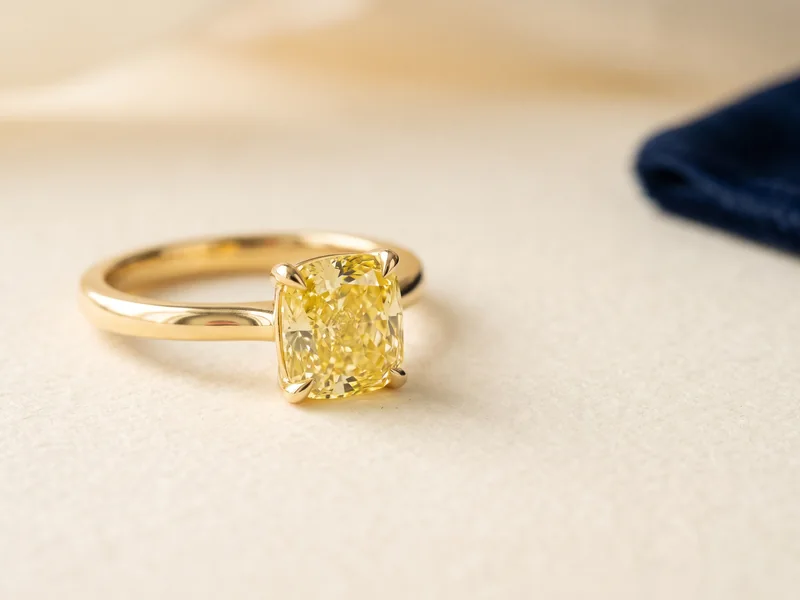 Fancy Colour DiamondsBest Settings and Metals for Coloured Diamonds
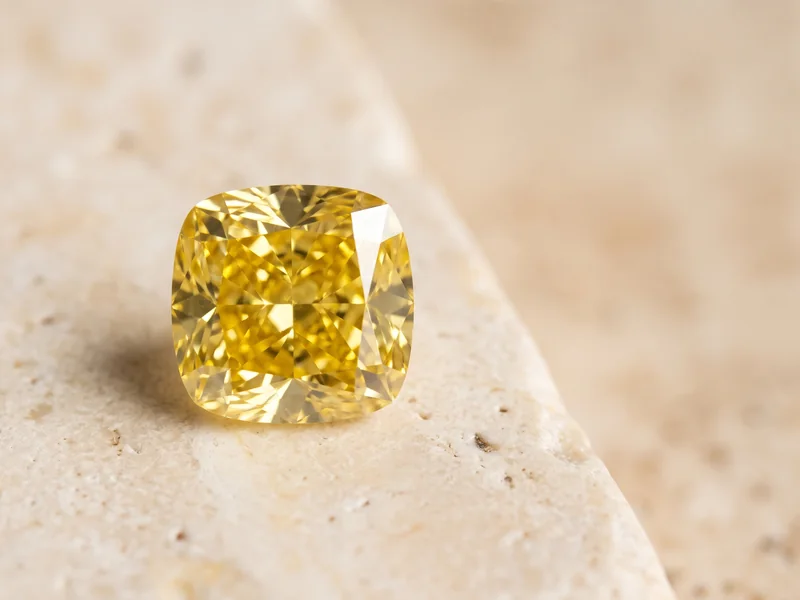 GemstonesYellow Sapphire
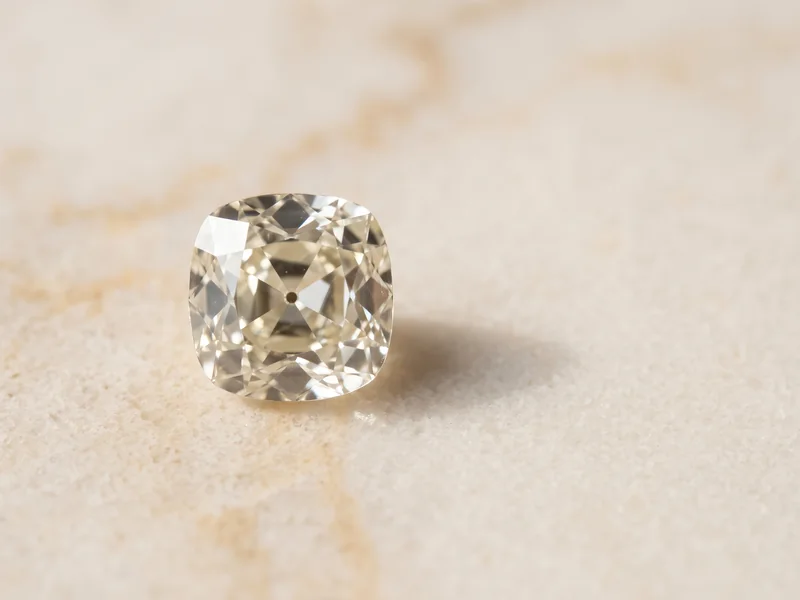 Diamond 4Cs & GradingL and M Colour Diamonds (Faint Yellow)
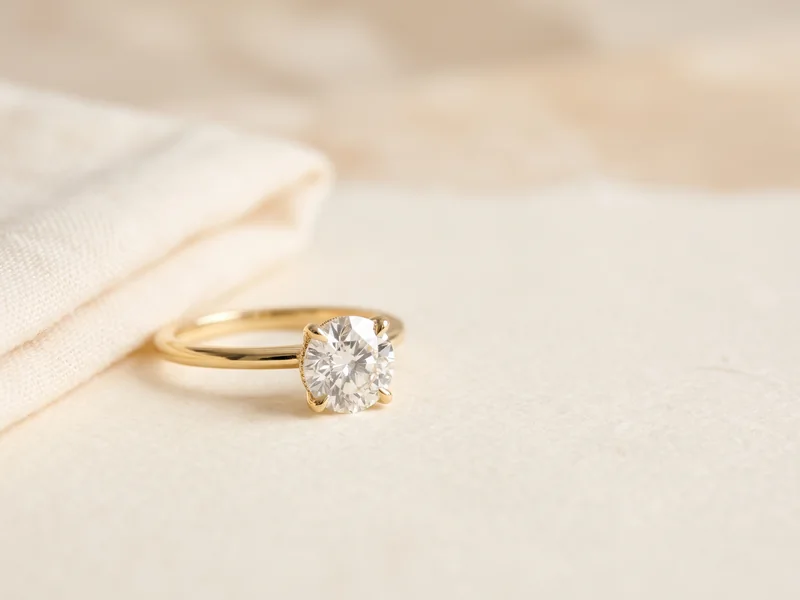 MetalsYellow Gold Engagement Rings With Colourless Diamonds
 MetalsWhat Gives Yellow Gold Its Colour and Strength?
 Fancy Colour DiamondsRed Diamonds
Explore more
More guides on this topic
Education