
- Education
- Engagement Rings & Settings
- Bezel Set Engagement Ring Guide: Full, Half and Modern Bezels
Engagement Rings & Settings
Bezel Set Engagement Ring Guide: Full, Half and Modern Bezels
A bezel is the quiet workhorse of engagement ring settings: it protects the stone, never snags and suits busy hands. Here is how full and half bezels look, wear and age, from jewellers who repair them every week.
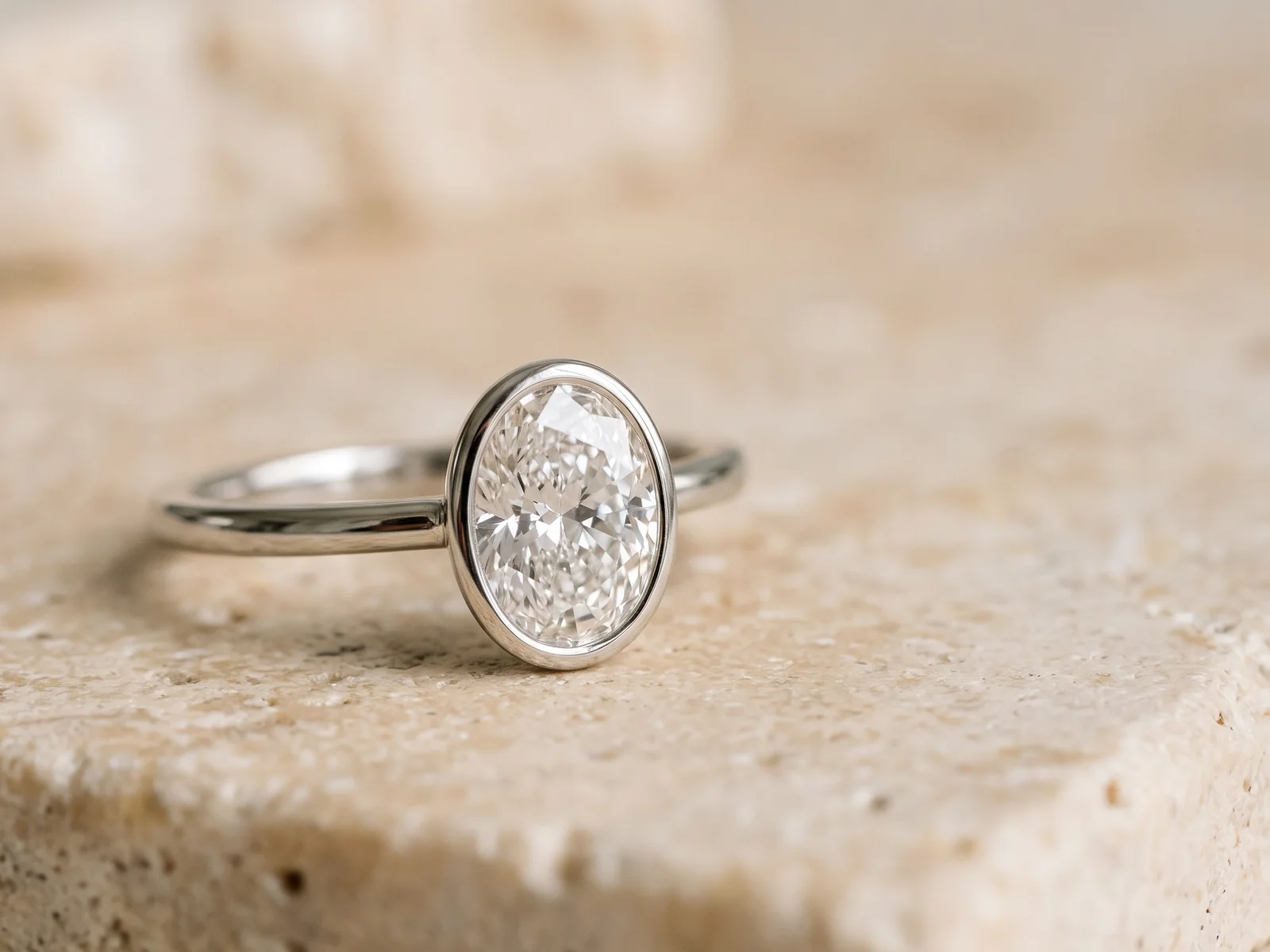
 Reviewed by Raj Sood, Graduate Gemologist (GIA), AJP (GIA)Master jeweller and Graduate Gemologist (GIA) · reviewed 4 November 2026
Quick answer
A bezel set engagement ring holds the centre stone in a thin rim of metal instead of claws. A full bezel wraps the whole edge; a half bezel covers two sides. It is one of the most protective, snag-free settings for active hands, at the cost of a little side light and slightly more work to clean and reset.
What is a bezel set engagement ring?
A bezel setting holds a gemstone in a continuous collar of metal, called the bezel, that is shaped to the stone's outline and pushed over its girdle (the thin outer edge where the top and bottom halves of the stone meet). Instead of four or six separate claws gripping a few points, the metal grips the stone all the way round.
It is one of the oldest ways to set a stone. Many ancient and medieval rings are bezel set, because a rim of metal was the simplest secure method long before fine claws were practical. Today the same idea is used in a cleaner, more modern way, often with a slim wall and an open gallery underneath.
To set it, the jeweller cuts a seat (a small ledge) inside the bezel wall with a bur, drops the stone in, then uses a burnisher or pusher to roll the top edge of the wall evenly over the girdle. This is called burnishing. Done well, the metal sits tight against the stone with no gaps, and the line of metal looks even all the way round when you look from above.
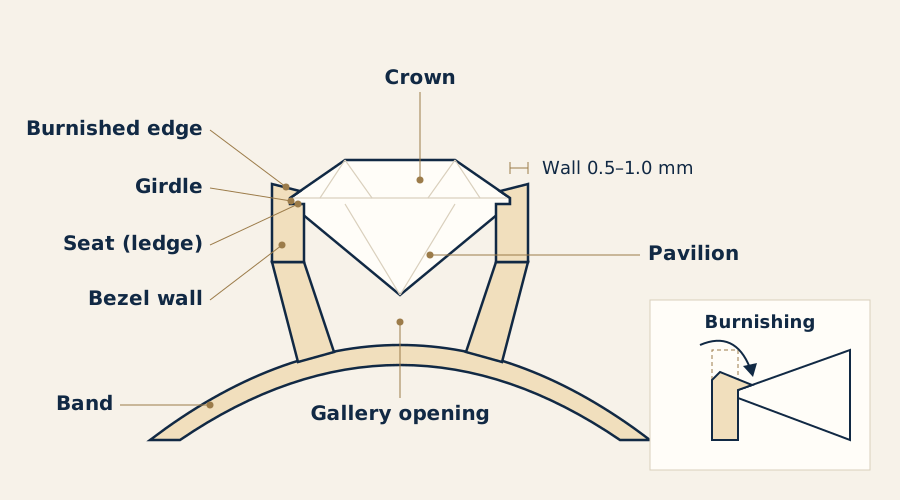
On a ring, the bezel sits on top of the band, either low to the finger or lifted on a gallery (the open structure underneath that lets light and cleaning water reach the stone). Our overview of engagement ring setting styles shows where the bezel sits among claws, halos and channels, and the jewellery glossary explains every term on this page.
What types of bezel setting are there?
Bezel is a family of settings rather than a single design. The main choice is between a full bezel and a half bezel, then how thick, how high and how decorated the rim is.
| Style | What it looks like | Good for |
|---|---|---|
| Full bezel | Metal around the entire girdle | Maximum protection; active hands; stones with fragile points or corners |
| Half (partial) bezel | Metal on two opposite sides, open at the other two | More side light and a lighter look, while still shielding the widest edges |
| Fine or knife-edge bezel | A slim wall, around 0.5–0.7 mm, tapered at the top | Showing as much of the stone as possible with a minimal outline |
| Milgrain bezel | Bezel edge finished with a row of tiny metal beads | Vintage and Art Deco looks |
| Double bezel | Two nested rims, sometimes in contrasting metals | A bold outline and extra edge protection |
| East–west bezel | An elongated stone set sideways across the finger | Ovals, emerald cuts and marquise for a modern look |
| Flush (gypsy) setting | Stone sunk level with the surface of the band | Side stones, men's rings and wedding bands |
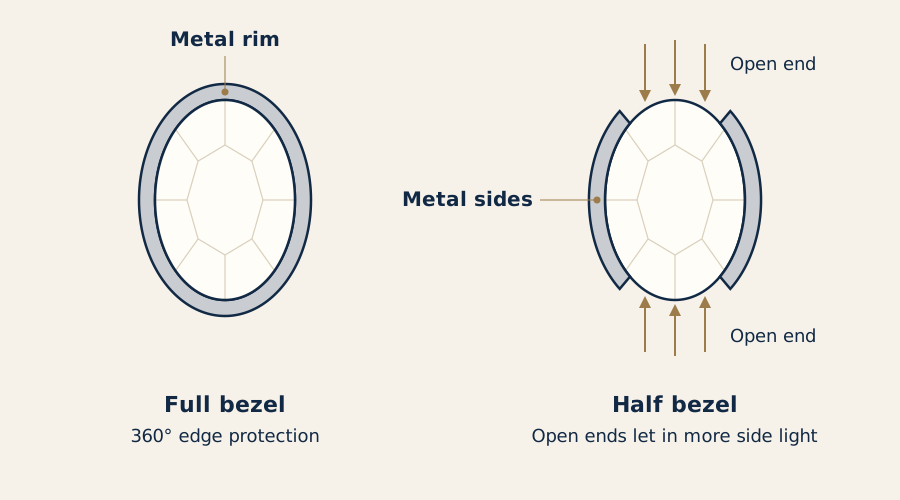
A full bezel engagement ring is the choice when protection comes first. A half bezel engagement ring suits people who want the security of metal on the sides that take the most knocks, but more sparkle from the open ends. On an oval or emerald cut, the half bezel usually covers the long sides; on a round, it can sit north–south or east–west.
Bezels also combine well with other details. A ring of small diamonds can sit under the bezel as a hidden halo, visible only from the side, and a milgrain edge with hand engraving gives vintage-inspired designs their old-world character.
Are bezel settings secure enough for everyday wear?
Yes. A well-made bezel is one of the most secure ways to hold a stone, which is why we often suggest it to nurses, doctors, gardeners, tradies, parents of small children and anyone who wears gloves or works with their hands. The advantages:
- It protects the edge. Diamond is 10 on the Mohs hardness scale, but it can still chip at the girdle with a sharp knock, because it splits along planes called cleavage. A rim of metal takes that knock instead.
- Nothing snags. There are no claw tips to catch on jumpers, hair, bedding or surgical gloves.
- No single point of failure. With claws, one bent or worn claw can let a stone drop out. A bezel grips the whole outline.
- It hides small edge flaws. A tiny girdle chip or an extra facet near the edge sits under the metal.
- It suits softer gems. Emerald (7.5–8 Mohs), tanzanite (6–7), morganite (7.5–8) and opal (5.5–6.5) all benefit from having their edges covered.
There are trade-offs, and it is worth knowing them before you choose:
- Less light from the sides. The face-up sparkle is nearly the same, but the stone gathers less light through its sides.
- Harder to clean. A closed-back bezel can trap soap and hand cream under the stone.
- Resetting takes longer. Removing a stone means unrolling the rim, and a thin bezel sometimes needs rebuilding afterwards.
- Dents show. A knock that would bend a claw leaves a flat spot or dent in the rim instead.
For a full side-by-side look at the trade-offs, see bezel and claw settings compared for daily wear.
Related guideBezel vs Claw Settings for Everyday WearBezel vs claw, halo and other settings: how do they compare?
| Setting | Edge protection | Sparkle | Snagging | Cleaning | Typical upkeep |
|---|---|---|---|---|---|
| Full bezel | Very high, whole edge | Good face-up; less side light | None | Harder under a closed back | Check rim for dents; rebuild if worn thin |
| Half bezel | High on two sides | More side light than full | Very low | Easy | As for full bezel |
| Four-claw | Lower; edges exposed | Very high | Some | Easy | Claws re-tipped as they wear |
| Six-claw | Moderate | Very high | Some | Easy | Claws re-tipped as they wear |
| Halo | Good for the centre; small stones take knocks | Very high; looks larger | Moderate | Moderate | Small halo stones can loosen |
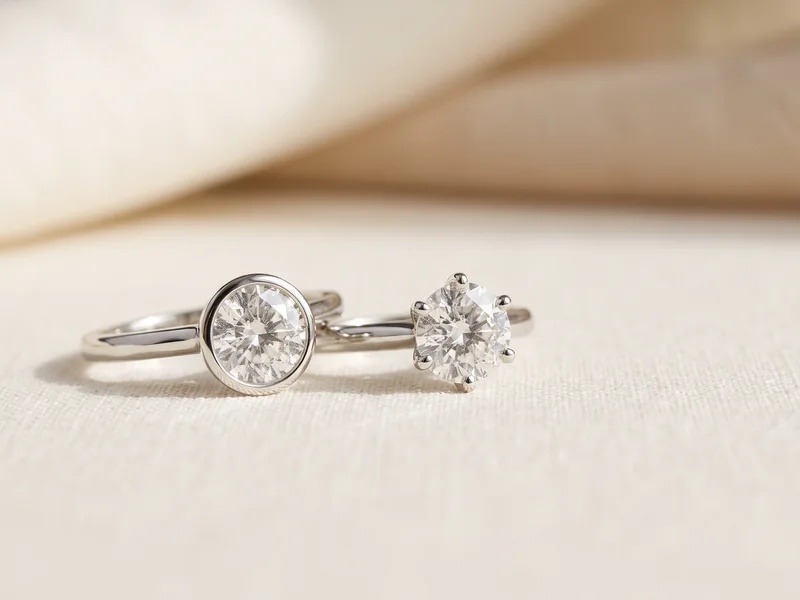
The main decision is really bezel versus claws. Claws show more of the stone and let in the most light, which is why four-claw and six-claw solitaires remain the most common choice. A bezel trades a little of that light for protection and a smooth, modern outline. A single bezel-set centre stone is still a solitaire, so everything in our guide to classic solitaire rings about proportions and band width applies.
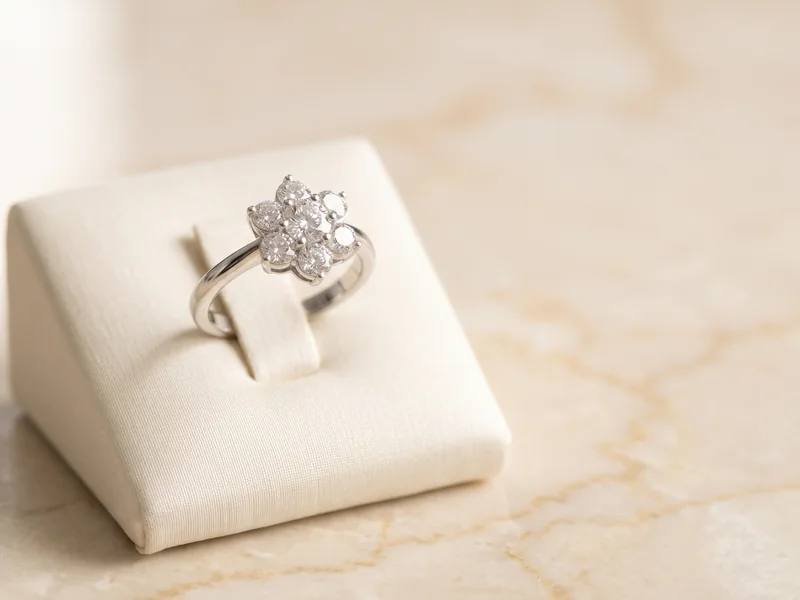
If you like a larger look, compare halo engagement ring designs, where small stones frame the centre, and read how a halo differs from a hidden halo. A bezel can also sit on cathedral shoulders, which lift the head and sweep the band up to meet it, so a low, protective setting still looks elegant from the side.
Not sure which one is right?
Send us the stones you are looking at and our gemologist will tell you which to choose and why.
Does a bezel setting make a diamond look smaller or less sparkly?
Less than most people expect. Most of a diamond's brilliance comes from light entering through the top (the crown), bouncing off the lower facets (the pavilion) and returning to your eye. A bezel covers the girdle and only a sliver of the crown edge, so the face-up view changes very little. What changes is the side light and the visible rim of metal.
That rim affects apparent size. A slim white-metal bezel adds a bright outline that can make a stone look a touch larger: a 1 carat round measures about 6.4–6.5 mm across, and with a 0.6 mm wall each side the visible outline is close to 7.7 mm. A thick or tall bezel does the opposite and makes the stone look sunk in. Ask to see the wall thickness and height on a render before the ring is made.
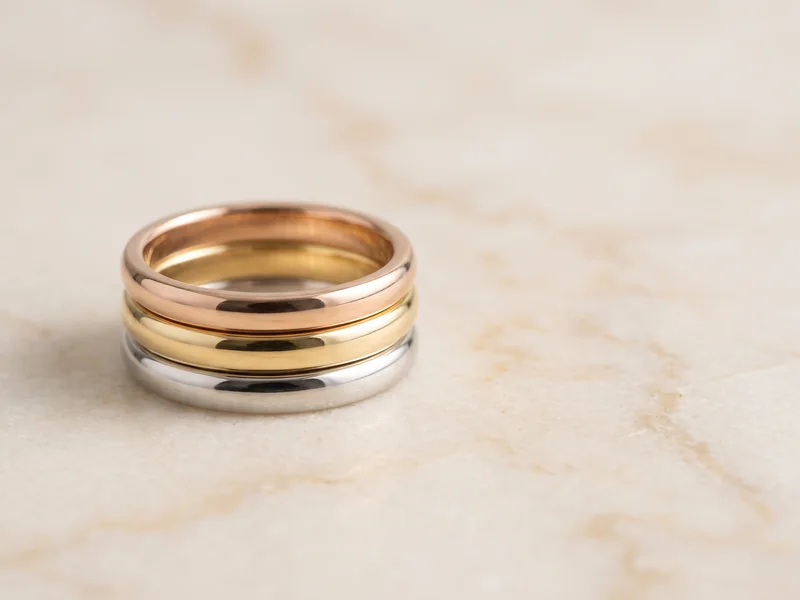
Metal colour matters more in a bezel than in claws, because the rim sits right against the stone and reflects into it. A yellow or rose gold bezel adds warmth, which suits a J or K colour diamond or a champagne stone, but can make a D–F diamond look slightly warmer than its grade. A common answer is a white gold or platinum bezel on a yellow or rose band; our guide to combining white, yellow and rose gold shows how that looks.
How the bezel suits each shape:
- Round: the easiest to bezel; the rim is even all the way round.
- Oval and other elongated shapes: an oval bezel engagement ring is a popular modern choice, set north–south or east–west.
- Princess and square corners: the bezel protects the corners, the weakest part of a princess cut.
- Pear, marquise and heart: the bezel shields the points, which chip more easily than curves.
- Emerald and Asscher: the clean lines of step cuts suit a bezel, but the metal outline makes any asymmetry easier to see.
- Cushion: soft corners sit comfortably in a full or half bezel.
Which metal is best for a bezel setting?
Each metal behaves a little differently once it has been burnished over a stone and worn for years:
- Platinum (usually 950): dense and malleable, so it pushes smoothly over the stone. When it wears, the metal tends to move rather than be lost, and it develops a soft grey patina that can be polished back.
- 18ct white gold: harder than platinum and holds a crisp edge, but it is usually rhodium plated (a thin coat of a bright white metal), which wears and needs replating every one to two years.
- 18ct yellow gold: a classic, warm choice; a little softer, so it shows dents sooner on a thin rim.
- 18ct rose gold: its copper content makes it slightly harder than yellow, and it suits warm-toned and vintage-look stones.
- 9ct gold: harder and less costly, but less malleable for fine bezel work, so it is less often used for a centre bezel.
Because every bezel is shaped to its own stone, it is one of the settings where a CAD render (a 3D computer model) earns its keep. It shows the wall thickness, the height above the finger and the gallery before anything is cast, and the finished ring can be checked against the render.
How does a bezel setting wear over the years?
This is the part many guides skip. From the repair bench, these are the changes we see in bezels after years of wear, and what fixes them:
| What we see | Why it happens | Usual fix |
|---|---|---|
| Dents or flat spots on the rim | Knocks against benches, car doors, gym equipment | Burnish out and re-push the metal against the stone |
| A thinning rim | Years of rubbing, faster in softer gold | Add metal with a laser welder or fit a new bezel head |
| A fine gap between metal and stone | A hard knock or metal fatigue | Re-tighten the bezel; check the stone for damage |
| A dull, cloudy-looking stone | Soap, lotion and skin oils trapped under a closed back | Ultrasonic or steam clean; choose an open gallery next time |
| White gold turning slightly yellow | Rhodium plating wearing away | Polish and replate |
Resizing is usually straightforward, because the band is cut and joined at the base, far from the stone. A large size change can flex the head slightly, so the bezel should be checked and re-tightened afterwards. Swapping or resetting a stone is more involved than with claws: the rim has to be lifted, and a very thin bezel may not take a second push, so a new bezel head is sometimes the better repair.
A simple routine keeps a bezel in good shape: a professional check every 6–12 months, a gentle clean at home with warm water, mild detergent and a soft brush, and taking the ring off for heavy lifting, gardening and the gym.
How much does a bezel set engagement ring cost?
The setting itself is usually a small share of the total; the centre stone sets most of the price. As a rough guide in Australia, a simple 18ct gold full-bezel solitaire setting (without the centre stone) is often around AUD 1,500–3,500, and platinum around AUD 2,500–5,000. A pavé band, hidden halo, milgrain or custom design adds to that. A bezel uses a little more metal than a claw head, but the overall labour is similar.
Bezels work for natural diamonds, laboratory-grown diamonds and coloured gems alike. Lab-grown diamonds cost much less than natural diamonds of the same size and grade, and the two look identical once set; natural diamonds are rarer. Both should come with an independent grading report. A bezel also suits lab-created sapphires and other synthetic gems, which should always be described as lab-created.
Create your bezel set engagement ring
For the wider picture on stones, budgets and ring styles, start at our engagement ring education hub.
Which wedding band suits a bezel engagement ring?
Because a bezel is wider at the head than a claw setting of the same stone, a straight wedding band may sit with a small gap beside it. If you want the two rings to touch, plan for a contoured or notched band, or lift the bezel on a gallery high enough for a straight band to slide underneath. Decide this before the engagement ring is made.
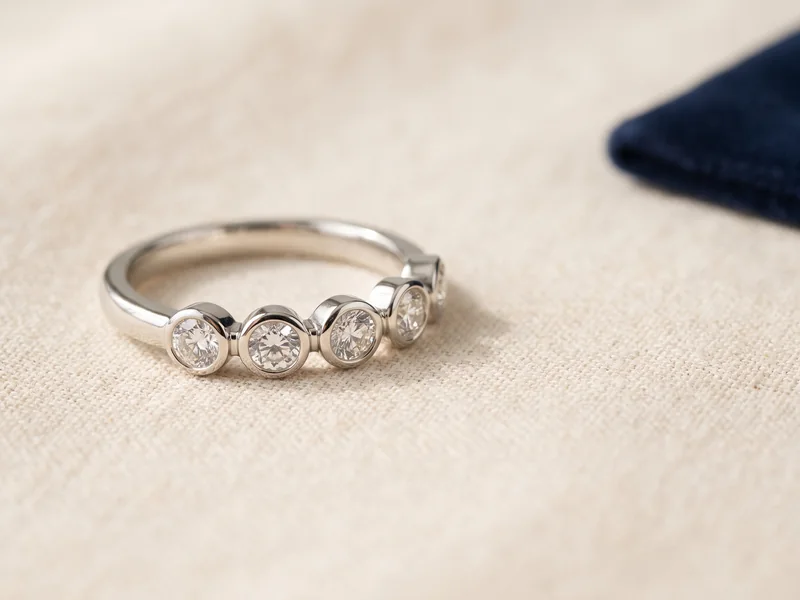
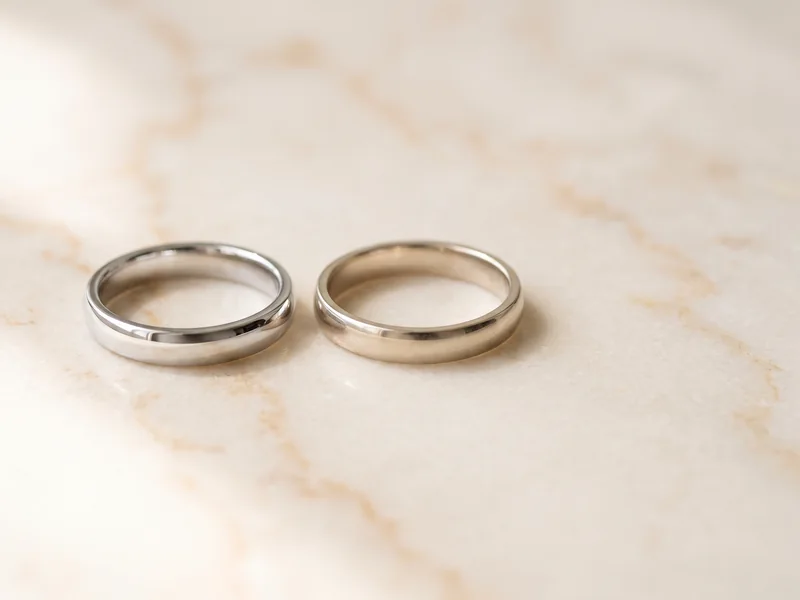
For a matching look, bezel-set diamond wedding bands repeat the rim of metal around each small stone. Channel settings are another protective, snag-free option; read up on channel-set diamonds and how they are repaired, and compare them with claw-set bands in our shared-claw versus channel-set bands guide.
Bezels can also hold more than one stone in the engagement ring itself. A three-stone ring with bezel-set side stones gives a clean, modern line, and our side-stone settings guide shows other ways to add stones beside a bezel centre.
How to choose a bezel set engagement ring: step by step
- Choose full or half. Full for maximum protection and active hands; half for more side light with protection on the long sides.
- Match the metal to the stone. White metal for a bright, colourless look; yellow or rose for warmth, or a white bezel on a coloured band.
- Check the wall on the render. Ask for the wall thickness (around 0.5–1.0 mm) and the height of the head above the finger.
- Ask for an open gallery. Openings under the stone let light in and make cleaning far easier.
- Plan the wedding band. Decide now whether the band should sit flush, and design the head height or a contoured band to suit.
- Inspect the finished ring. The rim should look even from above, sit tight with no gaps and feel smooth all the way round.
- Book regular checks. Have the bezel looked at every 6–12 months and after any hard knock.
Free consultation
Talk to a gemologist
Compare stones in person or online with Raj Sood, Graduate Gemologist (GIA), AJP (GIA).
Book a consultationShop this shape
FAQ
Common questions
Are bezel set engagement rings out of style?
No. Bezels have been used for centuries and are a popular modern choice, especially slim full and half bezels in platinum or white gold. The clean outline suits both minimalist and vintage-inspired designs.
Does a bezel setting make a diamond look smaller?
A slim white-metal bezel can actually make a stone look slightly larger by adding a bright outline. A thick or tall bezel, or a yellow rim on a very white diamond, can make it look smaller or warmer.
Is a bezel or claw setting more secure?
A well-made bezel is generally more secure, because it grips the whole edge and has no single claw that can bend and release the stone. Claws show more of the stone and let in more light.
Do bezel settings get dirty?
A closed-back bezel can trap soap and lotion under the stone, which dulls its sparkle. An open gallery and a regular clean with warm water, mild detergent and a soft brush keep it bright.
Can a bezel setting be repaired?
Yes. Dents can be burnished out, a loose stone re-tightened and a thin rim built up with a laser welder. If the bezel is badly worn, a new bezel head can be fitted.
Can you put a lab-grown diamond in a bezel setting?
Yes. Laboratory-grown diamonds are set exactly the same way as natural diamonds and are equally hard. Bezels also suit lab-created and natural coloured gems.
Terms in this guide

Ask a gemologist
Not sure which diamond to choose?
Raj Sood is a Graduate Gemologist (GIA) and master jeweller. Bring the stones you are considering, or send the reports, and he will tell you honestly which one is better and why.
Keep learning
Related guides
 Engagement Rings & SettingsBezel vs Claw Settings for Everyday Wear
 Wedding Bands & EternityBezel-Set Diamond Wedding BandsEngagement Rings & SettingsEngagement Ring Setting Styles Guide
 Engagement Rings & SettingsSolitaire Engagement RingsEngagement Rings & SettingsChannel-Set Diamonds: Pros, Cons and Repairs
 Wedding Bands & EternityShared-Prong vs Channel-Set Wedding Bands
 MetalsMixing White, Yellow and Rose Gold in a Bridal Set
 Engagement Rings & SettingsHalo Engagement Rings
Explore more
More guides on this topic
Education