
- Education
- Fancy Colour Diamonds
- Best Settings and Metals for Coloured Diamonds: A Gemmologist's Guide
Fancy Colour Diamonds
Best Settings and Metals for Coloured Diamonds: A Gemmologist's Guide
Coloured diamonds can look richer or washed out depending on the metal and setting around them. Here is how the colour forms, how it is graded, and which settings and metals suit each hue.
 Reviewed by Raj Sood, Graduate Gemologist (GIA), AJP (GIA)Master jeweller and Graduate Gemologist (GIA) · reviewed 4 November 2026
Quick answer
Coloured diamonds look strongest when the metal touching them matches or supports their hue: yellow gold claws for yellow, rose gold or platinum for pink, platinum or white gold for blue, and any metal for black. Choose protective settings such as bezels, halos or secure claws, and always check the report's colour origin line for natural, treated or lab-grown.
What makes coloured diamonds coloured?
A pure diamond is carbon in a tight, regular crystal lattice, and it has no colour at all. Coloured diamonds get their hue from something extra: a trace element sitting where a carbon atom should be, a distortion in the crystal, or damage from natural radiation deep underground. The trade calls any diamond with colour beyond the normal white-to-faint-yellow range a fancy colour diamond. Our full guide to fancy colour diamonds covers every hue in depth; this page focuses on what each colour means for the setting and metal you choose.
| Colour | Main cause | How rare in nature |
|---|---|---|
| Yellow | Nitrogen atoms replacing carbon, absorbing blue light | The most common fancy colour after brown |
| Brown and champagne | Plastic deformation (the lattice was bent by heat and pressure) | Common; often sold as champagne or cognac |
| Pink, red and purple | Plastic deformation, by a mechanism still being studied | Very rare; pure red is among the rarest of all |
| Blue | Boron atoms in the lattice (Type IIb diamonds) | Very rare |
| Green | Natural radiation displacing carbon atoms, often only in a thin surface layer | Rare, and hard to separate from treated green |
| Orange | Nitrogen-related defects | Rare, especially pure orange |
| Grey and violet | Often linked to hydrogen | Rare |
| Black | Masses of dark inclusions and fractures, often graphite | Natural-colour black is uncommon; most black diamonds sold are treated |
The cause of the colour also hints at how the stone behaves in a ring. Blue Type IIb diamonds are very pure apart from the boron and are usually clean. Black diamonds are coloured by dense inclusions, which makes them more brittle than other diamonds. Pinks often show colour graining: fine parallel lines left by the same deformation that turned them pink.
All coloured diamonds are still diamond: 10 on the Mohs hardness scale, with a refractive index of about 2.42. The difference is that colour, not sparkle, drives their value, so cutters often choose shapes such as the radiant and cushion, which hold and concentrate colour, over a round brilliant that is cut to maximise brightness.
How are coloured diamond intensity grades worked out?
White diamonds are graded on the D-to-Z scale, where less colour is better. Fancy colour diamonds flip that logic: more colour is usually worth more. GIA describes a coloured diamond by three things: hue (the colour itself, such as pink), tone (how light or dark it is) and saturation (how strong or pure the colour is). Together these give one of nine intensity grades, judged face-up against a neutral background in controlled light. If any of these words are new, our plain-English jewellery glossary defines them.
| GIA intensity grade | What it looks like |
|---|---|
| Faint | A hint of colour, only visible to a trained eye |
| Very Light | Slight colour, easy to miss in a setting |
| Light | Noticeable but soft colour |
| Fancy Light | Clear, pale colour |
| Fancy | Medium, even colour |
| Fancy Intense | Strong, saturated colour |
| Fancy Vivid | Very strong, bright colour; usually the most sought-after |
| Fancy Deep | Strong colour with a darker tone |
| Fancy Dark | Darker tone, lower saturation |
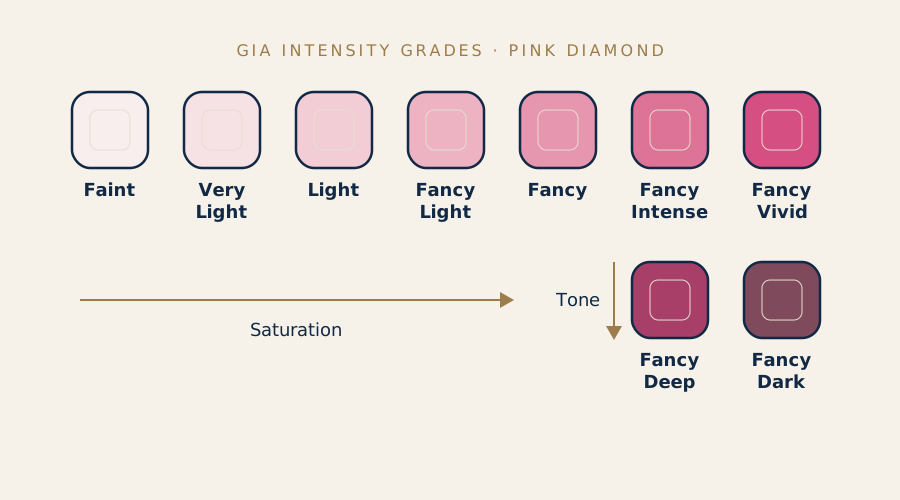
Most hues also carry a modifier. In Fancy Intense Purplish Pink, pink is the main hue and purplish is the secondary hue; the last word always names the dominant colour. Some modifiers are popular (purplish pink) and some lower the price (brownish pink usually costs less than pure pink). For yellow and brown diamonds, the Faint to Light grades fall inside the ordinary D-to-Z range, so a yellow is only called fancy once its colour is stronger than the Z master stone.
Why this matters for the setting: the lighter the grade, the more the metal around the stone changes what you see. A Fancy Vivid yellow holds its colour in any metal. A Fancy Light yellow or a Light pink can look noticeably weaker in white metal, or a little stronger in yellow or rose gold.
Natural, lab-grown or treated: how can you tell the difference?
A coloured diamond can reach you by three routes, and they look alike to the eye. The grading report is how you know which one you are looking at.
| Natural colour | Treated natural | Lab-grown | |
|---|---|---|---|
| Where the colour came from | Formed in the earth | Natural diamond, colour added or changed after mining | Grown in a laboratory; colour from growth or post-growth treatment |
| Common methods | None | HPHT (high pressure, high temperature), irradiation and annealing, coatings | HPHT or CVD growth, often followed by irradiation and annealing |
| Availability | Very rare in strong colours | Common | Readily available in most colours |
| Relative price | Highest | Much lower than natural colour | Usually the lowest |
| Report wording | Colour origin: Natural | Colour origin: Treated, with the method noted | A laboratory-grown diamond report |
| Heat sensitivity | Stable | Irradiated colours can change under a jeweller's torch; coatings can wear | Irradiated colours can change under a jeweller's torch |
Every GIA Colored Diamond Grading Report has a line called colour origin. It is the most important line on the page, because it tells you whether the colour you are paying for formed in the ground. Three examples of what a GIA colour origin report can show:
- Fancy Intense Yellow, colour origin Natural: the colour formed in the earth. This is the result you expect for a natural yellow priced as one.
- Fancy Deep Blue, colour origin Treated: a natural diamond whose colour was produced or changed after mining, for example by irradiation. It is still natural diamond, but priced well below a natural-colour blue.
- Colour origin Undetermined: the lab could not reach a firm conclusion, which happens most often with green diamonds. Ask about further testing, or price the stone as though it may be treated.
Lab-grown coloured diamonds receive a separate laboratory-grown report from GIA, or a report from labs such as IGI, which usually notes any post-growth treatment. GIA also laser-inscribes the girdle (the thin outer edge) of lab-grown stones it grades to show they are laboratory-grown. Lab-grown coloured diamonds are real diamond, with the same hardness and refractive index as natural; they simply come from a laboratory rather than the ground, and they put strong colours such as pink, blue and red within reach of most budgets.
There is a practical setting point here too. Irradiated colours, in treated natural and lab-grown stones alike, can shift if the diamond is heated by a jeweller's torch during ring sizing or claw re-tipping. Always tell your jeweller when a coloured diamond is treated or lab-grown, so the stone can be removed or protected before any heat work.
Browse red diamonds: natural and lab-grown fancy colour
Why are Argyle pink diamonds so rare?
Australia has a special place in the coloured diamond story. The Argyle mine in the Kimberley region of Western Australia began full-scale production in the mid-1980s and became the world's main source of pink diamonds, supplying the large majority of all pinks ever mined. Even so, pinks were only a tiny fraction of Argyle's output. Most of what it produced was brown, champagne and cognac diamond, along with very small numbers of red, violet and blue stones.
Rio Tinto closed Argyle in November 2020 once the ore body was worked out. With no comparable source to replace it, the supply of new natural pink diamonds has shrunk sharply. Most Argyle pinks are small, often well under a quarter of a carat, so many are set as accents beside a white centre rather than as the centre stone. Argyle pinks sold through the mine's channels usually came with Argyle documentation and a girdle inscription, which is worth asking about if a stone is described as Argyle.
Argyle also changed how brown diamonds are seen. It promoted a champagne and cognac scale, from C1 (lightest) to C7 (darkest), which helped warm brown diamonds become a popular choice for everyday jewellery. Champagne stones suit rose and yellow gold particularly well, as the next section shows.
Not sure which one is right?
Send us the stones you are looking at and our gemologist will tell you which to choose and why.
Which metal suits coloured diamonds of each hue?
A diamond behaves like a set of mirrors. Light enters, bounces off the back facets and returns to your eye, and some of that light has first reflected off the metal under and around the stone. Yellow gold returns warm yellow light, rose gold returns pinkish light, and platinum and white gold return neutral white light. In a colourless diamond the effect is small, as our guide to how the ring metal changes the colour you see explains. In a coloured diamond it can be the difference between a pink that reads pink and one that reads peach.
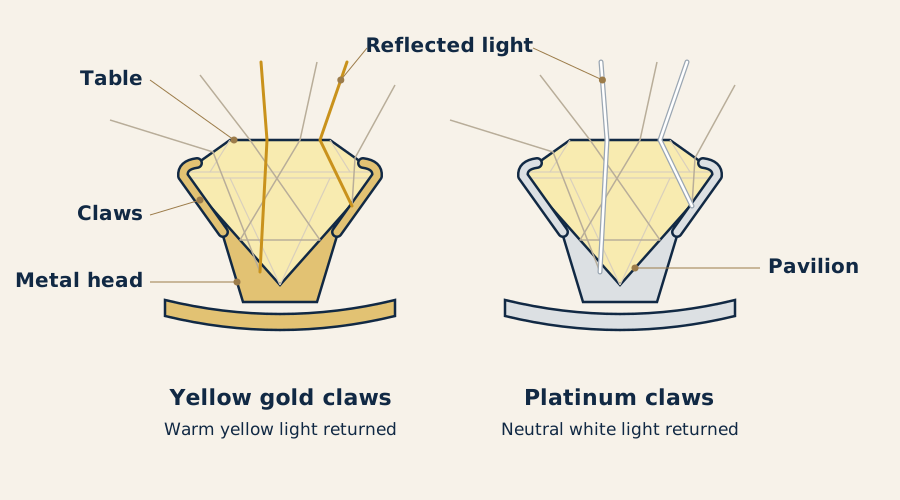
| Diamond colour | Metal that strengthens the colour | Metal for crisp contrast | Watch out for |
|---|---|---|---|
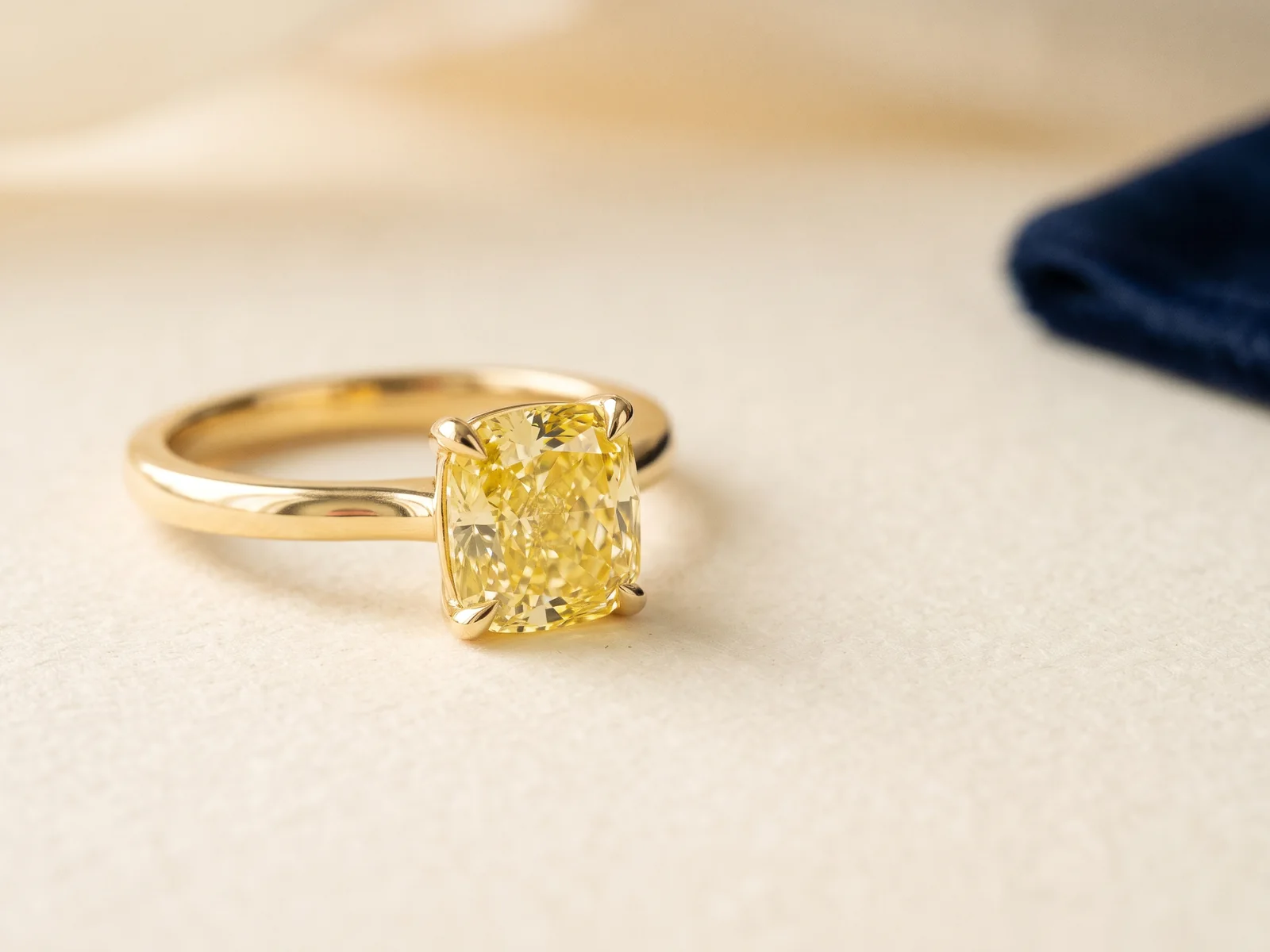
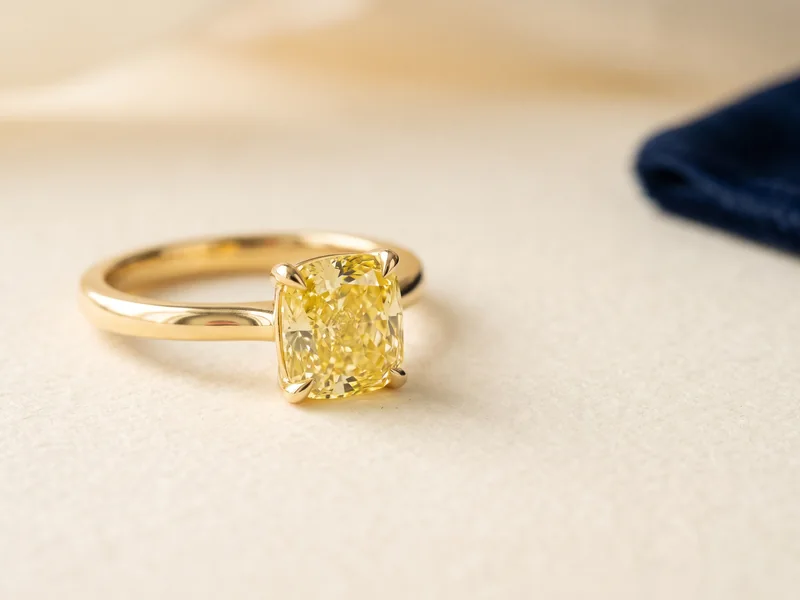
| Yellow | 18ct yellow gold claws or bezel | Platinum band with a yellow gold head | White claws can make a light yellow look paler |
| Pink | 18ct rose gold claws | Platinum or white gold | Rose gold can push a faint pink towards peach |
| Blue | Platinum or white gold | Platinum or white gold | Yellow gold can lend blue a greenish cast |
| Green | White metal for cool greens, yellow gold for warm yellowish greens | Platinum | Yellow gold can mute a bluish green |
| Orange | Yellow or rose gold | White gold | White metal can make it look brownish |
| Champagne and cognac | Rose or yellow gold | White gold for a cooler look | Very light champagne can look grey in white metal |
| Black | Black rhodium-plated white gold | White gold with a white diamond halo | Brittle stone; needs a protective setting |
| Red and purple | Platinum or white gold | Rose gold for a warmer red | Yellow gold can make red look orangey |
Platinum, usually sold as 950 platinum (95% pure), is naturally white and dense, so claws hold well and wear slowly. 18ct white gold is 75% gold alloyed with white metals and usually rhodium plated for a bright white finish; the plating wears and is typically renewed every one to two years, depending on how hard the ring is worn. 18ct yellow gold and 18ct rose gold are also 75% gold, with rose gold's colour coming from copper. 9ct and 14ct golds are paler in colour and a little harder, and suit everyday rings on a tighter budget.
The traditional answer for yellow and pink diamonds is a two-tone ring: a platinum or white gold band with a yellow or rose gold head (the part that holds the stone). You get the colour boost where light enters the diamond and a neutral, hard-wearing band. Black diamonds are often set in black rhodium-plated white gold, which makes the metal almost disappear around the stone, though the black plating wears on high spots and needs renewing.
What is the best setting for coloured diamonds?
The setting does two jobs for a coloured diamond: it keeps the stone safe, and it decides how much metal, light and contrast surround the colour. Here is how the main styles compare.
| Setting | Effect on colour | Security | Suits |
|---|---|---|---|
| Claws (4 or 6) | Shows the most stone; claws can be made in a matching colour of gold | Good; have claws checked every year | Strong colours, rounds, cushions and radiants |
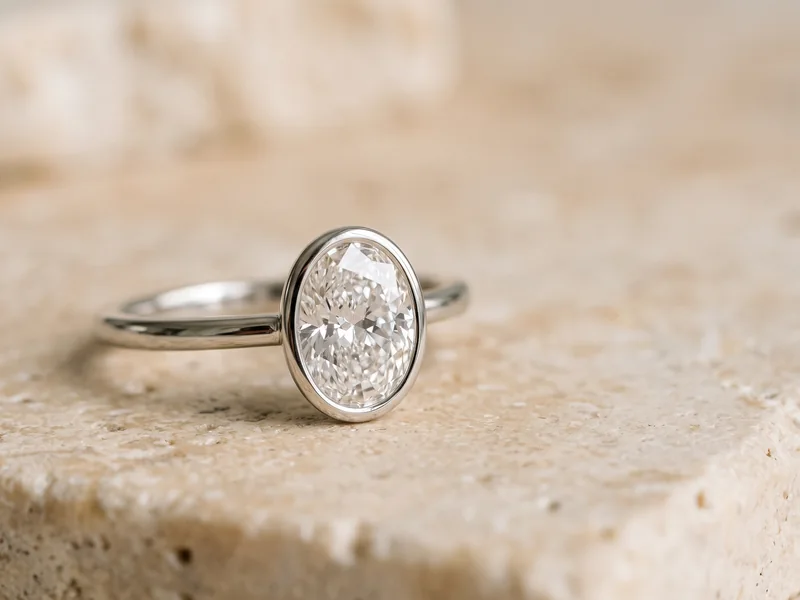
| Bezel | A metal rim reflects into the stone; a coloured bezel adds colour | Very secure | Black diamonds, active wearers, pointed shapes |
| Halo of white diamonds | The white frame makes the centre look more saturated by contrast, and larger | Good; the halo shields the edge | Light pinks and yellows, smaller centres |
| Halo of matching colour | Spreads colour, so a pale centre reads stronger | Good | Yellow and pink halos |
| Closed-back or cup | Coloured metal under the stone can deepen a pale colour | Secure | Pale stones; needs regular cleaning |
| Three-stone with white sides | Contrast makes the centre colour stand out | Good | Pink, blue and yellow centres |
For yellow diamonds, a long-established approach is a halo of small yellow diamonds set in yellow gold around a Fancy Light or Fancy yellow centre, so the whole head reads as one strong colour. For pinks and blues, the opposite often works better: a halo or side stones of colourless diamond in platinum, which frames the colour without tinting it.
Closed-back settings were common in antique jewellery because they deepen colour, but they block light from underneath. Any film of skin oil, soap or moisturiser trapped behind the stone dulls the colour quickly, so a closed back needs soaking and a soft brush more often than an open setting.
For the detail of claw count, claw thickness and seat depth, our complete guide to diamond and gemstone settings goes through each style. Designing a secure setting for a coloured stone covers the extra care that brittle and treated stones need, and if you work with your hands, see low-profile ring settings for active hands.
Which settings suit each coloured diamond shape?
Coloured diamonds are most often cut as radiants, cushions, ovals, pears and hearts, because these shapes hold colour better than a round brilliant. The shape decides where the fragile corners and points are, and that shapes the setting as much as the colour does.
- Cushion and radiant: the classic shapes for yellow and pink. Four double claws or a halo both work well; see cushion settings, from double claws to halos.
- Round: a round coloured diamond can look paler than the same rough cut as a cushion, so tinted claws or a coloured halo help. Compare options in settings for round diamonds.
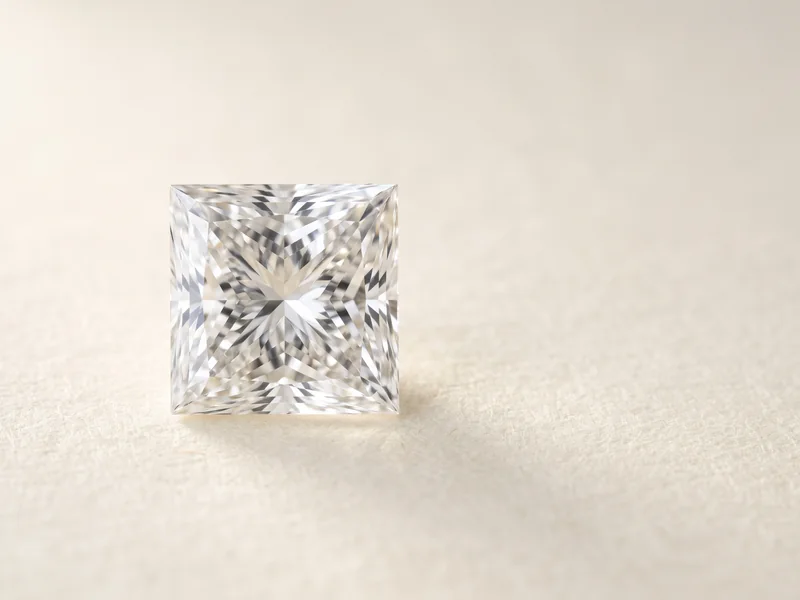
- Princess: four sharp corners need V-claws or corner claws; read about protecting a princess cut's corners.
- Asscher: the step facets show colour evenly but also show inclusions, so choose clean stones; see asscher cut setting styles.
- Pear, marquise and heart: each point needs a V-claw or bezel. See pear setting options, marquise settings that guard both tips and how to set a heart diamond safely; pink hearts are a popular choice.
- Ovals and other long shapes: east-west and bezel settings suit these well; see settings for ovals and other elongated shapes.
- Antique cuts: old mine cuts often show a soft natural yellow tint, which yellow gold flatters; see settings for old mine cut diamonds.
Are coloured engagement rings practical for everyday wear?
A coloured diamond engagement ring is as hard-wearing as a colourless one, because the stone is still diamond. The exceptions come from the way some stones are coloured, not from the colour itself. For design ideas across every hue, see our page on choosing a fancy coloured diamond engagement ring. The points to plan for:
- Black diamonds: heavily included and more brittle than other diamonds. A bezel or well-protected claws, and no hammer-style setting pressure on the stone, reduce the risk of chipping.
- Coated diamonds: the colour sits in a thin surface film that can scratch or wear away. Ultrasonic cleaners and harsh chemicals can damage it, so these suit occasional-wear pieces rather than daily rings.
- Irradiated and HPHT-treated stones: stable in normal wear, but tell your jeweller before any sizing or re-tipping that involves heat.
- Plating: white gold and black rhodium need re-plating over time; yellow gold, rose gold and platinum do not.
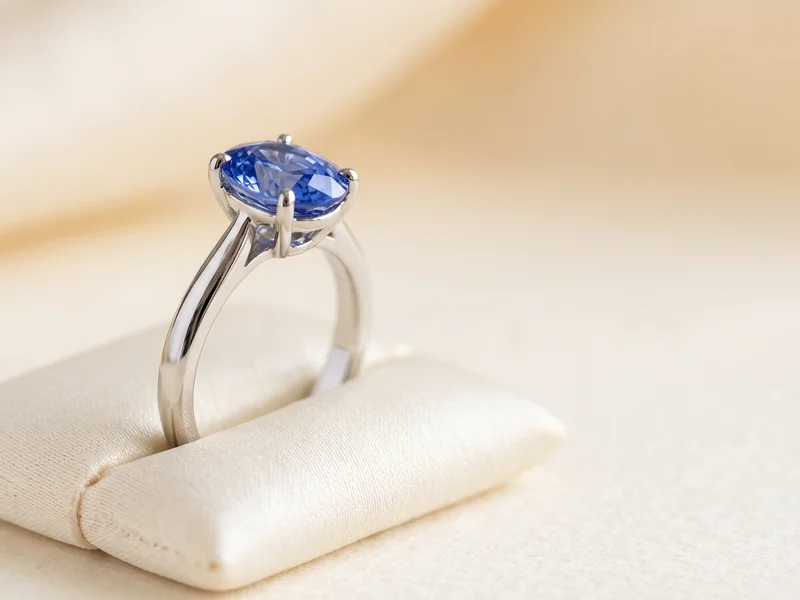
- Coloured gemstone alternatives: sapphire (9 on the Mohs scale) is durable for daily wear, but softer stones such as morganite (7.5–8) need more protective settings.
For daily wear, the safest combination is a lower-profile head, claws or a bezel in a hard-wearing metal, and a yearly check of claws and settings. Rose gold is a practical choice for pink and champagne stones, as its copper content makes it slightly harder than yellow gold of the same purity.
How do you choose a setting and metal for a coloured diamond?
- Read the report. Confirm the hue, modifier, intensity grade, and the colour origin line: natural, treated, undetermined or lab-grown.
- Note the intensity. Fancy Vivid and Fancy Deep stones hold colour in any metal; Light and Fancy Light stones benefit most from a matching metal or halo.
- Test the metal in daylight. Hold the loose stone against yellow, rose and white metal and choose the one that shows the colour the way you like it.
- Consider a two-tone head. Coloured gold claws or bezel for the colour, platinum or white gold for the band if you prefer a neutral look.
- Match the setting to the shape and stone. V-claws for points, corner claws for princess cuts, bezels for black diamonds and active hands.
- Plan for care. Ask about cleaning closed backs, re-plating, and whether the stone is heat-sensitive before any future sizing.
Free consultation
Talk to a gemologist
Compare stones in person or online with Raj Sood, Graduate Gemologist (GIA), AJP (GIA).
Book a consultationShop this shape
FAQ
Common questions
What is the best metal for a yellow diamond?
Yellow gold, at least for the claws or bezel, because it reflects warm light into the stone and strengthens the colour. Many people pair a yellow gold head with a platinum or white gold band for a neutral look.
Should a pink diamond be set in rose gold?
Rose gold warms pink and can make a light pink look stronger, but it can also push a faint pink towards peach. Platinum or white gold keeps the pink cooler and crisper, so compare both in daylight before deciding.
Are lab-grown coloured diamonds real diamonds?
Yes. Lab-grown coloured diamonds are real diamond with the same hardness and refractive index as natural, grown in a laboratory rather than mined. Their colour often comes from treatment after growth, which the report should note.
What does colour origin mean on a GIA report?
It states whether the diamond's colour formed naturally in the earth, was produced or changed by treatment, or could not be determined. It is the key line for judging whether a coloured diamond's price matches its origin.
Are black diamonds good for engagement rings?
They can be, with care. Black diamonds are full of inclusions and more brittle than other diamonds, so a bezel or well-protected claw setting is wise for a ring worn every day.
Are coloured diamonds rarer than white diamonds?
Natural fancy colour diamonds are much rarer than colourless ones; only around 1 in 10,000 natural diamonds shows fancy colour. Lab-grown and treated coloured diamonds are far more readily available.

Ask a gemologist
Not sure which diamond to choose?
Raj Sood is a Graduate Gemologist (GIA) and master jeweller. Bring the stones you are considering, or send the reports, and he will tell you honestly which one is better and why.
Keep learning
Related guides
 Diamond 4Cs & GradingHow Ring Metal Changes the Way Diamond Colour Looks
 Fancy Colour DiamondsFancy Coloured Diamond Engagement Rings
 GemstonesHow to Design a Secure Setting for a Coloured Gemstone
 Engagement Rings & SettingsBest Settings for Princess Diamonds
 Engagement Rings & SettingsBest Engagement Ring Settings for Active Hands
 Engagement Rings & SettingsBest Settings for Round Diamonds
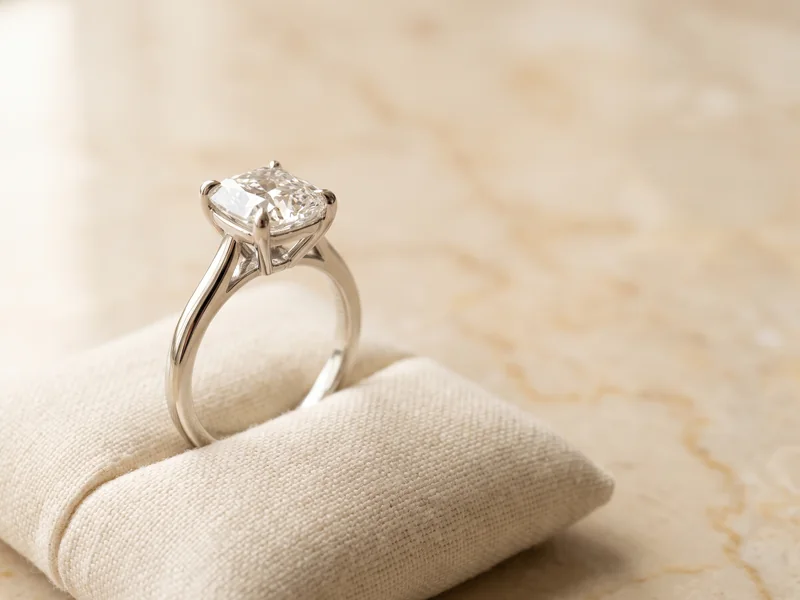 Engagement Rings & SettingsBest Settings for Cushion Diamonds
Explore more
More guides on this topic
Education