
- Education
- Care, Repairs & Remodelling
- How to Clean a Diamond Ring at Home (Without Damaging It)
Care, Repairs & Remodelling
How to Clean a Diamond Ring at Home (Without Damaging It)
A diamond that looks grey or flat is almost always just dirty. Cleaning it properly takes half an hour and a few household things, and doing it the wrong way can scratch the metal or loosen the stone.
 Reviewed by Raj Sood, Graduate Gemologist (GIA), AJP (GIA)Master jeweller and Graduate Gemologist (GIA) · reviewed 4 November 2026
Quick answer
To clean a diamond ring at home, soak it for 20–30 minutes in warm water with a few drops of mild dishwashing liquid, then gently brush under the diamond with a soft toothbrush, rinse in a bowl (not over a sink) and dry with a lint-free cloth. Avoid bleach, chlorine, toothpaste and abrasive powders. Repeat weekly.
Why does a diamond ring go cloudy?
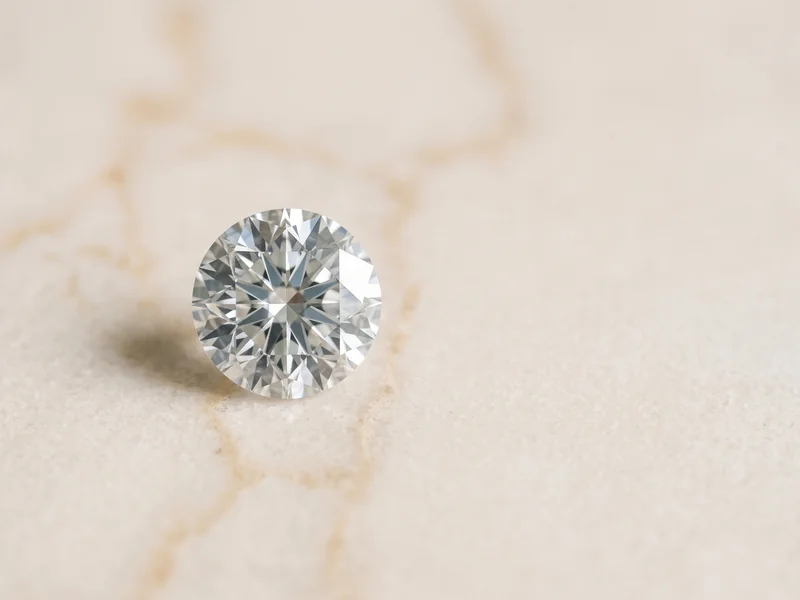
A clean diamond sends light back up through its top because of its very high refractive index (2.42), a measure of how sharply a material bends light. Light enters the top, hits the lower facets, called the pavilion, and bounces back out to your eye. Anything that coats those lower facets changes that. A film of hand cream on the pavilion acts like a dull lining: light passes into the grease instead of reflecting, and the stone looks grey and flat.
Diamond is also lipophilic, which means it attracts oil and repels water. That is why a diamond ring gets greasy so quickly. Skin oils, moisturiser, foundation, sunscreen and pool chlorine, soap scum and kitchen grease all cling to it, and then dust sticks to the oil. Most of it builds up underneath, in the gallery (the open metalwork below the stone) and behind the claws (the small metal prongs that hold the diamond in place).
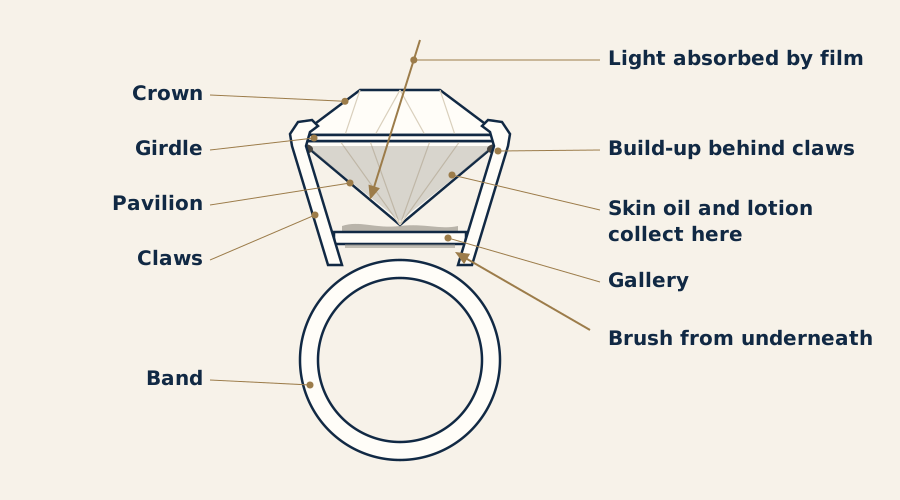
A dirty stone can look like a lower grade than it is. A well-chosen eye-clean diamond with a greasy pavilion can seem hazy, darker or even slightly yellow, and people sometimes worry the stone has changed. It has not. Diamond does not fade, stain or go cloudy on its own. Natural and lab-grown diamonds behave exactly the same way here, because both are the same crystallised carbon.
What is the safest way to clean a diamond ring?
For home cleaning, warm water, a few drops of mild dishwashing liquid and a soft toothbrush is the method jewellers recommend. It removes the grease that causes most dullness and is gentle on platinum, every colour of gold and almost every gemstone. Here is how it compares with the other options people try.
| Method | Safe for a diamond ring? | Watch out for |
|---|---|---|
| Warm water, mild dishwashing liquid, soft brush | Yes | Suits almost all rings; keep opal, pearl and emerald out of long soaks |
| Diluted household ammonia (about 1 part to 6 parts water) | Usually, for diamond in gold or platinum | Not for pearls, opal, emerald, turquoise or treated stones; use in a ventilated room |
| Home ultrasonic cleaner | The diamond, yes; the setting needs care | Can shake loose a stone in worn claws; avoid with fracture-filled diamonds, emerald, opal, pearl and tanzanite |
| Jewellery steamer | Best left to a jeweller | Sudden heat can stress included or treated stones |
| Jewellery wipes or polishing cloth | For the outside of the metal only | Cannot reach under the stone; silver cloths can leave residue on gold |
| Toothpaste or baking soda | No | Abrasive; scratches gold and platinum and wears rhodium plating |
| Bleach, chlorine or pool chemicals | No | Can attack gold alloys and weaken claws over time |
| Vinegar or lemon juice | Not recommended | Acids can dull some alloys and damage pearls, opal and emerald |
The soapy soak works because dishwashing liquid is a surfactant: it breaks up grease that plain water simply slides over. An ultrasonic cleaner uses high-frequency vibration in liquid to shake dirt loose, which is very effective but also shakes the setting. That is why jewellers check claws before putting a ring in one. For what a workshop ultrasonic and steam clean adds, see how a professional clean compares with cleaning at home.
What do you need to clean a diamond ring at home?
You probably have everything already. Gather it before you start so the ring is never sitting loose on a bench.
- A small bowl: glass or ceramic, big enough for the ring to lie flat.
- Warm water: comfortably warm to your hand, like a bath, never boiling.
- Plain dishwashing liquid: two or three drops. Avoid versions with added moisturiser, citrus acids or scrubbing particles.
- A new soft or extra-soft toothbrush: a child's toothbrush has a small head that fits between claws and under a halo. Keep it just for jewellery.
- A fine strainer or tea strainer: for rinsing, so a stone or the ring itself cannot go down the drain.
- A lint-free cloth: microfibre or an old cotton handkerchief. Tissues and paper towel leave fibres and can catch on claws.
- Optional: a round wooden toothpick to ease out packed grime from the gallery, used gently and never as a lever.
If your tap water leaves spots on glasses, give the ring a final rinse in cooled boiled or filtered water so it dries without marks. The same kit covers most of your other pieces too; our guide to caring for all your jewellery explains what changes for chains, earrings and pearls.
What should you never use on a diamond ring?
Diamond is the hardest natural material, 10 on the Mohs scale (a scale of scratch resistance from 1 to 10). The metal around it is much softer: gold and platinum sit around 2.5 to 4.5 depending on the alloy. Most cleaning damage happens to the metal, the claws or a neighbouring gemstone, not the diamond. Avoid these:
- Toothpaste and baking soda: both are abrasive. They leave fine scratches on gold and platinum and wear through rhodium plating on white gold.
- Bleach and chlorine: repeated contact can cause stress corrosion in gold alloys, where tiny cracks form and claws weaken without any obvious sign.
- Acetone and nail polish remover: fine on diamond, but they can damage some coloured stones, resins and any glued component.
- Silver dip: made for silver, not for gold, platinum or gemstones.
- Pins, needles and metal picks: they scratch metal and can push a claw out of position.
- Cleaning over an open sink: rings slip easily when soapy. Use a bowl and a strainer, or put the plug in.
- Boiling water or ice-cold rinses: a sudden temperature change (thermal shock) can stress a stone with large inclusions or fillings.
- Hard scrubbing on pavé: pavé is a band paved with tiny diamonds held by small beads of metal; heavy brushing can lift them.
Silver dip and polishing cloths are the right tools for cleaning sterling silver, but keep them away from a diamond ring set in gold or platinum. Chlorine is the one that catches most people out. Spas, pools and some household cleaners contain it, so see our guide to wearing your ring in the pool or at the beach before your next holiday.
Not sure which one is right?
Send us the stones you are looking at and our gemologist will tell you which to choose and why.
Does the metal, setting or gemstone change how you clean it?
The soapy soak suits nearly every diamond ring, but some combinations need a lighter touch. Platinum and yellow or rose gold handle the soak and brush without any issue. White gold is usually coated with rhodium, a hard, bright white metal plated over the gold. Gentle cleaning does not remove it, but abrasives and harsh chemicals wear it faster. When the warm tone of the gold starts to show through, see how often white gold needs rhodium replating.
| Ring or stone | How to clean | Take care with |
|---|---|---|
| Claw-set solitaire | Soak and brush, focusing under the stone | Check each claw before and after |
| Pavé or micro-pavé band | Soak, then light strokes along the band | Tiny beads can lift; avoid home ultrasonic on worn pavé |
| Halo | Brush the gallery and the gap between halo and centre | Dirt packs between the two rows |
| Bezel set | Soak and brush around the rim | Grime can sit behind a closed bezel; a jeweller may need to steam it |
| With sapphire or ruby (Mohs 9) | Same as diamond | Glass-filled or fracture-filled stones: no ultrasonic or ammonia |
| With emerald (Mohs 7.5–8, usually oiled) | Quick dip in lukewarm soapy water, soft brush | No soaking, ultrasonic or steam |
| With opal, pearl or tanzanite | Wipe with a damp, soft cloth only | No soaking or chemicals of any kind |
Some diamonds are fracture-filled, meaning a glass-like substance has been put into cracks to make them less visible. The report or receipt should say so. Filled diamonds should only be cleaned with the soapy soak; heat, steam and ultrasonic can damage the filling.
Lab-grown diamonds are cleaned exactly like natural ones, because they are the same material with the same hardness. If you are curious why that is, our guide to how lab-grown diamonds and gemstones are really made explains the process. Lab-created gemstones, such as a lab-created sapphire, share the hardness of their natural counterparts and take the same care. For any unfamiliar term here, our jewellery glossary has short definitions.
How often should you clean a diamond ring?
How often depends on how often you wear it. An engagement ring worn every day picks up a visible film within a week or two, especially if you use hand cream or cook a lot.
- Every week: a quick soak and brush for a ring worn daily.
- Every month: a longer soak and a careful brush of the gallery and claws.
- Every 6 months: a professional clean and claw check for a ring worn every day.
- Every 12 months: the same check for rings worn now and then.
You can slow the build-up a lot. Put your ring on last, after moisturiser, sunscreen, hairspray and makeup, and take it off for gardening, cleaning with chemicals, kneading dough and the gym. Our guide to sleeping or training in your ring covers why weights and pillows are both hard on claws. If it is an engagement ring, our engagement ring care guide puts the whole routine in one place.
Related guideEngagement Ring Care GuideHow to clean a diamond ring at home: step by step
- Check the setting first. Look at each claw and gently press the stone with a fingertip. If anything moves or clicks, skip the soak and bring the ring to a jeweller.
- Make the solution. Fill a small bowl with warm water and stir in two or three drops of plain dishwashing liquid.
- Soak for 20–30 minutes. A very greasy ring can stay in longer. Keep emerald, opal, pearl and tanzanite out of the soak.
- Brush gently from underneath. With a soft toothbrush, work through the gallery and around the back of each claw first, then the top of the stone. On pavé, use light strokes along the band.
- Repeat if needed. Put the ring back in the water for a few minutes and brush again. Two light rounds are better than one hard scrub.
- Rinse in a bowl or strainer. Use fresh warm water, with the sink plugged, until no suds remain. Soap film left behind dulls the stone again.
- Dry with a lint-free cloth. Pat rather than rub, so fibres do not catch on claws. A hairdryer on the cool setting dries the gallery quickly.
- Check the result. Hold the ring up to window light and look through the side of the diamond. If it is still hazy underneath, the grime is packed in, and that is a job for a jeweller.
How do you check your claws and setting after cleaning?
A clean ring is the easiest time to spot wear, because the grime that hides a worn claw has gone. Each claw should look rounded on top and sit snugly against the stone. Over years of wear, claws thin and flatten, and a knock can lift one away from the diamond.
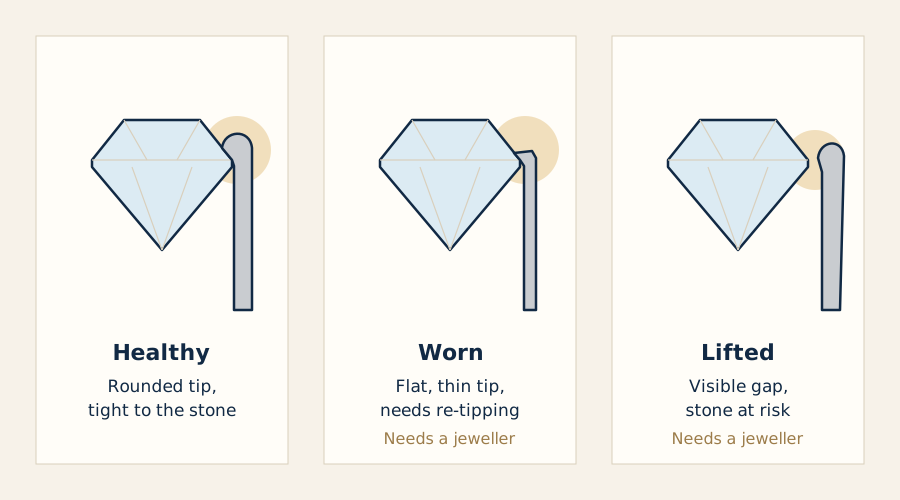
- Look: with good light, check every claw tip for flattening, thinning or a gap between the claw and the stone.
- Feel: run a fine scarf or stocking lightly over the top. If it snags, a claw has probably lifted.
- Listen: hold the ring near your ear and tap the stone gently with a fingernail. A rattle means the stone is loose.
- Turn it: look at the underside of the band. A band worn thin at the back, often under 1 mm, is weak.
A ring that spins on the finger takes more knocks, because the stone keeps turning towards the palm. If that sounds familiar, small sizing beads or a sizing bar can hold it upright, and it is worth measuring your ring size at home to see whether your size has changed.
When should you take your diamond ring to a jeweller?
Home cleaning keeps a ring looking right between visits. It does not replace a check by someone who can see the claws under magnification. Bring it in if you notice any of these:
- The stone moves, clicks or rattles.
- The ring snags on clothing or hair.
- A claw looks flat, thin or bent, or a small diamond is missing from pavé.
- The stone still looks dull after two careful home cleans.
- White gold looks yellow or patchy.
- The band is thin, bent out of round or cracked at the back.
- The ring has been in a pool, spa or chlorine cleaner often.
A jeweller can steam out packed grime, re-tip worn claws with new metal, tighten loose stones and replate white gold. If the back of the band has worn thin, re-shanking a worn band replaces the bottom section while keeping the top and the setting. Our guide to deciding whether to repair or replace a band helps when the damage is more than a single claw.
Our jewellery repairs service
A professional check is also a good moment to think about the future of the ring. Some people use it to reset the stone in a sturdier setting; others start upgrading to a larger diamond and keep the original band.
Free consultation
Talk to a gemologist
Compare stones in person or online with Raj Sood, Graduate Gemologist (GIA), AJP (GIA).
Book a consultationShop this shape
FAQ
Common questions
Can you clean a diamond ring with toothpaste?
No. Toothpaste is abrasive, and while it cannot scratch the diamond, it leaves fine scratches on gold and platinum and wears rhodium plating off white gold. Use warm water, mild dishwashing liquid and a soft toothbrush instead.
Can you clean a diamond ring with vinegar?
It is not recommended. Vinegar will not hurt the diamond, but acids can dull some gold alloys and damage pearls, opal and emerald. Dishwashing liquid removes grease more effectively anyway.
Are ultrasonic cleaners safe for diamond rings?
The diamond itself is fine, but the vibration can loosen a stone held by worn claws. Avoid ultrasonic cleaners for fracture-filled diamonds and for emerald, opal, pearl or tanzanite, and have the claws checked first.
Why is my diamond ring still cloudy after cleaning?
Usually grease is packed into the gallery under the stone where a brush cannot reach, or soap film was left behind after rinsing. If it stays dull after a professional clean, have it checked, as chipped or worn facet edges can also dull a diamond.
Do you clean a lab-grown diamond ring the same way?
Yes. A lab-grown diamond is the same material as a natural diamond, with the same hardness and the same tendency to attract oil, so the soapy soak and soft brush work exactly the same.
How often should I clean my engagement ring?
A quick soak and brush once a week keeps a daily-worn engagement ring bright. Have it professionally cleaned and the claws checked every 6 months.

Ask a gemologist
Not sure which diamond to choose?
Raj Sood is a Graduate Gemologist (GIA) and master jeweller. Bring the stones you are considering, or send the reports, and he will tell you honestly which one is better and why.
Keep learning
Related guides
 Care, Repairs & RemodellingProfessional Jewellery Cleaning vs Home CleaningCare, Repairs & RemodellingJewellery Care and Maintenance
 Care, Repairs & RemodellingSunscreen, Chlorine and Your Jewellery
 Care, Repairs & RemodellingRhodium Replating Schedule
 Care, Repairs & RemodellingHow to Clean Silver Jewellery
 Diamond 4Cs & GradingEye Clean Diamonds
 Buying Knowledge & Custom ProcessHow to Measure Your Ring Size at Home
 Lab-Grown DiamondsCan I Make a Lab-Grown Diamond or Gemstone at Home?
Explore more
More guides on this topic
Education