
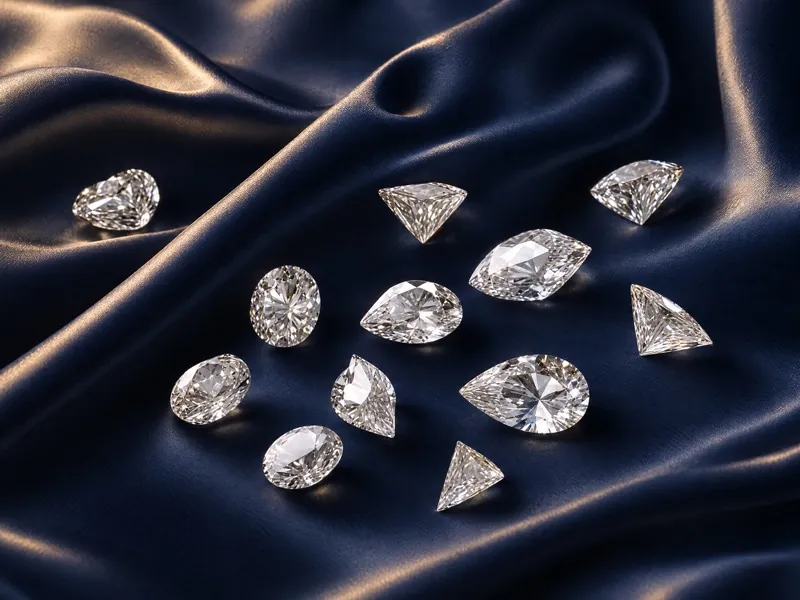
 Round
 Oval
 Emerald
 Cushion
 Pear
 Radiant
 Princess
 Marquise


- Education
- Certificates & Appraisals
- Jewellery Appraisal for Insurance, Explained
Certificates & appraisals
Jewellery Appraisal for Insurance, Explained
A jewellery appraisal for insurance is the document your insurer relies on if a ring is lost, stolen or damaged. A vague one can leave you under-covered, so it pays to know what a good appraisal looks like.
 Reviewed by Raj Sood, Graduate Gemologist (GIA), AJP (GIA)Founder and Graduate Gemologist (GIA) · reviewed 16 November 2026
Quick answer
A jewellery appraisal for insurance is a written report from a qualified appraiser that describes your piece in detail and states what it would cost to replace with an equivalent item at retail in Australia today. Insurers use it to set your sum insured and to replace the item accurately if you make a claim.
What is a jewellery appraisal for insurance?
An insurance appraisal is a written, signed document that does two jobs. First, it describes the piece precisely enough that someone who has never seen it could source or make an equivalent. Second, it gives a replacement value: what it would cost, at the time of the appraisal, to buy that equivalent item new from a retail jeweller in Australia.
It is not the same as a diamond grading report. A report from a laboratory such as GIA or IGI describes the diamond's characteristics and gives no price at all; an appraisal puts a dollar figure on the whole piece, including the setting and any side stones. Our guide to the difference between an appraisal and a certificate goes through this side by side.
Insurers ask for an appraisal for items above a certain value so they can set your premium, confirm what they are covering and, if you claim, replace the piece rather than guess. Each insurer sets its own threshold for when an appraisal is required, so check your policy wording.
Natural diamonds in stock today
See all 149,550 in stock →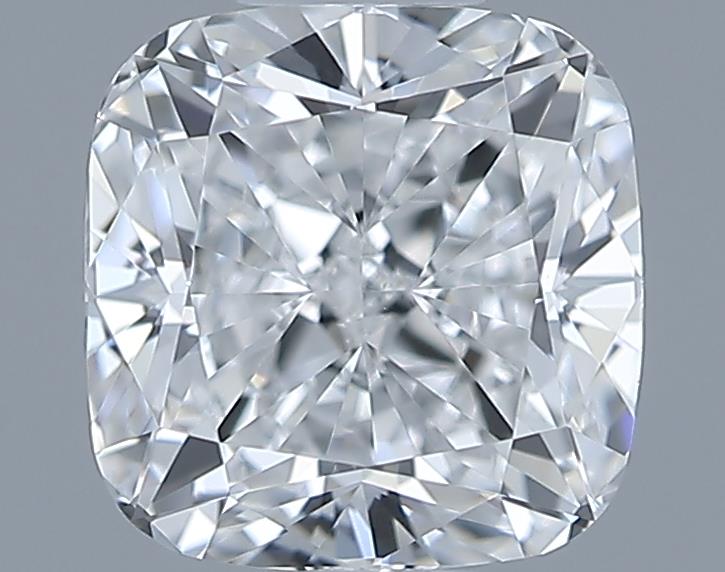 Natural Diamond0.75 ct Cushion DiamondF · VS1 Clarity · EX · VG · NON$1,968 AUDAll taxes inclusive
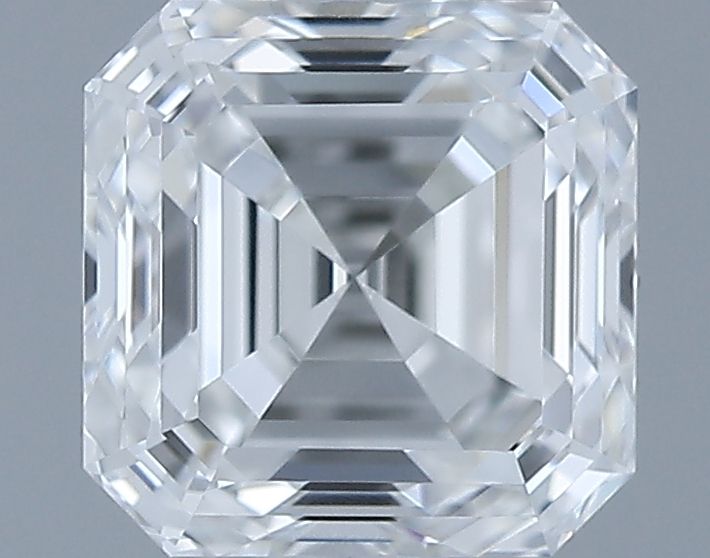 Natural Diamond0.60 ct Asscher DiamondF · VVS2 Clarity · EX · VG · NON$1,968 AUDAll taxes inclusive
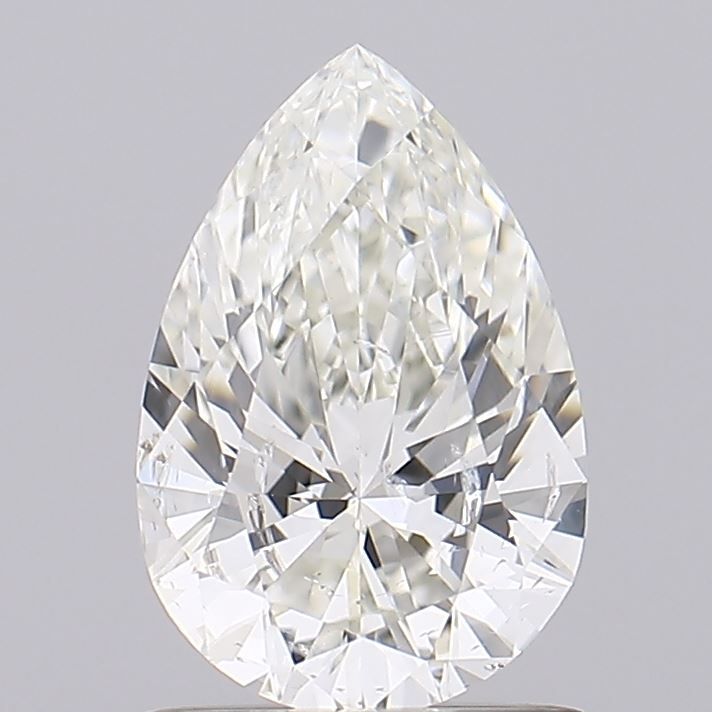 Natural Diamond1.10 ct Pear DiamondH · SI2 Clarity · EX · EX · VSLT$2,708 AUDAll taxes inclusive
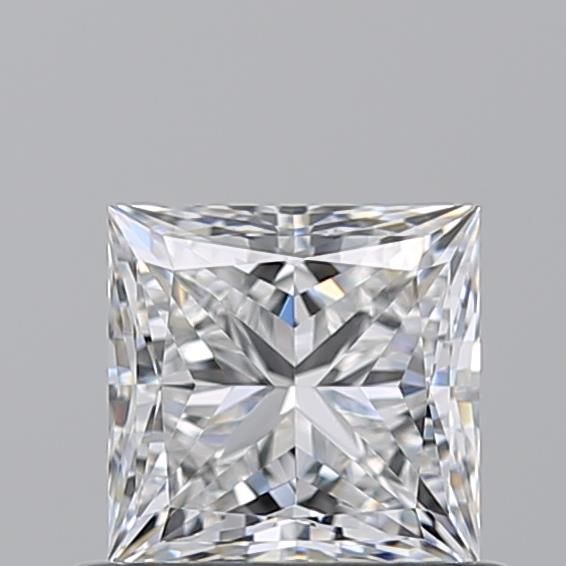 Natural Diamond0.71 ct Princess DiamondE · VVS1 Clarity · EX · VG · NON$2,708 AUDAll taxes inclusive
 Natural Diamond1.02 ct Heart DiamondI · IF Clarity · EX · EX · NON$4,718 AUDAll taxes inclusive
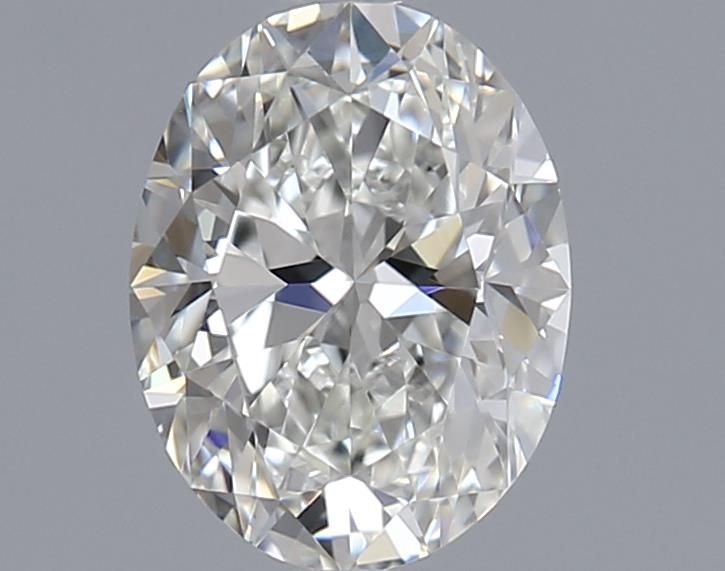 Natural Diamond1.00 ct Oval DiamondH · VVS2 Clarity · EX · VG · NON$4,718 AUDAll taxes inclusive
In stock when checked on 26 Nov 2026, 6:30 pm. Each diamond’s own page shows its live price and availability. Please check the lab report before you commit.
What should a jewellery appraisal for insurance include?
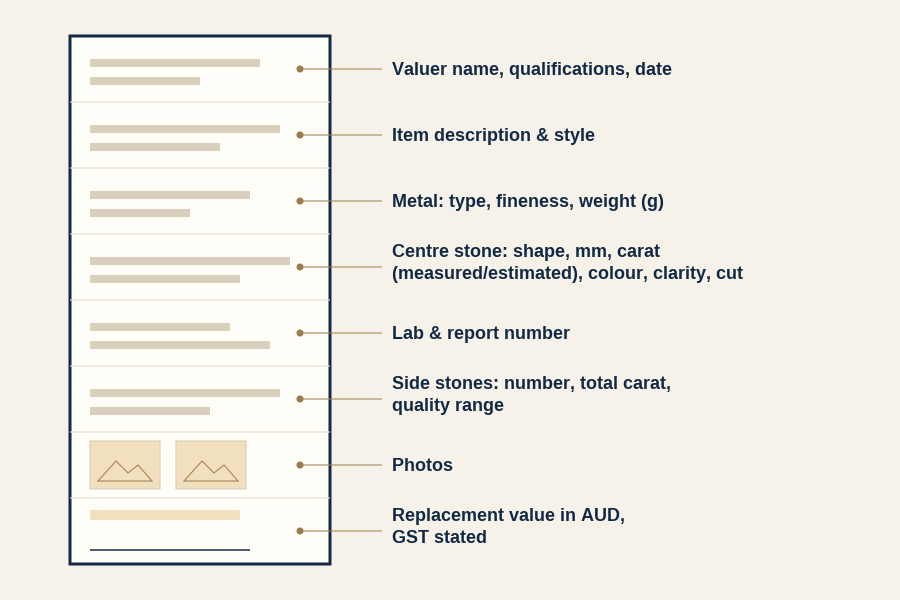
A good appraisal reads like a specification. If your piece were lost tomorrow, the document alone should let a jeweller recreate it. Look for each of these:
| Section | What it should state | Why it matters |
|---|---|---|
| Item description | Type of piece, style, setting (claw, bezel, halo), finish and any engraving | Lets the insurer match the design, not just the stones |
| Metal | Metal type and fineness (for example 18ct white gold, platinum 950) and weight in grams | Metal is a real part of the replacement cost |
| Centre stone | Shape, measurements in mm, carat weight (stated as measured or estimated), colour, clarity and cut | The single biggest driver of value |
| Grading report | Laboratory, report number and whether the stone was checked against it | Ties the appraisal to an independent description |
| Side stones | Number, shape, total carat weight and an estimated quality range | Pavé and halos add up quickly |
| Photos | Clear images of the piece from several angles | Helps confirm identity and design at claim time |
| Value | Replacement value in Australian dollars, stating whether GST is included | Sets your sum insured |
| Appraiser details | Name, qualifications, signature and date | Shows who stands behind the figure |
If an appraisal only says something like "diamond ring, approx. 1 carat, white gold" with a number underneath, it gives your insurer very little to work with. How the piece was made matters too: a ring made by hand at the bench takes more labour to remake than a cast one, so a good appraisal notes it. Our guide to cast versus hand-fabricated jewellery explains the difference.
Why is an insurance appraisal higher than what I could sell it for?
Because it answers a different question. An insurance appraisal states retail replacement value: what you would pay a jeweller to buy or make the same piece new. What you could sell it for, its resale value, is usually much lower, because a buyer of second-hand jewellery is paying a trade or second-hand price, not a retail one.
| Type of value | The question it answers | Typical use |
|---|---|---|
| Retail replacement | What would it cost to replace new at retail? | Insurance |
| Fair market value | What would a willing buyer pay a willing seller? | Estates, family law, some tax matters |
| Resale or second-hand | What would a dealer pay for it today? | Selling a piece |
None of these is the "real" value; each suits a different purpose. That is why replacement value vs resale value is a common source of confusion when people first read an appraisal. For estates or a property settlement you need a different kind of document entirely: see appraisals for estates and family law.
Related guideJewellery and Diamond AppraisalHow do insurers use an appraisal when you claim?
Most Australian home-contents and jewellery policies give the insurer a choice: replace the item, repair it, or pay you an amount. Many insurers prefer to replace through their own suppliers, which is why the description matters so much. A detailed appraisal makes it far more likely that what you get back matches what you lost.
- Agreed value: the policy covers a specific amount you and the insurer agree, often based on your appraisal.
- Replacement value: the insurer pays what it costs them to replace the item at the time of the claim, up to your limit. A market-value policy may pay less, allowing for age and wear.
- Item limits: many contents policies cap any single piece of jewellery unless you list it separately.
Policy types and wording vary between insurers, so read the product disclosure statement or ask your insurer how they settle jewellery claims. Our overview of how jewellery insurance works in Australia covers the main policy types and the questions worth asking before you sign.
Not sure which one is right?
Send us the stones you are looking at and our gemologist will tell you which to choose and why.
Does my diamond need a grading report for an appraisal?
No, but it helps a great deal. An appraiser can grade an unreported stone in its setting, but grading a mounted diamond is less precise: the claws hide part of the stone and the carat weight has to be estimated from measurements. When a stone has a report from a recognised laboratory, the appraiser can check the stone against it and quote the report number. Our guide to certified and uncertified diamonds explains why this makes such a difference.
Many diamonds carry a tiny laser inscription of their report number on the girdle, which lets an appraiser match stone to report under magnification. Our guide to what a laser inscription does and does not prove explains its limits, and what a grading report leaves out covers the details an appraiser still has to judge by eye.
The laboratory also matters, because grading standards are not identical everywhere. An appraiser will usually value a stone on how it actually grades, not only on what the paperwork says. See GIA vs IGI vs HRD, the wider comparison of diamond grading labs, and our notes on GSI and EGL reports. If your stone has an IGI or HRD report, our walk-throughs of the IGI natural diamond report and the HRD diamond report show where each detail sits.
Engagement rings in our catalogue
See all 1,187 →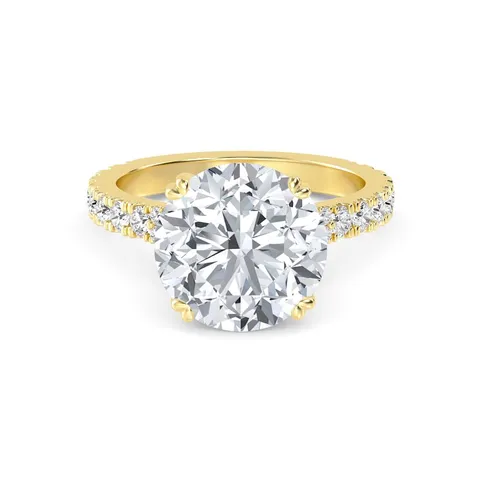 High Jewellery · Engagement ringRound Engagement RingShown with a 5ct Round lab-grown diamondFrom $4,708 AUD
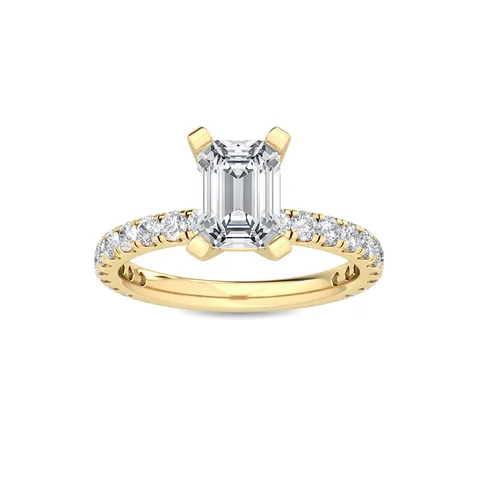 Side Stone · Engagement ringSide Stone Engagement Ring1.52ct total lab-grown diamondsFrom $1,878 AUD
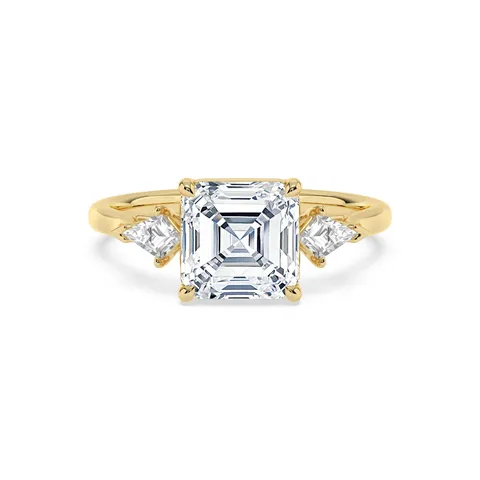 Side Stone · Engagement ringAsscher Side Stone Engagement RingSettings for an asscher centre diamond of your choiceFrom $1,918 AUD
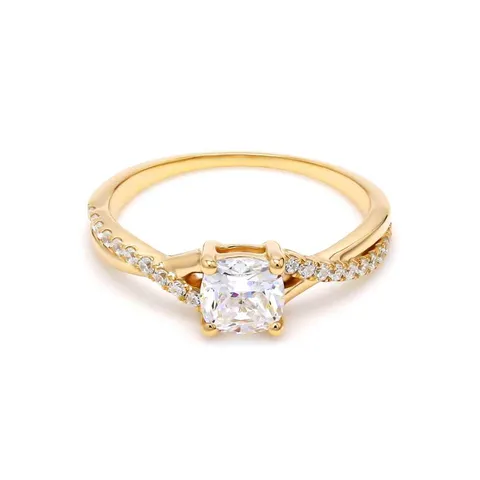 Side Stone · Engagement ringCushion Side Stone Engagement RingSetting for a cushion centre diamond of your choiceFrom $1,618 AUD
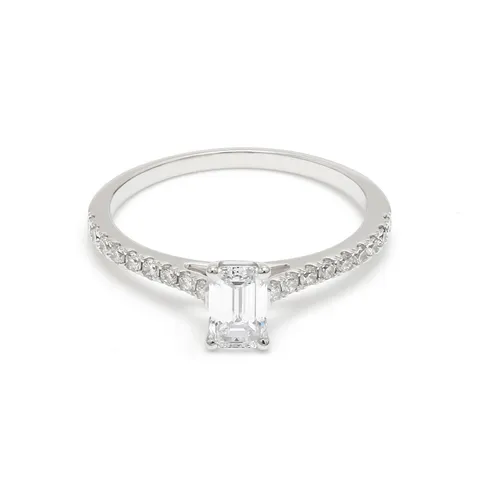 Side Stone · Engagement ringEmerald Side Stone Engagement RingSetting for an emerald centre diamond of your choiceFrom $1,538 AUD
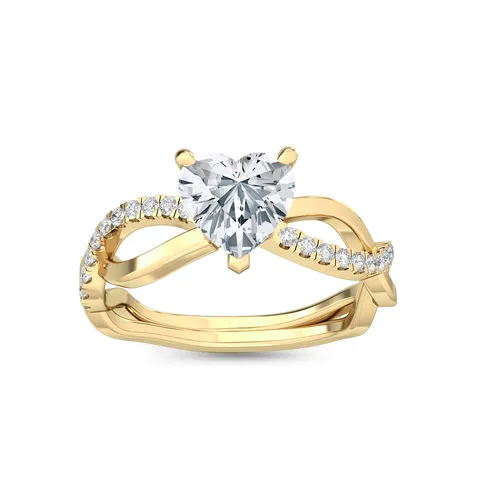 Side Stone · Engagement ringHeart Side Stone Engagement RingSetting for a heart centre diamond of your choiceFrom $1,948 AUD
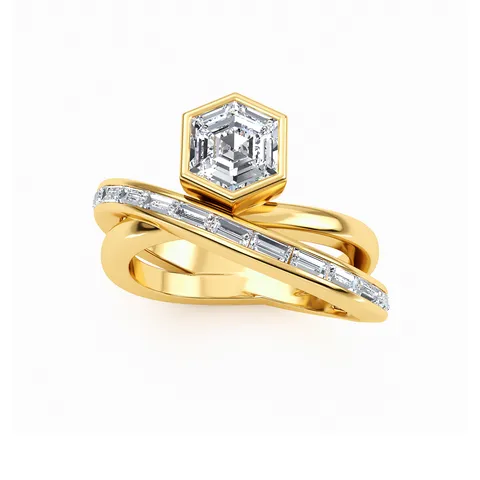 Side Stone · Engagement ringHexagon Side Stone Engagement RingSetting for a hexagon centre diamond of your choiceFrom $3,168 AUD
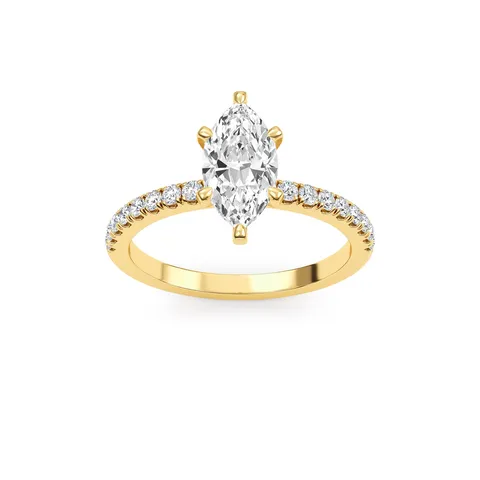 Side Stone · Engagement ringMarquise Side Stone Engagement RingSetting for a marquise centre diamond of your choiceFrom $1,528 AUD
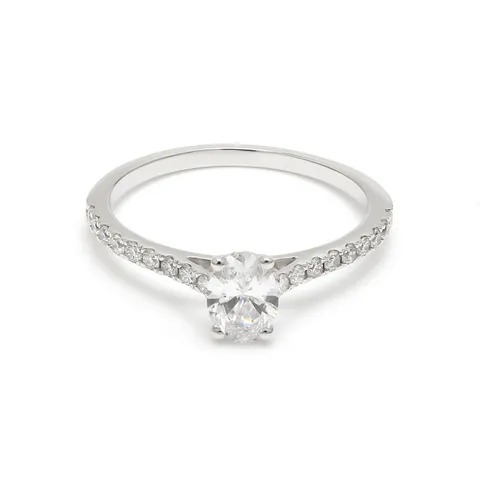 Side Stone · Engagement ringOval Side Stone Engagement RingSetting for an oval centre diamond of your choiceFrom $1,548 AUD
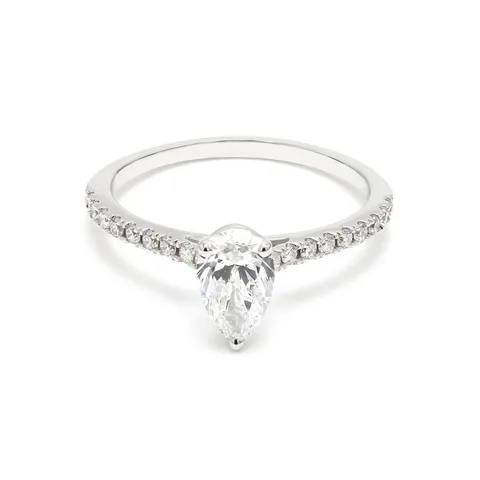 Side Stone · Engagement ringPear Side Stone Engagement RingSetting for a pear centre diamond of your choiceFrom $1,448 AUD
Listed on 26 Nov 2026. “From” prices are the lowest metal and size of each design, AUD incl. GST; each design’s page shows every option. Made to order in Melbourne in 3 to 5 weeks. Images are for illustration; your piece is made to order.
How are lab-grown diamonds valued for insurance?
The same way: the appraiser describes the piece and states what it would cost to replace with an equivalent laboratory-grown diamond at retail today. The appraisal must clearly identify the stone as lab-grown. Lab-grown diamond prices have changed quickly in recent years, which is a good reason to revalue lab-grown pieces more often so the sum insured stays realistic.
If you are not sure whether a stone is natural or lab-grown, an appraiser can send it for testing; a grading report from a laboratory will state whether it is natural or laboratory-grown. Diamond origin reports go a step further for natural diamonds by tracing where a stone came from, which some owners like to keep with their appraisal.
How often should you revalue jewellery?
Prices for gold, platinum and diamonds move, so an appraisal slowly drifts out of date. Many appraisers and insurers suggest revaluing every two to three years, and sooner when metal prices have moved sharply, after you have the piece remodelled or resized, or when you add stones. Check whether your insurer specifies an interval.
An out-of-date appraisal can leave you under-insured if prices have risen, or paying a higher premium than you need if they have fallen. Our guide to how often to revalue jewellery goes through the triggers in more detail.
How do you choose a jewellery appraiser in Australia?
In Australia, anyone can call themselves an appraiser, so look at qualifications and process rather than the title alone. Things worth asking:
- Gemmological training: a recognised gemmology qualification, such as a diploma from the Gemmological Association of Australia or a Graduate Gemologist (GIA) diploma.
- Appraiser registration: whether they are registered with a professional appraisers' body, such as the National Council of Jewellery Appraisers, which sets standards for appraisal practice.
- Equipment: a proper loupe or microscope, accurate scales, gauges and a way to test metal and identify stones.
- Fees: how the fee is calculated. A flat fee or a fee per item is generally considered better practice than a percentage of the value, which can reward a higher figure.
- Independence: whether they also sell jewellery, and if so how they keep appraisals objective.
An appraisal done at the time of purchase is common and perfectly normal, as long as the description is thorough and the value reflects real retail replacement cost. Understanding the stone itself helps you read any appraisal: start with the certificates and reports hub and keep the jewellery glossary open for unfamiliar terms.
GemTrove appraisals and diamonds
How to get a jewellery appraisal for insurance: step by step
- Gather your paperwork. Bring the receipt, any grading report and any earlier appraisal; they speed things up and make the result more precise.
- Clean and check the piece. A clean ring is easier to grade, and a jeweller can flag loose claws or worn settings at the same time.
- Ask how the stone will be assessed. Will it be checked against its report, or graded in the setting with estimated weight?
- Read the draft. Make sure the metal, measurements, stone details and report number are all there and correct.
- Send it to your insurer. Confirm the item is listed and the sum insured matches the appraisal, then diarise the next reappraisal.
Want a gemologist to look at it? Raj Sood is a gemologist in Melbourne, a Graduate Gemologist (GIA) who sees clients by appointment in the CBD. Read what a gemologist does, or see GIA diamonds in Melbourne. Related pages: loose diamonds in Melbourne and engagement rings in Melbourne. Raj Sood, Graduate Gemologist (GIA), sees clients by appointment at Unit 903/125 Swanston St, Melbourne VIC 3000.
To see real stones and prices, browse natural diamonds for sale, all priced in Australian dollars with GST. Buying from outside Melbourne or online? See buying a diamond or engagement ring from anywhere in Australia, how to buy a diamond online safely, diamond prices in Australia this month and how GemTrove selects diamonds. Related guides: a jewellery appraisal and a diamond grading report are not the same thing.
Free consultation
Talk to a gemologist
Compare stones in person or online with Raj Sood, Graduate Gemologist (GIA), AJP (GIA).
Book a consultationFAQ
Common questions
How much does a jewellery appraisal cost in Australia?
Fees vary by appraiser and by how many items and stones are involved. Ask for the fee up front, and prefer a flat or per-item fee over one calculated as a percentage of the value.
Is a diamond certificate the same as an appraisal?
No. A grading report describes the diamond's characteristics and gives no value. An appraisal describes the whole piece and states a replacement value for insurance.
Why is my insurance appraisal so much higher than the price I was offered for my ring?
An insurance appraisal states retail replacement cost. A dealer buying second-hand jewellery pays a trade price, which is usually much lower.
Will over-valuing my ring get me more if I claim?
Usually not. Many policies let the insurer replace the item or pay what replacement costs them, so a higher figure mainly increases your premium.
Can an appraisal be done while the diamond is still set?
Yes. The appraiser grades it in the setting and estimates the carat weight from measurements, which is less precise than grading a loose stone or checking it against a report.
Do lab-grown diamonds need an insurance appraisal?
If the piece is valuable enough to insure separately, yes. The appraisal should clearly state the stone is laboratory-grown and reflect current lab-grown replacement prices.
Ask a gemologist
Not sure which diamond to choose?
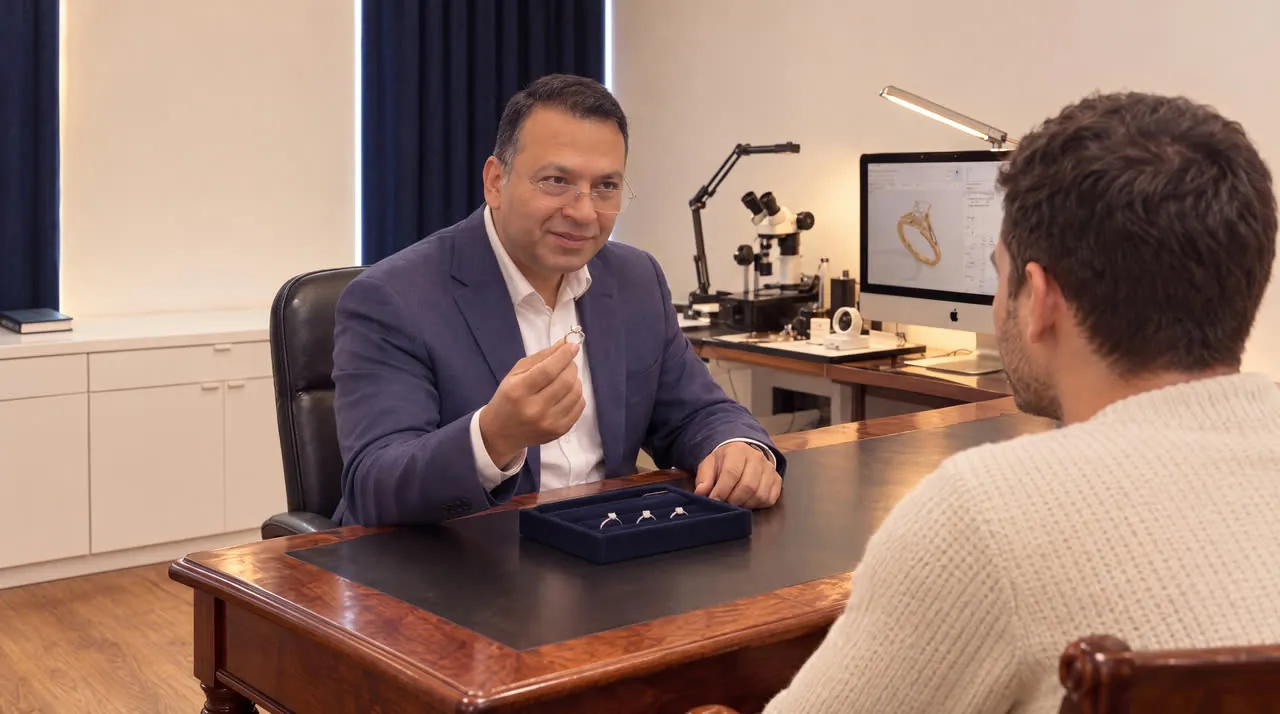
Raj Sood is a Graduate Gemologist (GIA) who works alongside our master jewellers. Bring the stones you are considering, or send the reports, and he will tell you honestly which one is better and why.
Keep learning
Related guides
 Certificates & AppraisalsJewellery and Diamond Appraisal
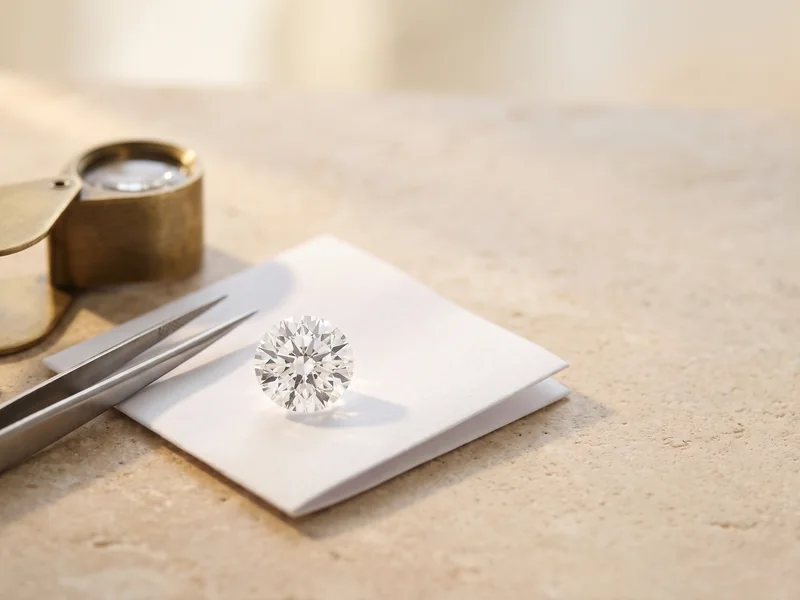 Buying Knowledge & Custom ProcessHow Jewellery Insurance Works in Australia
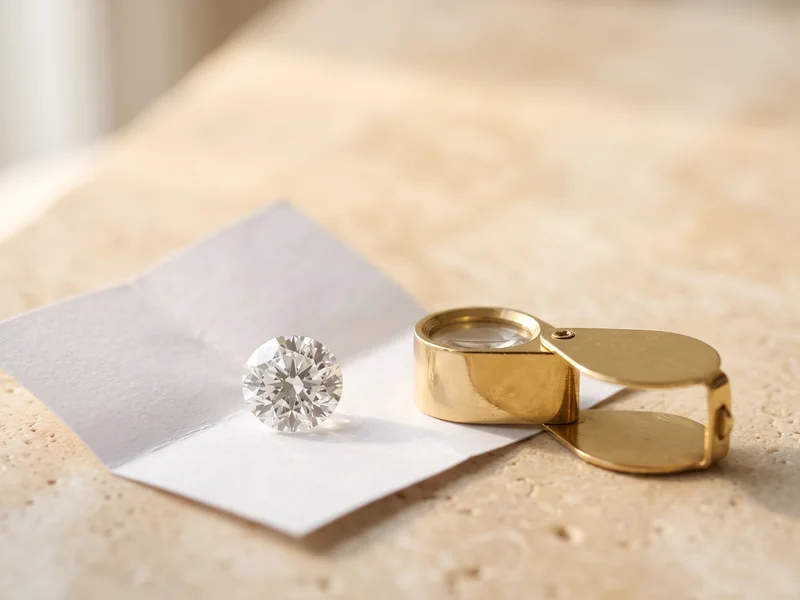 Certificates & AppraisalsHow Often to Revalue JewelleryCertificates & AppraisalsJewellery Appraisals for Estates and Family LawCertificates & AppraisalsDiamond Certificates & Jewellery Reports
 Wedding Bands & EternityA Jewellery Appraisal and a Diamond Grading Report Are Not the Same ThingCertificates & AppraisalsCertified vs Uncertified DiamondsCertificates & AppraisalsDiamond Grading Labs Compared
Explore more
More guides on this topic
Education