
GemTrove
Wedding Band Profiles Explained
A practical comparison of wedding band profiles explained with GemTrove: fit, width, profile, metal, stone setting, comfort and practical guidance for long-term wear.
WEDDING RING SHAPE GUIDE
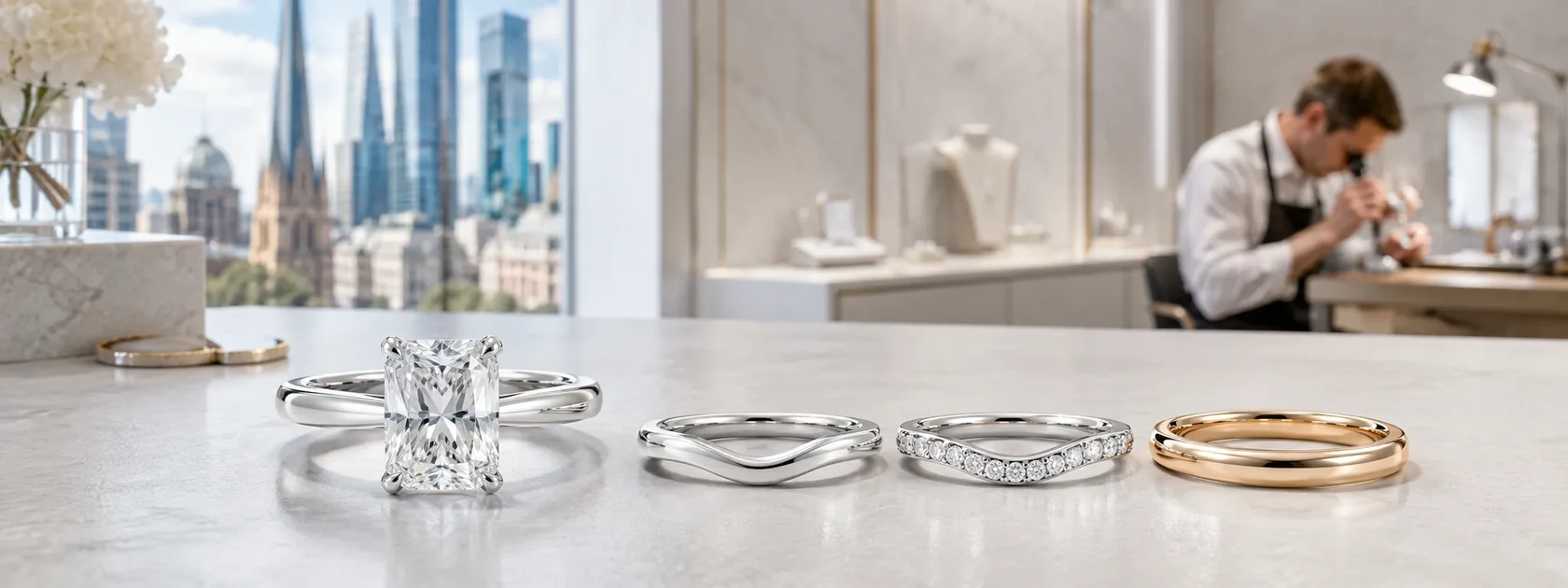
A wedding band profile describes the cross-sectional shape of the ring. It affects how the band looks from the side, how it catches light, how it feels against the finger and whether the overall design appears soft, traditional, contemporary or architectural. The most common profiles include court, flat court, D-shape, flat and comfort-fit. Profile should be chosen together with width, metal, finish and the wearer’s comfort preference. A court band offers rounded classic softness. A flat court band blends modern exterior lines with a more comfortable inner curve. A D-shape ring keeps a domed outer look with a flatter inside. A flat band gives a sharper contemporary silhouette. GemTrove helps customers compare these options in person and tailor them for plain, diamond-set, men’s and custom wedding bands. Continue with Wedding Ring Buying Guide, Wedding Band Width Guide, Men’s Wedding Band Guide and Wedding Bands. The wedding band profile shapes both comfort and character. Two rings in the same metal and width can feel completely different once the profile changes.
Book a Wedding Band Appointment
Browse Wedding Bands
Ask About Band Profiles
Court
Rounded outside and inside for a classic, softly curved wedding ring feel.
Flat court
Flat modern outer face with a curved inner surface for comfort.
D-shape
Domed outer profile with a flatter inner surface and traditional rounded appearance.
Comfort fit
A rounded interior option that can be applied to different wedding band styles. Profile is subtle in photographs but obvious on the hand. GemTrove recommends comparing profile options in person where possible before finalising a custom ring.
Wedding band profiles influence comfort, side appearance, modernity and how the ring feels during daily wear.
DIRECT ANSWER
Which wedding band profile is best?
There is no single best wedding band profile. A court profile suits customers wanting a classic rounded band with a comfortable feel. A flat court profile is often chosen for a modern appearance with a more forgiving inner curve. A D-shape band gives a traditional domed exterior with a flatter inside. A flat profile creates a stronger contemporary line. A comfort-fit interior can make many styles feel smoother for everyday wear.
Best for classic softness Court and D-shape profiles are often preferred when the customer wants a traditional rounded wedding ring look. Best for modern structure Flat and flat court profiles suit those wanting cleaner lines, stronger visual geometry and a more contemporary silhouette.
AT A GLANCE
Five reasons wedding band profile matters Profile may sound technical, but it strongly affects how the ring wears and how refined the finished design feels. 1
Comfort
The inside curve influences how the band feels during daily wear. 2
Visual style
Rounded profiles feel softer; flatter profiles feel sharper and more contemporary.
3
Apparent width
The same millimetre width can look more delicate or more substantial depending on profile. 4
Finish effect
Polish, brushed texture and bevelled edges behave differently across each profile. 5
Custom feel
Profile selection helps tailor a wedding band beyond metal and width alone.
MAIN COMPARISON TABLE
Court, flat court, D-shape, flat and comfort-fit bands compared This table explains how the common wedding band profiles differ in appearance, inner feel and styling direction.
Profile Outer shape Inner shape
Court profile Rounded exterior. Rounded interior.
Profile Outer shape Inner shape
Flat court
profile Flat exterior. Curved comfort-style interior. D-shape profile Rounded or domed exterior. Flatter interior. Flat profile Flat exterior. Typically flatter interior unless comfort fit is added.
Comfort-fit
interior
Can be combined with several
exterior styles. Rounded inner surface.
COURT PROFILE
What is a court wedding band?
A court profile has a rounded exterior and a rounded interior. It is one of the most enduring wedding ring profiles because it feels soft visually and often comfortable in daily wear. The curved outside gives the band a traditional domed appearance, while the curved interior helps avoid sharper edges against the finger.
Classic shape
A court band has a soft rounded silhouette that suits traditional wedding ring styling.
Comfort-led
The curved inner profile can feel smoother, especially in medium and wider ring widths.
Versatile across metals
Court bands work beautifully in yellow gold, white gold, rose gold and platinum.
FLAT COURT PROFILE
What is a flat court wedding ring?
A flat court wedding ring combines a flat outer surface with a gently curved interior. It is often chosen by customers wanting a more modern external silhouette without losing the comfort benefits of a softer inner shape. This profile is especially popular in men’s wedding bands and broader contemporary ring styles.
Modern exterior
The flat outside gives the ring a cleaner, more architectural appearance.
Comfort-focused inside
The curved interior helps the band sit more gently against the finger. Strong for custom finishes Brushed, matte, bevelled or grooved details often sit especially well on flatter outer surfaces.
Continue with Men’s Wedding Band Guide and Wedding Band Width Guide.
D-SHAPE PROFILE
What is a D-shape wedding band?
A D-shape wedding band has a domed or rounded exterior and a flatter interior, creating a cross-section similar to the capital letter “D”. It provides the visual softness of a traditional rounded wedding ring while keeping a simpler, flatter inside surface. D-shape bands often appeal to customers who want A traditional outer dome A familiar classic wedding ring look Defined curvature without an overly bulky feel A suitable base for polished precious metal bands Points to compare against court bands The D-shape interior is flatter than a true court profile A court band may feel softer inside for some wearers Both can look classic from the outside Comfort should be judged by trying both where possible
FLAT PROFILE
What is a flat wedding band?
A flat wedding band has a straighter, more planar outer face and typically a cleaner-edged appearance. It feels more contemporary than a softly rounded court or D-shape band. Flat profiles are often chosen for wider men’s bands, minimalist wedding rings and designs where surface finish, grooves or polished edge details become part of the style.
Crisp modern line
The flat outer face produces a sharper silhouette and stronger side profile.
Excellent for finishes
Brushed, satin, matte and mixed-polish designs show clearly across a flat face.
Can include comfort fit
A flat-looking band can still be made with a curved inner comfort-fit surface.
COMFORT FIT
What does comfort fit mean in a wedding band?
Comfort fit usually refers to a softly curved inner surface designed to feel smoother on the finger. It is especially useful in medium or wider bands, where a more rounded interior can reduce the sense of bulk at the edges. Comfort fit is not always a separate outer profile; it can be paired with court, flat court or flat-exterior styles depending on the design.
Comfort-fit question Practical an
Does comfort fit change the outside appearance? Not necessa
Is comfort fit useful for narrow rings? It can be, bu
Does comfort fit help daily wear? Many weare
Can a flat band have comfort fit? Yes. A ring m
Should comfort fit be compared in person? Yes. Finger s
PROFILE AND WIDTH TOGETHER
Why ring width changes how a profile feels
A profile that feels subtle in a 3mm band may feel more noticeable in a 6mm band. Wider rings reveal more of the outer surface, making flat, bevelled and stepped profiles visually stronger. Wider bands can also make the inside construction more relevant to comfort, which is why many customers consider flat court or comfort-fit interiors when choosing broader men’s wedding rings.
Narrower wedding bands
Profiles appear more delicate Court and D-shape styles can feel soft and classic Flat profiles create understated contemporary lines Often used in finer bridal bands and simple plain rings
Wider wedding bands
Profile shape becomes more visibly important Flat court and comfort-fit styles are commonly compared Finish and edge treatment have stronger design impact Often chosen for substantial men’s wedding bands
Read Wedding Band Width Guide and Men’s Wedding Band Guide.
PROFILE AND FINISH
How profile changes the look of polish, brush and texture
Surface finish works differently across each wedding band profile. A court band reflects light with a softer curved glow. A flat band gives more direct planes for satin, matte and brushed finishes.
Bevelled edges can create a crisp border on flat court or flat styles. A D-shape ring keeps a classic domed feel that suits polished traditional wedding bands particularly well.
Polished court or D-shape
Warm, traditional and softly reflective, ideal for classic plain wedding rings.
Brushed flat court
Contemporary and purposeful, often selected for modern men’s wedding bands. Mixed finish flat band Polished borders with a brushed centre can create elegant contrast and visual structure.
PLAIN, DIAMOND-SET AND CUSTOM BANDS
Profile choices also matter in more detailed wedding rings Wedding band profile is not limited to plain rings. Diamond-set bands, shaped wedding bands and custom fitted bridal bands also benefit from careful profile planning. A more softly rounded profile may complement a classic engagement ring, while a flatter band with refined diamonds can suit a modern bridal set. The chosen profile should support the diamonds rather than making the ring look overly heavy or disconnected.
Plain bands
Profile and finish define almost all of the visual character, making shape selection especially important.
Diamond wedding bands
Profile influences band height, side view and how diamonds sit within the ring architecture.
Custom fitted bands
Profile can be refined alongside contour and width to better match an engagement ring.
Continue with Plain vs Diamond Wedding Bands, Curved vs Straight Wedding Bands and Fitted
Wedding Bands Explained.
GENERAL CASE STUDY
Choosing the Right Wedding Band Profile for Daily Comfort
and Style
This illustrative case study shows how wedding band profile can refine a ring even when metal and width are already decided. From a simple platinum band request to a more considered flat court design
THE BRIEF
A customer wants a plain platinum men’s wedding band with a clean contemporary look, but is unsure whether a flat ring may feel too sharp for everyday wear.
GEMTROVE’S GUIDANCE
Court, flat, flat court and D-shape profiles are compared alongside width and finish. The customer tries a more modern outer profile with a rounded inner feel.
DESIGN DECISION
A flat court profile is selected, combining a crisp exterior with a comfort-led interior, then finished with a refined brushed centre and polished edges.
FINAL OUTCOME
The finished wedding band feels modern and substantial without compromising day-to-day comfort, showing the value of choosing the right profile.
GEMTROVE WEDDING BAND GUIDANCE
Profile is one of the most important small details in a wedding ring GemTrove is a third-generation jewellery business established in 2008, specialising in custom-made engagement rings, wedding bands, fine jewellery, natural diamonds, lab-grown diamonds and coloured gemstones from its Melbourne CBD showroom. With Graduate Gemologist – GIA expertise, custom CAD design support and practical ring-making knowledge, GemTrove helps customers compare court, flat court, D-shape, flat and comfort-fit profiles in context with width, metal, finish and everyday wear.
Profile explained clearly
Customers can understand how the side shape changes the ring’s look and feel. Comfort compared in person Inner profile differences are easier to judge once the band is on the hand.
Custom made options
Profile, width, metal and finish can be tailored to the wearer’s preferences. Bridal and men’s guidance Profile selection is considered for plain bands, diamond bands and men’s rings alike.
HELPFUL GEMTROVE LINKS
Explore wedding ring design, width, metals and custom band
options These pages help customers choose a wedding band profile as part of a complete, well-balanced ring decision.
Wedding Ring Buying Guide
Review the wider process of selecting metals, widths, style and custom wedding band details.
Wedding Band Width Guide
Understand how 2mm, 3mm, 4mm, 5mm and wider bands change the final look.
Men’s Wedding Band Guide
Compare men’s ring metals, widths, finishes, comfort fit and design direction.
Plain vs Diamond Wedding Bands
Choose between classic metal-led wedding bands and diamond-set styles.
Custom-Made Wedding Bands
Explore tailored width, profile, metal, diamond and finish options.
Curved vs Straight Wedding Bands
See how band shape and contour relate to an engagement ring.
Fitted Wedding Bands Explained
Learn about bands designed around existing ring profiles and exact contours.
Yellow Gold vs White Gold vs Rose Gold
Compare wedding band metal colours and how they shape the final look.
White Gold vs Platinum
Review naturally white platinum and bright white gold for wedding bands.
Wedding Bands
Browse wedding ring styles available through GemTrove.
Book a Private Appointment
Compare profile options in GemTrove’s Melbourne CBD showroom.
Contact GemTrove
Ask about wedding band profiles, custom specifications or appointment guidance.
CLIENT CONFIDENCE
The right wedding band often comes down to details that are felt, not just seen Profile choice can seem minor online, but on the hand it affects comfort, balance and the sense of quality in a wedding ring. Customers benefit from comparing court, flat court, D-shape and flat styles side by side before making a final selection. [Consider adding a verified customer testimonial relevant to wedding band guidance, comfort comparison, custom men’s rings or thoughtful in-showroom advice.] A wedding ring should look right and feel right every day. GemTrove helps refine subtle profile choices that make the final band more personal and enduring.
FREQUENTLY ASKED QUESTIONS
Wedding band profile FAQs
What is a wedding band profile?
A wedding band profile is the cross-sectional shape of the ring. It affects the outer look, the inner feel and the overall comfort of the band.
What is a court wedding band?
A court band has a rounded exterior and rounded interior, creating a classic, softly curved profile that many customers find comfortable for daily wear.
What is a flat court wedding ring?
A flat court ring has a flat outer surface with a curved interior, combining a modern exterior look with a comfort-focused inner shape.
What is a D-shape wedding band?
A D-shape band has a domed or rounded outside and a flatter inside surface, creating a traditional curved appearance from the top and side.
What is a flat wedding band?
A flat wedding band has a straighter outer profile and a more architectural appearance. It is often chosen for modern and minimalist wedding ring styles.
What does comfort fit mean?
Comfort fit refers to a ring with a rounded inner surface designed to feel smoother against the finger, especially in medium and wider bands.
Is court profile the same as comfort fit?
A court profile generally includes a rounded interior and exterior, so it is often comfortable. Comfort fit specifically refers to the rounded inner surface and can also be used with other outer profile styles.
Which wedding band profile is most comfortable?
Many wearers prefer court, flat court or other comfort-fit interiors because the inside of the ring is more softly rounded. The best choice still depends on width, finger shape and personal feel.
Which profile suits a modern men’s wedding band?
Flat court and flat profiles are often chosen for modern men’s wedding bands because they create cleaner lines and pair well with brushed, matte, bevelled or grooved finishes.
Which profile suits a traditional wedding ring?
Court and D-shape profiles are often preferred for traditional wedding rings because they create a softer rounded silhouette.
Can GemTrove custom make wedding bands in different profiles?
Yes. GemTrove creates custom wedding bands in court, flat court, D-shape, flat and comfort-fit styles, tailored by metal, width, finish and design brief.
Should I choose profile before or after width?
Profile and width should ideally be considered together, as a band’s width changes how strongly the profile appears and how the ring feels in daily wear.
CHOOSE THE PROFILE THAT FITS YOUR HAND AND STYLE
Compare court, flat court, D-shape, flat and comfort-fit wedding bands with GemTrove
Book a private appointment to compare wedding band profiles, widths, finishes and precious
metal options, then create a ring that feels considered from every angle.
Book a Wedding Band Appointment
Browse Wedding Bands
View Width Guide
Contact GemTrove
Proudly Australian Made and Owned
Visit Us in Melbourne
Stay Connected
0488878000 diamonds@gemtrove.com.au
Suite 903/125 Swanston St, Melbourne VIC 3000
Follow Us
Stay Update
Phone: 0488 878 000
Email: diamonds@gemtrove.com.au
Showroom: Suite 903/125 Swanston St, Melbourne VIC 3000
Appointments: Book a wedding band consultation
ABOUT GEMTROVE
WHY GEMTROVE
GemTrove Sitemap
Enter Your Email
(We will only send you insider news about our shapes, styling tips and exclusive updates) |