
- Education
- Engagement Rings & Settings
- Settings That Make a Diamond Look Bigger: Halos, Claws, Bands and Metal
Engagement Rings & Settings
Settings That Make a Diamond Look Bigger: Halos, Claws, Bands and Metal
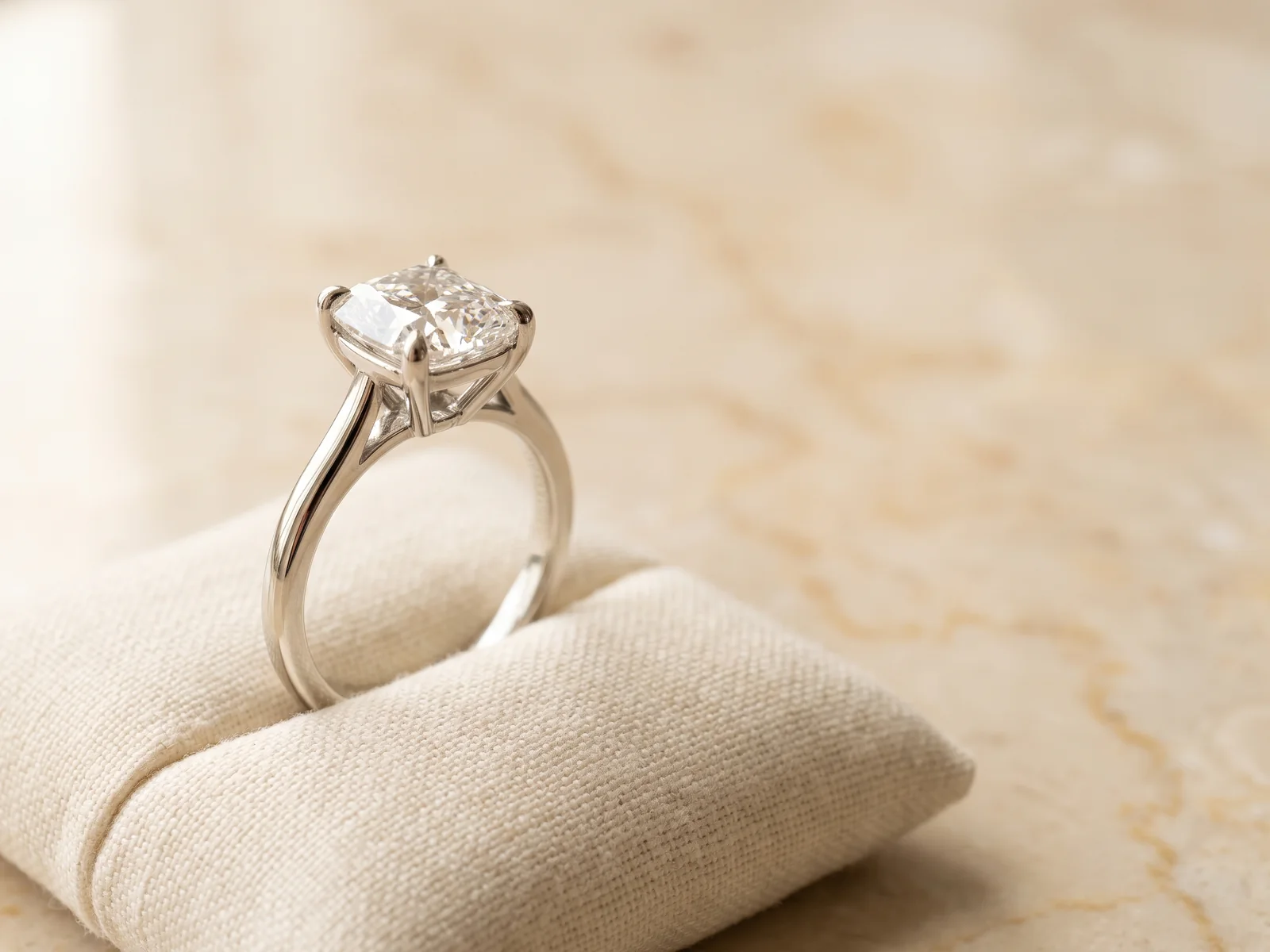
The setting can change how big a diamond looks as much as a jump in carat weight, often for less money. Here are the settings that make a diamond look bigger, with real millimetre figures and the trade-offs a jeweller will tell you about.
 Reviewed by Raj Sood, Graduate Gemologist (GIA), AJP (GIA)Master jeweller and Graduate Gemologist (GIA) · reviewed 4 November 2026
Quick answer
The settings that make a diamond look bigger are a halo (adds about 2–3 mm to the face-up width), slim four-claw heads, thin or tapered bands of about 1.6–2.0 mm, white metal claws, and illusion or cluster settings. Elongated shapes help too. Bezels and flush settings usually make a diamond look slightly smaller.
What are the settings that make a diamond look bigger?
Your eye does not measure a diamond in carats. It judges the face-up size (the outline you see looking straight down at the ring) and compares it with everything around it: the claws, the band, the metal colour and your finger. Change those surroundings and the same diamond can look noticeably larger or smaller. That is the whole idea behind the settings in this guide, and it sits alongside the stone-side tricks covered in the full set of ways to make a diamond look bigger.
It helps to know the parts of a ring first. The head is the part that holds the diamond. It is made of claws (also called prongs: small metal posts that grip the stone) or a bezel (a metal rim around the edge). Under the head sits the gallery, the side structure you see in profile. The shoulders are where the band rises to meet the head, and the shank is the band itself. Each part can be designed to add visual size or to take it away.
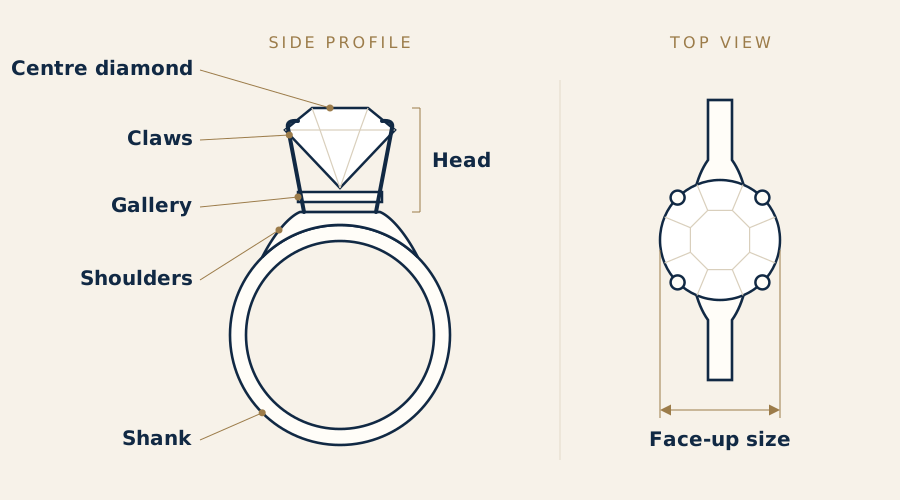
In short, the settings that add the most visual size are halos, clusters and illusion heads, which surround the centre with extra sparkle. Thinner claws, slimmer bands and white metal add a smaller but real boost. Bezels, flush settings and heavy, wide bands tend to do the opposite. Our overview of every engagement ring setting style shows how these fit into the wider range of designs, and any unfamiliar word here is explained in our glossary of jewellery terms.
Why does surrounding a diamond with more diamond work so well? Diamond has a high refractive index, about 2.42, so even tiny stones return a lot of light. Small diamonds packed around a centre stone read from a distance as one larger bright area. If you want the science behind that brightness, see why diamond returns so much light.
Does a halo make a diamond look bigger?
Yes, and by more than any other setting. A halo is a ring of small diamonds, called melee (diamonds under about 0.18 carat), set closely around the centre stone. With melee of about 1.0 mm and a fine metal rim, a halo adds roughly 1.1–1.3 mm on each side, so the bright outline grows by about 2.2–2.6 mm across. With 1.3–1.5 mm melee, the gain is closer to 3 mm.
| Round centre | Centre diameter | With a 1 mm halo | Similar outline to a round of |
|---|---|---|---|
| 0.50 ct | about 5.1 mm | about 7.3 mm | about 1.40 ct |
| 0.75 ct | about 5.8 mm | about 8.0 mm | about 2.00 ct |
| 1.00 ct | about 6.4 mm | about 8.6 mm | about 2.40 ct |
| 1.50 ct | about 7.4 mm | about 9.6 mm | about 3.25 ct |
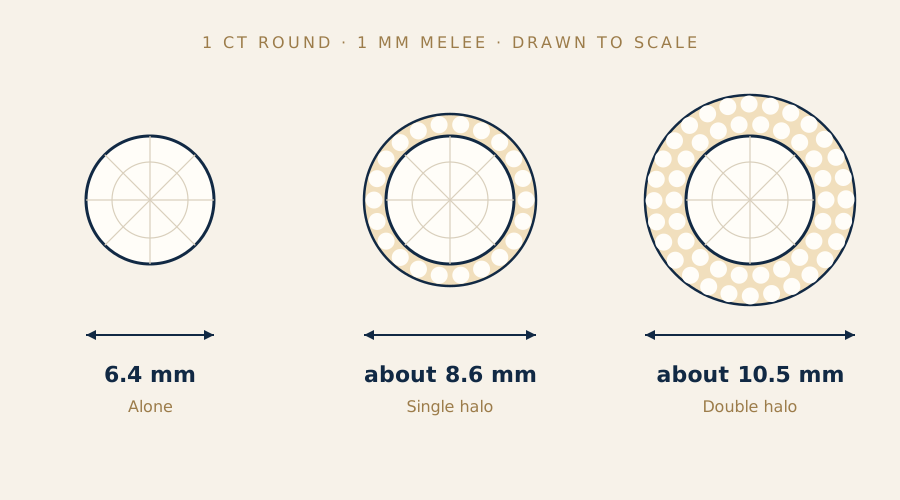
How much bigger does a halo make a diamond in real life? From across a room, the whole halo reads as the stone. Up close, you can still see where the centre ends, because the melee sparkle in smaller, busier flashes. So a halo makes the ring look larger rather than turning a 1 carat into a 2.4 carat. Think of it as a bigger presence, not a bigger diamond.
- Single halo: the classic choice, adding about 2–3 mm to the outline.
- Double halo: two rows of melee, adding about 4–5 mm. Very bold on a small centre, and more claws to check over time.
- Hidden halo: melee set around the gallery under the stone. It adds sparkle from the side but almost nothing face-up.
- Shaped halo: a halo can follow the stone's outline or change it, such as a cushion-shaped halo around a round. See how a halo frames a cushion for that look.
A halo does not have to be white. Sapphire and ruby halos are common because both are 9 on the Mohs hardness scale and wear well. Softer stones are a different matter: a peridot halo looks lovely, but at 6.5–7 on Mohs it scratches and wears faster on a ring worn every day. Our page on why peridot's green behaves differently covers where it works best. A coloured halo also makes the centre look smaller than a white one, because the eye separates the two colours.
Do claws or a bezel make a diamond look bigger?
Claws generally make a diamond look bigger than a bezel, because they leave more of the outline and more of the sides open to light. But the number, size and placement of the claws all matter.
- Four claws vs six: on a stone under about 0.75 carat, six claws cover a noticeable share of a small outline. Four claws show more diamond and tend to make the stone look a touch squarer and larger. On bigger stones the difference is minor.
- Claw size: finer claw tips of about 0.8–1.0 mm on a 1 ct stone hide less than heavy 1.3 mm claws. They must still be thick enough to hold the stone for years.
- Claw shape: rounded, pointed (talon) or flat tab claws. Pointed claws that taper out from the edge visually extend the outline slightly.
- Double claws: pairs of thin claws add security and a little extra 'frame' without the bulk of one heavy claw.
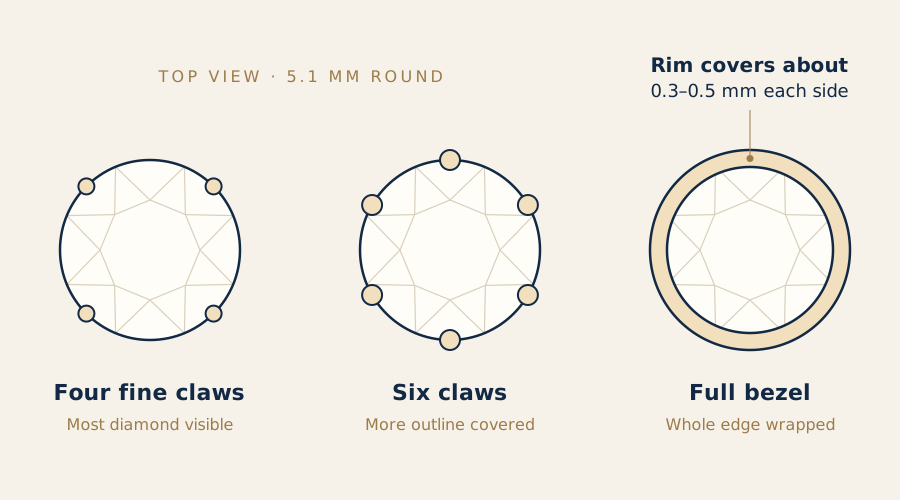
A bezel wraps the edge in metal, covering about 0.3–0.5 mm of the girdle (the outer edge of the diamond) on each side. On a 6.4 mm round, that can leave about 5.6 mm of diamond visible. In white metal with a fine, polished rim, the whole bezel can still read as one bright disc from a distance, so it is not always a big loss. A half bezel, which covers only two sides, sits between the two. Our explanation of how claws, bezels and channels hold a stone compares their security in detail.
Fancy shapes need claw placement that protects corners and points first. A princess, for example, should have a claw on each corner, and a V-claw is the usual choice there; see claw placement for princess corners.
Does a thin band make a diamond look bigger?
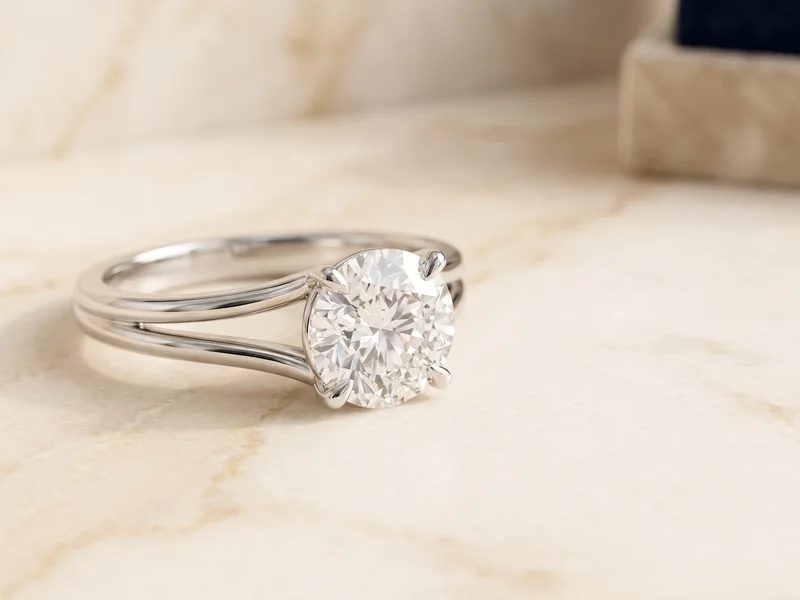
Yes. It is a proportion trick: a 6.4 mm diamond next to a 1.8 mm band looks much larger than the same stone on a 3 mm band. A band of about 1.6–2.0 mm wide is the usual sweet spot for a centre of 0.50–1.50 carats. Below about 1.5 mm the band may bend over time, especially under a halo, and it is harder to resize.
- Tapered shoulders: the band narrows as it reaches the head, which makes the centre look wider by contrast.
- Pavé shoulders: small diamonds set along the band carry sparkle up to the centre. They add brightness, though they also add busy detail beside the main stone.
- Cathedral shoulders: the band sweeps up in arches to hold the head. They draw the eye upward and make the centre look more prominent in profile.
- Split shank: the band splits into two near the head. It fills more of the finger, which suits larger hands, but can make a small stone look smaller.
Your finger matters too. The same 1 ct round covers more of a size J finger than a size Q finger, so it looks bigger on slimmer hands. If you are choosing for someone with larger hands, a halo or an elongated shape does more work than a thin band alone.
Many of the details that change the look in profile, such as a hidden halo or a detailed gallery, are covered in hidden halos and other under-the-head details.
Related guideHow to Make a Diamond Look BiggerNot sure which one is right?
Send us the stones you are looking at and our gemologist will tell you which to choose and why.
Does white gold or platinum make a diamond look bigger than yellow gold?
White metal claws blend into a colourless diamond, so the stone and its claws read as one larger white shape. Yellow or rose gold claws stand out as separate coloured dots, which visually trims the outline. The difference is small, perhaps a fraction of a millimetre in how the edge reads, but you can see it side by side.
| Metal choice | Effect on apparent size | Effect on colour |
|---|---|---|
| Platinum or white gold head | Claws blend in; stone reads largest | Keeps colourless diamonds looking white |
| Yellow gold head and band | Claws read as separate; slightly smaller | Warms the diamond; suits I–J colour |
| Rose gold head and band | Similar to yellow gold | Adds a pink warmth |
| Two-tone: white head, yellow band | Most of the size benefit of white | White around the stone, warm on the finger |
The two-tone option is popular for exactly this reason: a white gold or platinum head keeps the diamond looking white and large, while the band is the gold colour you prefer. White gold is usually rhodium plated (a thin coating of a bright white metal) and needs re-plating every year or two to keep that effect; platinum is naturally white.
Colour and setting work together. A warmer diamond in a bright white halo can look a little warmer by contrast, while yellow gold hides it. Our guide to shapes that hide warmth and inclusions explains how the cut changes this too.
What is an illusion setting, and where did these tricks come from?
An illusion setting surrounds a small diamond with a polished white metal plate, often bright-cut (engraved with tiny angled facets) or edged with millegrain (a row of tiny metal beads). The plate catches the light, so a 0.10–0.25 carat diamond reads from a distance as a larger bright shape. Making small diamonds look bigger is nothing new; jewellers have been doing it for centuries.
| Era | Approximate dates | Size-boosting technique |
|---|---|---|
| Georgian | c. 1714–1837 | Cluster rings of rose-cut diamonds in closed settings, often foil-backed to brighten them |
| Victorian | 1837–1901 | Daisy and cluster rings, small stones grouped to read as one flower |
| Edwardian | c. 1901–1915 | Platinum openwork and millegrain borders, fine claws that let light in |
| Art Deco | c. 1920–1935 | Geometric halos of small diamonds and calibré-cut coloured stones |
| Mid-century | 1940s–1950s | Illusion heads and plates around small diamonds |
| Modern | 2000s on | Micro-pavé halos, hidden halos and pavé bands |
Because our workshop remakes and repairs antique rings, we see how these older techniques hold up. Illusion plates and millegrain wear down over decades and can be rebuilt, while Georgian foil-backed settings should be kept dry, because water trapped behind the foil discolours it. The modern halo is essentially the Art Deco and cluster idea made with machine-precise melee.
Can cluster, floral and flush settings make a small diamond look bigger?
A cluster groups several small diamonds into one shape, with no single large centre. Seven 0.10 ct rounds arranged as a flower can face up at about 8–9 mm across, similar to the outline of a 2 carat round, for the cost of much smaller stones. Floral designs work the same way; see petal and floral cluster settings for the main styles. The trade-off is that a cluster sparkles in many small flashes rather than one big one.
Some settings go the other way. A flush or gypsy setting sinks the diamond into the band so the surface sits level with the metal. It is very secure and practical, but the metal covers the edge and hides the sides, so the stone looks smaller than its carat weight. Tension designs grip the stone between the two ends of the band; they let light in from the sides but hide part of the girdle where the metal holds it. Our guide to tension and suspended designs covers how much each style shows.
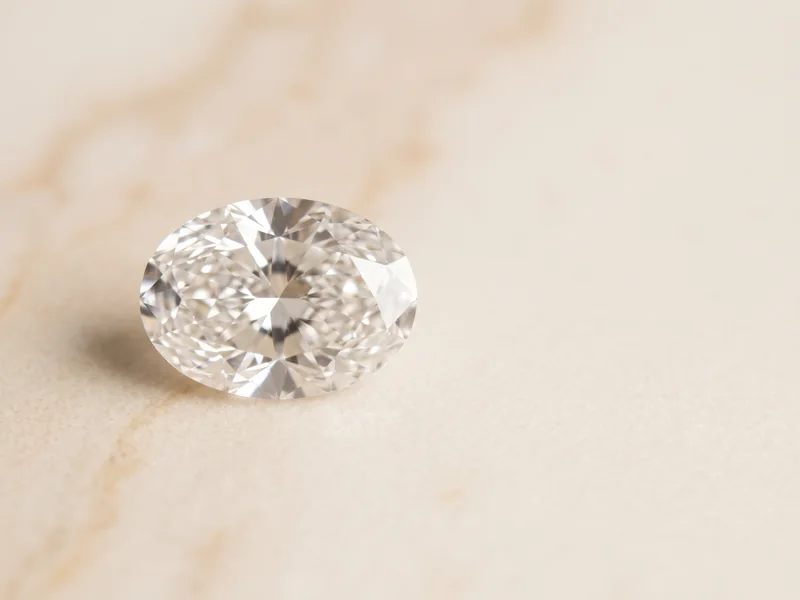
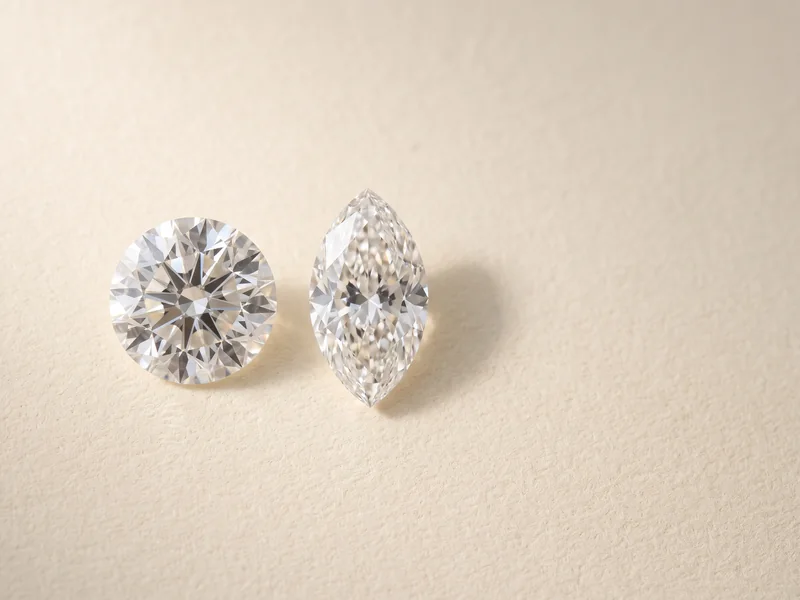
Shape matters as much as setting. Ovals, pears and marquise diamonds spread their weight over a longer outline and face up larger than a round of the same carat. Compare the numbers in shapes that face up largest for their weight before you settle on a setting.
Which settings add the most visual size? Comparison
| Setting | Effect on apparent size | Typical gain | Trade-offs |
|---|---|---|---|
| Double halo | Largest | About 4–5 mm across | Busy look; many small claws to maintain |
| Single halo | Large | About 2–3 mm across | Centre less distinct up close |
| Cluster or floral | Large for the carat | Outline of a much larger stone | Many small flashes, not one big one |
| Illusion plate | Moderate | Most effective under 0.25 ct | Vintage look; plate can wear |
| Fine four-claw solitaire | Small | Shows the full outline | Claws need checking over time |
| Thin or tapered band | Small | Better proportion, not more mm | Below 1.5 mm may bend |
| White metal head | Small | Claws blend into the stone | White gold needs re-plating |
| Bezel | Slightly smaller | Covers about 0.3–0.5 mm each side | Very secure and snag-free |
| Flush (gypsy) | Smaller | Hides edge and sides | Very secure; low profile |
These settings can be combined. A fine four-claw head in platinum on a tapered 1.8 mm band, with a hidden halo underneath, makes a 1 carat round look as large as it can without changing its outline. Add a full halo if you want the biggest possible presence.
How much do settings that make a diamond look bigger cost?
A halo or cluster usually costs more than a plain solitaire setting, because of the melee and the extra setting time, but it can cost far less than moving up in carat weight. As a broad guide in Australia, a plain 18ct gold solitaire setting runs about AUD $1,200–$2,500, and a halo setting about AUD $2,000–$4,500, depending on the metal, the size of the centre and whether the melee is natural or lab-grown. Platinum generally adds to both.
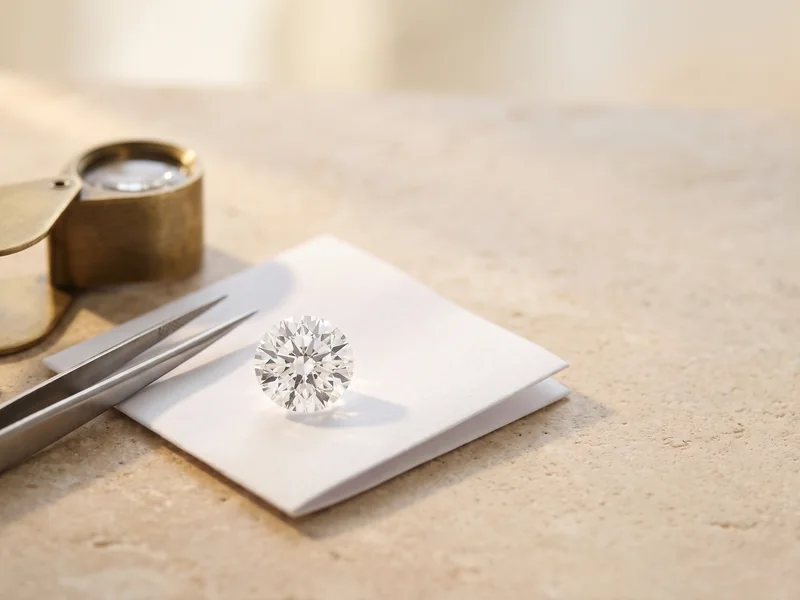
Compare that with the centre stone. Going from a 1 ct to a 1.5 ct natural diamond of the same grades often adds many thousands of dollars, while the same step in a lab-grown diamond costs much less. Lab-grown diamonds are real diamond, grown in a laboratory rather than mined, and look identical to natural ones; either can sit in any of these settings. Before you set a loose stone, check its spread and brightness in a tweezer video so you know the face-up size you are starting from.
Custom work is also where you can add the small personal touches, such as a hidden stone or engraving inside the band. Our page on engraving ideas that stay meaningful has ideas that suit both engagement rings and bands.
Create your ring: browse ring settings
How do you choose settings that make a diamond look bigger? Step by step
- Measure the stone, not the carat. Note the face-up millimetres from the grading report.
- Decide how much extra size you want. A halo adds about 2–3 mm; a fine solitaire head simply shows the full outline.
- Choose the head. Four fine claws for small stones, six or a bezel if security matters more than size.
- Pick the metal near the stone. A white metal head keeps the outline looking largest, even on a yellow or rose gold band.
- Set the band width. Aim for about 1.6–2.0 mm, tapered near the head if you want extra contrast.
- Check it in profile and on the hand. Look at claw thickness, the gallery and how the ring sits beside a wedding band.
- Plan the upkeep. Halos and fine claws should be checked by a jeweller about once a year.
Free consultation
Talk to a gemologist
Compare stones in person or online with Raj Sood, Graduate Gemologist (GIA), AJP (GIA).
Book a consultationShop this shape
FAQ
Common questions
Does a halo make a diamond look bigger?
Yes. A single halo of 1 mm diamonds adds about 2–3 mm to the bright outline, so a 6.4 mm 1 ct round reads at about 8.6 mm across. Up close, you can still see where the centre stone ends.
What is the best setting for a small diamond to look bigger?
For stones under about 0.50 carat, a halo, cluster or illusion setting adds the most visual size. A fine four-claw head on a slim white metal band is the simplest option that shows the full outline.
Does a bezel make a diamond look smaller?
Slightly. A bezel covers about 0.3–0.5 mm of the edge on each side, though a thin polished white rim can still read as part of the stone from a distance.
Does a thin band make a diamond look bigger?
Yes, by proportion. A band of about 1.6–2.0 mm makes the centre look larger than a wide band, but below about 1.5 mm the band may bend over time.
Do six claws make a diamond look smaller than four?
On stones under about 0.75 carat, yes, because six claws cover more of a small outline. On larger stones the difference is hard to see.
Does yellow gold make a diamond look smaller?
A little. Yellow claws stand out as separate points, while white claws blend into the diamond. A white metal head on a yellow gold band keeps most of the size benefit.
Terms in this guide

Ask a gemologist
Not sure which diamond to choose?
Raj Sood is a Graduate Gemologist (GIA) and master jeweller. Bring the stones you are considering, or send the reports, and he will tell you honestly which one is better and why.
Keep learning
Related guides
 Diamond 4Cs & GradingHow to Make a Diamond Look BiggerEngagement Rings & SettingsEngagement Ring Setting Styles Guide
 Diamond ShapesWhich Diamond Shape Looks Biggest per Carat
 Engagement Rings & SettingsDiamond & Gemstone Setting Guide
 Engagement Rings & SettingsHidden Details That Make a Custom Engagement Ring Personal
 Buying Knowledge & Custom ProcessWhat to Look for in a Loose Diamond Tweezer Video
 GemstonesPeridot Jewellery: What Makes Its Green Different?
 Wedding Bands & EternityWedding Ring Engraving Ideas That Stay Timeless
Explore more
More guides on this topic
Education