
- Education
- Diamond Shapes
- Princess Cut Diamonds: The Complete Guide
Diamond shapes
Princess Cut Diamonds: The Complete Guide
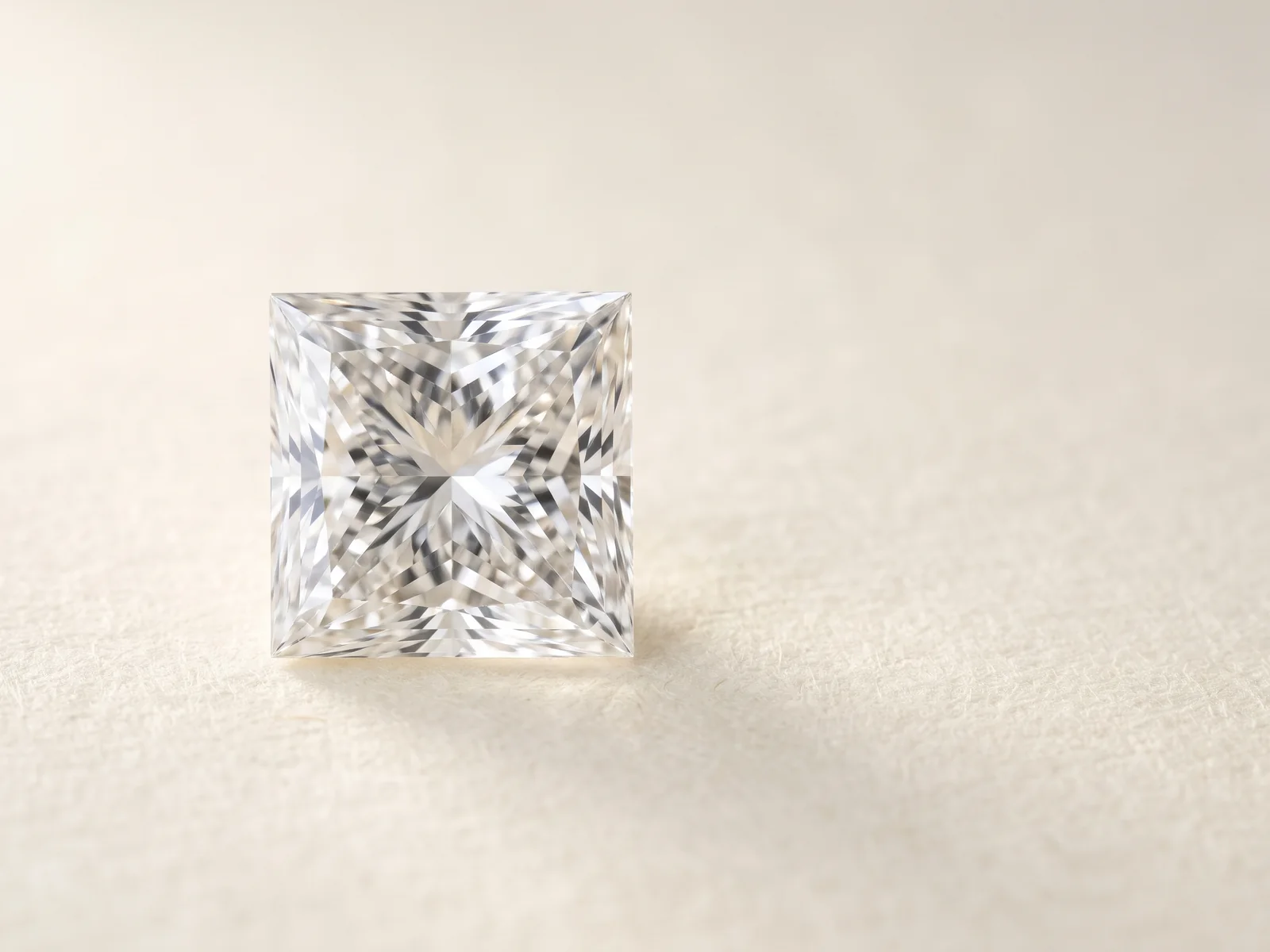
The princess cut diamond is the square brilliant: crisp, bright and usually better value per carat than a round. It has four sharp corners, though, so it pays to know what to check.
 Reviewed by Raj Sood, Graduate Gemologist (GIA), AJP (GIA)Master jeweller and Graduate Gemologist (GIA) · reviewed 4 November 2026
Quick answer
A princess cut diamond is a square or slightly rectangular modified brilliant with four sharp corners and usually 57 or 58 facets arranged in chevron patterns beneath. Look for a length-to-width ratio of 1.00–1.05, total depth of about 65–75%, an eye-clean clarity, and a setting with V-claws or a bezel that protects the corners.
What is a princess cut diamond?
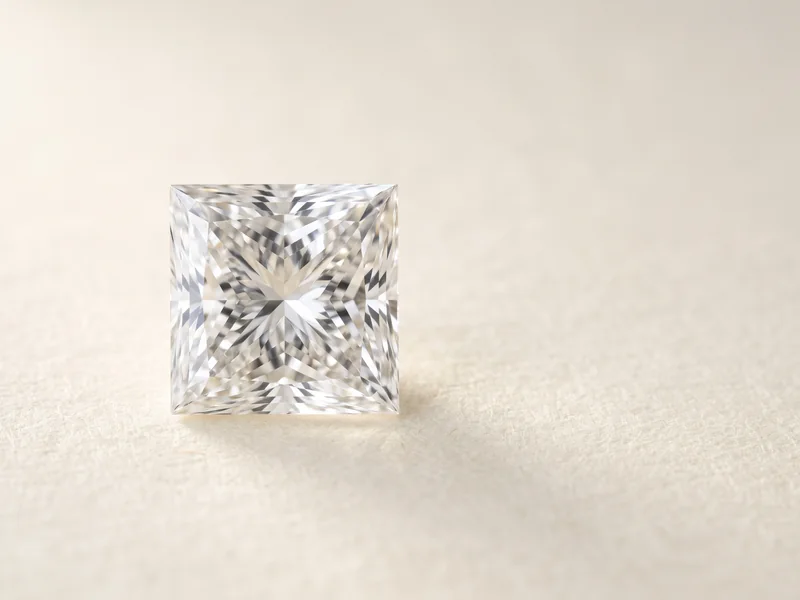
A princess cut diamond is a square or slightly rectangular modified brilliant. Seen from above, it has straight sides and four sharp, pointed corners. Seen from the side, it looks like an upside-down pyramid, because most of its depth sits in the pavilion (the lower half of the stone). The pavilion facets are cut as rows of chevrons, V-shaped facets that point towards the centre. They break light into many small, bright flashes rather than the broad, mirror-like panels of a step cut such as the emerald.
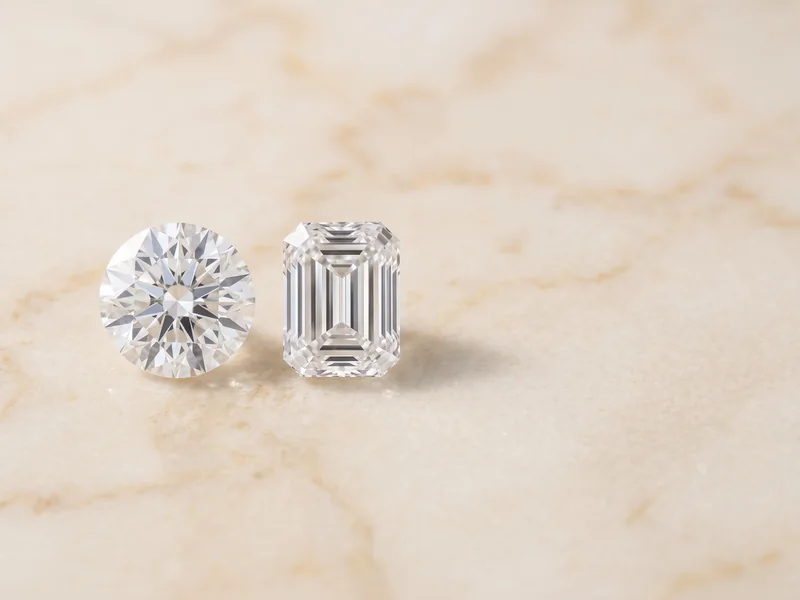
For decades the princess has been one of the most popular engagement ring shapes after the round, in Australia and overseas. It belongs to the square family alongside the radiant, cushion and Asscher, which you can see in our overview of diamond shapes, and it is one of the 34 diamond cuts explained side by side.
The modern princess was developed around 1980, building on earlier square brilliants such as the 'profile cut' of the 1960s. Because it is a brilliant cut, not a step cut, it sits firmly on the sparkle side of the faceting families, which our rose cut vs brilliant cut comparison explains.
There is also a practical reason the shape took off. Many rough diamonds grow as an octahedron, which is two four-sided pyramids joined at the base. Each pyramid already has roughly the shape of a princess pavilion, so cutters can keep a large share of the rough's weight. Less waste is one reason a princess usually costs noticeably less per carat than a round brilliant of the same colour and clarity.
How many facets does a princess cut diamond have?
Most princess cut diamonds have 57 or 58 facets. A stone has 58 if it has a culet (a tiny flat facet at the bottom tip) and 57 if it comes to a point. The count is not fixed, though. Depending on the cutter, princess cuts range from about 49 to 76 facets, and almost all of that difference is in the pavilion chevrons.
Cutters usually describe a princess by how many rows of chevrons it has under the table (the large flat facet on top):
- Two chevrons: fewer, larger facets. Bolder, chunkier flashes of light, and each flash is easier to see from a distance.
- Three chevrons: a common middle ground, balancing bold flashes with finer sparkle.
- Four chevrons: more, smaller facets. A finer, busier sparkle that can look a little like the crushed-ice look of a modified cushion, especially in larger stones.
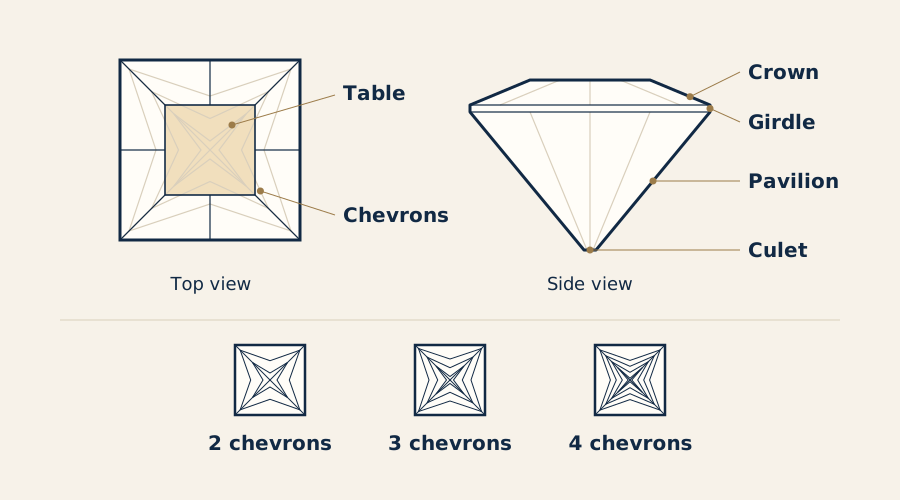
Chevron count is not printed on the grading report, so you need to see the stone or a 360° video. Our guide to princess chevron patterns shows each one face-up. Neither style is better. It comes down to whether you prefer bold flashes or fine glitter.
Diamond has a high refractive index of about 2.42, which means it bends light strongly. The deep pavilion of a princess sends much of that light back up through the table, which gives it a bright, crisp look. The trade-off is a fairly shallow crown (the upper part above the girdle). As a result, most princesses show a little less fire, the coloured flashes, than a well-cut round.
What is the best ratio for a princess cut diamond?
The length-to-width ratio compares one side of the stone with the other, using the measurements on the report. Divide the longer side by the shorter side. A ratio of 1.00 is a perfect square.
| Ratio | How it looks | Suits |
|---|---|---|
| 1.00–1.03 | Square to almost everyone's eye | Classic solitaires, halos, studs |
| 1.03–1.05 | Still reads as square; a trained eye may notice | Most engagement rings |
| 1.05–1.10 | Slightly rectangular | People who want a touch of length |
| Above 1.10 | Clearly rectangular | East-west settings, long fingers; a personal preference |
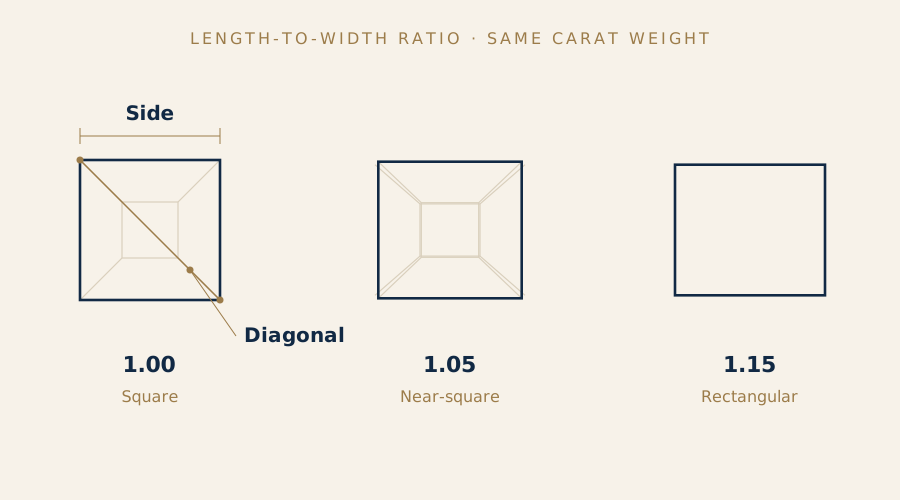
Most people buying a square princess want 1.00–1.05. Rectangular princesses above about 1.10 are less common, and they can cost a little less because fewer people ask for them. Either way, always work the ratio out from the measurements rather than trusting a photo, because camera angles can make a square stone look rectangular.
What should a certified princess cut diamond report show?
Certified princess cut diamonds come with an independent grading report from a laboratory such as GIA (Gemological Institute of America) or IGI (International Gemological Institute). The report records the shape, measurements, carat weight, colour, clarity, polish and symmetry. For a lab-grown stone, it also states clearly that the diamond is laboratory-grown.
GIA does not give princess cuts an overall cut grade the way it does for rounds. That means you judge the cut from the proportions and the stone itself. What 'ideal' and 'excellent' really mean explains why those labels carry different weight on rounds and fancy shapes. As a guide, these are the ranges that usually perform well:
| Measurement | Typical target | Why it matters |
|---|---|---|
| Table % | about 65–75% | Too large flattens the sparkle; too small looks dark |
| Total depth % | about 65–75% | Deeper looks small for its weight; shallower can look glassy |
| Girdle | Thin to slightly thick | An extremely thin girdle leaves the corners fragile |
| Culet | None or very small | A large culet shows as a dot in the centre |
| Polish and symmetry | Very Good or Excellent | Neat facet junctions and even chevrons |
| Ratio | 1.00–1.05 for a square look | Decides square or rectangular |
Depth above about 78% makes a princess look small for its carat weight, because the extra weight is hidden underneath. Below about 62%, light can leak straight through the pavilion and leave a glassy patch in the middle, called a window. Unlike ovals and pears, princess cuts rarely show a bow-tie. The more common fault is a dull centre or a dark cross from poorly judged pavilion angles, so watch the centre of the stone in a video.
Not sure which one is right?
Send us the stones you are looking at and our gemologist will tell you which to choose and why.
How big does a princess cut diamond look for its carat weight?
Because so much of a princess's weight sits in its deep pavilion, it looks smaller face-up than a round of the same carat weight. A 1 carat round is about 6.4 mm across. A 1 carat princess is about 5.5 mm along each side. The princess does have one advantage: its corner-to-corner diagonal is about 1.41 times the side length, so that 5.5 mm princess measures about 7.8 mm from point to point.
| Carat weight | Side length (approx.) | Corner to corner (approx.) |
|---|---|---|
| 0.50 ct | 4.4 mm | 6.2 mm |
| 0.75 ct | 5.0 mm | 7.1 mm |
| 1.00 ct | 5.5 mm | 7.8 mm |
| 1.50 ct | 6.3 mm | 8.9 mm |
| 2.00 ct | 6.9 mm | 9.8 mm |
These are typical figures for a square princess with a total depth of around 70%. A stone cut deeper will measure smaller. If you want the most visible size for your budget, compare millimetres, not just carats, and consider setting the princess on point (rotated 45°, sometimes called kite-set). That shows off the full diagonal, so it reads larger on the hand.
What colour and clarity suit a princess cut?
A princess hides body colour reasonably well, because its brilliant faceting scatters light. A touch of warmth can still gather in the four corners, where light travels a longer path through the stone. In white gold or platinum, most people are happy from H colour or better. If you are sensitive to warmth, look at G or higher. In yellow or rose gold, an I or J princess often looks just as white once it is set, because the metal warms everything around it.
For clarity, the goal is an eye-clean stone, meaning you cannot see any inclusions without magnification at a normal viewing distance. In a princess up to about 1.5 carats, that usually means VS2 or a carefully chosen SI1. The chevrons break up the view of small crystals and clouds well. Above 2 carats, the larger facets show more, so you may need VS1 or a well-checked VS2.
There is one exception to the eye-clean rule. A feather (a small internal crack) that reaches a corner or runs close to it is worth avoiding even if you can't see it. That is exactly where a chip would start if the stone took a knock.
How do you protect the corners of a princess cut diamond?
Diamond is 10 on the Mohs hardness scale, so it resists scratching better than anything else you wear. Hardness is not the same as toughness, though. Diamond has cleavage planes, directions along which it can split, and a sharp, unprotected corner hit against a benchtop or doorframe can chip. The setting's first job is to cover those four points. The usual options:
- Four V-claws: V-shaped claws (also called chevron prongs) that wrap each corner. This is the classic princess solitaire, and it shows the most of the stone.
- Bezel or half-bezel: a thin rim of metal around the edge. It is very secure and modern, though it shows slightly less of the outline.
- Halo: a frame of small diamonds that makes the princess look larger and shields its edges.
- Kite-set: the princess turned on point, with claws at the top, bottom and sides.
- Channel-set bands: small princesses set edge to edge between two metal walls. The corners are tucked away, which is why princess-cut wedding and eternity bands are so common.
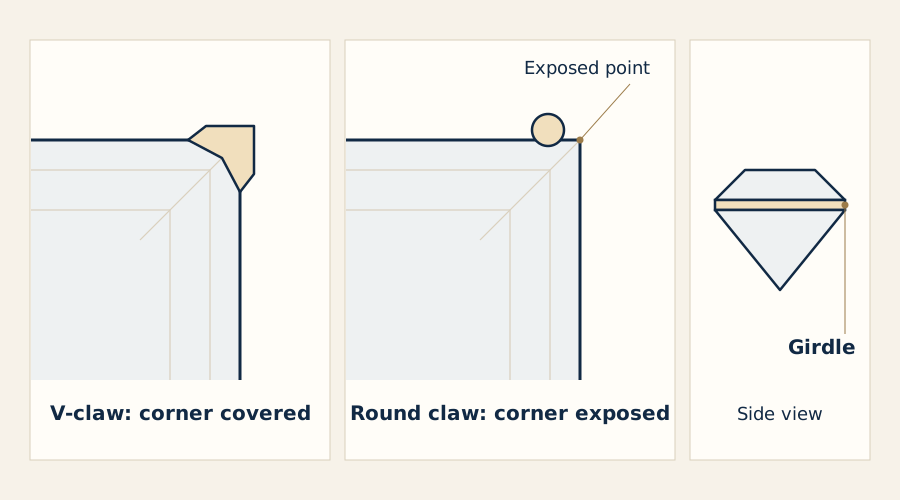
Our full guide to princess corner protection compares claw styles close up. If you like small diamonds along the shoulders, how micro-pavé and bead settings work covers the options. For a three-stone ring, trapezoid side stones and triangular side diamonds line up neatly with a princess's straight edges.
Princess vs radiant, Asscher and cushion: how do they compare?
| Princess | Radiant | Asscher | Cushion | Round | |
|---|---|---|---|---|---|
| Outline | Square, sharp corners | Square or rectangle, clipped corners | Square, clipped corners | Rounded square | Circle |
| Faceting | Brilliant (chevrons) | Brilliant, crown and pavilion | Step cut | Brilliant | Brilliant |
| Look | Crisp, bright sparkle | Lively, crushed-ice sparkle | Hall-of-mirrors steps | Softer, broader flashes | Even, intense brilliance |
| Corner risk | Higher; needs V-claws | Low | Low | Low | None |
| Price per carat | Usually well below a round | Usually below a round | Usually below a round | Usually below a round | Highest |
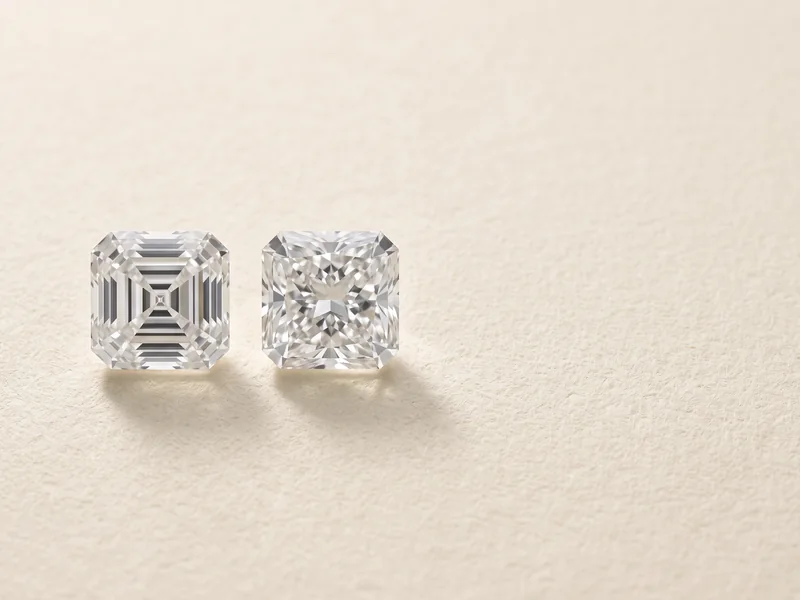
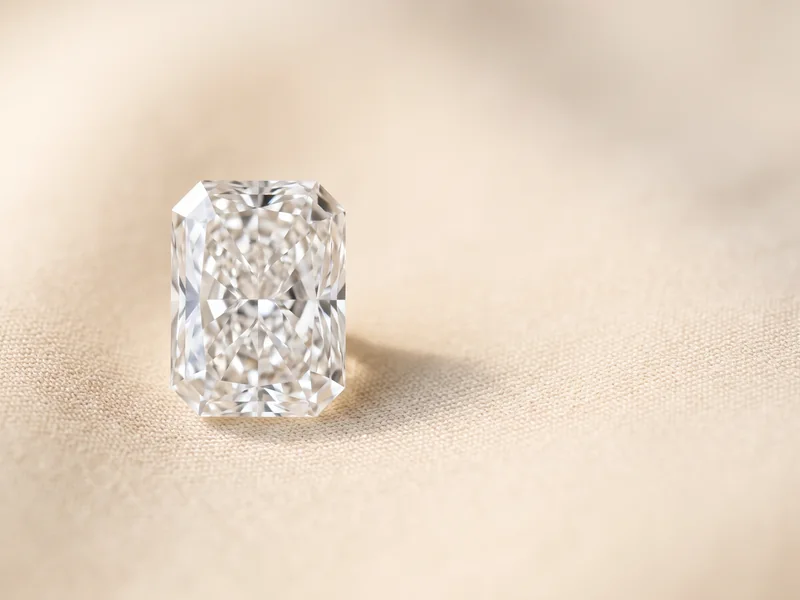
The closest relative is the radiant. A radiant cut has the same bright, brilliant look but with the corners clipped off, which removes the weak points. If you want that in a square outline, see our square radiant guide, and the princess vs radiant comparison goes through the differences point by point.
The Asscher is square too, but it is step-cut, so it shows large, calm panels instead of sparkle; our princess vs Asscher breakdown shows the two side by side. The cushion cut softens the square with rounded corners, and the Flanders cut is a square brilliant with clipped corners. For the whole family in one place, start with square and cushion cuts compared.
Related guidePrincess vs Radiant Cut DiamondsIs a lab-grown princess cut diamond worth it?
Princess cuts are cut from both natural and laboratory-grown diamond. Lab-grown diamond is real diamond with the same hardness, refractive index and sparkle; it is grown in a laboratory rather than mined. The two look identical to the eye, and only a lab can tell them apart. Most lab-grown stones also carry a laser inscription on the girdle saying they are laboratory-grown.
The main difference is price and rarity. Lab-grown princesses cost much less and are easy to find in 2 carats and above. Natural princesses are rarer and hold that rarity. As a rough guide, a natural 1 carat princess in G–H colour and VS2 clarity often sits somewhere around AUD 4,000–9,000. A lab-grown princess of similar grades is often around AUD 700–2,000. Prices move with the market and with cut quality, so treat these as ranges only.
Shop princess cut diamonds
Whichever you choose, ask for an independent grading report, and check the proportions and corners the same way. The guidance on ratio, depth, girdle and setting applies equally to natural and lab-grown princesses.
How to choose a princess cut diamond: step by step
- Read the report. Confirm the shape, measurements, carat, colour, clarity, polish and symmetry, and whether the diamond is natural or laboratory-grown.
- Work out the ratio. Divide the longer side by the shorter. Aim for 1.00–1.05 for a square look.
- Check the proportions. Table and total depth around 65–75%, and a girdle from thin to slightly thick, never extremely thin.
- Compare millimetres. Use the side length and diagonal, not just carat weight, to judge how big it will look.
- Watch a 360° video. Look for a bright centre with no dark cross or glassy window, and check that no feather sits near a corner.
- Choose the chevron look. Decide whether you prefer bold flashes (fewer chevrons) or fine glitter (more chevrons).
- Plan the setting first. Make sure each corner will be protected by a V-claw, bezel, halo or channel before you commit to the stone.
If any term on the report is unfamiliar, our jewellery glossary defines it in plain English.
Free consultation
Talk to a gemologist
Compare stones in person or online with Raj Sood, Graduate Gemologist (GIA), AJP (GIA).
Book a consultationFAQ
Common questions
How many facets does a princess cut diamond have?
Most have 57 or 58 facets: 58 with a culet and 57 without. Depending on the number of chevron rows in the pavilion, princess cuts can range from about 49 to 76 facets.
Are princess cut diamonds cheaper than round diamonds?
Usually, yes. Cutting a princess wastes less of the rough crystal, so it typically costs noticeably less per carat than a round of the same weight, colour and clarity. It also looks a little smaller face-up because it carries more depth.
Do princess cut diamonds chip easily?
Their four sharp corners are the most exposed part, so they are more likely to chip than a round's edge if left unprotected. V-claws, a bezel, a halo or a channel setting cover the corners and make a princess fine for everyday wear.
What is the best ratio for a princess cut diamond?
For a square look, choose a length-to-width ratio between 1.00 and 1.05. Above about 1.10 the stone looks clearly rectangular, which some people prefer.
What does a certified princess cut diamond mean?
It means the stone comes with an independent grading report from a laboratory such as GIA or IGI. The report records its measurements, carat, colour, clarity, polish and symmetry, and states whether it is natural or laboratory-grown.
Can you get lab-grown princess cut diamonds?
Yes. Lab-grown princess cuts are widely available, cost much less than natural ones and are graded on the same colour and clarity scales by labs such as IGI (GIA now uses simplified descriptive grades for lab-grown stones).
Terms in this guide

Ask a gemologist
Not sure which diamond to choose?
Raj Sood is a Graduate Gemologist (GIA) and master jeweller. Bring the stones you are considering, or send the reports, and he will tell you honestly which one is better and why.
Keep learning
Related guides
 Diamond ShapesPrincess-Cut Diamond Chevron PatternsDiamond ShapesPrincess-Cut Diamond Corner Protection
 Diamond ShapesPrincess vs Radiant Cut DiamondsDiamond ShapesPrincess vs Asscher Cut DiamondsDiamond ShapesUnderstanding Diamond Shapes
 Diamond ShapesAll 34 Diamond Cuts: Every Shape Explained and ComparedDiamond ShapesSquare and Cushion Cuts: Princess, Radiant, Cushion and Flanders
 Diamond ShapesRadiant Cut Diamonds
Explore more
More guides on this topic
Education