
- Education
- Wedding Bands & Eternity
- Best Wedding Band for Round Engagement Rings: The Pairing Guide
Wedding Bands & Eternity
Best Wedding Band for Round Engagement Rings: The Pairing Guide
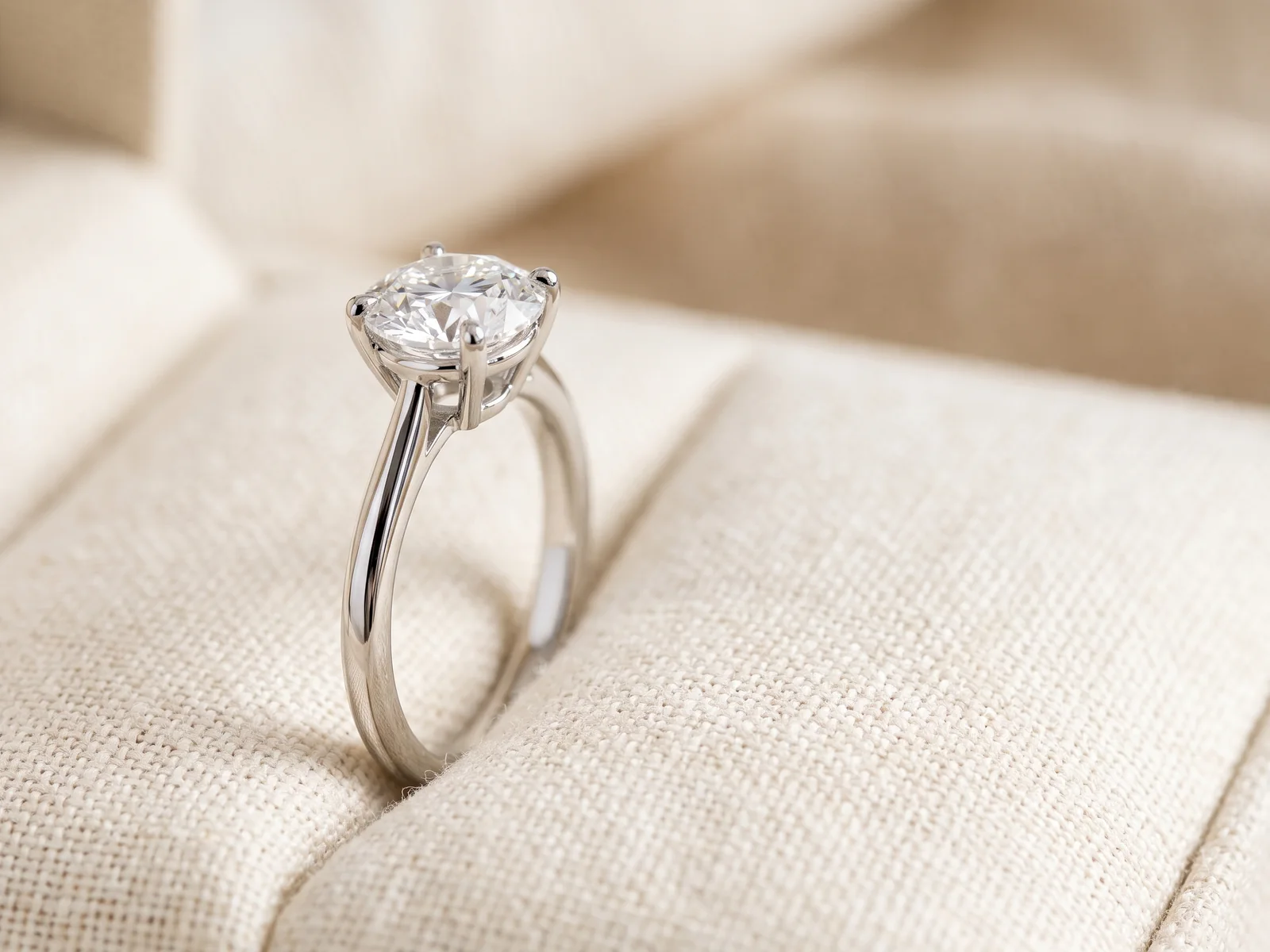
A round centre stone is the easiest shape to pair, but the setting underneath it decides whether a band can sit flush. Here is how to match the fit, width and metal so your wedding band for a round engagement ring wears well for decades.
 Reviewed by Raj Sood, Graduate Gemologist (GIA), AJP (GIA)Master jeweller and Graduate Gemologist (GIA) · reviewed 4 November 2026
Quick answer
Most round engagement rings pair with a straight wedding band of the same metal and a similar width, usually 1.8–2.5 mm. If the setting sits low or has a hidden halo, choose a contoured or notched band, or raise the setting. A round has no points, so almost any band style can sit flush.
What is the best wedding band for a round engagement ring?
There is no single best band, but a round is the most forgiving shape to pair. A round brilliant is a circle, with no corners to protect and no point hanging over the band, so a plain straight band, a diamond-set band or a slim eternity band can all sit comfortably beside it.
What actually decides the fit is the setting under the diamond: how high the stone sits, the shape of the basket (the metal cage that holds the diamond from below) and whether there is a hidden halo of small diamonds under the girdle. Two rings with the same 1 carat round can need completely different bands because of what is underneath.
Most Australians wear the wedding band on the inside, closer to the hand, with the engagement ring on the outside, but either order works as long as the two sit well together. If you are still sorting out the terms, our guide to the difference between a wedding ring and a wedding band explains them, and the complete wedding ring buying guide covers budgets, sizing and styles.
Compare the round with a princess-cut engagement ring, where the band has to clear four sharp corners, or with the overhanging tips of pear-shaped centre stones and the marquise shape, which often need a curved band. With a round you have more freedom, so the decisions come down to three things:
- Fit: does the band sit flush against the engagement ring, or with a small gap?
- Profile: straight, contoured or notched, depending on the setting height.
- Match: the same metal and a similar width, so the pair looks and wears as a set.
Should a wedding band sit flush or with a gap?
A flush fit means the two bands touch along their full length with no light between them, so they read as one ring. A gap means a small space, usually under the centre stone, where the setting or basket stops the band sitting tight. Neither is wrong; it is a matter of taste and of what your setting allows.
| Flush fit | Small gap | |
|---|---|---|
| Look | Two bands read as one continuous set | Each ring keeps its own outline |
| What it needs | A setting that sits above the band line, or a contoured band | Nothing special; works with most settings |
| Movement | Rings stay aligned | Rings can spin and drift apart |
| Wear | Constant contact; same metal recommended | Less rubbing at the centre, some at the sides |
| Suits | Cathedral and raised solitaires, matched sets | Low-set baskets, bezels, people who like a casual stack |
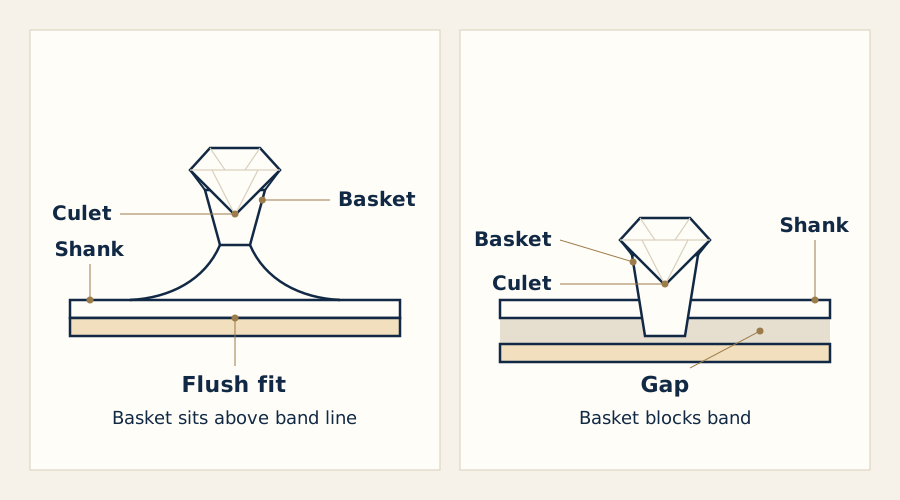
For a round, flush is the more common request, because the circle of the stone and the straight line of the band look tidy together. Step cuts such as the emerald cut are more often set low and wide, so a gap is more common there. Any unfamiliar setting term in this guide is explained in our jewellery glossary.
How does setting height affect a wedding band for a round engagement ring?
A round diamond is deep: a 1 carat round of about 6.4 mm across is roughly 3.9 mm from table to culet (the bottom point). The setting has to hold that depth somewhere. If the basket hangs down to the level of the finger, it will push a straight band away. If the shoulders rise up to meet the head, the band can slide underneath.
| Setting type | Can a straight band sit flush? | Usual band choice |
|---|---|---|
| Cathedral solitaire (shoulders sweep up to the head) | Usually yes; the basket sits above the band | Straight plain or pavé band |
| Raised claw head with open gallery | Usually yes | Straight band of matching width |
| Low-set four- or six-claw basket | Often no; the basket or claw bases block it | Notched or contoured band, or accept a gap |
| Hidden halo under the girdle | Depends on how low the halo sits | Check by eye; often contoured |
| Bezel (metal rim around the stone) | Rarely, unless the bezel is raised | Gap or a curved band |
| Halo of side diamonds | Sometimes; the halo is wider than the stone | Curved, notched or straight, case by case |
Hidden halos have become a popular detail under round solitaires, and they add 1–2 mm of width beneath the stone, which is exactly where a band wants to sit. Visible halos change the picture again; our guide to bands for halo settings goes through them. Some round settings borrow ideas from cushion designs, so the advice for cushion engagement rings is worth a look too.
Related guideBest Wedding Band for Halo Engagement RingsDo you need a curved or notched band for a round solitaire?
Only if your setting sits low, or if you want a particular look. A round in a cathedral or raised setting rarely needs anything but a straight band. If the basket blocks the band, these are the main profiles:
- Straight band: an even width all the way round. The simplest option and the easiest to resize.
- Contoured or curved band: dips in a gentle arc under the centre stone, following the outline of the basket so the band sits close.
- Notched band: mostly straight, with a small U- or V-shaped cut-out where the basket sits. Keeps a straight look from above.
- Chevron or V band: a deliberate point that frames the round from below. A style choice more than a fit fix.
- Open or split band: two thin strands, or a curve that wraps partly around the stone.
A contoured band is made to fit one engagement ring, so it will not sit well beside anything else, and it is harder to resize than a straight band because the curve can distort. That trade-off is the same for toi et moi rings and heart-shaped centre stones, where curved bands are much more common.
Not sure which one is right?
Send us the stones you are looking at and our gemologist will tell you which to choose and why.
How wide should a wedding band be for a round engagement ring?
The simplest rule is to match the width of the engagement ring's shank (the band part of the ring), or go slightly narrower. A wedding band much wider than the shank can make a smaller round look smaller, because the eye reads the metal before the stone.
| Centre stone (approx. diameter) | Typical engagement shank | Wedding band that usually suits |
|---|---|---|
| 0.50 ct (about 5.1 mm) | 1.6–2.0 mm | 1.6–2.0 mm |
| 1.00 ct (about 6.4 mm) | 1.8–2.5 mm | 1.8–2.5 mm |
| 1.50 ct (about 7.4 mm) | 2.0–2.8 mm | 2.0–3.0 mm |
| 2.00 ct and up (about 8.1 mm+) | 2.2–3.0 mm | 2.2–3.0 mm or wider |
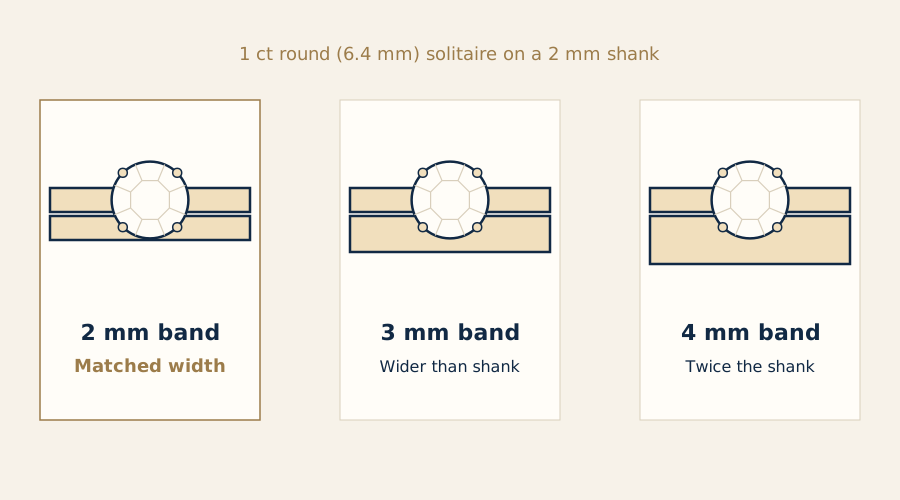
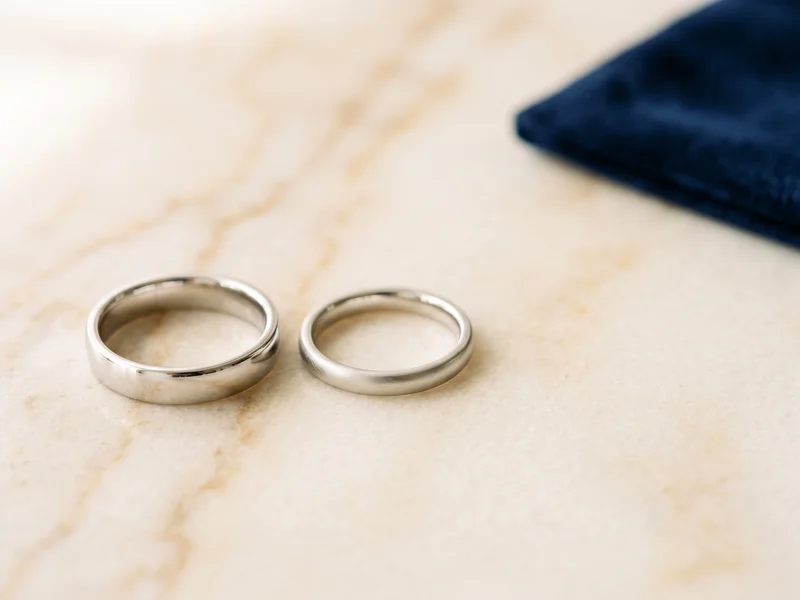
Width also changes comfort. Two 2 mm bands together are a 4 mm stack, which feels more like a single wider ring and can sit a little tighter on the finger. Wider bands pair well with larger rounds, which hold their own visually. The same width logic applies to elongated shapes; see our guide to oval engagement ring bands for how it changes when the stone runs along the finger.
Should your wedding band match your engagement ring metal?
Wherever you can, yes. Two rings worn side by side rub against each other every day. When one metal is harder than the other, the softer ring wears faster, and over years you can see a flat or thinned area where they meet.
| Pairing | What to expect |
|---|---|
| Platinum with platinum | Both develop the same soft patina; even wear |
| 18ct white gold with 18ct white gold | Even wear; both need rhodium replating, often every 12–24 months |
| 18ct yellow or rose with the same colour | Even wear and an exact colour match |
| Platinum with 18ct gold | Gold usually wears faster where the rings touch |
| 9ct gold with 18ct gold | Different hardness and a slightly different colour |
Purity matters as well as colour: an 18ct band next to a 9ct ring will not match exactly in tone. Platinum is roughly 30–40% heavier than 18ct gold of the same size and tends to move rather than wear away, which is why many people choose it for a ring worn every day. Our guide to choosing a metal for wedding bands compares each option in detail.
Which wedding band styles pair well with a round diamond?
Because a round has no corners, you can choose a band for the look you like rather than one forced by the shape. The common pairings:
- Plain polished band: lets the round be the only sparkle. Works with any setting.
- Pavé half-eternity band: small diamonds set across the top half of the band. The most popular partner for a round solitaire.
- Full eternity band: diamonds all the way round. Cannot easily be resized, so size carefully.
- Milgrain band: a fine beaded edge that suits vintage-style round settings.
- Knife-edge band: a ridge along the top that catches light and looks slimmer than its width.
- Claw-set or shared-claw band: larger round diamonds that echo the centre stone.
Stacking ideas that work well with a round:
- Classic pair: a round solitaire on a plain 2 mm band with a matching 2 mm pavé band.
- Sandwich: a plain or pavé band either side of the engagement ring, often added at an anniversary.
- Mixed texture: a polished solitaire with a milgrain or hammered band in the same metal.
- Contrast colour: a platinum solitaire with a yellow gold band, accepting the extra wear on the gold.
If you are choosing a matching pair, our men's wedding band guide covers widths and profiles for the other ring. Bands that suit radiant cuts and Asscher cuts follow different rules, because their straight edges change what looks balanced.
Will a wedding band rub against a round engagement ring?
Some contact is normal, and in the same metal it is mostly harmless polishing. The problems come from diamond on metal and diamond on diamond. Diamond is 10 on the Mohs hardness scale, far harder than any jewellery metal, so pavé diamonds in a band can slowly wear the claws or shank of the engagement ring they rub against. Two pavé bands grinding together can also loosen or chip small stones.
- Choose a band with a polished edge, or diamonds set slightly below the edge, if your engagement ring is also pavé.
- Check the claws of your round every 6–12 months; worn claw tips are the most common cause of lost centre stones.
- Make sure both rings are the same size, so one does not spin around the other.
- Take both rings off for the gym, gardening and heavy lifting.
Thin bands worn together can also bend, especially if the engagement shank is under about 1.8 mm. Our guide to why rings go out of round explains what causes it and how a jeweller fixes it.
Can a wedding band be made to fit your round engagement ring?
Yes, and for low-set rounds or hidden halos it is often the neatest result. A jeweller measures the engagement ring, including the setting height and basket profile, and designs a band that follows it. Computer-aided design (CAD) lets you see the pair from the side before any metal is cast.
If your band includes diamonds, match their colour to the centre stone: a G colour round looks best beside band diamonds in about the F–H range. Natural and laboratory-grown rounds look identical to the eye; lab-grown rounds cost much less, while natural rounds are rarer. Small diamonds in a band can be natural or lab-grown too, and they should be disclosed either way.
Browse round diamonds and create your bridal set
How to choose a wedding band for a round engagement ring: step by step
- Start with the engagement ring. Note its metal and carat, shank width in millimetres and whether it is cathedral, low-set, bezel or has a hidden halo.
- Decide flush or gap. If you want flush, check from the side whether a straight band can slide under the basket.
- Choose the profile. Straight if the setting allows it; notched or contoured if the basket sits low.
- Match the width. Aim for the same width as the shank or slightly narrower, usually 1.8–2.5 mm for a 1 carat round.
- Match the metal. Same metal and purity, so both rings wear and colour evenly.
- Pick the style. Plain, pavé, eternity, milgrain or knife-edge, and check how any diamonds will sit against the other ring.
- Check the size together. Try both rings on at once; a stack can feel tighter than one ring alone. Our guide to buying a wedding ring covers sizing in detail.
Free consultation
Talk to a gemologist
Compare stones in person or online with Raj Sood, Graduate Gemologist (GIA), AJP (GIA).
Book a consultationFAQ
Common questions
Can any wedding band sit flush with a round engagement ring?
Only if the setting allows it. A cathedral or raised setting usually lets a straight band sit flush, while a low-set basket or hidden halo often needs a notched or contoured band.
What width wedding band goes with a 1 carat round engagement ring?
Most people choose a band of about 1.8–2.5 mm, matching the engagement ring's shank. A much wider band can make the diamond look smaller.
Is it okay to have a gap between my wedding band and engagement ring?
Yes. A gap is common with low-set solitaires and bezels and some people prefer it. The rings may move apart more often, but it does not harm either ring.
Should my wedding band be the same metal as my engagement ring?
Ideally, yes. Different metals wear at different rates, so the softer ring wears faster where they touch, and the colours may not match exactly.
Does a pavé wedding band damage a round engagement ring?
It can wear the claws or shank over time, because diamond is harder than any metal. Regular claw checks and a band with a smooth edge help prevent problems.
Can a contoured wedding band be resized?
Usually only a little, and with care, because resizing can distort the curve. Straight bands are much easier to resize.

Ask a gemologist
Not sure which diamond to choose?
Raj Sood is a Graduate Gemologist (GIA) and master jeweller. Bring the stones you are considering, or send the reports, and he will tell you honestly which one is better and why.
Keep learning
Related guides
 Wedding Bands & EternityBest Wedding Band for Halo Engagement Rings
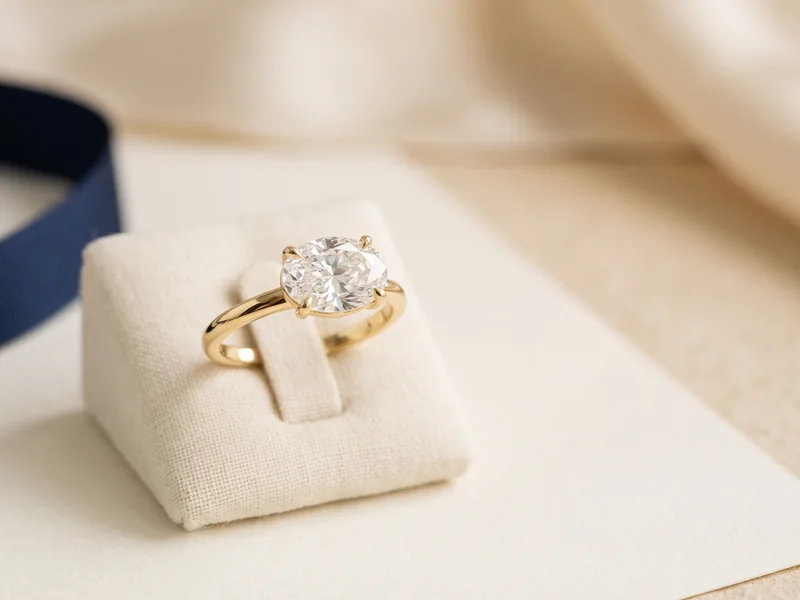 Wedding Bands & EternityBest Wedding Band for Oval Engagement Rings
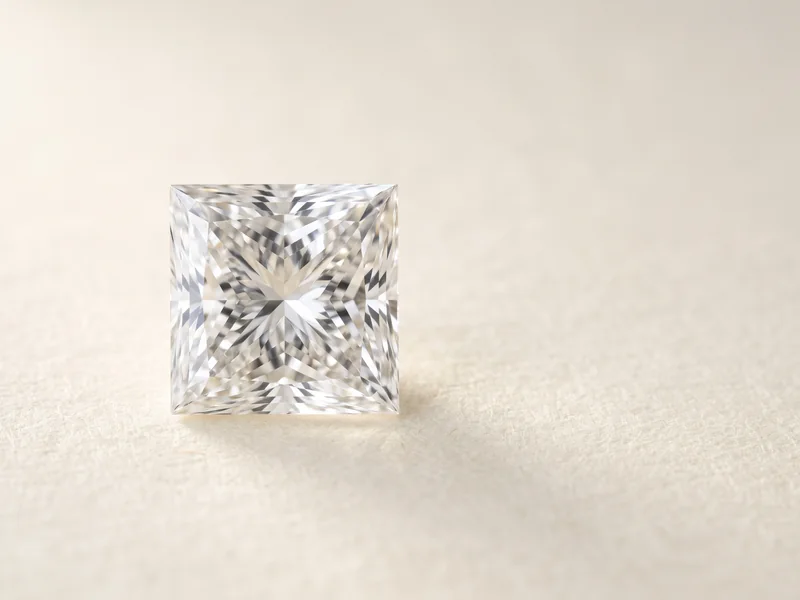 Wedding Bands & EternityBest Wedding Band for Princess Engagement RingsWedding Bands & EternityWedding Ring Buying Guide
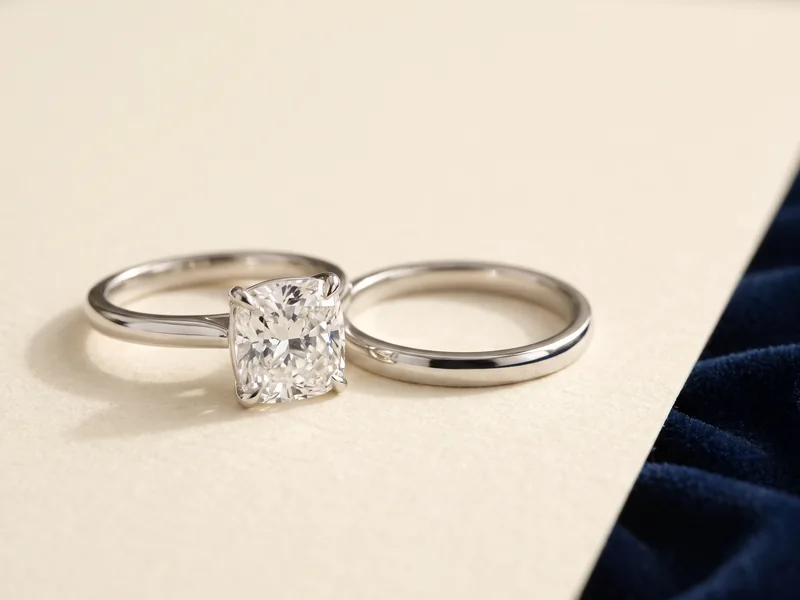 Wedding Bands & EternityWedding Ring vs Wedding Band
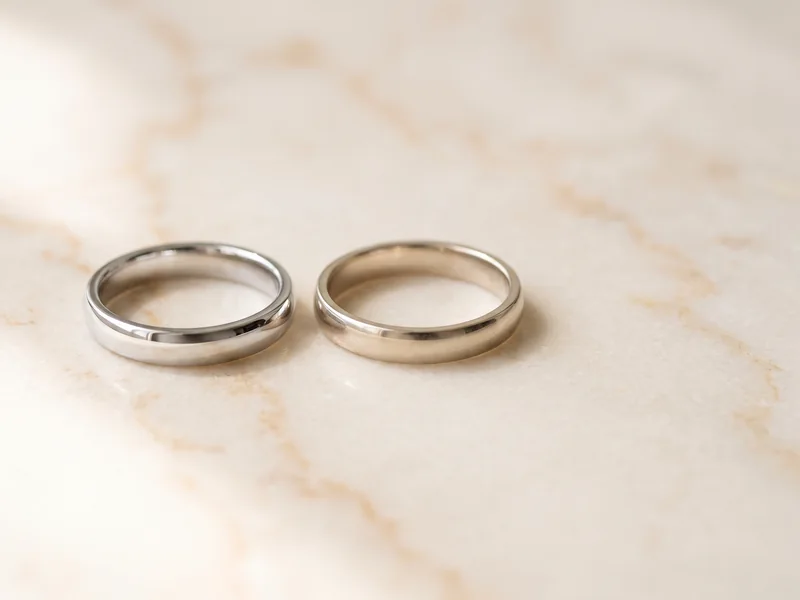 Wedding Bands & EternityMen’s Wedding Band GuideWedding Bands & EternityBest Wedding Band for Cushion Engagement Rings
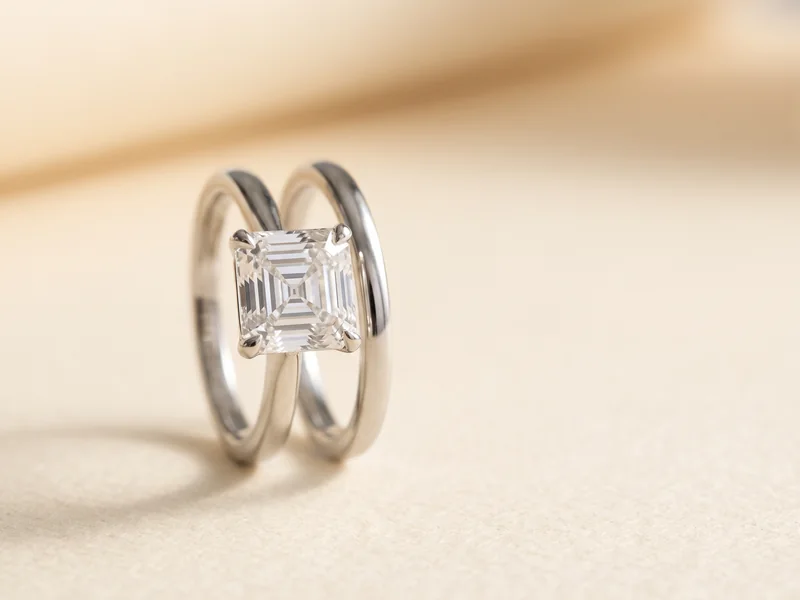 Wedding Bands & EternityBest Wedding Band for Asscher Engagement Rings
Explore more
More guides on this topic
Education