
Gemstones
Amber Gemstone Guide: Types, Colours, Real vs Fake and Care
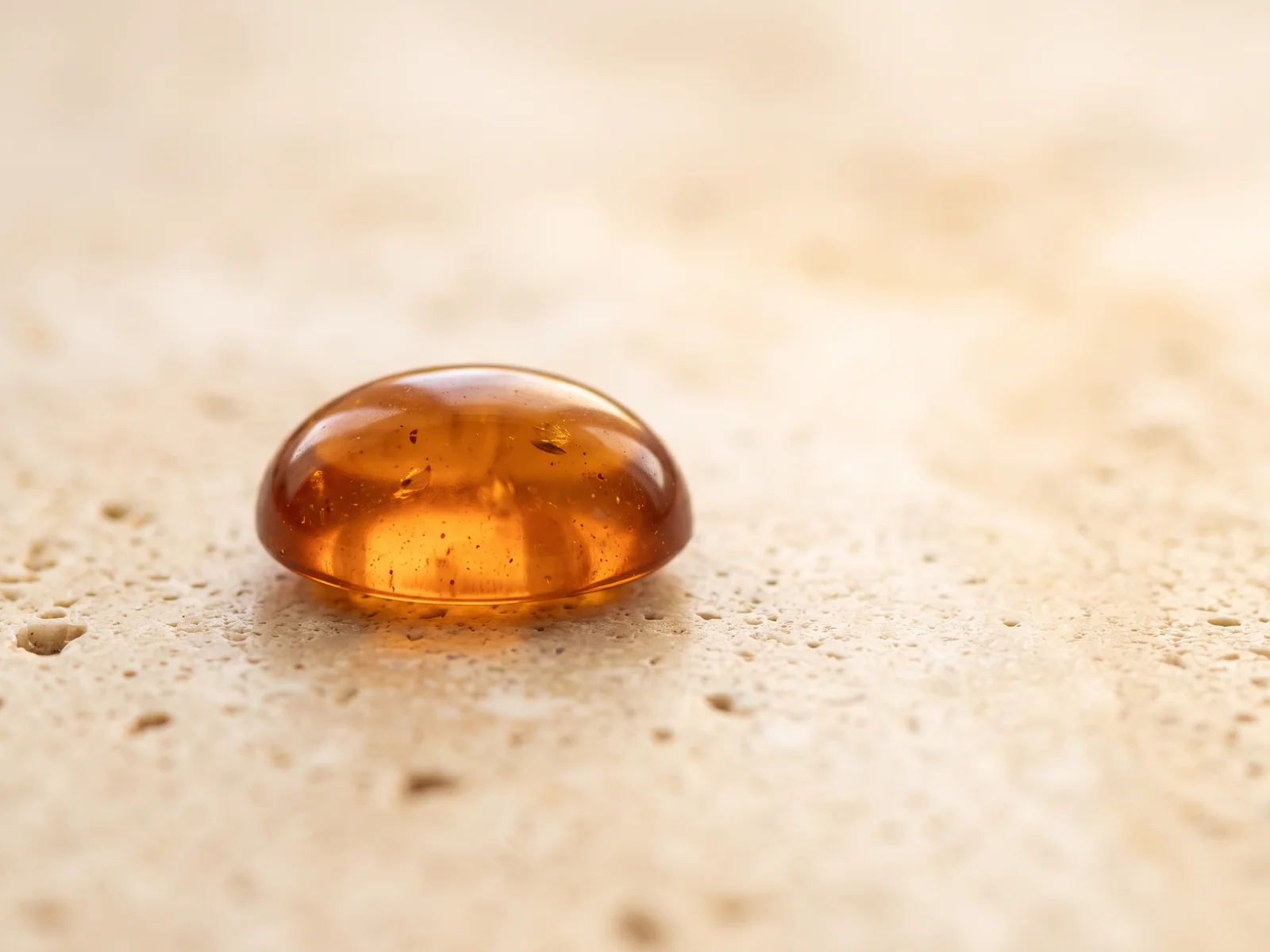
The amber gemstone is not a mineral at all but fossilised tree resin, often millions of years old, and that makes it light, warm and soft. It is also one of the most imitated gems on the market, so it pays to know what you are looking at.
 Reviewed by Raj Sood, Graduate Gemologist (GIA), AJP (GIA)Master jeweller and Graduate Gemologist (GIA) · reviewed 4 November 2026
Quick answer
Amber is fossilised tree resin, an organic gemstone between about 15 and 100 million years old. It is soft (Mohs 2–2.5) and light enough to float in salty water. Most jewellery amber comes from the Baltic. It suits pendants, earrings and beads better than everyday rings, and it needs gentle care away from heat and chemicals.
What is an amber gemstone?
Amber is fossilised tree resin: the sticky sap some trees ooze to seal a wound, buried and slowly hardened over millions of years. Because it comes from a living thing rather than from rock, gemologists call it an organic gem, in the same family as pearl, coral and jet. It has no crystal structure at all. Gemologists describe it as amorphous, meaning its molecules are tangled like a plastic rather than lined up like the crystals in a sapphire or quartz.
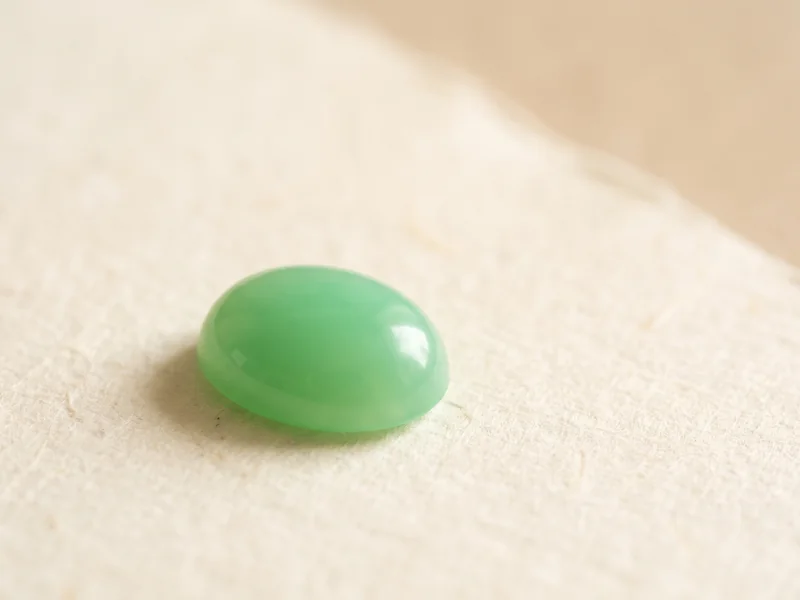
That sets amber apart from almost everything else in our wider guide to coloured gemstones. Even stones that feel soft and natural, such as jadeite and nephrite jade, are rocks made of interlocking mineral crystals. Amber is a natural polymer, a long-chain organic compound, which is why it feels warm in the hand, weighs very little and can pick up a static charge. Rub a piece on wool and it will lift scraps of paper; the ancient Greek word for amber, 'elektron', is where our word electricity comes from.
In gem terms, amber has a refractive index (how strongly it bends light) of about 1.54, a specific gravity (its weight compared with the same volume of water) of about 1.05–1.10, and a hardness of only 2–2.5 on the Mohs scale. If any of those terms are new, our glossary of gem and jewellery terms explains them in plain English.
How does amber form, and how is it different from copal?
Resin starts soft and full of volatile oils, the compounds that give a pine forest its smell. Once it is buried in sediment, away from air, those oils slowly escape and the molecules link together into longer and longer chains, a process called polymerisation. Over millions of years the resin becomes harder, less soluble and more stable. That is amber.
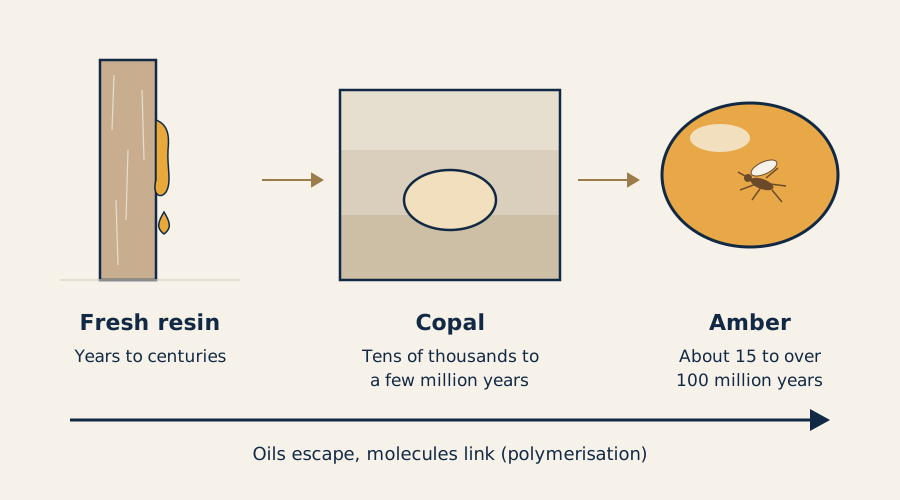
Partway along that path sits copal: resin that has hardened but not fully polymerised. There is no single agreed age cut-off, but copal is usually tens of thousands to a few million years old, compared with tens of millions for amber. Copal looks very similar, especially in clear yellow pieces, and it is often sold cheaply as amber or used to make pieces with suspiciously perfect insects inside.
| Fresh resin | Copal | Amber | |
|---|---|---|---|
| Typical age | Years to centuries | Tens of thousands to a few million years | About 15 to over 100 million years |
| Feel | Sticky, soft | Hard but can turn tacky | Hard, smooth, warm |
| Drop of acetone | Dissolves | Surface goes sticky or dull | Little or no reaction |
| Surface over time | Stays tacky | Often develops fine cracks (crazing) | Stable, slowly darkens |
| Value | None as a gem | Low | Low to high, depending on quality |
For a sense of scale, even the oldest amber is young by gem standards. Some zircon crystals from Western Australia's Jack Hills are over 4 billion years old, roughly 40 times older than the most ancient amber used in jewellery.
Where does amber come from, and is there amber in Australia?
Amber has been found on every continent, but only a few deposits produce enough clear, sizeable material for jewellery. Where a piece comes from affects its age, colour, inclusions and price.
| Source | Approximate age | What it is known for |
|---|---|---|
| Baltic (mainly Kaliningrad, Russia, plus Poland, Lithuania and the Baltic coast) | About 40–45 million years | Most of the world's jewellery amber; contains succinic acid (succinite); yellow, cognac, cherry and opaque butterscotch |
| Dominican Republic | About 15–25 million years | Very clear material, frequent insect inclusions, rare blue amber |
| Mexico (Chiapas) | About 15–23 million years | Clear yellow to red, some green and blue fluorescence |
| Myanmar (Burmese amber, or burmite) | About 99 million years | Very old, harder, reddish; important to science but mining is linked to conflict |
| Australia (Victoria and Tasmania) | Roughly 40–53 million years | Small, scientific finds; not mined for jewellery |
Baltic amber is what most Australians will see in shops. Its official mineral name is succinite, because it contains about 3–8% succinic acid, an organic acid that helps laboratories confirm its origin. Much of it is dug from a glauconite-rich sediment layer locally called blue earth, although pieces still wash up on Baltic beaches after storms.
Australia does have amber, though few people know it. Palaeontologists have recovered pieces from coastal cliffs around Anglesea in Victoria and from western Tasmania, some containing tiny fossil insects, spiders and plant fragments from when Australia was still joined to Antarctica. These finds matter greatly to science, because fossil resin from the old southern supercontinent of Gondwana is rare. The pieces are small, though, and there is no commercial Australian amber field, so any amber in Australian jewellery has almost certainly been imported.
What colours does amber come in, including blue amber?
Most people picture honey-yellow, but amber ranges widely. Colour comes from the original resin, from tiny bubbles and from oxidation, the slow reaction with air that darkens amber over decades.
- Yellow and honey: the classic colour, from pale lemon to deep gold.
- Cognac: a warm orange-brown, one of the most popular Baltic shades.
- Cherry or red: deep red-brown, often the result of natural oxidation or heat treatment.
- Butterscotch or egg-yolk: opaque yellow, cloudy from millions of microscopic bubbles; prized in older Baltic bead necklaces.
- White or bone: very opaque, almost chalky, and less common.
- Green: rare naturally; most green amber in shops has been heat and pressure treated, then set over a dark backing.
- Blue: mainly from the Dominican Republic; it looks golden when light shines through it, but shows a blue glow when viewed against a dark background in daylight and under ultraviolet.
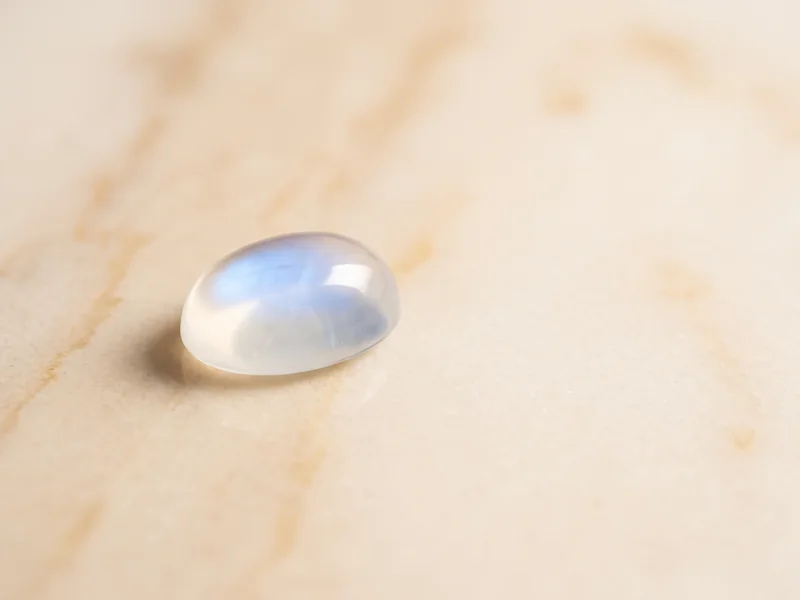
Blue amber's colour is fluorescence: compounds in the resin absorb ultraviolet light and give it back as visible blue. It is quite a different effect from the flash of labradorite, whose colour comes from light interference, or the soft floating glow of the adularescence seen in moonstone. Hold Dominican blue amber against something dark in sunlight to see it best.
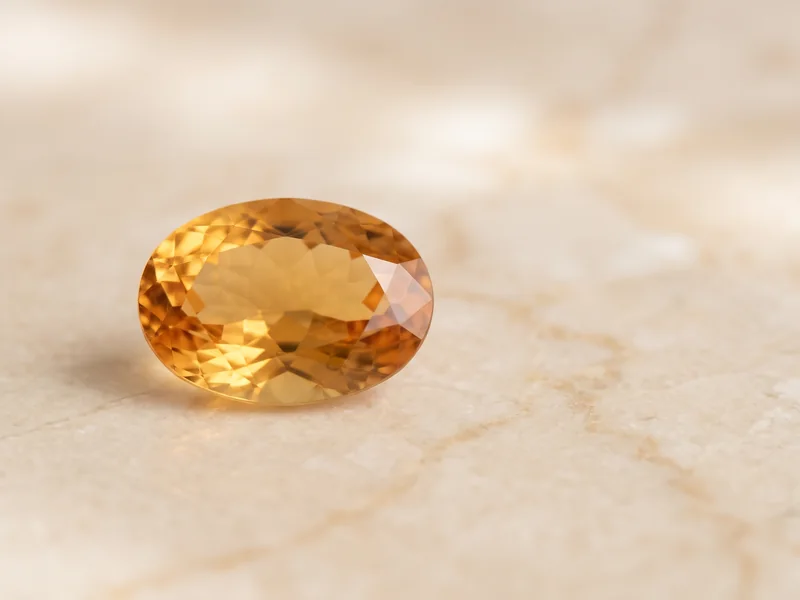
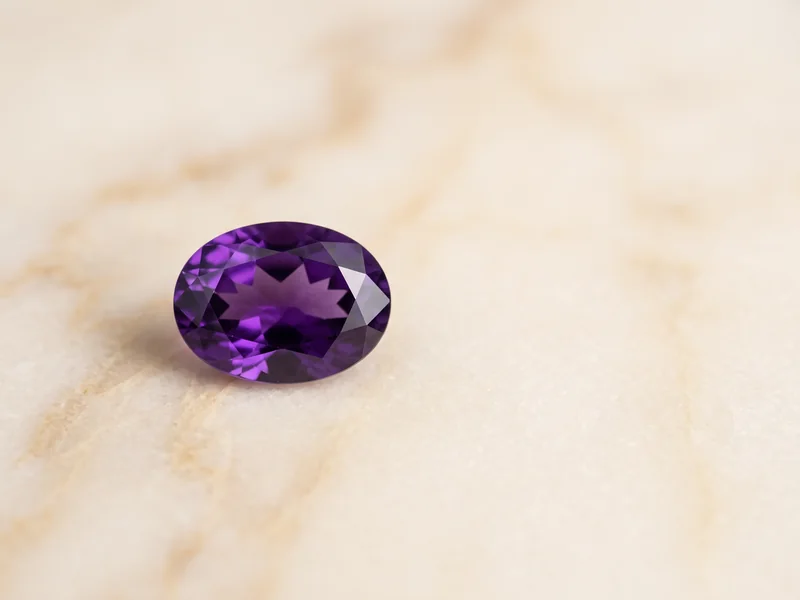
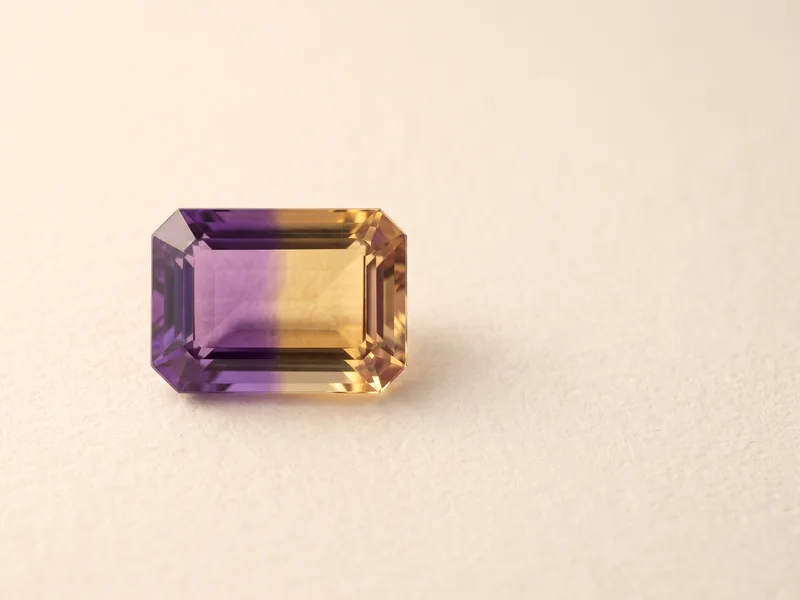
If you love amber's golden tones but want a harder stone, look at citrine, the yellow to orange quartz, or ametrine, which blends golden citrine and purple in one crystal. Both are quartz, at 7 on the Mohs scale, and together with purple amethyst quartz they cover much of the warm-to-violet colour range for far tougher everyday wear.
Related guideCitrineNot sure which one is right?
Send us the stones you are looking at and our gemologist will tell you which to choose and why.
Why is amber with insects so valuable?
Amber is a time capsule. Insects, spiders, seeds, flowers, feathers and even small lizards were caught in flowing resin and preserved in three dimensions, sometimes down to individual hairs. For jewellery, a clear, well-placed insect can multiply the value of a piece many times over.
What makes an inclusion valuable:
- Completeness: a whole insect, legs and wings intact, is worth far more than a fragment.
- Clarity: clear amber around the inclusion, without cracks or heavy debris.
- Rarity: a common gnat or ant is affordable; a scorpion, vertebrate or rare insect group is a museum-level find.
- Natural pose: real trapped creatures often show signs of struggle, with bent legs or a trail of bubbles.
Be wary of large, perfectly posed insects in very clear, flawless material. That is the classic sign of a modern insect set in copal or plastic. A real inclusion usually has small air bubbles, flow lines or plant debris around it.
Is an amber gemstone tough enough for everyday wear?
Not for a ring you wear every day. At 2–2.5 on the Mohs scale, amber can be scratched by household dust (which contains quartz at 7), by a fingernail on a soft piece, and by other jewellery in a drawer. It also softens with heat, from about 150 °C, and reacts with solvents. It is lightweight and does not shatter easily, which is why it shines in large beads, pendants and earrings that do not take knocks.
| Gem | Mohs hardness | Type | Everyday ring? |
|---|---|---|---|
| Amber | 2–2.5 | Organic (fossil resin) | No; pendants, earrings, brooches, beads |
| Turquoise | 5–6 | Mineral, porous | Occasional wear, protective setting |
| Lapis lazuli | 5–5.5 | Rock | Occasional wear |
| Moonstone | 6–6.5 | Feldspar mineral | With care, protective setting |
| Citrine | 7 | Quartz | Yes |
| Iolite | 7–7.5 | Cordierite mineral | Yes, with some care |
| Chrysoberyl | 8.5 | Mineral | Yes |
| Moissanite (lab-created) | 9.25 | Silicon carbide | Yes |
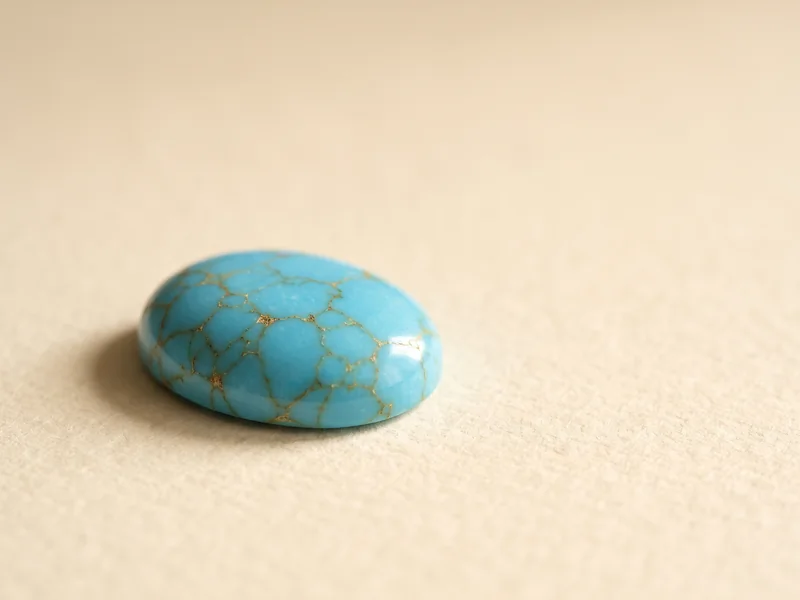
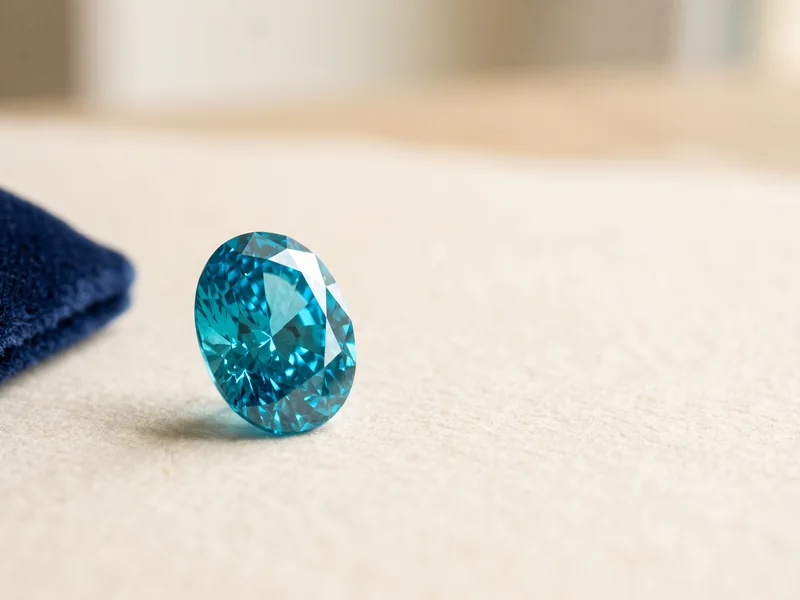
Amber shares its care needs with other soft and porous stones, such as turquoise, which also absorbs oils and chemicals, and deep blue lapis lazuli. If you want a warm colour in a ring that will take daily wear, harder choices include violet-blue iolite, golden chrysoberyl, one of the toughest coloured gems, or lab-created moissanite, which also comes in yellow tones.
A note on amber teething necklaces. These are widely sold in Australia, but product safety regulators, including the ACCC, have warned parents about choking and strangulation risks, and there is no good evidence that amber relieves teething pain. Amber is a jewellery material for adults, not a health product.
Is amber treated, and what is pressed amber?
Yes, much of the amber sold today has been treated in some way. Most treatments are long accepted in the trade, but they should be disclosed because they affect value.
- Heating and autoclaving: heating amber under pressure, often in oil or inert gas, removes cloudy bubbles and clarifies it. The same process can create sun spangles, glittering disc-shaped stress cracks that look a little like the metallic platelets in sunstone. Sun spangles are almost always a sign of heat treatment.
- Surface darkening: controlled heating oxidises the surface to produce cognac, cherry or antique-looking tones.
- Green treatment: heat and pressure treatment creates a green tint, usually set over a black backing to deepen it.
- Coating: a thin lacquer or resin coating adds colour or shine; it can wear through.
- Pressed amber (ambroid): small chips and dust are heated and fused under pressure into larger blocks. It is still amber, but reconstructed, and worth much less than a single natural piece. Under magnification it shows flow lines, a granular or swirled structure and elongated bubbles.
A reputable seller should be able to tell you whether a piece is natural untreated amber, heat-treated amber or pressed amber. Baltic amber associations and gem labs use these same broad categories.
How can you tell if amber is real?
Amber has been imitated for over a century, first with celluloid and Bakelite, now with polyester and other resins, glass and copal. No single home test is conclusive, but together a few simple checks will catch most fakes.
| Material | Salt water float | Drop of acetone | Under a UV torch | Other clues |
|---|---|---|---|---|
| Natural amber | Floats | No reaction | Chalky blue, white or yellow-green glow | Warm, light, natural bubbles and debris |
| Copal | Floats | Goes tacky or dull | Often a brighter white glow | Fine surface crazing, sweet resin smell |
| Pressed amber | Floats | No reaction | Patchy glow | Flow lines, granular texture |
| Plastic and polyester | Many sink, some float | Some soften | Usually little or no glow | Too uniform, moulded seams, perfect insects |
| Glass | Sinks | No reaction | Usually none | Cold, heavy, hard to scratch |
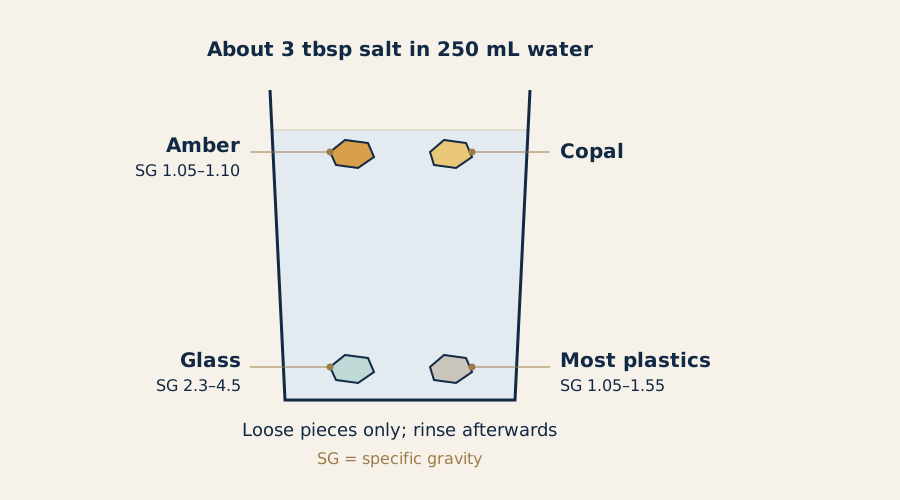
For the float test, dissolve about 3 level tablespoons of salt in 250 mL of warm water. Amber should rise; glass and most plastics will stay on the bottom. Rinse the piece in fresh water afterwards. Because copal also floats, follow up with a drop of acetone on a hidden spot: amber stays smooth, copal turns sticky within seconds.
For a valuable piece, especially one with an inclusion, a gem laboratory can confirm amber with infrared spectroscopy, which reads the chemical fingerprint of the resin and can usually separate Baltic amber from other origins and from copal.
How much is an amber gemstone worth in Australia?
Amber is one of the more affordable natural gems, but prices range widely. What matters most is size, clarity, colour, whether it is a single natural piece or pressed, and above all inclusions. The metal adds to the price too: sterling silver is the usual choice, while 9 carat and 18 carat gold settings cost considerably more.
| Piece | Approximate price range (AUD) |
|---|---|
| Small amber studs or pendant in sterling silver | about $40–$200 |
| Larger cabochon pendant or ring in sterling silver | about $100–$500 |
| Amber set in 9 ct or 18 ct gold | about $300–$1,500+ |
| Genuine Baltic amber bead necklace | about $100–$1,000+ |
| Amber with a clear, complete insect inclusion | about $200 to several thousand |
These are broad ranges only and move with the market and the metal price. Very cheap, very clear amber with a large insect is a warning sign rather than a bargain. Ask the seller whether the piece is natural or pressed, whether it has been heated or coated, and where it came from.
Because amber is soft, the setting does most of the protecting. A full bezel (a rim of metal around the edge) shields the stone's outline far better than claws, and a closed back can protect thin pieces. Drilled beads are best strung with a knot between each one, so they do not rub against each other.
Browse natural gemstones
How do you care for amber jewellery?
Amber lasts for generations if you treat it gently. Its main enemies are heat, solvents, hard knocks and abrasion. Like kunzite, which can fade in strong light, it is also better kept out of long, direct sunlight, which speeds up darkening and surface crazing.
- Put it on last. Apply perfume, hairspray, sunscreen and moisturiser first and let them dry; alcohol and oils dull amber's surface.
- Take it off for cleaning, swimming and the gym. Household chemicals, chlorine and sweat all attack the polish.
- Clean it gently. Use lukewarm water with a drop of mild soap, then dry with a soft, lint-free cloth. Never use an ultrasonic or steam cleaner, and never use acetone or jewellery dips.
- Restore the shine. Buff with a soft cloth; a tiny drop of olive oil, wiped off completely, can lift a dull surface.
- Store it separately. Keep amber in a soft pouch or its own compartment, away from harder gems and metal chains that will scratch it.
- Keep it cool. Avoid hot cars, saunas and sunny windowsills; sudden temperature changes can crack it.
- Have settings checked. Ask a jeweller to check bezels and bead stringing every year or two, and have it repolished professionally if it is heavily scratched.
Free consultation
Talk to a gemologist
Compare stones in person or online with Raj Sood, Graduate Gemologist (GIA), AJP (GIA).
Book a consultationShop this shape
FAQ
Common questions
Is amber a real gemstone?
Yes. Amber is an organic gem, meaning it comes from a living source rather than from a mineral. It is fossilised tree resin, usually tens of millions of years old.
How can I tell if my amber is real at home?
Float a loose piece in strong salt water: amber floats, while glass and most plastics sink. Then put a drop of acetone on a hidden spot; real amber stays smooth, while copal turns tacky.
What is the difference between amber and copal?
Both are hardened tree resin, but copal is much younger and not fully polymerised. It is softer, turns sticky with solvents, crazes over time and is worth far less than amber.
Can you wear an amber ring every day?
It is not ideal. At Mohs 2–2.5, amber scratches and scuffs easily, so an amber ring suits occasional wear in a protective bezel, while pendants and earrings suit daily wear.
Are amber teething necklaces safe?
Australian product safety regulators have warned about choking and strangulation risks with amber teething necklaces. There is no reliable evidence that amber eases teething pain.
Is there amber in Australia?
Yes, small amounts have been found in Victoria and Tasmania, some with fossil insects, and they are important to science. There is no commercial Australian amber field, so jewellery amber sold here is imported, mostly from the Baltic.

Ask a gemologist
Not sure which diamond to choose?
Raj Sood is a Graduate Gemologist (GIA) and master jeweller. Bring the stones you are considering, or send the reports, and he will tell you honestly which one is better and why.
Keep learning
Related guides
Explore more
More guides on this topic
Education