
- Education
- Jewellery Types
- Earring Back Types: A Guide to Butterfly, Screw, Lever and Hinged Backs
Jewellery types
Earring Back Types: A Guide to Butterfly, Screw, Lever and Hinged Backs
The back is the smallest part of an earring and the part most likely to fail. Knowing the earring back types, and what each one is good at, is the simplest way to stop a diamond stud or favourite hoop going down a drain.
 Reviewed by Raj Sood, Graduate Gemologist (GIA), AJP (GIA)Master jeweller and Graduate Gemologist (GIA) · reviewed 4 November 2026
Quick answer
The main earring back types are butterfly (push) backs, screw backs, locking push backs, lever-backs, hinged snap backs on hoops and huggies, flat-back labrets, and clip-ons for unpierced ears. Butterfly backs suit everyday studs; screw and locking backs secure valuable diamonds; lever-backs and hinged hoops close on themselves; titanium or gold flat backs suit sensitive ears.
What are the main earring back types?
An earring has two working parts: the decorative front and the fitting that holds it in the ear. Jewellers call these small metal parts findings. On a stud, the finding is a thin wire called the post that passes through the piercing, plus a back that grips the post behind the lobe. Drops, hoops and hooks use other fittings that close on themselves. If you want the bigger picture of rings, chains, bracelets and earrings side by side, our overview of every main jewellery type is the place to start.
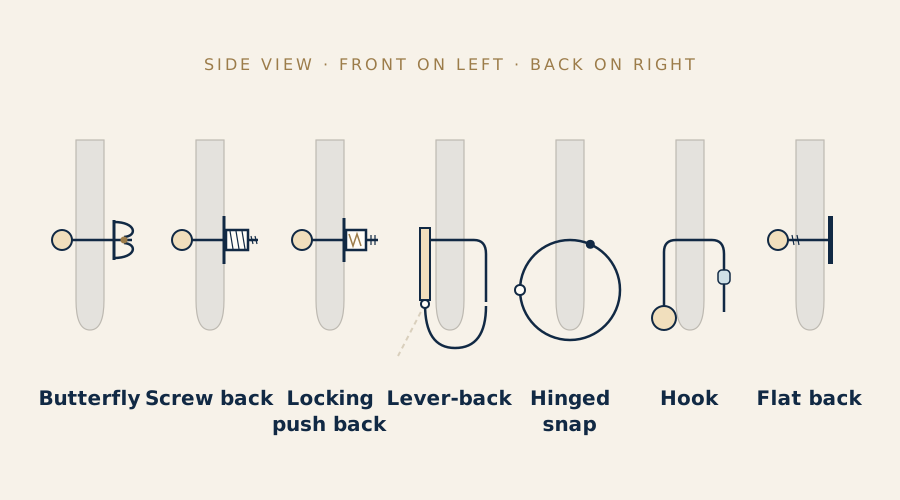
There are seven earring back types you will meet in Australian jewellery stores. They differ in how they grip, how easy they are to put on, and how secure they are if the earring is bumped or caught on a jumper.
| Back type | How it holds | Security | Ease of use | Common on |
|---|---|---|---|---|
| Butterfly (push, friction) | Two curled metal wings grip a notch on a smooth post | Moderate; loosens over time | Very easy | Everyday studs, pearl studs |
| Screw back | Back threads onto a threaded post | High | Slower; fiddly for some | Diamond studs from about 0.50 ct, children's earrings |
| Locking push back | Push on, then a spring catch locks onto the post | High | Easy once learned | Valuable studs where screwing is awkward |
| Lever-back | Hinged lever snaps shut against the hook | High | Easy | Drop earrings |
| Hinged snap (huggie, hoop) | Hinged wire or bar clicks into a catch | High | Easy | Huggies, hoops |
| Hook (French wire, fish hook) | Open curve hangs through the piercing | Low without a stopper | Very easy | Light drops |
| Flat back (labret) | Disc sits flat behind the ear; front screws or pushes in | High | Moderate | Sensitive ears, cartilage, sleeping |
Clip-ons and screw-clip backs for unpierced ears are an eighth family. They press against the lobe rather than passing through it, and the jewellery glossary covers the older names you may see on vintage pieces, such as screw-clips and paddle clips, and omega (French clip) backs that pair a post with a hinged clip.
How do butterfly earring backs work?
The butterfly back, also called a push back or friction back, is the most common earring back in the world. It is a small metal plate, usually about 5–6 mm across, with two wings curled over to form a tight channel. You push it along the post until it clicks into a small groove or notch, typically sitting a few millimetres behind the lobe.
It works by friction alone. That makes it quick and comfortable, but it also means it loosens with use. Each time you pull it off, the wings open a fraction. After a year or two of daily wear, many butterfly backs no longer grip firmly, and the earring can slide off when you pull a top over your head or lie on a pillow.
- Good for: light everyday studs, small gemstones under about 0.30 ct per stud, and fashion pieces.
- Watch for: a back that slides freely past the notch, or wings that have spread apart.
- Quick fix: a jeweller can gently squeeze the wings back together, but the metal work-hardens, so replacement is the longer-term answer.
Pearl studs almost always use butterfly backs on a smooth post, because the pearl is half-drilled and glued onto a short post with a small cup, and a threaded post would add little. Our guide to telling Akoya, South Sea and freshwater pearls apart explains how pearls are mounted and why they need gentler handling than diamonds.
A variation worth knowing is the jumbo or disc back: a butterfly back with a wider plastic or metal disc, often 10–12 mm across. It spreads the earring's weight across more of the lobe, so a heavy stud sits upright instead of drooping forward.
Are screw back earrings more secure than butterfly backs?
Yes. A screw back earring has a post with a fine thread cut along part of its length, and a back with a matching internal thread. You turn the back clockwise until it sits snugly behind the lobe. It cannot be pulled off; it has to be unscrewed. That is why screw backs are the usual recommendation for valuable diamond studs and for children, who tend to fiddle with their earrings.
There are trade-offs. Screw backs take longer to put on, and people with limited dexterity or long nails can find them frustrating. The thread can be crossed if the back goes on at an angle, which strips the post. And threads are not standard between makers, so a screw back from one pair often will not fit another. Keep spare backs with the earrings they came with.
Converting a butterfly stud to a screw back is a workshop job: the jeweller removes the smooth post and solders on a threaded one, then re-polishes the earring. It is usually straightforward on gold and platinum, but stones near the post may need to be protected or removed from the heat first.
A locking push back is a halfway house. It slides on like a butterfly, then a small spring-loaded catch grips a groove on the post and will not release until you squeeze it. Several makers produce their own patented versions, and most need their own matching post. If you are matching a pair of studs with a single-stone pendant, the same security logic applies to the pendant's bail and clasp, which our page on how solitaire pendants are set and hung covers.
What are lever-back, hinged and hook earring backs?
Drops, hoops and huggies do not use a separate back at all. The fastening is built into the earring.
- Lever-back: a curved wire hook with a hinged lever behind it. The lever snaps shut against the end of the hook, closing the loop completely. It is the most secure fitting for drop earrings and is easy to use one-handed.
- Hinged snap (huggie and hoop): one end of the hoop is hinged and clicks into a catch at the other end. Huggies are small hoops, usually 8–14 mm across, that hug the lobe closely.
- Latch back: a thin hoop wire whose end drops into a small tube or hook. Common on larger, lighter hoops; less secure than a hinged snap.
- French wire or fish hook: an open curved wire that simply hangs through the piercing. Light and simple but easy to lose, so add a small rubber or silicone stopper to the end.
- Shepherd's hook: a longer, more upright hook. Same security as a French wire.
- Omega or French clip: a post earring with an extra hinged loop that folds up and presses against the back of the lobe, taking the weight of larger earrings.
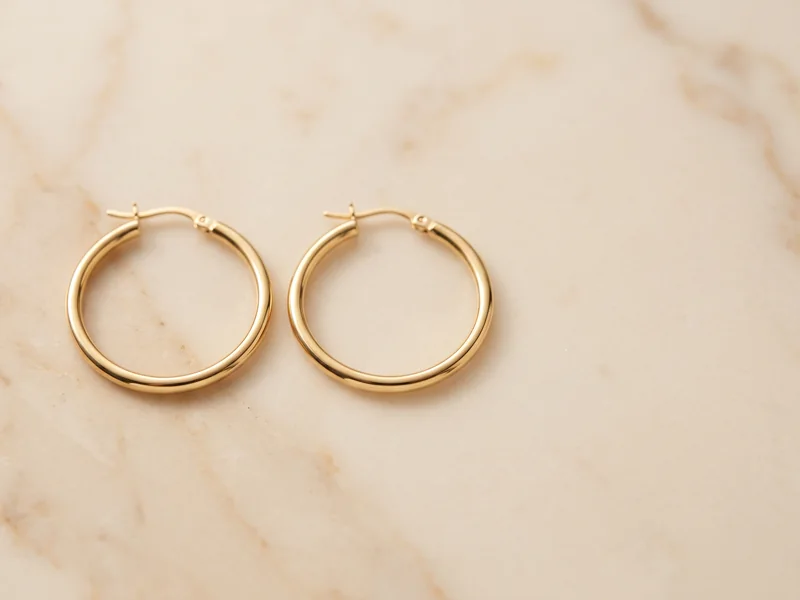
With a hinged hoop, the catch is the part that wears. If you can open it by pressing lightly, or it clicks shut but springs open when you twist the hoop, it needs attention. Our guide to hoop and huggie sizes and styles explains which hoop diameters suit which lobes, and how hinged and continuous hoops compare.
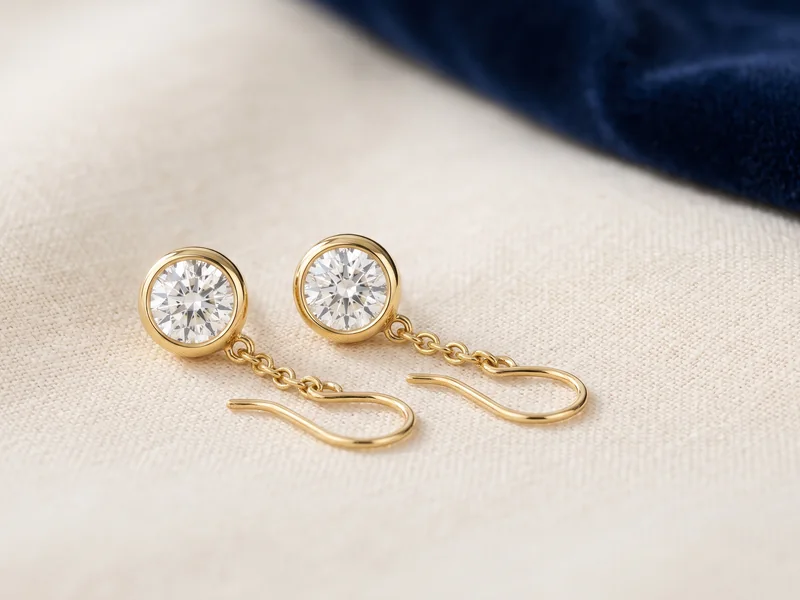
For drops, the back affects how the earring hangs as much as how secure it is. A lever-back holds a drop slightly forward of the lobe; a post with an omega clip holds it flatter. Our page on how drop and dangle earrings are set goes further into the settings themselves.
Related guideHoop and Huggie Earring StylesNot sure which one is right?
Send us the stones you are looking at and our gemologist will tell you which to choose and why.
Which earring backs suit diamond studs and heavy earrings?
As a stud gets bigger, two things change. The stone is worth more if it is lost, and the extra weight pulls the front forward so the earring droops and faces the floor. Both problems are solved by the back.
| Stud size per earring | Approx. diameter (round) | Back most people choose |
|---|---|---|
| Up to 0.25 ct | up to about 4.1 mm | Butterfly |
| 0.25–0.50 ct | about 4.1–5.2 mm | Butterfly or locking push back |
| 0.50–1.00 ct | about 5.2–6.5 mm | Screw back or locking push back |
| 1.00 ct and above | about 6.5 mm and up | Screw back, often with a jumbo disc or omega support |
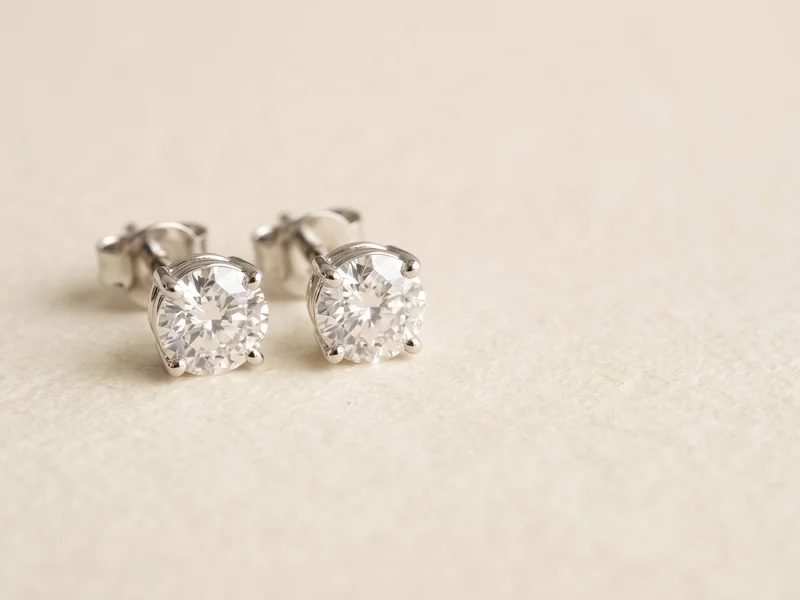
These are typical diameters for a well-cut round brilliant; fancy shapes and other gems sit at different sizes for the same weight. Our chart of diamond stud diameters by carat weight goes into each size on the ear, and whether a four-claw or six-claw basket suits it.
For drooping, look at where the post sits on the setting. If the post is attached low on the basket, a heavy stone tips forward. A jeweller can sometimes move the post higher, or you can add a disc back so the earring rests against more of the lobe. The same weight-versus-fastening problem shows up in fine diamond lines, which is why tennis bracelets carry a second safety catch and why tennis necklaces use box clasps with side locks.
Browse jewellery: diamond studs, hoops and drop earrings
Which earring back types suit sensitive ears?
Most reactions to earrings come from nickel, a metal used in some white gold alloys, cheap plated backs and costume jewellery. Because the back and post sit against a small wound-like channel through the skin, a nickel-containing back can cause itching or redness even when the front is fine. Matching the back's metal to the post matters as much as the front.
- Implant-grade titanium: very low reaction rate and light; widely used for new piercings and flat backs.
- 18 carat gold: 75% pure gold, well tolerated by most people. Yellow gold is the safest choice; check the white gold alloy if you have a known nickel allergy.
- 9 carat gold: 37.5% gold; the remaining alloy metals cause reactions in some sensitive people.
- Platinum: usually 95% pure in jewellery and rarely causes reactions.
- Sterling silver (925): fine for most, but it tarnishes, and some people react to the copper in the alloy.
- Silicone or rubber backs: soft and comfortable, useful on hooks, but they perish over time and should not be the only security on a valuable stud.
Flat backs, also called labrets, come from body piercing. The post has a flat disc at the back and the decorative front screws in (internally threaded) or presses in (threadless, push-pin). With nothing sticking out behind the lobe, they are comfortable to sleep in and suit cartilage piercings. They often use a thicker post of 1.0–1.2 mm, so they may feel tight in an older 0.8 mm lobe piercing.
Men's single studs often use flat backs or screw backs for the same comfort and security reasons; our guide to cufflinks, studs and other men's jewellery covers the wider range.
What size are earring posts in Australia?
In Australia, jewellers describe posts in millimetres, while many overseas and body jewellery suppliers still use gauge, an older wire measurement where a higher number means a thinner wire. Knowing both helps when you buy backs or earrings online.
| Gauge | Diameter | Where you see it |
|---|---|---|
| 22 g | about 0.64 mm | Fine fashion earrings, some hooks |
| 20 g | about 0.81 mm | Most fine jewellery studs and hooks |
| 18 g | about 1.02 mm | Many piercing studs, some flat backs |
| 16 g | about 1.29 mm | Cartilage and body jewellery labrets |
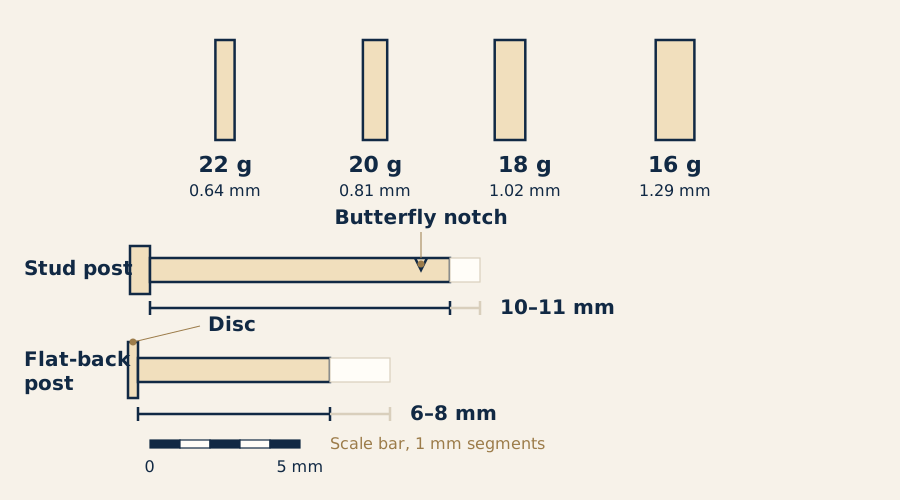
A standard fine jewellery stud post is about 10–11 mm long, with the notch for a butterfly back placed so the back sits comfortably behind an average lobe. Flat-back posts are shorter, typically 6–8 mm, because the disc sits directly against the skin. If your lobes are thick, a post at the longer end avoids pinching; if they are thin, a shorter post stops the stud tilting.
Measuring in millimetres is the same habit we encourage for chains: our necklace lengths in centimetres, from choker to opera and our comparison of chain styles from belcher to box both use metric sizing so you can compare pieces from different makers.
How do you clean and look after earring backs?
Backs collect skin oil, soap and hair product faster than any other part of an earring, and a clogged butterfly back grips less well. Clean them every few weeks.
- Soak: warm water with a drop of mild dishwashing liquid for 10–15 minutes.
- Brush: a soft toothbrush through the wings of a butterfly back and along the thread of a screw post.
- Rinse and dry: rinse over a plugged sink or in a bowl, never over an open drain, and dry with a lint-free cloth.
- Check: look for spread wings, worn threads and hinges that open too easily.
What suits the metal does not always suit the stone. Diamonds, sapphires and rubies tolerate warm soapy water well; emeralds, opals and pearls need much gentler care. Our guide to safe cleaning methods for each gemstone lists what to avoid, and our page on why some gems are naturally more included than others explains why emeralds in particular should never go in an ultrasonic cleaner.
Store each pair with its own backs attached or in a small bag. Most lost earrings start as a lost back, followed by a borrowed back that does not quite fit.
How do you choose between earring back types? Step by step
- Weigh up the value. For studs of about 0.50 ct each and above, or any pair you would hate to lose, choose a screw back or locking push back.
- Check the post. A smooth post takes butterfly or locking backs; a threaded post takes screw backs. Converting between them needs a new post soldered on.
- Match the metal. Use a back in the same metal as the post, ideally gold, platinum or titanium if your ears are sensitive.
- Think about weight. If a stud droops, add a jumbo disc back or an omega clip, or ask about moving the post higher on the setting.
- Consider how you wear them. If you sleep in your earrings or have cartilage piercings, a flat back is more comfortable.
- Test the fit. Push or screw the back on, give it a light tug and check that the earring sits upright and does not pinch the lobe.
- Keep spares. Ask for a spare pair of matching backs, especially for screw or locking systems, which are rarely interchangeable.
Free consultation
Talk to a gemologist
Compare stones in person or online with Raj Sood, Graduate Gemologist (GIA), AJP (GIA).
Book a consultationShop this shape
FAQ
Common questions
What is the most secure type of earring back?
Screw backs and locking push backs are the most secure for studs, because they cannot be pulled straight off. For drops, lever-backs are the most secure, and for hoops, a well-adjusted hinged snap.
Can I put screw backs on my existing studs?
Only if the post is threaded. A smooth post needs to be replaced with a threaded one, which a jeweller solders on and then re-polishes.
Why do my butterfly earring backs keep falling off?
The wings spread a little each time you remove the back, so it gradually stops gripping the notch on the post. Have the wings tightened or replace the backs; for valuable studs, consider changing to a screw or locking back.
Are earring backs universal?
Butterfly backs fit most standard posts of about 0.8 mm. Screw backs and locking backs are usually made to match their own posts, so they are often not interchangeable between makers.
What earring backs are good for sleeping in?
Flat backs, also called labrets, are the most comfortable because nothing sticks out behind the ear. Small hinged huggies are a good second choice.
Which earring backs are good for sensitive ears?
Implant-grade titanium, platinum and 18 carat yellow gold are the least likely to cause a reaction. Avoid plated or nickel-containing backs, and make sure the back matches the metal of the post.

Ask a gemologist
Not sure which diamond to choose?
Raj Sood is a Graduate Gemologist (GIA) and master jeweller. Bring the stones you are considering, or send the reports, and he will tell you honestly which one is better and why.
Keep learning
Related guides
 Jewellery TypesHoop and Huggie Earring Styles
 Jewellery TypesDiamond Stud Earring Sizes by Carat
 Jewellery TypesDrop Earring SettingsJewellery TypesJewellery Types Guide
 Jewellery TypesCufflinks and Men's Jewellery Types
 Jewellery TypesTypes of Necklace Chains
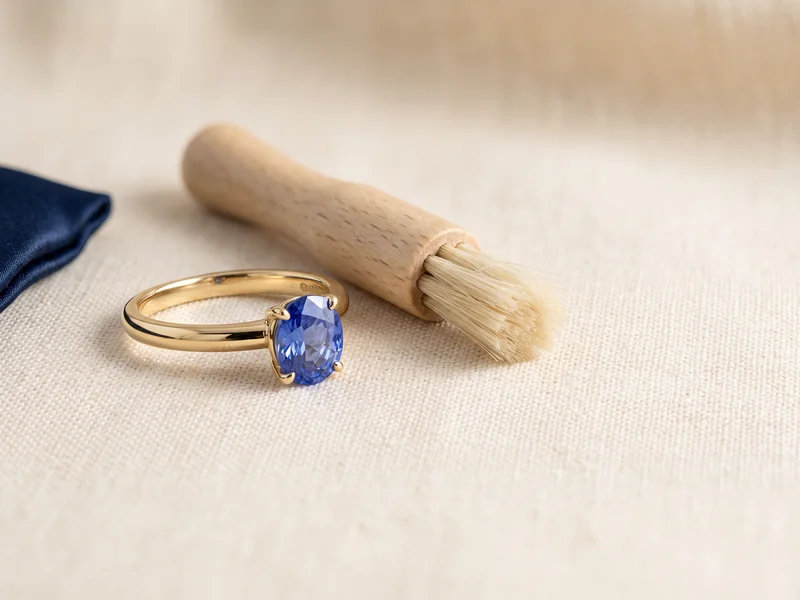 Care, Repairs & RemodellingCleaning Gemstones by Type
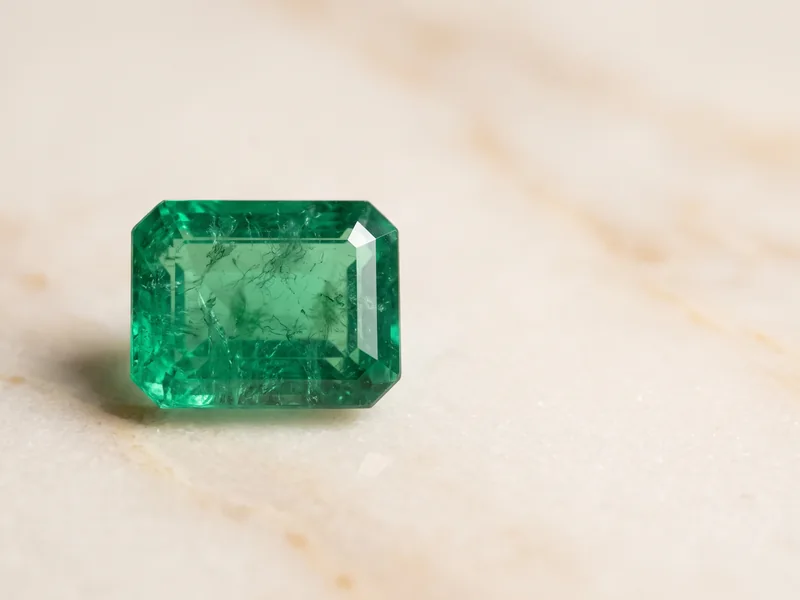 GemstonesGemstone Clarity Types I, II and III
Explore more
More guides on this topic
Education