
- Education
- Care, Repairs & Remodelling
- How to Clean Gemstones by Type: Safe Methods, What to Avoid and When to See a Jeweller
Care, Repairs & Remodelling
How to Clean Gemstones by Type: Safe Methods, What to Avoid and When to See a Jeweller
Knowing how to clean gemstones properly comes down to one thing: the stone. A method that brings a diamond back to life can crack an emerald, cloud an opal or dull a pearl, so here is what each gem can safely handle.
 Reviewed by Raj Sood, Graduate Gemologist (GIA), AJP (GIA)Master jeweller and Graduate Gemologist (GIA) · reviewed 4 November 2026
Quick answer
To clean most gemstones, soak them in warm water with a drop of mild dish soap, brush gently with a soft toothbrush, rinse and pat dry. Diamonds, rubies and sapphires usually handle ultrasonic cleaners; emeralds, opals, tanzanite and any treated stone need the gentle soapy-water method only, and pearls just a soft damp cloth.
How to clean gemstones: what decides the right method?
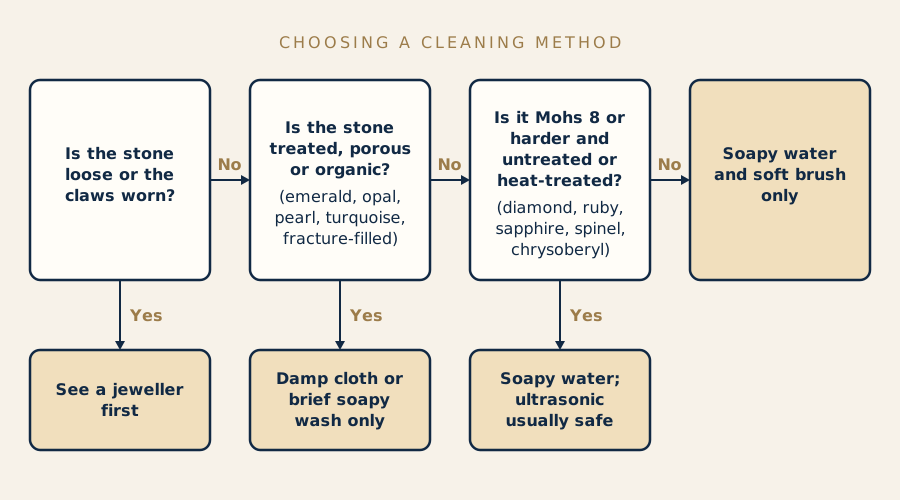
Every gemstone can be cleaned, but not every gemstone can be cleaned the same way. Three properties decide what a stone will tolerate. Hardness is resistance to scratching, measured on the Mohs scale from 1 (talc) to 10 (diamond). Toughness is resistance to chipping and breaking, and it is a separate thing: jade is softer than quartz but far tougher. Stability is how a stone reacts to heat, sudden temperature changes, chemicals and light.
Then there is what has been done to the stone. Many gems are treated to improve their colour or clarity: emeralds are commonly oiled, some rubies are filled with glass, turquoise is often stabilised with resin. A treatment you cannot see on the counter can be washed out, cracked or clouded by the wrong cleaner. That is why the first question at the repairs bench is not only 'what is it?' but 'what has been done to it?'
This page is the gem-by-gem companion to our guide to caring for and maintaining jewellery. If you only own a diamond ring, our walkthrough on cleaning a diamond ring at home goes deeper on that one job. Technical terms are explained as we go, and in our A–Z glossary of jewellery terms.
Why does gemstone hardness matter when cleaning?
Household dust contains fine particles of quartz, which sits at 7 on the Mohs scale. Anything softer than 7, such as opal, pearl, turquoise, tanzanite, peridot and moonstone, can be scratched simply by being wiped while dusty. Over the years that turns a polished surface dull and leaves facet edges looking rounded. A diamond at 10 or a sapphire at 9 shrugs it off.
So the rule for soft stones is simple: wet the stone first, never rub it dry, and use only a soft cloth or a baby toothbrush. Skip paper towel (it is rougher than it feels), abrasive powders and metal-polishing cloths, which are made for gold and silver, not for the gem sitting in them.
Some gems also have cleavage: flat planes of weakness along which the crystal can split cleanly. Topaz, tanzanite, moonstone and even diamond have it. A sharp knock, strong vibration or the shock of hot steam on a cool stone can start a split along those planes.
Inclusions (internal features such as crystals and fractures) matter too. A stone with fractures that reach the surface, common in emerald and in pink and red tourmaline, is more likely to be damaged by vibration and heat. Gemmologists group coloured stones into three clarity types by how included they usually are; our page on Type I, II and III clarity in coloured gems explains why a Type III stone such as emerald needs gentler handling than a Type I stone such as aquamarine.
Which gemstones can go in an ultrasonic cleaner?
An ultrasonic cleaner is a small tank that sends high-frequency sound waves through a cleaning solution. The waves create countless tiny bubbles that collapse against the jewellery (called cavitation) and shake grime loose from under claws and behind stones. A steam cleaner fires pressurised steam, well above 100 °C, to flush the loosened dirt away. Both work very well on the right stones and can do real damage on the wrong ones.
| Gemstone | Mohs | Warm soapy water | Ultrasonic | Steam | Watch for |
|---|---|---|---|---|---|
| Diamond (natural or lab-grown) | 10 | Yes | Usually safe | Usually safe | Not if fracture-filled or heavily included |
| Ruby and sapphire | 9 | Yes | Usually safe if untreated or heat-treated only | Usually safe if untreated or heat-treated only | Never for glass-filled ruby or fracture-filled stones |
| Chrysoberyl and alexandrite | 8.5 | Yes | Usually safe | Usually safe | Check the setting first |
| Spinel | 8 | Yes | Usually safe | Usually safe | Check for surface-reaching fractures |
| Topaz | 8 | Yes | Not recommended | Not recommended | Perfect cleavage; coated 'mystic' topaz scratches |
| Aquamarine and morganite | 7.5–8 | Yes | Usually safe if no fractures | Not recommended | Fractured stones |
| Emerald | 7.5–8 | Yes, briefly | Never | Never | Usually oiled or resin-filled |
| Tourmaline | 7–7.5 | Yes | Not recommended | Never | Heat-sensitive; pink and red often fractured |
| Amethyst and citrine (quartz) | 7 | Yes | Usually safe | Not recommended | Heat can fade or change colour |
| Garnet | 6.5–7.5 | Yes | Usually safe (not demantoid) | Not recommended | Sudden temperature change |
| Peridot | 6.5–7 | Yes | Not recommended | Never | Sensitive to heat and acids |
| Tanzanite | 6–7 | Yes | Never | Never | Heat shock and cleavage |
| Moonstone | 6–6.5 | Yes | Not recommended | Never | Cleavage |
| Opal | 5.5–6.5 | Brief wipe; never soak doublets or triplets | Never | Never | Contains water; heat can cause cracking |
| Turquoise and lapis lazuli | 5–6 | Damp cloth only | Never | Never | Porous; often stabilised or dyed |
| Pearl | 2.5–4.5 | Damp cloth only | Never | Never | Acids, perfume, sweat |
| Amber and coral | 2–4 | Damp cloth only | Never | Never | Very soft; solvents damage the surface |
'Usually safe' assumes a stone that is untreated or only heat-treated, without large surface-reaching fractures, in a setting that is sound. Lab-created gems (synthetic ruby, sapphire, spinel and so on) share the chemistry and hardness of their natural counterparts, so follow the same row. Lab-created emeralds tend to have fewer fractures than natural ones, but we still clean them gently. Lab-grown diamonds clean exactly like natural diamonds, and so do rare nitrogen-free Type IIa diamonds. Cubic zirconia (8–8.5) and moissanite (9.25) also handle normal cleaning; glass imitations (about 5.5) scratch easily.
Home ultrasonic units are inexpensive, but they are blunt tools: they cannot tell a loose claw from a tight one. For the differences in equipment, solutions and the checks a jeweller makes first, see how a professional clean differs from a home clean.
Related guideProfessional Jewellery Cleaning vs Home CleaningHow do treatments change the way you clean a gemstone?
Treatments are common and, when disclosed, perfectly legitimate. Some are completely stable and make no difference to cleaning; others are delicate and rule out heat, vibration and chemicals altogether. When you are cleaning treated gemstones, this table matters more than the gem's name.
| Treatment | Common in | What it means for cleaning |
|---|---|---|
| Heat treatment | Sapphire, ruby, tanzanite, aquamarine, citrine | Usually stable; clean as you would an untreated stone of the same type |
| Fracture filling (glass) | Diamond, ruby | No ultrasonic, steam or heat; lead-glass-filled ruby can be etched by mild acids such as lemon juice |
| Oiling or resin filling | Emerald | No ultrasonic, steam, hot water or solvents, which can draw out the filler and make fractures visible |
| Stabilisation (resin or wax) | Turquoise, some jade | Avoid solvents, heat and soaking |
| Dyeing | Jade, lapis, chalcedony, some pearls | Avoid solvents such as acetone or alcohol and long soaks, which can lift the colour |
| Surface coating | 'Mystic' topaz, some quartz | No ultrasonic, abrasive cloths or firm brushing; the coating wears off |
If you do not know whether your stone is treated, check its grading report or ask the jeweller who supplied it; a lab report will usually note detectable treatments. Until you know, clean it as if it were treated: warm soapy water and a soft brush, nothing more. It also matters for repairs. A glass-filled ruby or an oiled emerald can be damaged by the heat of a jeweller's torch, so mention any treatment before resizing or claw work.
Not sure which one is right?
Send us the stones you are looking at and our gemologist will tell you which to choose and why.
How do you clean pearls, opals and emeralds?
These are the stones we see damaged most often by well-meant cleaning. Each one needs its own approach:
- Pearls: pearl nacre is mostly calcium carbonate, which acids dissolve. Wipe pearls with a soft, slightly damp cloth after every wear to remove skin oils and perfume, then lay them flat to dry. Never soak a strand: the silk thread stretches and weakens, and water can sit in the drill holes. Put pearls on last, after make-up, perfume and hairspray.
- Solid opal: natural opal contains water within its structure, so heat and sudden temperature changes can cause fine cracks (crazing). Wash briefly in lukewarm soapy water with a soft brush and dry straight away.
- Opal doublets and triplets: a thin slice of opal glued to a backing (and, in a triplet, a clear cap on top). Do not soak them: water can creep into the glue line and leave the stone looking grey or foggy. Wipe with a damp cloth only.
- Emeralds: most are oiled or resin-filled. Clean quickly in lukewarm (never hot) soapy water, brush gently and dry. No ultrasonic, no steam, no solvents. If an emerald starts to look duller or shows new fine lines, the oil may have dried out; a jeweller can arrange re-oiling.
- Tanzanite: sensitive to heat shock and has strong cleavage. Lukewarm soapy water only, and keep it away from hot taps and cold-to-hot changes.
- Turquoise, lapis, malachite, amber and coral: soft and often porous. A damp cloth, then dry. Keep them away from soaps that leave a film, oils and cosmetics, which can soak in and change the colour.
What should you never use to clean gemstones?
Most of the damage we repair comes from household products that seem harmless. Here is what not to use to clean gemstones, and why:
- Toothpaste and bicarb soda: both are abrasive. They scratch softer gems and polish away fine detail on gold and silver.
- Bleach and chlorine: chlorine attacks the other metals mixed into gold alloys and can cause tiny cracks in claws over time. Keep rings out of bleach, spa water and pools.
- Vinegar, lemon juice and ammonia: acids and strong alkalis damage pearls, opal, turquoise, coral, peridot and glass-filled rubies. Diamonds survive them, but you do not need them.
- Acetone, nail polish remover and alcohol: these solvents can strip emerald oil, dyes, resins and stone coatings.
- Boiling water, steam irons and hair dryers: heat and fast temperature changes crack opal, tanzanite, emerald and fractured stones.
- Jewellery dips and 'instant' cleaners: fine for some metals and hard stones, but never for porous, organic or treated gems. Read the label for the stones it excludes.
- Pins, needles and stiff brushes: they scratch metal and can lift a claw away from the stone.
Many everyday exposures matter as much as the cleaning itself. Sunscreen and moisturiser leave a greasy film that dulls a stone within hours, and chlorine is hard on gold. Our guide to what sunscreen and pool chlorine do to jewellery covers this in detail, and we answer the common summer question of wearing a ring in the shower, the pool or the surf.
How often should you clean gemstone jewellery?
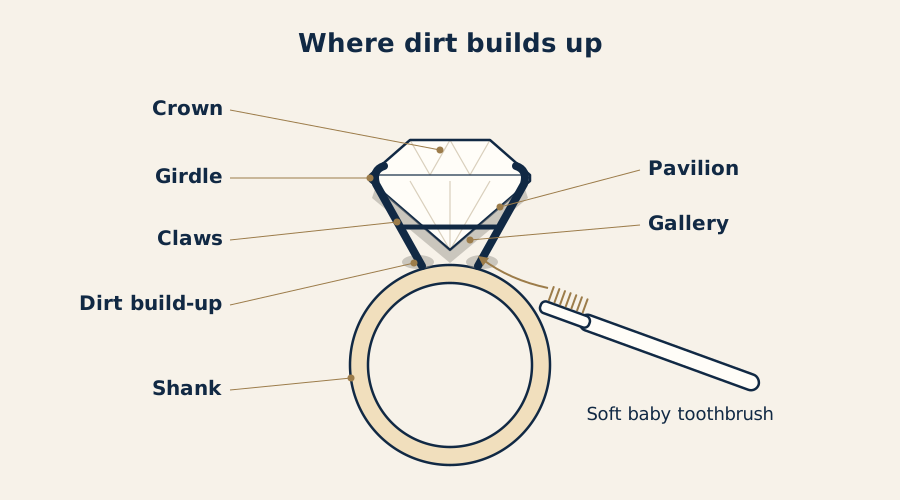
How often to clean jewellery depends on how often you wear it and what the stone is. A ring worn every day collects soap, hand cream and skin oils underneath the stone, where they block light from entering the pavilion (the lower half). Even a fine diamond can look grey and glassy when it is coated underneath. Earrings and pendants get dirty much more slowly.
| Piece | Home clean | Professional check |
|---|---|---|
| Everyday diamond, ruby or sapphire ring | Quick soapy clean weekly or fortnightly | Every 6–12 months |
| Ring with a soft or treated gem | Soft cloth after wear; gentle soapy clean about monthly | Every 6–12 months |
| Earrings and pendants | About monthly, or when they look dull | About yearly |
| Pearl strand | Damp cloth wipe after each wear | Restringing every few years if worn often |
| Opal jewellery | Damp cloth wipe after wear | About yearly, checking the setting and any doublet glue line |
These are sensible starting points, not fixed rules. If you garden, go to the gym or work with your hands, clean more often and take your rings off for the dirtiest jobs; our guide on sleeping, training and working out in your ring explains why. Rings fitted with sizing beads or a sizing bar trap extra grime inside the band, so give that area a brush too. For a full routine for a ring you wear every day, see our care routine for engagement rings.
When should you see a jeweller instead of cleaning at home?
Cleaning brings back sparkle; it does not fix wear. Book a check if you notice any of these:
- A stone that moves, rattles or sits crooked when you press it gently.
- A claw that catches on clothing, looks flattened or has worn thin at the tip.
- Dirt that will not shift from under the stone after a gentle soapy clean.
- A chip, a new line or a cloudy patch in the stone, or an emerald or opal that suddenly looks duller.
- White gold that looks yellowish, or a band that has thinned, cracked or lost its round shape.
- A treated, porous or very valuable piece that you are not sure how to clean.
A professional check covers more than a clean. We look at every claw under magnification and can tighten them, as explained in our guide to loose stones and how claws are tightened. White gold usually needs fresh rhodium plating every so often; our rhodium replating timeline sets out when. A band worn thin at the base can be rebuilt, and replacing the lower half of a ring's band is often simpler than people expect. If the damage is bigger, we can help you decide whether a worn band should be repaired or replaced, and if you are thinking of a larger centre stone at the same time, our page on trading up to a bigger diamond covers how that works.
Book a jewellery repair, clean or claw check
How to clean gemstones at home, step by step
This is the gentle method that is safe for almost every gem. Skip the soak for pearls, opal doublets and triplets, turquoise and other porous stones, and wipe them with a damp cloth instead.
- Check the stone first. Know what the gem is, whether it is treated, and press it gently to make sure it is secure.
- Make up the solution. A bowl of lukewarm (not hot) water with two or three drops of mild dish soap. Use a bowl, never an open sink drain.
- Soak hard, untreated stones. Diamonds, sapphires, rubies and similar gems can soak for 10–20 minutes to soften grime. Give emeralds, tanzanite and opals only a brief dip.
- Brush gently. Use a soft baby toothbrush, working under the stone and around each claw, where dirt builds up.
- Rinse. Dip in a second bowl of clean lukewarm water to remove the soap film.
- Dry straight away. Pat dry with a soft, lint-free cloth and let it air-dry fully before storing. Lay pearl strands flat.
- Inspect. Look at the stone and claws under a bright light, ideally with a loupe (a small magnifier), for chips, lifted claws or new lines.
- Store separately. Keep each piece in its own pouch or compartment so hard stones cannot scratch soft ones.
Free consultation
Talk to a gemologist
Compare stones in person or online with Raj Sood, Graduate Gemologist (GIA), AJP (GIA).
Book a consultationShop this shape
FAQ
Common questions
Can you clean gemstones with toothpaste?
No. Toothpaste is abrasive and can scratch softer gems such as opal, pearl, tanzanite and turquoise, and it dulls gold and silver. Warm water with a drop of mild dish soap and a soft brush does the job without the risk.
Can you put gemstones in an ultrasonic cleaner?
Only some. Untreated or heat-treated diamonds, rubies and sapphires usually handle it if the setting is sound, but emerald, opal, pearl, tanzanite, turquoise and any fracture-filled or coated stone should never go in. If in doubt, use soapy water.
How do you clean an emerald ring safely?
Give it a quick dip in lukewarm soapy water, brush gently with a soft toothbrush, rinse and dry straight away. Avoid hot water, ultrasonic and steam cleaners and solvents, which can remove the oil most emeralds are treated with.
How do I clean opal jewellery?
Wipe solid opal with a damp cloth or wash it briefly in lukewarm soapy water, then dry it. Never soak opal doublets or triplets, because water can get into the glue layer and make the stone look foggy.
Is vinegar safe for cleaning gemstones?
It is not needed and can cause harm. Vinegar is an acid that damages pearls, opal, turquoise, coral, peridot and glass-filled rubies; even on a diamond, mild soap works just as well.
Do lab-grown diamonds and lab-created gems need different cleaning?
No. Lab-grown diamonds and lab-created rubies, sapphires and spinels have the same hardness and chemistry as natural stones, so clean them the same way. Treat lab-created emeralds gently, as you would natural ones.

Ask a gemologist
Not sure which diamond to choose?
Raj Sood is a Graduate Gemologist (GIA) and master jeweller. Bring the stones you are considering, or send the reports, and he will tell you honestly which one is better and why.
Keep learning
Related guides
 Care, Repairs & RemodellingHow to Clean a Diamond Ring at HomeCare, Repairs & RemodellingProfessional Jewellery Cleaning vs Home Cleaning
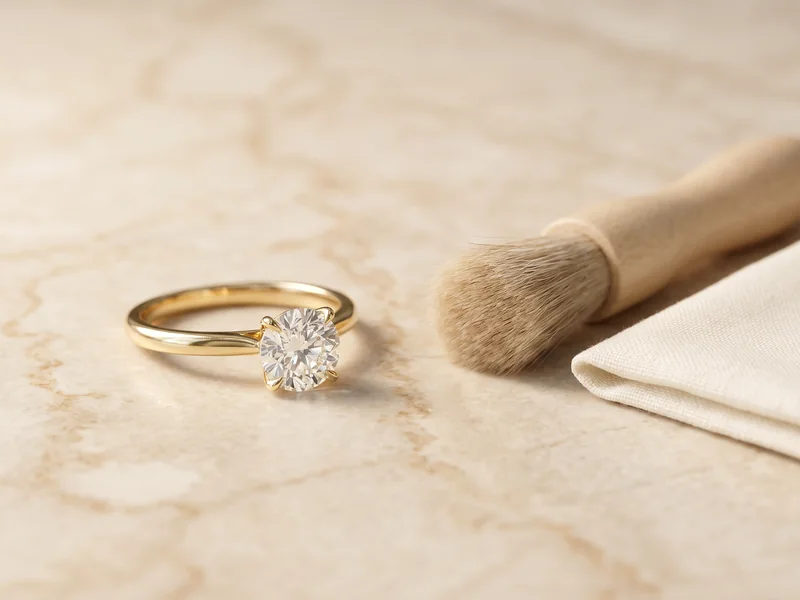 Care, Repairs & RemodellingLoose Stones and Stone Tightening
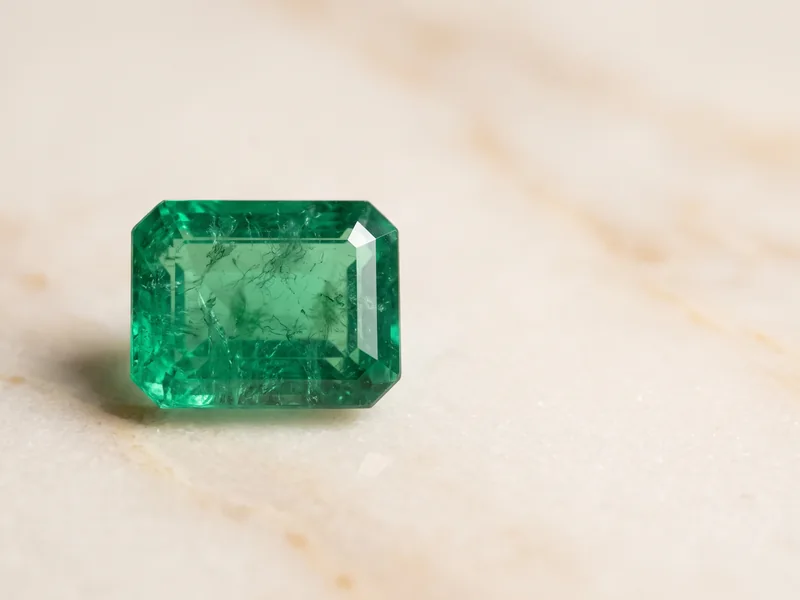 GemstonesGemstone Clarity Types I, II and III
 Lab-Grown DiamondsType IIa Diamonds ExplainedCare, Repairs & RemodellingCan You Wear Your Ring in the Shower, Pool or at the Beach?
 Care, Repairs & RemodellingRhodium Replating Schedule
Explore more
More guides on this topic
Education