
- Education
- Jewellery Types
- Types of Cufflinks and Men's Jewellery: Styles, Sizes and Security
Jewellery types
Types of Cufflinks and Men's Jewellery: Styles, Sizes and Security
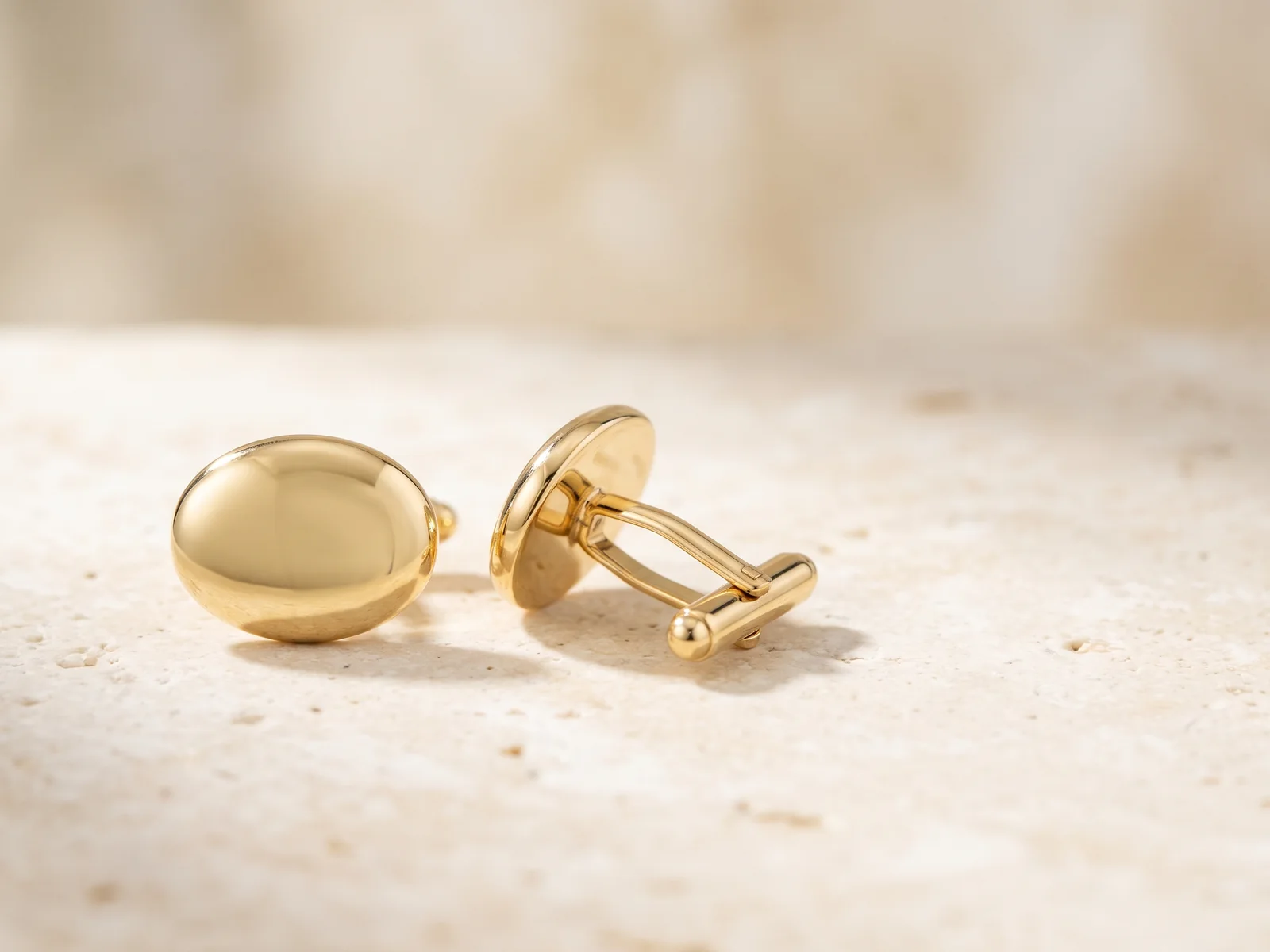
The types of cufflinks you choose decide how quickly you can dress, how secure the pair feels and how it looks under a jacket sleeve. Here is a clear guide to cufflink backs, sizes and metals, plus the other men's jewellery that sits alongside them.
 Reviewed by Raj Sood, Graduate Gemologist (GIA), AJP (GIA)Master jeweller and Graduate Gemologist (GIA) · reviewed 4 November 2026
Quick answer
The main types of cufflinks are bullet (torpedo) backs, whale backs, fixed backs, chain links, stud or button backs, and silk knots. Fixed and whale backs hold most securely; chain links are the most traditional. Other men's jewellery types include chains, bracelets, signet rings and bands, tie bars and studs, each sized in millimetres to suit the wearer.
What are cufflinks, and what counts as men's jewellery?
Cufflinks are small fasteners that close a shirt cuff in place of buttons. Each one has three parts: the face, the decorative front that shows on the outside of the cuff; the post (or a short chain) that passes through the buttonholes; and the back or toggle that stops it sliding out again. Linked buttons were worn as far back as the late 1600s, and cufflinks as we know them became common in the 1800s, when stiff, starched cuffs made ordinary buttons hard to use.
Men's jewellery today covers much more than cufflinks. It includes chains and pendants, bracelets, wedding bands, signet rings, engagement rings, tie bars, dress studs, lapel pins and earrings. Many of these share mechanisms and sizing logic with other jewellery, which is why our overview of every jewellery type is a useful companion to this page. If a trade word here is new to you, it is also defined in our jewellery glossary of trade terms.
Three choices matter most with any piece of men's jewellery: the mechanism (how it fastens and how secure it is), the size in millimetres (how it sits on the body) and the metal (how it wears over years). Silver is the most common starting point for cufflinks, and our page on how sterling silver is made and cared for explains why it tarnishes and how to keep it bright.
What are the main types of cufflinks?
Cufflinks are usually described by their back, because the back decides how easy they are to fasten and how well they stay put. Here are the six cufflink back types you will meet most often:
| Back type | How it works | Security | Ease of fastening | Suits |
|---|---|---|---|---|
| Bullet (torpedo) back | A small cylinder on a hinge swings in line with the post to pass through, then turns 90° to lock | Good | Very easy | Everyday office wear |
| Whale back | A flat, fish-tail shaped bar flips up and down on a fixed post | Very good | Easy | Daily wear and travel; one of the most common modern types |
| Fixed back | Solid post and back with no moving parts | Excellent | Fiddlier; needs larger or softer buttonholes | Heavy use, vintage styles, people who dislike hinges |
| Chain link | Two faces, or a face and a bar, joined by a short chain | Good | Fiddly to do up on your own | Formal wear; the most traditional look |
| Stud or button back | A rounded end pushed through like a button, sometimes with a screw-on back | Fair to good | Moderate | Slim, discreet looks and dress shirts |
| Silk knot | Two knotted balls of silk or elastic cord | Fair | Very easy | Casual, colourful and low cost |
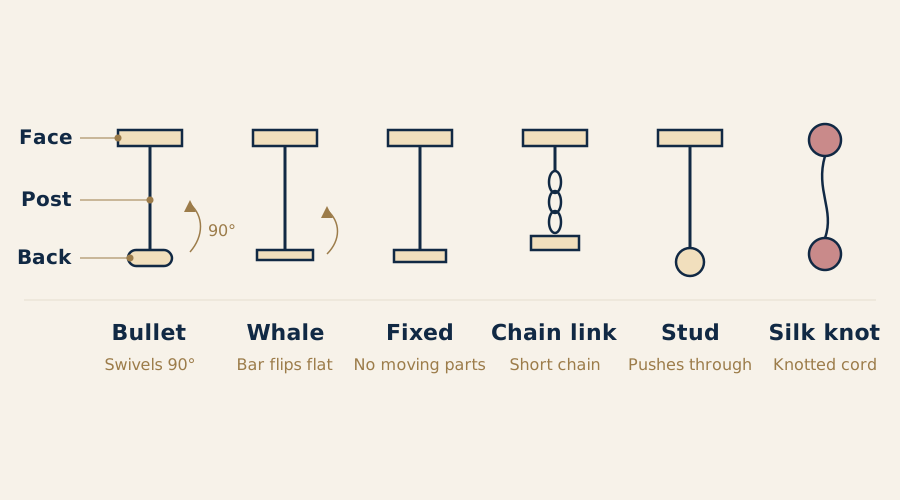
The toggle on a bullet or whale back works on a small spring or friction hinge. That is what makes these types of cufflinks quick to use, and it is also the part that eventually loosens with thousands of flips. If you know how earring backs such as screw, push and lever backs work, the logic is the same: more moving parts mean more convenience but more to check over time.
You will also see double-faced cufflinks, where both ends are decorative and linked by a chain or bar, so the cuff looks finished from both sides. And there are novelty pieces with hidden compartments, enamel pictures or moving parts; these follow the same back types underneath, so judge the mechanism the same way.
How do you wear cufflinks with French, barrel and convertible cuffs?
Not every shirt takes cufflinks. It depends on the cuff:
- French (double) cuff: twice the normal length, folded back on itself, with buttonholes on both sides and no buttons. It always needs cufflinks. This is the standard for business and formal wear.
- Single (link) cuff: one layer with buttonholes on both sides and no buttons. It needs cufflinks and suits a sleeker, more formal look, including traditional white tie.
- Convertible cuff: has a button on one side and a buttonhole on the other, plus a second buttonhole. You can button it or use cufflinks.
- Barrel (button) cuff: the everyday shirt cuff, fastened with sewn buttons. It does not take cufflinks unless you add a second buttonhole.
On a French cuff, the usual way is kissing cuffs: press the two inner faces of the cuff together so the edges line up, then pass the cufflink through all four layers from the outside. The decorative face sits on the outer side of the wrist, where people see it, and the back sits against the inner side. Because the post has to clear four layers of shirting, French cuffs need a longer post than single cuffs.
For black-tie events, cufflinks are often worn with matching dress studs, small decorative buttons that replace the shirt's front buttons. Classic black-tie sets use black onyx or white mother-of-pearl in a silver or gold frame; a tuxedo shirt with stud holes is needed for these.
What size should cufflinks and tie bars be?
Sizes are where online photos mislead the most, because a pair shot close up on a cream background can look twice its real size. Measure in millimetres and compare with something you already own, such as a 20c coin (28.65 mm across) or a 10c coin (23.6 mm).
| Item | Typical size | What to know |
|---|---|---|
| Small cufflink face | about 12–15 mm | Discreet; suits slim wrists and single cuffs |
| Standard cufflink face | about 15–20 mm | Sits comfortably on most shirts and wrists |
| Large cufflink face | about 20–25 mm | Statement size; can catch on a jacket sleeve |
| Cufflink post length | about 15–20 mm | Longer posts are needed for thick double cuffs |
| Tie bar length | about 35–60 mm | About three-quarters of the tie's width, never wider than the tie |
| Lapel pin face | about 10–20 mm | Sits on the left lapel, near the buttonhole |
Weight matters too. A heavy solid gold or fixed-back pair can drag a lightweight cotton cuff downwards, while a light silk knot hardly registers. As a rule of thumb, the bigger and heavier the face, the stiffer the cuff fabric you want, and the more of a gap you need between cuff and jacket sleeve. Most tailors suggest about 1–1.5 cm of shirt cuff showing below the jacket, which is enough to show a standard face without it catching.
For tie bars, the usual placement is between the third and fourth shirt buttons, clipping the tie to the shirt placket underneath. Skinny ties of about 5–6 cm need a short bar of about 35–40 mm; standard ties of about 7–8.5 cm suit 50–60 mm.
Not sure which one is right?
Send us the stones you are looking at and our gemologist will tell you which to choose and why.
What other types of men's jewellery are there?
Beyond cufflinks, these are the men's jewellery types most people ask about, with the sizes that usually work:
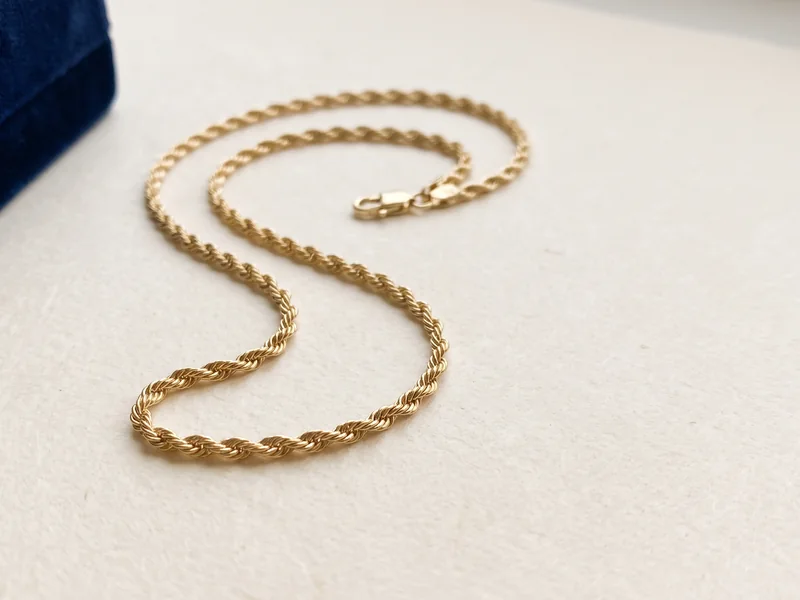
- Chains: curb, box, rope, figaro, wheat and Cuban links are the common men's styles, mostly 3–7 mm wide. Our guide to the full range of necklace chain styles compares their strength and look.
- Pendants: medallions, crosses, dog tags and initials, usually 15–35 mm, hung on a chain that passes easily through the pendant's bail.
- Bracelets: chain bracelets, ID bracelets with an engraving plate, solid cuff bangles and bead bracelets.
- Wedding bands: commonly 5–8 mm wide for men, in flat, court (rounded inside and out) or bevelled profiles.
- Signet rings: a flat face, typically about 10–15 mm, engraved with initials or a crest, traditionally worn on the little finger.
- Engagement rings: a growing category, often a band with a flush-set stone; see our page on engagement rings designed for men.
- Earrings: small studs of 3–6 mm or huggie hoops that sit close to the lobe.
- Tie bars, dress studs and lapel pins: the formal accessories that pair naturally with cufflinks.
Rings are the one type where a few millimetres of error makes a piece unwearable, and wider men's bands feel tighter than narrow ones of the same size. Before ordering, check how to measure a man's ring size accurately, especially for bands over 6 mm.
Coloured stones are a simple way to make men's jewellery personal. Birthstone cufflinks and pendants are a popular choice, and pearls appear in dress studs and lapel pins; our guide on how to tell pearl types apart explains the differences between freshwater, Akoya and South Sea pearls.
How thick and long should a men's chain or bracelet be?
Chain length is measured end to end, including the clasp, and width is measured across one link. For men, these are the usual choices:
| Chain length | Where it sits | Width that usually suits |
|---|---|---|
| 45 cm | At the base of the neck; close-fitting | 2–4 mm |
| 50 cm | On the collarbone; the most common men's length | 3–5 mm |
| 55 cm | Just below the collarbone; sits under an open collar | 3–6 mm |
| 60 cm | Mid-chest; good for pendants | 4–7 mm |
| 70 cm+ | Lower chest; worn over or under clothing | 5 mm and up |
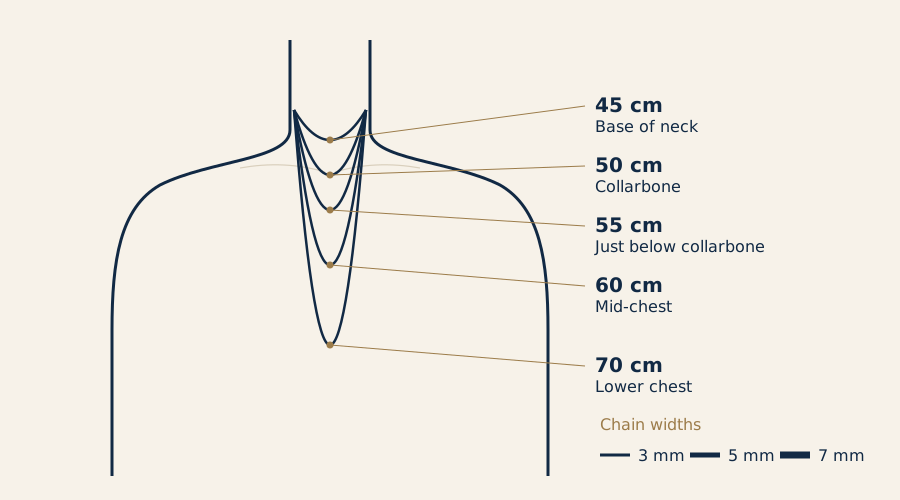
A broader neck or chest makes every chain sit higher, so a 50 cm chain on one person can look like 45 cm on another. Measure around the neck with a tape and add about 5–10 cm for a comfortable drape.
For bracelets, measure the wrist snugly just above the wrist bone, then add about 1.5–2.5 cm. Most men's bracelets end up between 19 and 22 cm. Solid cuff bangles are measured by their inner width and the size of the opening, and should slip on sideways over the narrow part of the wrist. Chains under about 2 mm look delicate on most men's wrists; 4–8 mm is the range most people choose for a chain bracelet.
Which metals and gemstones suit cufflinks and men's jewellery?
Men's jewellery tends to be worn hard: cufflinks knock on desks, bracelets rub on watch straps and rings take daily wear. The metal you choose decides how it ages.
| Metal | Purity | How it wears | Approximate price, plain cufflink pair (AUD) |
|---|---|---|---|
| Sterling silver | 92.5% silver | Soft; scratches and tarnishes, polishes up well | about $100–$400 |
| 9ct gold | 37.5% gold | Hardest of the common golds; good for daily wear | about $500–$1,500 |
| 18ct gold | 75% gold | Richer colour, softer; shows scratches sooner | about $1,500–$5,000 |
| Platinum | usually 95% (950) | Dense and heavy; scratches form a soft patina and very little metal is lost | about $2,500–$6,000 |
| Stainless steel and titanium | Alloys, not precious metals | Tough and low cost; titanium is very light; hard to resize or repair | usually under $200 |
These are broad ranges only; weight, design work and gold prices move them a great deal. Gold purity in Australia is described in carats (ct), and yellow, white and rose gold of the same carat contain the same proportion of pure gold, with different alloy metals making up the rest.
For set stones, think about hardness on the Mohs scale (a 1–10 scratch-resistance scale). Cufflink faces get knocked, so harder stones last better. Onyx (a black chalcedony, about 6.5–7) is a classic. Mother-of-pearl (about 3.5) and lapis lazuli (about 5–5.5) look handsome but scratch. Opal sits at about 5.5–6.5 and is a much-loved Australian choice for cufflinks; see Australian opal types compared with Ethiopian opal for why solid and boulder opal suit jewellery that is worn often.
Sapphire (9) and diamond (10) are the hardest options for signet rings and studs. Lab-grown diamonds and lab-created sapphires have the same hardness as natural ones and are a lower-cost way to get a hard-wearing stone. Some gems naturally contain more inclusions than others, which affects both their look and their toughness; our page on how gem clarity types affect durability explains why emeralds need more care than sapphires. For diamond lovers, there is also what makes a Type IIa diamond unusual.
Which types of cufflinks are most secure, and how do you care for them?
Fixed backs are the most secure because there is nothing to wear or flip open. Whale backs come next: the flat bar lies along the cuff and rarely flips by accident. Bullet backs are secure when new but can loosen as the hinge wears. Chain links are secure if the chain and its jump rings (the small connecting loops) are soldered closed. Silk knots can stretch and slip out of loose buttonholes.
- Check hinges and chains every few months; a jeweller can tighten a toggle or solder an open link.
- Clean metal with warm water, a drop of mild detergent and a soft brush, then dry well.
- Treat soft stones gently: keep opal, pearl, mother-of-pearl and lapis out of ultrasonic cleaners and away from perfume and cologne. Our guide to safe cleaning methods for each gemstone covers each stone.
- Slow silver tarnish by storing it in an anti-tarnish bag or a closed box away from rubber bands and wool, which contain sulphur.
- Store pairs together in separate compartments so faces do not scratch each other; see storing jewellery so pieces don't scratch.
Are cufflinks a good gift, and can they be made from old jewellery?
Cufflinks are a traditional gift for weddings, groomsmen, graduations, milestone birthdays and work anniversaries, partly because sizing is not an issue the way it is with rings. Engraved initials on the face or back, birthstones and family crests are common personal touches. Some couples follow the traditional anniversary materials, such as silver for the 25th or pearl for the 30th; our guide to anniversary gift traditions by year lists each one.
Cufflinks and signet rings are also a favourite way to give old family jewellery a new life. A single earring, a pendant or a stone from an inherited ring can become the face of a cufflink pair, and gold from old pieces can sometimes be reused. Not every part is suitable, though: worn claws, thin shanks and brittle solder joints may not be safe to keep. Our page on which old parts can be safely reused in a remodel explains what a jeweller checks first.
Shop jewellery
How do you choose cufflinks and men's jewellery? Step by step
- Check the shirts. French or single cuffs need cufflinks; convertible cuffs can take them; barrel cuffs usually cannot.
- Choose the back. Whale or fixed backs for security, bullet backs for speed, chain links for a traditional formal look.
- Measure the face. About 15–20 mm suits most wrists; compare against a coin before ordering online.
- Match the metal. Keep cufflinks, tie bar, watch and rings in the same colour of metal where possible.
- Think about wear. For daily use, choose 9ct gold, platinum or a harder stone; keep mother-of-pearl, opal and pearl for occasions.
- Size the rest. Measure neck, wrist and finger in millimetres or centimetres before choosing chains, bracelets and rings.
- Test the mechanism. Flip toggles, check chain links are closed and make sure the pair fastens comfortably through your own cuffs.
Free consultation
Talk to a gemologist
Compare stones in person or online with Raj Sood, Graduate Gemologist (GIA), AJP (GIA).
Book a consultationShop this shape
FAQ
Common questions
What are the different types of cufflinks?
The six common types are bullet (torpedo) backs, whale backs, fixed backs, chain links, stud or button backs and silk knots. They differ mainly in how they fasten and how secure they are.
Which cufflink back is the most secure?
Fixed backs, because they have no moving parts. Whale backs are a close second and are easier to fasten.
Can you wear cufflinks with a normal button shirt?
Not with a standard barrel cuff, because it has buttons rather than a buttonhole on both sides. You need a French, single or convertible cuff.
What size should cufflinks be?
Most cufflink faces are about 15–20 mm across, which suits most wrists and shirts. Small faces of 12–15 mm are discreet; anything over about 20 mm is a statement piece and may catch on a jacket sleeve.
What length chain should a man wear?
50 cm is the most common, sitting on the collarbone, and 55–60 cm suits pendants or an open collar. A broader neck makes chains sit higher, so measure your neck and add about 5–10 cm.
Should cufflinks match your watch and ring?
It is a common guideline to keep all metals the same colour, such as all silver-toned or all yellow gold. It is a style preference rather than a rule, and mixed metals can look deliberate when done consistently.

Ask a gemologist
Not sure which diamond to choose?
Raj Sood is a Graduate Gemologist (GIA) and master jeweller. Bring the stones you are considering, or send the reports, and he will tell you honestly which one is better and why.
Keep learning
Related guides
 Jewellery TypesTypes of Necklace Chains
 Buying Knowledge & Custom ProcessMen's Ring Size Guide
 MetalsSterling Silver Jewellery
 Jewellery TypesEarring Back Types
 Engagement Rings & SettingsMen's Engagement Rings
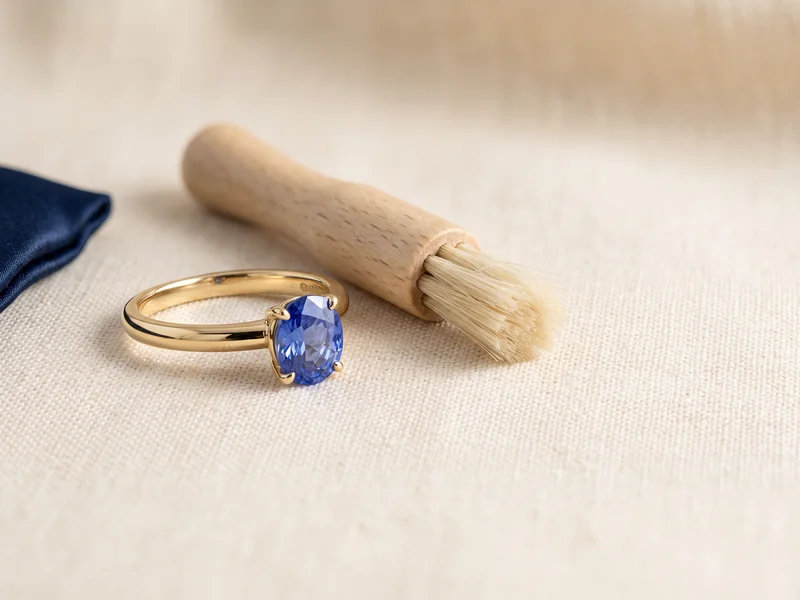 Care, Repairs & RemodellingCleaning Gemstones by Type
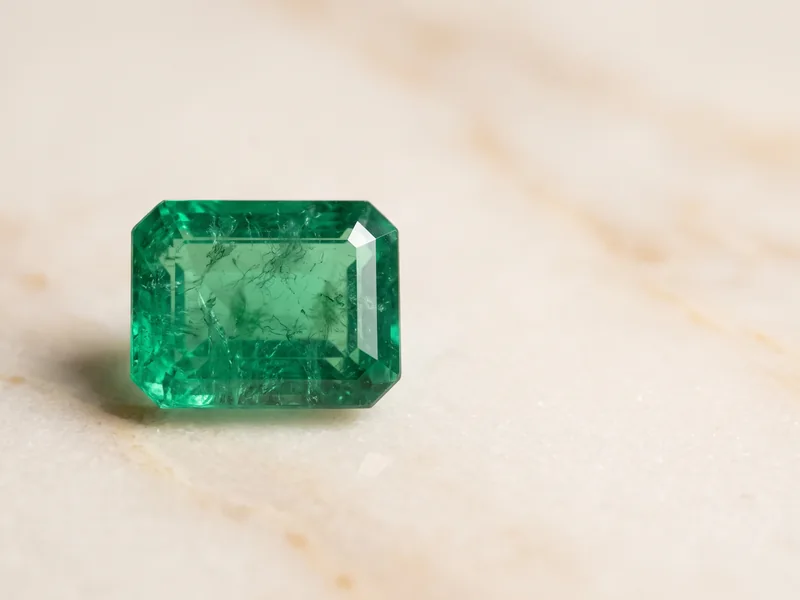 GemstonesGemstone Clarity Types I, II and III
Explore more
More guides on this topic
Education