
- Education
- Jewellery Types
- Anniversary Jewellery by Year: Traditional Gifts, Gemstones and Metals
Jewellery types
Anniversary Jewellery by Year: Traditional Gifts, Gemstones and Metals
Knowing which material or gem belongs to each year turns an anniversary gift into a message. Here is the full anniversary jewellery by year list, plus what each metal and gemstone is actually like to wear.
 Reviewed by Raj Sood, Graduate Gemologist (GIA), AJP (GIA)Master jeweller and Graduate Gemologist (GIA) · reviewed 4 November 2026
Quick answer
Anniversary jewellery by year follows the traditional gift list: early years use materials such as paper, leather and tin, then milestones turn precious: silver at 25, pearl at 30, ruby at 40, sapphire at 45, gold at 50, emerald at 55 and diamond at 60. Modern lists add diamond jewellery at 10 and gold jewellery at 14.
What are anniversary jewellery traditions by year?
Most wedding anniversaries have a material attached to them. The early years are humble (paper, cotton, leather, wood) and the materials grow more precious and more durable as the marriage does, until silver at 25 years, gold at 50 and diamond at 60. The idea is simple: the gift reflects how long and how strong the relationship has become.
There is no single official list. In practice you will meet three: the traditional list, which Australia and the UK mostly follow; the modern list, an American retail list that slots jewellery into many of the early years; and a separate anniversary gemstone list that gives a gem to most years. The three often disagree, so it is perfectly fine to choose whichever one gives you the gift you want.
Jewellery suits these traditions well because metals and gems last. A 25th anniversary silver pendant or a 40th anniversary ruby ring can be worn for decades and passed on. If you are still deciding what kind of piece to give, our overview of every main jewellery type sets out rings, earrings, necklaces and bracelets side by side, and any unfamiliar word on this page is explained in our jewellery terms explained in plain English.
Where do the traditional anniversary gifts come from?
The oldest parts of the tradition are the big milestones. Silver and gold anniversaries are usually traced to central European custom, where a wife was given a silver wreath at 25 years and a gold wreath at 50. The diamond anniversary is linked with the diamond jubilee idea, which became widely known when Queen Victoria celebrated 60 years on the throne in 1897.
The fuller year-by-year list is much newer. Etiquette writers in the early twentieth century published lists covering the 1st, 5th, 10th, 15th, 20th, 25th, 50th and 75th years, and in the late 1930s American jewellers' associations expanded them to cover every year, adding more jewellery along the way. That is why the modern list leans so heavily on diamonds, gold and watches.
Some traditional materials have also been quietly replaced. The 14th anniversary was once ivory, which is now heavily restricted and no longer appropriate; the modern list substitutes gold jewellery. The 35th was coral, and many people now choose jade instead.
What is the anniversary jewellery by year list?
Here is the full list for the years most people celebrate, with the traditional material, the modern (American) gift, the anniversary gemstone, and a jewellery idea that fits each one.
| Year | Traditional | Modern | Gemstone | Jewellery idea |
|---|---|---|---|---|
| 1st | Paper | Clocks | Gold | Fine gold chain or engraved pendant |
| 2nd | Cotton | China | Garnet | Garnet studs or a cord bracelet |
| 3rd | Leather | Crystal or glass | Pearl | Pearl studs or a leather-strap watch |
| 4th | Linen (fruit and flowers in the US) | Appliances | Blue topaz | Flower-motif pendant or blue topaz ring |
| 5th | Wood | Silverware | Sapphire | Sapphire ring or wood-inlay band |
| 6th | Sugar (iron in the US) | Wood | Amethyst | Amethyst pendant or earrings |
| 7th | Wool or copper | Desk sets | Onyx | Rose gold piece (gold alloyed with copper) |
| 8th | Bronze | Linen or lace | Tourmaline | Tourmaline ring or pendant |
| 9th | Pottery or willow | Leather | Lapis lazuli | Lapis cufflinks or signet ring |
| 10th | Tin or aluminium | Diamond jewellery | Diamond | Diamond studs or an eternity band |
| 11th | Steel | Fashion jewellery | Turquoise | Turquoise set in silver |
| 12th | Silk or linen | Pearls or coloured gems | Jade | Pearl strand or jade pendant |
| 13th | Lace | Textiles or furs | Citrine | Citrine pendant |
| 14th | Ivory (now replaced) | Gold jewellery | Opal | Opal pendant in gold |
| 15th | Crystal | Watches | Ruby | Ruby studs or a watch |
| 20th | China | Platinum | Emerald | Platinum band |
| 25th | Silver | Sterling silver | Silver | Silver bangle, chain or locket |
| 30th | Pearl | Diamond | Pearl | Pearl strand |
| 35th | Coral | Jade | Emerald | Jade or emerald piece |
| 40th | Ruby | Ruby | Ruby | Ruby ring or pendant |
| 45th | Sapphire | Sapphire | Sapphire | Sapphire earrings or ring |
| 50th | Gold | Gold | Gold | Gold bracelet or band |
| 55th | Emerald | Emerald | Emerald or alexandrite | Emerald ring |
| 60th | Diamond | Diamond | Diamond | Diamond necklace, bracelet or ring |
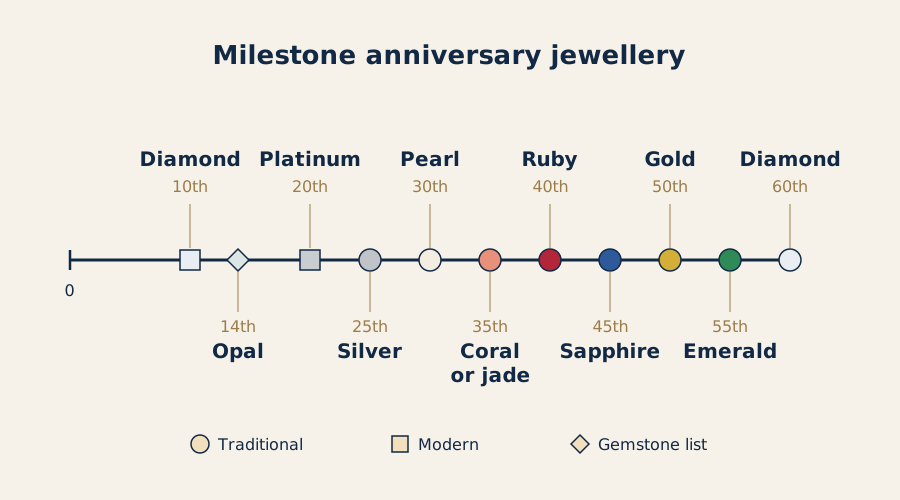
Lists differ between sources, especially for the gemstone column and for years 16 to 19, which many lists skip entirely. Treat the table as a guide to the meaning, not a rulebook.
How do you turn paper, cotton and leather years into jewellery?
The first decade is where the traditional materials are least like jewellery, so people get creative. Most ideas fall into three approaches: pair the material with a small piece, choose the year's gemstone instead, or use a metal that echoes the material.
- Paper (1st): a hand-written card with a fine gold chain, or a pendant engraved with the wedding date. The gemstone list gives gold to the first year anyway.
- Cotton (2nd): a cotton or silk cord bracelet with a small gold charm, or garnet studs. Garnet sits at about 6.5 to 7.5 on the Mohs scale, fine for earrings and pendants.
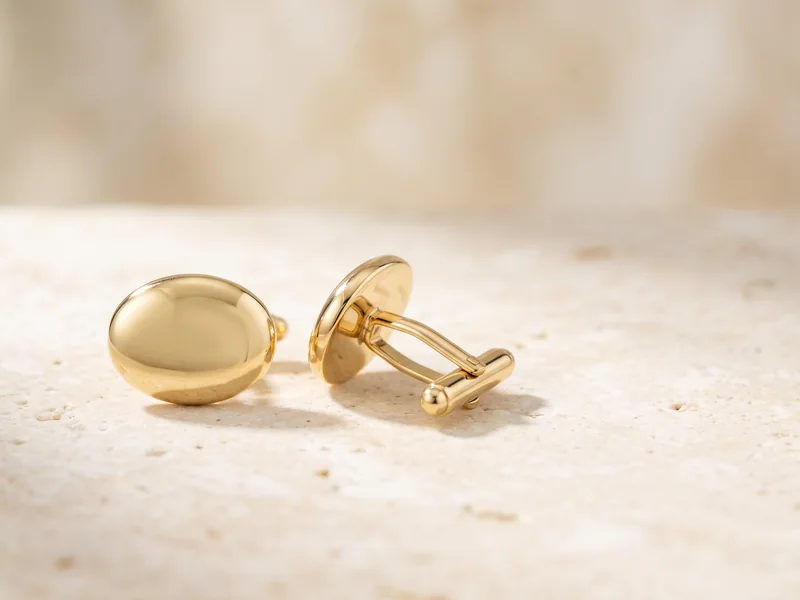
- Leather (3rd): a watch on a leather strap, or leather and metal cufflinks. Our page on cufflinks and other men's jewellery covers the styles.
- Copper (7th): rose gold gets its pink colour from copper, so a rose gold ring or bracelet fits the year neatly.
- Lapis lazuli (9th): a deep blue stone that suits cufflinks and the flat face of a signet; see how signet rings are made and engraved.
- Tin or aluminium (10th): almost everyone switches to the modern list here, which gives diamond jewellery. For many couples it is the first diamond gift after the engagement ring.
For a pendant at any of these early years, the chain matters as much as the charm. A cable or belcher chain is sturdy for everyday wear, while a fine box chain suits a small, light pendant; our guide to necklace chain styles and strengths compares them.
Not sure which one is right?
Send us the stones you are looking at and our gemologist will tell you which to choose and why.
What metals mark the 20th, 25th and 50th anniversaries?
Three of the milestone anniversaries are metals: platinum at 20 (on the modern list), silver at 25 and gold at 50. Each wears quite differently, so it is worth knowing what you are buying.
| Anniversary | Metal | Purity | How it wears |
|---|---|---|---|
| 20th | Platinum 950 | 95% platinum | Dense, naturally white, does not fade; scratches move metal rather than remove it |
| 25th | Sterling silver 925 | 92.5% silver | Soft and tarnishes; suits pendants, bangles and earrings more than daily rings |
| 50th | 9ct gold | 37.5% gold | Harder and less expensive; paler colour |
| 50th | 14ct gold | 58.5% gold | A balance of colour and durability |
| 50th | 18ct gold | 75% gold | Richer colour; the usual choice for fine jewellery |
| 7th (copper) | Rose gold | Gold with copper and some silver | Warm pink tone that deepens slightly over time |
| 11th (steel) | Stainless steel or titanium | Not precious metals | Very tough and affordable; common for men's pieces |
For a 25th anniversary silver jewellery gift, choose pieces that do not rub constantly against hard surfaces: a locket, a bangle, a chain or earrings. Silver tarnishes when exposed to air and sulphur, so a gift box with an anti-tarnish strip helps, and our guide on storing silver, pearls and softer gems safely explains the rest.
For a 50th anniversary gold jewellery gift, think about the person's existing pieces. White gold is rhodium plated (coated in a thin layer of a bright white metal) and needs re-plating every year or two; yellow and rose gold do not. A gold bracelet is a popular choice at 50; size it with our guide to measuring a wrist for a bracelet so it sits comfortably rather than sliding over the hand.
Which anniversary gemstones are tough enough for everyday wear?
The gemstone list mixes very hard stones with quite soft ones, and that changes what kind of jewellery suits each year. Hardness is measured on the Mohs scale (1 to 10), which shows how easily a stone scratches. Toughness, its resistance to chipping and breaking, is a separate thing: jade is softer than quartz but extremely tough.
| Gem | Anniversary | Mohs hardness | Everyday ring? | Care note |
|---|---|---|---|---|
| Diamond | 10th, 60th | 10 | Yes | Can still chip on thin edges or points |
| Ruby and sapphire | 5th, 15th, 40th, 45th | 9 | Yes | Very durable; most are heat treated, which is standard |
| Blue topaz | 4th | 8 | With care | Can cleave (split) from a sharp knock |
| Emerald | 20th, 35th, 55th | 7.5–8 | Protective setting | Usually included and oiled; avoid ultrasonic cleaners |
| Amethyst and citrine | 6th, 13th | 7 | Yes, with care | Can fade with long, strong sunlight exposure |
| Garnet | 2nd | 6.5–7.5 | Occasional | Suits earrings and pendants |
| Jade | 12th, 35th | 6–7 | Yes | Very tough despite moderate hardness |
| Opal | 14th | 5.5–6.5 | Occasional | Contains water; avoid heat and knocks |
| Turquoise | 11th | 5–6 | Occasional | Porous; keep away from oils and perfume |
| Lapis lazuli | 9th | 5–5.5 | Occasional | Suits cufflinks and pendants |
| Pearl | 3rd, 12th, 30th | 2.5–4.5 | Rarely | Put on last, take off first |
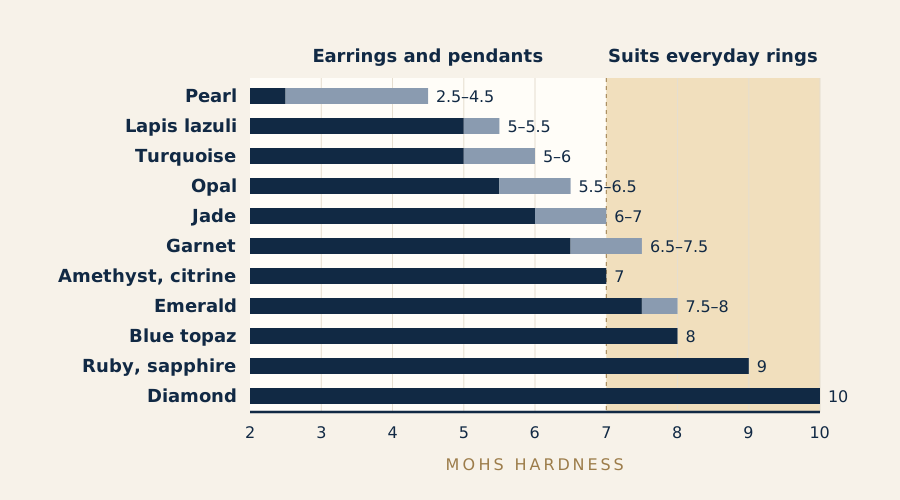
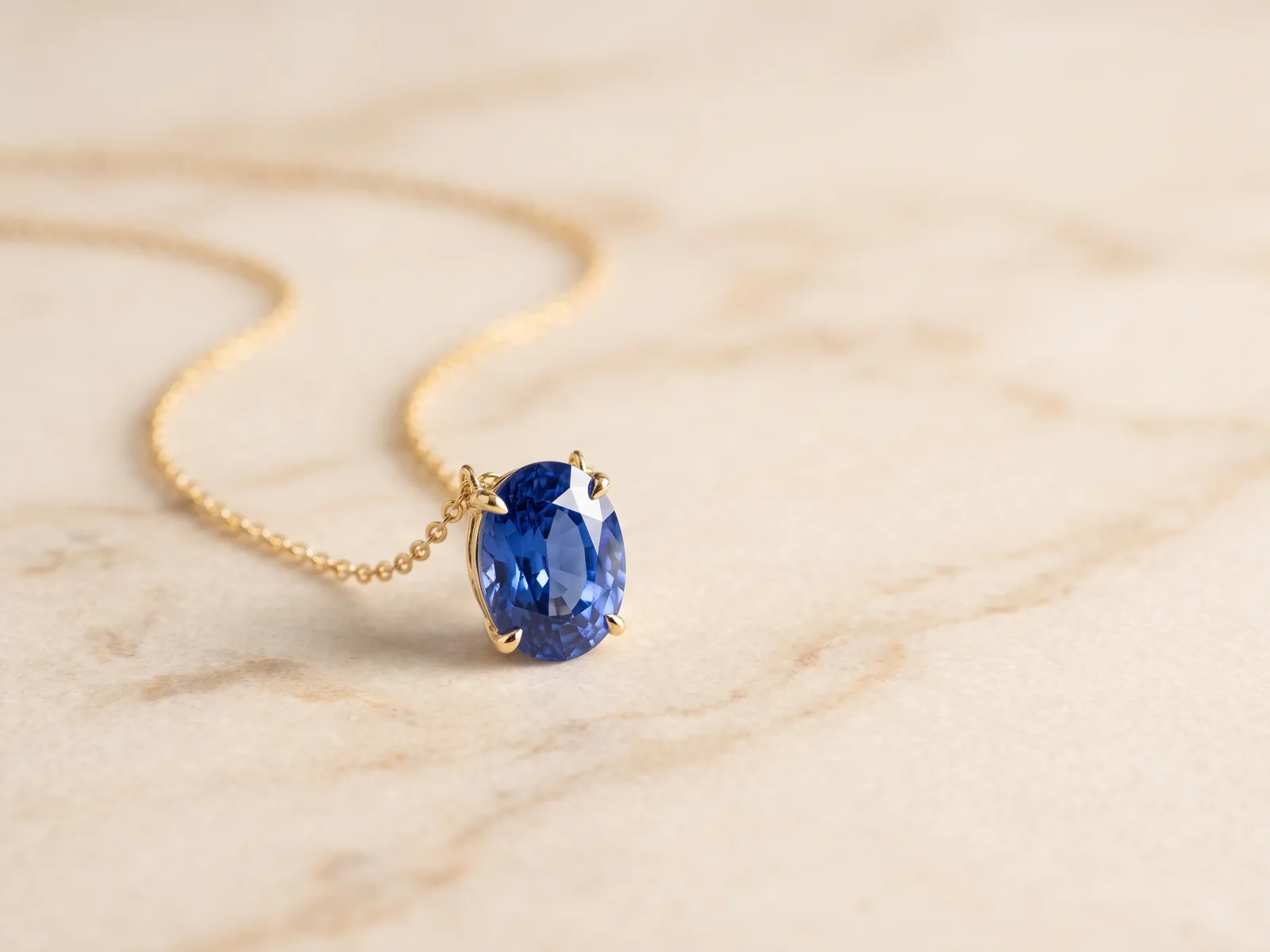
The 40th anniversary ruby and 45th anniversary sapphire are the easiest milestone gems to wear daily, because both are corundum at 9 on the Mohs scale. The 14th, opal, is Australia's national gemstone, which makes it a meaningful choice here; an opal pendant or earrings protect it far better than a ring. For any earrings with a valuable gem, pair them with secure earring backs such as screw or lever backs.
Should an anniversary gem be natural or lab-grown?
Many anniversary gems now come in both natural and laboratory-made versions. Lab-grown diamonds are real diamond, with the same hardness of 10 and refractive index of about 2.42 as natural diamond, grown in a laboratory instead of mined. Lab-created (synthetic) rubies, sapphires and emeralds likewise have the same chemistry and hardness as their natural counterparts. They cost much less than natural stones, and they must always be described as lab-grown or lab-created.
Natural stones are rarer and carry the appeal of having formed in the earth over millions of years. Neither choice is more real than the other; it is a question of budget, size and what the stone means to you. Whichever you choose, ask for a grading report or written description that states clearly whether the gem is natural or laboratory-grown and whether it has been treated.
| Anniversary piece | Approximate price range (AUD) |
|---|---|
| Sterling silver pendant on chain (25th) | about $80–$400 |
| Freshwater pearl strand, about 45 cm (30th) | about $200–$1,500 |
| Akoya pearl strand, about 45 cm (30th) | about $1,500–$6,000 |
| Lab-grown diamond studs, 1.00 ct total (10th or 60th) | about $800–$2,500 |
| Natural diamond studs, 1.00 ct total, G–H, SI (10th or 60th) | about $3,000–$8,000 |
| Natural ruby, 1 ct, good colour, heated (40th) | about $1,000–$10,000+ |
| 18ct gold chain bracelet (50th) | about $1,000–$4,000 |
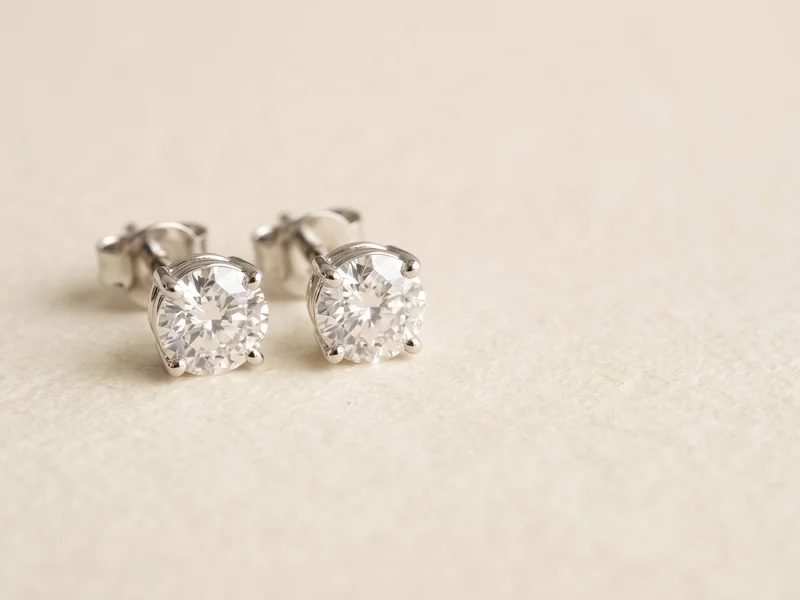
These are broad ranges only; gem prices move with quality, origin, treatment and the market. For diamond studs, the face-up size matters more than the carat figure on its own; our chart of diamond stud sizes by carat weight shows what 0.25 to 1.00 carat per ear looks like in millimetres.
Browse jewellery: anniversary ideas in natural and lab-grown
What type of anniversary jewellery suits each milestone?
The material gives the meaning; the type of piece decides how often it is worn. A few pairings come up again and again:
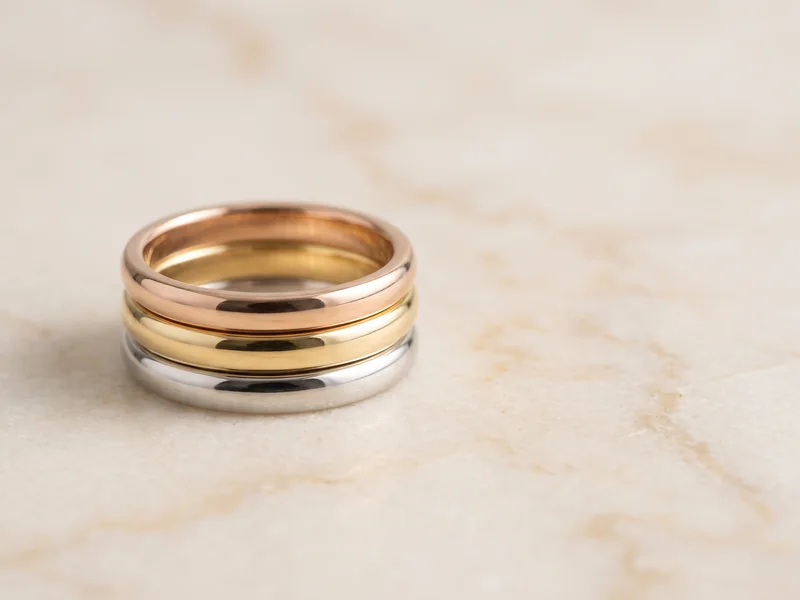
- 10th anniversary diamond jewellery: diamond studs or an eternity band worn beside the engagement ring. Many couples add a band at each milestone, and our guide to building an anniversary ring stack shows how bands of different widths sit together.
- 25th and 50th: a chain, bangle or locket in the year's metal, sized with our guide to choosing a necklace length so a pendant lands where it is meant to.
- 30th pearl: a strand, pearl drops or studs. For drops, see how drop earring settings hold a gem.
- 40th ruby and 45th sapphire: a solitaire pendant or ring; our page on pendant and solitaire settings compares claw, bezel and bail styles.
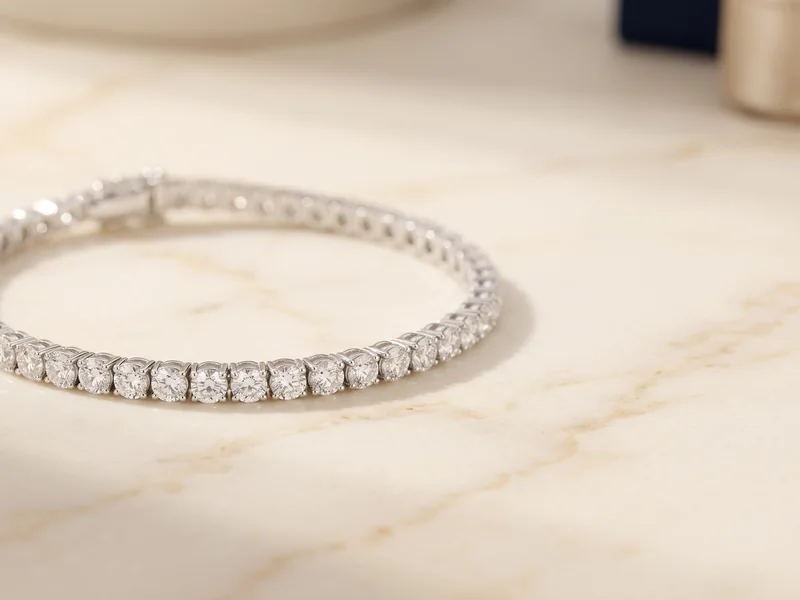
- 60th diamond anniversary gift: a line of diamonds, such as one of the pieces in how tennis bracelets are built and secured or tennis necklaces and their clasps.
- Everyday options: small gold or diamond hoops and huggies are easy to wear daily at almost any anniversary.
Another option at a milestone is to remake something you already have: resetting the engagement diamond, adding side stones, or turning inherited pieces into a new ring that carries the family history forward.
How do you choose anniversary jewellery by year? Step by step
- Find the year. Check which anniversary it is and look up the traditional, modern and gemstone options in the table above.
- Pick the list that suits. You can mix: a traditional-year metal with the gemstone-list stone is common and perfectly correct.
- Check wearability. If it is a ring for daily wear, choose a gem of about 7 or higher on the Mohs scale (or a very tough stone such as jade); softer gems suit earrings and pendants.
- Choose the piece type. Think about what the person already wears every day: rings, studs, chains or bracelets.
- Decide natural or lab-grown. Ask for a report or written description stating the origin and any treatment.
- Get the size right. Confirm ring size, wrist measurement or chain length before ordering.
- Personalise it. Engrave the wedding date and years inside a band or on the back of a pendant.
- Plan the care. Store silver and pearls away from harder pieces, and book a claw check yearly for set stones.
Free consultation
Talk to a gemologist
Compare stones in person or online with Raj Sood, Graduate Gemologist (GIA), AJP (GIA).
Book a consultationShop this shape
FAQ
Common questions
What is the traditional jewellery for each anniversary year?
The main jewellery milestones are silver at 25, pearl at 30, ruby at 40, sapphire at 45, gold at 50, emerald at 55 and diamond at 60. The modern list also gives diamond jewellery at 10, pearls or coloured gems at 12 and gold jewellery at 14.
What is the 10th wedding anniversary gift?
Traditionally tin or aluminium, but the modern list and the gemstone list both give diamond. Most people mark the 10th with diamond studs, a pendant or an eternity band.
What anniversary is opal?
Opal is usually listed as the 14th anniversary gemstone. It sits at about 5.5 to 6.5 on the Mohs scale, so it is better suited to pendants and earrings than an everyday ring.
Is it the 40th anniversary for ruby or the 45th?
Ruby is the 40th and sapphire is the 45th. Both are the same mineral, corundum, at 9 on the Mohs scale, so both wear well in rings.
Can I give a lab-grown diamond for a 60th anniversary?
Yes. A lab-grown diamond is real diamond and fits the tradition; it should simply be described as lab-grown so everyone knows what it is. Many people choose lab-grown to get a larger stone for the same budget.
Do I have to follow the anniversary list exactly?
No. The lists vary between countries and sources, and many couples mix traditional metals, modern gifts and gemstones. The meaning behind the choice matters more than matching a particular list.

Ask a gemologist
Not sure which diamond to choose?
Raj Sood is a Graduate Gemologist (GIA) and master jeweller. Bring the stones you are considering, or send the reports, and he will tell you honestly which one is better and why.
Keep learning
Related guides
 Wedding Bands & EternityBuilding an Anniversary Ring StackJewellery TypesJewellery Types Guide
 Jewellery TypesTennis Bracelets Explained
 Jewellery TypesDiamond Stud Earring Sizes by Carat
 Jewellery TypesCufflinks and Men's Jewellery Types
 Care, Repairs & RemodellingHow to Store Jewellery
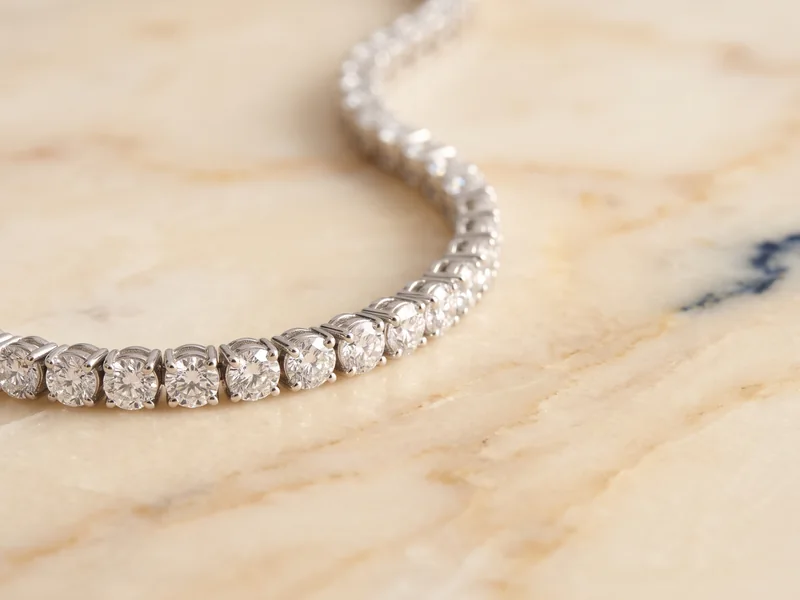 Jewellery TypesTennis Necklaces Explained
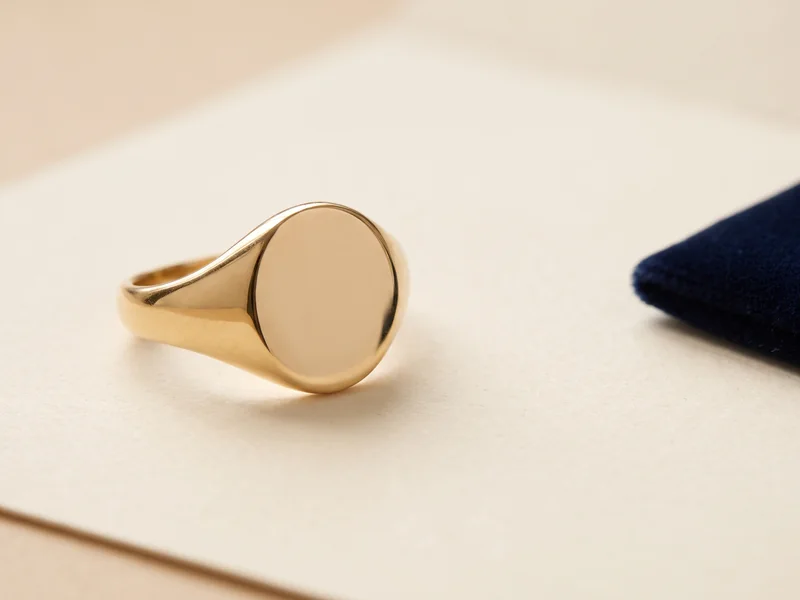 Jewellery TypesSignet Rings Explained
Explore more
More guides on this topic
Education