
- Education
- Jewellery Types
- Drop Earring Settings: Styles, Lengths, Security and What to Look For
Jewellery types
Drop Earring Settings: Styles, Lengths, Security and What to Look For
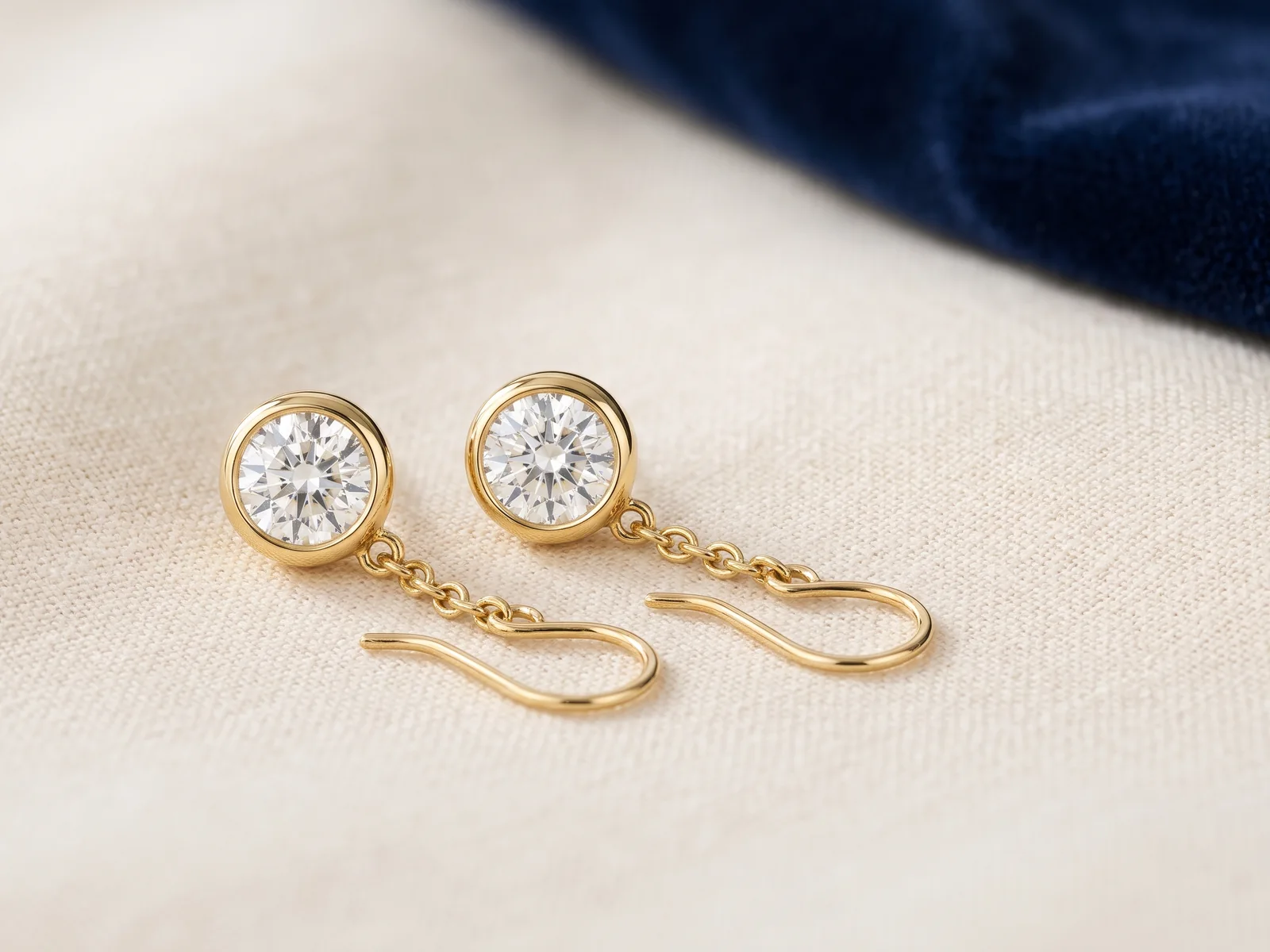
Drop earrings move every time you do, which is what makes them catch the light and what puts their settings under strain. Here is how drop earring settings work, which styles and lengths suit you, and what to check so a stone never goes missing.
 Reviewed by Raj Sood, Graduate Gemologist (GIA), AJP (GIA)Master jeweller and Graduate Gemologist (GIA) · reviewed 4 November 2026
Quick answer
Drop earring settings hold a stone or pearl so it hangs below the earlobe. Each has three parts: the fitting (post, hook or lever-back), the link that lets it swing, and the setting itself, usually claws, a bezel or a halo. For security, choose soldered links, a lever-back or screw back for longer drops, and claws that protect points.
What are drop earring settings?
A drop earring is any earring where the main stone, pearl or metal shape hangs below the piercing rather than sitting flat against the lobe like a stud. The term setting covers everything that holds it together: the metal that grips the stone, the link that lets it move and the fitting that goes through your ear. Where drop earrings sit among studs, hoops, pendants and bracelets is covered in our overview of every main jewellery type.
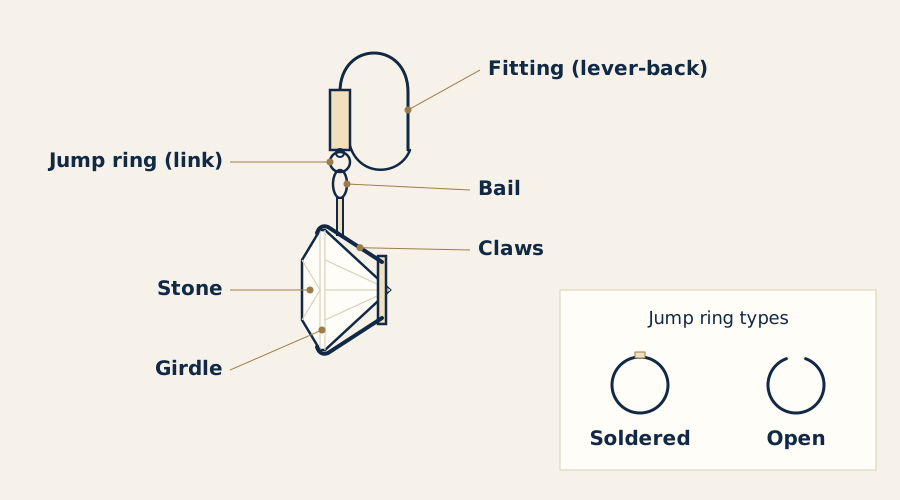
Every drop earring, from a tiny diamond on a short link to a long chandelier, is built from the same three parts:
- The fitting: the part that passes through the piercing. It can be a post with a back, a hook (also called a shepherd's or French hook), a lever-back or a hinged hoop.
- The link: what connects the fitting to the stone. Usually a jump ring (a small loop of wire), a bail (a loop or tube fixed to the top of the setting), a short chain or a hinge. This is what lets the drop swing.
- The setting: the metal that holds the stone, most often claws (also called prongs), a bezel (a rim of metal around the edge) or a halo of small diamonds.
People use drop and dangle loosely. In the trade, a drop usually hangs fairly still, often a single stone on a short link, while a dangle earring moves freely, sometimes with several moving parts. A chandelier is a larger, tiered design with several drops hanging from one frame. If you prefer something that stays close to the lobe, our guide to hoops and huggies that hug the lobe covers those, including huggies that carry a small detachable drop. Any term you have not met before is explained in our plain-English jewellery glossary.
What styles of drop earrings are there?
Most drop earrings fall into a handful of styles. The style decides how much the earring moves, how heavy it feels and which settings suit it.
| Style | What it looks like | Typical length | Movement |
|---|---|---|---|
| Solitaire drop | One stone on a short link or fixed bail | 10–20 mm | Gentle swing |
| Halo drop | Centre stone framed by small diamonds | 12–25 mm | Gentle swing |
| Bezel drop | Stone in a smooth metal rim, often on a fine chain | 10–30 mm | Swings freely |
| Line or tennis drop | A row of claw-set stones hanging in a line | 20–50 mm | Flexible, follows the neck |
| Pear or briolette drop | Teardrop stone hanging point-down | 15–35 mm | Swings and turns |
| Threader | Fine chain pulled through the piercing, stone at one end | 40–100 mm | Very free |
| Chandelier | Tiered frame with several drops | 40–80 mm | Lots of movement |
| Huggie with charm | Small hoop with a removable drop | 15–25 mm | Gentle swing |
Line drops use the same construction as the row of individually set stones in a tennis necklace: each stone sits in its own small claw or box setting, joined to the next by a hinge. That makes them flexible but also means every hinge is a wear point. Bezel drops on chain borrow from necklace work, and the chain choice matters. A fine cable chain is light and flexible; a box or curb chain holds its shape better. Our guide to chain styles from cable to box explains the differences, and the same chains appear in earrings in miniature.
There are also articulated drops, where the stone hangs from a hinge that lets it swing in one plane only, and fixed drops, where the stone is attached directly below the post with no movement at all. Fixed drops are sometimes called jacket-style when they extend under the lobe. They are quieter and less likely to catch, but they show less sparkle in motion, because sparkle in a drop comes largely from movement.
Which drop earring settings hold a stone most securely?
The setting that grips the stone matters more in a drop than in a stud, because a drop swings, knocks against your jaw, catches on scarves and hair, and gets pulled every time you take off a jumper. Here is how the common options compare.
| Setting | Security | Light and sparkle | Suits | Watch for |
|---|---|---|---|---|
| 4-claw | Good | Very high; most of the stone is visible | Round, cushion, princess | Claws catching on fabric |
| 6-claw | Very good | High; slightly rounder look | Round diamonds 0.50 ct and up per earring | More metal showing |
| 3-claw with V-claw | Very good for points | High | Pear and heart drops | The V-claw must fully cover the tip |
| Bezel | Excellent | A little less light enters from the sides | Everyday wear, softer gems, active lives | Hides a sliver of the outline |
| Half-bezel | Very good | Medium–high | Modern look with open sides | Exposed edges on two sides |
| Halo | Very good; the halo shields the centre | Very high; looks larger | Smaller centre stones | Tiny claws on halo stones need checking |
| Cup or peg (pearls) | Good if glued and pinned | Not applicable | Pearls and drilled beads | Cement can fail with perfume and heat |
| Drilled pin and cap (briolettes) | Good | Light passes freely | Faceted briolette drops | The drill hole can crack softer gems |
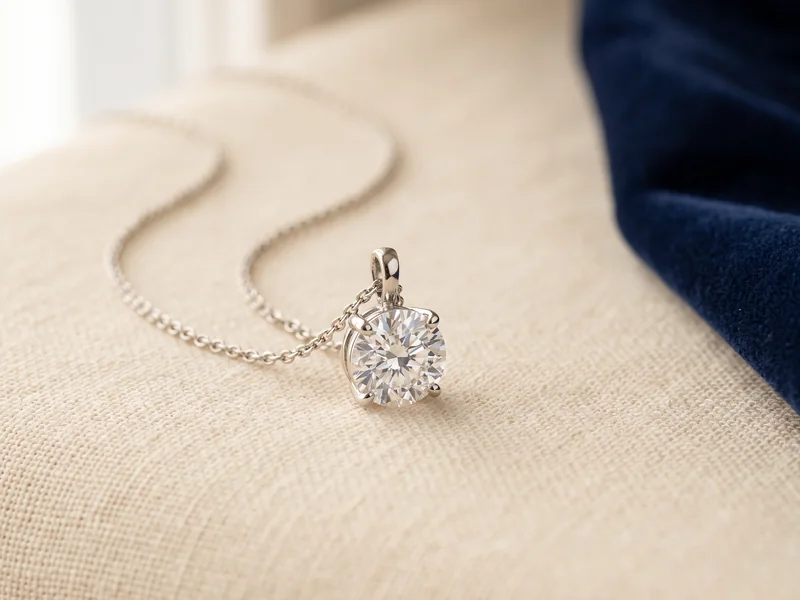
Claw settings let in the most light and show the most stone, which is why they are the usual choice for diamond drops. Many earring heads are the same as the heads used for solitaire pendants, just scaled down. For a round diamond under about 0.30 carat per earring, four claws are usually plenty. Above about 0.50 carat, six claws spread the load and mean the stone stays put even if one claw is bent.
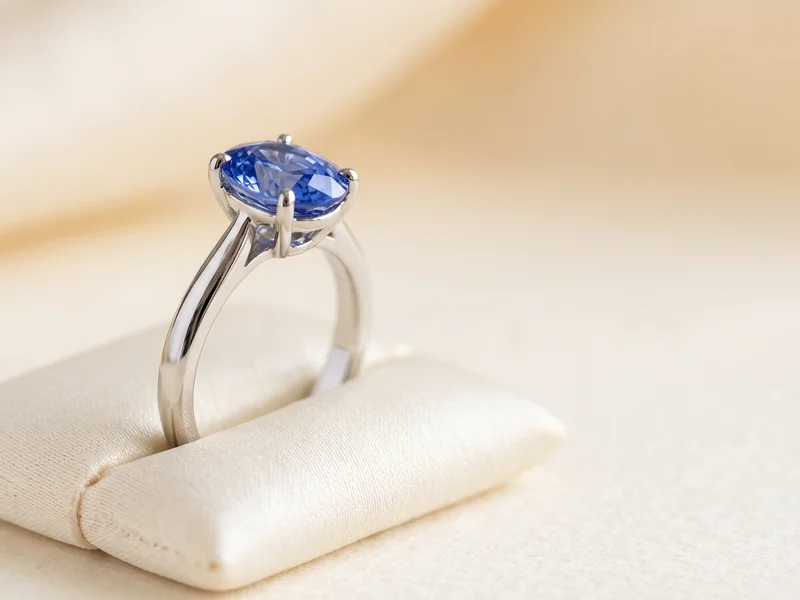
A bezel is the most secure option because the metal wraps the whole girdle (the outer edge of the stone), so nothing sticks out to catch. It suits softer or more brittle gems such as emerald, opal and tanzanite, where a knock on an exposed edge could chip the stone. If you are planning drops in a coloured gem, our guide to designing a secure setting for a softer coloured gem goes into claw thickness, bezel height and protective shapes.
Pearls are usually set on a peg: a short metal post glued into a half-drilled hole, sometimes with a small cup underneath. Ask whether the peg is threaded or textured, because a smooth peg relies on glue alone, and perfume, hairspray and heat weaken the cement over the years.
Which earring backs and fittings work best with drop earrings?
The fitting carries the full weight of the drop and takes the pull when it catches. That makes it the most common point of loss, not the setting. Our guide comparing every earring back, from butterflies to screw backs covers each type in detail; for drops, these are the ones that matter.
| Fitting | How it closes | Security | Suits |
|---|---|---|---|
| Post and butterfly (push back) | Friction back slides onto the post | Fair; loosens with wear | Short, light drops |
| Post and screw back | Back threads onto a grooved post | High | Diamond drops, children, valuable pairs |
| Lever-back | Hinged lever clicks shut against the hook | High | Mid-length and long drops |
| French or shepherd's hook | Open wire through the ear | Low without a stopper | Light, casual drops |
| Hook with silicone stopper | Hook plus a small rubber back | Fair | Light drops |
| Hinged huggie or hoop | Hinged bar clicks into the hoop | High | Short drops and removable charms |
| Omega back | Post plus a hinged clip under the lobe | High; supports the lobe | Heavier and statement drops |
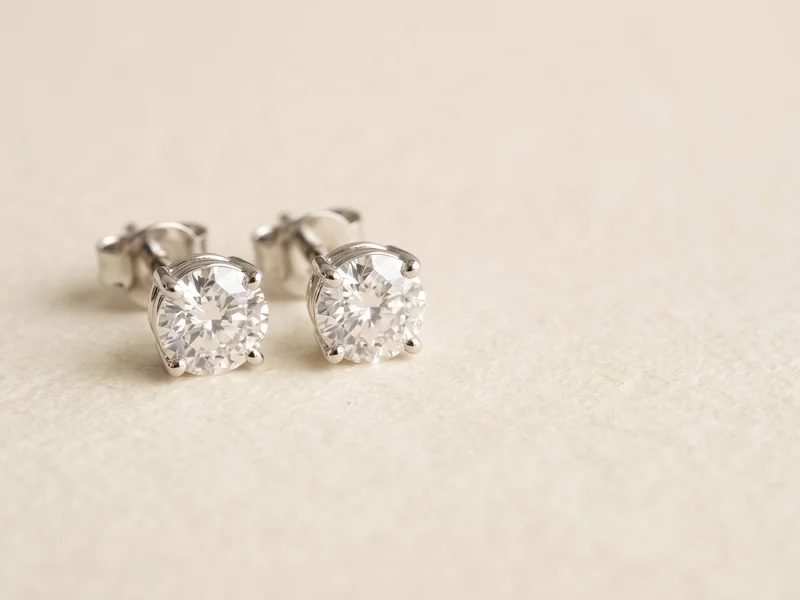
For a pair of diamond drops, a screw back or lever-back is worth the small extra cost. A butterfly back that has been pushed on and off for a few years loses its grip, and once a drop is swinging, the extra leverage can work a loose butterfly off the post. If you love the look of a hook, a silicone stopper adds a little security, but it is not a substitute for a closed fitting on a valuable stone.
Related guideEarring Back TypesNot sure which one is right?
Send us the stones you are looking at and our gemologist will tell you which to choose and why.
How long should drop earrings be?
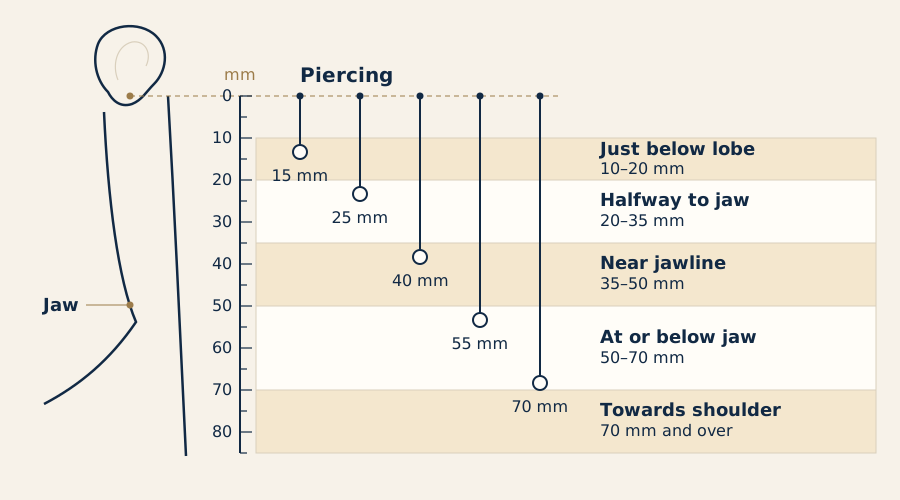
Drop length is measured from the piercing to the lowest point of the earring. It is the single most useful number when choosing, and it is easy to misjudge from a photo, so check the measurement in millimetres.
| Drop length | Where it sits | Feels like |
|---|---|---|
| 10–20 mm | Just below the lobe | An everyday stud with movement |
| 20–35 mm | Halfway to the jaw | Work-friendly, noticeable |
| 35–50 mm | Near the jawline | Evening or occasion |
| 50–70 mm | At or below the jaw | Statement; pairs with hair up |
| 70 mm and over | Towards the shoulder | Threaders and chandeliers |
A few practical guides help. Shorter drops of 10–25 mm suit most face shapes and are easy to wear with collars, headsets and helmets. Longer drops draw the eye down and can lengthen a rounder face, while a shorter, rounder drop softens a longer face. These are tendencies, not rules. Your hair matters as much: long drops disappear under loose hair and come into their own with it pinned up.
The stone size also changes how a drop reads. A 0.25 carat round diamond is only about 4.1 mm across, which looks delicate on a 25 mm drop but can get lost on a 50 mm one. Our chart of stud diameters by carat weight gives the millimetre size for each weight, and the same figures apply to a round diamond in a drop setting. A halo adds roughly 1.5–2.5 mm to the visible diameter.
Earrings and necklaces also compete for space. A long drop with a choker-length necklace can feel crowded, while a short drop leaves room for a pendant. Our guide to choosing a necklace length to sit with your earrings shows where each length falls on the neck.
Are drop earrings secure enough for everyday wear?
Yes, if they are built for it. A well-made short drop with a screw back or lever-back and closed links is as practical as a stud. The problems usually come from weight, open links and worn claws.
Weight. Diamonds themselves weigh very little: one carat is 0.2 grams. Most of an earring's weight is metal. A simple diamond drop in 18ct gold might weigh 1–3 grams per earring, while a chandelier can weigh 8–15 grams. Many people find about 5–8 grams per earring is the limit for comfortable all-day wear. Heavier earrings stretch the piercing over time, and an omega back or a larger backing disc spreads the load.
Movement. Every swing rubs the jump ring against the loop it hangs from. Over years, this wears both pieces thin, and an open jump ring can slowly gap. On a valuable pair, ask for the jump rings to be soldered closed and made from wire of at least about 0.8–1.0 mm, rather than fine 0.5 mm wire.
- Claws: tips should sit flush over the stone, with no gaps you can catch a fingernail on.
- Links: closed and ideally soldered, with no visible wear groove.
- Posts: straight and firmly soldered; a bent post weakens and can snap.
- Backs: butterflies that slide on too easily should be squeezed or replaced.
- Hooks: the wire should not be thin or bent open at the back.
Take drop earrings off for sleep, sport, swimming and when pulling clothes over your head. Chlorine attacks gold alloys and solder, and sleeping in a long drop bends the fitting. A quick check at the jeweller every year or so, especially for claw settings, catches a lifted claw before it loses a stone.
What stones suit drop earrings: natural diamonds, lab-grown diamonds or gemstones?
Earrings are protected from most knocks compared with rings, so they can carry softer gems that would struggle on a hand. The Mohs scale measures scratch resistance from 1 to 10, and it is a useful guide, though toughness (resistance to chipping) matters too.
| Stone | Mohs hardness | Suits drop earrings? | Setting to consider |
|---|---|---|---|
| Diamond (natural or lab-grown) | 10 | Yes, very durable | Claw, halo or bezel |
| Sapphire and ruby (natural or lab-created) | 9 | Yes | Claw or bezel |
| Emerald | 7.5–8, brittle | Yes, with care | Bezel or protective claws |
| Tanzanite | 6–6.5 | Yes, earrings suit it well | Bezel or halo |
| Opal | 5.5–6.5 | Yes, away from heat and water | Bezel |
| Pearl | 2.5–4.5 | Yes, a classic drop | Peg and cup |
Natural diamonds formed deep in the earth billions of years ago and are mined. Lab-grown diamonds are real diamond, with the same hardness and refractive index (about 2.42), grown in a laboratory over weeks. They look identical to the eye, and lab-grown diamonds cost much less, which lets many people choose a larger pair. Both should come with a grading report or clear disclosure stating which they are.
A pair of earrings needs two stones that match in size, colour and cut, and in a drop the stones hang at eye level and are compared side by side more than studs. Matching is easier with lab-grown diamonds because more stones are available to choose from; our guide on how to match a pair of lab-grown diamonds explains tolerances in millimetres and colour grades.
| Diamond drop earrings, pair, 14–18ct gold, G–H, VS–SI | Approximate price range (AUD) |
|---|---|
| Lab-grown, 0.50 ct total | about $800–$2,000 |
| Natural, 0.50 ct total | about $1,500–$4,000 |
| Lab-grown, 1.00 ct total | about $1,200–$3,000 |
| Natural, 1.00 ct total | about $3,500–$9,000 |
These are broad ranges only. A halo, extra stones on the link, platinum or a long line drop all add to the price, and market prices move. Coloured gems vary even more widely, from a few hundred dollars for lab-created sapphire drops to many thousands for fine natural sapphire or emerald.
Browse jewellery: drop earrings and more
Which metal suits drop earring settings?
Metal choice affects colour, weight, durability and comfort for sensitive ears. 18ct gold is 75% pure gold, 14ct is 58.5% and 9ct is 37.5%; the rest is alloy metals that add hardness and set the colour. Platinum 950 is 95% platinum, heavier and naturally white, and it wears by moving rather than losing metal, which suits claws.
- Yellow and rose gold: warm the look of a diamond, so slightly warmer colour grades still look white.
- White gold: usually plated with rhodium for a bright white finish; earrings wear less than rings, so re-plating is needed less often.
- Platinum: strong, dense and hypoallergenic, but a long platinum drop is noticeably heavier than gold.
- Sensitive ears: if nickel bothers you, ask for nickel-free white gold, yellow gold or platinum posts and hooks.
Drop earrings are also a common remodelling project. A diamond from an old ring or pendant can be reset into a drop, and the process of checking, measuring and setting the stone is much like resetting a loose diamond you already own. Some people design drops to sit with a matching tennis bracelet, and drops are a popular choice in anniversary gift traditions year by year. Single drop earrings for men, usually short and simple, sit alongside the styles in our guide to men's earrings, cufflinks and other pieces.
How do you choose drop earring settings? Step by step
- Decide the drop length. Measure from your piercing in millimetres; 10–25 mm for everyday, 35 mm and longer for occasions.
- Choose the stone. Natural diamond, lab-grown diamond, lab-created or natural gemstone, or pearl, and confirm which it is in writing.
- Pick a setting to suit it. Claws for maximum sparkle, a V-claw for pear tips, a bezel for softer gems or active wear.
- Check the link. Look for soldered jump rings of solid wire, or a fixed bail, rather than thin open rings.
- Choose a secure fitting. Screw backs or lever-backs for diamond drops; hooks with stoppers only for light pieces.
- Check the weight. Ask for the weight per earring; about 5–8 g is the comfortable limit for most people.
- Plan care. Have claws and links checked about once a year and take drops off for sleep, sport and swimming.
Free consultation
Talk to a gemologist
Compare stones in person or online with Raj Sood, Graduate Gemologist (GIA), AJP (GIA).
Book a consultationShop this shape
FAQ
Common questions
What is the difference between drop and dangle earrings?
A drop earring usually hangs fairly still on a short link or fixed bail, often with a single stone. A dangle earring moves more freely and may have several moving parts, though many people use the two names interchangeably.
What is the most secure back for drop earrings?
Screw backs and lever-backs are the most secure for valuable drops, because they cannot slide off the way a worn butterfly can. Omega backs also add support under the lobe for heavier earrings.
Can I wear diamond drop earrings every day?
Yes, if the drop is short, the links are soldered closed and the fitting is a screw back or lever-back. Take them off for sleep, sport and swimming, and have the claws checked about once a year.
How heavy is too heavy for drop earrings?
Many people find around 5–8 grams per earring is the limit for comfortable all-day wear. Heavier earrings can stretch the piercing over time, so save them for occasions or use a supportive back.
Are lab-grown diamond drop earrings real diamonds?
Yes. Lab-grown diamonds are real diamond with the same hardness and sparkle as natural diamonds; they are grown in a laboratory rather than mined and cost much less. They should always be disclosed as lab-grown.
Can I turn an old diamond into drop earrings?
Yes. A loose diamond or stones from an old ring can be reset into drop earrings, as long as they are checked for chips and matched sensibly for size and colour.

Ask a gemologist
Not sure which diamond to choose?
Raj Sood is a Graduate Gemologist (GIA) and master jeweller. Bring the stones you are considering, or send the reports, and he will tell you honestly which one is better and why.
Keep learning
Related guides
 Jewellery TypesEarring Back Types
 Jewellery TypesPendant and Solitaire Necklace SettingsLab-Grown DiamondsMatching Two Lab-Grown Diamonds for Earrings
 Jewellery TypesHoop and Huggie Earring StylesJewellery TypesJewellery Types GuideJewellery TypesDiamond Stud Earring Sizes by Carat
 Care, Repairs & RemodellingSetting a Loose Diamond Into an Existing Ring
 GemstonesHow to Design a Secure Setting for a Coloured Gemstone
Explore more
More guides on this topic
Education