
Gemstones
Spinel Engagement Ring Guide: Colours, Durability, Price and Settings
Spinel sat in royal crowns for centuries, mistaken for ruby. Today it is one of the few hard, usually untreated coloured gems that suits daily wear, and this guide covers what to check before you choose a spinel engagement ring.
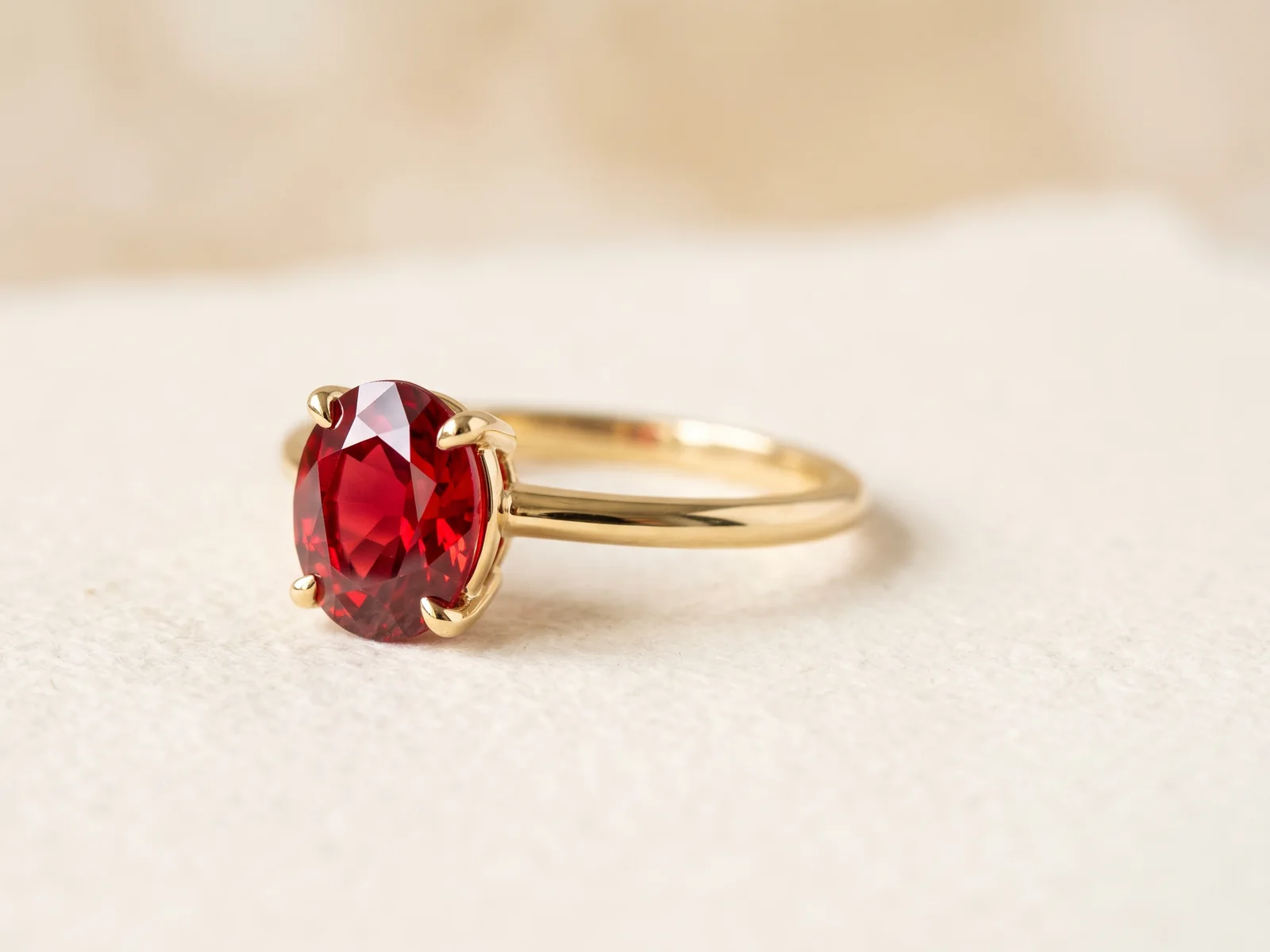
 Reviewed by Raj Sood, Graduate Gemologist (GIA), AJP (GIA)Master jeweller and Graduate Gemologist (GIA) · reviewed 4 November 2026
Quick answer
A spinel engagement ring uses spinel, a natural gemstone rated 8 on the Mohs scale with good toughness and no true cleavage, so it handles daily wear well with sensible care. It comes in red, pink, purple, grey and rare cobalt blue, is usually untreated, and usually costs less than a ruby or sapphire of similar colour.
What is a spinel engagement ring?
A spinel engagement ring is an engagement ring set with spinel as its centre stone. Spinel is a natural mineral, magnesium aluminium oxide (MgAl2O4), that crystallises in the cubic system, usually as neat eight-sided crystals called octahedra. It is not a kind of ruby or sapphire, and natural spinel is not a lab-made material, although a lab-created version does exist. Our spinel gemstone profile covers the mineral itself in more depth.
For centuries spinel was confused with ruby. The so-called Black Prince's Ruby in the British Imperial State Crown, a stone of roughly 170 carats, is actually a red spinel, and several other famous royal 'rubies' have turned out the same way. Spinel was only recognised as a separate mineral in the late 1700s, once scientists could compare crystal shape and other properties. That history is part of why spinel is still underrated: many people simply have not heard of it, so demand, and price, stay lower than its quality suggests.
It belongs on a short list of coloured gemstones suited to rings because it combines three things: good hardness, good toughness and bright, even colour that usually needs no treatment. If any of those terms are new, our jewellery glossary explains them in plain English, and each is also explained below.
What colours does spinel come in?
Pure spinel is colourless, but tiny amounts of other elements colour it. Chromium gives reds and pinks, iron gives purples, lavenders, greys and steely blues, and cobalt gives the rare vivid blue that collectors chase. The main colours you will see in rings:
- Red: the closest look to ruby, and the classic red spinel engagement ring. Fine reds come from Myanmar and historically from Tajikistan. A bright neon red-pink from Myanmar is sold under the trade name 'Jedi', which describes a look, not an official grade.
- Pink and hot pink: Tanzania's Mahenge area produced a major find of vivid pink spinel. A pink spinel ring is a popular alternative to pink sapphire.
- Purple and lavender: soft, romantic colours that are often the most affordable spinels.
- Grey and steel blue: subtle, modern colours, often from Sri Lanka and Myanmar, that pair well with white metals.
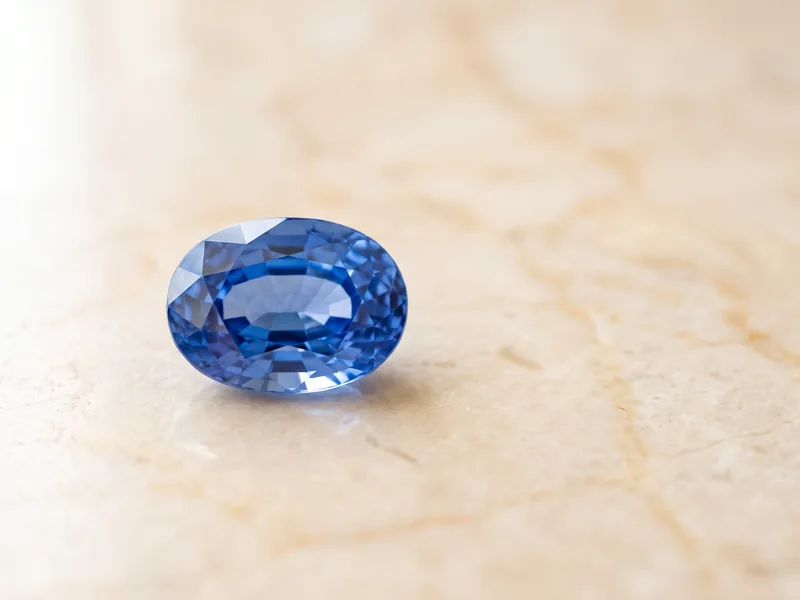
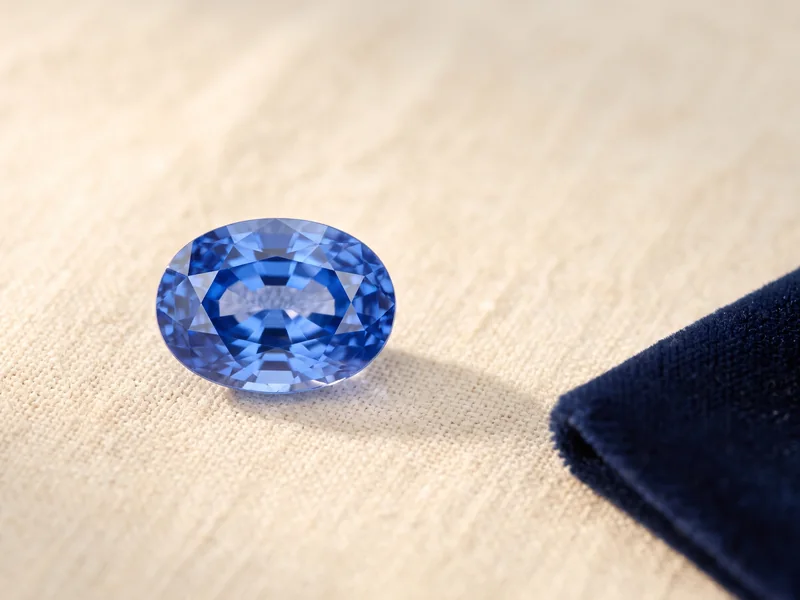
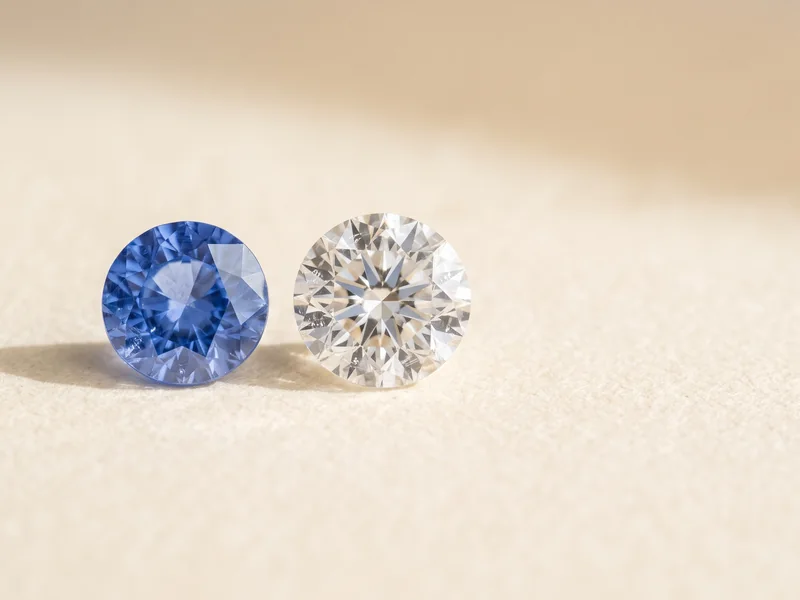
- Cobalt blue: very rare, coloured by cobalt rather than iron, mainly from Sri Lanka and Vietnam. A blue spinel engagement ring in true cobalt blue is the most expensive colour.
- Orange, 'flame' and black: less common in engagement rings, but available.
Spinel is singly refractive, meaning light travels through it at one speed whatever its direction. In practice, the colour looks the same from every angle; there is no pleochroism (a second colour appearing as you tilt the stone), which ruby and sapphire both show. That makes spinel easier to cut for colour and gives an even, clean look face-up. Its dispersion (the spread of light into rainbow flashes) is about 0.020, similar to sapphire.
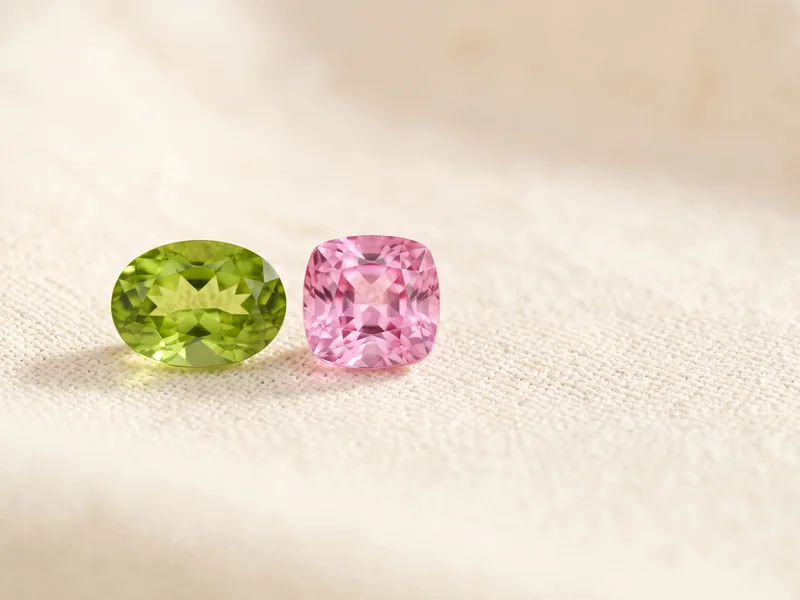
A few rare spinels show special effects: colour-change stones that shift between blue and purple in different lighting, and star spinels with four or six rays. Our guide to colour change and star effects in gems explains how these happen. Spinel's growing profile also got a boost when spinel joined peridot as an August birthstone in 2016.
Related guideSpinelIs spinel good for an engagement ring you wear every day?
Yes, with sensible care. Two separate properties decide whether a gem survives daily wear. Hardness is resistance to scratching, measured on the Mohs scale from 1 to 10. Toughness is resistance to chipping and breaking. Spinel hardness is 8, which matters because everyday dust contains quartz at 7: anything below 7 slowly dulls just from being wiped. At 8, spinel is harder than dust. Our page on how the Mohs hardness scale works explains the scale in full.
Spinel's toughness is rated good, and it has no true cleavage (a flat plane along which a crystal splits easily). Topaz, by comparison, is also 8 on the Mohs scale but has perfect cleavage, so one sharp knock can split it. That difference is why spinel suits rings far better than its hardness number alone suggests.
| Gemstone | Mohs hardness | Toughness | Ring suitability |
|---|---|---|---|
| Diamond | 10 | Good (has cleavage) | Excellent |
| Ruby and sapphire | 9 | Excellent | Excellent |
| Chrysoberyl | 8.5 | Excellent | Excellent |
| Spinel | 8 | Good, no true cleavage | Very good |
| Topaz | 8 | Poor (perfect cleavage) | Fair; needs protection |
| Aquamarine | 7.5–8 | Good | Good |
| Emerald | 7.5–8 | Poor to fair | Fair; protective setting |
| Tourmaline | 7–7.5 | Fair | Fair to good |
| Peridot | 6.5–7 | Fair | Occasional wear |
| Tanzanite | 6–7 | Poor to fair | Occasional wear |
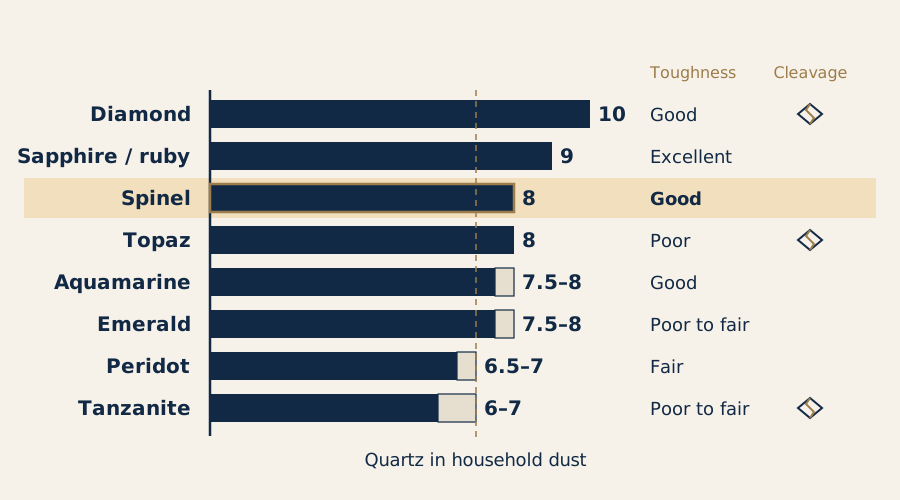
Realistically, a spinel worn every day for decades may show slight rounding or tiny nicks on its facet edges, where a sapphire or diamond would show less. The good news is that spinel can be re-polished by a lapidary to restore sharp edges. If you are weighing spinel against other options, our list of gems that suit rings worn every day ranks them on the same criteria.
Spinel vs sapphire and ruby: what is the difference?
Red spinel and ruby, or blue spinel and sapphire, can look very similar across a table. Gemmologically they are quite different. Ruby and sapphire are both corundum (aluminium oxide); spinel contains magnesium as well and has a different crystal structure. Here is how spinel compares with sapphire, ruby and other common centre stones:
| Spinel | Ruby / sapphire | Diamond | Red garnet | |
|---|---|---|---|---|
| Mohs hardness | 8 | 9 | 10 | 7–7.5 |
| Refractive index | 1.712–1.762 | 1.762–1.770 | 2.42 | about 1.74–1.81 |
| Refraction | Single | Double | Single | Single |
| Pleochroism | None | Yes, two shades | None | None |
| Specific gravity | 3.58–3.61 | 3.95–4.05 | 3.52 | about 3.7–4.2 |
| Typical treatment | Usually none | Usually heated | Natural: usually none | Rarely treated |
| Price for similar colour | Usually below ruby and sapphire | Higher | Varies widely | Usually lowest |
These differences are how a gemmologist tells them apart. On a refractometer, which measures how much a gem bends light, spinel gives one steady reading, usually around 1.712–1.720 for pinks and reds, while ruby gives two readings because it is doubly refractive. A dichroscope shows ruby splitting into two shades of red; spinel stays one colour. Under magnification, natural spinel often contains tiny octahedral crystals, sometimes in rows, which are a useful natural sign.
On price, fine red and pink spinel usually cost less than ruby or pink sapphire of a similar colour and size, largely because fewer buyers know to ask for it. Cobalt blue spinel is the exception and can rival fine sapphire. Sapphire's extra point of hardness also means it shows edge wear more slowly, which is worth weighing if you are hard on your hands.
Not sure which one is right?
Send us the stones you are looking at and our gemologist will tell you which to choose and why.
Where does spinel come from, and is there Australian spinel?
Most gem spinel is mined from gravels and marble deposits in a handful of countries:
- Myanmar: Mogok and Namya, known for reds, hot pinks and the neon 'Jedi' look.
- Sri Lanka: gem gravels producing pinks, purples, greys and some cobalt blues.
- Tajikistan: the historic Kuh-i-Lal mines, source of the old 'balas rubies' in royal collections.
- Tanzania: Mahenge (vivid pinks and reds) and Tunduru.
- Vietnam: Luc Yen, including some cobalt blue spinel.
- Madagascar, Afghanistan and Pakistan: smaller but steady supply.
In Australia, spinel turns up mostly as black spinel, an iron-rich variety sometimes called pleonaste or ceylonite, recovered alongside sapphire in the eastern alluvial gemfields such as New England in New South Wales and central Queensland. Fine coloured spinel suitable for an engagement ring is rare in Australia and not a commercial source, so almost all the red, pink and blue spinel you see here is imported.
Origin can affect price, particularly for red and pink stones described as Burmese, but it is not a quality grade. Some laboratories, including GIA, offer an origin opinion on request; it is an expert opinion based on inclusions and trace elements, not a certainty. Colour, clarity and cut matter far more to how the stone looks on your hand. Our guide to how spinel forms and where it is found goes further into the geology.
Is spinel treated, and what is lab-created spinel?
Most natural spinel on the market is untreated, which is one reason gemmologists like it. Compare that with ruby and sapphire, which are routinely heated. Heat treatment of spinel does exist, usually to improve clarity or colour, and laboratories can often detect it from changes in how the stone glows under laser light. Diffusion-treated blue spinel and fracture-filled stones have also been reported, though they are uncommon. Any treatment should be disclosed; our guide to how gem treatments should be disclosed explains what to expect on a report and an invoice.
Lab-created spinel, also called synthetic spinel, has the same basic chemistry but is grown in a factory. It has been made for over a century, mainly by flame fusion (melting powder in a flame and letting it crystallise as it drips) and, for finer material, by flux growth (crystallising slowly from a molten chemical bath). It is inexpensive and often used in birthstone jewellery and to imitate aquamarine, blue zircon and sapphire. It must always be sold as lab-created or synthetic spinel, never just 'spinel'.
Telling them apart is specialist work. Flame-fusion spinel usually contains extra alumina, which pushes its refractive index to around 1.727–1.730 and causes strong strain that shows as a cross-hatched 'tatami' pattern under a polariscope. It may also contain round gas bubbles. Flux-grown spinel is harder to identify, because its inclusions can resemble natural ones; for a significant stone, ask for an independent report from a laboratory such as GIA that states natural or lab-created and lists any treatment. How light behaves inside a gem, including the glow labs measure, is covered in our explainer on the way gems interact with light.
How much does a spinel engagement ring cost in Australia?
Spinel price in Australia depends mostly on colour, then size, clarity and cut. Saturated, pure colours cost the most; greyish or brownish tones cost less. Clarity standards are high: most good spinel is eye-clean, meaning no inclusions you can see without magnification at normal viewing distance. These broad loose-stone ranges are for natural spinel of good to fine quality, around 1–2 carats:
| Spinel type (natural unless stated) | Approximate price per carat (AUD) |
|---|---|
| Grey, lavender, light purple | about $300–$1,500 |
| Pink and hot pink | about $1,000–$5,000 |
| Fine red | about $2,000–$8,000+ |
| Cobalt blue | about $5,000–$20,000+ |
| Lab-created spinel | often under about $100 |
These are indicative ranges only and move with the market and the individual stone. Per-carat prices rise sharply above about 2 carats, because large clean spinel is scarce. The setting adds to the total: a simple solitaire in 18 ct gold or platinum typically adds a few thousand dollars, more with a diamond halo or hand-finished detail.
Spinel's specific gravity, about 3.60, is close to diamond's 3.52, so a 1 carat round spinel measures roughly 6.0–6.4 mm across, depending on depth. A 1 carat sapphire, being denser at about 4.00, looks noticeably smaller. Coloured gems are often cut deeper than diamonds to hold colour, so always compare millimetre measurements rather than carats; our page on carat weight versus millimetre size for coloured gems shows how much this varies.
Browse natural gemstones, including spinel
What is the best setting for a spinel engagement ring?
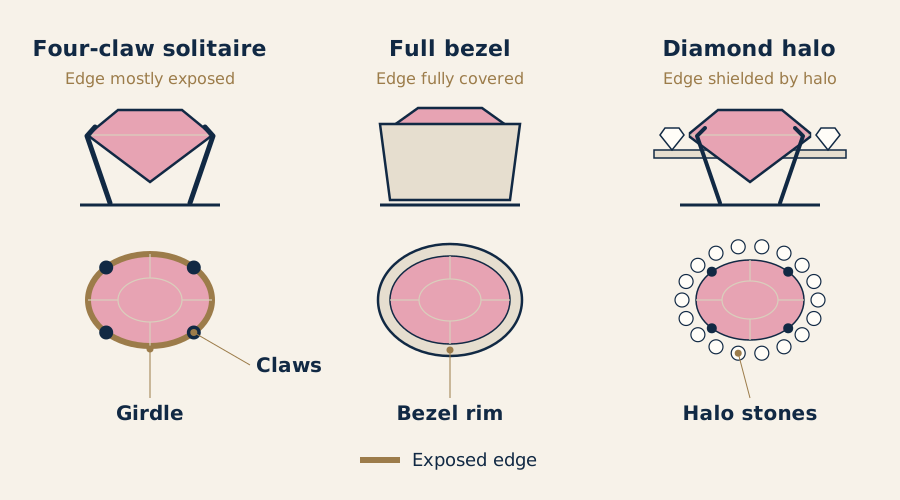
At 8 on the Mohs scale with good toughness, spinel does not need the heavy protection that emerald or tanzanite do, so most styles work. The aim is to keep the girdle (the stone's outer edge) and corners out of harm's way and to hold the stone low enough that it does not catch. Our claw, bezel and halo settings compared guide goes through each option in detail, and the definitions of girdle, bezel and other setting terms help when you read a ring description.
Spinel is most often cut as ovals, cushions and rounds, with some pears. These outlines behave much like their diamond equivalents on the hand: an oval spinel lengthens the finger in the same way as oval diamonds, and a pear needs its point protected just like pear-shaped diamonds. Our overview of the main stone outlines helps you picture each shape before you compare spinels.
- Four or six claws: shows the most colour and lets light in from the sides. Six claws add security for a round; four suit ovals and cushions.
- Bezel or half-bezel: a rim of metal around the edge, a good choice for active hands, nurses, tradies and gym-goers.
- Diamond halo: frames the colour and makes the centre look larger. A well-made halo sits around the centre stone and helps shield its edge.
- Three-stone: spinel between two diamonds, or a spinel centre with sapphire side stones.
- Metal choice: red and pink spinel glow in yellow or rose gold; grey, lavender and blue spinel look crisp in white gold or platinum.
How do you clean and care for a spinel ring?
Spinel is stable to light and normal household temperatures, so care is simple:
- Clean: warm water, a drop of mild dish soap and a soft toothbrush, then rinse and dry with a lint-free cloth.
- Ultrasonic and steam: generally safe for untreated, inclusion-free spinel, but avoid them if the stone has fractures or any filling.
- Store separately: keep it apart from diamond and sapphire jewellery, which are harder and can scratch it.
- Take it off: for the gym, gardening, moving furniture and anything with abrasive cleaners.
- Check yearly: have the claws or bezel inspected, as worn metal is a bigger risk than the stone itself.
The storage point matters more than people expect. A harder gem will always scratch a softer one, which is covered in our explainer on why harder gems scratch softer ones. If your stone has been filled or otherwise treated, skip the ultrasonic; our page on caring for treated stones safely explains why some treatments are sensitive to heat and vibration.
How do you choose a spinel engagement ring? Step by step
- Pick a colour family. Decide between red, pink, purple, grey or blue, then compare several stones within it side by side.
- Confirm it is natural or lab-created. The description and any report should say so clearly.
- Ask about treatment. Most spinel is untreated, but get it in writing; use these questions to ask about gem treatments.
- Check clarity and cut. Aim for eye-clean, and tilt the stone to look for a pale window in the centre.
- Compare millimetres, not carats. Note the length, width and depth so you know the face-up size.
- Match the setting to your life. Claws for maximum colour, a bezel or halo for active hands, and weigh spinel against other ring-worthy gems if you work hard with your hands.
Free consultation
Talk to a gemologist
Compare stones in person or online with Raj Sood, Graduate Gemologist (GIA), AJP (GIA).
Book a consultationShop this shape
FAQ
Common questions
Is spinel good for an engagement ring?
Yes. Spinel is 8 on the Mohs scale, has good toughness and no true cleavage, so it handles daily wear well. It is softer than sapphire or diamond, so remove it for heavy work and store it separately.
Is spinel more expensive than sapphire?
Usually not. Red, pink and purple spinel generally cost less than sapphire or ruby of a similar colour, but fine cobalt blue spinel can match or exceed sapphire prices.
Is spinel a real gemstone or a fake ruby?
Natural spinel is a real gemstone in its own right, a separate mineral from ruby. It was historically mistaken for ruby, and lab-created spinel also exists, which must be disclosed as lab-created or synthetic.
Is spinel usually treated?
Most natural spinel is untreated. Heat treatment and other treatments exist but are uncommon, and they should always be disclosed.
What colour spinel is most valuable?
Vivid cobalt blue is the rarest and usually the most expensive, followed by pure, saturated red and hot pink. Grey, lavender and light purple are the most affordable.
Can spinel be worn every day?
Yes, with sensible care. Over many years the facet edges may show slight wear, which a lapidary can re-polish.

Ask a gemologist
Not sure which diamond to choose?
Raj Sood is a Graduate Gemologist (GIA) and master jeweller. Bring the stones you are considering, or send the reports, and he will tell you honestly which one is better and why.
Keep learning
Related guides
 GemstonesSpinel
 GemstonesGemstone Hardness Guide
 GemstonesBest Gemstones for Daily Wear Rings
 GemstonesTreated vs Untreated GemstonesGemstonesGemstones | Coloured Gemstones, Birthstones and Custom Jewellery
 GemstonesAugust Birthstone: Peridot and Spinel
 Engagement Rings & SettingsDiamond & Gemstone Setting Guide
 GemstonesGemstone Carat vs Size (Density)
Explore more
More guides on this topic
Education