
Metals
White Gold Rhodium Plating: Why White Gold Is Rhodium Plated and How Long It Lasts
Almost every white gold ring in an Australian shop window is wearing a thin coat of another metal. Knowing what white gold rhodium plating does, and when it wears off, tells you what your ring will really look like in five years.
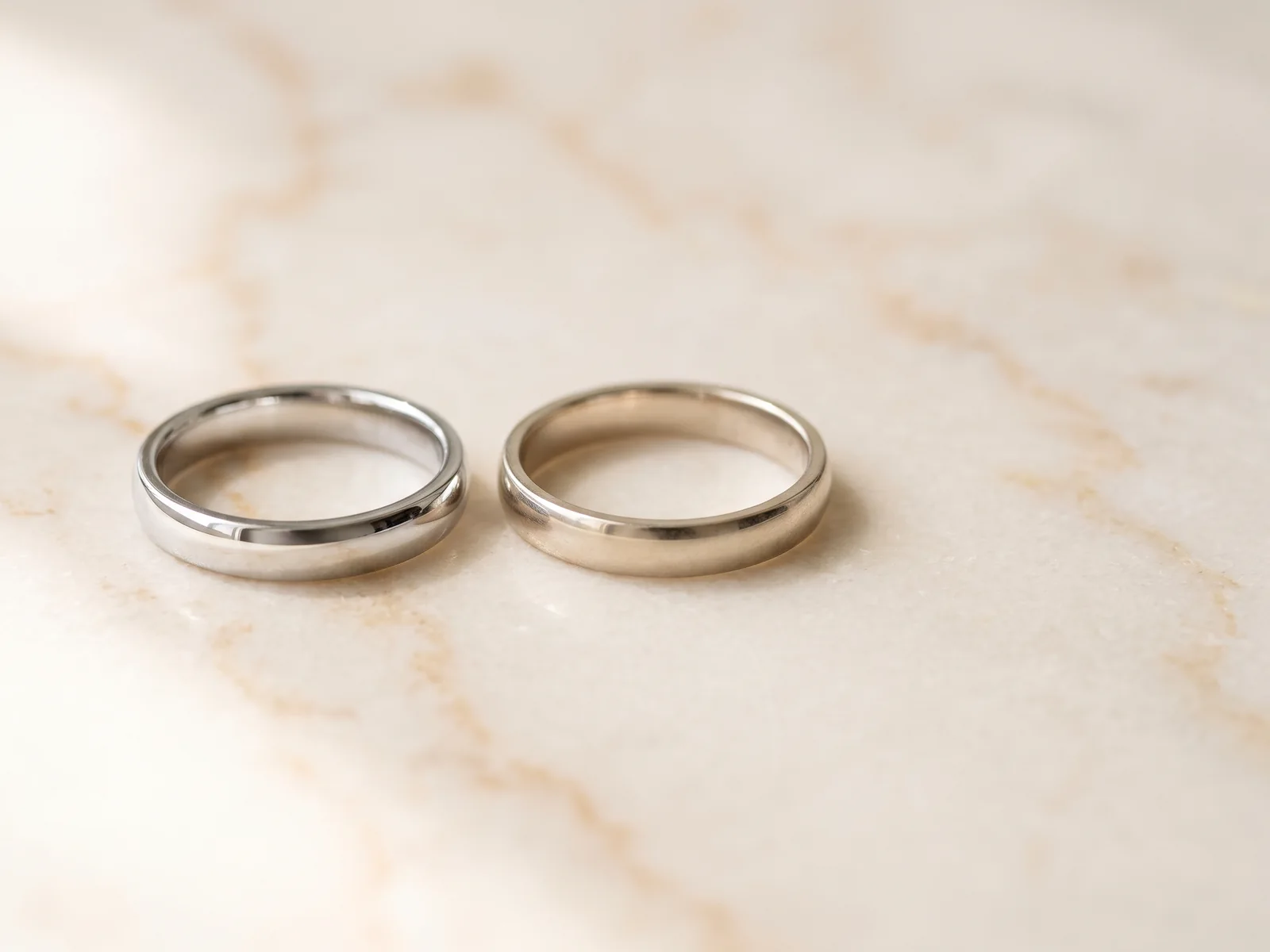
 Reviewed by Raj Sood, Graduate Gemologist (GIA), AJP (GIA)Master jeweller and Graduate Gemologist (GIA) · reviewed 4 November 2026
Quick answer
White gold is rhodium plated because the gold alloy underneath is naturally a pale, slightly warm grey-yellow. White gold rhodium plating adds a very thin layer, about 0.1–0.5 microns, of rhodium, a bright white platinum-group metal. It gives the cool white colour, resists fine scratches and wears off in roughly 1–3 years on a ring.
What is white gold rhodium plating?
White gold is not a metal that comes out of the ground. It is an alloy (a blend of metals): pure yellow gold mixed with white metals such as palladium, silver, nickel and zinc, which bleach out most of the yellow. Even a well-made alloy is not truly white. On its own it looks pale grey, soft champagne or faintly yellow, depending on the recipe. Rhodium plating is the finishing coat that turns that off-white alloy into the bright, cool white most people picture when they hear the words white gold.
Rhodium is a platinum-group metal, a rare relative of platinum and palladium, mined mostly in South Africa as a by-product of platinum mining. It is very white, highly reflective and does not tarnish. A jeweller applies it by electroplating: the clean piece is lowered into a rhodium solution and a small electric current deposits metal atoms onto its surface. The finished layer is usually about 0.1–0.5 microns thick. A micron is a thousandth of a millimetre, so the coating is hundreds of times thinner than a human hair.
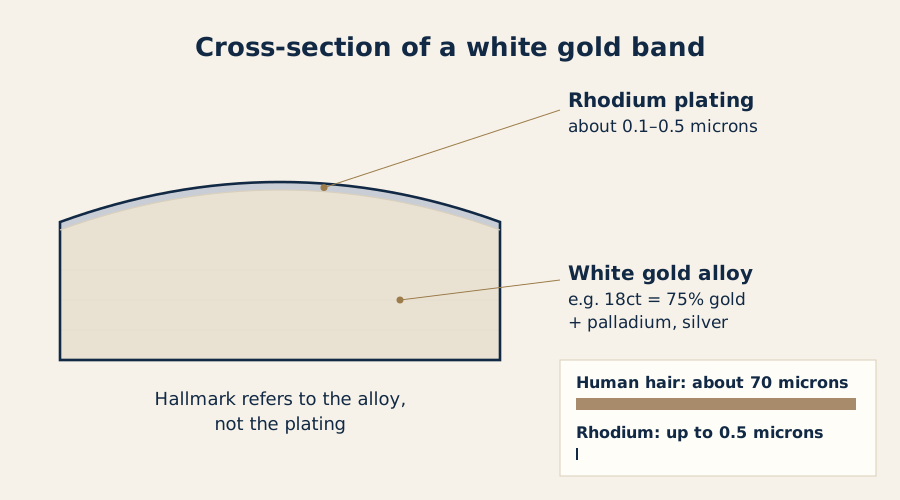
Because the coating is so thin, it does not change the gold content, the weight or the hallmark of the piece. It is a surface finish over solid gold. That is quite different from gold-plated jewellery, where a cheaper base metal sits under a gold skin; our guide to how plating differs from solid gold explains why that matters for value and wear. You may also come across black rhodium, a darker grey version used for contrast on vintage-style and men's pieces. Any term here you have not met before is explained in our glossary of jewellery terms.
Why is white gold rhodium plated?
Gold is one of the few metals with a strong natural colour, and it fights to show through. In 18ct white gold, three quarters of the metal is still pure yellow gold, so the white metals can only soften it, not remove it. Jewellers plate white gold for five practical reasons:
- Colour: rhodium gives a consistent, bright white that matches platinum and makes a white gold ring look the same from every angle.
- Uniform finish: a ring is often assembled from parts (band, claw head, solder joints) made from slightly different alloys. Plating makes them all one colour.
- Surface hardness: rhodium is roughly 6 on the Mohs scale, against about 2.5–3 for gold alloys, so a fresh coat resists the fine scuffs of daily wear for a while.
- Brightness around diamonds: a cool white metal reflects less warmth into a colourless diamond, so the stone looks whiter.
- A temporary barrier: while it is intact, the plating keeps skin away from the alloy underneath, which matters for people sensitive to nickel.
The industry has a way of measuring how white a gold alloy is. A spectrophotometer reads its yellowness index (YI), and white golds are loosely sorted into three grades: Grade 1, below about 19, is white enough to wear unplated; Grade 2, about 19–24.5, is acceptable unplated but noticeably warm; Grade 3, about 24.5–32, is meant to be rhodium plated. Most everyday white gold alloys sit in Grade 2 or 3, which is why plating is the norm rather than the exception.
Rose and yellow gold are not plated, because their colour is the whole point; see how the three gold colours are made for the alloy recipes behind each. If you want a white metal that never needs a coating, look at naturally white platinum, which is white all the way through.
What is white gold made of in 9ct, 14ct and 18ct?
The carat number tells you how much pure gold is in the alloy, out of 24 parts. The rest is the mix that whitens and hardens it. Counter-intuitively, more gold usually means a warmer, more yellow white gold, so an 18ct white ring often relies on its plating more than a 9ct one.
| Carat (stamp) | Pure gold | Typical whitening metals | Unplated colour | Notes |
|---|---|---|---|---|
| 9ct (375) | 37.5% | Silver, copper, zinc, sometimes palladium or nickel | Pale grey to light warm grey | Harder and less costly; can tarnish slightly over years |
| 14ct (585) | 58.5% | Palladium or nickel, silver, copper, zinc | Light champagne to soft grey | Common in imported and US-made rings |
| 18ct (750) | 75% | Palladium or nickel, with silver and copper | Warm grey-yellow | Richest gold content; most commonly plated |
There are two main families of white gold. Nickel white gold is whiter and harder, but nickel is a common skin allergen and the alloy can be springy and harder to work. Palladium white gold is nickel-free, kinder to skin and softer to set stones in, but it is greyer in colour and the alloy usually costs more. Many workshops now favour palladium-based or low-nickel alloys for rings that sit against skin all day.
If you are weighing up gold content against durability, our page on the differences between 9ct and 18ct gold goes deeper on hardness and price. White gold stops at 18ct in practice: once you push towards high-purity 22ct and 24ct gold, there is too little room left for whitening metals, which is why those purities are almost always yellow.
What do the stamps on white gold mean in Australia?
Look inside the band of most white gold rings and you will find a small stamp. It tells you the gold content of the alloy, not the plating. Rhodium is never stamped, because it adds no measurable precious metal value.
| Stamp | What it means | Gold or metal content |
|---|---|---|
| 9ct or 375 | 9 carat gold | 37.5% gold |
| 10K or 417 | 10 carat gold (mostly US imports) | 41.7% gold |
| 14ct, 14K or 585 | 14 carat gold | 58.5% gold |
| 18ct, 18K or 750 | 18 carat gold | 75% gold |
| Pt950 or Plat | Platinum | 95% platinum |
| 925 or Sterling | Sterling silver, sometimes rhodium plated to look like white gold | 92.5% silver |
| GP, GEP, HGE | Gold plated over base metal | A gold skin only, not solid gold |
Australia does not have compulsory hallmarking or a government assay office the way the United Kingdom does. The mark is applied by the manufacturer or jeweller, and under Australian Consumer Law it must not be misleading. Australian makers traditionally stamp 'ct' (9ct, 18ct); imported pieces often show 'K' or the three-digit number alone. A maker's mark beside the purity stamp tells you who made the piece and who stands behind the claim.
One thing to watch: a 925 stamp on a bright white ring means rhodium-plated sterling silver, not white gold. It looks almost identical when new but is softer and less valuable. Our complete gold jewellery guide covers stamps and quality marks across every colour, and the page on solid, filled and plated gold shows how to tell them apart.
Not sure which one is right?
Send us the stones you are looking at and our gemologist will tell you which to choose and why.
How often does white gold need rhodium plating?
Rhodium plating is hard but thin, so it wears away through friction rather than suddenly peeling. The first sign is a faint warm or yellowish patch, usually on the underside of the band where it rubs against the palm, the next finger and everything you pick up. How quickly that happens depends on the piece and how it is worn.
| Piece | Typical wear | Approximate time before replating |
|---|---|---|
| Wedding band, worn daily | Constant contact on all sides | 6–18 months |
| Engagement ring, worn daily | Band underside and claw tips | 12–24 months |
| Ring worn occasionally | Light contact | 2–4 years |
| Pendant or earrings | Very little friction | 3–5 years or more |
| Bracelet | Rubs on desks and wrist | 1–2 years |
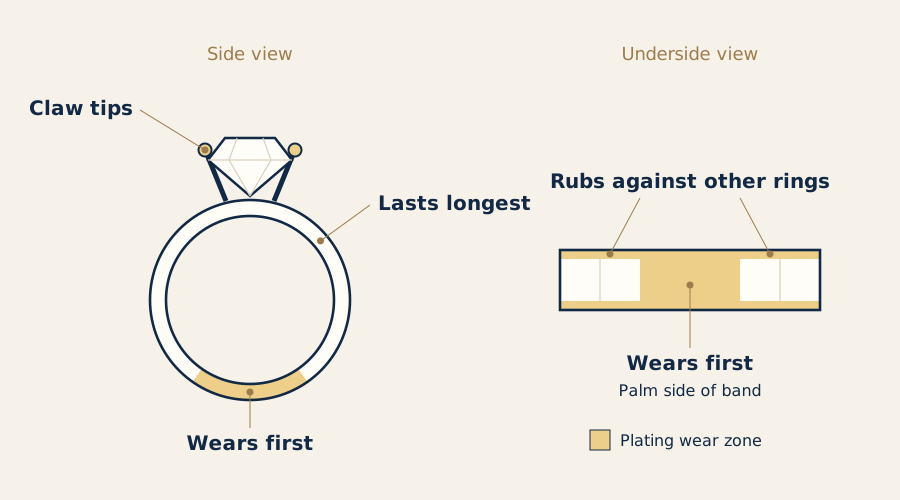
The alloy colour underneath changes the timetable. A palladium white gold shows only a small step from bright white to soft grey, so many people go years without replating. A warmer 18ct alloy shows the change sooner. Gym work, gardening, rock climbing and regular contact with pool chlorine all speed up wear; chlorine can also attack the alloy itself over time.
Rings worn together also wear faster where they touch. If your wedding band is shaped to sit hard against the engagement ring, as with contoured bands made to sit flush beside a heart, expect the plating to thin along that shared edge first.
Some people deliberately stop replating and enjoy the softer champagne tone, especially when pairing white gold with yellow or rose bands, where a gentler white blends more easily. That is a personal choice; the gold underneath is just as solid either way.
Can rhodium plating stop a nickel allergy?
Only for a while. Nickel is one of the most common causes of allergic contact dermatitis, an itchy red rash where metal touches skin. Rhodium itself is very rarely a problem, and a fresh coat seals the alloy away from your skin. The catch is that plating wears thinnest on the palm side of the band, which is exactly where the ring presses on skin, so a reaction can return months after replating.
- Ask what is in the alloy. Palladium white gold is nickel-free and the most reliable white gold choice for sensitive skin.
- Consider platinum. Platinum 950 is naturally white, does not need plating and is rarely a cause of allergy.
- Yellow and rose gold alloys generally contain no nickel, though rose gold's copper occasionally bothers very sensitive skin.
- Avoid relying on plating alone if you have had a confirmed nickel reaction before.
The European Union limits how much nickel jewellery can release against skin; Australia does not have an equivalent specific rule, so it is worth asking the question directly. The same caution applies to other plated finishes, such as gold vermeil, another plated finish, where the layer over silver also wears with time. For a wider view, see our advice on choosing an engagement ring metal for sensitive skin.
Is rhodium-plated white gold better than platinum?
Neither is better across the board. They look almost the same on the day you buy them, but they age differently and suit different budgets.
| Rhodium-plated white gold (18ct) | Unplated palladium white gold | Platinum 950 | |
|---|---|---|---|
| Colour new | Bright cool white | Soft grey-white | Grey-white, slightly darker |
| Colour after years | Warm patches until replated | Stays soft grey-white | Develops a soft satin patina |
| Needs plating | Yes, every 1–3 years on a ring | No (optional) | No |
| Scratching | Plating resists fine scuffs; gold scratches by losing metal | Scratches by losing metal | Scratches by moving metal, losing less |
| Weight | Medium (about 14.5–16 g/cm³) | Medium | Heavy (about 21.4 g/cm³) |
| Nickel | Possible, depending on alloy | None | None |
| Upfront cost | Lower | Moderate | Highest |
| Ongoing upkeep | Regular replating | Occasional polish | Occasional polish |
Platinum costs more upfront but has no plating to maintain, and its claws wear slowly, which suits a ring worn every day for decades. White gold costs less to start with and looks brighter while the plating is fresh, but you should plan on a small recurring cost. Our full white gold vs platinum comparison puts the long-term numbers side by side, and the guide to every engagement ring metal compared adds palladium, yellow and rose gold to the picture.
Related guideWhite Gold vs PlatinumHow much does rhodium plating cost in Australia?
Replating is a workshop job rather than a quick dip. A proper rhodium finish includes cleaning, polishing and an electrical plating bath, so the price reflects bench time as much as the rhodium. Rhodium is also one of the most volatile precious metals, and its price has at times been several times that of gold per ounce, which nudges plating costs up and down.
| Job | Approximate price range (AUD) |
|---|---|
| Ring rhodium replate (clean, polish, plate) | about $60–$150 |
| Ring replate with claw check and minor re-tipping | about $120–$300 |
| Pair of earrings or a pendant | about $50–$120 |
| Bracelet or long chain | about $80–$200 |
| Pen plating around delicate gemstones | about $80–$180 |
In the workshop, a typical replate runs like this: the piece is cleaned in an ultrasonic bath and steamed, polished to remove scratches (rhodium copies whatever surface it lands on), electro-cleaned and rinsed, then plated in warm rhodium solution for somewhere between 30 seconds and a couple of minutes before a final rinse and dry. Polishing removes a tiny amount of gold each time, so on a ring that is replated every year for decades, thin claws need watching, especially the V-claw guarding the point of a heart shaped diamond and other claw settings that protect fragile tips. Ask whether your piece needs a full polish or only a light one.
Untreated diamonds, sapphires and rubies handle the cleaning and plating bath well, though fracture-filled diamonds and glass-filled rubies do not. Opals, pearls, emeralds, tanzanite, turquoise and coral do not: they can be damaged by heat, ultrasonic cleaning or the plating chemicals. For those, the jeweller either removes the stones or uses pen plating, where rhodium is brushed onto just the metal with a fine-tipped applicator. Lighter, everyday pieces in 9ct often need replating less often, a point covered in our page on which carat wears better day to day.
Ring settings by metal
How do you look after rhodium-plated white gold? Step by step
- Check the alloy when you buy. Ask whether it is palladium or nickel white gold and what carat it is; this decides how warm it looks when the plating wears.
- Take it off for hard work. Remove rings for the gym, gardening, cleaning with chemicals and swimming in chlorinated pools.
- Clean gently. Warm water, a drop of mild dishwashing liquid and a soft toothbrush; skip abrasive polishing cloths, which wear the plating faster.
- Store pieces apart. Keep white gold away from diamond jewellery in a soft pouch, because diamond scratches everything, including rhodium.
- Watch the underside of the band. When a warm strip appears, book a replate rather than waiting for the whole ring to change colour.
- Combine jobs. Ask for a claw and setting check with each replate, and mention any delicate gemstones so they can be protected.
If you are still deciding on a colour, it helps to see white, yellow and rose gold side by side before you commit, keeping in mind that only white gold comes with this ongoing finish.
Free consultation
Talk to a gemologist
Compare stones in person or online with Raj Sood, Graduate Gemologist (GIA), AJP (GIA).
Book a consultationShop this shape
FAQ
Common questions
Why is my white gold ring turning yellow?
The rhodium plating has worn through and you are seeing the natural colour of the gold alloy underneath. The gold has not changed; a replate restores the bright white.
Is white gold real gold if it is rhodium plated?
Yes. The ring is solid gold alloy, and the stamp (such as 18ct or 750) describes that alloy. The rhodium is only a very thin surface finish.
How long does rhodium plating last on white gold?
On a ring worn every day, usually about 1–3 years, and sooner on wedding bands that rub against other rings. Earrings and pendants can go 3–5 years or more.
Can you get white gold without rhodium plating?
Yes. Many jewellers can leave a ring unplated, which shows the alloy's natural soft grey or champagne tone. Palladium white gold looks the most even unplated.
Does rhodium plating damage gemstones?
Diamonds, sapphires and rubies are generally fine unless they are fracture-filled or glass-filled. Opals, pearls, emeralds and other delicate stones should be removed or protected with pen plating, so always tell the jeweller what is set in the piece.
Does platinum need rhodium plating?
No. Platinum is naturally white all the way through, so it never needs plating, although some people choose a rhodium coat for a brighter white look.

Ask a gemologist
Not sure which diamond to choose?
Raj Sood is a Graduate Gemologist (GIA) and master jeweller. Bring the stones you are considering, or send the reports, and he will tell you honestly which one is better and why.
Keep learning
Related guides
 MetalsWhite Gold vs PlatinumMetalsBest Metal for Engagement Rings
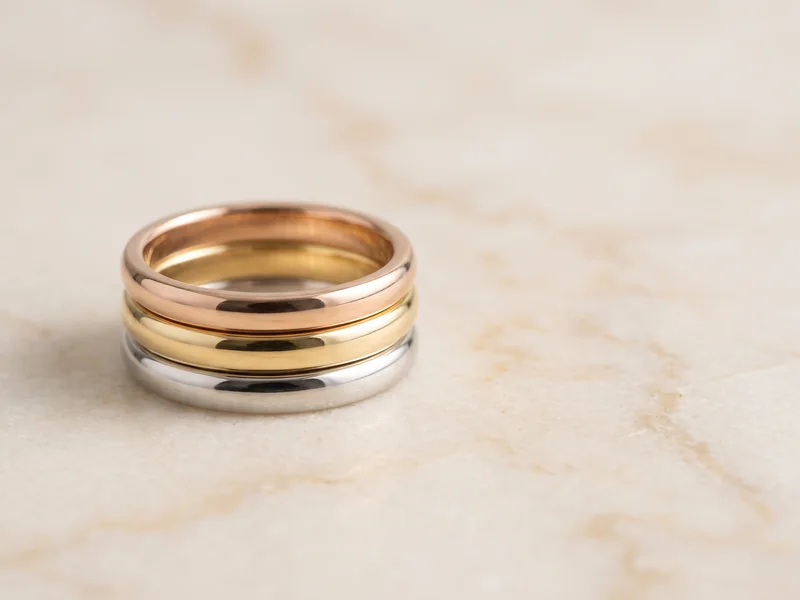 MetalsYellow Gold vs White Gold vs Rose Gold
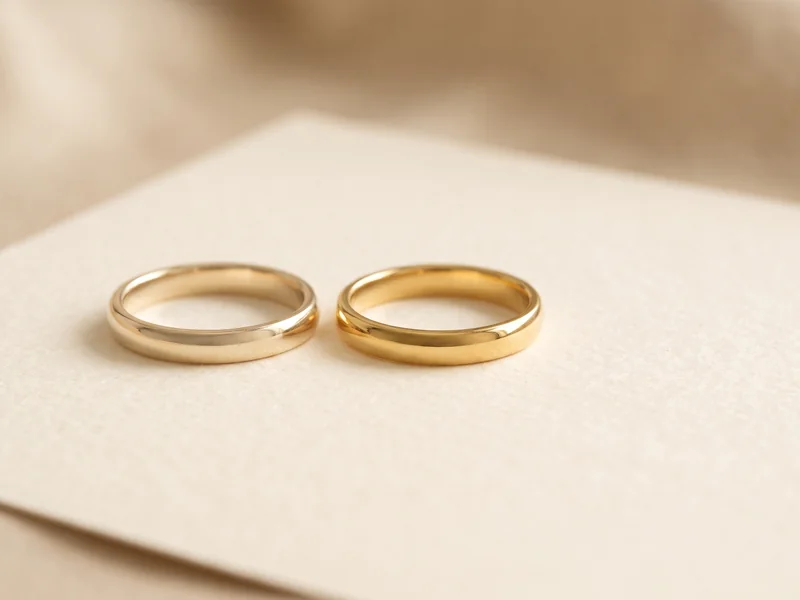 Metals9K vs 18K Gold: Which Gold Is Better for Jewellery?MetalsGold Plated vs Gold Filled vs Solid Gold
 MetalsGold Vermeil ExplainedMetalsMixing White, Yellow and Rose Gold in a Bridal SetMetals22K and 24K Gold Jewellery
Explore more
More guides on this topic
Education