
- Education
- Wedding Bands & Eternity
- Choosing a Wedding Band for a Heart Engagement Ring: Flush, Contoured or Gap
Wedding bands & eternity
Choosing a Wedding Band for a Heart Engagement Ring: Flush, Contoured or Gap
A heart's wide lobes and point often stop a straight band sitting flush. Here is how to choose a wedding band for a heart engagement ring: flush or gap, contoured shapes, widths, metal and stacking.
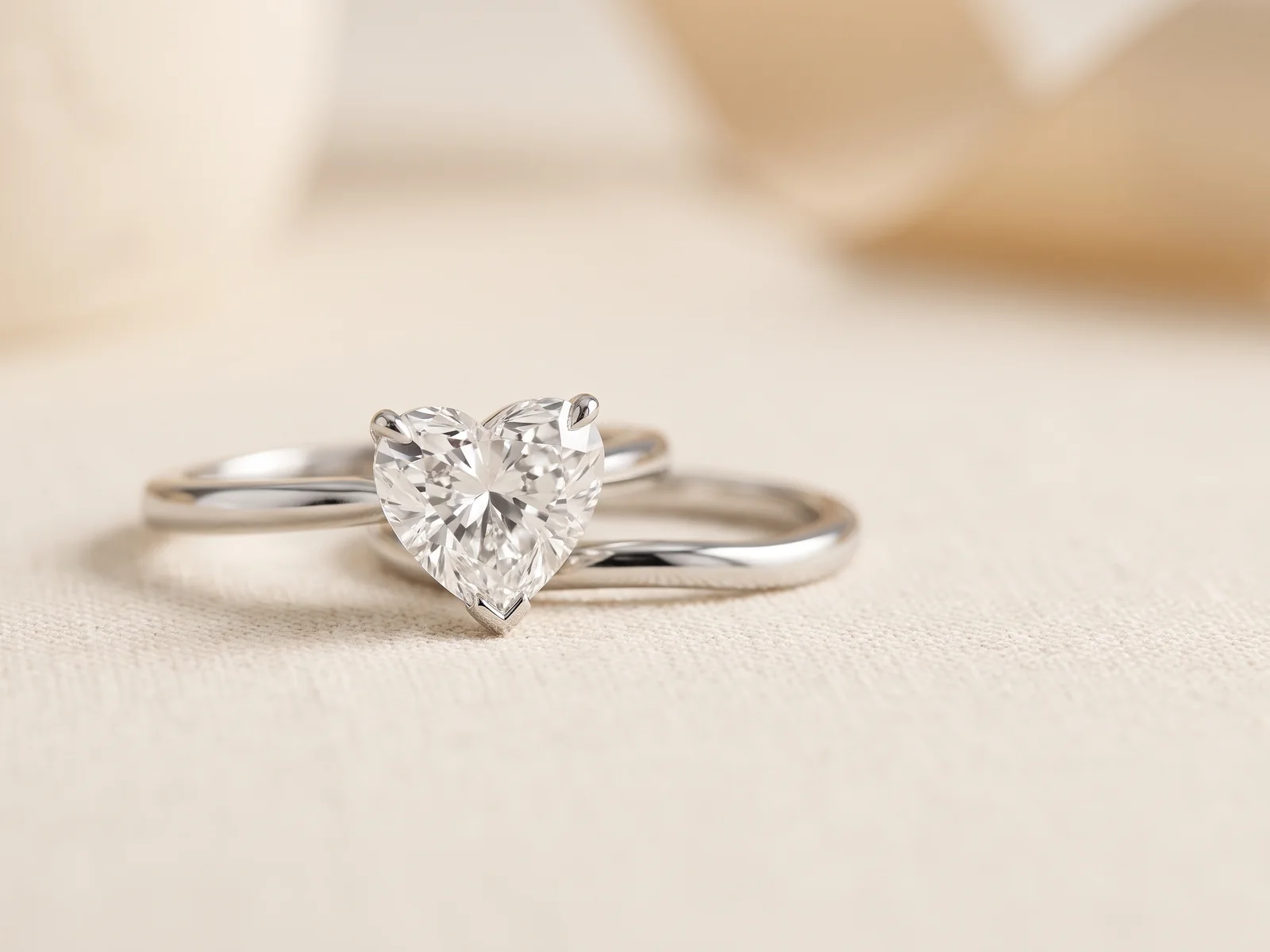
 Reviewed by Raj Sood, Graduate Gemologist (GIA), AJP (GIA)Master jeweller and Graduate Gemologist (GIA) · reviewed 4 November 2026
Quick answer
The best wedding band for a heart engagement ring depends on how high the heart sits. If the stone clears the band, a straight band can sit flush. If the lobes or point overhang, choose a contoured or notched band shaped around them, or leave a small gap. Match the metal and keep widths about 1.8–2.5 mm.
What is the best wedding band for a heart engagement ring?
There is no single best band, because the right choice depends on how your heart engagement ring is built. The question that decides it is simple: when you slide a band up beside the engagement ring, does anything get in the way? With a heart, something often does. The stone is almost as long as it is wide, so whichever end faces the band, the lobes or the point, usually reaches past the edge of the shank (the part of the engagement ring that goes around the finger).
That leaves three broad options. A straight band sits flush if the heart is set high enough to clear it. A contoured band is curved or notched so it wraps around the part that overhangs. Or you accept a small gap and wear a straight band beside it. All three are normal, and a jeweller can tell you which your ring allows in a minute or two. If you are still learning about the stone itself, our complete heart shaped diamond guide covers ratio, symmetry and colour.
A quick note on words: most people use wedding ring and wedding band to mean the same thing, though some jewellers keep band for a plain, narrow ring. Our explainer on the difference between a wedding ring and a wedding band sorts out the terms, and the glossary of jewellery terms defines anything else on this page you have not met before.
Why won't a straight band sit flush against a heart ring?
Take a typical 1 carat heart, about 6.8 mm wide and 6.3 mm long. Most heart engagement rings are set with the lobes and point running along the finger, so that 6.3 mm length sits across a shank that is often only 1.8–2.2 mm wide. Even before you count the claws, the stone reaches roughly 2 mm past each side of the shank. If it sits low, a straight wedding band simply runs into it.
Five things decide whether a band can slide underneath:
- Setting height: how high the girdle (the thin outer edge of the diamond) sits above the finger. If it sits above the top of the wedding band, which is usually 1.5–1.8 mm thick, the band can pass underneath.
- Gallery and basket: the metalwork under the stone. A wide basket or a hidden halo (a row of small diamonds tucked under the girdle) can block a band even when the stone is high.
- Bezel: a rim of metal around the heart. A low bezel is very secure but nearly always stops a straight band sitting flush.
- Shoulders: cathedral shoulders, which arch up to meet the head, push the band away from the stone.
- V-claw: the V-shaped claw that protects the point wraps the outside of the stone and adds a little to the overhang at that end.
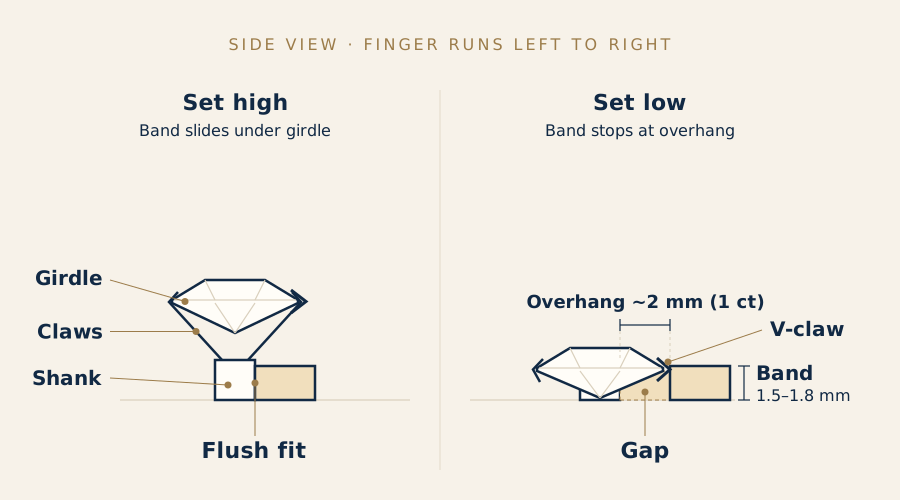
So the band you can wear is partly decided by the setting. If you have not chosen the engagement ring yet, look at heart setting styles and how high each one sits with a wedding band in mind. Raising the head by a millimetre or so at the design stage can turn a gap into a flush fit, though a taller setting is slightly more exposed to knocks.
Should a wedding band sit flush or with a gap?
Both are correct. What matters is choosing one on purpose, rather than ending up with a band that almost touches.
| Straight band, flush | Contoured or notched band | Straight band with a gap | |
|---|---|---|---|
| What it needs | Heart set high enough to clear the band | A band shaped to this engagement ring | Nothing; works with any setting |
| Look | Joined, the classic bridal set | A curved or V line that frames the heart | Two separate rings with a sliver of finger between |
| Gap | None | None, or under about 0.5 mm | About 0.5–2 mm, depending on the overhang |
| Contact with the diamond | None if fitted well | None if fitted well | None |
| Worn alone or with other rings | Most flexible | Usually only suits this engagement ring | Flexible |
| How it is made | Ready-made or custom | Usually custom, made to the ring | Ready-made or custom |
A gap is not a fault. Many people like how it lets each ring be seen on its own, and a straight band is the easiest to wear alone, swap, or match with a partner's ring. What you want to avoid is the in-between: a band that nearly touches, so the two rings knock together and metal rubs against the claws or the edge of the diamond. Hearts have a thin point and a thin cleft (the dip between the lobes), and years of rubbing there can wear the claws that hold them.
Flush fits are popular because the set looks like one piece and the band has less room to spin. The round is the easiest shape for this, as our guide to bands that pair with round engagement rings explains. A heart needs a little more planning, but the result can be just as neat.
What are contoured, curved and notched wedding bands?
A contoured band (also called a curved or shadow band) is shaped to follow the outline of the engagement ring, so the two sit snugly with no gap. These are the styles that work with a heart:
| Band style | Shape | Why it suits a heart | Watch for |
|---|---|---|---|
| Curved | A smooth, gentle arc in the centre | Follows the rounded lobes when they face the band | Too shallow a curve still leaves a gap |
| V or chevron | A pointed dip in the centre | Mirrors the point when the point faces the band | A sharp V can catch on knitwear |
| Notched | A straight band with a small cut-out | Clears the V-claw or bezel while staying mostly straight | The notch shows when worn alone |
| Wishbone | Rises to a peak in the centre | Frames the heart from below and looks deliberate | Bolder look; less versatile on its own |
| Open or negative space | Two ends that part around the stone | No contact with the stone at all | Needs careful sizing so the ends sit evenly |
| Paired contour | Two curved bands, one each side | Frames the heart top and bottom | Often soldered together; harder to resize |
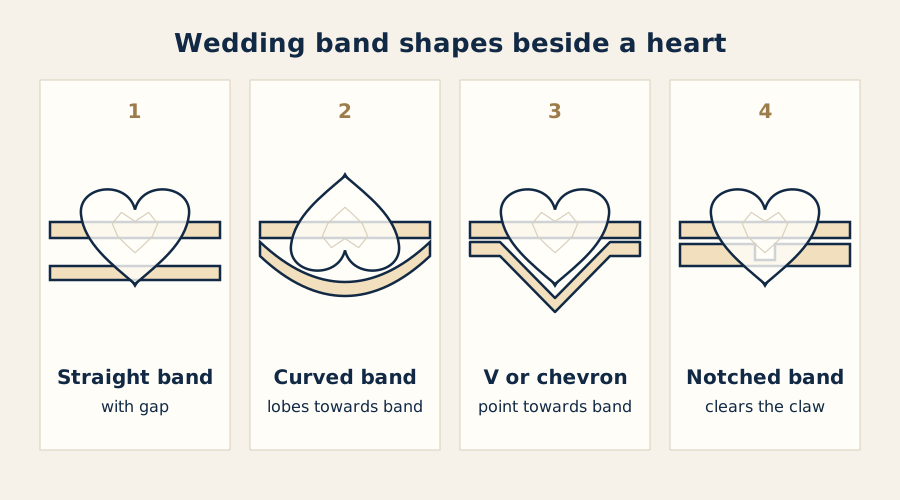
Which end of the heart faces the band changes the choice. With the point towards the band, a V or chevron echoes it. With the lobes towards the band, a broad, shallow curve follows them more closely than a sharp V. A notched band is the quiet option: it looks straight from a distance, with just enough metal removed to clear the claw.
Contoured bands are usually made for one engagement ring, often in CAD (computer-aided design, where the band is modelled on screen around measurements or a scan of your ring before it is cast). Because they are shaped to that ring, they can look unusual worn alone, and resizing has to keep the curve centred under the heart.
Not sure which one is right?
Send us the stones you are looking at and our gemologist will tell you which to choose and why.
How wide should a wedding band be next to a heart?
The simplest rule is to match the band's width to the engagement ring's shank, or keep it within about half a millimetre. Width means the measurement across the top of the band, along the finger. Thickness, the depth from outside to inside, matters too: around 1.5–1.8 mm feels solid and holds its shape over decades of wear.
| Engagement shank | Typical heart size | Band width that usually balances |
|---|---|---|
| 1.5–1.8 mm (fine) | 0.50–0.75 ct | 1.5–2.0 mm |
| 1.8–2.2 mm (classic) | 0.75–1.50 ct | 1.8–2.5 mm |
| 2.2–3.0 mm (substantial) | 1.50 ct and above | 2.2–3.0 mm |
| Pavé or tapered shank | Any | Match the shank near the head, or go slightly narrower |
A band much wider than the shank makes the heart look smaller, and a heart needs its full outline on show. Our page on the carat weight where a heart outline reads clearly explains why hearts under about 0.50 ct can start to look like rounded triangles, and a heavy band beside a small heart makes that worse. At the other end, a band narrower than about 1.5 mm that is also thin can bend out of round over years of wear.
If you plan to add bands over time, think about the total width of the stack. Three 2 mm rings measure about 6 mm on the finger, plus any gaps, and a wide stack often needs a quarter to half a size larger to pass the knuckle comfortably.
Should the wedding band match the metal of a heart engagement ring?
Matching the metal is the safest choice, for looks and for wear. Rings worn side by side rub every day, and different alloys wear at different rates: a harder one can slowly wear a softer one where they touch. White gold beside platinum can also look slightly different in colour once the white gold's plating thins.
- Platinum (usually 950, meaning 95% platinum): naturally white and dense. It scratches to a soft satin finish, but the metal mostly moves rather than wears away, so claws and shanks keep their mass well.
- 18ct white gold (75% gold): usually rhodium plated for a bright white finish. Plating wears, often needing renewal every 12–24 months on a ring worn daily, and a band rubbing against it can speed that up along the contact edge.
- 18ct yellow and rose gold: warm colours that make I–J colour diamonds look whiter. Rose gold gets its colour from copper, so the shade varies between alloys; ask for the same alloy as your engagement ring.
- Mixed metals: a yellow gold band beside a platinum heart can look deliberate. If you mix, keep the hardness similar and expect a little extra wear where they meet.
If your partner is choosing a band as well, the two do not have to match each other, only suit each wearer. The guide to men's wedding bands covers wider profiles, comfort fit and alternative metals, and our full wedding ring buying guide covers sizing, profiles and budgets for both.
Plain band or diamond band: which suits a heart engagement ring?
A plain polished band keeps the attention on the heart's outline, which is the shape's whole appeal. A satin or brushed finish adds texture without competing for sparkle. A diamond band adds brightness: small round stones echo the heart's brilliant faceting, while baguettes give a straight, architectural line that contrasts with its curves.
- Half eternity: diamonds across the top third to half of the band. Easier to resize than a full eternity and comfortable between fingers.
- Full eternity: diamonds all the way around. It usually cannot be resized by more than a fraction, so confirm the size first.
- Claw or pavé set: the most sparkle, but small claws beside the heart's claws can catch on each other in a flush fit.
- Channel set: stones held between two walls of metal. The smooth edges sit kindly against the engagement ring.
- Stone size: diamonds of about 1.3–2.0 mm suit most bands beside a 1 ct heart; larger stones start to compete with the centre.
Lab-grown diamonds work well in bands. They are real diamond, grown in a laboratory rather than mined, and they cost much less than natural diamonds of the same size, which adds up across 15–30 small stones. Natural and lab-grown melee (very small diamonds, usually under about 0.18 ct) look the same in a band; the difference is origin and price, and it should be disclosed either way.
As a rough guide, a plain 2 mm 18ct gold band is about AUD $700–$1,500, a platinum one about $1,000–$2,000, a custom contoured band about $1,200–$3,000, and a diamond half eternity about $1,500–$5,000 depending on the metal, whether the diamonds are natural or lab-grown, and the total carat weight. These are broad ranges only and move with metal prices.
How do you stack wedding bands with a heart engagement ring?
Stacking is where a heart becomes fun, because its curves give bands something to frame. Traditionally the wedding band goes on first, closest to the hand, so it sits nearest the wearer's own heart, with the engagement ring above it. Combinations that work well:
- The classic pair: one plain or diamond band below the engagement ring, matched in metal and width.
- The frame: a contoured band on each side, so the heart sits between two curves. These are often joined into one piece so they cannot shift.
- The chevron stack: a V band against the point, with a straight band beyond it, building a gentle arrow shape.
- Colour accent: a thin band of natural or lab-created pink sapphire (9 on the Mohs hardness scale) beside a white heart; lab-created stones should be labelled as such.
- Mixed textures: a polished engagement ring with a milgrain (a fine beaded edge) or hammered band for contrast.
If your engagement ring has two centre stones, such as a heart beside a pear, the overhang sits in two places and the rules change again; see band pairings for toi et moi rings.
Related guideBest Settings for Heart DiamondsHow does band pairing for a heart compare with other diamond shapes?
| Shape | Where it overhangs | Straight band flush? | Common band choice |
|---|---|---|---|
| Heart | Lobes or point, about 2 mm past a 2 mm shank at 1 ct | Only if set high | Curved, V, notched, or straight with a gap |
| Round | Small and even | Often | Straight, plain or eternity |
| Oval | Ends along the finger | Sometimes | Straight or gently curved |
| Pear | Point at one end | Sometimes | V or curve on the point side |
| Marquise | Two points | Rarely | Contoured or open |
| Princess, Asscher, cushion | Corners | Often, with compact claws | Straight, sometimes notched |
| Emerald and radiant | Short ends along the finger | Often | Straight, baguette or eternity |
The heart has most in common with the pear, which also has a point, so our guide to wedding bands for pear engagement rings is a useful companion, and the marquise band pairing guide deals with two points at once. For softer outlines, see oval engagement ring band options and what sits well beside a cushion.
Square and rectangular stones raise different questions about corners and straight edges: compare pairing a band with a princess cut, bands for Asscher cut rings, bands beside an emerald cut and radiant cut wedding band ideas.
How do you choose a wedding band for a heart engagement ring? Step by step
- Check the side view. Hold the engagement ring at eye level and see how high the girdle and claws sit above the bottom of the shank.
- Measure the shank. Note its width across the top and its thickness; a jeweller can measure both to 0.1 mm.
- Try a straight band first. Slide a plain band of similar width up to it. If it sits flush without touching the diamond or claws, you have the most options.
- Decide on flush or gap. If the heart blocks the band, choose between a contoured or notched band and a straight band with a small, even gap.
- Match metal and width. Use the same metal and alloy where possible, with a width within about 0.5 mm of the shank.
- Bring the ring to the fitting. A contoured band is shaped to your engagement ring, so the jeweller needs the ring, or an accurate scan, for the CAD model.
- Size them together. Try both rings on at once; a stack can need a slightly larger size than either ring alone.
If you are designing the engagement ring and band at the same time, you can plan the head height and the band's curve together from the start, which gives you the widest choice of flush or contoured fits.
Browse heart-shaped diamonds and design a matching band
Free consultation
Talk to a gemologist
Compare stones in person or online with Raj Sood, Graduate Gemologist (GIA), AJP (GIA).
Book a consultationFAQ
Common questions
Can you wear a straight wedding band with a heart engagement ring?
Yes. It sits flush if the heart is set high enough to clear the band; otherwise it sits with a small gap, which is a common and perfectly practical look.
Do I need a curved wedding band for a heart shaped diamond?
Not necessarily. A curved or V band is the main way to get a flush fit when the heart sits low or has a bezel, but a straight band with a gap is just as wearable.
Which way should a heart point on an engagement ring?
Either way is fine and it is a personal choice. The direction changes which part of the heart faces the wedding band, the lobes or the point, and so which contour fits best.
How wide should a wedding band be for a heart engagement ring?
Match the width of the engagement ring's shank, usually about 1.8–2.5 mm beside a 1 ct heart solitaire. A much wider band makes the heart look smaller.
Can a contoured wedding band be resized?
Usually by about a size, but the curve must stay centred under the heart, so it takes more care than a straight band. Bands soldered to the engagement ring are resized as one piece.
Should my wedding band be the same metal as my engagement ring?
It is the safest choice, because matching metals look the same and wear evenly. Mixing metals is fine if you like the look, but expect some extra wear where the rings touch.

Ask a gemologist
Not sure which diamond to choose?
Raj Sood is a Graduate Gemologist (GIA) and master jeweller. Bring the stones you are considering, or send the reports, and he will tell you honestly which one is better and why.
Keep learning
Related guides
 Engagement Rings & SettingsBest Settings for Heart DiamondsDiamond ShapesHeart-Shaped Diamonds
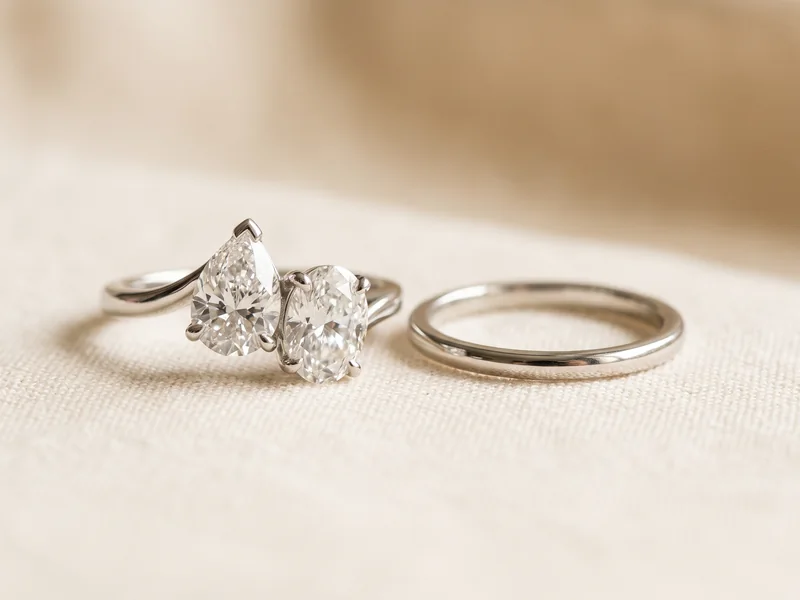 Wedding Bands & EternityBest Wedding Band for Pear Engagement RingsWedding Bands & EternityWedding Ring Buying Guide
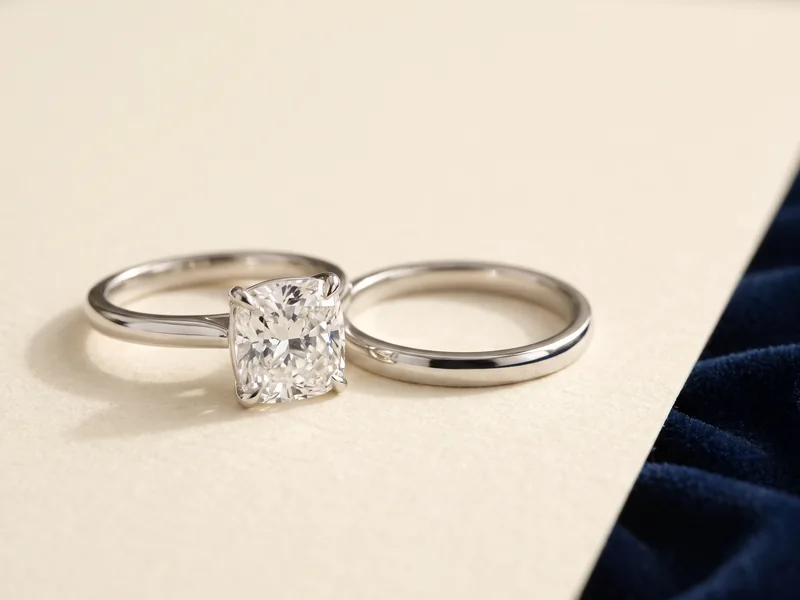 Wedding Bands & EternityWedding Ring vs Wedding Band
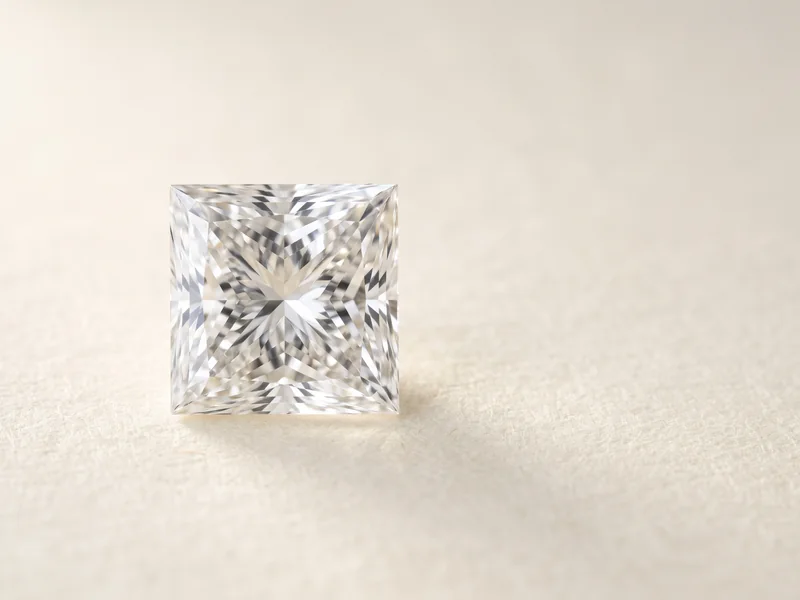 Wedding Bands & EternityBest Wedding Band for Princess Engagement Rings
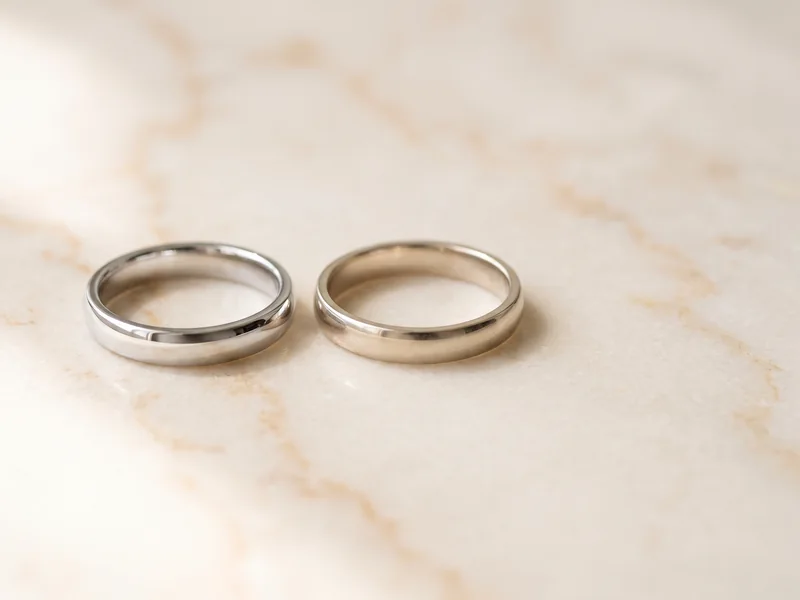 Wedding Bands & EternityMen’s Wedding Band Guide
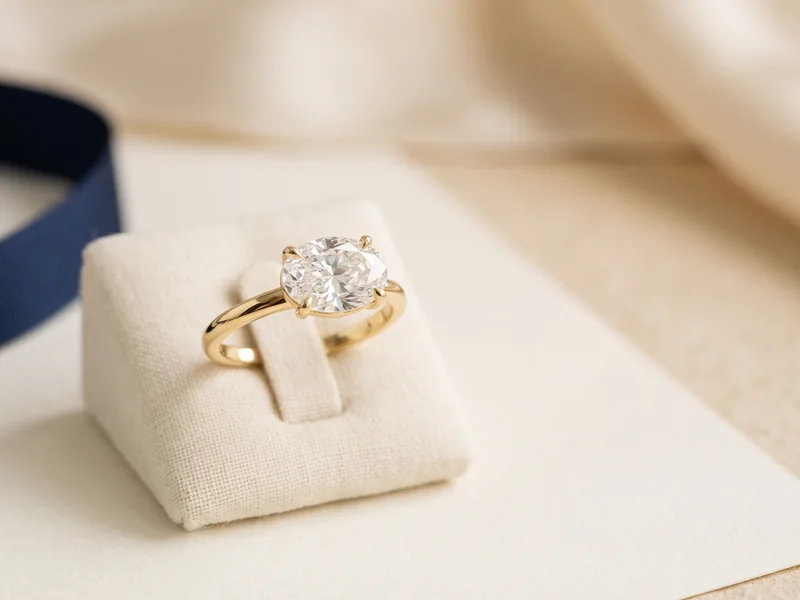 Wedding Bands & EternityBest Wedding Band for Oval Engagement Rings
Explore more
More guides on this topic
Education