
Gemstones
Ceylon Sapphire Guide: What Sri Lankan Origin Means for Colour, Value and Rings
A Ceylon sapphire label can add real money to the price of a stone, so it pays to know what the word promises and what it does not. Here is what Sri Lankan origin means, how it is proven and how it changes the way a sapphire looks.
 Reviewed by Raj Sood, Graduate Gemologist (GIA), AJP (GIA)Master jeweller and Graduate Gemologist (GIA) · reviewed 4 November 2026
Quick answer
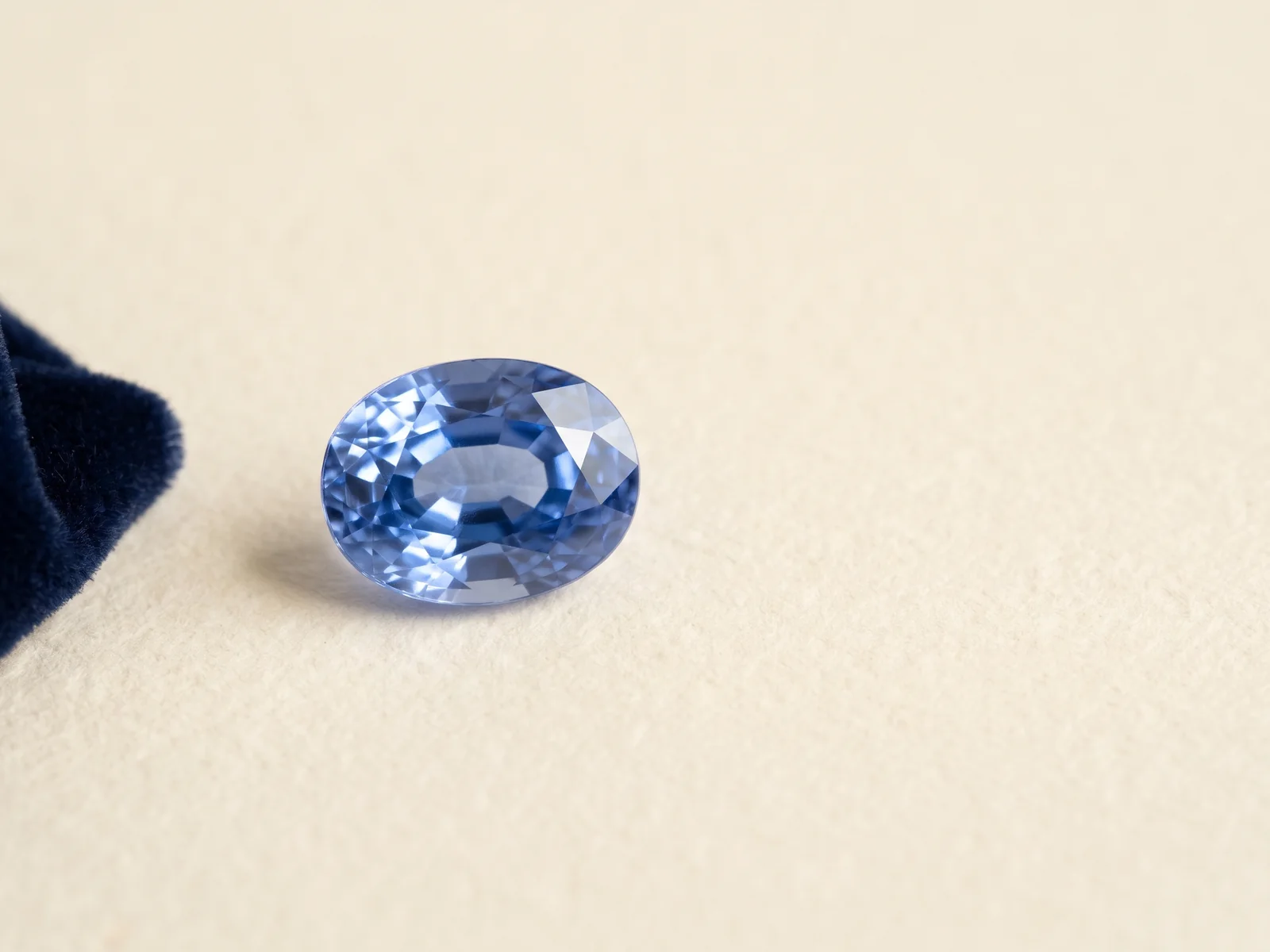
A Ceylon sapphire is a sapphire mined in Sri Lanka, which was called Ceylon until 1972. The name describes origin, not a grade. Ceylon blues are usually lighter, brighter cornflower to medium blue thanks to low iron, often heat-treated, and are identified by inclusions and trace elements on a lab origin report.
What is a Ceylon sapphire?
A Ceylon sapphire is a natural sapphire mined in Sri Lanka. The island was known as Ceylon under British rule and kept that name until it became the Republic of Sri Lanka in 1972. The gem trade simply never stopped using the old name, so you will see Ceylon sapphire and Sri Lankan sapphire used for exactly the same thing.
Like every sapphire, a Ceylon stone is corundum, a crystal of aluminium oxide (Al2O3). Pure corundum is colourless. Tiny traces of iron and titanium working together make it blue, chromium makes it pink, and iron on its own gives yellow. Our complete sapphire gemstone guide covers the mineral, its grading and its full colour range in more depth.
Sri Lanka has supplied gems for well over two thousand years. Most sapphires come from the wet south-west of the island, around Ratnapura (the name means city of gems), and from districts such as Elahera, Okkampitiya and Kataragama. Miners still dig pits by hand into a gem-bearing gravel called illam, then wash it in round baskets to separate the heavy stones. The same gravels produce spinel, chrysoberyl, garnet, zircon and moonstone, which is why the island matters so much in the wider world of coloured gemstones.
The key point: Ceylon is a geographic origin, not a quality grade. A Sri Lankan sapphire can be pale, cloudy or badly cut, and a sapphire from somewhere else can be finer. Any unfamiliar term in this guide is explained in our plain-English jewellery glossary.
What does Sri Lankan origin actually mean on a lab report?
No one can prove where a sapphire was mined just by looking at it. An origin statement is a laboratory opinion, built from several kinds of evidence and compared against reference collections of stones of known origin. Labs that issue origin opinions include Gübelin, SSEF, GRS, AGL and GIA.
- Inclusions: the tiny crystals, needles and fluid patterns inside the stone, viewed under a microscope. Each deposit tends to have its own typical mix.
- Trace elements: measured with instruments such as LA-ICP-MS or EDXRF. Iron, gallium, titanium and chromium levels differ between metamorphic and basaltic deposits.
- Spectroscopy: FTIR and UV-Vis readings show how the stone absorbs light, which also helps detect heat treatment.
A typical origin report states that the stone is natural corundum, describes its colour, records whether there are indications of heating, and gives an origin such as Sri Lanka (Ceylon). Some labs add trade colour terms like royal blue or cornflower blue when a stone meets their own criteria. If the evidence is unclear, the lab will say origin undetermined rather than guess.
The hardest separation is between Sri Lanka and Madagascar. Both produce sapphires in metamorphic rock (rock changed by heat and pressure deep in the crust), so their inclusions and chemistry can overlap. That is one reason origin reports are opinions, and why they are usually only worth ordering for larger or more valuable stones, roughly 1.5 carats and up or any stone sold as unheated.
What colour is a Ceylon blue sapphire?
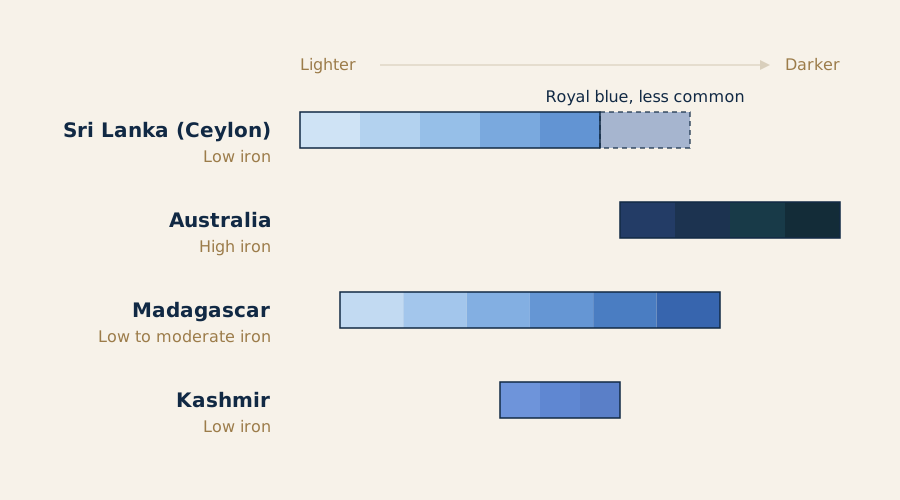
Sri Lankan sapphires formed in metamorphic rock with very little iron. Low iron means less of the dark, slightly green tone that iron adds, so Ceylon blues tend to be light to medium, bright and lively. They hold their sparkle well even in dim light. The classic description is cornflower blue, but the range runs from pale sky blue through to a medium-dark royal blue, which Sri Lanka produces less often.
| Colour | How it looks | Notes |
|---|---|---|
| Cornflower blue | Bright, medium blue with no grey | The signature Ceylon colour |
| Light or sky blue | Pale, airy blue | Common; check it does not look washed out |
| Royal blue | Deeper, saturated blue | Less common from Sri Lanka; priced higher |
| Padparadscha | Delicate pinkish orange to orangey pink | Sri Lanka is the classic source; the name comes from Sinhala for lotus flower |
| Yellow | Lemon to golden yellow | Sri Lanka is a major source; often heated |
| Pink and purple | Soft pink to violet | Pink from chromium; purples add iron and titanium |
| Star sapphire | A six-rayed star across a domed cabochon | Caused by dense needle-like inclusions (silk) |
Sri Lanka also produces violet to purple stones; our purple sapphire guide explains how those colours are graded. If you are drawn to warmer shades, read about orange sapphires and how they differ from padparadscha, because the line between the two is narrow and matters for price. Deep green tones are less typical of Sri Lanka and more common from basaltic deposits such as Australia's; see our page on green sapphires and where they come from.
Coloured sapphires are pleochroic, meaning they show slightly different colours along different directions in the crystal. In blue sapphire that is usually violet-blue one way and greenish blue the other, so a good cutter orients the stone to face up with the purer blue.
How does a Ceylon sapphire compare with Australian, Madagascar and Kashmir sapphires?
| Sri Lanka (Ceylon) | Australia | Madagascar | Kashmir | |
|---|---|---|---|---|
| Geology | Metamorphic | Basaltic (volcanic) | Mostly metamorphic | Metamorphic |
| Iron content | Low | High | Low to moderate | Low |
| Typical blue | Light to medium, bright | Dark, inky, sometimes greenish | Wide range, often similar to Ceylon | Velvety cornflower blue |
| Typical inclusions | Long fine silk, zircon crystals with halos, fingerprints | Strong straight colour zoning, fewer fine needles | Similar to Ceylon | Milky zones that soften the colour |
| Other colours | Padparadscha, yellow, pink, purple | Teal, green, yellow, parti-colour | Pink, orange, purple | Rarely other colours |
| Supply today | Steady | Small, mainly Queensland and NSW | Large since the late 1990s | Very rare, mostly old stones |
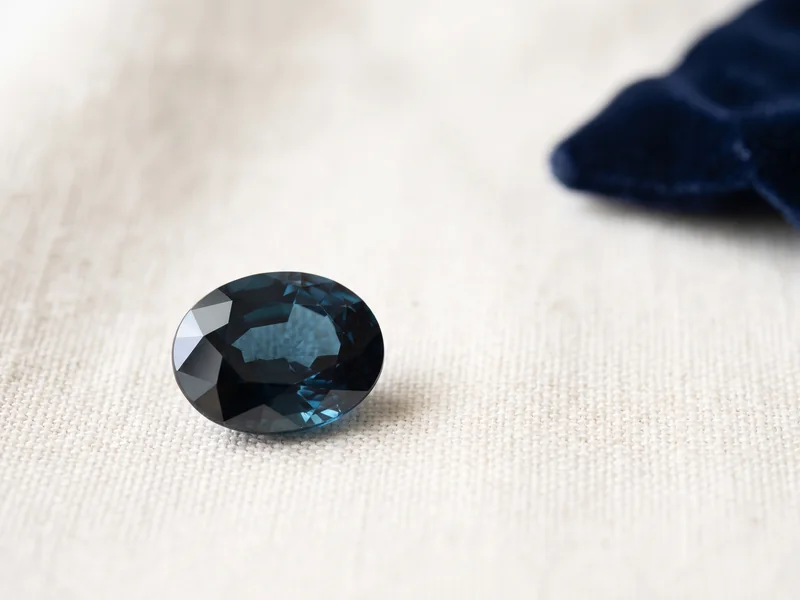
Australia is the useful comparison for local buyers. Our sapphires come mainly from the Anakie field in Central Queensland (around Rubyvale, Sapphire and Anakie) and the New England region of New South Wales (around Inverell and Glen Innes). They formed in iron-rich volcanic rock, so blues tend to be darker and more saturated, sometimes with a green or teal undertone. In the 1970s and 1980s Australia supplied a large share of the world's blue sapphire, but many stones were cut overseas and sold without any origin attached.
Today Australian stones are prized for their own character rather than as a darker version of Ceylon. Many people choose Australian sapphire engagement rings for the parti-colours and teals that Sri Lanka rarely produces. If you are torn between the two looks, our page on how teal sapphires compare with classic blues puts them side by side.
Related guideAustralian Sapphire Engagement RingsNeither origin is better in itself. A bright Ceylon blue suits someone who wants sparkle and a lighter, open colour; a deep Australian blue suits someone who wants richness and contrast. Judge the individual stone first and the origin second.
Not sure which one is right?
Send us the stones you are looking at and our gemologist will tell you which to choose and why.
How do gemmologists identify a Sri Lankan sapphire?
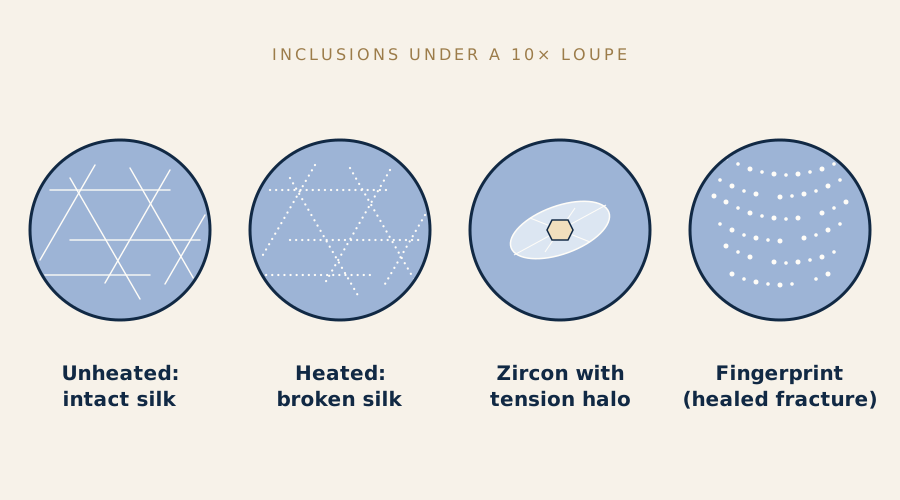
Standard tests confirm that a stone is sapphire: a refractive index of about 1.762–1.770, birefringence (the difference between its two refractive indices) of about 0.008–0.009 and a specific gravity near 4.00. Those numbers are the same for sapphire from anywhere, so they confirm the gem, not the mine. Origin clues come from the inside of the stone. Under a 10× loupe and a microscope, these are the features that point towards Sri Lanka:
- Long, fine silk: thin needles of rutile (titanium oxide), often long and hair-like, crossing in three directions at 60° to each other.
- Zircon crystals with halos: tiny included crystals surrounded by a disc-shaped stress crack, sometimes called a tension halo.
- Fingerprints: healed fractures that look like a fingerprint or lace pattern of fluid droplets.
- Negative crystals: small cavities shaped like corundum crystals, sometimes containing fluid or gas.
- Soft colour zoning: bands of colour that are usually gentler than the sharp, straight hexagonal zoning typical of basaltic sapphires.
The same examination separates natural from lab-created sapphire (also called synthetic sapphire). Flame-fusion lab-created stones often show curved growth lines and round gas bubbles, which natural corundum never has. Our glossary explains terms like silk, fingerprints and colour zoning if you want to read a report with confidence, and the guide to how sapphire is graded for colour and clarity shows how these features affect value.
Are Ceylon sapphires heat-treated, and does it matter?
Most Ceylon sapphires on the market have been heated. Heating is an old practice in Sri Lanka, and modern furnaces take corundum to roughly 1,600–1,800°C. Heat dissolves some of the rutile silk back into the crystal, where the titanium joins with iron to create blue. The result is a clearer, bluer stone, and the change is stable and permanent.
Much of Sri Lanka's blue supply comes from geuda: milky white or pale, cloudy corundum that was once of little value. From the 1970s and 1980s, cutters in Thailand and Sri Lanka learned to heat geuda into transparent blue sapphire, which changed the market. Heated stones are fully accepted in the trade as long as the treatment is disclosed.
Signs of heating that a lab looks for include silk broken into dotted lines, altered crystals and disc-shaped fractures around included minerals. A Ceylon sapphire with a report stating no indications of heating is much rarer and costs considerably more than a heated stone of similar look.
- Heat only: the standard treatment; accepted when disclosed.
- Beryllium diffusion: heating with beryllium to change colour, mostly in yellow, orange and padparadscha-like stones. It must be disclosed and greatly affects value.
- Glass filling: lead glass forced into fractures. Far more common in ruby, but possible in low-grade sapphire, and it lowers durability.
- Surface diffusion: colour added to a thin outer layer only; recutting can remove it.
Lab-created sapphire has the same chemistry, hardness and refractive index as natural sapphire, and it is a perfectly sound choice when it is clearly sold as lab-created. It simply has no geographic origin, so it can never be a Ceylon sapphire. Our overview of natural and lab-created gemstones compared explains the difference in more detail.
Is a Ceylon sapphire engagement ring durable enough for everyday wear?
Yes. Sapphire is 9 on the Mohs scale of hardness, so it resists scratching from dust and grit far better than most gems. It also has excellent toughness, meaning it resists chipping and breaking, because corundum has no true cleavage (it can only part along certain twinning planes). Origin makes no difference to durability: a Ceylon stone is exactly as hard as an Australian one.
| Gem | Mohs hardness | Toughness | Everyday ring? |
|---|---|---|---|
| Diamond | 10 | Good (has cleavage) | Yes |
| Sapphire, including Ceylon | 9 | Excellent | Yes |
| Ruby | 9 | Excellent | Yes |
| Spinel | 8 | Good | Yes, with some care |
| Aquamarine and morganite | 7.5–8 | Good | Yes, with some care |
| Emerald | 7.5–8 | Poor to fair | Only in a protective setting |
| Tanzanite | 6–6.5 | Fair | Better for pendants and occasional rings |
For the setting, think about colour as well as security. A light Ceylon blue picks up colour from the metal around it: white gold and platinum keep it cool and clear, while yellow gold can warm a pale stone towards teal. Four or six claws show the most of the stone, and a bezel protects the girdle (the outer edge) if you work with your hands. You can see the trade-offs in our comparison of diamond vs sapphire for an everyday ring, and browse sapphire engagement rings made in Melbourne for setting ideas.
How much does a Ceylon sapphire cost in Australia?
Colour is the biggest driver of price, followed by clarity, cut, carat weight, treatment and, finally, a documented origin. Prices also jump at the round sizes of 1, 2, 3 and 5 carats. The ranges below are broad guides for well-cut, eye-clean stones only; the market moves and every stone is individual.
| Stone (blue unless stated) | Approximate price range (AUD) |
|---|---|
| 1 ct heated, light to medium blue | about $800–$2,500 |
| 1 ct heated, fine cornflower blue | about $1,500–$4,000 |
| 1 ct unheated, fine blue, with origin report | about $3,000–$8,000 or more |
| 2 ct heated, fine blue | about $4,000–$12,000 |
| 1 ct padparadscha, with report | about $4,000–$15,000 |
| 1 ct lab-created blue sapphire | about $50–$400 |
A Ceylon sapphire often costs more than an Australian sapphire of similar size, mainly because many buyers prefer the lighter, brighter blue, though fine Australian stones hold their own. If you are deciding between gem types rather than origins, see how sapphire prices stack up against diamond. For local stones, compare rings set with sapphires from Queensland and New England.
Buy a sapphire because you love it on the hand. Gem prices can rise and fall, and resale values are usually well below retail, whatever the origin.
Browse natural gemstones, including sapphires
How do you choose a Ceylon sapphire? Step by step
Most Ceylon sapphires are cut as ovals and cushions, because those outlines keep the most weight from the rough crystal. The proportion and bow-tie checks in our guide to oval proportions and bow-ties apply to an oval sapphire too, and our overview of the main cut shapes shows the other outlines you may be offered. Whether you are choosing a loose stone or a ring design built around a Ceylon stone, these checks work in order:
- Pick your colour first. Decide whether you want light, cornflower or deeper blue before origin enters the picture.
- Read the report. It should confirm natural corundum and state whether there are indications of heating or any other treatment.
- Ask for an origin report where it matters. For stones over about 1.5 carats or any stone sold as unheated Ceylon, look for an origin opinion from a recognised lab.
- View it in different light. Check daylight, warm indoor light and LED. Watch for windowing, a pale see-through patch in the centre caused by a shallow pavilion.
- Look inside with a loupe. Fine silk is normal; avoid fractures that reach the surface, especially near the girdle.
- Compare face-up size. Sapphire is denser than diamond, so a 1 ct sapphire looks smaller than a 1 ct diamond. Compare millimetre measurements, not carat weight.
- Match the metal to the colour. White metals keep light Ceylon blues crisp; try yellow gold beside the stone before deciding.
Outline affects face-up size as much as weight does: elongated shapes spread wider for the same carat. Our comparison of which shapes face up largest for their weight was written for diamonds, but the pattern holds for sapphire, allowing for its higher density.
Free consultation
Talk to a gemologist
Compare stones in person or online with Raj Sood, Graduate Gemologist (GIA), AJP (GIA).
Book a consultationShop this shape
FAQ
Common questions
Is a Ceylon sapphire the same as a Sri Lankan sapphire?
Yes. Ceylon was the island's name until 1972, and the gem trade still uses it. Both terms mean a sapphire mined in Sri Lanka.
Are Ceylon sapphires better than Australian sapphires?
Not better, just different. Ceylon sapphires are usually lighter and brighter because of low iron, while Australian sapphires tend to be darker, richer and sometimes teal. Judge each stone on its own colour and clarity.
Are all Ceylon sapphires heat-treated?
Most are, and heating is accepted when disclosed. Unheated Ceylon sapphires exist but are rarer and cost considerably more, so they should come with a lab report confirming no indications of heating.
Can a jeweller tell a Ceylon sapphire just by looking at it?
A gemmologist can see inclusions that suggest Sri Lanka, such as long fine silk and zircon halos, but cannot prove origin by eye. A firm origin opinion needs a laboratory using trace element and spectroscopy tests.
What colour is a Ceylon sapphire?
Ceylon blue sapphires are typically light to medium cornflower blue, bright and lively. Sri Lanka also produces yellow, pink, purple, star sapphires and padparadscha.
Is a Ceylon sapphire good for an engagement ring?
Yes. At 9 on the Mohs scale with excellent toughness, sapphire is one of the most practical coloured gems for daily wear. A white metal setting keeps a light Ceylon blue looking clear.
Was Princess Diana's engagement ring a Ceylon sapphire?
Her ring is widely reported to hold an oval Ceylon sapphire of about 12 carats, surrounded by diamonds. It helped make Sri Lankan sapphire one of the most recognised gem origins.
Terms in this guide

Ask a gemologist
Not sure which diamond to choose?
Raj Sood is a Graduate Gemologist (GIA) and master jeweller. Bring the stones you are considering, or send the reports, and he will tell you honestly which one is better and why.
Keep learning
Related guides
 GemstonesSapphire Gemstones
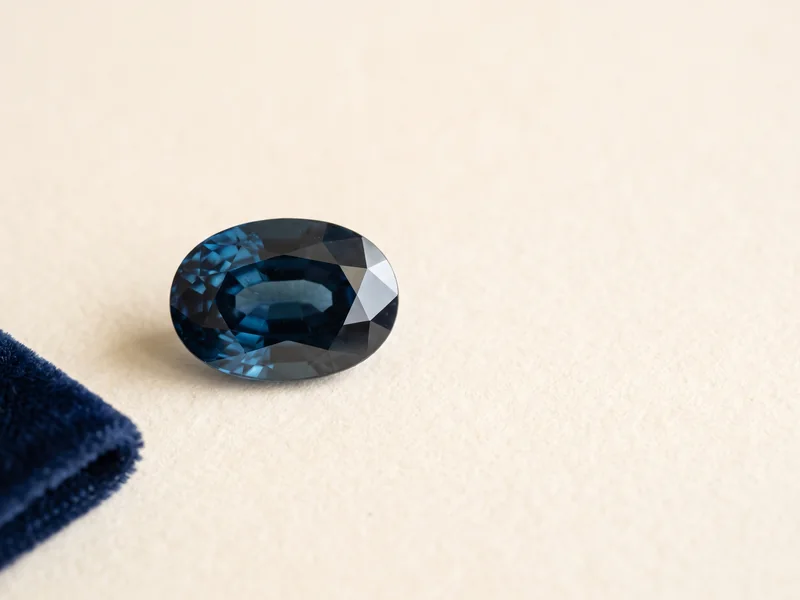 GemstonesAustralian Sapphire Engagement Rings
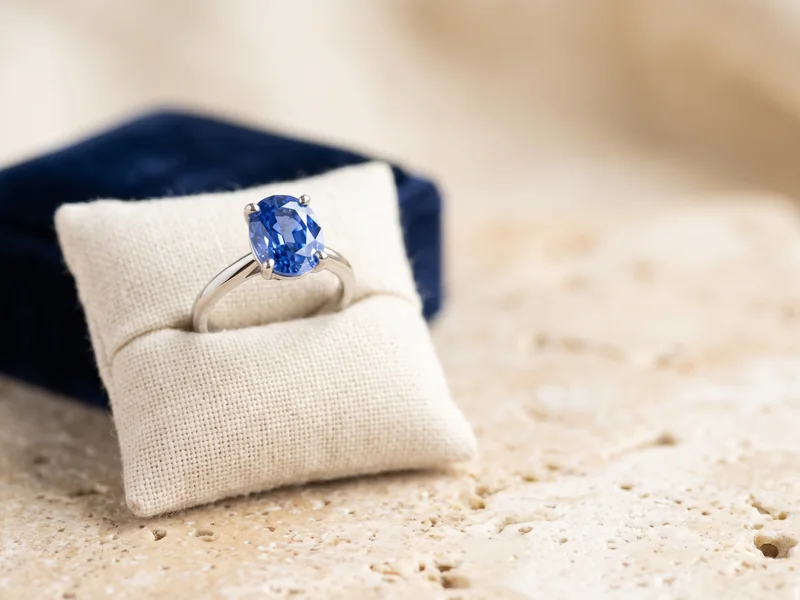 GemstonesSapphire Engagement Rings in Melbourne
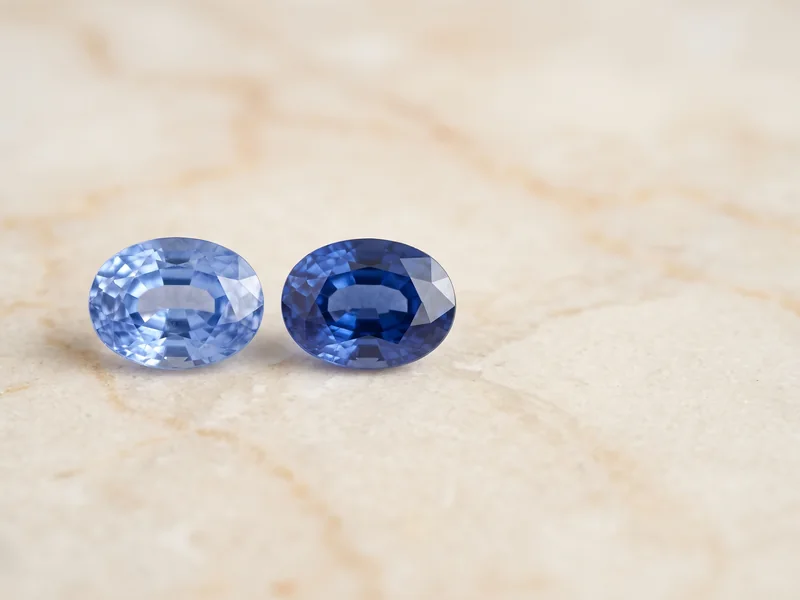 GemstonesTeal Sapphire vs Blue Sapphire Engagement RingsGemstonesGemstones | Coloured Gemstones, Birthstones and Custom Jewellery
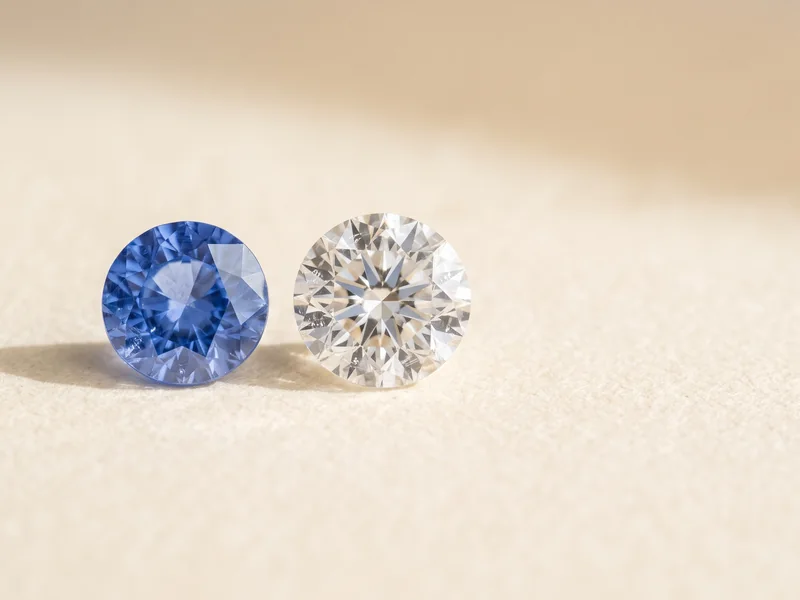 GemstonesDiamond vs Sapphire Engagement Rings
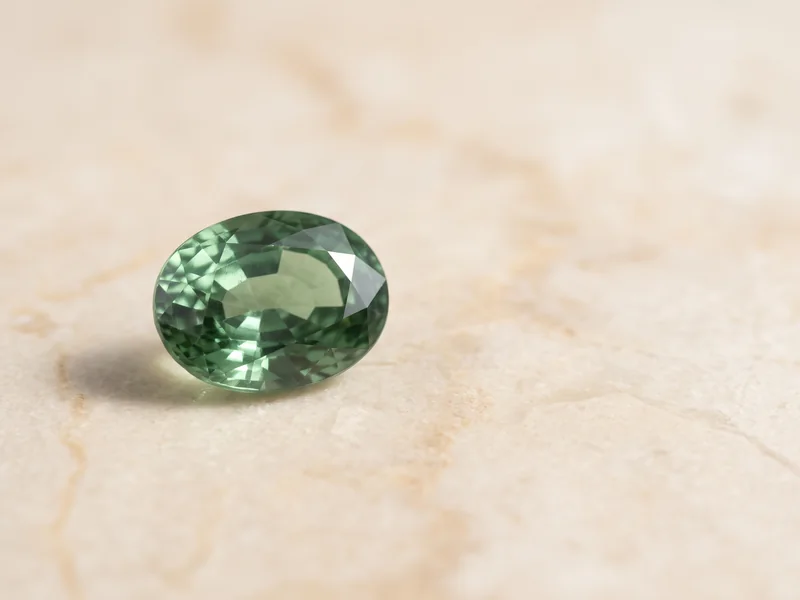 GemstonesGreen Sapphire
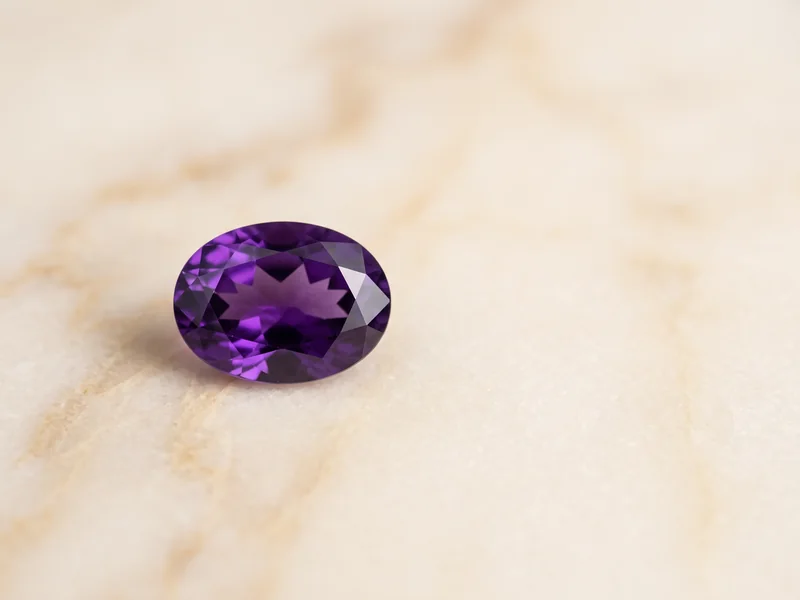 GemstonesPurple Sapphire
Explore more
More guides on this topic
Education