
Gemstones
Green Sapphire Guide: Colour, Origins, Treatments and Value
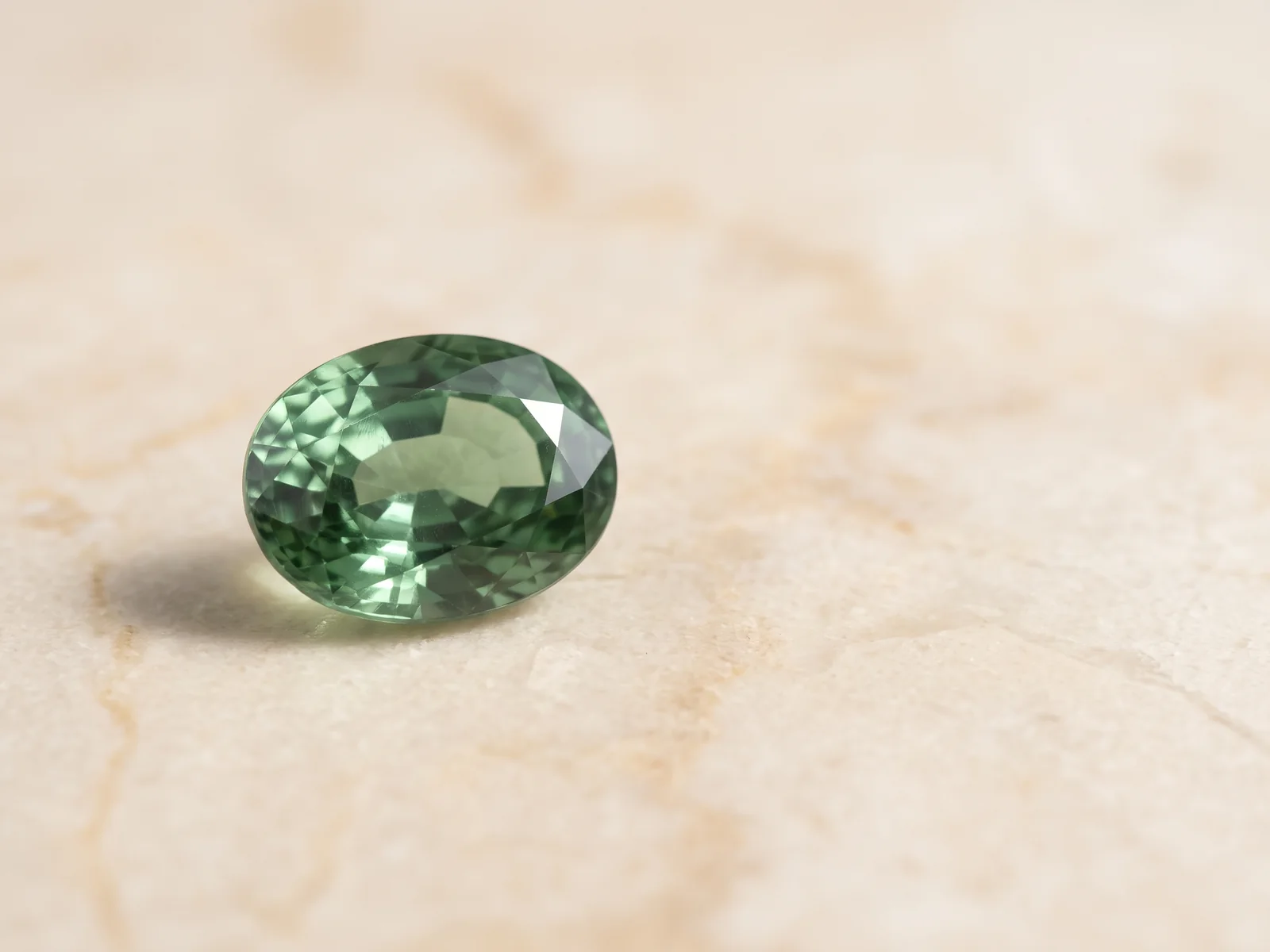
A green sapphire gives you a real green in a stone tough enough for daily wear. The colour range is wide, though, and the price gap between an olive stone and a bright forest green is large. Here is what a gemmologist checks, from colour and treatment to origin and setting.
 Reviewed by Raj Sood, Graduate Gemologist (GIA), AJP (GIA)Master jeweller and Graduate Gemologist (GIA) · reviewed 4 November 2026
Quick answer
A green sapphire is corundum coloured green mainly by iron. It rates 9 on the Mohs scale with excellent toughness, so it suits everyday rings far better than emerald or peridot. The most valued stones are a medium, bright, pure green that is eye-clean and well cut; olive, very dark or heavily included stones cost less.
What is a green sapphire?
A green sapphire is corundum, the same mineral as blue sapphire and ruby. Corundum is crystallised aluminium oxide, Al2O3. In its pure form it is colourless, which is what is sold as colourless white sapphire. Tiny amounts of other elements give it colour. Red corundum is called ruby; every other colour is sapphire. So a green sapphire is simply sapphire that happens to be green. Our complete sapphire gemstone guide covers the whole family.
The green almost always comes from iron. Iron on its own (as Fe3+) tends to make sapphire yellow. Iron paired with titanium creates blue. When both are present, the yellow and blue mix and your eye reads green. Under magnification you can often see this directly as fine bands of blue and yellow running through the crystal, called colour zoning. The balance between those two colours decides whether a stone looks yellow-green, pure green or blue-green.
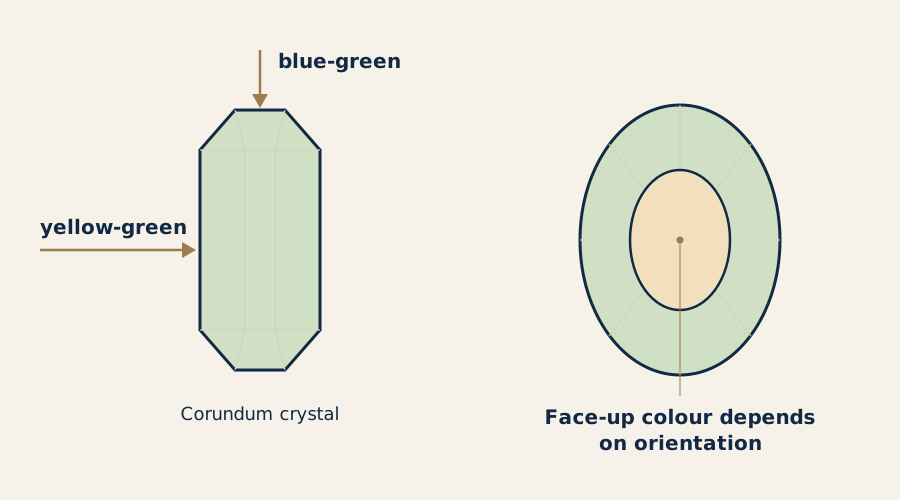
The physical properties are the same as any sapphire: 9 on the Mohs scale, a refractive index (how strongly the stone bends light) of about 1.762–1.770, a specific gravity of about 4.00 and a trigonal crystal structure. Sapphire is doubly refractive, meaning light splits into two rays inside it, and pleochroic, meaning it shows different colours when viewed from different directions. In green sapphire that is usually a blue-green in one direction and a yellow-green in another. If any of these terms are new, our plain-English jewellery glossary explains them.
Green sits alongside the other fancy sapphire colours, such as purple sapphire, orange sapphire and the pink-orange padparadscha sapphire, classically from Sri Lanka. To compare it with other coloured stones and birthstones, start with our guides to coloured gemstones and birthstones.
What colours does green sapphire come in?
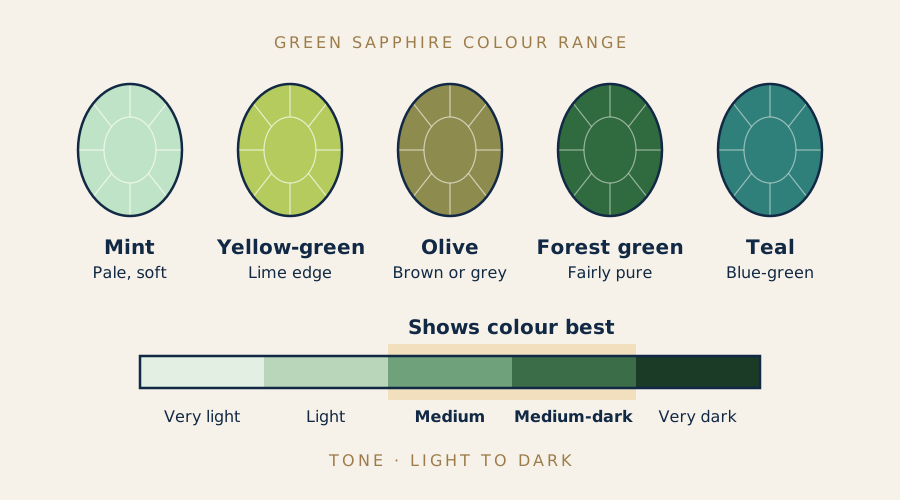
Green sapphire is less a single colour than a range. Gemmologists describe colour by hue (the basic colour), tone (how light or dark) and saturation (how strong or pure, as opposed to greyish or brownish). Here is how the main trade colours compare:
| Colour | What it looks like | Notes |
|---|---|---|
| Mint / light green | Pale, soft, fresh green | Lower iron; bright, but light tones usually cost less than medium tones |
| Yellow-green | Green with a lime or chartreuse edge | More yellow-causing iron; lively in yellow gold |
| Olive / khaki | Green muted with brown or grey | Very common in basalt-related stones; usually the most affordable |
| Forest green | Medium to medium-dark, fairly pure green | Most sought-after when bright rather than inky |
| Blue-green (teal) | Roughly even blue and green | Often sold separately as teal sapphire |
Where green ends and teal begins is a judgement call, and dealers draw the line differently. If you are drawn to the bluer end, our guide to teal sapphire engagement rings covers those stones, and the teal versus blue sapphire comparison shows how they differ from classic blue. Some stones show two or more distinct colours in separate zones, often green with yellow or blue; these are sold as parti sapphires with two or more colours. A stone whose colour shifts between daylight and warm indoor light is a different effect again, explained in our colour-change sapphire guide.
Tone matters as much as hue. Many green sapphires, especially from iron-rich sources, are dark. A stone that looks a rich forest green in a dealer's bright lamp can look close to black under a restaurant light. As a rough guide, medium to medium-dark tones show the colour best. Very light stones look bright but washed out, and very dark ones lose their green indoors. Saturation is where most natural green sapphires fall short: a vivid, clean green with no grey or brown is genuinely uncommon and priced accordingly.
Is a green sapphire engagement ring durable enough for everyday wear?
Yes. Two properties decide whether a gem survives daily wear on a hand. Hardness is resistance to scratching, measured on the Mohs scale. Toughness is resistance to chipping and breaking. Sapphire is 9 for hardness, second only to diamond among common gems, and it has no cleavage (a natural plane along which a crystal splits easily), so its toughness is rated excellent. That combination is why a green sapphire engagement ring is a practical choice in a way an emerald ring often is not.
| Green gem | Mohs hardness | Toughness | Everyday ring? |
|---|---|---|---|
| Green sapphire | 9 | Excellent (no cleavage) | Yes |
| Green diamond | 10 | Good (cleaves in four directions) | Yes |
| Tsavorite garnet | 7–7.5 | Good | Yes, with a protective setting |
| Emerald | 7.5–8 | Poor to good; usually included and oiled | With care; protective setting advised |
| Green tourmaline | 7–7.5 | Fair | Occasional wear |
| Peridot | 6.5–7 | Fair | Occasional wear or a bezel setting |
| Chrome diopside | 5–6 | Fair (has cleavage) | Earrings and pendants |
The one caveat is parting: some sapphires have planes of weakness caused by twinning or stress during growth, and a hard knock on that plane can split the stone. It is uncommon, and a gemmologist can often see the twinning lines under magnification. Sapphire is also stable to light and normal heat, so its colour will not fade with wear.
If you are weighing up the classic green gem, our emerald and sapphire durability comparison goes through the trade-offs in detail. Peridot is a softer, more yellow green with its own character; see what makes peridot's green different. For the hardest option, natural green diamonds are extremely rare and far more expensive, while lab-grown green diamonds are also available.
Where do green sapphires come from, and are Australian ones good?
Green sapphires are found wherever sapphires form in iron-rich conditions. The main sources include:
- Australia: the Central Queensland gemfields around Anakie, Rubyvale and Sapphire, and the New England district of New South Wales around Inverell and Glen Innes.
- Thailand and Cambodia: Chanthaburi and Kanchanaburi in Thailand, and Pailin in Cambodia, all basalt-related deposits similar to Australia's.
- Africa: Nigeria, Madagascar, Tanzania (including the Umba Valley) and Kenya.
- Sri Lanka: lighter, brighter greens; see what Ceylon origin means for a sapphire.
- United States: Montana, where the river gravels and Rock Creek produce many greens and teals.
Australian green sapphire comes from sapphires carried to the surface in basalt volcanic rock. These stones are naturally high in iron, which is why Australia is known for deep blues, greens, yellows and parti colours. For several decades from the 1970s, Australia was one of the world's larger sapphire producers, and much of the rough was sent to Thailand to be cut and treated. Today mining is smaller scale, but Australian greens remain widely available.
Are they good? The best Australian greens are a rich, saturated forest green with good clarity. The challenge is tone: many are dark, and a skilled cutter will cut them a little shallower to let more light through. Our Australian sapphire ring guide covers the local fields and stones in more depth. Unlike blue sapphire, where origins such as Kashmir carry a large premium, origin usually adds little to the price of a green sapphire. Colour, clarity and cut matter far more.
Not sure which one is right?
Send us the stones you are looking at and our gemologist will tell you which to choose and why.
Are green sapphires heated or treated?
Most sapphires on the market have been heated, and green is no exception, although green is treated less consistently than blue. Heat can dissolve fine rutile needles (called silk) to improve clarity and can shift the balance of blue and yellow. Many green stones are sold unheated, partly because heat does less to improve them than it does for blue. Either way, the treatment should be disclosed. These are the treatments you may meet:
- Heat only: the most common and stable treatment. A lab report will say "indications of heating" or "no indications of heating".
- Beryllium diffusion: heating with beryllium, used mainly to create yellow and orange. It can affect green and yellow-green stones and should always be stated on a report.
- Surface diffusion: colour added only to a thin outer layer. Re-polishing or a chip can remove it. Uncommon in green.
- Fracture or glass filling: filling surface-reaching cracks to improve appearance. Much more common in ruby, rare in green sapphire, and the least durable treatment.
Unheated stones of the same colour and clarity cost more than heated ones, because they are rarer. A heat-only stone is still a natural sapphire with the same hardness and durability, so for most people it is a sensible choice. What matters is knowing which you are buying.
Lab-created green sapphire (also called synthetic green sapphire) is real corundum grown in a laboratory, with the same hardness and refractive index as natural. Most is made by flame fusion, a method in use since the early 1900s, which keeps it very affordable; flux-grown and hydrothermal stones also exist. A lab-created stone must always be sold as lab-created or synthetic, never simply as green sapphire.
How does a gemmologist identify a green sapphire?
Several green gems look alike, and glass and other synthetics imitate them all. When Raj Sood, our Graduate Gemologist (GIA), examines a green stone, these are the checks that separate green sapphire from its look-alikes:
- Refractive index: about 1.762–1.770, with birefringence of 0.008–0.010. Green tourmaline reads about 1.62–1.64, peridot 1.65–1.69 and emerald 1.57–1.58.
- Single or double refraction: sapphire is doubly refractive; tsavorite garnet and glass are singly refractive.
- Pleochroism: a dichroscope shows two colours, typically blue-green and yellow-green.
- Spectroscope: iron-rich sapphires, Australian ones especially, show absorption lines in the blue around 450 nm.
- Inclusions: natural stones show straight, angular colour zoning, silk and fingerprint-like healed fractures. Flame-fusion lab-created stones show curved growth lines and round gas bubbles.
Treatment identification is harder and usually needs laboratory equipment. For a stone where heating or origin affects the price significantly, an independent report from a lab such as GIA, SSEF, Gübelin or AGL is worth having.
How much does green sapphire cost in Australia?
Green sapphire costs considerably less than a fine blue sapphire or a padparadscha of the same size, which is part of its appeal. Within green, these factors move the price, roughly in order:
- Colour: a bright, pure, medium-toned green costs several times more than an olive or very dark stone.
- Clarity: eye-clean stones (no inclusions visible without magnification) cost more; some silk is normal and can soften the look.
- Cut: a well-proportioned stone with no window (a washed-out, see-through patch in the centre) shows more colour. Many coloured stones are native-cut to save weight, which can leave windows.
- Size: price per carat rises with size, especially above 2 carats in fine colour.
- Treatment: unheated commands a premium over heated.
- Natural or lab-created: lab-created green sapphire costs a small fraction of natural.
| Type and quality | Approximate price range (AUD per carat) |
|---|---|
| Lab-created green sapphire | about $30–$150 |
| Natural, commercial (olive or dark, some inclusions), 0.5–1 ct | about $150–$500 |
| Natural, good (medium green, eye-clean), 1–2 ct | about $500–$1,500 |
| Natural, fine (bright, well cut, often unheated), 2 ct+ | about $1,500–$4,000 or more |
These are broad ranges only; prices vary with the individual stone and the market. A green sapphire is also a common way to get a coloured centre stone for much less than a diamond of similar size; our diamond versus sapphire ring comparison sets out the cost, sparkle and durability differences.
Browse natural gemstones, including sapphires
What is the best setting and metal for a green sapphire ring?
Because sapphire is hard and tough, almost any setting works. The choice is more about colour and style than protection:
- Claws: four or six claws let the most light into the stone, which helps darker greens stay bright.
- Bezel: a rim of metal is very secure and modern, but it blocks some light, so it suits lighter or brighter greens better than dark ones.
- Halo: diamonds or white sapphires around the centre add sparkle and can make a dark green look livelier by contrast.
- Three-stone: green sapphire flanked by diamonds is a popular design, and the hardness of both means the ring wears evenly.
Metal changes the colour you see. Yellow gold warms yellow-green and olive stones; white gold and platinum keep blue-greens and mint greens cool and crisp; rose gold softens olive and khaki tones. Shapes that suit green include ovals, cushions and emerald cuts, and shallower cuts help dark Australian stones.
For design ideas across every sapphire colour, see our sapphire engagement ring designs made in Melbourne.
How do you clean and care for green sapphire jewellery?
Green sapphire is one of the easiest coloured gems to look after:
- Everyday cleaning: warm water, a drop of mild dishwashing liquid and a soft toothbrush, then rinse and dry with a lint-free cloth.
- Ultrasonic and steam cleaners: generally safe for untreated and heat-only stones without large fractures. Avoid them for fracture-filled, glass-filled or surface-diffused stones.
- Storage: keep it apart from softer gems such as emerald, opal and pearl, which sapphire can scratch, and from diamonds, which can scratch sapphire.
- Checks: have the claws checked by a jeweller every 6–12 months, since a worn claw is the most common reason any stone is lost.
- Chemicals: chlorine and harsh cleaners do not harm sapphire itself but can damage gold alloys over time, so take the ring off for pools and cleaning.
How do you choose a green sapphire? Step by step
- Confirm what it is. Check that the paperwork says natural or lab-created, and whether any treatment is disclosed.
- Pick your green. Decide where on the range you want to sit: mint, yellow-green, forest green or blue-green teal.
- Judge tone in two lights. View the stone in daylight and under warm indoor light; it should still read green, not black.
- Look for a window. Tilt the stone and check the centre does not go pale or see-through.
- Check clarity by eye. Aim for eye-clean at normal viewing distance; fine silk is acceptable.
- Match the metal and setting. Choose claws for darker stones and a metal colour that flatters the hue.
Free consultation
Talk to a gemologist
Compare stones in person or online with Raj Sood, Graduate Gemologist (GIA), AJP (GIA).
Book a consultationShop this shape
FAQ
Common questions
Is green sapphire rare?
Green sapphire in general is not rare, especially in olive and dark tones from basalt sources such as Australia and Thailand. A bright, pure, medium-toned green that is eye-clean and unheated is uncommon, and is priced accordingly.
Is green sapphire better than emerald for an engagement ring?
For durability, yes. Sapphire is 9 on the Mohs scale with excellent toughness, while emerald is 7.5–8 and usually contains fractures that make it prone to chipping. Emerald has a distinct bluish-green colour that some people prefer, so it comes down to colour versus practicality.
Are Australian green sapphires good quality?
They can be. Australian sapphires are iron-rich, so the greens are often deep and saturated; the best are a rich forest green. Many are dark, so look for a stone that still shows green indoors.
How much is a 1 carat green sapphire?
As a rough guide, a natural 1 carat green sapphire might cost about AUD $150–$1,500, depending mostly on colour, clarity and treatment. Lab-created green sapphire costs much less.
Is a lab-created green sapphire a real sapphire?
Yes. It is real corundum with the same hardness and optical properties, but grown in a laboratory rather than formed in the earth. It must always be sold as lab-created or synthetic.
Does green sapphire change colour?
Green sapphire does not fade or change permanently. It can look slightly different from different angles because of pleochroism, and darker stones look darker under warm indoor light.
Terms in this guide

Ask a gemologist
Not sure which diamond to choose?
Raj Sood is a Graduate Gemologist (GIA) and master jeweller. Bring the stones you are considering, or send the reports, and he will tell you honestly which one is better and why.
Keep learning
Related guides
 GemstonesAustralian Sapphire Engagement Rings
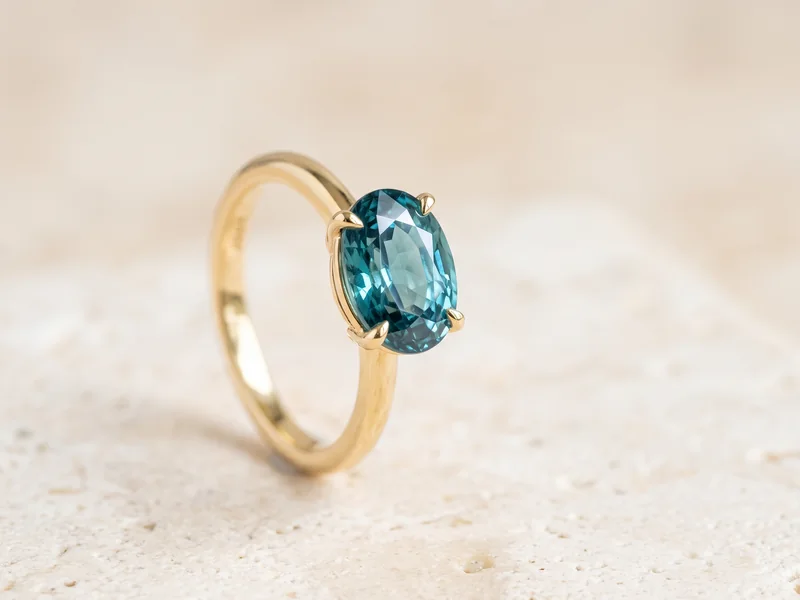 GemstonesTeal Sapphire Engagement Rings
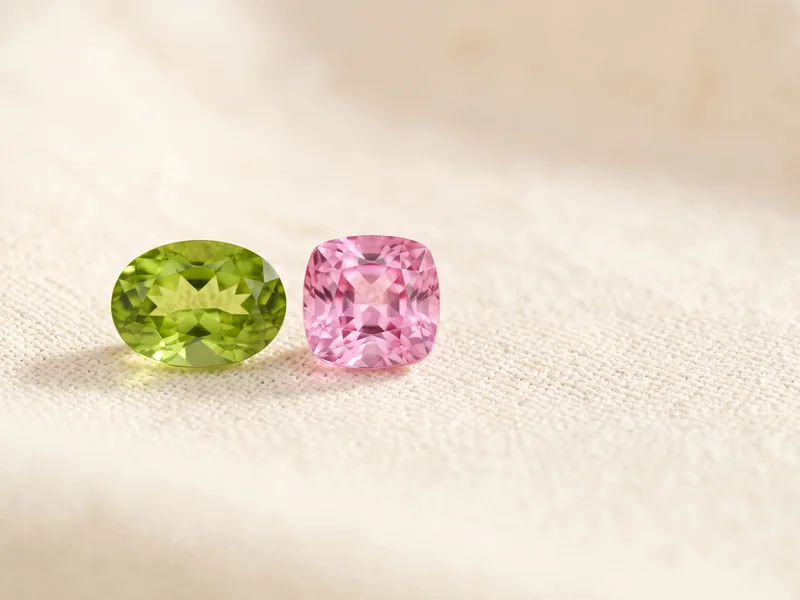 GemstonesEmerald vs Sapphire Engagement Rings
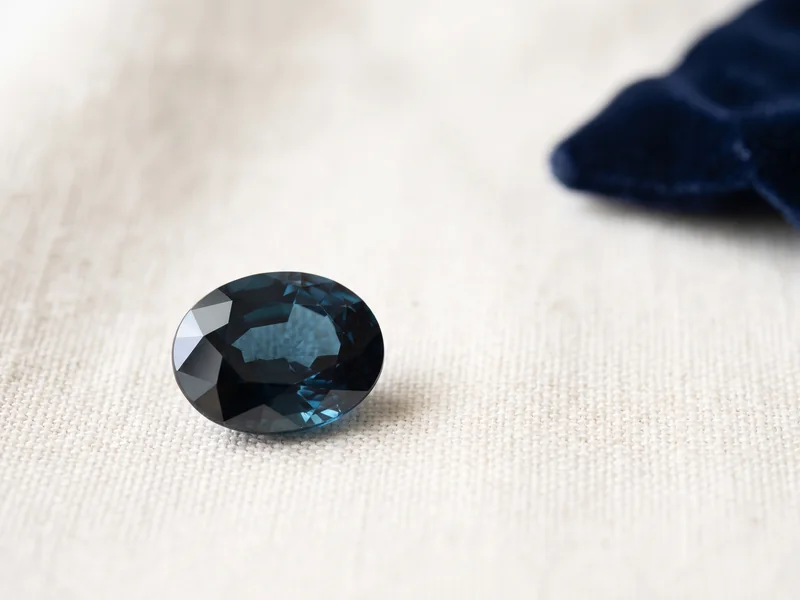 GemstonesSapphire GemstonesGemstonesGemstones | Coloured Gemstones, Birthstones and Custom Jewellery
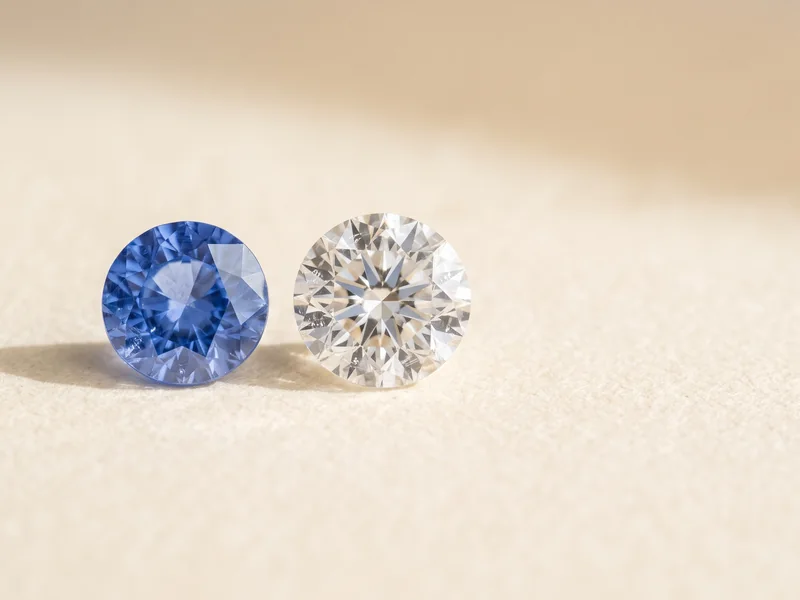 GemstonesDiamond vs Sapphire Engagement Rings
 GemstonesSapphire Engagement Rings in Melbourne
 GemstonesPurple Sapphire
Explore more
More guides on this topic
Education