
GemTrove
Teal Sapphire vs Blue Sapphire Engagement Rings
Compare teal sapphire vs blue sapphire engagement rings, including colour mood, Australian sapphire appeal, metals, settings, daily wear and GemTrove sapphire guidance.
Quick Answer
Blue sapphire engagement rings are usually more classic, traditional and formal, while teal sapphire engagement rings feel more modern, earthy and individual. Blue sapphire is ideal if you want timeless elegance. Teal sapphire is ideal if you want a less traditional coloured gemstone ring, especially with Australian sapphire character and custom design.
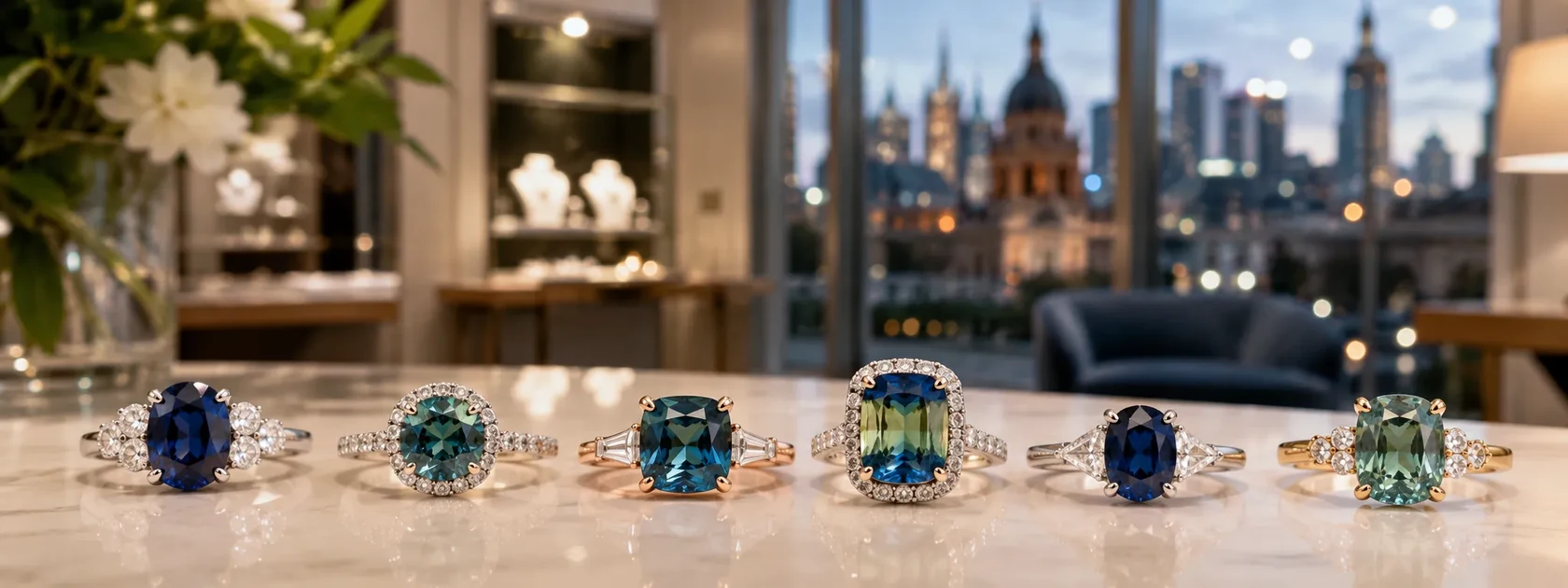
Teal Sapphire vs Blue Sapphire Engagement Rings Teal and blue sapphires are both beautiful choices for engagement rings, but they create very different moods. Blue sapphire feels classic and traditional, while teal sapphire feels more modern, earthy and distinctive.
Book a sapphire consultation
Explore custom sapphire rings
Blue sapphire
Classic, elegant, traditional and timeless
Teal sapphire
Modern, earthy, unique and non-traditional
Australian sapphire appeal
Australian sapphires are admired for blue, teal and parti colours
Gemologist-led guidance
Compare colour, durability, treatment and setting suitability Teal sapphire feels modern and distinctive, while blue sapphire gives a more classic engagement ring look.
Teal vs Blue Sapphire at a Glance
Blue sapphire usually gives a more classic and traditional engagement ring look. Teal sapphire blends blue and green tones for a more modern and distinctive feel.
Australian sapphires are often admired for blue, teal, green and parti colour combinations. Blue sapphire often suits white gold, platinum, yellow gold and vintage-inspired settings.
Teal sapphire often suits yellow gold, rose gold, nature-inspired and one-of-a-kind custom designs. Both can be suitable for daily wear when the sapphire and setting are chosen carefully.
What Is the Main Colour Difference?
The main colour difference is that blue sapphire is dominated by blue, while teal sapphire shows a mix of blue and green. A blue sapphire may look royal, deep, bright or velvety depending on tone and saturation. A teal sapphire may lean blue-green, green-blue, grey-teal or deeper ocean-toned depending on the stone.
Neither colour is automatically better. The right choice depends on the wearer’s style, preferred metal colour, desired mood and whether the ring should feel traditional or more individual.
Feature
Blue sapphire
Teal sapphire
Colour impression Classic blue, from deep navy to vivid royal blue Blue-green, green-blue or ocean- Style mood Traditional, formal, timeless and elegant Modern, earthy, distinctive and Common design direction Halo, solitaire, three-stone and vintage-inspired rings Custom, nature-inspired, east-w kind designs Best buyer fit Someone who wants a refined coloured gemstone with classic appeal Someone who wants colour, ind more unusual sapphire look
The Australian Sapphire Connection
Australian sapphires are often associated with deep blue, teal, green and parti colour combinations. This makes them especially relevant when comparing teal sapphire and blue sapphire engagement rings. Many Australian sapphires have a natural, earthy colour character that suits custom design.
Blue Australian sapphires can feel classic and grounded, while teal Australian sapphires often feel more contemporary and unusual. Parti sapphires can sit between both worlds, showing blue, green and yellow colour zones in the same stone.
Australian blue sapphire
Often chosen for a deeper, more traditional engagement ring look with strong colour presence.
Australian teal sapphire
Often chosen for a distinctive blue-green look that feels natural, modern and individual.
Australian parti sapphire
Often chosen for visible colour zoning and a one-of-a-kind custom engagement ring design. For more detail, read GemTrove’s guides to Australian sapphire engagement rings, teal sapphire engagement rings and parti sapphire engagement rings.
Which Looks More Modern?
Teal sapphire usually looks more modern because its blue-green colour is less expected than traditional blue. It suits customers who want a coloured gemstone engagement ring that still feels refined but not overly conventional.
Teal sapphire can work especially well in yellow gold, rose gold, bezel settings, east-west layouts, asymmetric details and nature-inspired designs. It is also a strong choice for customers who like Australian sapphire character and want a custom ring with a less standard colour story.
Teal sapphire often suits
Modern custom engagement rings Nature-inspired settings East-west sapphire rings Warm yellow or rose gold One-of-a-kind gemstone designs
Choose teal if you want
A less traditional engagement ring Blue-green colour with personality An Australian sapphire feel A ring that feels individual but still elegant A modern alternative to classic blue sapphire
Which Looks More Classic?
Blue sapphire usually looks more classic because it has a long history in fine jewellery and engagement rings. It feels formal, elegant and timeless, especially when paired with diamonds in a halo, three-stone or vintage-inspired setting.
A deep blue sapphire in platinum, white gold or yellow gold can feel traditional and refined. It is a strong option for someone who wants colour but still wants a ring that reads as classic engagement jewellery.
Blue sapphire often suits
Classic solitaire rings Diamond halo settings Three-stone engagement rings Vintage-inspired details White gold, platinum and yellow gold
Choose blue if you want
A traditional coloured gemstone ring A formal, elegant look A timeless sapphire centre stone A design that pairs well with diamonds A classic alternative to a diamond centre stone
Skin Tone and Metal Colour Guidance
Skin tone and metal colour can change how a sapphire appears on the hand. The same teal or blue sapphire may look cooler, warmer, deeper or brighter depending on whether it is set in yellow gold, rose gold, white gold or platinum.
Metal colour Effect on blue sapphire Effect on teal sapphire Style fe Yellow gold Adds warmth and a traditional richness to blue sapphire Enhances earthy green-blue tones and creates strong contrast Warm, nature-
Rose gold
Creates a romantic contrast but may soften the blue Can make teal sapphire feel warm, unusual and expressive Soft, ro individu White gold Gives blue sapphire a crisp and refined appearance Makes teal sapphire feel cooler and more contemporary Clean, e modern Platinum Creates a premium, cool-toned classic look Gives teal sapphire a refined, understated finish Durable timeless As a general guide, warm skin tones often suit yellow and rose gold beautifully, while cool skin tones often suit white gold and platinum. However, personal preference and the exact sapphire colour matter
more than a strict rule.
Daily Wear and Durability
Both teal sapphire and blue sapphire can be suitable for daily-wear engagement rings. Sapphire is a durable gemstone, but the setting still needs to be designed properly. The stone should be secure, the claws should suit the shape, and the design should match the wearer’s lifestyle.
Stone durability
Sapphire is one of the most durable coloured gemstones used in engagement rings, making it suitable for many daily-wear designs.
Setting security
The ring should use appropriate claws, bezel protection or setting structure depending on the stone shape and lifestyle.
Regular care
Like any engagement ring, a sapphire ring should be cleaned and checked periodically for worn claws or loose stones. Durability should be considered together with design. A low-profile bezel-set sapphire may suit an active wearer, while a delicate high-set halo may need more care.
Best Settings for Teal Sapphire and Blue Sapphire
The best setting depends on the exact sapphire and the look you want. Blue sapphire often suits classic and diamond-accented settings, while teal sapphire often suits custom, nature-inspired and contemporary settings.
Setting style Best for blue sapphire Best for teal sapphire Solitaire Creates a timeless coloured gemstone engagement ring Lets the blue-green colour become the m Halo Classic diamond frame that brightens a deep blue centre stone Can create contrast, but should be balanc colour remains clear Bezel Creates a clean, modern edge around a traditional colour Very effective for earthy, modern or east-designs Three-stone Elegant with diamond side stones for a traditional look Distinctive with tapered diamonds, colou nature-inspired proportions Vintage-inspired Excellent for royal blue sapphire, milgrain
and halo details Beautiful when paired with yellow gold, r details East-west Less common but can make a classic colour feel modern Very suitable for a contemporary teal sap ring For more setting ideas, explore GemTrove’s engagement ring setting styles guide and custom sapphire engagement rings guide.
What Sapphire Reports and Visual Review Can Tell You A gemstone report may help confirm whether a sapphire is natural or lab-grown and may provide treatment information where testing supports it. This can be useful for significant sapphire purchases.
A report does not fully show whether the sapphire colour suits the wearer, whether the stone looks too dark, whether the cut is lively, or whether the colour balance is right for the intended setting. Visual review remains important for both teal and blue sapphire engagement rings.
A report may help with
Natural or lab-grown identification Treatment information where tested Stone measurements and identity details Supporting documentation for important stones
Visual review helps with
Colour beauty in real lighting Brightness and face-up appeal Blue-green balance in teal sapphires Whether the sapphire suits the chosen setting For more detail, see GemTrove’s guides to treated vs untreated gemstones and natural vs lab-grown gemstones for engagement rings.
Common Mistakes to Avoid
Choosing by colour name only
Not all blue sapphires or teal sapphires look alike. Judge the exact stone, not only the label.
Ignoring lighting changes
Sapphire colour can shift in different lighting. Compare images, videos or in-person viewing where possible.
Forgetting treatment questions
Treatments are common in sapphires and should be understood before purchase.
Choosing the wrong metal colour
The metal can change the feel of the stone. Always consider the sapphire and metal together.
GemTrove’s Sapphire Ring Guidance
GemTrove helps customers compare teal sapphire and blue sapphire engagement rings with guidance on colour, tone, cut, treatment, setting style, metal choice and daily-wear suitability.
The process can include sapphire comparison, CAD previews and gemologist-led custom design advice. Teal, blue, parti and Australian sapphire engagement ring guidance Custom-made sapphire ring settings in Melbourne Natural and lab-grown sapphire guidance where relevant Graduate Gemologist – GIA and AJP – GIA support Appointment-based Melbourne CBD showroom consultations Support for wedding bands, remodelling and bring-your-own gemstone settings
Read or share a Google review
Helpful Related Guides
Teal sapphire rings
Explore teal sapphire colour, style options and custom engagement ring guidance. Read the teal sapphire guide
Australian sapphires
Learn about Australian sapphire colours, teal and parti appeal, treatments and durability.
View Australian sapphire guidance
Custom sapphire rings
Understand how a custom sapphire ring can be designed around the exact centre stone.
Explore custom sapphire rings
Frequently Asked Questions
Is teal sapphire or blue sapphire better for an engagement ring?
Neither is automatically better. Blue sapphire is usually better for a classic, traditional look, while teal sapphire is often better for a modern, distinctive and less conventional engagement ring.
What is the difference between teal sapphire and blue sapphire?
Blue sapphire is mainly blue, while teal sapphire combines blue and green tones. Teal sapphires may look blue-green, green-blue, grey-teal or ocean-toned depending on the stone.
Are teal sapphires Australian?
Some teal sapphires are Australian, but not all. Australian sapphires are known for blue, green, teal and parti colour combinations, but the origin should be discussed based on the specific stone and available documentation.
Which sapphire colour looks more modern?
Teal sapphire usually looks more modern because its blue-green colour is less traditional than classic blue sapphire. It suits custom, nature-inspired and one-of-a-kind engagement rings.
Which sapphire colour looks more classic?
Blue sapphire usually looks more classic because it has long been used in fine jewellery and engagement rings. It pairs beautifully with diamonds, halos, three-stone designs and vintage-inspired settings.
What metal suits teal sapphire best?
Teal sapphire often suits yellow gold, rose gold, white gold and platinum, depending on the exact blue-green balance. Yellow gold can make teal look warm and earthy, while white metals can make it feel crisp and modern.
What metal suits blue sapphire best?
Blue sapphire suits white gold, platinum and yellow gold especially well. White metals create a crisp classic look, while yellow gold gives the sapphire a warmer, more traditional appearance.
Are teal and blue sapphires durable enough for daily wear?
Yes, both can be suitable for daily-wear engagement rings when chosen carefully and set securely. The final design should consider stone shape, setting protection, claw strength and lifestyle.
Reviewed for accuracy by GemTrove’s Graduate Gemologist – GIA and AJP – GIA. Content updated: May 2026. Professional reference note: This guide is informed by recognised gemological principles, sapphire assessment practice, gemstone treatment considerations and GemTrove’s practical custom jewellery experience.
Book a Teal or Blue Sapphire Ring Consultation
If you are comparing teal sapphire vs blue sapphire engagement rings, a private consultation can help you see how colour, metal, setting style and daily-wear practicality work together. GemTrove can guide you through custom sapphire ring options, including Australian sapphire styles where suitable stones are available.
GemTrove welcomes appointments at Suite 903/125 Swanston St, Melbourne VIC 3000. Speak with the team about teal sapphire engagement rings, blue sapphire engagement rings, custom coloured gemstone rings, CAD previews and gemologist-led jewellery guidance.
Book an appointment
Explore engagement rings