
- Education
- Engagement Rings & Settings
- Engagement Ring Claw Styles Explained: Numbers, Shapes and Wear
Engagement Rings & Settings
Engagement Ring Claw Styles Explained: Numbers, Shapes and Wear
Engagement ring claw styles change how your diamond looks, how safely it is held and how often the ring needs a jeweller's attention. Here is what each style does, seen from both the design desk and the repair bench.
 Reviewed by Raj Sood, Graduate Gemologist (GIA), AJP (GIA)Master jeweller and Graduate Gemologist (GIA) · reviewed 4 November 2026
Quick answer
Engagement ring claw styles differ in number, tip shape and metal. Four claws show more diamond; six hold it more securely. Tips can be round, eagle (pointed), tab (flat), V-shaped for points, or double. Platinum claws generally last longest. Whatever you choose, claws thin with daily wear, so have them checked every 6–12 months.
What are engagement ring claw styles?
A claw (called a prong in the United States) is a thin post of metal that rises from the ring and folds over the edge of the stone to hold it in place. Engagement ring claw styles vary in three main ways: how many claws there are, the shape of each tip, and the metal they are made from. Together those choices decide how much of the diamond you see, how securely it is held and how the ring wears over the years. Claw settings are one family in our overview of every engagement ring setting style, and by far the most common for solitaires.
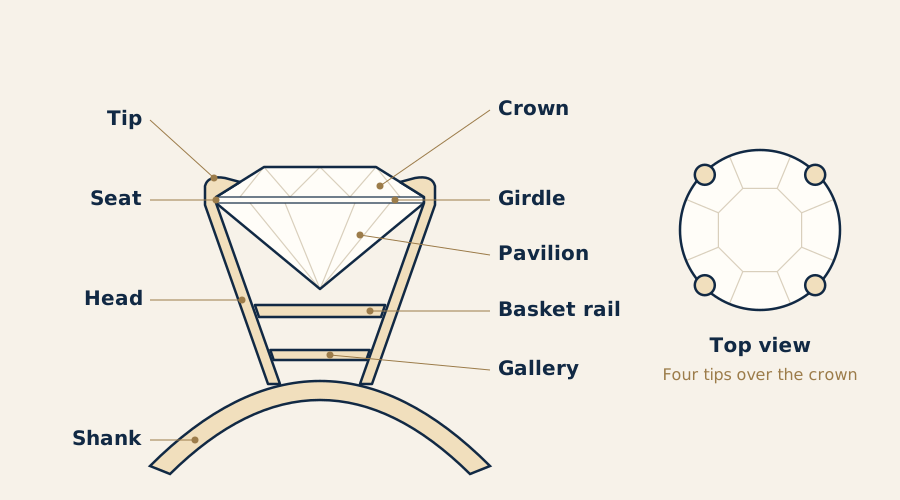
A few parts are worth knowing. The head is the whole cluster of claws that holds the centre stone. Inside each claw the setter cuts a small notch called the seat (or bearing), where the girdle (the thin outer edge of the diamond) sits. The tip is the top of the claw that is pushed over the crown, the sloping upper part of the stone. Below the stone, the gallery is the open metalwork that joins the claws and lets light in from the sides.
Claws suit diamond well. At 10 on the Mohs scale it is the hardest natural material, so it can take the pressure of claws being tightened against it. It can still chip along its cleavage planes if an exposed edge takes a hard knock, which is why the claws' second job is protection. Softer stones need more care: emerald (7.5–8 on the Mohs scale) and opal (about 5.5–6.5) can crack if claws are pushed down too hard, so setters work more gently and often use more claws. Claws work exactly the same way on natural and lab-grown diamonds. If any term here is new, our glossary of jewellery terms explains it.
How many claws should an engagement ring have?
The number of claws is the first decision, and the one that changes the look most. More claws mean more security and a rounder outline; fewer claws mean more of the diamond on show and a cleaner, more geometric look.
| Claws | How it looks | Suits | Things to know |
|---|---|---|---|
| 3 | Triangular, open | Trillion cuts, some hearts | Each claw carries a lot of load; mostly for three-sided stones |
| 4 | Squares off a round; most diamond visible | Rounds, princess, cushion, emerald, radiant | If one claw fails, the stone can loosen quickly |
| 5 | Balanced around a point | Pears and hearts (with a V-claw at the point) | Common on pointed shapes; less common on rounds |
| 6 | Rounder outline, more metal | Rounds, ovals, larger stones | Extra security; can look busy on stones under about 0.50 ct |
| 8 (double) | Four pairs of fine claws | Rounds, cushions, vintage designs | Spreads the load; more metal to maintain |
For a round brilliant, the choice is usually between four and six. Four claws make a round diamond look slightly squarer and let in a touch more light, and the clean look appeals to many people. Six claws keep the outline circular and mean that if one claw is damaged, five are still holding the stone. On a diamond over about 1 carat, or for someone who works with their hands, six claws is the more forgiving choice.
Related guideFour-Claw vs Six-Claw Solitaire Engagement RingsClaw count also depends on the shape. Fancy cuts with corners or points need claws in particular positions, not just a particular number; see our guide to claw positions for fancy shapes before deciding on a count for a pear, marquise or princess. If you have not settled on a shape yet, our overview of every diamond shape shows the outlines side by side.
What are the different claw tip shapes?
Once the number is settled, the tip shape sets the character of the ring. The tip is what you see on top of the stone and what touches clothing, hair and benches every day, so it affects both style and wear.
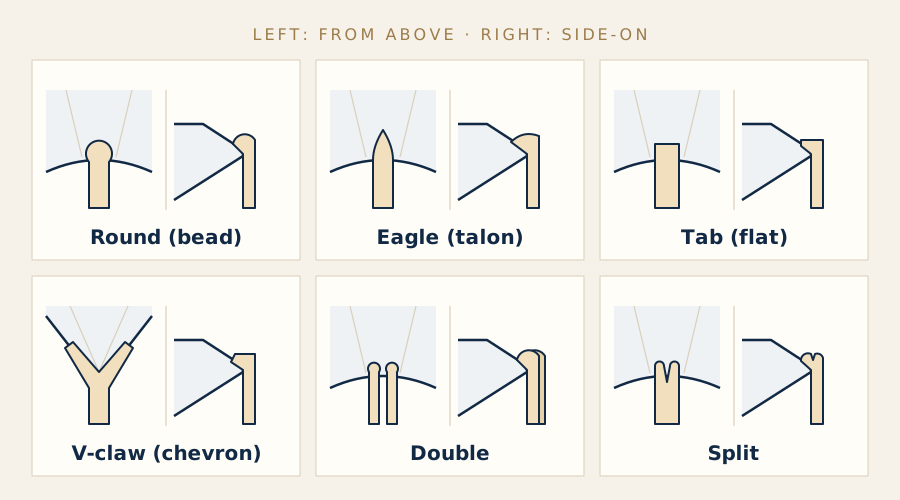
| Tip style | How it looks | Suits | Wear notes |
|---|---|---|---|
| Round (bead) | Small domed tip | Any shape; the classic choice | Smooth, rarely snags; easy to retip |
| Eagle (talon) | Fine pointed tip curving over the stone | Rounds and ovals, vintage or delicate looks | Covers less of the stone; the fine point wears and can catch |
| Tab (flat) | Flat, squared tip | Princess, emerald and Asscher corners; modern rings | Sits low; more metal for retipping |
| V-claw (chevron) | V-shaped claw that wraps a point or corner | Pears, marquise, hearts, princess cuts | Protects the most fragile parts of the stone |
| Double | Two thin claws side by side at each position | Rounds, cushions, vintage styles | More grip points; more tips to check |
| Split | One claw split into two at the top | Rounds and cushions | Looks finer than a double claw; forked tips can thin quickly |
Round tips are the most practical: they sit smoothly, they rarely catch on knitwear, and a jeweller can rebuild them easily. Eagle claws give a finer, more delicate look because they cover less of the crown, but the pointed end is the first part to wear down and the easiest to snag. Tab claws suit straight-edged stones and give a clean, architectural look. Double claws use more metal overall, which adds security, though each individual claw is thinner.
For larger photos of each style, including how they look finished in platinum and gold, see our close-up guide to round, eagle, tab, V and double claws.
Where should the claws sit on pear, marquise and princess cuts?
Points and sharp corners are the thinnest parts of a diamond, and the most likely to chip. The rule is simple: every point should have a claw protecting it, usually a V-claw. Typical placements:
- Pear: a V-claw at the point, plus two to four round claws around the curved end (five claws in total is common).
- Marquise: a V-claw at each of the two points, plus two or four claws along the sides.
- Princess: a V-claw or tab claw on each of the four corners. Round claws here leave the corners exposed.
- Heart: a V-claw at the point and a claw on each lobe; some designs add claws beside the cleft.
- Emerald and Asscher: claws on the four cut corners. Because the corners are already trimmed, round or tab claws work well.
- Oval and cushion: no points, so four or six round or double claws are fine. Four claws can sit at the 'corners' or at north, south, east and west (called compass claws). Our guide to oval diamond ratios and settings shows both layouts.
Our detailed guide on where claws should sit on pears, marquise and princess cuts shows each layout from above. The shape guides go further on each stone: see choosing a pear cut diamond, the marquise cut and its two fragile points and heart shaped diamond ratio, symmetry and settings.
Not sure which one is right?
Send us the stones you are looking at and our gemologist will tell you which to choose and why.
High set or low set: does claw height matter?
Claws are not only about the tips. How tall the claws are, and how they connect underneath, changes how the ring sits on the hand and how it wears.
- High set: the stone sits well above the band, often on a cathedral setting where the shoulders sweep up to meet the claws. More light reaches the sides and a straight wedding band can sit flush underneath, but a tall head is more exposed to knocks.
- Low set: the stone sits closer to the finger. It catches less on gloves and doorframes, but may need a curved or notched wedding band.
- Basket: a horizontal rail joins the claws partway down. The rail braces the claws so they bend less if knocked.
- Peg head: claws on a simple post with no rail. Very open, but each claw stands alone.
- Hidden halo or under-gallery: small diamonds or metalwork beneath the stone, seen from the side. Adds detail and stiffens the head.
A solitaire head commonly places the girdle somewhere around 5–8 mm above the finger, depending on the stone's depth and the design. That is why we show a CAD render (a computer-aided design model) of the head from the side before anything is made: it is far easier to judge height and claw thickness on screen than to change a cast ring. For how claws compare with cathedral, basket and halo designs across the whole ring, see our guide to cathedral, basket and halo settings.
Which metal makes the strongest engagement ring claws?
The metal matters as much as the style, because it decides how claws respond to years of rubbing and knocks. The key difference is how each metal wears: some lose metal as they wear, others move and bend.
| Metal | How the claws wear | Upkeep |
|---|---|---|
| Platinum (950) | Dense and tough; when scratched the metal mostly moves rather than wearing away, and claws tend to bend rather than snap | Polish when it looks dull; claws still need checks and eventual retipping |
| 18ct white gold | Harder at first, but metal is gradually lost from the tips; usually rhodium plated for a whiter colour | Re-plating roughly every 12–24 months; retipping as tips thin |
| 18ct yellow or rose gold | Wears like white gold but without plating; warm colour suits warmer diamonds | Retipping as tips thin |
| 14ct and 9ct gold | Lower gold content (58.5% and 37.5%) makes the alloy harder, but it can be less forgiving to rework | Retipping as tips thin; ask about alloy suitability for claws |
Many people choose a platinum or white gold head on a yellow or rose gold band. The white claws disappear against a colourless diamond, while the band keeps its warm colour. The head can also be replaced on its own later, which is useful once the claws have been retipped several times.
Some metals simply cannot be made into claws. Tungsten carbide is very hard and scratch resistant, but it is too brittle to bend over a stone and cannot be resized, which is why tungsten suits plain bands but not claws. For an engagement ring, claws need a metal that can be pushed, shaped and later rebuilt.
How do claws wear, and when do they need retipping?
This is where the repair bench teaches more than any catalogue. Claw tips are the highest point of the ring after the diamond itself, so they rub against desks, steering wheels, pockets and bedsheets every day. Over the years, round tips flatten, eagle points shorten and the gap between tip and stone grows. A knock can also lift a claw away from the stone without you noticing. With daily wear, many claws need attention somewhere around 5–10 years, but a ring worn at the gym or in the garden can need it much sooner.
Signs that claws need a jeweller:
- Tips look flat or shiny rather than rounded when viewed side-on.
- The ring snags on jumpers, hair or tights.
- You can see light, or slide a fingernail, between a claw and the stone.
- The stone sits slightly tilted, or you hear a faint rattle.
- A claw looks thinner than its neighbours, often the one facing your other fingers.
The fix depends on how far wear has gone. Retipping adds new metal to the top of each claw, usually by laser welding or soldering, then shapes it back into a tip; it typically costs roughly AUD $40–$120 per claw. When the claw itself is too thin, a jeweller rebuilds or replaces the claw, and if most claws are worn the whole head is replaced, often in the range of AUD $300–$900 or more depending on metal and size. Our guide to signs your claws need retipping explains each stage with photos. If you would rather avoid claw maintenance altogether, consider a full rim of metal instead of claws.
Are claw settings practical for everyday wear?
Yes, for most people, with regular checks. The table compares the main engagement ring claw styles with bezel settings, which hold the stone with a metal rim rather than claws.
| Style | Light and visibility | Security | Snag risk | Upkeep |
|---|---|---|---|---|
| 4 round claws | Highest | Good | Low | Check every 6–12 months |
| 6 round claws | High | Very good | Low | More tips to check |
| Double claws | High | Very good | Low to medium | Eight tips to check |
| Eagle claws | High; least metal on the stone | Good | Medium | Points wear first |
| Half-bezel | Good; sides open | Very good | Low | Low |
| Full bezel | Lower; edge covered | Highest | Very low | Lowest |
Claws let the most light into a diamond and show the most of it, which is why they remain the default for solitaires. A bezel protects the edge completely, so it suits nurses, tradespeople, gardeners and anyone hard on their hands. Our comparison of bezel and claw settings for active hands goes deeper into the trade-offs. If neither feels right, there are many ideas if classic claws are not your style, from east-west settings to flush-set stones.
The same wear patterns apply to all claw-set jewellery, not just rings. Earrings face less contact, but claw-set huggie earrings still benefit from a quick check whenever you bring your ring in.
How do you choose between engagement ring claw styles?
- Start with the shape. Points and corners need V-claws or tab claws; rounds, ovals and cushions can take any tip.
- Pick the count. Decide whether four or six claws suit your stone, considering size and how active your hands are.
- Choose the tip. Round for practicality, eagle for a finer look, tab for straight edges, double for a vintage feel.
- Decide the height. High set with a cathedral or basket, or low set for everyday comfort; check how your wedding band will sit.
- Choose the metal. Platinum or a white gold head for white diamonds; think about upkeep such as rhodium re-plating.
- Review a CAD render. Look at the claws from above and side-on, checking thickness and how much of the stone each tip covers.
- Plan the upkeep. Book a claw check every 6–12 months and follow a retipping schedule that matches how you wear the ring.
Explore ring settings, custom design and repairs
Free consultation
Talk to a gemologist
Compare stones in person or online with Raj Sood, Graduate Gemologist (GIA), AJP (GIA).
Book a consultationShop this shape
FAQ
Common questions
Is 4 claw or 6 claw better for an engagement ring?
Neither is better for everyone. Four claws show more of the diamond and give a clean look, while six claws hold the stone more securely and keep a round outline. Six is often chosen for stones over about 1 carat or for active hands.
What is an eagle claw setting?
An eagle claw (or talon) has a fine pointed tip that curves over the stone. It covers less of the diamond than a round tip, but the point wears faster and can catch on fabric.
What is a V-claw used for?
A V-claw wraps around a point or corner of a diamond to protect it from chipping. It is common on pear, marquise, heart and princess cuts.
How often should engagement ring claws be checked?
Every 6–12 months is a sensible routine, and straight away if the ring snags or you hear the stone rattle. Regular checks catch thinning claws before a stone is lost.
Are double claws more secure?
Double claws give eight points of contact instead of four, so the load is spread and one damaged claw is less likely to free the stone. Each claw is thinner, though, so there are more tips to keep an eye on.
Do platinum claws need retipping?
Yes, eventually. Platinum tends to move rather than wear away, so its claws usually last longer than white gold, but tips still flatten and thin with years of daily wear.
Terms in this guide

Ask a gemologist
Not sure which diamond to choose?
Raj Sood is a Graduate Gemologist (GIA) and master jeweller. Bring the stones you are considering, or send the reports, and he will tell you honestly which one is better and why.
Keep learning
Related guides
 Engagement Rings & SettingsFour-Claw vs Six-Claw Solitaire Engagement Rings
 Engagement Rings & SettingsClaw Types: Round, Eagle, Tab, V-Prong, Double
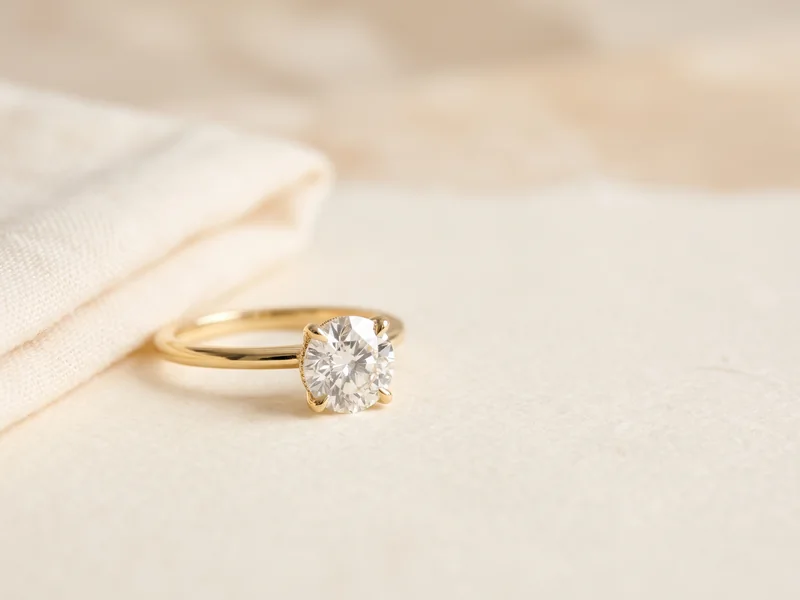 Care, Repairs & RemodellingWhen Do Ring Claws Need Retipping?
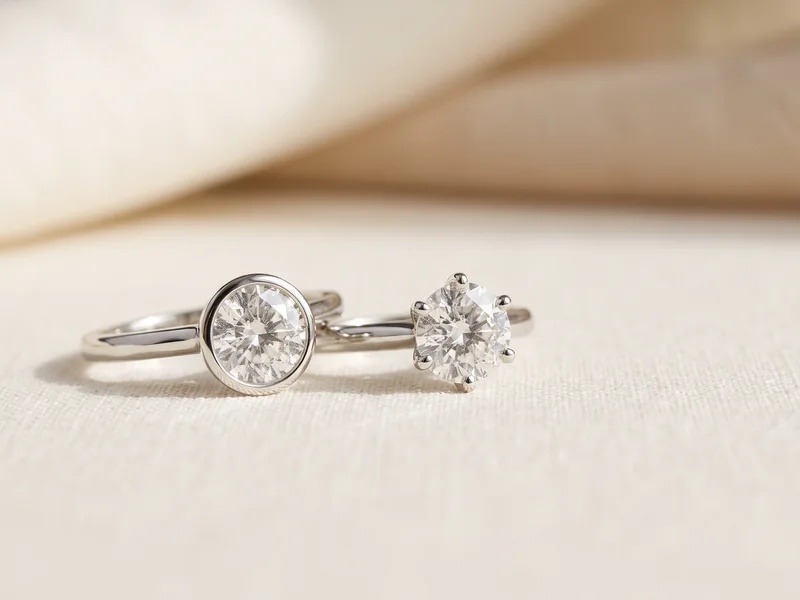 Engagement Rings & SettingsBezel vs Claw Settings for Everyday WearEngagement Rings & SettingsEngagement Ring Setting Styles Guide
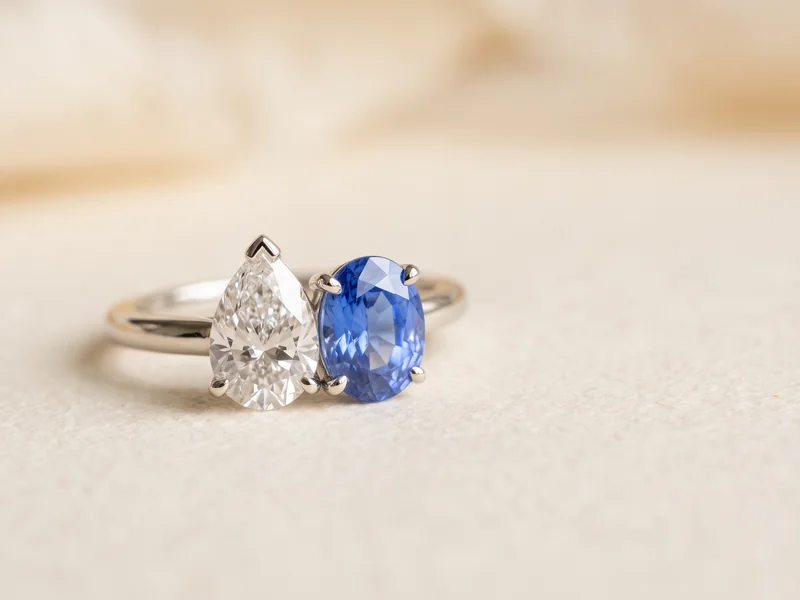 Engagement Rings & SettingsClaw Placement for Pointed Shapes
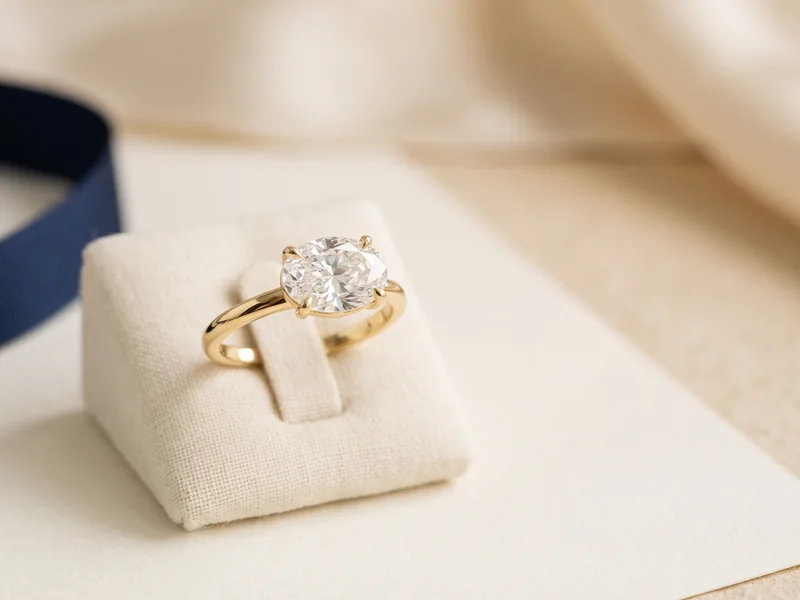 Engagement Rings & SettingsHow to Choose an Engagement Ring When You Dislike Traditional Styles
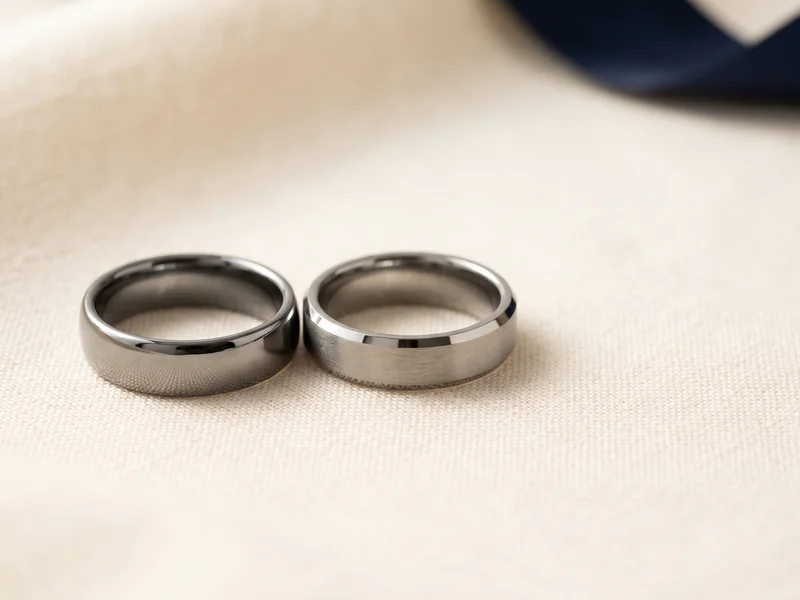 MetalsTungsten Jewellery: Modern Strength, Scratch Resistance & Contemporary Style
Explore more
More guides on this topic
Education