
- Education
- Engagement Rings & Settings
- How to Choose an Alternative Engagement Ring When You Dislike Traditional Styles
Engagement Rings & Settings
How to Choose an Alternative Engagement Ring When You Dislike Traditional Styles
Not everyone wants a round diamond held high in claws. Here is how to work out what you actually dislike, choose an alternative engagement ring that suits you, and make sure it still holds up after years of daily wear.
 Reviewed by Raj Sood, Graduate Gemologist (GIA), AJP (GIA)Master jeweller and Graduate Gemologist (GIA) · reviewed 4 November 2026
Quick answer
Start by naming what you dislike about traditional rings, such as height, claws, sparkle or a white diamond, then change that element. An alternative engagement ring might use a low bezel, an east-west or asymmetric stone, a coloured gem of Mohs 8 or harder, a sculptural band or mixed metals. Check durability as carefully as style.
What counts as an alternative engagement ring?
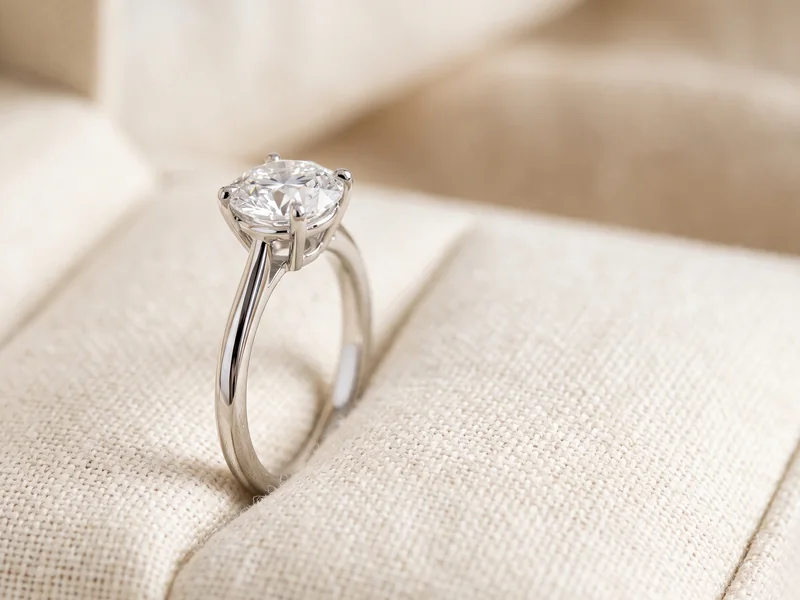
In Australian jewellery, a "traditional" engagement ring usually means one thing: a round brilliant diamond of around 1 carat, held high in four or six claws on a slim white gold or platinum band. There is nothing wrong with it. It is popular because it works. But plenty of people look at that ring and feel nothing, or actively dislike it.
An alternative engagement ring is simply any ring that changes one or more of those defaults: the stone, its shape, the way it is held, the metal or the overall silhouette. You do not have to change everything. Some of the most satisfying non-traditional engagement rings keep a classic diamond but turn it sideways, or keep the solitaire idea but swap claws for a smooth rim of metal.
Our full guide to engagement ring setting styles covers the standard options in detail. This page is about stepping outside them without ending up with a ring that looks great on day one and needs constant repairs by year five. If you hit a term you have not met before, our plain-English jewellery glossary explains it.
What exactly do you dislike about traditional engagement rings?
Most people who say they hate traditional rings actually dislike one or two specific features. Pin those down first and the choice becomes much easier, because each dislike has a practical alternative and a trade-off worth knowing about.
| If you dislike… | Consider… | Watch out for |
|---|---|---|
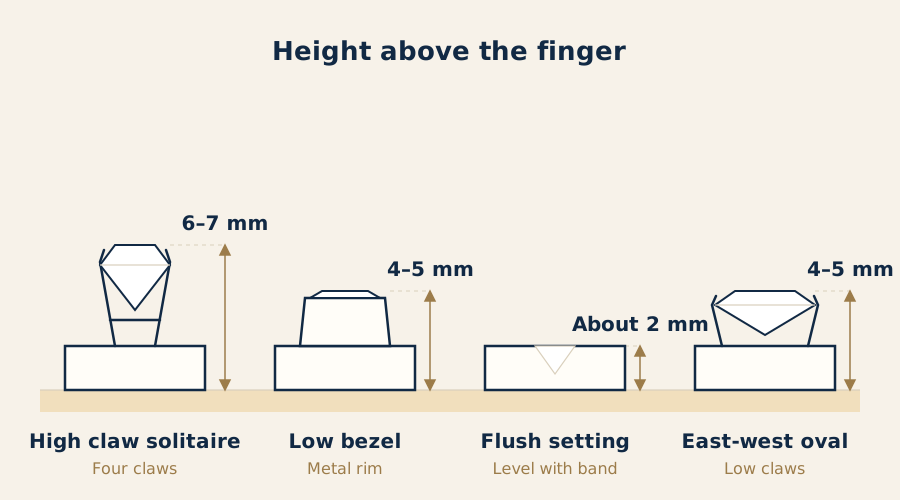
| A stone sitting high and catching on things | Low bezel, flush or east-west setting | Less light enters from the sides, so cut quality matters more |
| Claws and fussy metalwork | Full or half bezel, tension-style or smooth sculptural shoulders | A bezel covers a sliver of the stone's edge |
| Too much sparkle | Step cuts (emerald, Asscher, baguette), rose cut, old cuts or a cabochon | Step cuts show inclusions and body colour more clearly |
| A white diamond | Sapphire, spinel, a coloured diamond or a lab-grown coloured diamond | Hardness and toughness: aim for Mohs 8 or higher |
| Perfect symmetry | Toi et moi (two stones), asymmetric cluster or an offset stone | Two or more stones mean more claws to maintain |
| Looking "bridal" | Signet-style ring, wide band, mixed metals or an open cuff | Open designs need enough metal or they can bend |
Write your dislikes down before you browse. People often find their list is shorter than expected: "I just hate how tall it is" is a very different brief from "I don't want a diamond at all". It also gives a jeweller something concrete to design around, instead of vague words like "unique" or "different". If the round shape itself is the problem, our overview of every diamond shape is a good place to see what else is out there.
Which settings suit an alternative engagement ring?
The setting (the metal that holds the stone) changes the character of a ring more than anything else. These are the alternatives we are asked about most, with what each really involves:
- Bezel setting: a continuous rim of metal wrapped around the stone's girdle (its outer edge). It sits low, has nothing to snag and protects corners and points. A half-bezel covers only two sides, letting in more light while still guarding the edges.
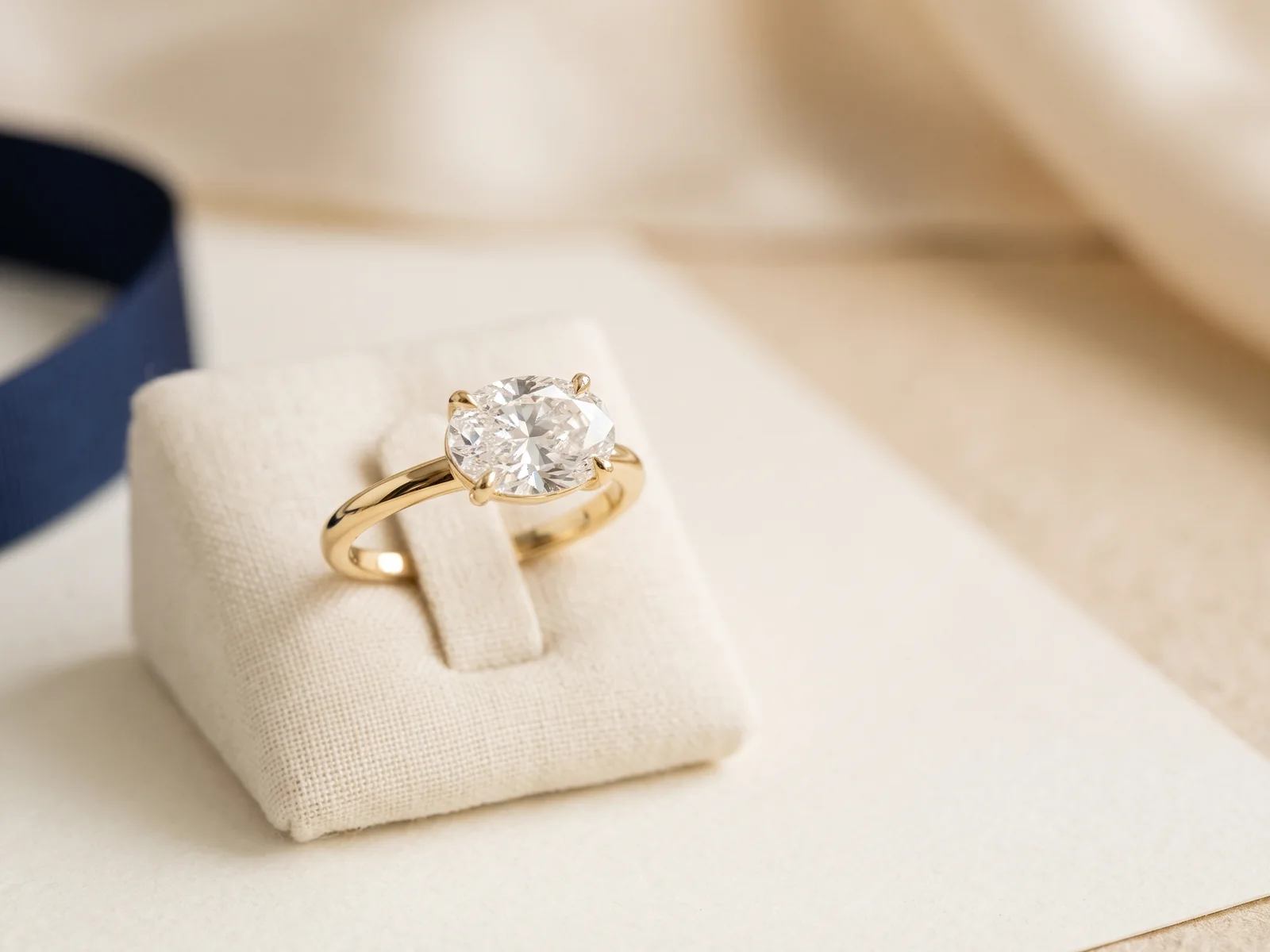
- East-west setting: an elongated stone such as an oval diamond, marquise, pear cut or emerald cut turned sideways so it runs across the finger. Same stone, completely different look, and it sits a little lower and wider.
- Toi et moi: French for "you and me", two stones side by side, often in contrasting shapes or colours, such as a pear and an oval or a diamond and a sapphire.
- Tension-style setting: the stone looks suspended between two ends of the band. True tension settings rely on the spring of the metal; most modern versions hide a small seat or bar underneath for security.
- Flush (gypsy) setting: the stone is sunk into a drilled hole so its table sits level with the band. Very low profile and very practical, usually for stones under about 0.50 carat.
- Asymmetric and cluster designs: several small stones arranged off-centre, in a scatter or around a coloured centre. These read as a single shape from a distance.
- Open cuff or bypass: the band does not close into a circle under the stone; the two ends pass each other or each carry a stone.
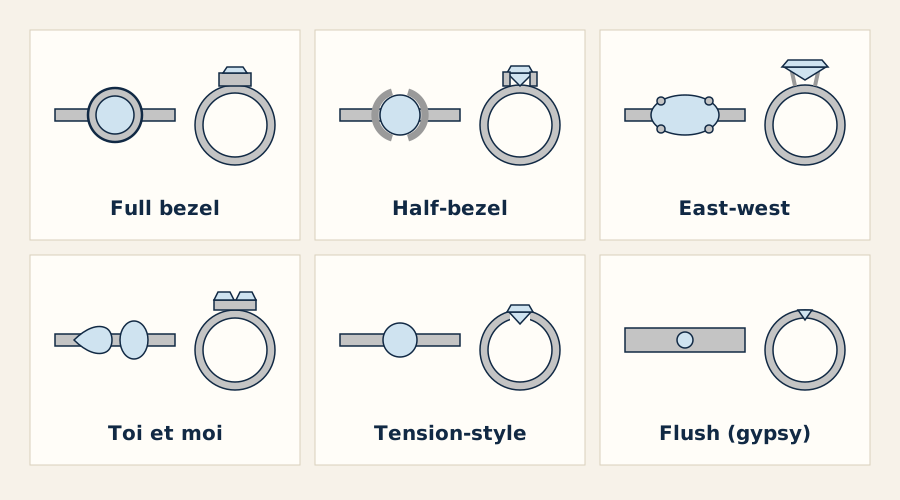
For an east-west ring, the stone's length-to-width ratio decides how dramatic the sideways look is; our guide to elongated diamond cuts and their ratios compares ovals, pears, marquises and emerald cuts. If you like a claw setting but not the standard look, the claws themselves can change everything. Flat tab claws, long eagle claws, double claws and compass-point claws all shift the style; our page on claw shapes from eagle to tab and double claws shows the differences. To compare these against halos, cathedrals and trilogies, see how bezel, halo and cathedral settings differ.
Can an engagement ring be something other than a white diamond?
Yes, and many are. The key is that an engagement ring is worn every day, for decades, so the stone has to cope with knocks, dust and hand creams. Two properties matter. Hardness, measured on the Mohs scale from 1 to 10, is resistance to scratching; everyday dust contains quartz at Mohs 7, so anything softer slowly loses its polish. Toughness is resistance to chipping and breaking, and it is a separate thing: emerald is fairly hard but not tough.
| Stone | Mohs hardness | Toughness | For a daily-wear engagement ring? |
|---|---|---|---|
| Natural or lab-grown diamond | 10 | Good, but can cleave on a hard knock | Yes |
| Moissanite (lab-created silicon carbide) | 9.25 | Good | Yes |
| Sapphire (natural or lab-created) | 9 | Excellent | Yes |
| Ruby (natural or lab-created) | 9 | Excellent | Yes |
| Spinel | 8 | Good | Yes |
| Morganite, aquamarine | 7.5–8 | Fair to good | With care and a protective setting |
| Emerald | 7.5–8 | Poor (often included and oiled) | With care, ideally in a bezel |
| Tanzanite | 6–7 | Poor | Not recommended for daily wear |
| Opal | 5.5–6.5 | Poor | Bezel only, and expect to re-polish |
Sapphire is the most common alternative, and not only in blue. Australian sapphires from New South Wales and Central Queensland often show deep blue, teal or green tones, and parti sapphires show two or more colours in one stone. Spinel comes in pinks, reds, greys and blues and is often very clean. Lab-grown diamonds come in white and in colours such as pink, blue and yellow, and lab-created sapphires and rubies have the same hardness as their natural versions at a much lower cost.
Australian opal is a meaningful choice for many couples, but it is soft and can crack with sudden temperature changes. If you love it, keep it in a full bezel, consider it for a right-hand ring or pendant, or pair a small opal with a harder stone in a toi et moi. As a very rough guide, a 1 carat natural blue sapphire of good colour runs from about AUD 1,500 to well over 6,000 depending on origin and treatment, while a 1 carat lab-created sapphire is usually a few hundred dollars. Treat these as broad ranges only.
Not sure which one is right?
Send us the stones you are looking at and our gemologist will tell you which to choose and why.
Which metals and bands suit a non-traditional engagement ring?
Metal is the quickest way to make a ring feel less bridal. 18ct yellow gold (75% pure gold) gives a warm, vintage or bold look and wears to a soft glow. Rose gold gets its colour from copper and flatters pink, peach and champagne stones. Platinum is dense and naturally white; it scratches but the metal moves rather than wearing away. White gold is usually rhodium plated, which needs re-plating every year or few to stay bright white.
- Mixed metals: a yellow gold band with a white gold or platinum head, or two-tone bands, so the stone sits in white metal but the ring reads warm.
- Textures: brushed, hammered or sandblasted finishes look modern but polish back up in high-wear spots within months, so expect to refresh them.
- Wide or chunky bands: a 3–5 mm band or a signet-style shape makes a small stone look deliberate rather than modest. Our guide to choosing a band width that balances the stone sets out the proportions.
- Alternative metals: tungsten carbide is very scratch resistant but cannot be resized and is not suited to holding a precious stone in claws; read what tungsten can and cannot do before choosing it for anything but a plain band.
If one of you works with your hands, durability matters more than any trend. The same thinking behind bands built to survive hands-on work applies to engagement rings: thicker metal, rounded edges and a low stone. And if you like a cohesive look, the mixed-metal or textured style of the ring carries nicely into matching hoops and huggie earrings later on.
How does an alternative engagement ring wear over the years?
From the repair bench, the rings that cause trouble are rarely the unusual-looking ones. They are the ones where style won over metal thickness. Here is how the common alternative designs tend to age with daily wear:
| Design | Where it wears | What to expect |
|---|---|---|
| High four-claw solitaire (for comparison) | Claw tips catch and thin | Claws checked yearly; retipping every few years for many wearers |
| Full bezel | Rim can dent or lift with a hard knock | Very low maintenance; dents can usually be reshaped |
| Tension-style | Stone relies on precise fit and stiff metal | Hard to resize; must be checked if dropped or knocked |
| East-west elongated | Points face the fingers beside it | Protect points with V-claws or a bezel |
| Toi et moi or cluster | Many small claws | More frequent claw checks; small stones can loosen |
| Band under 2 mm | Thins and can bend or crack at the base | May need re-shanking (a new lower band) within 10–20 years |
| Open cuff or bypass | Ends can spread apart | Needs enough metal; avoid heavy pressure such as gripping weights |
Whatever you choose, have it checked every 12 months or so. Our page on the signs that claws need retipping shows what thinning looks like under a loupe, and when a band does wear through, deciding whether to repair or replace a worn band explains the options. Band thickness matters here too; see how band width affects comfort and strength.
Should you design a custom engagement ring with CAD?
If your idea does not exist in a shop window, a custom design is often the simplest way to get it. CAD (computer-aided design) lets a jeweller build the ring on screen to exact millimetre measurements and show you photo-like renders from every angle before any metal is cast. You can see how high the stone sits, how wide the shoulders are and whether a wedding band will sit flush, then change it.
At GemTrove we show CAD renders alongside photos of finished rings made from similar designs, so you can compare how a render translates into real metal. Once the design is approved, it is printed as a resin model, cast in your chosen metal, then set and finished by hand.
Custom work takes time, typically four to eight weeks depending on the stone and the complexity. If there is a date in mind, read how far ahead to order a custom engagement ring before you start.
Related guideEngagement Ring Setting Styles GuideCreate your ring or browse ring settings
Should you choose an unconventional ring together or as a surprise?
Surprising someone with a classic solitaire is relatively low risk. Surprising someone with a bold, unusual design is a bigger gamble, because non-traditional tastes are specific. If your partner has told you they dislike traditional rings, that is usually a sign they have opinions about what they do want.
Many couples now design together, or the proposer chooses the stone and the setting is finalised afterwards. Our guide to whether couples should choose the ring together weighs up the options. If you are set on a surprise, borrow a ring they already wear on the same finger for sizing, look at their everyday jewellery for metal colour and texture, and choose a design that can be adjusted later, such as a loose stone in a simple temporary setting, so there is time to plan the order around the proposal date.
How to choose an alternative engagement ring: step by step
- List your dislikes. Height, claws, sparkle, white diamonds, symmetry or a bridal look. Be specific.
- Match each dislike to an alternative. Use the table above: a bezel for no claws, an east-west stone for a low and wide look, a coloured gem for no white diamond.
- Check the stone's hardness and toughness. Aim for Mohs 8 or higher for daily wear; softer stones need a protective setting and extra care.
- Confirm natural or lab-grown. Ask for a grading report or written disclosure stating whether the stone is natural, lab-grown or lab-created, and whether it has been treated.
- Choose metal for wear, not just colour. Aim for a band of about 2 mm or more and ask how thick the metal is under the stone.
- Check it with a wedding band. Ask whether a band will sit flush, or plan a contoured band from the start.
- Review the CAD or the finished piece in person. Look at the side profile and try it on if possible, then book a check-up after the first year.
Free consultation
Talk to a gemologist
Compare stones in person or online with Raj Sood, Graduate Gemologist (GIA), AJP (GIA).
Book a consultationShop this shape
FAQ
Common questions
What is an alternative engagement ring?
It is any engagement ring that moves away from the classic round diamond in a high claw setting. That might mean a coloured stone, a bezel or east-west setting, two stones instead of one, or a bold band or mixed metals.
Can you have an engagement ring without a diamond?
Yes. Sapphire, ruby, spinel and moissanite are all hard enough for daily wear, and sapphire and ruby are also very tough. Softer or less tough stones such as opal or emerald can work in a protective bezel but need more care, and tanzanite is better kept for occasional wear.
Are bezel set engagement rings less sparkly?
Slightly, because the metal rim blocks a little light from the side. A well-cut stone still shows strong brilliance face-up, and many people prefer the calmer, cleaner look.
Do east-west engagement rings look smaller?
Not usually. Turning an oval or emerald cut sideways often makes it look wider on the finger, though it can look a little shorter from fingertip to knuckle.
Are tension settings safe for everyday wear?
True tension settings depend on precise sizing and stiff metal, and they are hard to resize. Most modern tension-style rings include a hidden seat for security, and any version should be checked if it takes a hard knock.
Is a toi et moi ring harder to look after?
It has more claws than a solitaire, so it benefits from a yearly check. Using a bezel on one or both stones reduces the maintenance.

Ask a gemologist
Not sure which diamond to choose?
Raj Sood is a Graduate Gemologist (GIA) and master jeweller. Bring the stones you are considering, or send the reports, and he will tell you honestly which one is better and why.
Keep learning
Related guides
 Engagement Rings & SettingsEngagement Ring Claw Styles ExplainedEngagement Rings & SettingsWhat Engagement Ring Band Width Should You Choose?
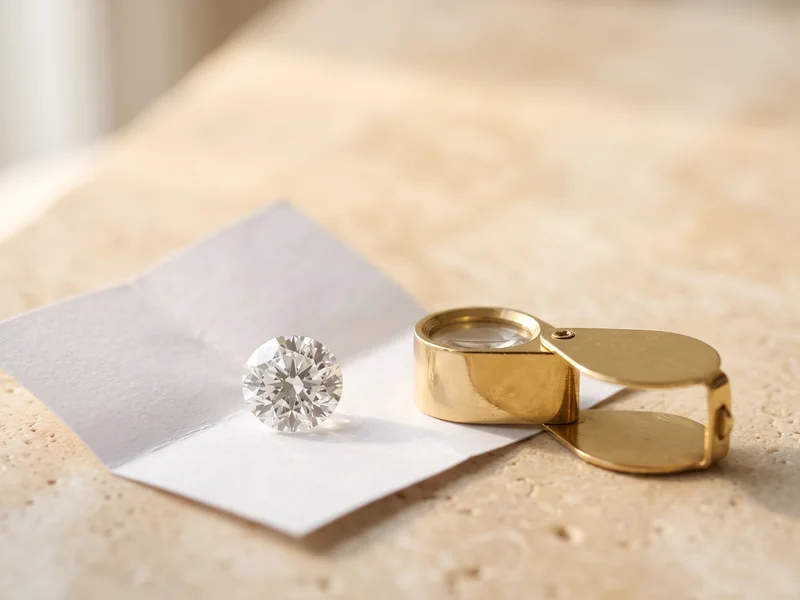 Buying Knowledge & Custom ProcessShould Couples Choose an Engagement Ring Together?Buying Knowledge & Custom ProcessPlanning a Proposal: When Should You Order the Engagement Ring?
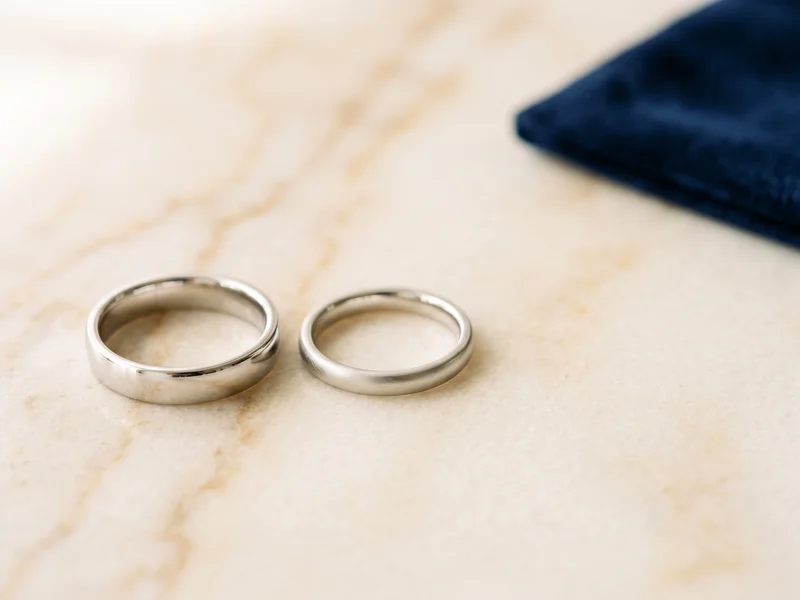 Wedding Bands & EternityHow to Choose a Men’s Wedding Band for Hands-On Work
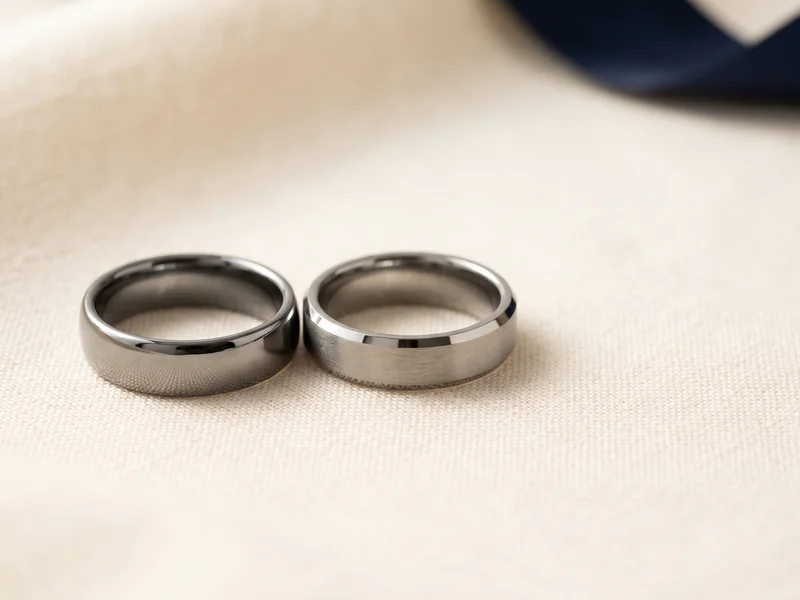 MetalsTungsten Jewellery: Modern Strength, Scratch Resistance & Contemporary Style
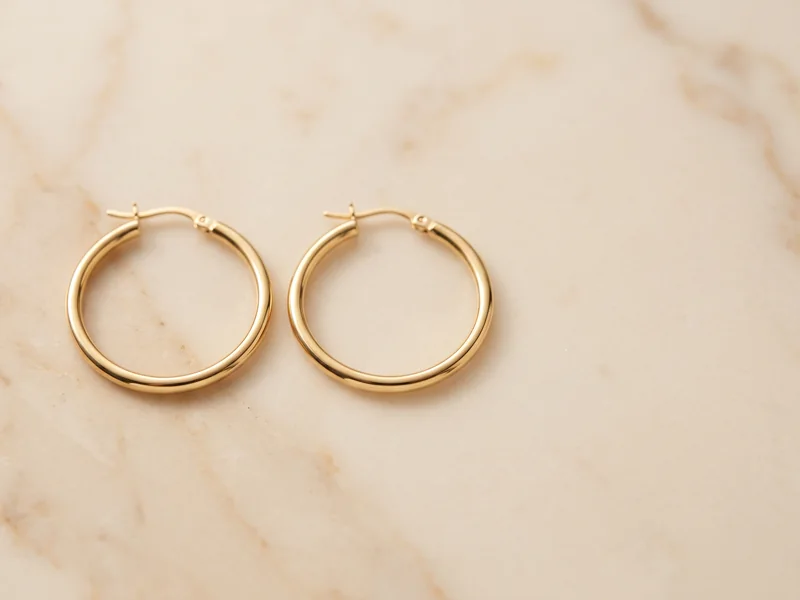 Jewellery TypesHoop and Huggie Earring Styles
Explore more
More guides on this topic
Education