
- Education
- Wedding Bands & Eternity
- Wedding Band Maintenance Checklist: Cleaning, Checks and Repairs
Wedding Bands & Eternity
Wedding Band Maintenance Checklist: Cleaning, Checks and Repairs
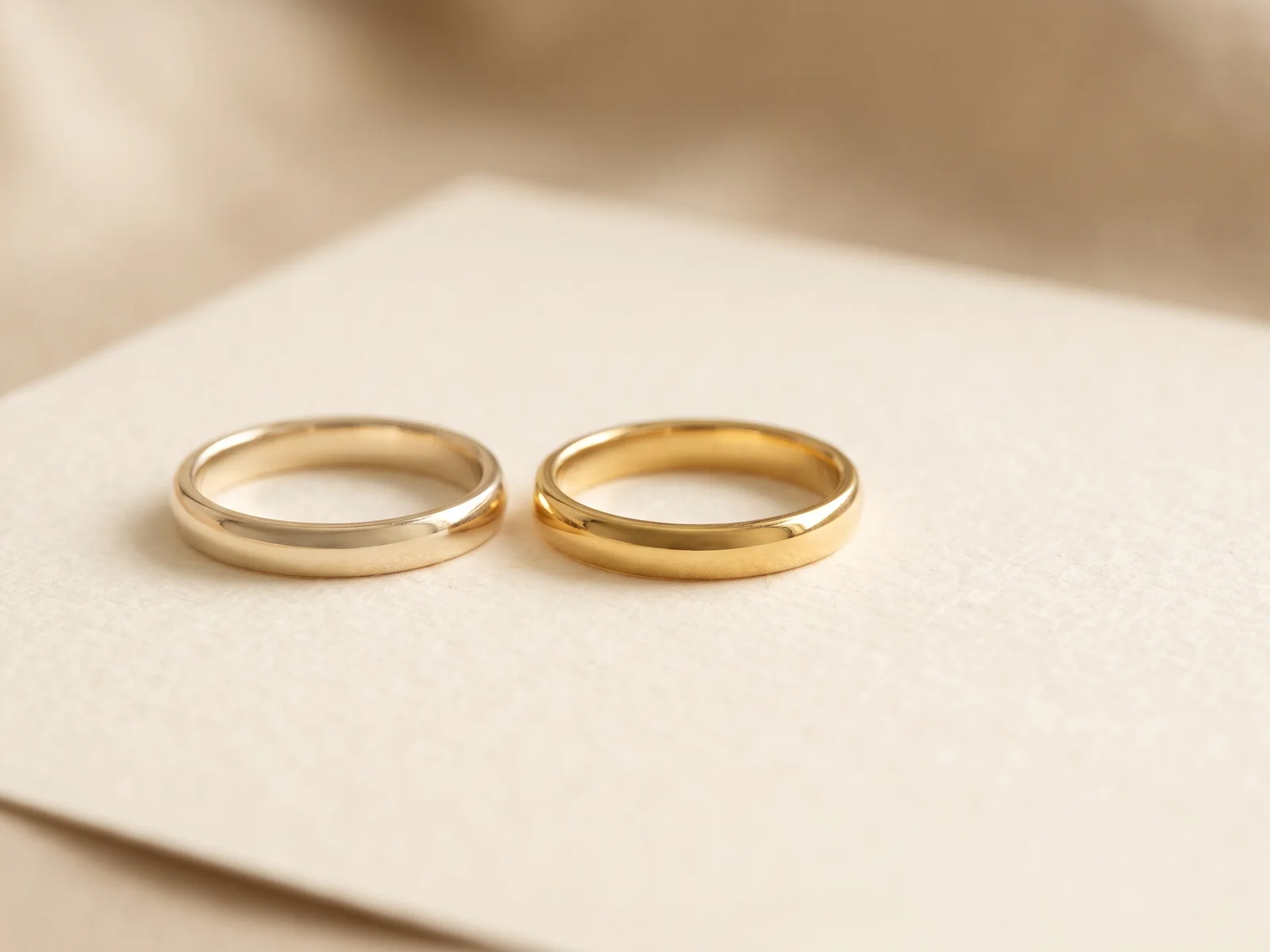
A wedding band is the piece of jewellery most people wear every single day for decades, so it takes more knocks than anything else you own. A little regular wedding band maintenance keeps it comfortable, keeps diamonds where they belong and saves a much bigger repair later.
 Reviewed by Raj Sood, Graduate Gemologist (GIA), AJP (GIA)Master jeweller and Graduate Gemologist (GIA) · reviewed 4 November 2026
Quick answer
Good wedding band maintenance means a gentle clean at home every week or two with warm water, mild detergent and a soft brush, taking the band off for gym, gardening and chlorinated pools, and a professional check every 6–12 months. White gold needs rhodium replating about every 12–18 months; diamond bands need their settings checked.
What does wedding band maintenance involve?
Wedding band maintenance is everything that keeps a band wearable over the long run: cleaning so it looks bright, inspecting so small problems are caught early, and servicing, which covers polishing, replating, tightening stones, resizing and, eventually, rebuilding worn metal. If you are still sorting out the terms, our explainer on how a wedding band differs from a wedding ring covers what each name usually means.
Most of the work is simple and done at home in a few minutes. The rest is a quick bench check by a jeweller once or twice a year. The goal is not to keep a band looking brand new forever; a plain band that shows a soft patina of fine scratches after ten years is perfectly healthy. The goal is to stop the slow problems, such as a thinning shank (the band itself) or a loose diamond, from turning into a lost stone or a cracked ring.
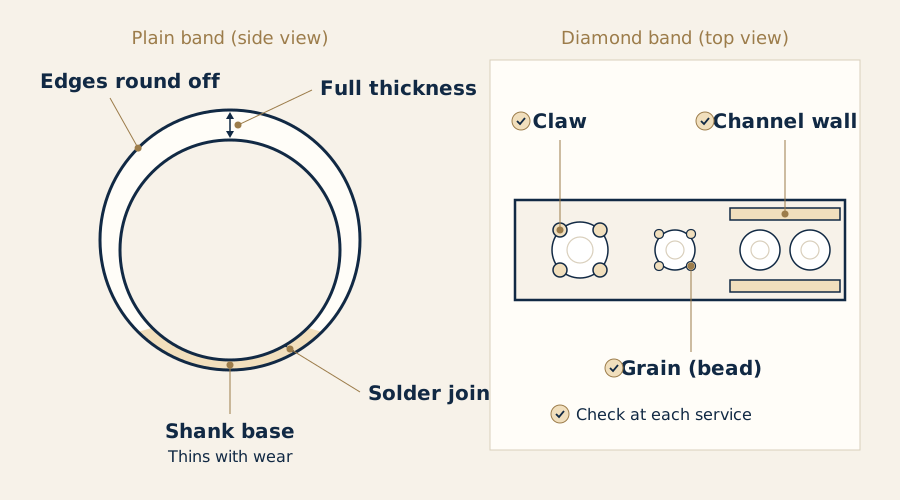
A band wears in predictable places. The underside of the shank, which sits against your palm, takes the most contact with door handles, steering wheels and benchtops. The outer edges round off. On a diamond band, the small metal points that hold each stone wear down too. Any unfamiliar word here is defined in our plain-English jewellery glossary.
How do different wedding band metals wear?
The metal decides most of your maintenance routine. Gold and platinum are soft enough to be resized, polished and repaired, which is why jewellers favour them for rings meant to last a lifetime. Harder modern metals scratch less but are far harder, or impossible, to alter. If you are still choosing, our guide to choosing a wedding ring metal from the start compares them in more depth.
| Metal | Approx. Mohs hardness | How it wears | Main maintenance |
|---|---|---|---|
| 9ct yellow gold | about 2.5–3.5 | Scratches, but the alloy is fairly tough | Polish every few years; resizable |
| 18ct yellow or rose gold | about 2.5–3 | Fine scratches and a soft satin look over time; loses a little metal with each polish | Polish as needed; check shank thickness |
| 18ct white gold (rhodium-plated) | about 2.5–3 under the plating | Rhodium wears off, showing a warmer tint underneath | Rhodium replate about every 12–18 months |
| Platinum 950 | about 4–4.5 | Scratches move metal rather than remove much, giving a grey-white patina | Polish if you want the bright look back |
| Titanium | about 6 | Resists scratches but dulls; hard to resize | Light polish; resizing usually limited |
| Tungsten carbide | about 8.5–9 | Very scratch-resistant but brittle; can crack if dropped on tiles | Cannot be resized; replace if the size changes |
White gold needs the most routine care. Most white gold is a yellow-toned alloy coated with rhodium, a bright white metal from the platinum family. A band rubs against everything, so the plating on its underside usually wears through faster than on an engagement ring, often within 12–18 months. Replating is a quick bench job: the ring is cleaned, polished and dipped in a rhodium bath.
Platinum is denser and does not need plating. It develops a soft, matte patina that many people like. Titanium and tungsten are popular for men; our men's wedding band metals such as tungsten and titanium guide covers their trade-offs, including the fact that a tungsten band cannot be resized if your finger changes.
How to clean a wedding band at home?
Skin oils, soap, hand cream and sunscreen build a film on any band within days. On a plain band it dulls the shine; on a diamond band it collects underneath the stones and stops light entering them, which is why a dirty diamond band looks grey. A gentle clean every week or two is enough:
- Soak: 10–20 minutes in warm (not boiling) water with a few drops of mild dishwashing liquid.
- Brush: a soft baby toothbrush, paying attention to the inside of the band and the gaps under any stones.
- Rinse: in a bowl or with the plug in, never over an open drain.
- Dry: pat with a lint-free cloth; a jewellery polishing cloth brings plain gold and platinum up nicely.
Avoid toothpaste, bicarb paste and kitchen scourers, which are abrasive and scratch gold. Avoid bleach and chlorine-based cleaners entirely. Home ultrasonic cleaners are fine for most solid diamond bands in good repair, but they can shake out a stone that is already loose, and they are not suitable for emerald, opal, pearl, tanzanite or fracture-filled stones. Natural and lab-grown diamonds clean the same way, because a lab-grown diamond is real diamond with the same hardness and chemistry.
The routine differs a little between band styles: see how plain and diamond bands differ in upkeep if you are weighing up the two.
When should you take your wedding band off?
Most damage happens during a handful of activities. Take the band off, and put it somewhere fixed rather than a pocket, for:
- Gym and weights: gripping a barbell can dent a band out of round and crush stones against the bar.
- Gardening, building and renovating: grit acts like sandpaper, and heavy tools dent shanks.
- Chlorinated pools and hot spas: chlorine can attack the alloy metals in gold over time and, with repeated exposure, can contribute to cracking, especially at solder joins.
- Cleaning with chemicals: bleach, oven cleaner and strong bathroom products.
- Cold water and the beach: fingers shrink in cold water, and many bands are lost in the surf.
- Contact sports: a ring on a caught finger can cause serious injury as well as a damaged band.
Put the band back on after hand cream and sunscreen have soaked in. If your work is hands-on, such as trades, nursing or farming, our notes for people who work with their hands every day cover profiles and metals that cope better, plus silicone bands for the worksite.
Not sure which one is right?
Send us the stones you are looking at and our gemologist will tell you which to choose and why.
How often to service a wedding ring?
Here is a realistic schedule for a band worn every day. Adjust it if you are hard on your hands or if your band has a lot of small diamonds.
| Task | Who does it | How often |
|---|---|---|
| Gentle soak and brush | You | Every 1–2 weeks |
| Check for loose stones or dents | You | Monthly |
| Professional clean and inspection | Jeweller | Every 6–12 months |
| Claw, grain and channel check on diamond bands | Jeweller | Every 6 months |
| Rhodium replate (white gold) | Jeweller | About every 12–18 months |
| Polish and refinish (gold or platinum) | Jeweller | Every 1–3 years, or when you want the shine back |
| Measure shank thickness | Jeweller | At each inspection after about 10 years of wear |
| Resize | Jeweller | Only when the fit changes |
An inspection takes a jeweller a few minutes under magnification. They look for raised or worn claws, thin spots in the shank, cracks near the solder join (where the band was last sized) and stones that move when pressed. Catching a lifted grain at this stage is a small tightening job; missing it can mean replacing a diamond. Our full wedding ring buying guide explains how construction quality affects how often a band needs this attention.
How do you look after a diamond or eternity wedding band?
Diamond bands need more checking than plain ones because each stone is held by small amounts of metal. How you care for one depends on the setting style:
- Claw setting: each stone sits in small prongs. Claws thin and lift with wear, so they are checked first.
- Grain or pavé setting: stones are held by tiny beads of metal raised from the band. Grains wear flat over years and can be re-raised or replaced.
- Channel setting: stones sit between two metal walls. It is very secure, but a knock can spread the walls and loosen a row.
- Bezel setting: a rim of metal around each stone. The most protective style, and the least maintenance.
At home, hold the band near your ear and tap it gently with a fingernail: a faint rattle or click often means a loose stone. Run a fingertip over the setting; a claw that catches on fabric has usually lifted. Look for gaps where a stone has gone. Diamond is 10 on the Mohs scale, but it can still chip along a thin edge if two diamond bands grind together, so store them apart.
A full eternity band, with stones all the way around, usually cannot be resized by more than a fraction because there is no plain metal to cut. A half eternity band has a plain base that can be sized. The shape of the band also matters: our guide to court, flat and knife-edge band profiles shows how each one wears.
Related guidePlain vs Diamond Wedding BandsWhy is your wedding band wearing against your engagement ring?
Two rings worn side by side rub every time your hand moves. Over years that friction wears a groove in the softer piece, thins the claws of the engagement ring and can loosen the centre stone. It is one of the most common repairs jewellers see, and much of it comes down to how the two rings sit together.
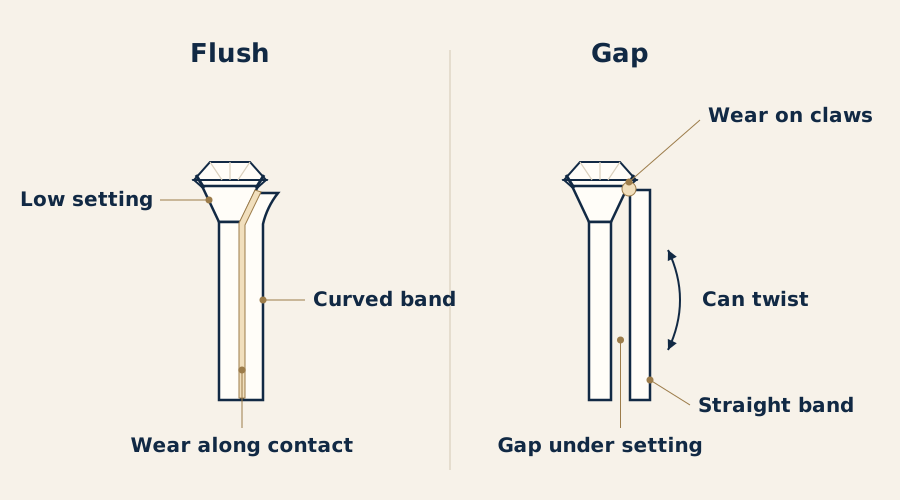
| Sits flush | Small gap | |
|---|---|---|
| Look | Rings read as one set | Rings read as two pieces |
| Where wear happens | Along the whole touching side | Mainly where the band meets claws |
| Movement | Little; the band is held in place | Band can twist and rub the setting |
| Typical fix | Fitted or curved band shaped to the setting | Lower the setting or choose a notched band |
Wear in matching metals and similar alloys, so one ring does not wear the other down faster. If your engagement ring has a low setting or a wide centre stone, a straight band may knock against the claws; fitted bands shaped around the engagement ring and the trade-offs in curved versus straight bands explain the options. Square shapes are especially prone to this, because the corners catch; see bands that suit a princess cut's corners. For the full approach to pairing, read matching a band to your engagement ring.
Pointed shapes need the same care. The tip of a heart or a pear cut diamond often sits close to the band, and a straight band can rub the V-claw that protects it; our guide to wedding bands that sit safely beside a heart shows contoured options that leave the point clear.
Some couples have the two rings soldered together. It stops the rubbing entirely, but both rings then have to be resized together and cannot be worn apart.
When does a wedding band wearing thin need resizing or rebuilding?
Most new bands are about 1.5–2 mm thick through the shank. After many years of daily wear, especially in 18ct gold, the base can thin noticeably. A band worn down to roughly 1 mm or less at its thinnest point may bend out of round, crack at the solder join or feel sharp. The fix is reshanking: the jeweller cuts out the worn lower section and joins in new metal of the same alloy, keeping the top of the band and any stones.
Resizing is needed when the fit changes, which happens with age, pregnancy, weight change and climate; fingers swell in a Melbourne summer and shrink in winter. Australian sizes use letters, from A to Z and then Z+1 and up, with half sizes between. A plain gold or platinum band can usually be sized up or down about one to two sizes by stretching, compressing or cutting and adding metal. Going much larger is often done by adding a section. A comfort-fit or court profile can make a snug band easier to wear without resizing.
Polishing removes a little metal each time, which softens edges and makes engraving shallower. If you have words inside the band, ask for the inside to be cleaned rather than heavily polished. Deeper hand or laser engraving lasts longest; our guide to engraving that holds up to years of polishing covers depth and fonts. When a band is too worn to rebuild sensibly, remaking it in the same design is the usual next step.
Create your eternity ring or wedding band
Wedding band maintenance checklist: step by step
- Every 1–2 weeks: soak in warm soapy water, brush gently inside and out, rinse in a bowl and pat dry.
- Every month: check the band in good light for dents, flat spots and missing or loose stones; do the fingernail tap test on diamond bands.
- Every day: take the band off for gym, gardening, chlorinated pools, chemical cleaning and contact sport, and put it in a fixed spot.
- Every 6–12 months: book a professional clean and inspection; ask for claws, grains and the solder join to be checked under magnification.
- Every 12–18 months (white gold): have the band rhodium replated when you see a warmer tint showing through.
- Every few years: ask for the shank thickness to be measured and for a polish if you want the bright finish back; keep engraving in mind.
- When the fit changes: resize rather than live with a loose band; a band that slides over the knuckle easily is easy to lose.
- For your records: keep photos, grading reports for any significant diamonds and an up-to-date valuation, which many insurers ask to see every few years.
- Before buying a second band: run a pairing check against your engagement ring so the two rings sit without grinding.
Free consultation
Talk to a gemologist
Compare stones in person or online with Raj Sood, Graduate Gemologist (GIA), AJP (GIA).
Book a consultationShop this shape
FAQ
Common questions
How often should I clean my wedding band?
A gentle soak and brush every one to two weeks keeps most bands bright. Diamond bands benefit from weekly cleaning because lotion and soap build up behind the stones.
How often does white gold need rhodium plating?
A white gold wedding band usually needs replating about every 12–18 months, because the underside wears fastest. You will notice a slightly warmer, yellowish tint when the rhodium has worn through.
Can I wear my wedding band in the pool?
It is wise to take it off. Chlorine can attack gold alloys over time, and cold water shrinks your fingers so a band can slip off unnoticed.
Can every wedding band be resized?
Most gold and platinum bands can be resized by one to two sizes. Full eternity bands are very limited, and tungsten carbide bands cannot be resized at all.
Why does my wedding band look scratched after a year?
Gold and platinum are relatively soft, so fine scratches are normal everyday wear. A jeweller can polish them out, though platinum's soft grey patina is something many people choose to keep.
Is it bad for my wedding band to rub against my engagement ring?
Over years, yes. The friction can thin the claws holding your centre stone, so check both rings at each inspection and consider a fitted or curved band if they grind.

Ask a gemologist
Not sure which diamond to choose?
Raj Sood is a Graduate Gemologist (GIA) and master jeweller. Bring the stones you are considering, or send the reports, and he will tell you honestly which one is better and why.
Keep learning
Related guides
 Wedding Bands & EternityHow to Match a Wedding Band to an Engagement Ring
 Wedding Bands & EternityPlain vs Diamond Wedding Bands
 Wedding Bands & EternityFitted Wedding Bands Explained | Custom Curved Bands
 Wedding Bands & EternityWedding Band Profiles ExplainedWedding Bands & EternityWedding Ring Buying Guide
 Wedding Bands & EternityWedding Ring vs Wedding Band
 Wedding Bands & EternityMen’s Wedding Band Guide
 Wedding Bands & EternityBest Wedding Band for Princess Engagement Rings
Explore more
More guides on this topic
Education