
- Education
- Wedding Bands & Eternity
- Choosing a Wedding Band for a Princess Engagement Ring: Flush, Gap, Width and Metal
Wedding Bands & Eternity
Choosing a Wedding Band for a Princess Engagement Ring: Flush, Gap, Width and Metal
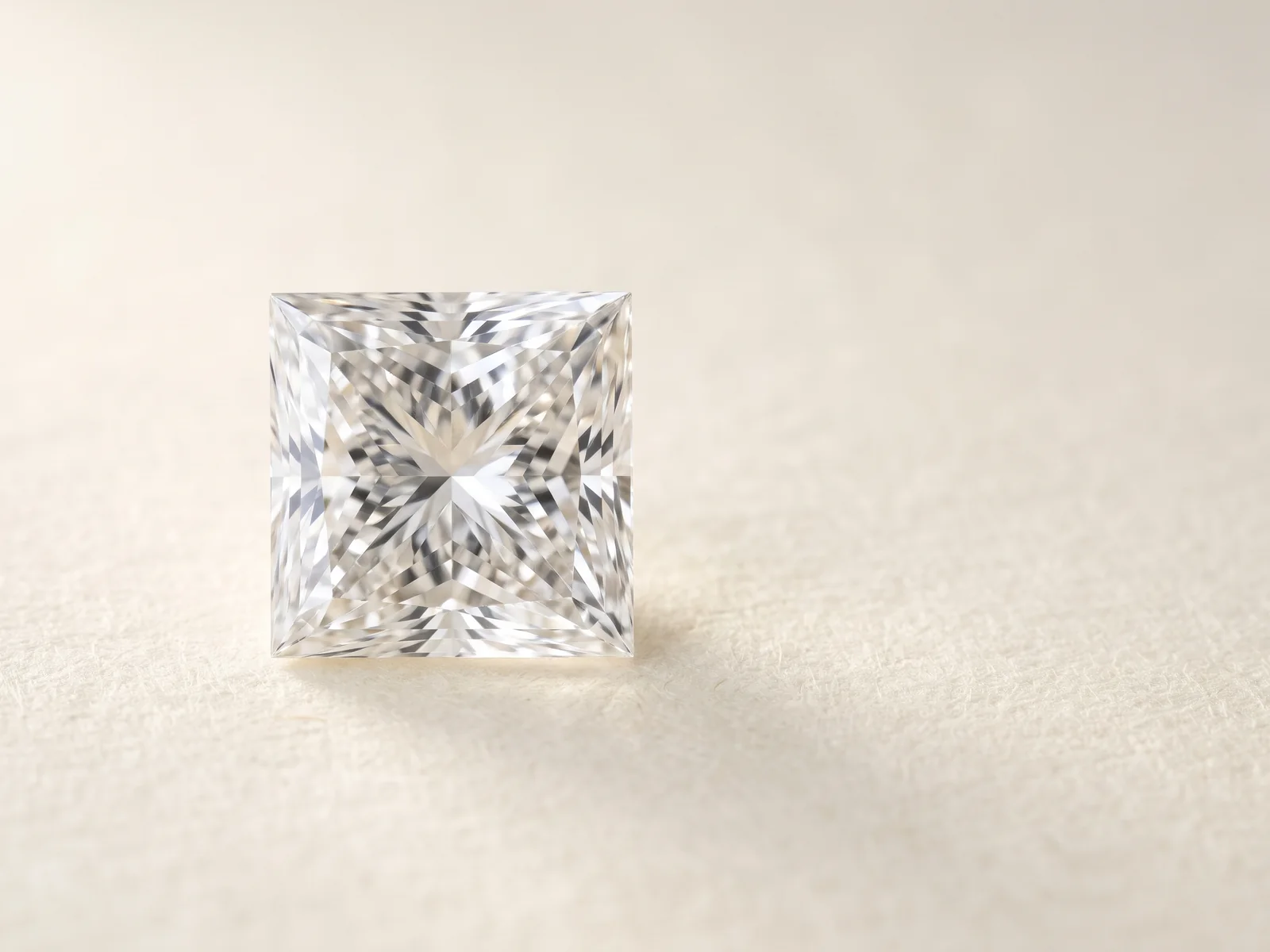
A princess cut has four sharp corners and four claws that guard them, and those claws decide how any wedding band will sit beside it. Here is how to choose a wedding band for a princess engagement ring that fits flush, wears well and suits the square outline.
 Reviewed by Raj Sood, Graduate Gemologist (GIA), AJP (GIA)Master jeweller and Graduate Gemologist (GIA) · reviewed 4 November 2026
Quick answer
Most princess engagement rings pair well with a straight band of similar width, usually 1.8–2.5 mm, sitting flush against the setting. Check the claws first: four corner claws on a high setting often leave room for a straight band, while low or halo settings may need a notched or fitted band. Match the metal, and try them on together.
What is the best wedding band for a princess engagement ring?
For most princess engagement rings, the answer is a straight band about the same width as the engagement ring's shank (the part of the ring that circles your finger). The princess cut is a square, and straight lines repeat its clean edges. A curved band, which flatters a pear or marquise, often looks slightly out of step beside a square stone.
Whether a straight band will actually sit against the engagement ring is a separate question, and it depends on how the setting is built. Three things decide the match:
- The setting: how high the stone sits and where the four corner claws end. This decides whether the band sits flush (touching along its whole length) or leaves a gap.
- The width: a band close to the shank width looks deliberate; a much wider or narrower band can look like it came from a different set.
- The metal: the same alloy keeps the colour even and means neither ring wears down faster than the other.
People use the words ring and band loosely; if you are wondering whether there is a real difference, see our explainer on whether you call it a wedding ring or a wedding band. Any term on this page you have not met before, such as gallery or shank, is also defined in our plain-English jewellery glossary.
Why is a princess cut harder to pair with a wedding band than a round?
A princess cut is a square modified brilliant: it has brilliant-style triangular and kite-shaped facets, usually around 57–58 of them, arranged in a square outline. Most are close to perfectly square, with a length-to-width ratio of about 1.00–1.05. Princess cuts are also deep, often 68–75% total depth, so a 1 carat princess measures only about 5.5 mm along each side.
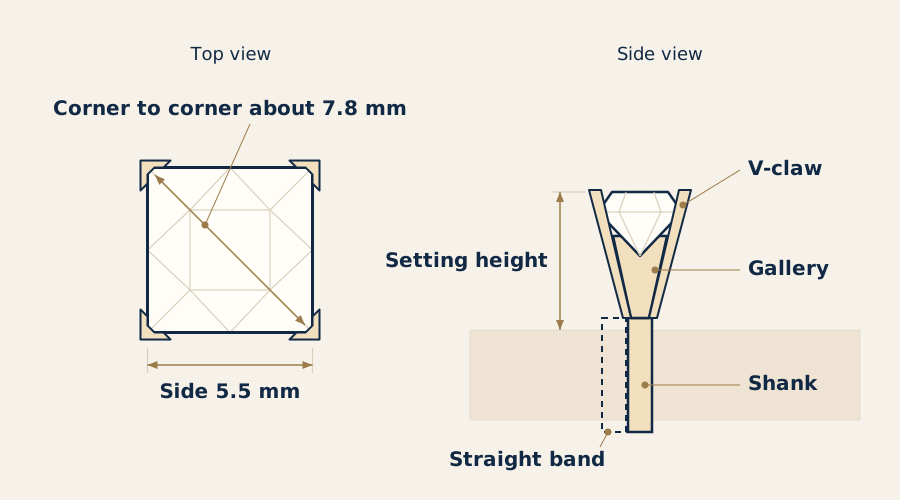
Diamond is 10 on the Mohs hardness scale, but hardness is not toughness. The four corners of a princess are thin points that can chip if they take a knock, so they are almost always protected by four V-claws, V-shaped claws that wrap each corner. Those claws are what a wedding band has to work around.
Here is the geometry that catches people out. The diagonal of a square is about 1.41 times its side, so a 5.5 mm princess measures roughly 7.8 mm from corner to corner. When the stone is set with its sides parallel to the band, as most are, a corner claw sits at each end of the side facing the band, reaching down and outward right where a wedding band wants to sit. A round of 1 carat is about 6.4 mm across, and its claws are spread around a circle, which is why our guide to how bands pair with a round solitaire usually finds a flush fit easier.
Some princess cuts are set on the diagonal, sometimes called kite-set, with a point facing each band. That changes the pairing completely: a notched or slightly V-shaped band often suits it better than a straight one. Other square and step-cut stones have their own quirks; compare pairing bands with the square, step-cut Asscher and bands for long, step-cut emerald rings.
Should a wedding band for a princess engagement ring sit flush or leave a gap?
Flush means the two rings touch along their length with no daylight between them. A gap means a small space, usually about 1–3 mm, opens up beside the head of the engagement ring because the claws or setting push the band away.
A straight band can sit flush when the head sits high enough that the basket and claw tips finish above the top of the band, or when the setting has a straight-sided gallery (the metal framework under the stone) that stops above the shank. On low settings, where the bottom of the stone sits within a millimetre or two of the finger, the corner claws usually block a straight band. Halo settings add roughly 1.5–2 mm of small diamonds around each side, which widens the head again; our page on bands that clear a halo setting deals with that case.
| Flush fit | Small gap | |
|---|---|---|
| Look | One continuous set, very tidy | Two separate rings, a little more relaxed |
| Setting needed | High or wedding-band-friendly head, or a notched/fitted band | Works with almost any setting |
| Wear | Rings can rub; check claws are not touching the band | Rings move more and can twist apart on the finger |
| Band shape | Straight on high settings; notched or fitted on low ones | Straight band of any style |
| Cost | Custom fitting adds cost | No extra work |
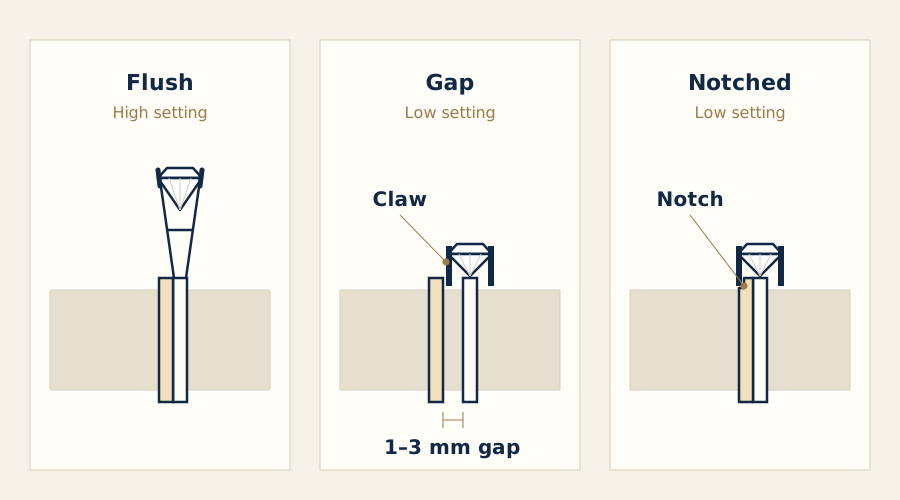
A gap is not a fault. Some people like seeing two distinct rings, and it avoids any metal-on-metal rubbing at the claws. If you want the rings to sit together, a band shaped to fit is usually the answer; see our guide to custom fitted bands that close the gap, and for the general rules that apply to any shape, how to match a band to any engagement ring.
Straight, notched or contour: which band shape suits a princess cut?
| Band shape | How it meets a princess ring | Notes |
|---|---|---|
| Straight plain | Flush on high settings; gap on low ones | Cleanest match for the square outline |
| Straight diamond | Same as plain; adds a line of sparkle | Channel set suits princess very well |
| Notched | A small cut-out lets the claws or basket sit into the band | Flush on many low settings; keeps a straight look |
| Fitted (custom) | Shaped around your exact setting | Most precise; made after measuring your ring |
| Contour / curved | Gentle U-curve beneath the head | Can suit a princess halo; often looks too soft on a solitaire |
| Chevron / V | Points towards the stone | Suits a kite-set princess, less often a standard one |
A notched band is the most common fix for a low princess setting. The notch is small, so from the top the band still reads as a straight line, and it lets the band sit snug against the corner claws. A fully fitted band goes further, mirroring the side of the head. This is also the usual approach when you are building a band around an older engagement ring that was never designed to have a band beside it.
Contour bands come into their own with pointed shapes; compare curved bands made for pear shapes and V and contour bands beside a marquise. With a princess, a curve can look as if it is fighting the stone's straight sides, so choose one only if you like that contrast.
The profile, the shape of the band when cut through, matters too. A flat profile echoes the princess's crisp lines and sits snugly against a flat-sided shank. A court (comfort-fit) profile is rounded inside and out, which is comfortable but leaves a small V where it meets the engagement ring. Our guide to flat, court and D-shape profiles compared shows each in cross-section.
Not sure which one is right?
Send us the stones you are looking at and our gemologist will tell you which to choose and why.
How wide should a wedding band be for a princess cut ring?
Start with the shank of your engagement ring. Most solitaire shanks are about 1.6–2.5 mm wide, and a band within about 0.2–0.3 mm of that width looks like it was made for the set. A princess is a fairly bold, squared shape, so it carries a slightly wider band better than a delicate round does, but the stone itself should still be the focus.
| Princess centre stone | Approximate size | Band width that usually balances |
|---|---|---|
| 0.50 ct | about 4.4 × 4.4 mm | 1.5–2.0 mm |
| 0.75 ct | about 5.0 × 5.0 mm | 1.7–2.2 mm |
| 1.00 ct | about 5.5 × 5.5 mm | 1.8–2.5 mm |
| 1.50 ct | about 6.3 × 6.3 mm | 2.0–2.8 mm |
| 2.00 ct | about 7.0 × 7.0 mm | 2.2–3.0 mm |
- Slimmer band: makes the centre stone look larger by contrast.
- Wider band, 3–4 mm: gives a stronger, more modern look, but can make a smaller princess look smaller.
- Thickness matters too: bands under about 1.5 mm deep (from inside to outside surface) can bend out of round over years of wear, so check depth as well as width.
- Combined width: two rings together often feel tighter, so some people go up a quarter or half size on one ring.
Plain or diamond band: which setting style suits a princess cut?
A plain band keeps the attention on the centre stone and is the simplest to wear and resize. A diamond band adds sparkle and can make the set look more finished. Our page on the pros and cons of plain and diamond bands covers the trade-offs in full. If you choose diamonds, the setting style matters for a princess:
- Channel set: small diamonds held side by side between two metal walls, with no claws. Princess-cut diamonds in a channel repeat the square centre stone, and the smooth edges will not catch on the engagement ring's claws. A channel set princess cut wedding band is one of the most natural partners for a princess solitaire.
- Shared-claw (shared-prong): each diamond is held by small claws shared with its neighbours. More light reaches the stones, so it sparkles more, but the claws can catch and rub against the engagement ring. See channel versus shared-claw settings for a side-by-side comparison.
- Bezel set: each diamond sits in its own thin metal rim. Very smooth and secure; read more about bezel-set bands with a smooth, snag-free edge.
- Pavé: many tiny round diamonds set close together. Pretty, but less of a match for the princess's straight lines.
Try to keep the band's diamonds within a grade or two of the centre stone's colour; a G centre usually looks right with F–H band diamonds. Natural and lab-grown diamonds are both real diamond with the same hardness and sparkle, and they can be worn together, but grading reports and descriptions should always state which is which. A half eternity band (diamonds across the top only) can be resized more easily than a full eternity band, which has diamonds all the way round.
Should the wedding band match the engagement ring metal?
In most cases, yes. Rings worn together rub against each other every day, and when two different alloys touch, the harder one gradually wears the softer one. Matching the metal also keeps the colour even, which is especially noticeable with white metals.
- Platinum with platinum: usually 950 platinum (95% pure). Naturally white, dense and hard-wearing; it develops a soft satin look (called patina) over time.
- 18ct white gold with 18ct white gold: 75% gold, usually plated with rhodium for a bright white finish. The plating wears and is typically renewed every 12–24 months; if one ring is replated and the other is not, they will look slightly different.
- Yellow or rose gold: warm colours that make a princess with a touch of body colour look whiter. Match the carat (18ct with 18ct) as well as the colour.
- Two-tone on purpose: a yellow gold band beside a platinum ring can look deliberate, but expect some uneven wear where they meet.
What are good princess cut wedding set stacking ideas?
These are the combinations that tend to work with a princess engagement ring, from simplest to boldest:
- Classic pair: a princess solitaire with a 2 mm flat plain band in the same metal, sitting flush beneath a high setting.
- Matching square line: a princess solitaire with a channel set princess cut half eternity band; the small squares echo the centre stone.
- Notched solitaire set: a low-set princess with a notched plain band, so the two sit together without a gap.
- Sandwich stack: a thin diamond band either side of the engagement ring, which frames the square head and protects it from side knocks.
- Mixed texture: a polished engagement ring with a slightly wider brushed or flat band, for contrast without changing metal.
Cushion cuts are the closest relative to the princess, with soft corners instead of sharp ones, and our page on band pairings for cushion engagement rings shows how rounding the corners changes the fit. If your partner wants a band that relates to yours, see our guide to choosing a matching men's wedding band.
Related guideFitted Wedding Bands Explained | Custom Curved BandsHow much does a princess cut bridal set cost in Australia?
Princess cuts are made from both natural and laboratory-grown diamond, and the two look the same to the eye. Lab-grown diamonds are real diamond grown in a laboratory rather than mined; they cost much less than natural diamonds of similar grades. A princess also usually costs less per carat than a round of the same weight and grades, partly because cutting a square keeps more of the rough crystal.
| Item | Approximate price range (AUD) |
|---|---|
| Plain 2 mm band, 18ct gold | about $700–$1,500 |
| Plain 2 mm band, platinum | about $900–$2,000 |
| Channel set princess half eternity, about 0.50 ct total, lab-grown | about $1,500–$3,000 |
| Channel set princess half eternity, about 0.50 ct total, natural | about $2,500–$5,500 |
| Notched or fitted version of a band | adds about $300–$1,000 |
| 1 ct princess centre stone, G–H, VS, lab-grown | about $1,000–$3,000 |
| 1 ct princess centre stone, G–H, VS, natural | about $6,000–$14,000 |
These are broad ranges only. Metal prices, diamond grades and how much hand work a band needs all move the final figure, so treat them as a starting point for planning rather than a quote.
Browse princess cut diamonds and wedding bands: natural and lab-grown
How do you choose a wedding band for a princess engagement ring? Step by step
- Measure the shank. Note the engagement ring's shank width in millimetres; this is your starting band width.
- Look side-on. Check how high the stone sits and whether the corner claws reach below the top of the shank.
- Decide flush or gap. Choose whether you want the rings to touch or sit as two separate pieces.
- Pick the band shape. Straight for high settings, notched or fitted for low settings, contour only for halos or by preference.
- Match the metal. Same alloy and carat, so the colour stays even and both rings wear at a similar rate.
- Choose plain or diamond. If diamond, consider a channel or bezel setting and keep colour within a grade or two of the centre.
- Try them together. Check comfort across the knuckle, the combined feel and whether either ring needs a size adjustment.
- Finish the details. Add any engraving inside the band before it is finished.
For the words inside the band, our ideas on engraving wording that still reads well decades on are a good place to start. For budgeting, sizing and timing beyond the princess question, read the complete wedding ring buying guide.
Free consultation
Talk to a gemologist
Compare stones in person or online with Raj Sood, Graduate Gemologist (GIA), AJP (GIA).
Book a consultationFAQ
Common questions
Will a straight wedding band sit flush with a princess cut engagement ring?
Often, but not always. It sits flush when the setting is high enough that the corner claws finish above the band; on low settings the claws usually push a straight band away, and a notched or fitted band closes the gap.
What width wedding band goes with a 1 carat princess cut?
Most people choose about 1.8–2.5 mm, ideally within 0.2–0.3 mm of the engagement ring's shank width. Wider bands suit a bolder look but make the centre stone appear a little smaller.
Is a curved band a good match for a princess cut?
Usually not for a solitaire, because the curve contrasts with the square outline. A gentle contour can suit a princess halo, and a V-shaped band can suit a princess set on the diagonal.
What diamond band suits a princess engagement ring?
A channel set band with small princess-cut diamonds is a natural match because it repeats the square shape and has no claws to catch. Bezel set bands are another smooth, secure option.
Can I wear a white gold band with a platinum princess ring?
You can, but the two metals wear at different rates where they rub, and the colour can differ once the white gold's rhodium plating wears. Matching the metal avoids both issues.
Do I need a custom band for my princess engagement ring?
Only if you want the rings to sit flush and your setting is low or wide. Many princess rings take a standard straight band; a notched or fitted band is made when the claws get in the way.

Ask a gemologist
Not sure which diamond to choose?
Raj Sood is a Graduate Gemologist (GIA) and master jeweller. Bring the stones you are considering, or send the reports, and he will tell you honestly which one is better and why.
Keep learning
Related guides
 Wedding Bands & EternityHow to Match a Wedding Band to an Engagement Ring
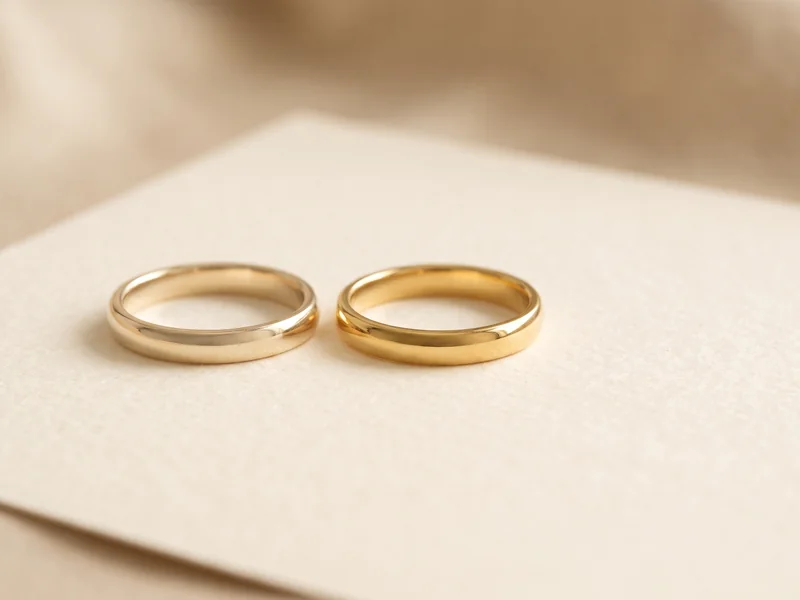 Wedding Bands & EternityFitted Wedding Bands Explained | Custom Curved Bands
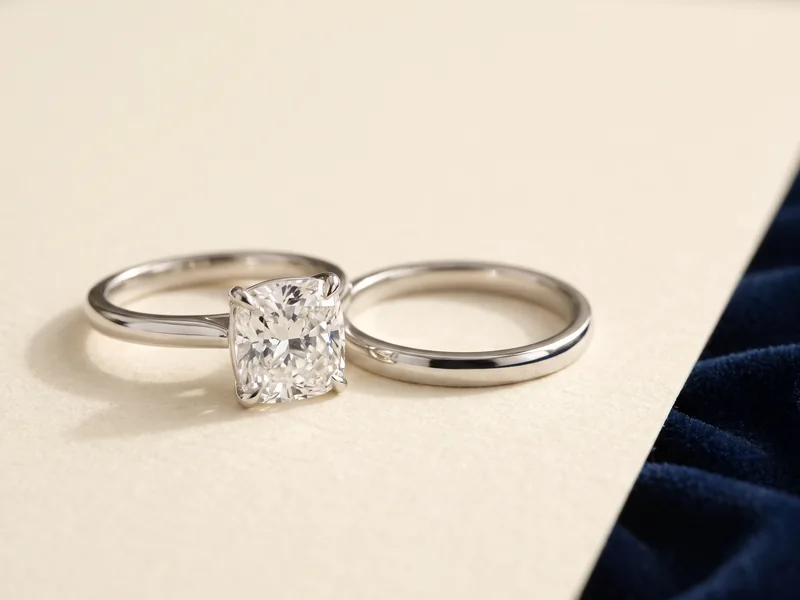 Wedding Bands & EternityBest Wedding Band for Cushion Engagement Rings
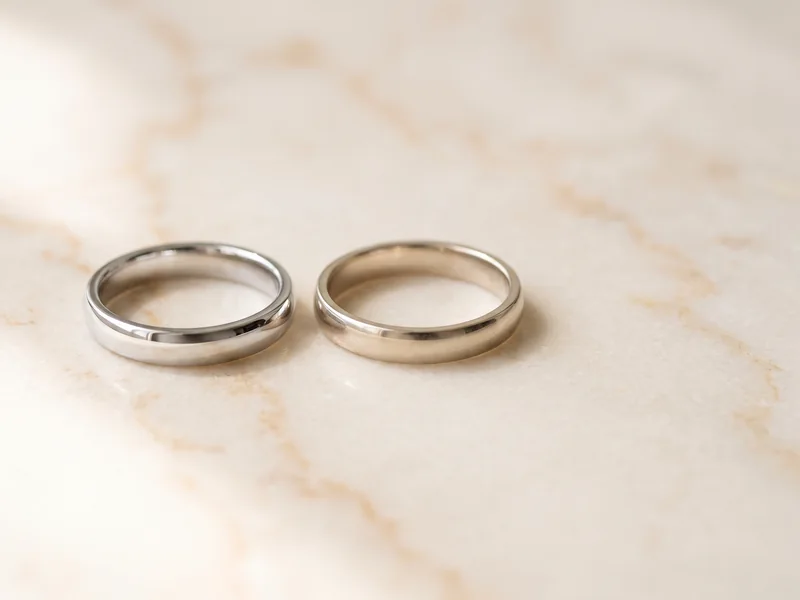 Wedding Bands & EternityShared-Prong vs Channel-Set Wedding BandsWedding Bands & EternityWedding Ring Buying GuideWedding Bands & EternityWedding Ring vs Wedding BandWedding Bands & EternityMen’s Wedding Band GuideWedding Bands & EternityBest Wedding Band for Oval Engagement Rings
Explore more
More guides on this topic
Education