
- Education
- Diamond 4Cs & Grading
- When Is an SI1 Diamond a Smart Choice? Clarity, Eye-Clean Odds and Price
Diamond 4Cs & Grading
When Is an SI1 Diamond a Smart Choice? Clarity, Eye-Clean Odds and Price
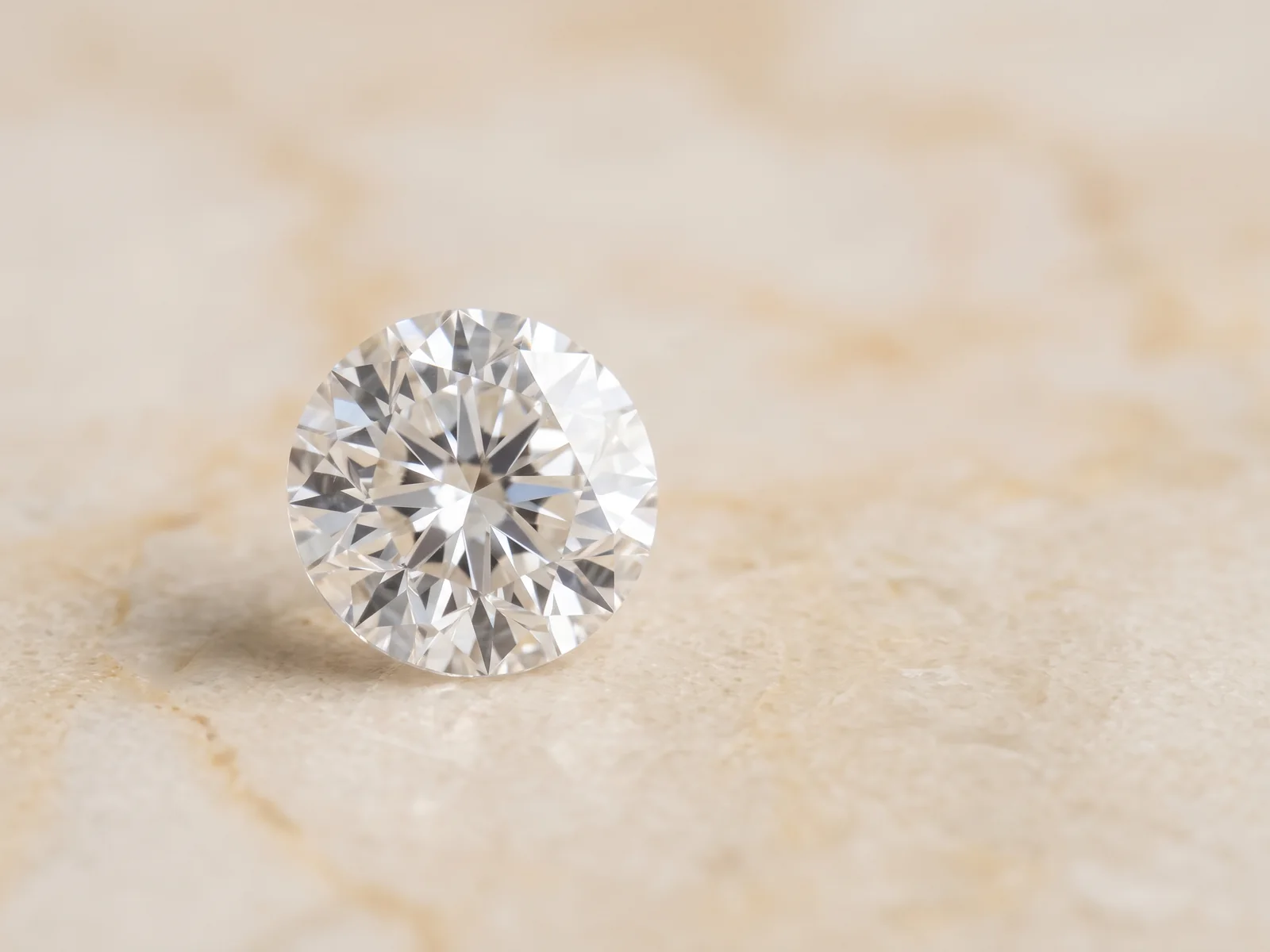
An SI1 diamond can look exactly like a VS2 on the hand for noticeably less money, or it can show a dark mark you notice every day. Here is how to tell which one you are looking at.
 Reviewed by Raj Sood, Graduate Gemologist (GIA), AJP (GIA)Master jeweller and Graduate Gemologist (GIA) · reviewed 4 November 2026
Quick answer
An SI1 diamond is a smart choice when its inclusions can't be seen face-up without magnification. That is most likely in brilliant shapes such as round, oval and cushion under about 1.5 carats, with inclusions that are white or near the edge. It usually costs noticeably less than VS2, but every SI1 must be checked individually.
What does SI1 clarity mean?
Clarity describes the small internal features (called inclusions) and surface marks (called blemishes) that almost every diamond has. It is one of the four Cs of diamond grading, alongside cut, colour and carat weight. A grader examines the stone face-up under 10× magnification, a loupe or microscope that makes the diamond look ten times larger, and assigns one of eleven grades.
SI1 stands for Slightly Included, first grade. On the GIA definition, SI inclusions are noticeable to a trained grader at 10×, whereas VS (Very Slightly Included) inclusions are minor and harder to find. SI1 is the cleaner of the two SI grades; SI2 has larger or more numerous inclusions. The grade says nothing about whether you can see the inclusion without magnification, and that gap is exactly where an SI1 can be good value.
| Grade | Name | What a grader sees at 10× |
|---|---|---|
| FL | Flawless | No inclusions or blemishes |
| IF | Internally Flawless | No inclusions, only minor surface blemishes |
| VVS1–VVS2 | Very, Very Slightly Included | Inclusions extremely difficult to see |
| VS1–VS2 | Very Slightly Included | Minor inclusions, difficult to somewhat easy to see |
| SI1–SI2 | Slightly Included | Noticeable inclusions |
| I1–I3 | Included | Obvious inclusions that may affect brightness or durability |
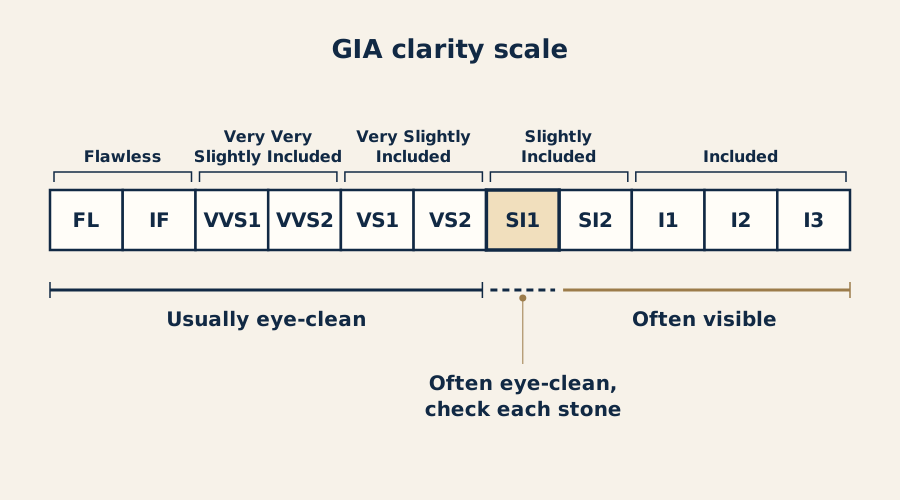
Clarity grading weighs five things: the size of each inclusion, the number, the position (under the table, the large top facet, is most visible), the nature (a crystal, a feather, a cloud) and the relief, meaning how much it contrasts with the diamond around it. Two SI1 stones can therefore look completely different. If any of these words are new, our plain-English jewellery glossary explains them.
Is an SI1 diamond eye-clean?
Often, but not always. A diamond is eye-clean when you cannot see any inclusion with normal vision, looking face-up at about 25–30 cm, the distance you would look at a ring on your own hand. Our guide to what eye-clean really means covers the test in detail. Most VS2 stones pass easily. With SI1 a good share pass, a share are borderline and some show an inclusion you will find every time you look.
Whether a particular SI1 is eye-clean comes down to three things the grade cannot tell you:
- Colour of the inclusion: white or colourless crystals, feathers and clouds blend into the sparkle; black crystals (often graphite or other dark minerals) stand out.
- Position: an inclusion near the girdle (the thin outer edge) is easily hidden by faceting or a claw; the same inclusion under the table is in plain view.
- Number of reflections: brilliant faceting can mirror one inclusion several times across the stone, which can make a small crystal look like a scatter of dots.
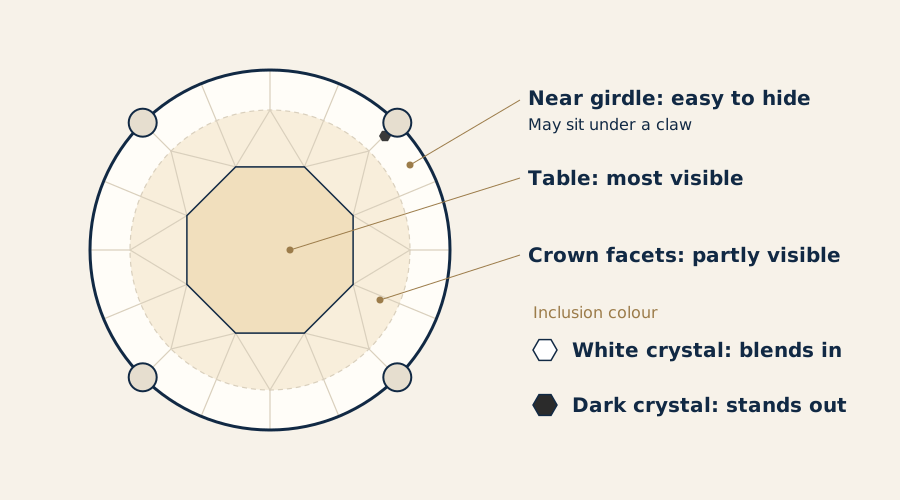
Clarity also matters for durability, not just looks. A feather (a small internal fracture) that reaches the surface, especially near the girdle or a point, can be a weak spot if the stone takes a hard knock. In SI1 this is uncommon but worth checking on the report's plotting diagram.
Which shapes and sizes suit SI1 clarity?
Two factors change your odds more than anything else: the faceting style and the size. Brilliant cuts (round, oval, cushion, pear, princess, radiant, marquise, heart) break light into many small flashes that disguise inclusions. Step cuts (emerald, Asscher, baguette) have long, flat, parallel facets that work like a window into the stone, so inclusions show far more readily. If you are unsure which family a shape belongs to, look at the facets: many small triangles and kites mean brilliant, long parallel strips mean step cut.
Size works the same way. A larger diamond has a larger table and each inclusion is physically bigger for the same grade, because grading is judged relative to the stone. A half-carat diamond at SI1 is very often eye-clean, and the same is broadly true for three-quarter carat stones. Around 1 carat most brilliant SI1s are still fine, but it is worth checking each one. By the time you reach a 1.25 carat diamond or one and a half carats, you need to be more selective, and in 2 carat diamonds, where clarity choices get harder, many buyers move up to VS2.
| Size | Brilliant cuts (round, oval, cushion) | Step cuts (emerald, Asscher) |
|---|---|---|
| 0.30–0.75 ct | SI1 usually eye-clean; often a sensible pick | SI1 possible with careful checking |
| 0.75–1.25 ct | SI1 often eye-clean; check each stone | VS2 or better usually safer |
| 1.25–1.75 ct | Some SI1s eye-clean; inclusions under the table more visible | VS1–VS2 recommended |
| 2 ct and over | Hand-picked SI1 only; VS2 a common choice | VS1 or better usually needed |
These are general patterns, not rules. A 2 carat oval SI1 with a single white crystal under a side facet can be cleaner to the eye than a 1 carat VS2 with a dark pinpoint in the centre. That is why you look at the stone, not just the grade.
Which inclusions are fine in an SI1, and which should you avoid?
The grading report lists the inclusion types, and a plotting diagram (a map of the stone) shows where they are: red symbols for inclusions, green for blemishes. Here is how to read them for an SI1:
- Usually fine: small white or transparent crystals, light pinpoints, small feathers that stay inside the stone, faint needles and indented naturals on the girdle.
- Check carefully: clouds (clusters of tiny pinpoints). A light cloud is invisible, but a large one can make the stone look hazy or dull even though no single mark is visible.
- Avoid in most cases: dark crystals under the table, a feather that reaches the surface near the girdle or a point, and cavities or chips that open to the surface.
- Be wary of: reports that say "clarity grade is based on clouds that are not shown". It is common in SI grades and sometimes means transparency has been reduced.
Photos and videos can mislead in both directions. A high-magnification video makes every SI1 look heavily included, while a small product photo can hide a dark crystal entirely. The most useful comparison is an SI1 photographed beside a VS2 and an SI2 of similar size, so you can see what the grade step actually looks like. Ask for that if you can, and for a face-up check of whether the stone is eye-clean at normal viewing distance.
Not sure which one is right?
Send us the stones you are looking at and our gemologist will tell you which to choose and why.
SI1 vs VS2 vs SI2: what is the real difference?
The grades either side of SI1 are the ones people most often weigh it against. The table shows how they compare in practice for a brilliant cut of about 1 carat.
| VS2 | SI1 | SI2 | |
|---|---|---|---|
| Inclusions at 10× | Minor, somewhat easy to see | Noticeable | Easily noticeable |
| Eye-clean (1 ct brilliant) | Almost always | Often; check each stone | Sometimes; many show something |
| Step cuts | Usually eye-clean under 1.5 ct | Risky above about 1 ct | Rarely suitable |
| Durability concerns | Very rare | Uncommon; check surface-reaching feathers | More frequent; check the plot |
| Price | Highest of the three | Typically about 10–20% below VS2 | Typically below SI1 |
| Who it suits | Larger stones, step cuts, peace of mind | Brilliant cuts to about 1.5 ct, value-focused buyers | Careful buyers happy to inspect many stones |
The jump from VS2 to SI1 is where many people find the most sensible value: the price drops, but a well-chosen SI1 looks the same to the eye. The step down to SI2 saves a little more, but the share of stones with visible inclusions rises sharply, so you have to look at many more diamonds to find a good one. Seeing how clarity trades off against colour, cut and carat helps you decide where your budget does the most work.
Related guideEye Clean DiamondsHow much does an SI1 diamond cost in Australia?
SI1 diamonds come in both natural and laboratory-grown form. A lab-grown diamond is real diamond, with the same hardness (10 on the Mohs scale) and refractive index (about 2.42) as a natural one, grown in a laboratory rather than mined. Lab-grown diamonds cost much less than natural, and both should come with an independent grading report from a lab such as GIA or IGI that states clearly whether the stone is natural or lab-grown.
| 1 ct round, G colour, Excellent cut | Approximate price range (AUD) |
|---|---|
| Natural, VS2 | about $8,000–$13,000 |
| Natural, SI1 | about $6,500–$11,000 |
| Natural, SI2 | about $5,000–$9,000 |
| Lab-grown, VS2 | about $1,000–$2,500 |
| Lab-grown, SI1 | about $900–$2,200 |
These are broad ranges only; prices move with the market and with every other grade on the report. The pattern matters more than the exact numbers. In natural diamonds, the SI1 step can free up enough budget to move up a colour grade or a step in carat weight, for example from 0.90 to 1.00 carat. In lab-grown diamonds, the gap between SI1 and VS2 is often small in dollar terms, because so many lab-grown stones are grown clean. If a lab-grown VS2 costs only a little more, it is often the simpler choice.
Lab-grown inclusions also look different. Stones grown by the HPHT method (high pressure, high temperature) can contain metallic flux inclusions, while CVD stones (chemical vapour deposition) can show dark pinpoints or graphite-like specks. Both are judged on the same SI1 standard, but dark lab-grown inclusions deserve the same careful look as dark crystals in a natural stone.
Browse SI1 diamonds: natural and lab-grown
When is an SI1 diamond the smart choice?
Putting it together, an SI1 diamond tends to be the smart pick in these situations:
- A brilliant shape up to about 1.5 carats, where faceting hides small inclusions well.
- A natural diamond on a set budget, where the saving over VS2 can go into colour, carat or a better cut.
- Inclusions that are white, small and off-centre, ideally near the girdle where a claw can cover them.
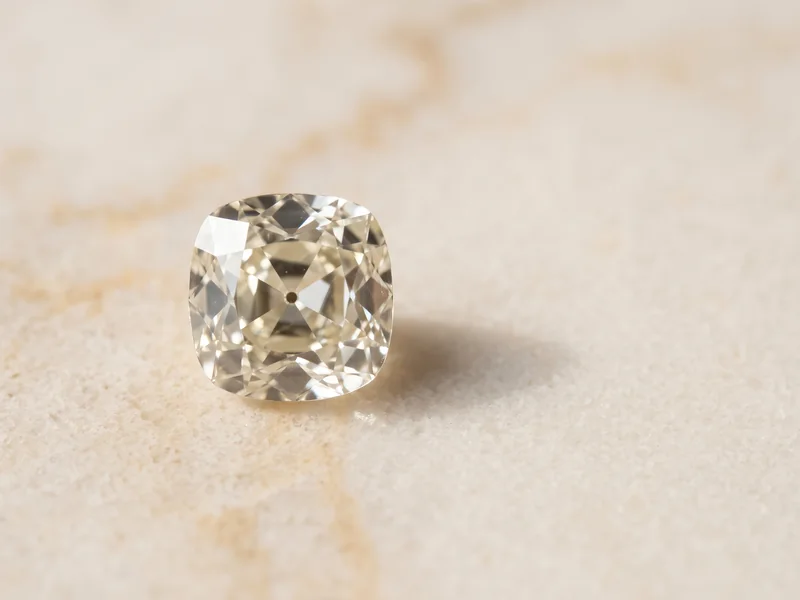
- A warm colour or warm metal. Buyers choosing faint yellow L and M colour diamonds for vintage or yellow gold settings are usually focused on character and value, and SI1 fits that thinking.
- An excellent cut with strong polish and symmetry. Lively sparkle disguises inclusions far better than a dull, poorly proportioned stone, so read up on how polish and symmetry grades affect sparkle alongside clarity.
And SI1 is usually not the right choice for:
- Emerald, Asscher and baguette cuts over about 1 carat, where the open facets show everything.
- Large stones of 2 carats and over, unless you can inspect the diamond yourself.
- Lab-grown diamonds where VS2 costs only a little more.
- Any stone with a dark inclusion under the table or a surface-reaching feather near the edge, however good the price.
Can the setting hide inclusions in an SI1 diamond?
Sometimes, and it is one of the practical advantages of choosing SI1 carefully. A claw placed over an inclusion near the girdle can make it disappear entirely. A bezel (a thin rim of metal around the edge) hides more of the girdle again. A halo of small diamonds adds extra sparkle around the centre stone, which draws the eye away from small details.
For this to work, the stone and setting need to be planned together: the jeweller orients the diamond so the inclusion sits under a claw, rather than setting it in any rotation. It is also a good moment to check any feather near the edge, because a claw sitting on it puts pressure on a weak spot. Allow time for that conversation; our guide on how far ahead to order the engagement ring sets out realistic lead times.
Bear in mind that a setting can only cover what is at the edge. An inclusion in the centre of the table cannot be hidden by any setting, so the stone itself still has to pass the eye-clean test.
How do you check an SI1 diamond before you buy? Step by step
- Read the report. Confirm SI1 clarity, the grading lab, and whether the diamond is natural or lab-grown. Note the cut, polish and symmetry grades too.
- Study the plotting diagram. Find where each inclusion sits. Favour stones whose main inclusion is off the table and towards the girdle.
- Read the comments. Look for notes such as "clouds not shown" and check whether any feather reaches the surface.
- Look face-up at normal distance. In person or in a real-size photo, at about 25–30 cm. If you cannot find the inclusion, it is eye-clean for you.
- Compare with the grades either side. View the SI1 next to a VS2 and an SI2 of similar size and shape, and weigh the price step against what you can actually see.
- Plan the setting. Ask whether a claw can sit over the main inclusion, and make sure no claw presses on a feather near the edge.
- Check unfamiliar terms. Look up any inclusion type or report wording in our glossary of grading and setting terms before you decide.
Free consultation
Talk to a gemologist
Compare stones in person or online with Raj Sood, Graduate Gemologist (GIA), AJP (GIA).
Book a consultationShop this shape
FAQ
Common questions
Is SI1 clarity good for an engagement ring?
Yes, if the stone is eye-clean. Many SI1 brilliant cuts under about 1.5 carats look the same as a VS2 on the hand, and the report should show no feather reaching the surface near the edge.
Can you see inclusions in an SI1 diamond?
Under 10× magnification, yes; that is what the grade means. With the naked eye, many SI1s show nothing, while some show a dark crystal or a hazy cloud, so each stone has to be checked individually.
What is the difference between SI1 and VS2?
VS2 inclusions are minor and somewhat easy to see at 10×, while SI1 inclusions are noticeable at 10×. Almost all VS2 brilliants are eye-clean; many but not all SI1s are, and SI1 usually costs somewhat less.
Is an SI1 diamond worth it compared with SI2?
For most buyers, yes. SI2 stones are cheaper again, but far more of them show a visible inclusion, so you need to inspect many more to find a clean one.
Should I buy a lab-grown SI1 diamond?
It can be fine, but compare it with lab-grown VS2 first. Lab-grown diamonds cost much less than natural, so the dollar gap between SI1 and VS2 is often small, and the cleaner grade may cost little extra.
Are SI1 diamonds less durable?
Not usually. Most SI1 inclusions sit inside the stone and do not affect strength; the exception is a feather that reaches the surface near the girdle or a point, which you can spot on the report's plotting diagram.

Ask a gemologist
Not sure which diamond to choose?
Raj Sood is a Graduate Gemologist (GIA) and master jeweller. Bring the stones you are considering, or send the reports, and he will tell you honestly which one is better and why.
Keep learning
Related guides
 Diamond 4Cs & GradingEye Clean DiamondsDiamond 4Cs & GradingDiamond 4CsDiamond 4Cs & GradingPolish and SymmetryDiamond 4Cs & Grading1.5 Carat Diamonds
 Diamond 4Cs & GradingL and M Colour Diamonds (Faint Yellow)Diamond 4Cs & Grading0.5 Carat Diamonds
 Diamond 4Cs & Grading0.75 Carat Diamonds
 Diamond 4Cs & Grading1.25 Carat Diamonds
Explore more
More guides on this topic
Education