
- Education
- Diamond 4Cs & Grading
- 1.5 Carat Diamonds: Size, Price and What to Choose
Diamond 4Cs & Grading
1.5 Carat Diamonds: Size, Price and What to Choose
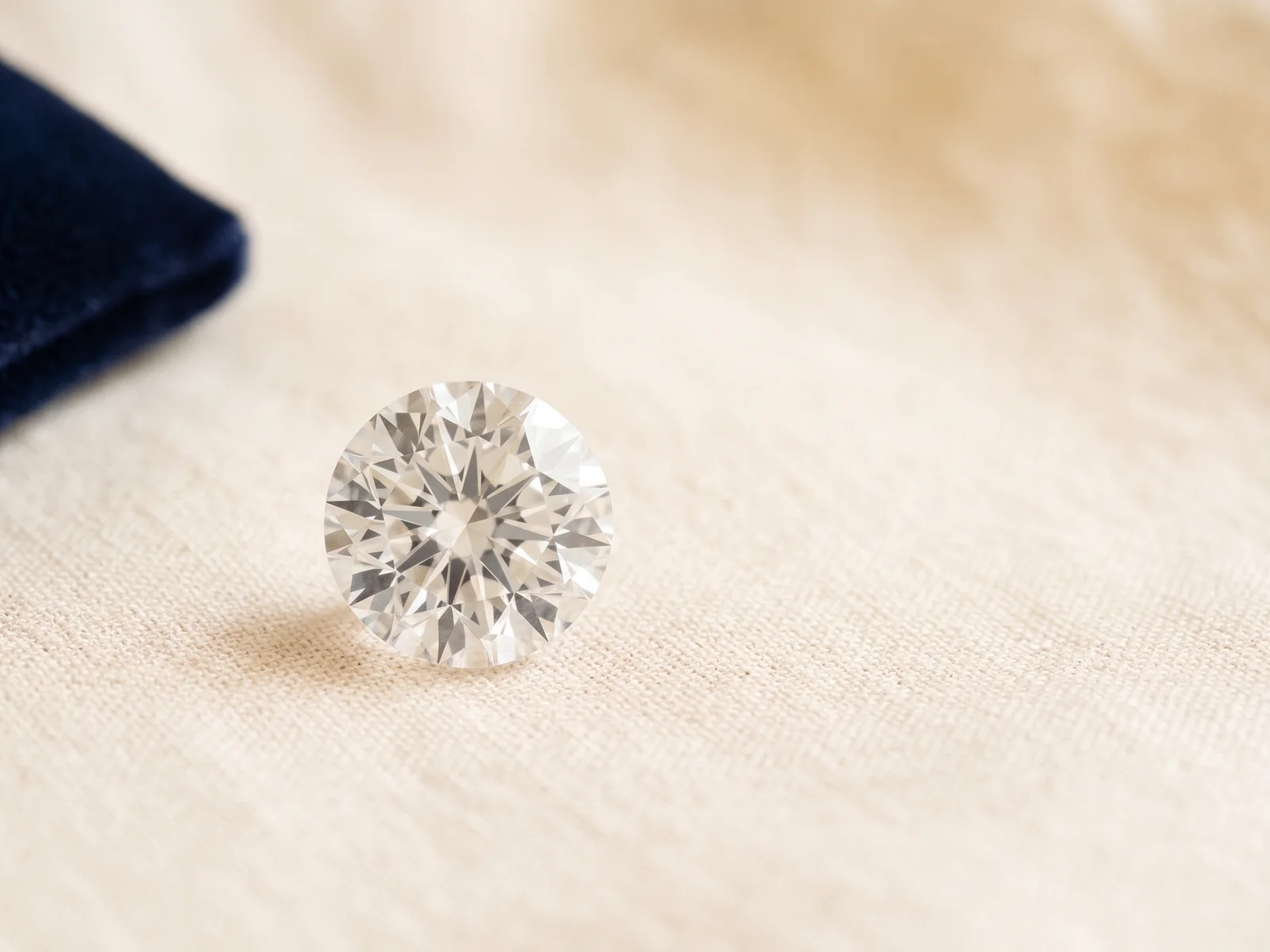
A 1.5 carat diamond is where a centre stone starts to look generous on most hands without the price of a 2 carat. Here is what it measures in every shape, what it costs in Australia and how to get the most from it.
 Reviewed by Raj Sood, Graduate Gemologist (GIA), AJP (GIA)Master jeweller and Graduate Gemologist (GIA) · reviewed 4 November 2026
Quick answer
A 1.5 carat diamond weighs 0.30 grams. A well-cut round measures about 7.3–7.5 mm across, and elongated shapes like ovals look larger, around 8.8 × 6.5 mm. Natural 1.5 carat diamonds typically cost about AUD $8,000–$50,000, lab-grown about AUD $1,000–$4,500. For most people, G–H colour and VS2–SI1 eye-clean clarity balance looks and budget.
What is a 1.5 carat diamond?
Carat is a unit of weight, not size. One carat is 0.20 grams and is divided into 100 points, so a 1.5 carat diamond weighs 0.30 grams and is often written as 1.50 ct or 150 points. Our guide to how carat weight is measured explains why weight and visible size are not the same thing.
Carat is only one of the 4Cs of diamond grading, alongside cut, colour and clarity. At 1.5 carats the other three start to matter more than they do in smaller stones: the stone is larger and light travels further through it, so colour is easier to see, and inclusions (tiny internal features) are physically larger.
Watch the wording on listings. A 1.5 ct total weight (often shortened to tw or ctw) ring or pair of earrings adds up every stone, so a pair of 1.5 ct tw studs is two stones of about 0.75 ct each, not two 1.5 carat diamonds. If any term here is unfamiliar, our jewellery glossary defines it in plain English.
How big is a 1.5 carat diamond in mm?
Because carat is weight, the same 1.5 carats spreads differently depending on the shape and how deep the stone is cut. Elongated shapes such as oval, pear and marquise carry less weight underneath, so they look larger face-up than a round or cushion of the same weight.
| Shape | Typical size at 1.5 ct | Face-up impression |
|---|---|---|
| Round brilliant | about 7.3–7.5 mm diameter | The reference point |
| Oval (ratio ~1.35) | about 8.8 × 6.5 mm | Looks larger than a round |
| Pear (ratio ~1.50) | about 9.2 × 6.1 mm | Looks larger, lengthens the finger |
| Marquise (ratio ~2.00) | about 11.4 × 5.7 mm | Longest outline for the weight |
| Emerald (ratio ~1.40) | about 8.0 × 5.7 mm | Similar to a round; open, mirror-like |
| Radiant (ratio ~1.25) | about 7.4 × 6.0 mm | Slightly smaller than a round |
| Cushion (square) | about 6.6 × 6.6 mm | Looks smaller; deeper cut |
| Princess | about 6.3 × 6.3 mm | Compact; corners add presence |
| Asscher | about 6.3 × 6.3 mm | Compact, step-cut |
| Heart (ratio ~0.93) | about 7.8 × 7.2 mm | Similar to a round |
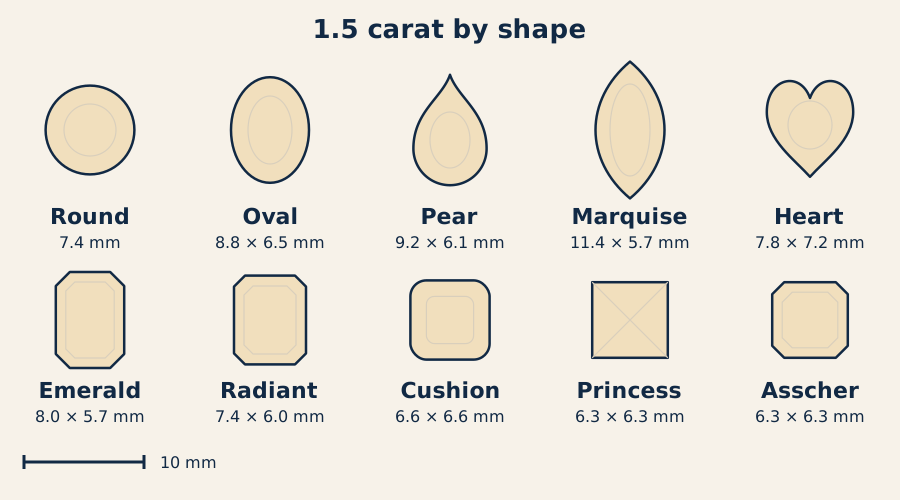
These are typical measurements, not rules. A round cut deep, at around 64% total depth, may measure only 7.1–7.2 mm, while a well-proportioned round near 60–62% depth sits at 7.4–7.5 mm. That 0.3 mm is visible on the hand, which is why measurements on the grading report matter as much as the weight. For every shape and carat in one place, see our mm-to-carat size chart for every shape.
How does a 1.5 carat diamond look on the finger?
On an average Australian ring size of about N (a finger roughly 17 mm across), a 7.4 mm round covers a little under half the width of the finger. On a slimmer size J finger (about 15 mm), the same stone covers around half and reads as clearly substantial. On a larger size R or S hand it looks balanced rather than big.
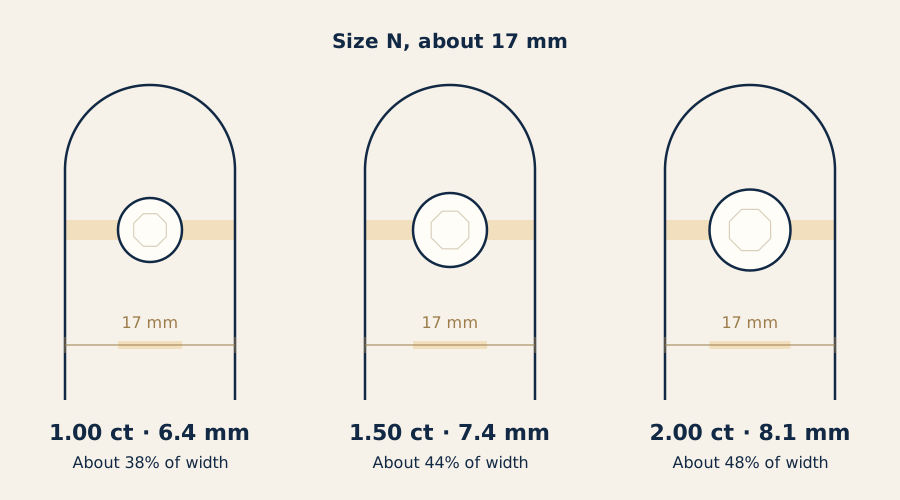
Compared with three-quarter carat stones or half-carat diamonds, a 1.5 carat is a noticeable jump in presence: a 0.50 ct round is about 5.1 mm across, so the 1.5 ct is roughly 45% wider and more than twice the face-up area. A few things change how big it looks:
- Shape: an oval, pear or marquise looks longer and larger than a round of the same weight.
- Setting: a halo adds about 2–3 mm to the visible width; thin claws and a slim band make the centre stone look bigger by contrast.
- Band width: a 1.8–2.2 mm band flatters a 1.5 ct; a 3 mm band makes it look smaller.
- Spread: a stone cut for good face-up size (spread) looks larger than a deep one of the same weight.
How much does a 1.5 carat diamond cost in Australia?
Price per carat rises with size, so a 1.5 carat diamond costs well over one and a half times a 1 carat of the same quality. The figures below are approximate AUD ranges for a round with an excellent cut; prices move with the market, so treat them as a guide and check current stock for live prices.
| Colour / clarity | Natural 1.5 ct round (approx. AUD) | Lab-grown 1.5 ct round (approx. AUD) |
|---|---|---|
| J–K, SI1–SI2 | $8,000–$13,000 | $1,000–$2,000 |
| H–I, VS2–SI1 | $12,000–$20,000 | $1,200–$2,500 |
| F–G, VS1–VS2 | $18,000–$30,000 | $1,600–$3,500 |
| D–E, VVS1–IF | $30,000–$50,000+ | $2,500–$4,500 |
Three things move price most at this size. First, the 1.50 threshold: demand clusters at round numbers, so a 1.40–1.49 ct stone often costs noticeably less than a 1.50 ct and looks almost identical, only about 0.1–0.2 mm smaller across. Second, shape: fancy shapes such as ovals, pears and cushions usually cost less per carat than rounds. Third, cut quality, which sets how much light the stone returns.
If you are weighing up budgets, our guide to 1 carat diamond prices and sizes shows where the step up from one carat sits, and the comparison table further down puts 1 ct, 1.25 ct, 1.5 ct and 2 ct side by side.
Not sure which one is right?
Send us the stones you are looking at and our gemologist will tell you which to choose and why.
Natural vs lab-grown 1.5 carat diamonds: which suits you?
A laboratory-grown diamond is real diamond: the same carbon crystal, the same hardness and the same optical properties as a natural diamond. The difference is origin. Natural diamonds formed in the earth over hundreds of millions to billions of years; lab-grown diamonds are grown in weeks by CVD (chemical vapour deposition) or HPHT (high pressure, high temperature).
| Natural 1.5 ct | Lab-grown 1.5 ct | |
|---|---|---|
| Material | Diamond (carbon) | Diamond (carbon) |
| Hardness | 10 on the Mohs scale | 10 on the Mohs scale |
| Refractive index | 2.42 | 2.42 |
| Origin | Formed in the earth | Grown in a laboratory (CVD or HPHT) |
| Approx. price (H–I, VS2–SI1) | AUD $12,000–$20,000 | AUD $1,200–$2,500 |
| Availability at 1.5 ct | Rarer, especially in high colours | Widely available in most grades |
| Grading report | GIA, IGI and others | IGI, GIA and others; report states lab-grown |
| Resale | Some resale market, below retail | Very limited resale market |
Lab-grown diamonds cost much less than natural at this size, which is why many people choose a lab-grown 1.5 ct, or go larger, for the same budget. Natural diamonds hold their rarity and appeal to people who value a stone formed in the earth; they are not an investment, but they do have a more established resale market. Our page on lab-grown sizes from 1 to 5 carats shows how far the same budget goes, and how to choose a lab-grown 1 carat covers the grading checks that apply at 1.5 ct too.
Shop 1.5 carat diamonds
Every lab-grown diamond should be disclosed as lab-grown on its grading report, and most are laser-inscribed on the girdle (the thin outer edge) with the report number and a lab-grown notation.
What colour and clarity should a 1.5 carat diamond be?
At 1.5 carats, colour and clarity are easier to see than in a 1 carat, so it pays to be a little more careful. These are the combinations that work well for most people:
| Metal and shape | Colour | Clarity | Why |
|---|---|---|---|
| Round in white gold or platinum | G–H | VS2–SI1 (eye-clean) | Faces up white; brilliant facets hide small inclusions |
| Oval, pear or marquise in white metal | F–H | VS2–SI1 (eye-clean) | Elongated shapes show colour at the ends |
| Emerald or Asscher (step cut) | F–H | VS1 or better | Open table shows inclusions clearly |
| Any shape in yellow or rose gold | I–J | VS2–SI1 (eye-clean) | Warm metal hides a faint warmth in the stone |
| Cushion or radiant | G–H | VS2–SI1 (eye-clean) | Deeper stones hold colour; check the video |
Eye-clean means you cannot see inclusions with the naked eye from about 25–30 cm. At 1.5 ct a VS2 is almost always eye-clean in a brilliant cut, while an SI1 needs checking stone by stone: some are perfectly clean to the eye, others have a dark crystal under the table. SI2 at this size is often visible, so choose it only after seeing a magnified video.
Fluorescence (a glow under ultraviolet light) is graded none, faint, medium, strong or very strong. None to faint is the safe choice; medium blue can make an I or J look slightly whiter, but strong fluorescence occasionally gives a hazy look and should be checked in person or on video.
Does cut matter more in a 1.5 carat diamond?
Yes. A larger stone shows its light performance more plainly, so a dull or leaky cut is more obvious at 1.5 ct than at 0.5 ct. For rounds, choose a GIA Excellent or IGI Ideal/Excellent cut grade. As a rough guide, well-performing rounds sit around 57–60% table and 59.5–62.5% total depth, with a crown angle near 34–35° and pavilion angle near 40.6–41°.
Fancy shapes have no overall GIA cut grade, so you judge them on ratio, depth and the stone itself. In ovals, pears and marquise look for a mild bow-tie (a dark band across the middle) rather than a strong one that stays dark as the stone moves. A depth of about 58–65% keeps an oval from looking small for its weight.
Spread is the other side of cut. A stone cut too deep hides weight underneath, so it looks like a 1.3 ct face-up; one cut too shallow looks big but leaks light and appears glassy. Comparing diameter against our full table of sizes by shape quickly shows whether a stone is spreading well.
Which settings suit a 1.5 carat diamond?
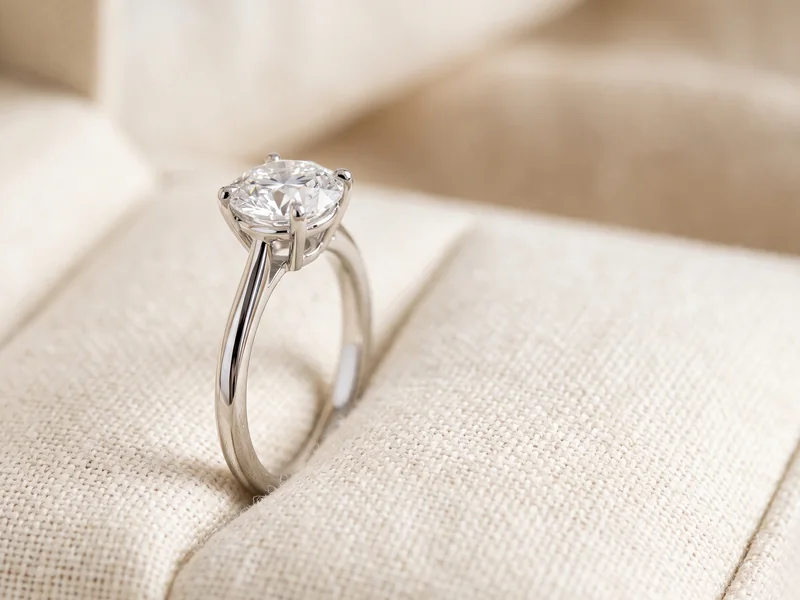
A 1.5 carat stone is large enough to carry almost any setting, and heavy enough that security matters for everyday wear.
- Four-claw solitaire: shows the most diamond and keeps the look clean. Choose claws about 1.0–1.2 mm thick at this size.
- Six-claw solitaire: a little more secure and makes a round look slightly rounder; the extra claws hide a little more of the edge.
- Bezel: a rim of metal around the girdle. The most protective option for active hands; makes the stone look slightly smaller.
- Halo: a ring of small diamonds that adds about 2–3 mm to the visible width, so a 1.5 ct can look closer to 2 ct face-up.
- Three-stone: a 1.5 ct centre with side stones of about 0.30–0.50 ct each gives a wide, balanced ring.
- Hidden halo and low settings: keep the head lower so the ring catches less on clothing and gloves.
Band width matters with heavier stones: about 1.8–2.5 mm is a common range for a 1.5 ct, thick enough to support the head without making the centre stone look small. The same considerations, with sturdier claws again, apply to 2.5 carat stones and larger.
1.5 carat vs 1 carat vs 2 carat: is the step up worth it?
| Round, H colour, VS2 | Diameter | Face-up area | Natural (approx. AUD) | Lab-grown (approx. AUD) |
|---|---|---|---|---|
| 1.00 ct | about 6.4 mm | about 32 mm² | $7,000–$12,000 | $700–$2,000 |
| 1.25 ct | about 6.9 mm | about 37 mm² | $9,000–$16,000 | $900–$2,500 |
| 1.50 ct | about 7.4 mm | about 43 mm² | $13,000–$22,000 | $1,000–$3,500 |
| 2.00 ct | about 8.1 mm | about 52 mm² | $22,000–$40,000 | $1,400–$4,500 |
Going from 1 ct to 1.5 ct adds about 1 mm across and roughly a third more face-up area, which most people notice straight away. Going from 1.5 ct to 2 ct adds only about 0.7 mm, but in natural diamonds it can add a large share to the price, because 2 carats is another demand threshold. That makes 1.5 ct a common sweet spot for natural stones.
If 1.5 ct stretches the budget, the 1.25 carat step looks only about 0.5 mm smaller. If you want more presence, our 2 carat diamond guide covers sizes and prices, and for larger stones see 3 carat diamonds, 4 carat diamonds, 5 carat diamonds and stones from 6 to 10 carats.
Related guide2 Carat DiamondsHow to choose a 1.5 carat diamond: step by step
- Decide natural or lab-grown first. The price gap at 1.5 ct is large, so this choice sets everything else.
- Pick the shape. Use the mm table above: if you want the most face-up size for the weight, look at ovals, pears and marquise.
- Check the measurements on the report. For a round, aim for about 7.3–7.5 mm; well outside this suggests the stone is cut deep or shallow.
- Consider 1.40–1.49 ct. Just under the 1.50 mark looks almost the same and often costs less.
- Set colour and clarity by metal and shape. G–H and VS2–SI1 eye-clean suit most rounds in white metal; I–J in yellow or rose gold.
- Watch a 360° video. Look for inclusions under the table, a strong bow-tie in fancy shapes and any haze from fluorescence.
- Plan the setting. Choose claw thickness, head height and band width to suit a 1.5 ct stone; our carat weight explainer helps if you are comparing total-weight designs.
Free consultation
Talk to a gemologist
Compare stones in person or online with Raj Sood, Graduate Gemologist (GIA), AJP (GIA).
Book a consultationShop this shape
FAQ
Common questions
How big is a 1.5 carat diamond?
A well-cut 1.5 carat round measures about 7.3–7.5 mm across. An oval of the same weight is about 8.8 × 6.5 mm and a cushion about 6.6 mm square, so shape changes how large it looks.
How much is a 1.5 carat diamond in Australia?
A natural 1.5 carat round typically costs about AUD $8,000–$50,000 depending on colour, clarity and cut. A lab-grown 1.5 carat is usually about AUD $1,000–$4,500.
Is a 1.5 carat diamond big on the finger?
On an average size N finger a 1.5 ct round covers a little under half the finger's width, which looks generous without being oversized. On slimmer fingers it reads as clearly large.
What is the best colour and clarity for a 1.5 carat diamond?
For most rounds in white gold or platinum, G–H colour and VS2 or an eye-clean SI1 work well. Step cuts like emerald need VS1 or better, and yellow or rose gold suits I–J colour.
Is it worth buying a 1.45 carat instead of 1.5 carats?
Often, yes. A 1.45 ct is only about 0.1 mm smaller across, which you will not see on the hand, and stones just under 1.50 ct usually cost less.
Is a 1.5 carat lab-grown diamond a real diamond?
Yes. A lab-grown diamond is real diamond with the same hardness (10 on the Mohs scale) and refractive index (2.42) as natural. It is grown in a laboratory rather than formed in the earth, and its report states that it is lab-grown.

Ask a gemologist
Not sure which diamond to choose?
Raj Sood is a Graduate Gemologist (GIA) and master jeweller. Bring the stones you are considering, or send the reports, and he will tell you honestly which one is better and why.
Keep learning
Related guides
 Diamond 4Cs & Grading1 Carat Diamonds
 Diamond 4Cs & Grading2 Carat Diamonds
 Diamond 4Cs & Grading1.25 Carat DiamondsDiamond 4Cs & GradingDiamond MM to Carat Size Chart (All Shapes)Diamond 4Cs & GradingDiamond 4Cs
 Diamond 4Cs & Grading5 Carat DiamondsDiamond 4Cs & Grading2.5 Carat DiamondsDiamond 4Cs & Grading0.5 Carat Diamonds
Explore more
More guides on this topic
Education