
Pearls
Pearl Care and Restringing: How to Clean, Store and Restring Pearls
Pearls are one of the few gems grown by a living animal, and among the softest you are likely to wear every day. Good pearl care and restringing on time is what keeps a strand glowing for decades instead of a few years.
 Reviewed by Raj Sood, Graduate Gemologist (GIA), AJP (GIA)Master jeweller and Graduate Gemologist (GIA) · reviewed 4 November 2026
Quick answer
Pearls are soft (2.5–4.5 on the Mohs scale) and easily damaged by acids, perfume and heat. Put them on last, wipe them with a soft damp cloth after wearing, and store them flat and separate. Have a knotted strand restrung on fresh silk every one to two years if worn often, or as soon as the thread stretches.
What are pearls made of, and why do they need special care?
A pearl is built by a mollusc, usually an oyster or a freshwater mussel, as a defence against an irritant. The animal coats the irritant in layer after layer of nacre (mother-of-pearl): microscopic platelets of aragonite, a crystal form of calcium carbonate, bound together by conchiolin, a tough organic protein. Each platelet is well under a thousandth of a millimetre thick. Light bouncing back from thousands of these thin, overlapping layers creates lustre, the deep, mirror-like glow that sets a fine pearl apart from a shiny bead.
In nature the irritant arrives by accident, which is why natural pearls are so rare. Almost every pearl sold today is cultured: a pearl farmer places a polished shell bead (the bead nucleus) or a small piece of mantle tissue inside the mollusc, then waits months or years while it lays down nacre. Our guide to how natural and cultured pearls differ explains the process and how laboratories tell the two apart with X-ray imaging.
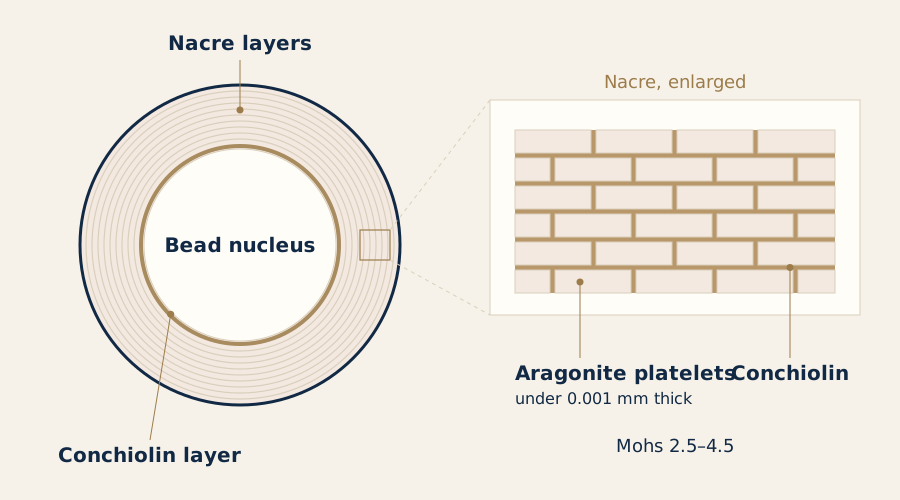
That structure explains every care rule in this guide. Pearl sits at only about 2.5–4.5 on the Mohs hardness scale, so grit, metal edges, other gems and even household dust (which contains quartz at Mohs 7) can scratch it. Its refractive index is roughly 1.52–1.69, far below diamond's 2.42, so its beauty comes from lustre rather than sparkle, and lustre lives on the surface. Calcium carbonate dissolves in acid, so sweat, vinegar, lemon juice and many cosmetics slowly etch that surface. And because conchiolin is organic, years of very dry heat can dry it out and cause fine cracks in the nacre.
A diamond shrugs off all of this; a pearl does not. If you are not sure which pearls you own, start with our guide to identifying the main pearl types. Any unfamiliar word on this page is also explained in our glossary of jewellery terms.
Which pearl types, sizes and colours are there?
Cultured pearls fall into a handful of families, set mainly by the mollusc that grew them. The species decides the size range, the natural colours and how thick the nacre usually is, and that last point affects how much wear a pearl can take.
| Pearl type | Mollusc and main origin | Usual size | Natural colours | Care notes |
|---|---|---|---|---|
| Akoya | Akoya oyster (Pinctada fucata), Japan and China | about 2–10 mm, mostly 6–8 mm | White, cream, silver-blue, with rose or silver overtones | Nacre often thin; worn spots can expose the bead |
| Freshwater | Freshwater mussels, mainly China | about 2–12 mm, some larger | White, pink, peach, lavender | Often solid nacre, so fairly tolerant of wear |
| Tahitian | Black-lip oyster (Pinctada margaritifera), French Polynesia | about 8–15 mm | Grey, green, aubergine, peacock | Avoid acids and strong heat like any pearl |
| South Sea | Pinctada maxima (silver-lip or gold-lip), Australia, Indonesia, Philippines | about 9–20 mm, mostly 10–15 mm | White, silver, cream, golden | Thick nacre, but the surface is just as soft |
| Keshi | By-product of culturing, no bead | about 2–15 mm | Follows the host oyster | Solid nacre; irregular shapes |
| Mabe | Half-pearl grown against the shell | about 10–20 mm | White, cream, iridescent | Assembled with a filler and backing; never soak |
The overtone is a second colour that seems to float over the body colour, such as the rose glow on a white Akoya. For the detail on each family, see our guides to Akoya pearls from Japan and China, freshwater pearls and their wide colour range and dark Tahitian pearls and their overtones.
Two less familiar types deserve a mention because their care differs slightly. Keshi pearls, which have no bead nucleus, are solid nacre right through, so they cope well with wear. Mabe half-pearls grown against the shell are cut from the shell, filled and backed, which means water and solvents can loosen the join. Wipe a mabe; never soak it.
What makes Broome South Sea pearls different?
Australia's cultured pearl industry is centred on Broome in Western Australia and the northern coastline, where the large silver-lip form of Pinctada maxima grows white and silver South Sea pearls. The oyster is big, the pearl usually stays in it for around two years, and the result is a pearl typically 10–16 mm across with a thick nacre coat and a soft, satiny lustre. Our page on Australian South Sea pearls from Broome covers the history and the farms, and white and golden South Sea pearls compares Australian pearls with the golden pearls grown further north.
Thick nacre is good news for durability: a small scratch on a South Sea pearl is far less likely to reach the bead than on a thin-nacred Akoya. But the surface hardness is the same, so perfume and sunscreen still dull it. Size brings its own issue. A strand of 12–15 mm pearls is heavy, and that weight pulls on the silk every time it is worn, so large South Sea strands need a thicker thread and often stretch sooner than a light Akoya necklace. For Broome South Sea pearl care, the rules below apply in full, with a closer eye on the thread.
How are pearls graded, and what drives their value?
There is no single worldwide grading system for pearls the way there is for diamonds, but gemmologists judge the same factors everywhere. In rough order of how much they move the price:
- Size: measured in millimetres across. Value climbs steeply with size, especially above about 10 mm in South Sea and Tahitian pearls.
- Lustre: how sharp and bright reflections look on the surface. High lustre shows a crisp reflection of a window or light; low lustre looks chalky.
- Nacre quality: how thick and even the nacre is. Thin nacre can look glassy and wears through.
- Surface: spots, pits, bumps and wrinkles. A few small marks are normal; clean surfaces cost more.
- Shape: round is rarest, then near-round, oval, button, drop, circlé (with rings around it) and baroque (irregular).
- Colour: body colour, overtone and orient (the rainbow shimmer some pearls show).
- Matching: in a strand or pair, how closely the pearls match in size, colour and lustre.
Care ties straight into value. Lustre and surface are the first things lost to acid, perfume and abrasion, and unlike a diamond, a pearl cannot be repolished to bring them back. A worn pearl stays worn. Looking after the surface is looking after most of what you paid for. Our guide to the pearl grading factors in detail shows each one with examples, and pearls are also covered as the traditional June birthstone.
Related guidePearl Grading: Lustre, Nacre, Surface, Shape, SizeNot sure which one is right?
Send us the stones you are looking at and our gemologist will tell you which to choose and why.
How do you care for pearls day to day?
Most damage to pearls happens slowly, from everyday contact rather than one accident. A few habits prevent almost all of it:
- Last on, first off. Put pearls on after perfume, hairspray, sunscreen and make-up have dried, and take them off before you undress at night.
- Wipe after every wear. A soft, slightly damp cloth removes sweat and skin oils before they can etch the nacre.
- Keep them out of water you swim in. Pool chlorine and salt water both attack nacre and soak the silk thread.
- Take them off for active jobs. Gym, gardening, cleaning and cooking (vinegar and citrus are acids) are all hard on pearls.
- Mind pearl rings and bracelets. They knock against desks and car doors, so they wear far faster than earrings or necklaces.
| Care need | Pearl | Diamond | Sapphire | Opal |
|---|---|---|---|---|
| Mohs hardness | 2.5–4.5 | 10 | 9 | 5.5–6.5 |
| Ultrasonic cleaner | Never | Usually fine if untreated | Usually fine if untreated | Never |
| Steam cleaner | Never | Usually fine | Usually fine | Never |
| Perfume and acids | Etch the surface | No effect | No effect | Can dull it |
| Everyday ring wear | Gentle only | Yes | Yes | With care |
Pearls need gentler handling than almost any other common gem. For comparison, our care advice for each gemstone lists stone by stone what is safe, our guide to looking after an engagement ring covers cleaning a diamond ring at home, and why amethyst can fade in sunlight shows another gem that needs protecting from light and heat.
How do you clean pearls and store them safely?
For routine cleaning, a soft cloth dampened with clean water is all you need. For a deeper clean every few months, add a few drops of mild, unscented soap to lukewarm water, dip the cloth, not the pearls, and wipe each pearl gently. Wipe again with a cloth dampened in plain water, then lay the piece flat on a dry towel. Can pearls get wet? A quick wipe is fine, but a knotted strand should never be soaked: wet silk stretches, and water trapped in the drill holes and knots can discolour the thread. Let a damp strand dry flat for about 24 hours before wearing it.
Never use an ultrasonic cleaner, a steam cleaner, jewellery dips, toothpaste, baking soda, vinegar or ammonia-based glass cleaner. All of them either scratch or dissolve the surface, or loosen the glue holding a pearl on its earring post.
How to store pearls comes down to keeping them away from harder gems, heat and stretching:
- Separately: in a soft pouch or its own lined compartment, so diamonds and sapphires cannot scratch it.
- Flat, not hanging: hanging a strand on a hook stretches the silk over weeks.
- Away from heat and direct sun: not on a windowsill or near a heater, where nacre can dry out.
- Not sealed for years: pearls do better in a cloth pouch than in an airtight plastic bag kept in a safe long term. Wearing them now and then is good for them.
- Clasp closed: fasten the clasp before storing so the strand does not tangle or kink.
How often do pearls need restringing, and how should you care for the strand?
Silk is the traditional thread for pearls because it is soft and drapes well, but it stretches, frays and weakens with wear, skin oils and moisture. For a knotted pearl necklace worn every week, plan on restringing every one to two years. A strand worn a few times a year can go longer, but have it checked at least every few years, because silk weakens in a drawer too.
Signs your pearls need restringing now:
- Gaps between the pearls and the knots, or pearls that slide along the thread.
- The strand looks longer than it used to or no longer hangs evenly.
- The silk looks grey, dirty or discoloured, especially near the clasp.
- Fraying or fuzz on the thread at the clasp end, where it takes the most strain.
- The clasp is loose, bent or hard to close.
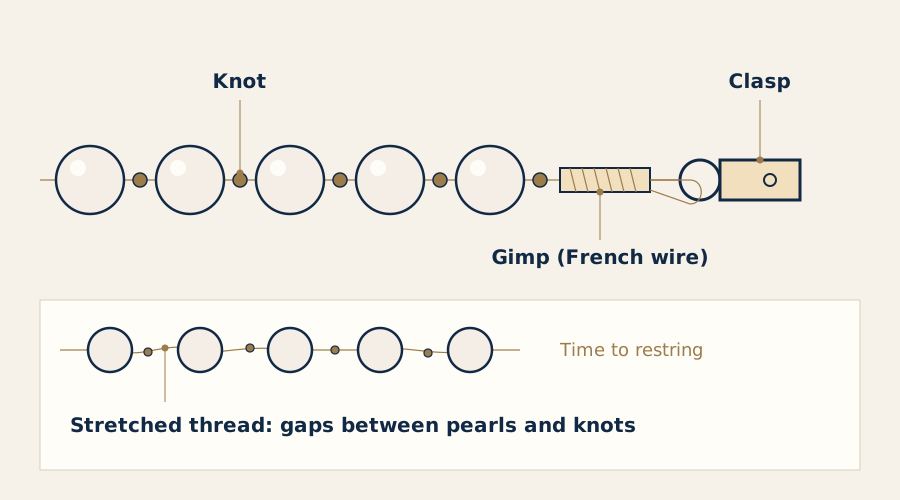
The knots are the reason knotted strands are worth the extra work. They stop the pearls rubbing against each other and wearing away their nacre, and if the thread breaks, you lose at most one pearl instead of the whole necklace bouncing across the floor. Most fine pearl strands are knotted; small freshwater or bead strands are sometimes strung without knots.
What happens during pearl restringing?
Restringing is a careful hand job. The jeweller removes the old thread, checks each pearl and drill hole, cleans the pearls gently, and lays them out in their original order so the graduation and matching stay the same. A new thread is chosen to fit the drill holes snugly, then a knot is tied by hand between every pearl. At each end, the thread usually runs through a short coil of fine metal called gimp or French wire, which protects the silk where it loops through the clasp. A 45 cm strand of 7 mm pearls has about 60 to 65 pearls, which means about 60 to 65 knots.
| Silk thread | Nylon or synthetic thread | |
|---|---|---|
| Feel and drape | Soft, drapes naturally | Slightly stiffer |
| Stretch over time | Stretches more | Stretches less |
| Strength | Good, weakens with moisture | High, less affected by moisture |
| Knots | Tight, neat, traditional | Can be springier to knot |
| Usual choice for | Fine Akoya, South Sea and Tahitian strands | Heavy baroque strands, beads, daily-wear pieces |
Silk vs nylon pearl thread is partly taste. Many gemmologists still choose silk for fine pearls because it hangs so softly, while modern synthetic threads suit heavy or hard-worn pieces. Restringing is also the right moment to change the length, add an extender, swap a worn clasp or rework a strand into a new design. At GemTrove, pearl restringing is done in-house, so the strand stays with the people who knot it.
How much does pearl care and restringing cost in Australia?
Home pearl care costs almost nothing: a soft cloth, mild soap and a pouch. Restringing is a paid service, and prices depend on the length of the strand, how many pearls there are, whether it is knotted, the thread and any new clasp. As a broad guide to pearl restringing cost in Australia:
| Job | Approximate price range (AUD) |
|---|---|
| Knotted strand up to about 50 cm | about $60–$150 |
| Long or opera strand (70–90 cm), knotted | about $100–$250 |
| Unknotted strand or bead bracelet | about $40–$100 |
| Multi-strand necklace | priced per strand, plus re-matching |
| New clasp | about $50 for a simple clasp to several hundred for gold |
These are broad ranges only and vary between jewellers; always ask for a quote first. Pearls with very small or uneven drill holes, or a strand that needs re-matching, take longer. If you are thinking about new pearls rather than restringing old ones, our page on pearl strands and custom pearl designs shows what can be made.
Browse natural gemstones and our pearl restringing service
How to prepare pearls for restringing: step by step
- Check the strand. Lay it flat and look for gaps at the knots, stretched thread, discoloured silk or a loose clasp.
- Gather every pearl. If the strand has broken, collect all the pearls and any clasp parts in a sealed envelope, and count them.
- Note the length and order. Measure the strand or photograph it laid flat, so it comes back the same, or decide now if you want it shorter or longer.
- Choose thread and knots. Ask for knotted silk for a fine strand, or a synthetic thread for a heavy or hard-worn one.
- Decide on the clasp. Keep the original, have it repaired, or choose a new one in the metal you want.
- Ask for a quote and timing. Confirm the price and when it will be ready before work starts.
- Start fresh habits. When it comes back, wipe after wearing, store it flat and book the next check in a year or two.
Free consultation
Talk to a gemologist
Compare stones in person or online with Raj Sood, Graduate Gemologist (GIA), AJP (GIA).
Book a consultationShop this shape
FAQ
Common questions
Can pearls get wet?
A quick wipe with a damp cloth is fine, but do not swim, shower or soak pearls. Chlorine and salt water attack the nacre, and wet silk stretches, so dry any damp strand flat for about 24 hours.
How often should pearls be restrung?
Every one to two years for a strand worn often, and every few years for one worn occasionally. Restring sooner if you see gaps between the knots or the strand has grown longer.
How do you clean pearls at home?
Wipe them with a soft cloth dampened in clean water after every wear. For a deeper clean, use a cloth dipped in lukewarm water with a drop of mild soap, wipe again with plain water and dry flat, never using ultrasonic or steam cleaners.
Can a broken pearl necklace be fixed?
Yes. Collect every pearl and the clasp, and a jeweller can restring them in their original order, usually with a knot between each pearl so a future break loses only one.
Does restringing damage pearls?
No. Restringing done carefully by hand does not harm the pearls, and it protects them, because fresh knots stop the pearls rubbing together and a sound thread stops them falling.
Why are my pearls looking dull?
Dullness usually comes from perfume, sunscreen, sweat or acids etching the surface, or from scratches. Regular wiping prevents it, but lost lustre cannot be fully restored by polishing.

Ask a gemologist
Not sure which diamond to choose?
Raj Sood is a Graduate Gemologist (GIA) and master jeweller. Bring the stones you are considering, or send the reports, and he will tell you honestly which one is better and why.
Keep learning
Related guides
 PearlsPearl Grading: Lustre, Nacre, Surface, Shape, SizePearlsBroome South Sea Pearls (Australian)PearlsTypes of Pearls and Pearl Identification Guide
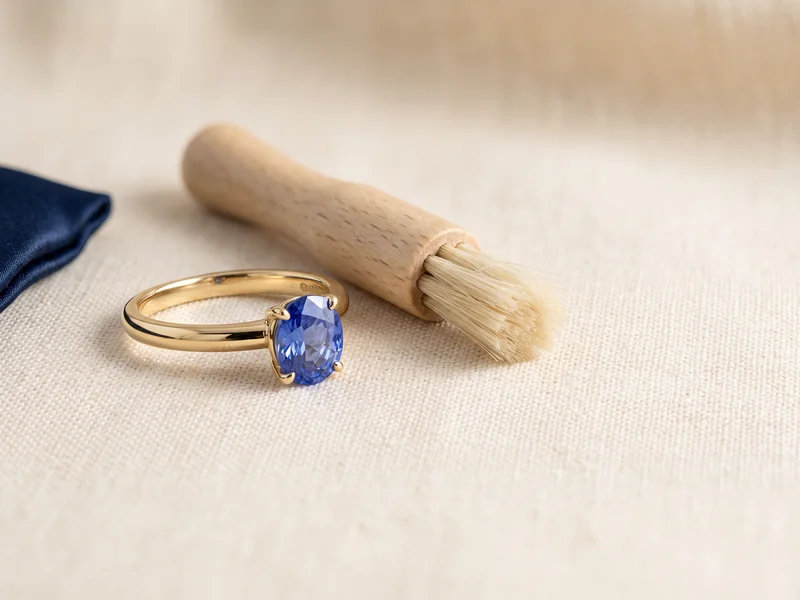 GemstonesGemstone Care by Stone
 PearlsPearl Jewellery, Pearl Strands and Custom Pearl DesignsPearlsMabe Pearls
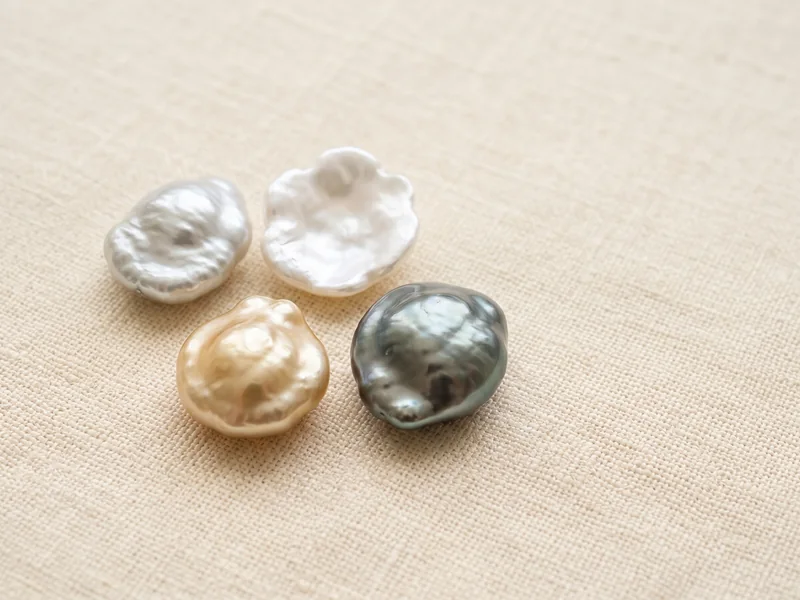 PearlsKeshi PearlsPearlsFreshwater Pearls
Explore more
More guides on this topic
Education