
- Education
- Gemstones
- Aquamarine vs Blue Topaz: How They Differ, How to Tell Them Apart and Which to Choose
Gemstones
Aquamarine vs Blue Topaz: How They Differ, How to Tell Them Apart and Which to Choose
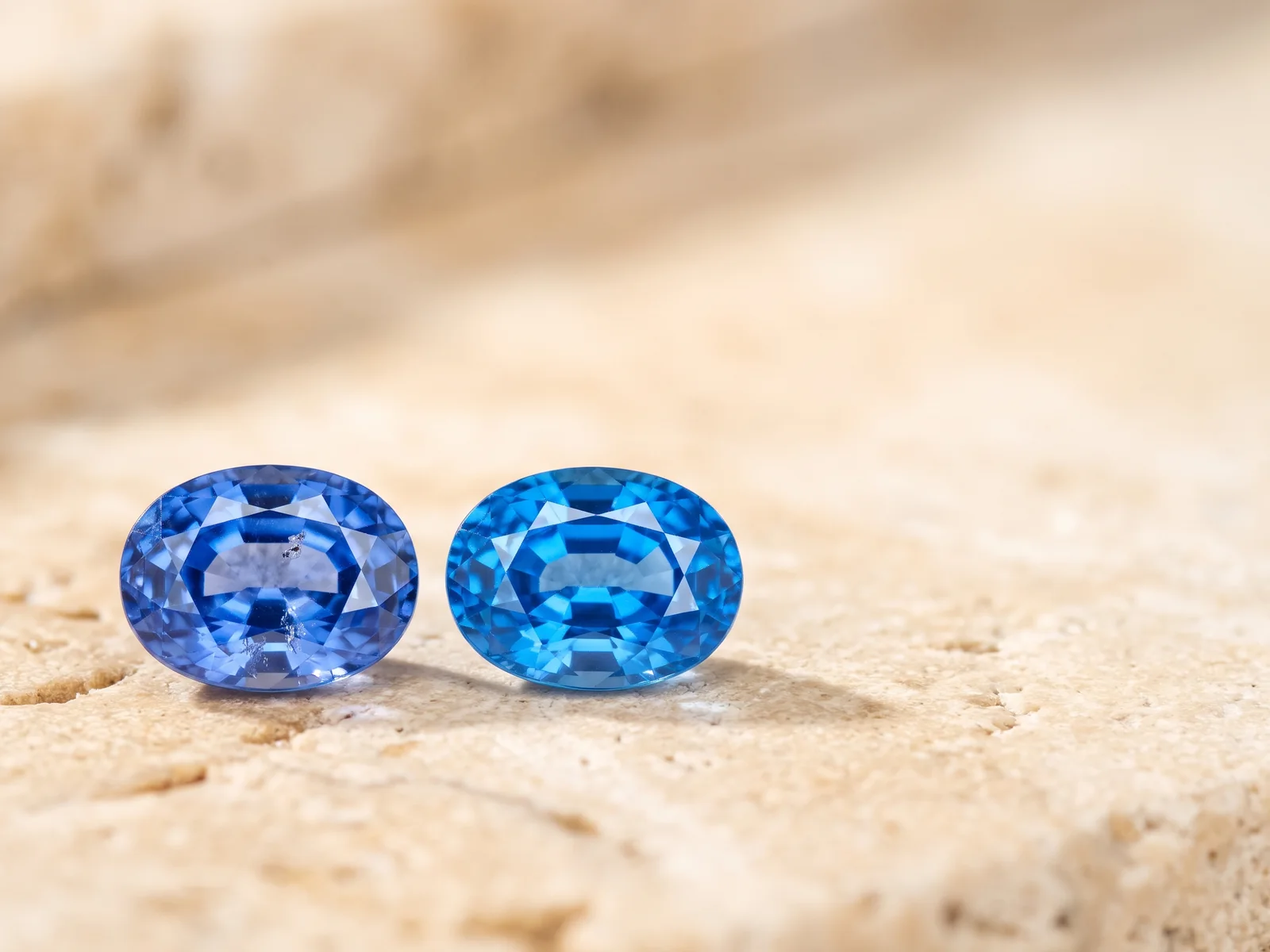
Aquamarine vs blue topaz is one of the most common questions at the counter, because the two blues look alike in a photo but behave very differently on the hand. Here is what separates them, from colour and treatment to durability, weight and price.
 Reviewed by Raj Sood, Graduate Gemologist (GIA), AJP (GIA)Master jeweller and Graduate Gemologist (GIA) · reviewed 4 November 2026
Quick answer
Aquamarine vs blue topaz: aquamarine is a beryl coloured by iron, usually a soft, slightly greenish sea blue, Mohs 7.5–8 with good toughness. Blue topaz is colourless topaz irradiated and heated to bright Sky, Swiss or London blue, Mohs 8 but with perfect cleavage. Aquamarine costs more and suits everyday rings better; blue topaz gives vivid colour for less.
Aquamarine vs blue topaz: what is the difference?
They are two completely different minerals that happen to share a colour. Aquamarine is the blue to greenish blue variety of beryl, the same mineral species as emerald and morganite. Topaz is an aluminium silicate containing fluorine, and almost all blue topaz on the market starts life as colourless topaz that has been treated to turn blue. If you are comparing several blue stones at once, our coloured gemstone guides cover the wider family, and any unfamiliar word below is defined in our plain-English jewellery glossary.
The practical differences come down to four things: the shade of blue, how the colour got there, how well the stone copes with knocks, and price. Aquamarine is softer in tone, naturally coloured (usually with a gentle heat treatment) and tougher. Blue topaz is brighter, treated by irradiation, a little harder on the scratch scale but much easier to split with a sharp blow, and costs far less.
| Aquamarine | Blue topaz | |
|---|---|---|
| Mineral | Beryl, Be3Al2Si6O18 | Topaz, Al2SiO4(F,OH)2 |
| Cause of colour | Iron in the crystal | Colour centres created by irradiation, then heat |
| Usual treatment | Heating to remove green or yellow tint (stable) | Irradiation plus heating (stable in normal wear) |
| Typical colour | Pale to medium sea blue, often slightly greenish or greyish | Bright sky blue, vivid Swiss blue or dark inky London blue |
| Mohs hardness | 7.5–8 | 8 |
| Toughness | Good | Poor to fair (perfect cleavage) |
| Refractive index | about 1.567–1.590 | about 1.606–1.630 |
| Specific gravity | about 2.68–2.80 | about 3.49–3.57 |
| Birthstone | March | November (topaz); blue topaz is also listed for December |
| Price per carat | Moderate to high | Low |
What is aquamarine?
The name comes from the Latin for seawater, and the best aquamarine looks exactly like that: a clear, cool blue. The colour comes from small amounts of iron. Iron in one form gives blue, iron in another gives yellow, and a mix of the two gives the greenish blue that most rough aquamarine shows straight out of the ground.
That is why most aquamarine is heat treated. Gentle heating, in the order of a few hundred degrees Celsius, removes the yellow component and leaves a purer blue. The result is permanent, cannot normally be detected and is accepted across the trade. It does not need special care afterwards.
Aquamarine grows in large, clean crystals, so eye-clean stones of several carats are common. When inclusions are present they are usually fine hollow tubes running parallel to the length of the crystal (sometimes called rain), liquid-filled fingerprints, or a faint white haze known as snow. Its colour is fairly light, so small stones under about 1 carat can look almost colourless; colour builds with size and depth. The deepest, most saturated material is often called Santa Maria colour, after the Brazilian locality that made it famous, and it commands a clear premium.
Because aquamarine crystals are long, cutters often choose elongated outlines such as ovals, pears and emerald cuts, which keep more of the rough and deepen the colour along the length. These are the same outlines used for diamonds, set out in our overview of the main cut shapes; the oval shape guide and the pear shape guide explain how the length-to-width ratio changes the look, and the same logic applies to coloured stones.
Aquamarine is the traditional March stone; our page on aquamarine as the March birthstone covers its history and the jewellery people choose for it.
What is blue topaz, and is blue topaz irradiated?
Yes. Natural blue topaz does exist, but it is rare and usually very pale. Nearly all the blue topaz you see in jewellery is natural colourless topaz that has been irradiated (exposed to radiation that alters the crystal structure and creates colour centres) and then heated to settle the colour. The stone is still natural topaz; only the colour is treated, and sellers should disclose it.
The treatment method sets the shade, and the trade names are worth knowing:
- Sky blue: the lightest, closest to aquamarine in depth but brighter and without the greenish tone. Usually produced with gamma rays or an electron beam.
- Swiss blue: a vivid, saturated mid blue. Usually electron beam treatment followed by heat.
- London blue: a dark, slightly greyish inky blue. Produced by neutron irradiation in a nuclear reactor. Treated stones are held until any induced radioactivity has decayed to safe levels, and this is regulated in many countries.
The colour is stable to light in normal wear, but high heat can fade or change it, which matters when a ring goes to the bench for repairs. A different product, sometimes sold as mystic or coated topaz, has a thin surface coating and is far less durable. Our guide to how blue topaz is irradiated and cared for goes deeper, and the full blue topaz guide covers cuts and sizes.
Related guideBlue Topaz Jewellery: Treatment and CareTopaz comes in other colours too. The most valuable is the naturally coloured golden-orange imperial topaz, and topaz shares the November spot with citrine, as explained in our page on topaz and citrine for November birthdays.
London blue or Swiss blue topaz vs aquamarine: which colour suits you?
Side by side, the two are easy to separate by colour alone. Aquamarine is calm and watery, with a hint of green or grey, and it looks brightest in daylight. Blue topaz is crisper and more saturated, and Swiss blue in particular looks almost electric. London blue is the darkest of all and can look close to navy in dim indoor light.
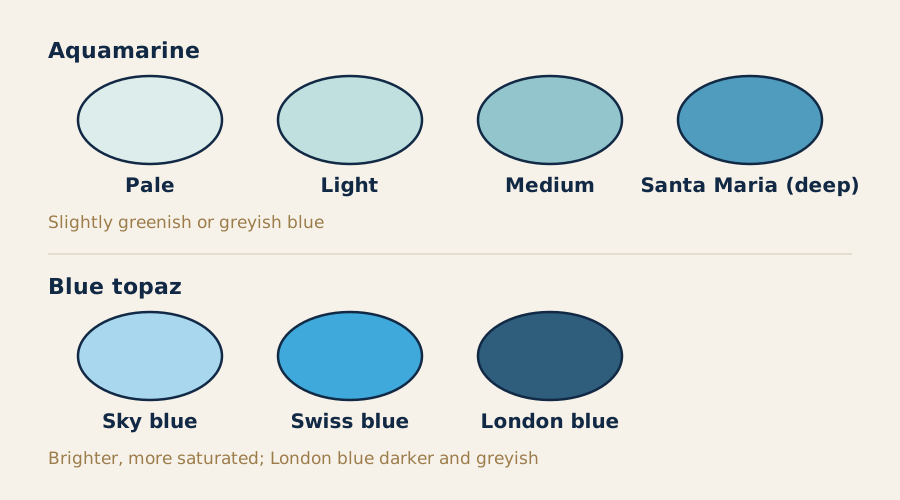
Two more points affect how the colour reads on the hand:
- Pleochroism: many gems show different colours along different directions in the crystal. Aquamarine is distinctly dichroic, showing blue one way and near-colourless or greenish blue another, so cutters orient it carefully. Treated blue topaz shows this much less.
- Metal colour: white gold and platinum keep both stones looking cool. Yellow gold warms aquamarine towards green, while Swiss and London blue topaz hold their colour better against yellow. Rose gold suits pale aquamarine and Sky blue topaz well.
If you love the look of aquamarine but want a stronger blue, it is worth seeing a Santa Maria colour stone before switching to topaz. If you simply want the most vivid blue for the money, Swiss blue topaz is hard to beat on colour.
Not sure which one is right?
Send us the stones you are looking at and our gemologist will tell you which to choose and why.
Aquamarine vs blue topaz: which is tougher for an everyday ring?
Two properties decide how a stone wears. Hardness (the Mohs scale) measures resistance to scratching; anything 7 or above resists everyday dust, which contains quartz at 7. Toughness measures resistance to chipping and breaking. A stone can be hard and still brittle, and that is exactly the case with topaz.
Topaz has perfect basal cleavage, meaning it can split cleanly along one flat plane if it takes a sharp knock in the wrong direction, such as a ring hitting a doorframe or a benchtop. Aquamarine has no cleavage worth worrying about and good toughness, so although the two are similar in hardness, aquamarine is the safer choice for a ring worn every day.
| Gem | Mohs hardness | Toughness | Cleavage | Everyday ring? |
|---|---|---|---|---|
| Aquamarine | 7.5–8 | Good | Indistinct | Yes, with a protective setting |
| Blue topaz | 8 | Poor to fair | Perfect, one direction | With care; ideal for pendants and earrings |
| Blue sapphire | 9 | Excellent | None | Very well suited |
| Blue diamond | 10 | Good | Perfect, four directions | Very well suited |
| Blue spinel (natural or lab-created) | 8 | Good | None | Well suited |
| Blue glass imitation | 5–6 | Poor | None | Scratches quickly |
If you need a blue that can handle hard work every day, sapphire is the toughest coloured option; our guide to judging blue sapphire quality explains what to look for. For the hardest blue of all, see natural and lab-grown blue diamonds, though prices are in a different league. For aquamarine specifically, our page on aquamarine engagement ring designs shows settings that protect the stone.
How can you tell aquamarine from blue topaz?
By eye you can make a good guess from colour and pleochroism, but a firm identification needs standard gemmological tests. These are the checks a gemmologist runs, and they also expose imitations such as glass and lab-created blue spinel, which is sometimes used to imitate aquamarine.
| Test | Aquamarine | Blue topaz |
|---|---|---|
| Refractive index (refractometer) | about 1.567–1.590 | about 1.606–1.630 |
| Birefringence | about 0.005–0.009 | about 0.008–0.010 |
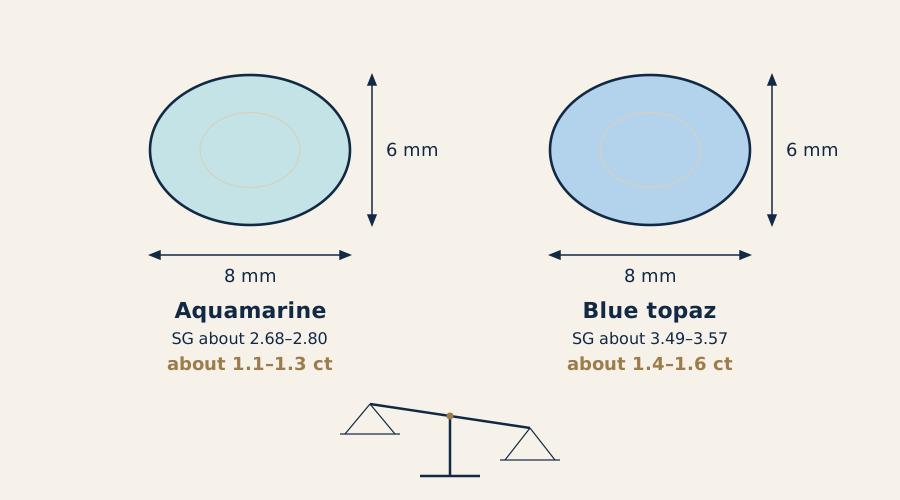
| Specific gravity | about 2.68–2.80 | about 3.49–3.57 |
| Pleochroism (dichroscope) | Distinct: blue and near-colourless | Weak in most treated stones |
| Typical inclusions | Hollow parallel tubes, fingerprints, snow | Liquid and two-phase inclusions, cleavage cracks; often very clean |
| Look in the hand | Feels light for its size | Feels noticeably heavier |
The weight difference is the one you can notice at home. Topaz is about 30% denser than beryl, so a blue topaz weighs more than an aquamarine of exactly the same size. That is also why carat weight alone is a poor way to compare the two: compare the millimetre measurements instead.
Refractive index and specific gravity are explained further in our glossary of terms like pleochroism and specific gravity. If a stone is sold as aquamarine and the price seems very low for a strong blue, ask for the test results or an independent report.
Where do aquamarine and blue topaz come from, including Australia?
Both minerals form in granite pegmatites, coarse-grained rocks that crystallise slowly and allow large gem crystals to grow. That is why they often turn up in the same regions.
- Aquamarine: Brazil (especially Minas Gerais) is the classic source, with important production from Madagascar, Mozambique, Nigeria, Zambia and Pakistan.
- Topaz for treatment: most colourless rough used for blue topaz comes from Brazil, with other sources in Sri Lanka, Nigeria and elsewhere.
- Australia: topaz is found in the New England region of NSW, around O'Briens Creek near Mount Surprise in Queensland, and at Killiecrankie on Flinders Island in Tasmania, where colourless to pale blue pebbles have long been called Killiecrankie diamonds. Aquamarine occurs in small amounts in New England and in Western Australian pegmatites, mostly as collector material.
Australian topaz is a favourite with fossickers, and some pale blue pieces are naturally coloured. Commercial jewellery stones, though, almost always come from overseas rough. Origin does not change the price of blue topaz much; for aquamarine, colour matters far more than locality, apart from the Santa Maria name.
How much do aquamarine and blue topaz cost in Australia?
This is where the two differ most. Because colourless topaz is plentiful and the treatment is efficient, blue topaz is one of the most affordable gems available in large, clean sizes. Aquamarine is moderately priced in pale colours and rises steeply as the blue deepens.
| Loose stone, 1–3 ct, eye-clean | Approximate price per carat (AUD) |
|---|---|
| Sky or Swiss blue topaz | about $10–$50 |
| London blue topaz | about $20–$80 |
| Aquamarine, light blue | about $100–$400 |
| Aquamarine, medium to deep blue | about $400–$1,200 |
| Aquamarine, top Santa Maria colour | about $1,000 and up |
These are broad ranges only, and they move with size, cut quality and the market. In a finished ring, the metal and setting often cost more than a blue topaz itself, while a good aquamarine can be the largest part of the price. Remember too that size, not weight, is what you see: a 2 ct blue topaz is physically smaller than a 2 ct aquamarine. Both are natural minerals; for an overview of how natural stones are graded and priced, see our page on natural gemstones explained.
Browse natural gemstones
How do you set and care for aquamarine and blue topaz?
For a ring, choose a setting that guards the edges. A bezel (a rim of metal around the girdle) or a halo protects either stone well, and four or six claws work for aquamarine. For blue topaz in a ring, a bezel or a low-set design reduces the chance of a blow landing on the cleavage plane. Pendants and earrings take very little knocking, so topaz is ideal there. Many people choosing an aquamarine for an engagement ring go for a halo or hidden halo to add sparkle and protection at the same time.
- Cleaning aquamarine: warm soapy water and a soft brush. Ultrasonic cleaners are usually safe unless the stone has fractures or liquid inclusions; steam is not recommended.
- Cleaning blue topaz: warm soapy water only. Avoid ultrasonic and steam cleaners, which can stress the cleavage plane.
- Heat: avoid sudden temperature changes for topaz. Tell your jeweller the stone is treated topaz before any repair, as torch heat can fade the colour; it is often removed before soldering.
- Storage: keep both away from harder gems such as sapphire and diamond, which can scratch them, and away from each other in a jewellery box.
More detail on cleaning and storing topaz jewellery is in our dedicated care guide.
How do you choose between aquamarine and blue topaz? Step by step
- Decide how it will be worn. Daily ring: lean towards aquamarine. Pendant, earrings or an occasional ring: either works.
- Pick the colour you actually like. Soft sea blue points to aquamarine; vivid or dark blue points to Swiss or London blue topaz.
- Compare by millimetres, not carats. Topaz is denser, so the same weight looks smaller.
- Ask about treatment. Expect heated aquamarine and irradiated blue topaz; avoid coated stones for rings.
- Check identification. For aquamarine at a higher price, ask for refractive index and specific gravity results or a report.
- Match the setting. Choose a bezel, halo or secure claws, and note the stone type for any future repairs.
If neither feels right, the range of Sky, Swiss and London blue topaz shades and our March birthstone jewellery ideas are good next stops for seeing both stones in finished pieces.
Free consultation
Talk to a gemologist
Compare stones in person or online with Raj Sood, Graduate Gemologist (GIA), AJP (GIA).
Book a consultationShop this shape
FAQ
Common questions
Is aquamarine more expensive than blue topaz?
Yes, usually by a wide margin. Blue topaz often costs tens of dollars per carat, while good aquamarine runs from a few hundred to over a thousand dollars per carat depending on colour.
Is blue topaz a real gemstone?
Yes. Blue topaz is natural topaz whose colour has been created by irradiation and heating. The treatment is permanent in normal wear and should be disclosed.
Can blue topaz be used in an engagement ring?
It can, but topaz has perfect cleavage and can split from a hard knock, so it needs a protective setting such as a bezel. Aquamarine, with better toughness, is the more practical choice for daily wear.
How can I tell if my stone is aquamarine or blue topaz?
Aquamarine is usually paler and slightly greenish, shows two colours as you tilt it and feels lighter for its size. A refractometer reading (about 1.57–1.59 for aquamarine, 1.61–1.63 for topaz) confirms it.
Does blue topaz fade?
Not in normal wear or sunlight. High heat, such as a jeweller's torch during a repair, can fade or change the colour, so always mention the stone before work is done.
Is London blue topaz radioactive?
London blue is produced by neutron irradiation, but treated stones are held until any induced radioactivity decays to safe levels before release, a process regulated in many countries. Properly released stones are safe to wear.

Ask a gemologist
Not sure which diamond to choose?
Raj Sood is a Graduate Gemologist (GIA) and master jeweller. Bring the stones you are considering, or send the reports, and he will tell you honestly which one is better and why.
Keep learning
Related guides
 GemstonesBlue Topaz
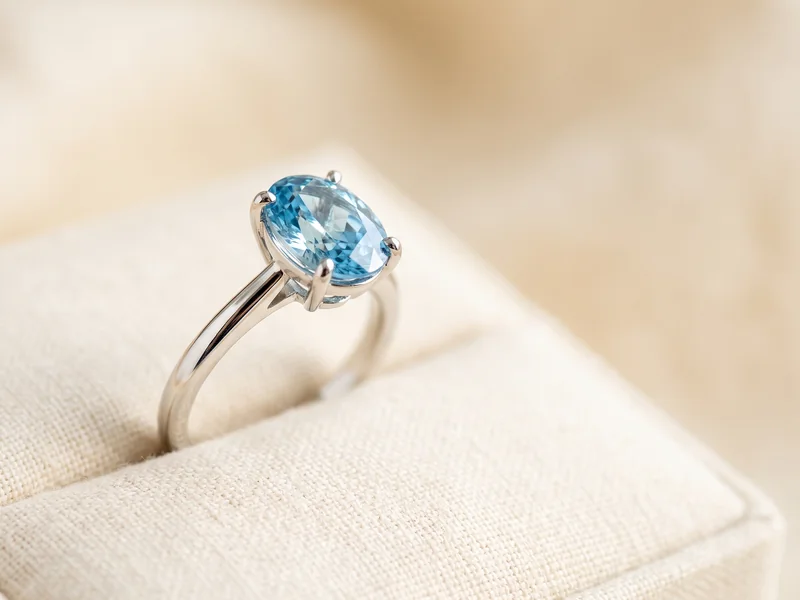 GemstonesAquamarine Engagement RingsGemstonesBlue Topaz Jewellery: Treatment and CareGemstonesMarch Birthstone: AquamarineGemstonesGemstones | Coloured Gemstones, Birthstones and Custom Jewellery
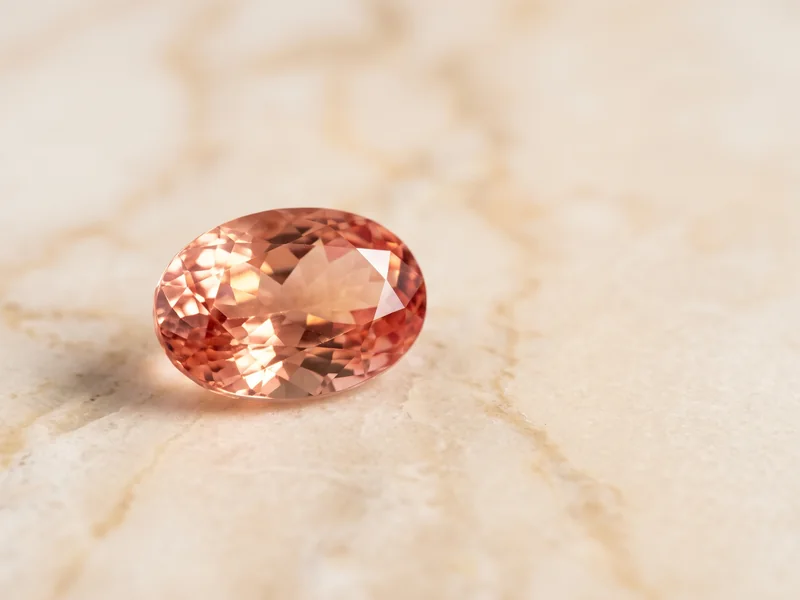 GemstonesImperial Topaz
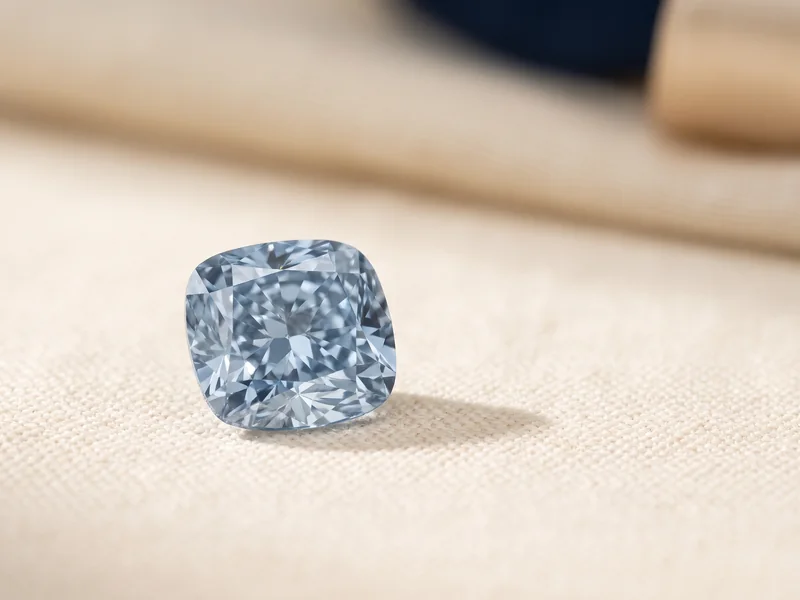 Fancy Colour DiamondsBlue Diamonds
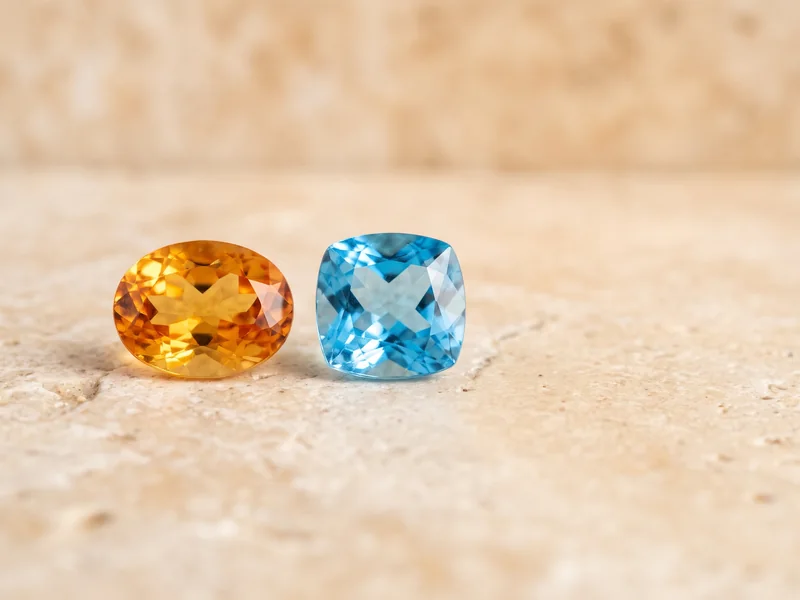 GemstonesNovember Birthstone: Topaz and Citrine
Explore more
More guides on this topic
Education