
Gemstones
Tanzanite Ring Guide: Beauty vs Everyday Durability
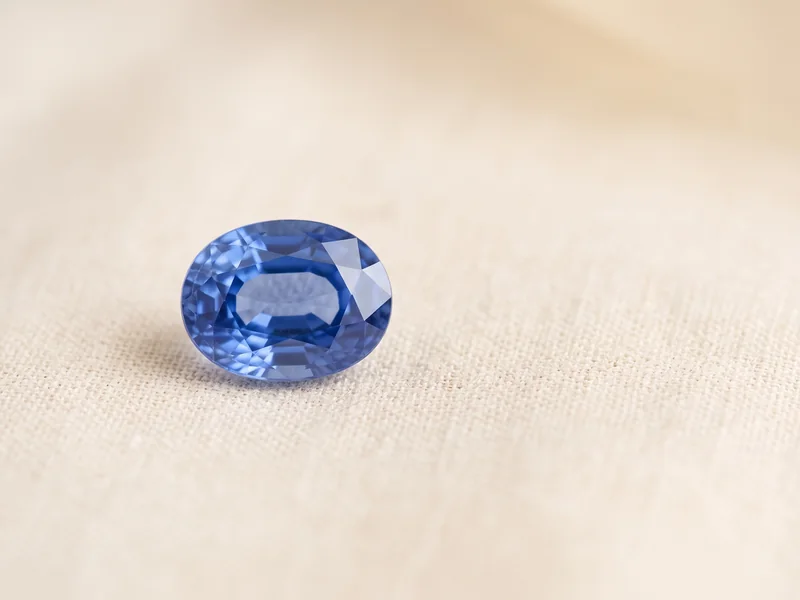
Tanzanite has a violet-blue colour few other gems can match, but it is softer and more fragile than most ring stones. Before you choose a tanzanite ring, it helps to know exactly what it can and cannot handle.
 Reviewed by Raj Sood, Graduate Gemologist (GIA), AJP (GIA)Master jeweller and Graduate Gemologist (GIA) · reviewed 4 November 2026
Quick answer
A tanzanite ring can be worn daily, but with care. Tanzanite rates 6 to 7 on the Mohs scale, no harder than the quartz in household dust, and has one direction of perfect cleavage, so a knock can split it. Choose a bezel or halo setting, remove it for sport and housework, and never steam or ultrasonically clean it.
What is tanzanite?
Tanzanite is the violet-blue variety of a mineral called zoisite, a calcium aluminium silicate. Its colour comes from traces of vanadium in the crystal. It was identified in 1967 in the Merelani Hills of northern Tanzania, near Mount Kilimanjaro, and that small area is still the only known commercial source in the world. Tiffany & Co. gave it the name tanzanite and promoted it from 1968. For its history, mining and colour grades in more depth, see our full tanzanite gemstone profile.
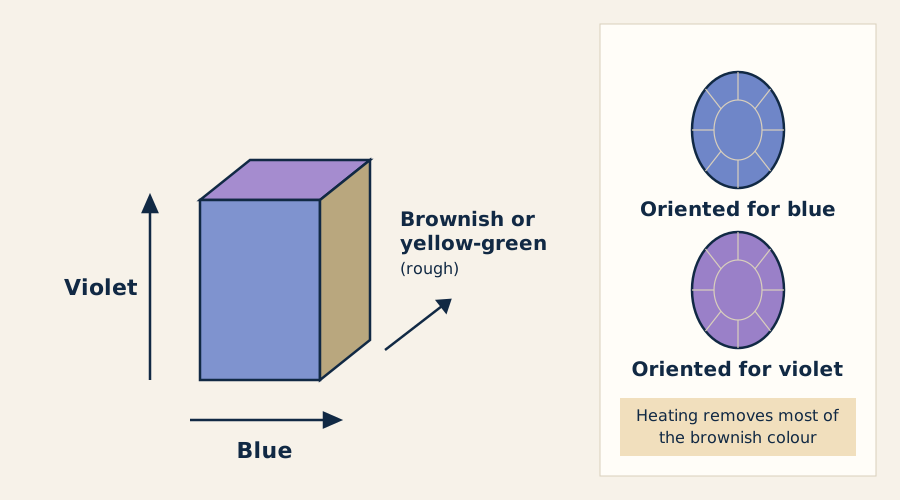
What makes tanzanite unusual is trichroism: it shows three different colours depending on which direction you look through the crystal. Rough tanzanite typically shows blue, violet and a brownish or yellowish-green colour. Heating removes most of the brown component, leaving the blue and violet that people recognise. A cutter decides which colour faces up by how they orient the stone, which is why two tanzanites of the same size can look noticeably more blue or more purple.
Tanzanite is not mined in Australia. Australia is known for sapphire from central Queensland and the New England region of New South Wales, for opal and, historically, for pink diamonds, so most blue-violet stones with an Australian origin story are sapphires. Tanzanite sits among the wider world of coloured gemstones as a relatively young gem, and since 2002 it has been one of December's three birthstones, which is a big reason it turns up in rings.
Is a tanzanite ring durable enough for everyday wear?
Gem durability has three parts, and tanzanite is modest on all three. Our page on how hardness, toughness and stability are measured explains each in detail; here is how they apply to a tanzanite ring.
- Hardness (scratch resistance): tanzanite is 6 to 7 on the Mohs scale, usually quoted around 6.5. Quartz, the most common mineral in dust and sand, is 7. That means everyday grit can slowly scratch and dull the facets, especially the table (the large flat top facet) and the facet edges.
- Toughness (resistance to chipping and breaking): rated poor to fair. A knock against a bench, a doorframe or gym equipment can chip the girdle (the outer edge) or break the stone.
- Cleavage: tanzanite has perfect cleavage in one direction, meaning the crystal tends to split cleanly along a flat plane when struck at the wrong angle. This is the main risk for a ring.
- Stability: tanzanite is sensitive to sudden temperature change (thermal shock) and can be attacked by hydrochloric and hydrofluoric acid. Heat from a jeweller's torch can crack it.
| Gem | Mohs hardness | Toughness | Cleavage | Everyday ring? |
|---|---|---|---|---|
| Diamond | 10 | Good | Four directions, but rarely a problem | Yes |
| Ruby and sapphire | 9 | Excellent | None | Yes |
| Spinel | 8 | Good | None | Yes |
| Aquamarine | 7.5–8 | Good | Indistinct | Yes, with some care |
| Emerald | 7.5–8 | Poor to fair (fractures) | Indistinct | Protective setting needed |
| Tourmaline | 7–7.5 | Fair | None | Yes, with care |
| Amethyst (quartz) | 7 | Good | None | Yes, with care |
| Tanzanite | 6–7 | Poor to fair | Perfect, one direction | Occasional wear, or a protective setting and careful habits |
| Opal | 5.5–6.5 | Poor | None | Occasional wear |
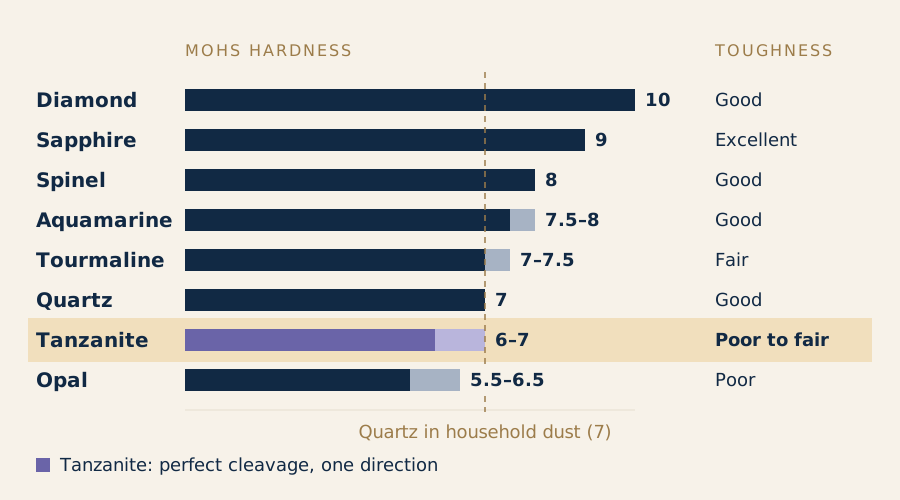
So is tanzanite durable? Durable enough for earrings and pendants, which rarely take knocks, and durable enough for a ring you wear thoughtfully. It is not a stone you can forget about the way you can with sapphire or diamond. Our guide to durability ratings for everyday ring stones ranks the main options if you are still choosing between gems.
Related guideGemstone Durability for Everyday RingsTanzanite vs sapphire and other blue stones: how do they compare?
If you love tanzanite's colour but are worried about wear, it helps to compare it with the other blue and violet stones used in rings. The numbers below are the standard gemmological values a gemmologist uses to identify each stone.
| Tanzanite | Blue sapphire | Lab-created sapphire | Blue spinel | Iolite | |
|---|---|---|---|---|---|
| Mohs hardness | 6–7 | 9 | 9 | 8 | 7–7.5 |
| Toughness | Poor to fair | Excellent | Excellent | Good | Fair |
| Refractive index | 1.691–1.700 | 1.762–1.770 | 1.762–1.770 | about 1.718 | 1.542–1.551 |
| Colour character | Blue to violet, strongly trichroic | Blue, sometimes slightly green or violet | Even blue, made to order | Blue to violet-blue, singly refractive | Violet-blue, strongly pleochroic |
| Usual treatment | Heating, almost always | Heating common | Grown in a laboratory | Usually none | Usually none |
| Australian source | No | Yes (Queensland, NSW) | Not applicable | No significant source | No |
| Daily ring wear | With care | Very well suited | Very well suited | Well suited | With care |
Blue sapphire is the obvious alternative: at 9 on the Mohs scale with no cleavage, it shrugs off daily wear. Australian sapphires often lean towards deep, slightly green-blue tones rather than tanzanite's violet, but some violet-blue sapphires come close. A lab-created sapphire has the same hardness and refractive index as natural sapphire and costs much less; it must always be described as lab-created. Blue spinel is a good middle ground at 8 on the Mohs scale.
Another colourful option many people overlook is tourmaline, a tougher colourful alternative at 7–7.5 on the Mohs scale, which comes in blues, teals and violets as well as pinks and greens. Our guide to tourmaline engagement rings and how they wear covers it as a ring stone in detail.
Can you wear a tanzanite engagement ring every day?
Yes, many people do, but a tanzanite engagement ring asks more of you than a diamond or sapphire ring. An engagement ring is worn for decades, through travel, work, cooking and sleep, so it collects more knocks than almost any other piece of jewellery. Over ten or twenty years you should expect some softening of facet edges and possibly a re-polish, and you should accept that a single hard knock at the wrong angle could split the stone.
It works best when three things line up: a protective setting, a wearer whose work is not hard on the hands (nursing, trades and gardening are tough on any ring) and the habit of taking the ring off for sport, gym, cleaning and the beach. If that does not sound like your life, consider tanzanite in earrings or a pendant and a sapphire on the hand. Our guide to choosing a birthstone engagement ring that lasts weighs up each month's stone with this in mind, and if you were drawn to tanzanite as a December stone, zircon and turquoise, tanzanite's birthstone partners are worth knowing about too, though neither is tougher for a ring.
Not sure which one is right?
Send us the stones you are looking at and our gemologist will tell you which to choose and why.
What is the best setting for a tanzanite ring?
Because the danger for tanzanite is impact, not just scratching, the setting does a lot of the protective work. The aim is to cover the girdle, keep the stone low and avoid any design that squeezes the stone. Shape plays a part too: ovals and rounds have no sharp corners to chip, the same reason oval diamonds suit hard-working rings, while pears and trillions need their points covered.
- Full bezel: a continuous rim of metal around the girdle. This is the most protective tanzanite ring setting, because the edge, where chips start, is fully covered.
- Half-bezel: metal on two sides, leaving the ends open. A good balance of protection and light.
- Halo: a ring of small diamonds around the centre stone takes knocks before the tanzanite does. The diamonds may be natural or lab-grown, and should be described as such.
- Six claws or more, set low: more claws spread the load and hold the stone if one wears. Corners on cushions and trillions need claws that wrap the points.
- Low profile: a stone sitting close to the finger is knocked far less often than one in a tall cathedral or high-set solitaire.
- Avoid tension settings: they hold the stone by pressure alone, which is the last thing a gem with perfect cleavage needs.
For a full comparison of how each style wears, see bezel versus claw settings for daily wear. The metal itself matters less than the design: platinum, white gold and yellow gold all suit tanzanite. Yellow and rose gold warm the stone slightly towards violet, while white metals keep it looking bluer.
How do you judge tanzanite colour and quality?
Colour drives most of tanzanite's value. The most prized stones are a saturated, deep blue to violet-blue with a hint of purple, neither too dark nor washed out. Lighter lavender stones cost much less. Because colour depth builds with the size of the stone, smaller tanzanites (roughly under 1 carat) tend to look paler than larger ones cut from the same rough.
- Colour: look for strong saturation and a medium to medium-dark tone. Check the stone in daylight and under warm indoor light; tanzanite looks bluer in daylight and more violet under warm light.
- Clarity: most faceted tanzanite is eye-clean, meaning no inclusions (internal features) visible without magnification. Visible inclusions lower value and, if they reach the surface, can weaken the stone further.
- Cut: ovals, cushions, pears and trillions are common. A good cut gives even colour and brightness across the face, with no washed-out window in the centre.
- Grades: you will often see trade labels such as AA, AAA or AAAA. These are not a standardised system, so one seller's AAA can differ from another's. Compare the stones themselves, not the letters.
Tanzanite is cut in the same outlines used for diamonds, so our overview of gem and diamond shapes and the full catalogue of 34 cut styles are useful for picturing how each shape will look on the hand. For the meaning of terms such as tone, saturation and window, our plain-English jewellery glossary has short definitions. You can also read tanzanite colour grades and origin for more detail on how the trade describes colour.
Is tanzanite heat treated, and how can you spot imitations?
Heat treated tanzanite is the norm. Nearly all tanzanite on the market has been gently heated, typically somewhere in the range of about 400–600°C, to remove the brownish colour and bring out the blue and violet. The result is stable and permanent, and it is so standard that untreated blue tanzanite is rare. A seller should still disclose it.
Less common, and less acceptable without disclosure, is coating: a thin surface layer, sometimes containing cobalt, that adds colour to pale stones. Coatings can wear away at facet edges over time. Under magnification a gemmologist looks for colour concentrated at the surface and for scratches or worn patches along facet junctions.
Several materials imitate tanzanite. The usual ones are synthetic forsterite, glass, and lab-created stones such as coloured synthetic spinel or cubic zirconia. A gemmologist separates them with standard tests, and these are the figures on refractive index and specific gravity explained:
- Tanzanite: refractive index about 1.691–1.700, birefringence about 0.008–0.013, specific gravity about 3.35, and strong trichroism visible through a dichroscope.
- Synthetic forsterite: refractive index about 1.635–1.670 with a much higher birefringence (around 0.035), so the back facet edges look doubled through a loupe.
- Glass: singly refractive, no pleochroism, and often gas bubbles or swirl marks under magnification.
- Lab-created spinel or cubic zirconia: singly refractive, so they show no trichroism at all.
How much does a tanzanite ring cost in Australia?
Tanzanite is priced per carat, and the price per carat climbs with colour saturation and size. Because there is only one source, prices also move with mine output in Tanzania. The ranges below are broad guides for natural, heated tanzanite only.
| Tanzanite quality | Approximate loose price per carat (AUD) |
|---|---|
| Light lavender, commercial quality | about $150–$400 |
| Medium blue-violet, good saturation | about $400–$900 |
| Deep, saturated blue-violet, 2 ct and above | about $900–$1,800 |
A finished tanzanite ring price in Australia depends just as much on the setting. A simple 18ct gold bezel solitaire with a 1 carat stone might land roughly in the $1,500–$3,500 range, while a diamond halo, platinum or a custom design adds considerably more. For comparison, a natural blue sapphire of similar colour and size usually costs more than tanzanite, and a lab-created sapphire usually costs less. Browse natural coloured stones by type to compare options side by side.
Browse natural gemstones
How do you clean and care for a tanzanite ring?
Good habits do more to protect tanzanite than anything else. Knowing how to clean a tanzanite ring safely is simple:
- Clean gently: use lukewarm water, a drop of mild dishwashing liquid and a soft toothbrush, then rinse and pat dry.
- Never use ultrasonic or steam cleaners: the vibration and heat can crack a stone with cleavage.
- Avoid sudden temperature changes: do not go from a hot dishwasher tray to cold water, or leave the ring on a sunny dashboard.
- Keep acids away: remove the ring before using descalers, pool and spa chemicals or strong cleaning products.
- Take it off for hard work: gym, gardening, cleaning, moving furniture and the beach, where sand is mostly quartz.
- Store it separately: a soft pouch or its own compartment, away from diamonds and sapphires, which will scratch it.
- Check the setting: have the claws or bezel inspected every 6–12 months and before any repair.
How do you choose a tanzanite ring? Step by step
- Be honest about wear. Decide whether this is a daily ring or an occasional one. For hard daily wear, compare it with how other gems compare for hard wear before committing.
- Judge the colour in two lights. View the stone in daylight and warm indoor light, and choose a saturation you love in both.
- Check clarity and cut. Look for an eye-clean stone with no surface-reaching inclusions and no washed-out centre.
- Ask about treatment. Heating is expected; ask specifically whether the stone is coated, and ask for the disclosure in writing.
- Choose a protective setting. A bezel, half-bezel or halo, set low, with six claws or more if you prefer claws.
- Plan for repairs. Ask that the stone be removed before any sizing or soldering, and book a setting check every 6–12 months.
Free consultation
Talk to a gemologist
Compare stones in person or online with Raj Sood, Graduate Gemologist (GIA), AJP (GIA).
Book a consultationShop this shape
FAQ
Common questions
Is tanzanite durable enough for an engagement ring?
It can be, with a protective setting and careful habits. At 6–7 on the Mohs scale with perfect cleavage, tanzanite is far more vulnerable than sapphire or diamond, so expect some wear over the years and remove it for sport and housework.
Does tanzanite scratch easily?
Yes, more easily than most ring stones. Quartz in everyday dust and sand is harder than or equal to tanzanite, so facet edges and the table can dull over time and may need re-polishing.
Is all tanzanite heat treated?
Almost all of it. Gentle heating removes brownish tones and brings out the blue and violet; the result is stable. Coating is a separate, less common treatment that should always be disclosed.
Can I clean my tanzanite ring in an ultrasonic cleaner?
No. Ultrasonic vibration and steam can crack tanzanite. Use lukewarm soapy water and a soft brush instead.
Is tanzanite found in Australia?
No. The only known commercial source is the Merelani Hills in northern Tanzania. Australia is better known for sapphire, opal and pink diamonds.
What is a more durable alternative to tanzanite?
Blue or violet sapphire (Mohs 9) is the most durable alternative, and lab-created sapphire offers the same hardness for less. Blue spinel (Mohs 8) is another good option.

Ask a gemologist
Not sure which diamond to choose?
Raj Sood is a Graduate Gemologist (GIA) and master jeweller. Bring the stones you are considering, or send the reports, and he will tell you honestly which one is better and why.
Keep learning
Related guides
 GemstonesTanzanite
 GemstonesGemstone Durability for Everyday Rings
 Engagement Rings & SettingsBezel vs Claw Settings for Everyday Wear
 GemstonesBirthstone Engagement Rings: Choosing for DurabilityGemstonesGemstones | Coloured Gemstones, Birthstones and Custom JewelleryGemstonesDecember Birthstone: Tanzanite, Zircon and Turquoise
 GemstonesTourmaline Engagement Rings: Colour and Durability
 GemstonesGemstone Properties: Hardness, RI, SG, Durability and Jewellery Use
Explore more
More guides on this topic
Education