
- Education
- Wedding Bands & Eternity
- How to Choose a Men's Wedding Band for Hands-On Work
Wedding Bands & Eternity
How to Choose a Men's Wedding Band for Hands-On Work
A men's wedding band for hands-on work has to survive tools, concrete, steel, chemicals and heat, and it must never put your finger at risk. Here is how to choose the metal, width, profile, finish and fit so the ring lasts and stays safe on the job.
 Reviewed by Raj Sood, Graduate Gemologist (GIA), AJP (GIA)Master jeweller and Graduate Gemologist (GIA) · reviewed 4 November 2026
Quick answer
For hands-on work, choose a low-profile band 4–6 mm wide, about 2 mm thick, with a court (comfort-fit) inside and a brushed or textured finish that hides scratches. Platinum, 9ct or 14ct gold and titanium all wear well. Take any metal ring off around machinery or live electrics, or wear a silicone band instead.
What makes a men's wedding band for hands-on work different?
A wedding band worn at a desk mostly meets keyboards and coffee cups. A band worn by a sparky, chippy, mechanic, farmer, chef, nurse or landscaper meets steel, concrete, timber, gloves, tool handles and cleaning chemicals every single day. The ring that looks right in the shop window is not always the ring that still looks right, and still fits, after five years on site. Our full guide to men's wedding bands covers style in general; this page is about the extra demands of physical work.
Four things wear a working ring down:
- Abrasion: grit, sand, cement and rough timber act like fine sandpaper, scratching the surface and, in softer metals, slowly thinning the band.
- Impact and pressure: gripping a hammer, shovel or spanner squeezes the ring against the handle. A thin band can be pushed out of round (into an oval) over time.
- Chemicals and heat: chlorine, cement lime and some solvents attack metal alloys and dry the skin under the ring; welding and cooking heat travel straight through metal.
- Snagging: raised edges, claws and stones can catch on wire, mesh, hooks and moving parts, which is a safety risk, not just a cosmetic one.
Most of the choices below come back to those four. If you are still deciding on terminology, our explainer on the difference between a wedding ring and a wedding band sorts that out, and any technical word you meet here is defined in our plain-English jewellery glossary.
Is it safe to wear a wedding ring for manual work?
Often yes, with sensible habits. The serious risk is ring avulsion: an injury that happens when a ring catches on something and the full force of a fall or a moving machine is pulled through the finger. It ranges from bruising to severe soft-tissue damage (sometimes called degloving). It can happen with any metal ring, which is why many workplace safety policies require jewellery to come off in certain tasks.
Take your band off, or swap to a silicone ring, when you are:
- Working near rotating machinery such as drills, lathes, grinders, augers or conveyor belts.
- Working on or near live electrical circuits or batteries. Gold, platinum, titanium and tungsten carbide all conduct electricity, and a ring that bridges a terminal can burn the finger.
- Climbing ladders, scaffolding, fences or truck trays, where a ring can catch as you jump or slip down.
- Welding or handling hot material, because metal rings heat up quickly and hold that heat against the skin.
- Handling hooks, chains, wire or mesh, which are the classic snag points.
The design of the band matters too. A smooth, low band with rounded edges is less likely to catch than a wide flat band with sharp corners or a raised stone; we explain how a low, rounded band profile catches less in our profiles guide.
Think about removal in an emergency as well. If your hand is crushed or swells after an injury, the ring may have to be cut off. Gold, platinum and palladium cut easily with a standard ring cutter. Titanium cuts too, but more slowly and often with a powered cutter. Tungsten carbide cannot be cut with a standard ring cutter; it has to be cracked off with locking pliers, which emergency staff can do but which takes the right tool.
Which metal suits a men's wedding band for hands-on work?
Two properties get mixed up. Hardness is resistance to scratching, often measured on the Mohs scale (1 for talc up to 10 for diamond). Toughness is resistance to cracking or breaking when hit. A very hard metal can still shatter, and a softer metal can bend without breaking. A good work ring balances the two.
| Metal | Hardness (Mohs, approx.) | How it wears at work | Resizable? | Density (g/cm³, approx.) |
|---|---|---|---|---|
| Platinum 950 | 4–4.5 | Scratches, but the metal is pushed aside rather than lost; develops a soft grey patina; very tough | Yes | about 20 |
| 18ct yellow or rose gold | about 3 | Scratches readily and slowly wears thinner over decades | Yes | about 15–16 |
| 18ct white gold | about 3–4 | As 18ct, plus the rhodium plating wears off and shows a warmer tone | Yes | about 14–16 |
| 9ct or 14ct gold | about 3.5–4 | Harder and more scratch-resistant than 18ct; less gold, so lower cost | Yes | about 11–14 |
| Palladium 950 | about 4.75 | Naturally white, lighter than platinum, wears in a similar way | Yes, by a skilled jeweller | about 12 |
| Titanium | about 6 | Resists scratches well and is very light; can dent under a heavy blow | Usually not | about 4.5 |
| Tungsten carbide | 8.5–9 | Almost scratch-proof, but can crack or shatter if struck hard | No | about 15 |
| Silicone | Soft | Nicks and stretches; designed to tear under heavy load | Replace instead | about 1.1 |
Platinum suits heavy work because it is tough and does not wear away the way gold does. When it scratches, the metal is mostly displaced rather than removed, so the band keeps its weight; it simply takes on a matte, lived-in look that can be polished back. It is also naturally white, so there is no plating to wear off.
Gold is a fine choice if you pick the carat with your job in mind. 18ct gold is 75% pure gold and is softer, so on a hand that grips tools all day it scratches quickly and loses a little metal every year. 9ct (37.5% gold) and 14ct (58.5% gold) contain more of the harder alloy metals, so they hold up better and cost less. White gold is usually plated with rhodium for a bright white colour, and on a working hand that plating can wear through within a year or so, needing a re-plate to stay white.
Titanium and tungsten carbide are popular with tradies because they shrug off scratches and cost less. The trade-off: neither can usually be resized, so if your finger changes size you replace the ring, and tungsten carbide's brittleness means a hard knock against steel or concrete can crack it. Ceramic bands are similar again: very scratch-resistant but brittle. Our wedding ring buying checklist covers how these metals compare for everyday wear beyond the worksite.
How wide should a men's wedding band be for manual work?
Men's bands commonly run from about 4 mm to 8 mm wide. For hands-on work, most people are happiest at 4–6 mm. A wider band covers more skin, so it traps more sweat, dirt and moisture underneath, rubs against the neighbouring fingers when you grip, and feels tighter because it sits across more of the finger's flex. You can see how men's and women's band widths compare in our widths guide.
| Width | How it feels at work | Suits |
|---|---|---|
| 3–4 mm | Barely noticed; stays out of the way when gripping | Slimmer fingers, or anyone who dislikes wearing rings |
| 5–6 mm | A balance of presence and comfort | Most working hands |
| 7–8 mm | Bold; can pinch between fingers when gripping tools | Broad hands; often needs a slightly larger size |
| 9 mm and wider | Restricts finger bend and traps grime | Rarely practical for manual work |
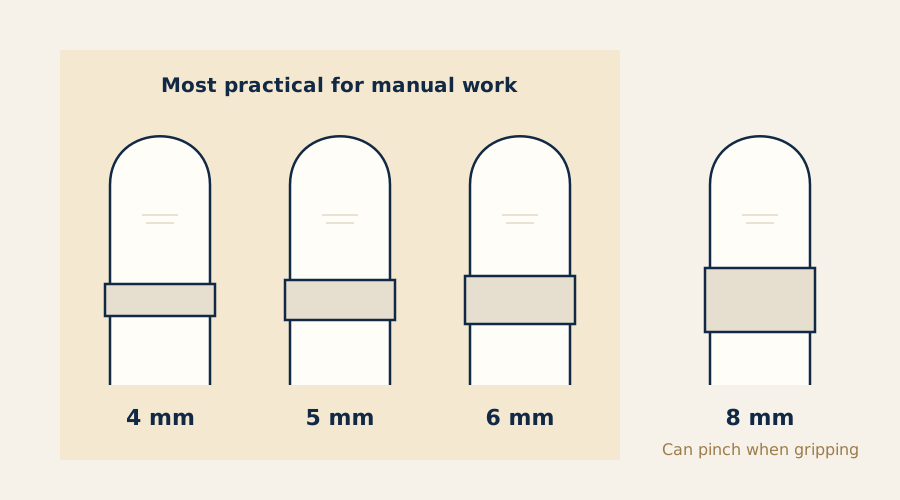
Width and finger size go together: a 6 mm band looks slim on a big hand and wide on a small one. If you are unsure, try on 4, 5 and 6 mm samples and then grip something like a broom handle. The width that disappears when you hold a tool is usually the right one.
Not sure which one is right?
Send us the stones you are looking at and our gemologist will tell you which to choose and why.
Which wedding band profile is most comfortable for manual work?
The profile is the shape of the band when you cut it across, like looking at the end of a pipe. It changes how the ring feels, how easily it slips over the knuckle and how likely it is to catch. For a full rundown, see our guide to court, D-shape and flat profiles compared.
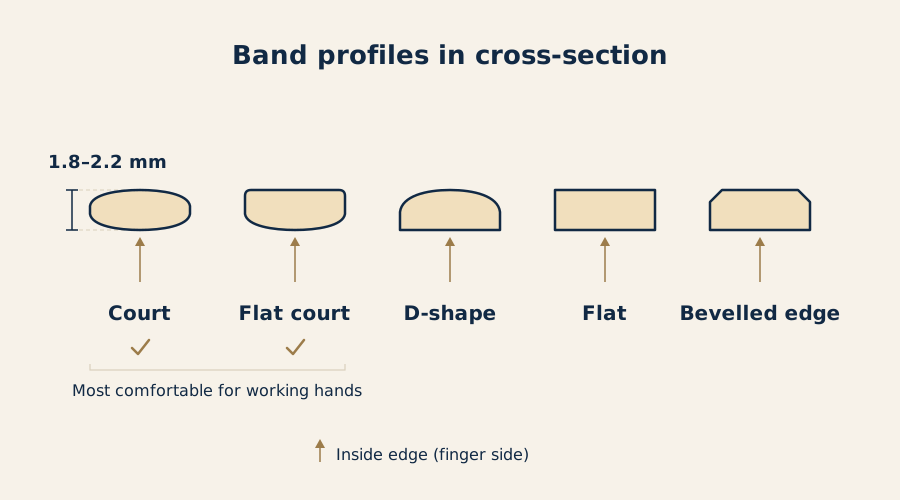
- Court (comfort fit): rounded on the outside and the inside. It slides over the knuckle easily, does not dig in when you grip and has no edges to snag. The usual choice for working hands.
- Flat court: flat on top for a modern look, rounded inside for comfort. Ask for softened outer edges so the corners do not catch.
- D-shape: domed on top, flat inside. Comfortable on top but the flat inner edges can dig in when you make a fist.
- Flat: flat on top and inside with square edges. Sharp corners can catch and press into the skin; less suited to heavy work.
- Bevelled edge: flat top with angled edges; the angles take knocks well but can show wear.
Thickness matters as much as shape. A band of about 1.8–2.2 mm thick resists being squeezed out of round by tool handles while still feeling comfortable. Bands under about 1.5 mm, especially in 18ct gold, can slowly go oval with heavy gripping. Very thick bands, over about 2.5 mm, feel bulky between the fingers.
If your partner's engagement ring is shaped or curved, their band may need a fitted shape, but a men's work band is almost always best kept straight and simple. Our page on curved and fitted bands explains when a contour is worth it.
Which finish hides scratches best on a work ring?
A high polish shows every scratch within weeks on a working hand. A textured finish hides them, because new marks blend into the existing surface. Common options:
- Satin or brushed: fine parallel lines that give a soft sheen. New scratches blend in, and a jeweller can re-brush it in minutes.
- Sandblasted or matte: an even frosted surface that hides fine marks well, though it can polish up in high-contact spots.
- Hammered: small dimples across the surface; the most forgiving finish for heavy wear.
- Polished with brushed centre: a mix that keeps a little shine at the edges.
Any finish can be refreshed. Many working ring owners have their band refinished every year or two, which costs far less than replacing it. Engraving is best placed on the inside of the band, where it is protected; outside engraving softens quickly on a tool hand.
If you want a diamond or two, choose a flush setting (also called a gypsy setting), where the stone sits in a drilled seat level with the metal surface, with no claws to catch. Diamond is 10 on the Mohs scale, so the stone itself copes well; the setting is what needs protecting. Raised claws are a poor match for gloves and mesh. Our guide to plain versus diamond-set bands weighs up both, and you can browse men's band styles, from classic to modern for ideas that still suit a working hand.
How should a wedding band fit if you work with your hands?
Working hands change size more than most. Fingers swell in heat, after heavy lifting and at the end of the day, and shrink in cold weather and cold water. A ring that feels perfect on a cool morning can feel tight on a 38°C afternoon on site, and one that fits on a hot day can slip off in winter.
Aim for a band that is snug enough not to slide back over the knuckle by itself, but loose enough to remove with soap or water when your hand is warm. That second point matters for safety: you want to be able to get it off quickly. Wider bands fit tighter than narrow ones at the same size, so a 7–8 mm band often needs about a quarter to half a size larger. Our advice on getting your ring size right explains Australian letter sizing and how to measure.
If your knuckles are large compared with the base of your finger, a court profile helps the ring slide over the knuckle, and a jeweller can discuss options such as a slightly larger size with a comfortable inside curve.
Should you wear a silicone ring at work instead?
Many tradespeople wear their metal band off the job and a silicone ring on site. Silicone bands are designed to stretch and tear under a heavy load, which lowers the risk of a ring injury, and they do not conduct electricity. They typically cost about AUD $20–$60 and come in many colours and widths.
- Pros: safer around machinery and electrics, comfortable in heat, cheap to replace, no scratches to worry about.
- Cons: not a lasting keepsake, can trap moisture underneath, and wears out with time and sun exposure.
- Good habit: keep a small tin or zip pouch in the ute or locker for your metal band, so it is never left loose on a bench.
A silicone ring does not replace common sense. Even silicone should come off near fast rotating parts, and the metal band you wear the rest of the time should still be chosen with the width, profile and fit advice above.
How much does a men's wedding band for hands-on work cost?
The price of a plain band depends mostly on the metal and how much of it there is. A wider or thicker band uses more metal, and dense metals like platinum need more weight for the same size. These are broad ranges for a plain 5–6 mm court band in a typical men's size:
| Metal | Approximate price range (AUD) |
|---|---|
| Silicone | about $20–$60 |
| Tungsten carbide | about $100–$500 |
| Titanium | about $150–$600 |
| 9ct gold | about $600–$1,500 |
| 14ct gold | about $900–$2,000 |
| Palladium 950 | about $1,200–$2,500 |
| 18ct gold | about $1,500–$3,500 |
| Platinum 950 | about $2,000–$4,500 |
Precious metal prices move with the market, so treat these as a guide only. Over a working lifetime, a precious metal band that can be resized, refinished and repaired may cost less per year than replacing cheaper bands that cannot be resized. Flush-set diamonds add to the cost depending on the number, size and whether they are natural or lab-grown.
Many couples want the two bands to feel like a pair even when they look different. Our guide to matching a band to your partner's engagement ring covers metal colour and finish. If your partner has a square stone, see bands that sit beside a princess cut, and for a heart-shaped centre stone, see bands that sit flush beside a heart. If neither of you wants anything conventional, our ring ideas for people who dislike traditional styles may spark a design.
Create your work-ready wedding band
How to choose a men's wedding band for hands-on work, step by step
- List your work hazards. Machinery, live electrics, heat, chemicals, heavy gripping or climbing. This tells you when the ring must come off and whether a silicone backup makes sense.
- Choose the metal. Platinum or 9ct/14ct gold for a band you can resize and refinish for life; titanium or tungsten carbide for scratch resistance at lower cost, accepting they usually cannot be resized.
- Pick the width. Start at 4–6 mm and test by gripping a tool handle; compare typical band widths in millimetres before you decide.
- Choose a court or flat court profile about 1.8–2.2 mm thick, with softened edges so nothing catches.
- Pick a forgiving finish. Brushed, matte or hammered hides daily scratches; put any engraving inside.
- Size it for real conditions. Measure at the end of a working day and on a cold morning, and allow extra for wider bands.
- Keep it simple. If you want stones, choose a flush setting; check any term you are unsure of in our definitions for every jewellery term.
- Plan care. Store it safely when it comes off, and have it refinished and checked every year or two.
Free consultation
Talk to a gemologist
Compare stones in person or online with Raj Sood, Graduate Gemologist (GIA), AJP (GIA).
Book a consultationShop this shape
FAQ
Common questions
What is the most durable metal for a men's wedding band?
For scratch resistance, tungsten carbide is the hardest, but it can crack and cannot be resized. For long-term durability, platinum is very tough and does not wear away like gold, and 9ct or 14ct gold is harder than 18ct.
Should tradies wear their wedding ring at work?
Many do, but take it off around rotating machinery, live electrics, welding and climbing, where a ring can cause a serious injury. A silicone ring is a common alternative on site.
Is tungsten or titanium better for a work wedding band?
Tungsten carbide is more scratch-resistant and heavier, but brittle and can only be cracked off in an emergency. Titanium is very light, tougher against knocks and can be cut off more easily, though neither can usually be resized.
What width wedding band is most comfortable for manual work?
Most people who work with their hands choose 4–6 mm. Wider bands trap dirt and sweat and can pinch between fingers when gripping tools.
Can a scratched wedding band be fixed?
Yes. Gold, platinum and palladium bands can be refinished by a jeweller to a polished, brushed or matte surface. Tungsten carbide is very hard to refinish and is usually left as it is; titanium can often be re-brushed or polished, though not every jeweller offers this.
Do silicone wedding rings really prevent ring injuries?
They are designed to stretch and tear under heavy load, which lowers the risk compared with metal, and they do not conduct electricity. They should still come off near fast-moving machinery.

Ask a gemologist
Not sure which diamond to choose?
Raj Sood is a Graduate Gemologist (GIA) and master jeweller. Bring the stones you are considering, or send the reports, and he will tell you honestly which one is better and why.
Keep learning
Related guides
 Wedding Bands & EternityMen’s Wedding Band Guide
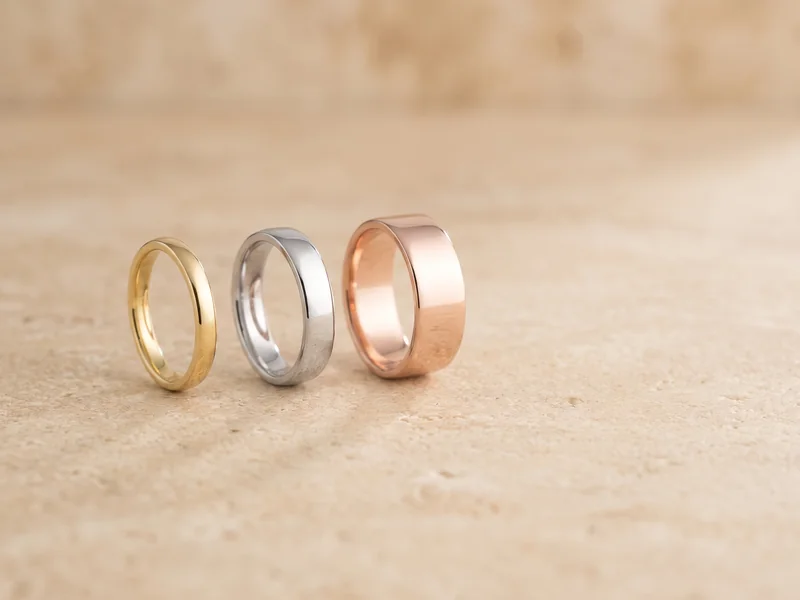 Wedding Bands & EternityWedding Band Profiles Explained
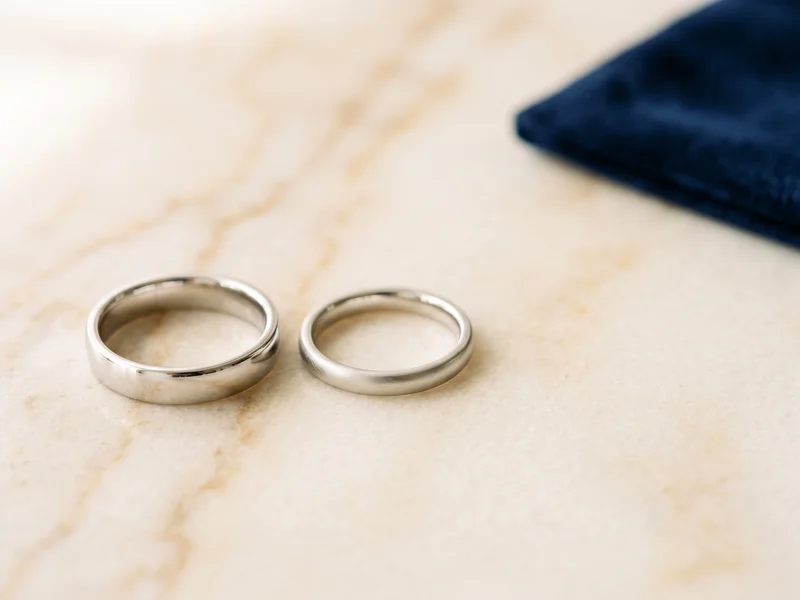 Wedding Bands & EternityWomen's vs Men's Wedding Band WidthsWedding Bands & EternityWedding Ring Buying Guide
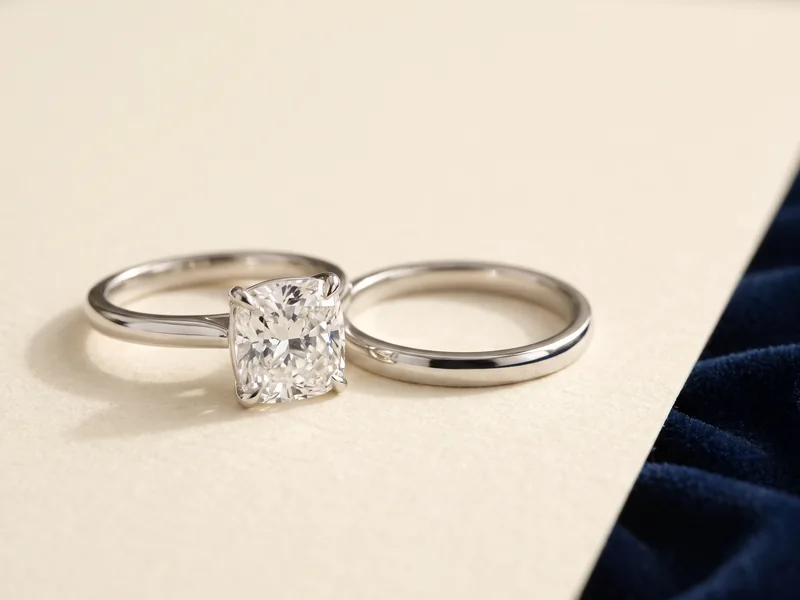 Wedding Bands & EternityWedding Ring vs Wedding Band
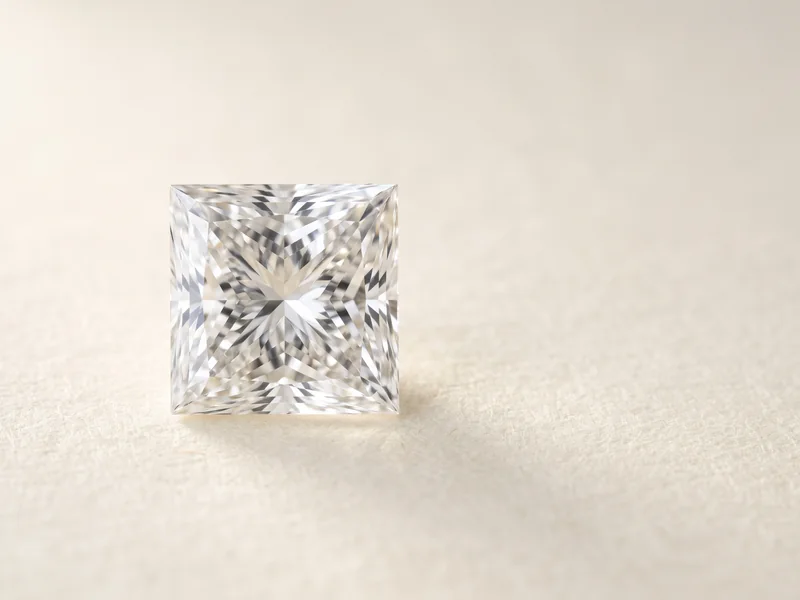 Wedding Bands & EternityBest Wedding Band for Princess Engagement Rings
 Wedding Bands & EternityHow to Match a Wedding Band to an Engagement Ring
 Wedding Bands & EternityPlain vs Diamond Wedding Bands
Explore more
More guides on this topic
Education