
- Education
- Lab-Grown Diamonds
- Lab-Grown Fancy Colour Diamonds: How the Colour Is Made, Graded and Priced
Lab-Grown Diamonds
Lab-Grown Fancy Colour Diamonds: How the Colour Is Made, Graded and Priced
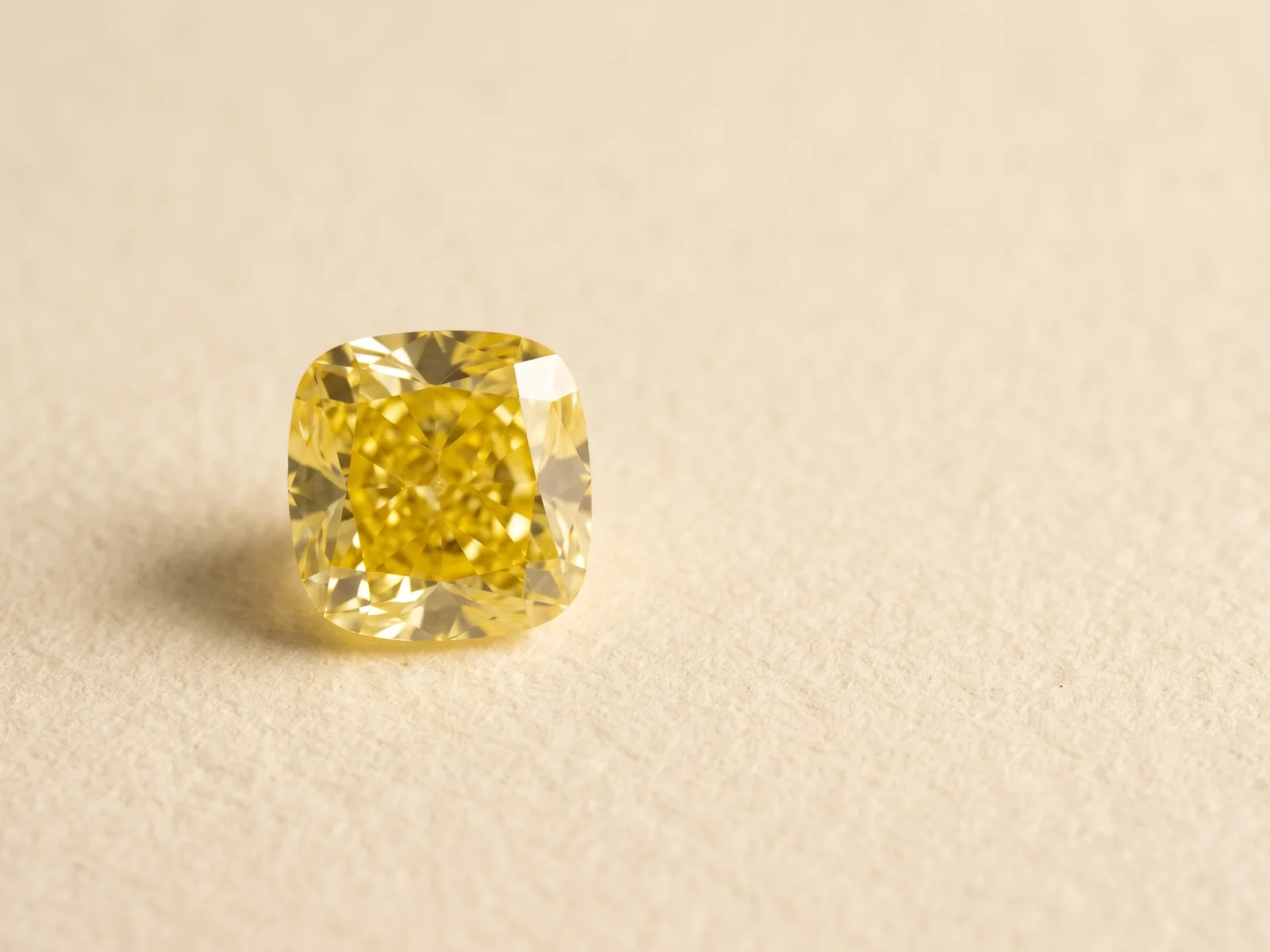
Lab-grown fancy colour diamonds put pink, blue and vivid yellow within reach of most budgets. Before you choose one, it helps to know how the colour got there, what the report should say, and how it compares with a natural coloured diamond.
 Reviewed by Raj Sood, Graduate Gemologist (GIA), AJP (GIA)Master jeweller and Graduate Gemologist (GIA) · reviewed 4 November 2026
Quick answer
Lab-grown fancy colour diamonds are real diamonds grown in a laboratory in colours such as yellow, pink, blue and green. Yellow and blue can form during growth from nitrogen or boron; most pinks, reds and greens come from post-growth treatment. They are usually graded Fancy Light to Fancy Vivid and cost a small fraction of natural coloured diamonds.
What are lab-grown fancy colour diamonds?
A fancy colour diamond is any diamond with a strong, attractive body colour, beyond the faint yellow or brown tints covered by the ordinary D-to-Z colour scale. Lab-grown fancy colour diamonds are those same coloured diamonds, grown in a laboratory instead of formed underground. They are pure carbon arranged in the same crystal structure as a mined diamond, so they are real diamond, not a simulant like cubic zirconia or moissanite. If that distinction is new to you, our explanation of why lab-grown diamonds are genuine diamond covers the chemistry.
Physically, a laboratory-grown diamond has the same hardness (10 on the Mohs scale), the same refractive index (about 2.42) and the same density (about 3.52) as a natural one. What differs is origin, the tiny growth features a laboratory can detect, and very often the way the colour was produced. For the wider background on growing methods, sizes and reports, start with our complete guide to lab-grown diamonds.
The colours you will see most often are yellow, pink, blue and green, followed by champagne (brown), black and, less commonly, red, purple and orange. Any unfamiliar word on this page is also defined in our plain-English jewellery glossary.
How is colour created in a lab-grown diamond?
Lab diamonds are grown in one of two ways. HPHT (high pressure, high temperature) recreates the crushing pressure and heat deep in the earth inside a press. CVD (chemical vapour deposition) builds the crystal layer by layer from a carbon-rich gas in a vacuum chamber. Colour then comes from one of two routes: trace elements absorbed while the crystal grows, or a treatment applied afterwards.
In natural diamonds the causes of colour are similar. Nitrogen makes most yellows, boron makes blues, natural radiation makes greens, and pink comes from distortion of the crystal lattice under pressure. The lab simply controls those causes, or recreates their effect with treatment.
| Colour | Usual cause in lab-grown | Grown that way or treated? |
|---|---|---|
| Yellow, orange-yellow | Nitrogen absorbed during HPHT growth | Often as-grown; sometimes treated to deepen colour |
| Blue | Boron added during HPHT growth | Usually as-grown |
| Pink, red, purple | Lattice defects (nitrogen-vacancy centres) created by irradiation and annealing | Almost always post-growth treatment |
| Green | Irradiation that displaces carbon atoms | Post-growth treatment |
| Champagne, brown | Growth defects, mainly in CVD | As-grown, sometimes adjusted by heating |
| Black | Heavy irradiation or dense dark inclusions | Treatment or as-grown inclusions |
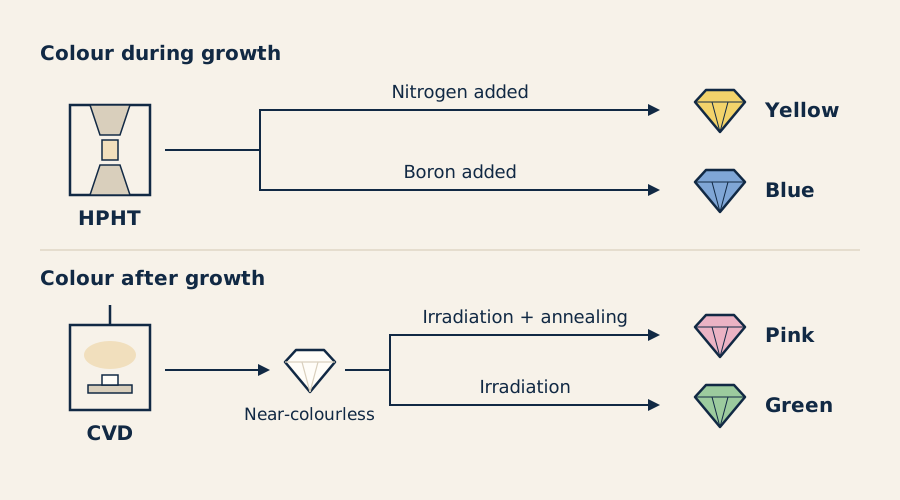
Post-growth treatment means the diamond is grown first, often near-colourless, then irradiated and/or heated (annealed) to rearrange tiny defects in its crystal until it absorbs light in a way that shows a chosen colour. This is a normal and widely used process, and it is not a coating; the colour sits inside the diamond. It must still be disclosed. If you are comparing near-colourless stones rather than coloured ones, our page on how D-to-Z colour grades apply to lab-grown stones explains that separate scale.
How are lab-grown fancy colour diamonds graded?
Fancy colour diamonds are not graded D to Z. Instead a laboratory describes three things: the hue (the main colour, such as pink), any modifier (a secondary colour, such as purplish) and the intensity (how strong the colour is). The grade reads like a sentence, for example "Fancy Intense Purplish Pink". Our guide to how fancy colour diamonds are graded walks through each part with examples.
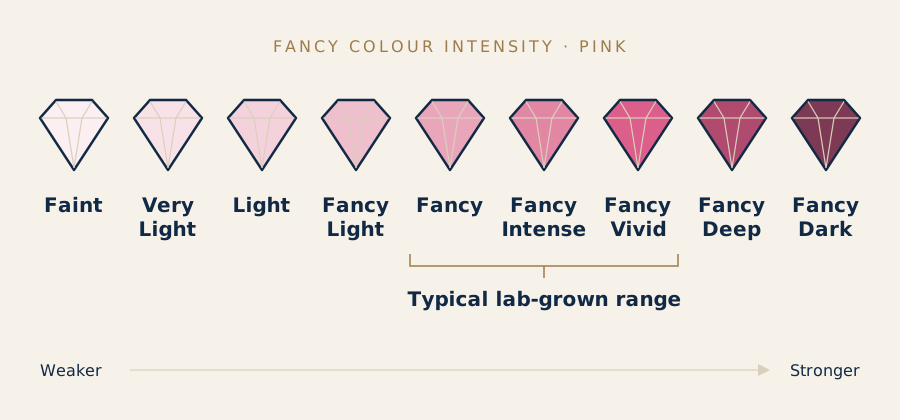
The full intensity scale runs Faint, Very Light, Light, Fancy Light, Fancy, Fancy Intense, Fancy Vivid, Fancy Deep and Fancy Dark. Because labs can push colour quite strongly, most lab-grown coloured stones sold for jewellery sit between Fancy and Fancy Vivid. See each step of the Faint to Vivid intensity scale for how the grades look side by side, and what a Fancy Vivid grade really means for the top of the range.
Most lab-grown coloured diamonds in Australia come with an IGI report, and some with GIA or GCAL reports. A typical lab-grown report for a coloured stone shows:
- "Laboratory-Grown Diamond" printed clearly at the top, and a matching laser inscription on the girdle (the thin outer edge), often with "LG" and the report number.
- Growth method: HPHT or CVD, usually in the comments.
- Colour grade: for example "Fancy Vivid Yellow" or "Fancy Intense Pink".
- Treatment note: wording such as "post-growth treatment" or "indications of post-growth treatment" where the colour has been altered.
- Clarity, measurements and cut details, the same as for any diamond.
Some labs also note "colour distribution", meaning whether the colour looks even across the stone or patchy. Even distribution is preferred.
Which lab-grown colours can you get, and how do they look?
Each colour has its own character, and the modifier changes the look a lot. A pink with a purplish modifier reads cooler and closer to raspberry; an orangy pink reads warmer and closer to peach. Our page on modifiers and overtones such as purplish or greenish explains how to read those words.
- Lab grown yellow diamond: the most common and usually the lowest-priced colour. Fancy Intense and Fancy Vivid yellows are often called "canary", a trade nickname rather than a grade.
- Lab grown pink diamond: the most requested colour. Most are CVD-grown and then treated. Shades run from soft pastel to strong hot pink.
- Lab grown blue diamond: coloured by boron, usually HPHT-grown. Blues often carry a slight grey or greenish modifier, so look at the stone or a true-colour video, not just the grade.
- Green: usually created by irradiation, from mint to deep forest green.
- Champagne and black: less expensive and popular in men's rings and modern designs. Black diamonds are opaque, so clarity grades do not apply in the usual way.
Cut shape affects colour too. Radiant and cushion cuts, along with oval diamond shapes and teardrop pear cuts, tend to hold and concentrate colour, which is why so many natural coloured diamonds are cut in those shapes. A round brilliant returns more white sparkle, which can make the colour look slightly paler at the same grade. Our overview of every diamond shape shows the main outlines side by side.
Not sure which one is right?
Send us the stones you are looking at and our gemologist will tell you which to choose and why.
Lab-grown vs natural fancy colour diamonds: what is the difference?
Both are diamond, and both can be beautiful. The differences are origin, rarity, the usual cause of colour and, above all, price. Natural fancy colour diamonds are rare: only a small fraction of mined diamonds show strong colour, and natural pinks and blues are among the rarest gems on earth. Australia's Argyle mine in Western Australia produced most of the world's natural pinks until it closed in 2020.
| Lab-grown fancy colour | Natural fancy colour | |
|---|---|---|
| Material | Diamond (carbon), Mohs 10, RI 2.42 | Diamond (carbon), Mohs 10, RI 2.42 |
| Origin | Grown by HPHT or CVD in weeks | Formed in the earth over very long periods |
| Colour cause | Often post-growth treatment; yellow and blue can be as-grown | Usually natural; some natural stones are treated too |
| Typical intensity offered | Fancy to Fancy Vivid, widely available | Strong grades are scarce, especially in pink and blue |
| Availability in 1 ct+ | Easy to find in most colours | Limited, particularly pink, blue and red |
| Price | A small fraction of natural | Much higher; pink and blue can reach six or even seven figures |
| Report | States laboratory-grown and any treatment | States natural and whether colour is natural or treated |
Neither type is a stand-in for the other. A lab-grown coloured diamond is a way to enjoy a strong colour in a size that would be out of reach in a natural stone. A natural coloured diamond is valued for its rarity and its natural origin. If you are weighing the two, our guide on how HPHT and CVD diamonds are grown gives the full picture of the lab side, and you can view both side by side in store.
Browse fancy colour diamonds: natural and lab-grown
How much do lab-grown fancy colour diamonds cost in Australia?
Prices depend on colour, intensity, carat, clarity and cut, roughly in that order. In lab-grown stones the colour itself is less of a price driver than in natural stones, because treatment can produce strong colour reliably. Our article on the factors behind fancy colour pricing explains how each one weighs in.
| About 1 ct, Fancy Intense–Vivid, eye-clean | Lab-grown (approx. AUD) | Natural (approx. AUD) |
|---|---|---|
| Yellow | about $800–$3,000 | about $8,000–$25,000 |
| Pink | about $1,000–$4,000 | often six figures, and rarely available |
| Blue | about $1,500–$5,000 | often six figures or more |
| Green | about $1,000–$4,000 | varies widely; usually tens of thousands or more |
| Champagne or black | about $500–$2,000 | about $1,500–$6,000 |
Treat these as broad ranges only. Lab-grown prices have fallen steadily over recent years and can move quickly, while natural prices for top pinks and blues depend heavily on the individual stone. A few patterns hold:
- Yellow is usually the most affordable lab colour; pink and blue usually cost more.
- Moving from Fancy to Fancy Vivid raises the price, but by far less in lab-grown than in natural.
- Even colour distribution and a pure hue (no grey or brown modifier) are worth paying for, because they are what you see on the hand.
- Lab-grown diamonds do not hold resale value the way rarer natural stones can, so buy one because you love the colour.
Is a lab-grown fancy colour diamond good for an engagement ring?
Yes. At 10 on the Mohs scale, a lab-grown coloured diamond is as scratch-resistant as any diamond and suits daily wear. Like all diamond it can chip if a thin edge or point takes a hard knock, so pointed shapes such as pear, marquise and heart shaped diamonds need a protective claw or bezel. For design ideas, from halos that intensify colour to white diamond side stones, see our fancy coloured diamond engagement ring designs.
Related guideFancy Coloured Diamond Engagement RingsTreated colours are stable under normal wear, sunlight and cleaning. The one real caution is high heat. A jeweller's torch held near the stone during resizing or re-tipping claws can, in some treated diamonds, shift or fade the colour, because heat is part of how that colour was created. Any competent bench jeweller will remove the stone or protect it, but only if they know it is treated.
Metal colour changes how the diamond looks. Yellow gold warms and deepens yellow diamonds; rose gold flatters pink; white gold and platinum keep blues and greens crisp. Many coloured centres are set in white metal claws to frame the stone, with a yellow or rose gold band.
What must a jeweller disclose about lab-grown coloured diamonds in Australia?
Under the Australian Consumer Law, a business must not mislead you about what a product is or where it comes from. In practice, for a lab-grown coloured diamond that means:
- It must be clearly called lab-grown or laboratory-grown, in the listing, on the receipt and on the report. A coloured lab diamond described only as a "pink diamond" invites confusion.
- Treatment should be disclosed, because it changes how you need to care for the stone and how it is valued.
- The report should match the stone: check that the laser inscription number matches the report number.
- No implied rarity: a lab-grown pink should not be marketed with the scarcity language that applies to natural Argyle pinks.
Laboratories identify lab-grown diamonds with spectroscopy and fluorescence imaging, which reveal growth patterns HPHT and CVD stones leave behind. You cannot tell by eye, and neither can a standard diamond tester. Our article on how labs tell natural and lab-grown diamond apart covers the methods. If anything on a report is unclear, ask the seller to explain it in plain words before you pay.
How do you choose a lab-grown fancy colour diamond? Step by step
- Pick the colour first. Look at real stones or true-colour videos, not just grade names; a pink with a purplish modifier looks very different from an orangy pink.
- Choose the intensity. Use the intensity grade printed on the report as a guide: Fancy Intense is strong, Fancy Vivid is the most saturated without darkening.
- Check the report. Confirm "laboratory-grown", the growth method (HPHT or CVD), any post-growth treatment note and the colour distribution.
- Match the inscription. The laser-inscribed number on the girdle should match the report number.
- Check clarity by eye. Eye-clean (no inclusions visible without magnification) is enough; VS2 or SI1 is usually fine in a coloured stone.
- Choose a colour-friendly shape and metal. Radiant, cushion, oval and pear hold colour well; match the metal to the hue.
- Note the care rules. Keep the report, and tell any jeweller the stone is treated before heat is used near it.
Still deciding between colours or between natural and lab-grown? Our explainer on the difference a Vivid grade makes and the step-by-step guide to reading a coloured diamond grade are good next reads.
Free consultation
Talk to a gemologist
Compare stones in person or online with Raj Sood, Graduate Gemologist (GIA), AJP (GIA).
Book a consultationShop this shape
FAQ
Common questions
Are lab-grown coloured diamonds treated?
Many are. Most lab-grown pink, red, purple and green diamonds get their colour from irradiation and heating after growth, while many yellows and blues are coloured during growth by nitrogen or boron. The report should state whether post-growth treatment has been applied.
Will the colour of a lab-grown pink diamond fade?
Not in normal wear, sunlight or cleaning. Very high heat, such as a jeweller's torch during repairs, can change some treated colours, so always tell the jeweller the stone is treated.
Is a lab grown blue diamond the same as a natural blue diamond?
Both are diamond and both are coloured by boron, so they look alike. The lab-grown stone is usually grown by HPHT, costs a small fraction of a natural blue and is identified as laboratory-grown on its report and inscription.
How much is a 1 carat lab-grown pink diamond in Australia?
As a broad guide, about AUD $1,000–$4,000 for a 1 ct eye-clean stone in Fancy Intense to Fancy Vivid, depending on hue, cut and clarity. Natural pinks of that size and colour usually cost six figures.
Can you tell a lab-grown fancy colour diamond from a natural one by looking?
No. The difference can only be confirmed by a gemmological laboratory using spectroscopy and fluorescence imaging. Rely on the report and the laser inscription.
Do lab-grown fancy colour diamonds hold their value?
Generally not. Lab-grown prices have been falling as production grows, so it is best to choose one because you love the colour rather than for resale.

Ask a gemologist
Not sure which diamond to choose?
Raj Sood is a Graduate Gemologist (GIA) and master jeweller. Bring the stones you are considering, or send the reports, and he will tell you honestly which one is better and why.
Keep learning
Related guides
 Fancy Colour DiamondsHow Fancy Colour Diamonds Are GradedLab-Grown DiamondsLab-Grown Diamonds Guide
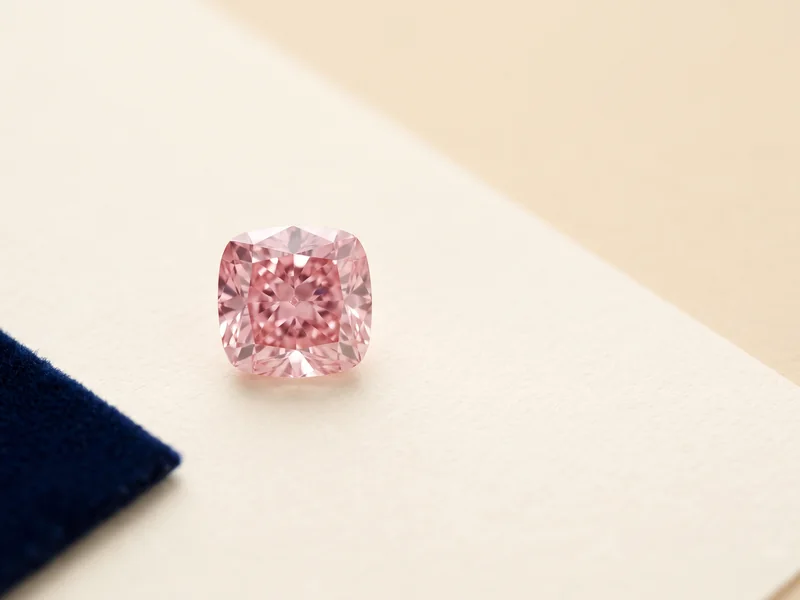 Fancy Colour DiamondsFancy Colour Intensity Scale: Faint to Vivid
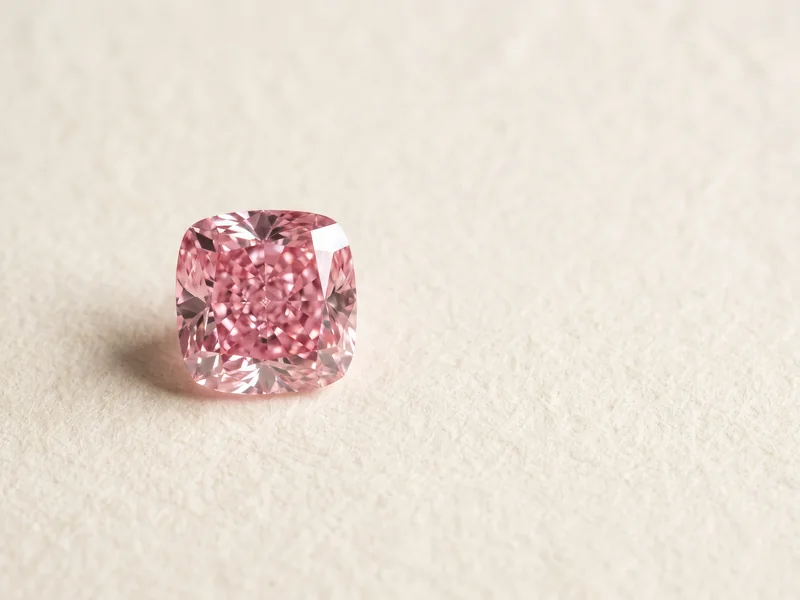 Fancy Colour DiamondsWhat Drives Fancy Colour Diamond Prices
 Lab-Grown DiamondsLab-Grown Diamond Colour GradesFancy Colour DiamondsFancy Colour Modifiers and Overtones
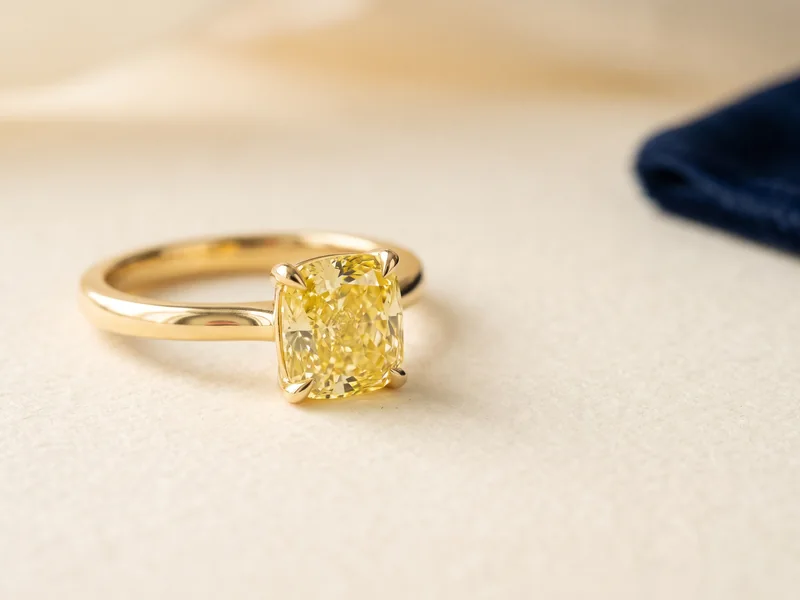 Fancy Colour DiamondsFancy Coloured Diamond Engagement Rings
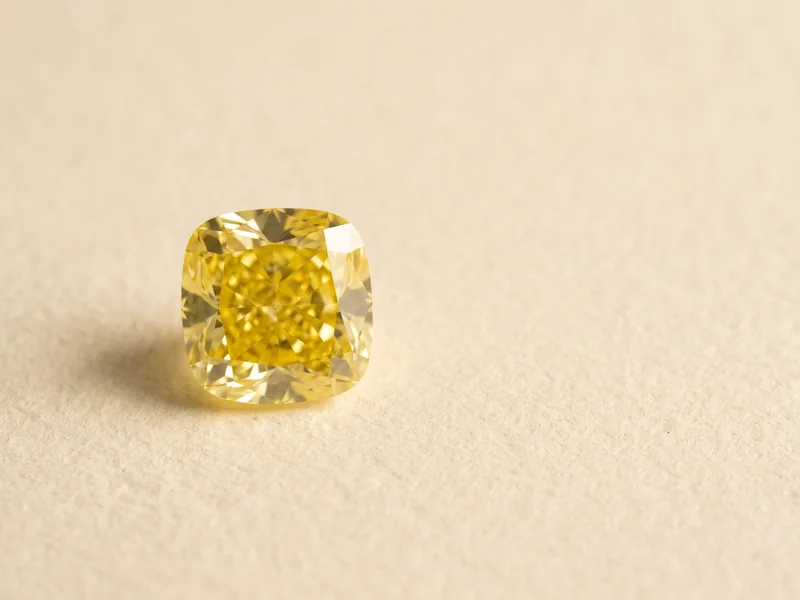 Fancy Colour DiamondsWhat Is a Fancy Vivid Diamond?
Explore more
More guides on this topic
Education