
- Education
- Fancy Colour Diamonds
- Fancy Colour Diamond Grading: How Coloured Diamonds Are Graded
Fancy Colour Diamonds
Fancy Colour Diamond Grading: How Coloured Diamonds Are Graded
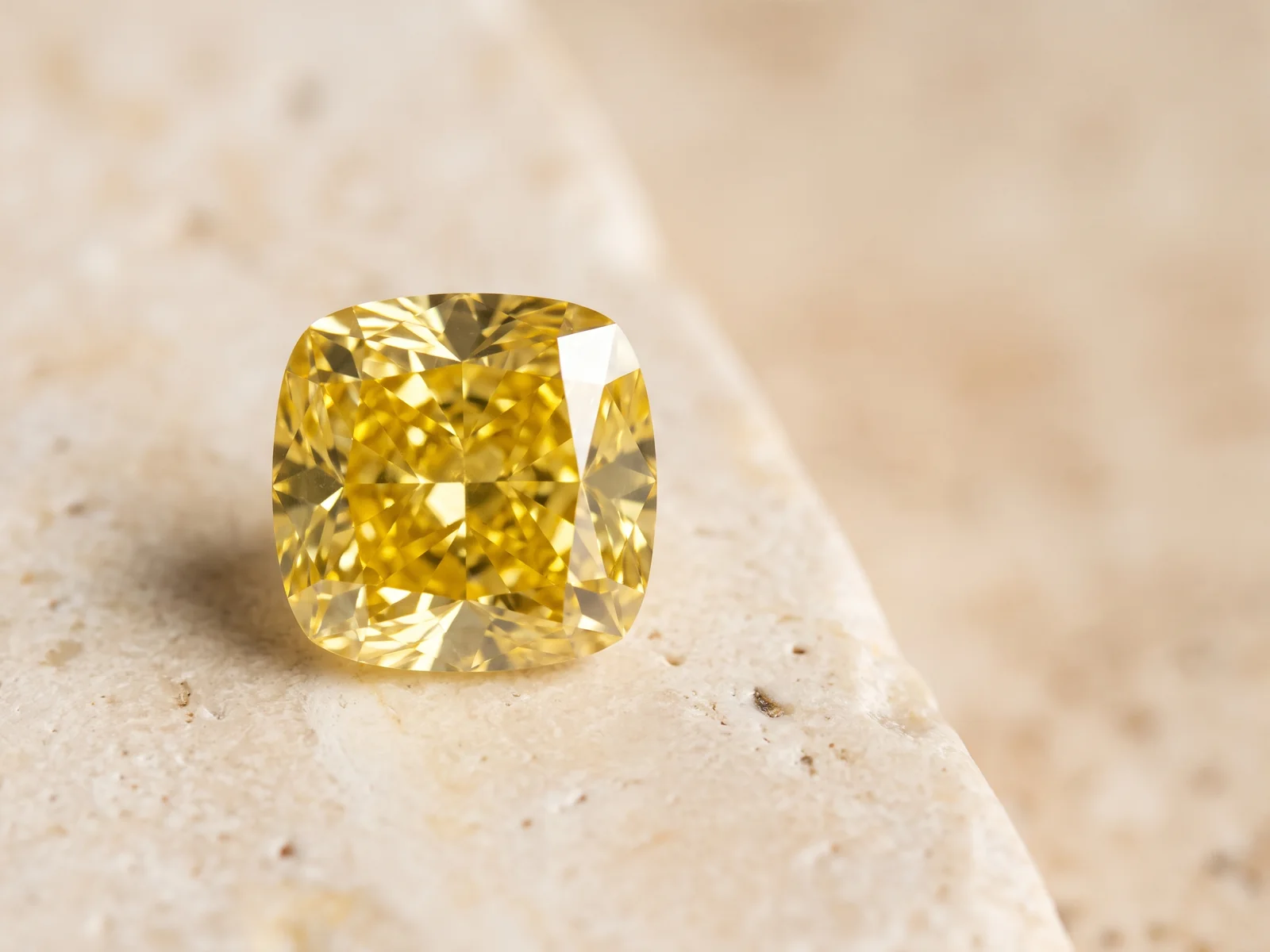
With a coloured diamond, colour is the whole point, and the price can change many times over between one grade and the next. Here is how fancy colour diamond grading works, from what causes the colour to how a lab names it and proves its origin.
 Reviewed by Raj Sood, Graduate Gemologist (GIA), AJP (GIA)Master jeweller and Graduate Gemologist (GIA) · reviewed 4 November 2026
Quick answer
Fancy colour diamond grading describes colour rather than its absence. Labs such as GIA compare the stone face-up against references and record its hue, tone (lightness) and saturation (strength). These combine into an intensity grade, from Faint through Fancy Vivid to Fancy Deep and Fancy Dark, and the report states whether the colour is natural, treated or laboratory-grown.
What is fancy colour diamond grading?
Most diamonds are graded on how little colour they have. The D-to-Z scale, explained in our guide to diamond colour grading, rewards the absence of a yellow or brown tint. Fancy colour diamond grading flips that logic. Once a diamond's colour is strong enough, or is a hue other than yellow or brown, it is graded on the character and strength of that colour instead.
A fancy colour diamond is a diamond with body colour beyond the normal range: yellow or brown deeper than Z, or any distinct pink, blue, green, orange, purple, red, grey or black. Labs such as GIA, IGI and HRD all issue coloured diamond reports, but GIA's system is the reference most of the trade works from, so it is the one explained here. For a tour of the colours themselves, start with our fancy colour diamonds guide; any unfamiliar word is defined in the GemTrove jewellery glossary.
Three lines on a coloured diamond report matter more than anything else: the colour grade (for example Fancy Intense Purplish Pink), the colour distribution (even or uneven) and the colour origin (natural, treated or undetermined). Carat weight, clarity and measurements are still recorded, but colour drives most of the value.
What causes colour in a diamond?
Pure diamond is carbon in a tight cubic crystal, and it is colourless. Colour appears when something interrupts that crystal: a trace element sitting in place of a carbon atom, a distortion in the lattice, or damage from natural radiation. Each cause produces a characteristic set of hues, and gemmologists use these causes (along with spectroscopy) to separate natural colour from treated colour.
| Colour | Main cause | Gemmologist's note |
|---|---|---|
| Yellow, orange | Nitrogen atoms in the crystal | The most common fancy colour; 'canary' is a trade name for strong yellow |
| Brown (champagne, cognac) | Distortion of the lattice (plastic deformation) | Very common; Argyle produced large volumes of brown |
| Pink, red, purple | Plastic deformation; the exact colour centre is still researched | Colour often sits in parallel bands called graining |
| Blue | Boron (Type IIb diamonds) | Boron also makes these diamonds conduct electricity |
| Green | Natural radiation over millions of years | Colour is often only a thin skin; widely imitated by treatment |
| Grey, violet | Hydrogen, sometimes boron | Argyle produced a few rare violet stones |
| Black | Dense dark inclusions such as graphite | Most black diamonds sold are treated |
| Chameleon | An unusual defect sensitive to heat and darkness | Olive green shifts towards yellow, then returns |
Scientists also sort diamonds into types by their impurities. Type Ia holds nitrogen in clusters (most diamonds, including pale 'cape' yellows). Type Ib holds single, scattered nitrogen atoms and is rare, giving intense yellow and orange. Type IIa has almost no nitrogen and includes some of the rarest pinks. Type IIb contains boron and is blue. Reports from GIA sometimes note the type on coloured stones, especially blues.
A chameleon diamond's change is temporary, triggered by gentle heating or a spell in the dark. That is a different mechanism from the daylight-to-lamplight shift explained in how alexandrite changes colour under different light. Salt-and-pepper diamonds, popular in Australian engagement rings, are another case: they are colourless to grey stones with many visible black and white inclusions, sold for their character rather than graded as fancy colour.
How does GIA grade hue, tone and saturation?
GIA describes every coloured diamond with three attributes. Hue is the colour itself; GIA's colour wheel uses 27 hue names, from pure ones such as pink and blue to blends such as purplish pink or greenish blue. Tone is how light or dark the colour appears. Saturation is how strong or pure it is, from greyish or brownish (weak) to intense.
Tone and saturation are then combined into a single intensity grade. A grader places the diamond face-up in a standard grey viewing box under controlled daylight-balanced lighting and compares it with reference stones of known colour. The grade describes the overall face-up impression, which the trade calls the characteristic colour, not the darkest or lightest spot.
| Intensity grade | Tone and saturation | What you see |
|---|---|---|
| Faint | Very light, very weak | A hint of colour, mostly seen face-down |
| Very Light | Light, weak | Colour just visible face-up |
| Light | Light, slightly stronger | Clear but pale |
| Fancy Light | Light to medium, moderate | Obviously coloured, soft |
| Fancy | Medium, moderate | A clear, balanced colour |
| Fancy Intense | Medium, strong | Rich colour |
| Fancy Vivid | Medium, very strong | The strongest, brightest colour |
| Fancy Deep | Medium to dark, strong | Rich but darker |
| Fancy Dark | Dark, weaker | Dark, with less brightness |
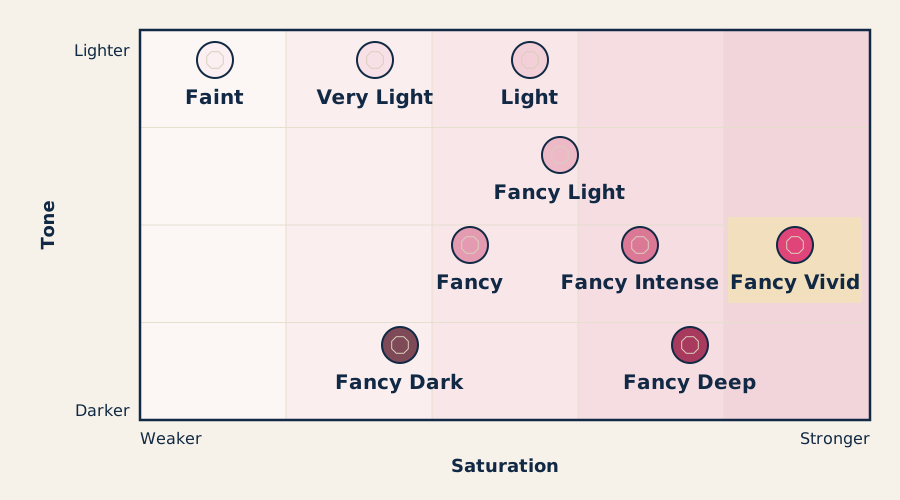
Two details catch people out. First, for yellow and brown the Faint, Very Light and Light ranges overlap the K–Z part of the D-to-Z scale, so yellow only becomes 'fancy' beyond Z; a pink or blue with the same faint tint is graded Faint Pink or Faint Blue. Second, a few hues use fewer grades: red diamonds are usually given simply Fancy Red, and black diamonds Fancy Black, because their tone and saturation vary so little.
Each step up the scale can change the price sharply, especially at the top. Our page on the full intensity scale from Faint to Vivid shows each grade side by side, and what makes a diamond Fancy Vivid explains why Fancy Vivid vs Fancy Intense is the comparison buyers ask about most.
Related guideFancy Colour Intensity Scale: Faint to VividHow is fancy colour diamond grading different from D–Z grading?
A colourless diamond and a fancy colour diamond are both diamond, with a hardness of 10 on the Mohs scale and a refractive index of about 2.42. What changes is how the colour is judged, and what counts as 'good'.
| D–Z colourless grading | Fancy colour grading | |
|---|---|---|
| What is graded | Absence of yellow or brown | Hue, tone and saturation |
| Viewing position | Face-down, through the side of the pavilion | Face-up, the way you see it worn |
| Grade names | Letters D to Z | Words, e.g. Fancy Intense Yellow |
| Role of cut | Cutters minimise visible colour | Cutters choose shapes that intensify colour |
| Top of the scale | D, completely colourless | Fancy Vivid, the strongest colour |
| Colour distribution | Not reported | Reported as even or uneven |
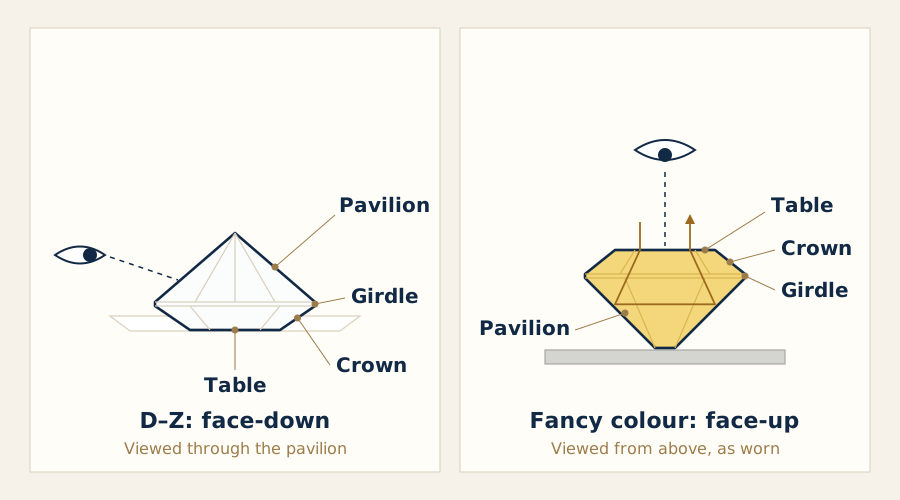
At the colourless end, a D colour diamond or an E colour stone is prized because it shows nothing. Further down, a K colour diamond with its faint warmth is discounted for the same tint that, much stronger, would make a valuable fancy yellow. The middle ground (roughly S to Z) is often the poorest value of all: too yellow to be colourless, not yellow enough to be fancy.
Because fancy colour is graded face-up, the cut plays a bigger part than in a colourless stone. Radiant, cushion, pear and oval shapes bounce light back and forth inside the stone, lengthening its path and deepening the colour, so a cutter can sometimes lift a Fancy rough stone to Fancy Intense. Rounds tend to leak colour and are less common in strong hues. That is one reason there is no standard set of ideal proportions here, as our guide to why fancy shapes have no single proportion chart explains. Clarity is graded on the usual FL to I3 scale, but buyers of coloured stones usually accept more inclusions, provided the stone is eye-clean or close to it.
Not sure which one is right?
Send us the stones you are looking at and our gemologist will tell you which to choose and why.
What do modifiers and overtones mean on a fancy colour report?
Many coloured diamonds are not one pure hue. GIA writes the secondary colours as modifiers, placed before the main colour. The last word is always the dominant hue. In 'Fancy Intense Orangy Yellow', yellow dominates and orange is secondary. In 'Fancy Brownish Greenish Yellow', yellow leads, green is next and brown is a weaker overtone.
- Pure hue (Fancy Pink, Fancy Blue): usually valued above the same hue with a modifier.
- Positive modifiers: purplish in pink, or orangy in yellow, are often well regarded and can look richer.
- Muting modifiers: brownish and greyish lower the brightness and usually the price.
- Hyphenated colours (Pink-Purple): the two hues are roughly equal, with the second slightly stronger.
The report also records colour distribution. 'Even' means the colour looks uniform face-up; 'uneven' means visible zones or patches, which lowers value. Pink diamonds in particular can show their colour in stripes of graining, so look at the face-up video rather than relying on the grade alone.
Fluorescence (a glow under ultraviolet light) is listed too. A strong blue glow can make a yellow diamond look slightly greenish in sunlight, and many pink diamonds fluoresce blue without any visible effect. For worked examples of every common modifier, see our guide to fancy colour modifiers and overtones.
How do you read a colour origin report: natural, treated or lab-grown?
Colour can be natural, added to a natural diamond by treatment, or produced in a diamond grown in a laboratory. All three are real diamond. They look alike to the eye, so only a gemmological lab with spectroscopic equipment can tell them apart reliably, and the origin statement on the report is the single most important line for price.
| Origin | What it means | How the report shows it |
|---|---|---|
| Natural | Colour formed in the earth | Colour origin stated as natural |
| Treated (natural diamond) | Colour created or changed after mining, usually by HPHT (high pressure, high temperature) or irradiation and heating | Colour origin stated as treated, with the method in the comments |
| Undetermined | The lab cannot conclude whether colour is natural | Colour origin stated as undetermined; priced closer to treated |
| Laboratory-grown | The diamond itself was grown in a laboratory; colour may be as-grown or treated after growth | A separate laboratory-grown diamond report, with any post-growth treatment noted |
GIA offers two kinds of report for natural coloured stones: the full Coloured Diamond Grading Report, which covers colour, clarity, measurements and origin, and a shorter Coloured Diamond Identification and Origin Report, which confirms that the stone is natural, states the colour grade and origin, and leaves out clarity. The shorter report is common on small stones such as Argyle pinks under 0.20 carat. Lab-grown coloured diamonds are more often graded by IGI.
Surface coatings, thin films that make a diamond look pink or blue, are not permanent and can wear off with cleaning. Labs such as GIA will identify a coated stone but will not give it a normal colour grade. Irradiated colour is stable in normal wear, but the heat from a jeweller's torch during resizing or retipping can change it, so tell your jeweller if a stone is treated.
Lab-grown fancy colour diamonds are widely available in yellow, blue and pink, and cost far less than natural stones of the same grade. Blues are often grown with boron, yellows with nitrogen, while pinks usually gain their colour through treatment after growth. Our guide to laboratory-grown coloured diamonds covers how each colour is made.
Shop fancy colour diamonds: natural and lab-grown
Why are Argyle pink diamonds graded differently?
No fancy colour story matters more to Australians than Argyle. The mine, in the East Kimberley region of Western Australia, began full production in the mid-1980s and was run by Rio Tinto until it closed in November 2020. It produced enormous quantities of brown and small colourless diamonds, but it became famous for pinks: Argyle is widely reported to have supplied more than 90% of the world's pink diamonds. Most were small, well under one carat.
Argyle used its own colour scale alongside GIA's. Pinks were given a number for intensity (1 strongest, 9 palest) and letters for hue: P for pink, PP for purplish pink, PR for pink rosé and PC for pink champagne, with separate categories for red, blue and violet. A stone described as '4PP', for example, is a fairly strong purplish pink. Argyle also created a champagne scale, C1 to C7, for its brown diamonds, with C7 the deepest cognac tone.
The rarest pinks each year were offered at the invitation-only Argyle Pink Diamonds Tender, laser-inscribed with an identification number and sold with an Argyle certificate. If you are looking at a pre-owned Argyle pink, ask for the Argyle certificate and, ideally, a GIA report that confirms natural colour origin. Since the closure, no new Argyle rough is being mined, so every Argyle pink in the market now comes from existing stock.
Which fancy colours are rarest, and how does grading affect price?
Only a very small share of mined diamonds show enough colour to be graded fancy. Within that group, rarity follows the colour. The table below gives the usual order; prices are broad approximate ranges per carat and move with intensity, size and the market.
| Colour (natural) | Relative rarity | Approximate price pattern (AUD) |
|---|---|---|
| Brown, champagne, cognac | Most common | Often below a colourless diamond of similar size |
| Yellow | Common for a fancy colour | About $5,000–$25,000 per carat for Fancy to Fancy Vivid, 1 ct |
| Black (natural colour) | Uncommon | Usually modest; most black stones are treated |
| Orange, green, purple | Rare | Tens of thousands per carat for strong colours |
| Blue, pink | Very rare | Tens of thousands to several hundred thousand per carat |
| Red | Rarest | Few exist; sold individually |
Grading moves value in a consistent way. The intensity grade matters most, then the hue and its modifiers, then size, then clarity and cut. A Fancy Vivid pink can cost many times a Fancy Light pink of the same weight. A treated or lab-grown stone with the same colour grade costs a small fraction of a natural one; a 1 carat lab-grown fancy yellow or blue is often in the range of about $1,000–$5,000. For the full breakdown, see what drives fancy colour diamond prices.
Natural and lab-grown coloured diamonds are both real diamond. Choose natural if rarity and a geological origin matter to you, and laboratory-grown if you want a strong colour in a larger size for a lower price. Neither should be bought on the expectation that it will rise in value.
What are the best settings and metals for coloured diamonds?
Metal colour reflects up through a diamond, so the setting can strengthen or weaken how its graded colour looks once worn. Gemmologists use a few reliable pairings:
- Yellow and orange diamonds: yellow gold claws or a yellow gold bezel deepen the colour, even on a platinum or white gold band.
- Pink diamonds: rose gold warms the pink; white gold or platinum keeps a purplish pink cooler and crisper.
- Blue, green and grey diamonds: white gold or platinum, which will not add a yellow cast.
- Champagne and cognac diamonds: rose or yellow gold for warmth, or white metal for contrast.
- Black diamonds: any metal; white metal gives the strongest contrast.
A halo of white diamonds makes a coloured centre look larger and frames the hue, while a halo of matching coloured stones can make a paler centre look stronger. For white accent stones in white metal, G colour side diamonds or near-colourless H colour accents look clean beside a pink or blue. In yellow or rose gold, slightly warmer I colour accents blend in well. Bezel settings add security and, in coloured gold, a little extra colour. Design ideas are collected in our guide to fancy coloured diamond engagement rings.
How do you check a fancy colour diamond before buying?
- Confirm the report. Check it is from an independent lab such as GIA or IGI and that the report number matches any laser inscription on the girdle.
- Read the origin first. Natural, treated, undetermined or laboratory-grown; this sets the price range before anything else.
- Decode the colour grade. Note the intensity, the dominant hue (the last word) and any modifiers such as brownish or purplish.
- Check the distribution. Even is preferred; ask for a face-up video to see any graining or zoning.
- Compare like with like. Line up stones of the same intensity and hue; within one grade, colour can still vary noticeably.
- View in different light. Daylight, warm indoor light and, if possible, the metal you plan to use.
- Plan the setting and care. Choose a metal that suits the hue, and tell your jeweller if the colour is treated before any repair work.
Free consultation
Talk to a gemologist
Compare stones in person or online with Raj Sood, Graduate Gemologist (GIA), AJP (GIA).
Book a consultationShop this shape
FAQ
Common questions
What is the highest grade for a fancy colour diamond?
Fancy Vivid is generally the most valued intensity grade, showing the strongest saturation at a medium tone. Fancy Deep and Fancy Dark are darker grades, not higher ones.
What is the difference between Fancy Intense and Fancy Vivid?
Both have a medium tone, but Fancy Vivid has stronger saturation, so the colour looks brighter and purer. The step between them can make a large difference to price, especially in pink and blue.
Are treated coloured diamonds real diamonds?
Yes. A treated coloured diamond is natural diamond whose colour was created or changed after mining, usually by HPHT or irradiation. It must be disclosed, and it costs much less than a diamond with natural colour.
How can I tell if a coloured diamond's colour is natural?
Not by eye. Ask for a report from a lab such as GIA that states the colour origin as natural, and check that the report number matches the laser inscription on the stone.
Are lab-grown fancy colour diamonds graded the same way?
Broadly, yes. Labs describe their hue and intensity with the same kind of terms, but they issue a separate laboratory-grown report that notes any treatment after growth.
Why are Argyle pink diamonds so valuable?
Argyle in Western Australia supplied most of the world's pink diamonds before it closed in 2020, and no new rough is being mined there. Natural pinks are also very rare from any other source.
Terms in this guide

Ask a gemologist
Not sure which diamond to choose?
Raj Sood is a Graduate Gemologist (GIA) and master jeweller. Bring the stones you are considering, or send the reports, and he will tell you honestly which one is better and why.
Keep learning
Related guides
 Fancy Colour DiamondsFancy Colour Intensity Scale: Faint to VividFancy Colour DiamondsFancy Colour Modifiers and Overtones
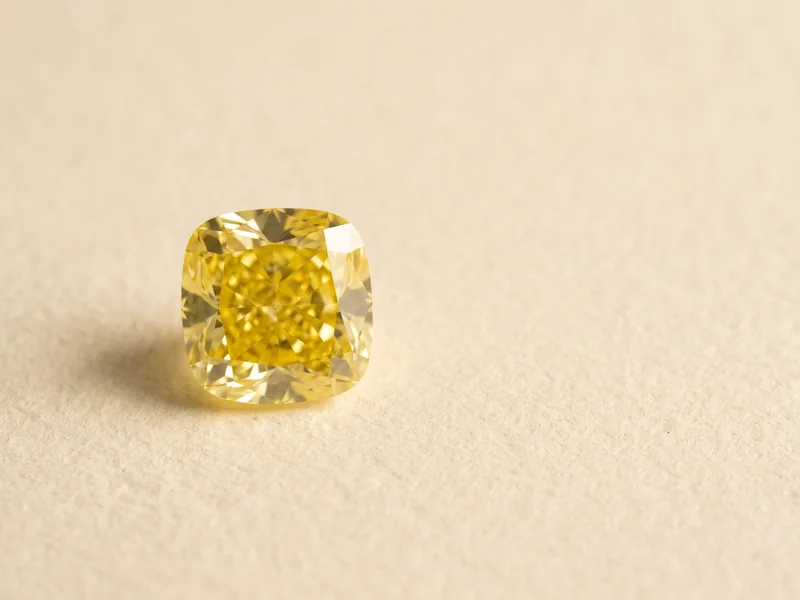 Lab-Grown DiamondsLab-Grown Fancy Colour Diamonds
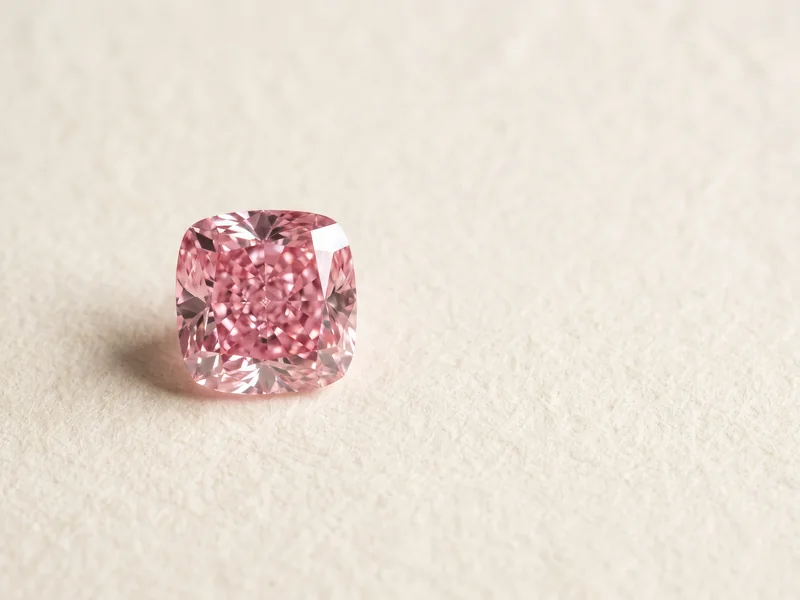 Fancy Colour DiamondsWhat Drives Fancy Colour Diamond Prices
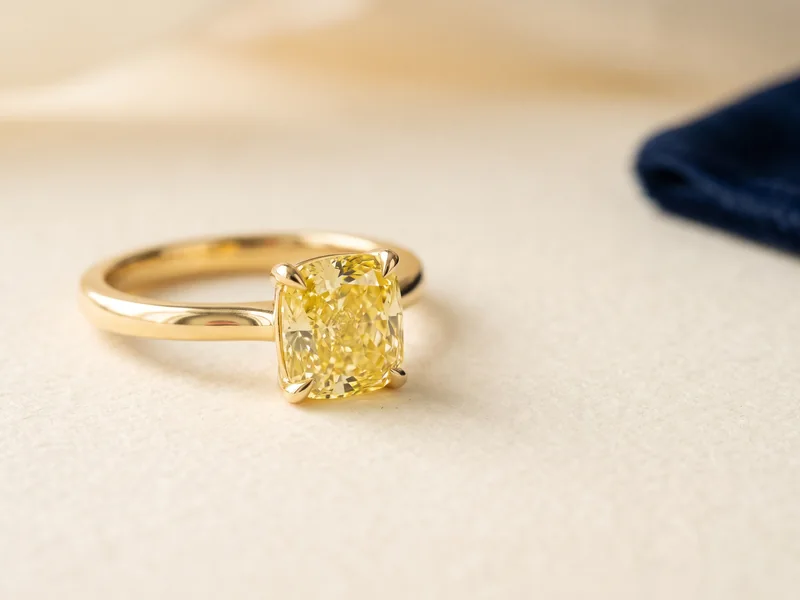 Fancy Colour DiamondsFancy Coloured Diamond Engagement RingsFancy Colour DiamondsWhat Is a Fancy Vivid Diamond?
 Diamond 4Cs & GradingDiamond Colour Grading
Explore more
More guides on this topic
Education