
- Education
- Diamond Anatomy & Light
- What Is a Diamond Culet? Sizes, Grades and What They Mean
Diamond Anatomy & Light
What Is a Diamond Culet? Sizes, Grades and What They Mean
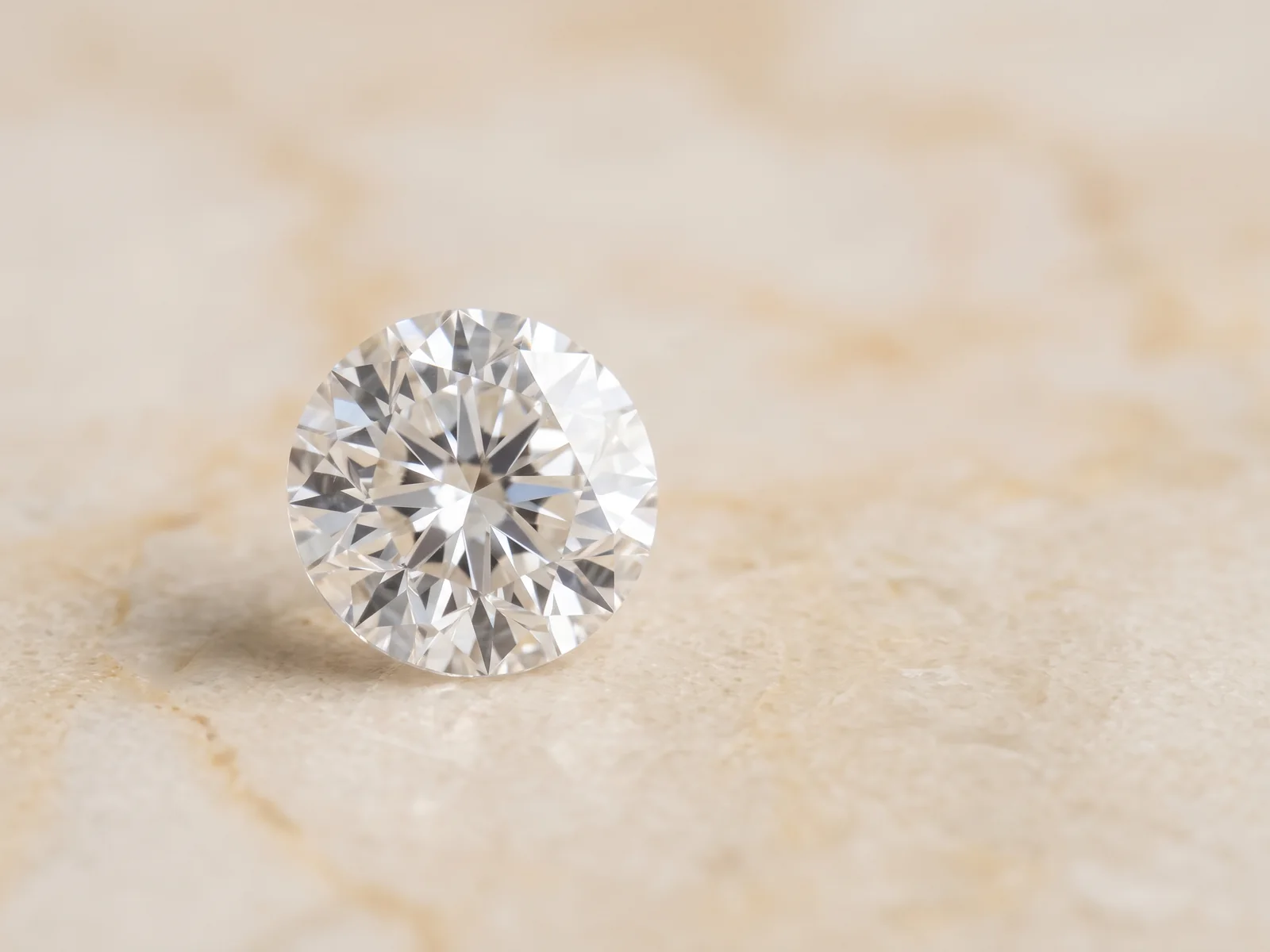
The diamond culet is the smallest part of the stone, but it is printed on every grading report, and a large one can show as a hole in the middle of the diamond. Here is what the culet is, how it is graded and when it actually matters.
 Reviewed by Raj Sood, Graduate Gemologist (GIA), AJP (GIA)Master jeweller and Graduate Gemologist (GIA) · reviewed 4 November 2026
Quick answer
A diamond culet is the point or facet at the bottom of the pavilion. Most modern round brilliants have a culet graded None (a point) to Very Small, which is invisible face-up. Medium or larger culets can show as a small dark or bright circle through the table, common in antique cuts but a drawback in modern stones.
What is a diamond culet?
The culet (said "KEW-let" or "kew-LAY") is the very bottom of a diamond. On a faceted stone, the lower half is called the pavilion: a cone of sloping facets that reflect light back up through the top. Where those pavilion facets meet, the stone either comes to a sharp point or ends in a tiny flat facet polished parallel to the table (the large flat facet on top). That point or tiny facet is the culet.
When the pavilion simply meets in a point, graders say the culet is None, or describe it as a pointed culet. When a small flat facet has been polished there, it is given a size, from Very Small up to Extremely Large. A standard round brilliant has 57 facets; if it has a culet facet, the count becomes 58. To see how the culet fits with the table, crown, girdle and pavilion, our guide to the full anatomy of a diamond, from table to culet lays out every part.
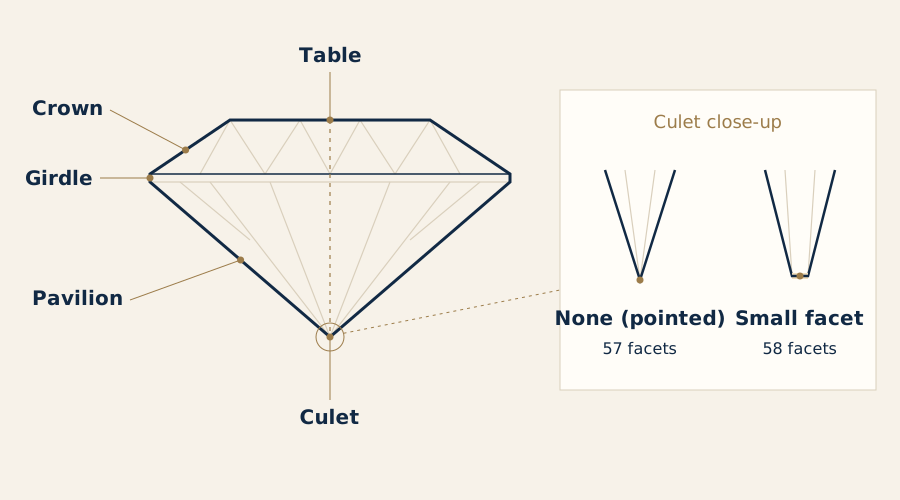
The culet matters for two reasons. First, because it sits directly under the table, anything happening there is seen right in the middle of the stone when you look at it face-up. Second, a sharp point is the thinnest piece of diamond in the whole stone. Diamond is 10 on the Mohs hardness scale, but hardness (resistance to scratching) is not the same as toughness (resistance to chipping), and a fine point can still chip if it takes a hard knock.
The culet is also where the pavilion angles converge, so its size is tied up with how the rest of the stone was cut. Our page on how crown and pavilion angles control light explains that relationship, and any unfamiliar word on this page is defined in our plain-English jewellery glossary.
Why do some diamonds have a culet and others a point?
For most of diamond history, cutters deliberately left a large culet. Old mine cuts (from roughly the 1700s to the late 1800s) and Old European cuts (roughly the 1890s to the 1930s) were polished by hand on cast-iron wheels, and a broad culet made the bottom of the stone much less likely to break during cutting, setting and wear. It also saved a little weight from the rough crystal. Our comparison of how the Old European cut differs from a modern round shows the full set of changes.
In these antique cuts the culet is often large enough to see with the naked eye as a small circle or octagon in the centre of the stone. Collectors call this an open culet. In an old stone it is part of the character, along with the small table and tall crown, and it does not count against the diamond the way it would in a modern round.
Modern cutting tools, laser-assisted planning and better polishing control mean today's cutters can safely bring the pavilion to a near-perfect point. A pointed culet lets the pavilion facets work across the whole width of the stone, with no flat spot in the middle that lets light pass straight through. That is why almost every modern round brilliant is graded None to Very Small. It is also one reason two diamonds of the same carat can look so different: an antique cut and a modern brilliant handle light in quite different ways.
Some modern makers now cut antique-style or "old cut" diamonds, both natural and lab-grown, with a deliberately small to medium open culet to recreate the vintage look. If you see a Medium culet on a stone sold as an old-cut style, that is a design choice, not a flaw.
What do diamond culet sizes mean on a grading report?
GIA, IGI and other labs record culet size as a word grade, judged under 10× magnification looking face-up through the table. GIA uses eight grades. The table below gives a practical guide to what each one looks like; exact cut-offs vary a little between labs.
| Culet grade | What you see at 10× | Effect face-up to the eye |
|---|---|---|
| None (pointed) | A sharp point, no facet | None |
| Very Small | Barely visible as a pinpoint | None |
| Small | A tiny facet, just visible | None in practice |
| Medium | A small but clear octagon or circle | Usually invisible; may show in larger stones |
| Slightly Large | An obvious facet | May show as a small spot in the centre |
| Large | A clearly outlined facet | Often visible as a dot or small hole |
| Very Large | A broad facet | Visible as an open centre |
| Extremely Large | A very broad facet | Clearly visible; typical only of some antique cuts |
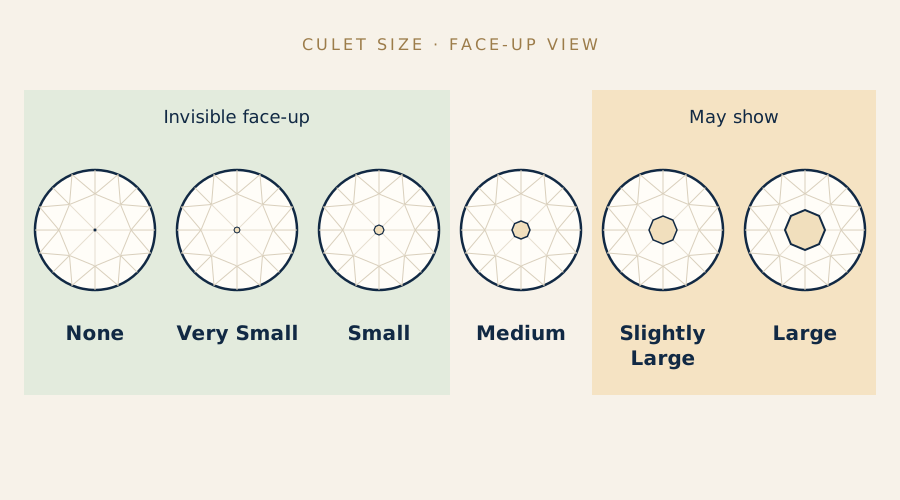
For a modern round brilliant, None, Very Small or Small are all fine and you would not tell them apart without a loupe (a 10× hand magnifier). Medium is acceptable in many stones, especially under about 1 carat, but it is worth checking a magnified photo. Slightly Large and above in a modern cut usually means the cutter was saving weight or working around a problem in the rough, and it can leave a visible spot under the table.
Reports also sometimes note the culet's condition in the comments, for example a chip or abrasion at the culet. Damage at the culet is usually tiny but should be looked at before you buy, because a chip there can grow if the stone is knocked again. Read the culet grade alongside the polish, symmetry and proportions, not on its own.
Does a culet affect a diamond's sparkle?
A small culet has no visible effect on sparkle. A large one can. Light entering the table normally strikes the sloping pavilion facets, reflects across and comes back up to your eye as brightness and fire (flashes of colour). A flat culet facet sits parallel to the table, so light that hits it does not bounce back; it passes straight out of the bottom of the stone. The bigger the culet, the bigger that "leak" in the centre.
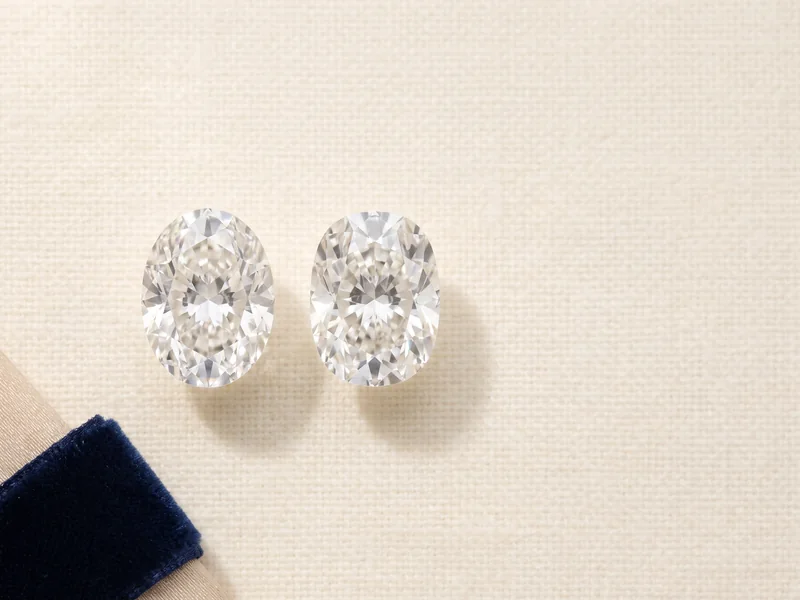
Face-up, that leak looks like a small round or octagonal spot right under the table. Against a white background it reads as a bright, glassy hole; on the hand, against skin and the setting, it often reads as a dark dot. It is a close cousin of windowing in different diamond shapes, where a shallow pavilion lets light pass through a wider area.
People often blame the culet for problems it does not cause. A dark centre in a round is more often nailhead, and a grey ring around the table is fisheye. Both come from the pavilion angle, not the culet. The comparison below separates the usual centre-of-stone effects.
| Effect | What it looks like | Main cause | Culet involved? |
|---|---|---|---|
| Large open culet | Small spot or hole directly under the table | Culet facet polished too large | Yes |
| Nailhead | Dark centre spreading across the table | Pavilion angle too steep (roughly above 42°) | No |
| Fisheye | Grey or white ring just inside the table edge | Pavilion too shallow (roughly below 40°), girdle reflects | No |
| Windowing | See-through, washed-out centre | Shallow pavilion or poor angles in fancy shapes | Sometimes, with a large culet |
| Extinction / dark zones | Dark patches that stay as the stone moves | Light leaking or blocked by poor proportions | Rarely |
| Bow-tie | Dark band across the middle of elongated shapes | Light not returned across the width | No |
If a diamond looks dark in the middle, read about the nailhead effect and fisheye rings caused by shallow pavilions before blaming a small culet. For darkness that shows up elsewhere in the stone, see extinction and dark zones. Most well-cut modern rounds sit at a pavilion angle of about 40.6°–41.8°; our explanation of the ideal pavilion angle range shows why that narrow window matters far more than a None versus Small culet.
Not sure which one is right?
Send us the stones you are looking at and our gemologist will tell you which to choose and why.
How do ASET and Idealscope images show the culet?
ASET (Angular Spectrum Evaluation Tool) and Idealscope are reflector viewers that photograph a diamond through a coloured filter, turning light behaviour into a colour map. In an ASET image, red shows light gathered from high angles (the brightest return), green shows light from lower angles, blue shows contrast (reflections of the viewer's head), and white or very pale areas show light leaking straight through. An Idealscope shows strong return as red and leakage as white.
A pointed or Very Small culet is invisible in these images: the arrows of the pavilion facets meet cleanly at the centre. A Medium or larger culet appears as a small white or pale dot exactly in the middle, where light is passing straight out. If you see a pale centre that is wider than a dot, the cause is more likely a shallow pavilion than the culet itself. Our guide on how to read ASET and Idealscope images walks through real examples.
Related guideASET and Idealscope Images ExplainedDo fancy shaped diamonds have a culet?
Every faceted diamond with a pavilion has a culet of some kind, but its form depends on the shape. In rounds and squares, the pavilion facets meet in a single point. In elongated shapes the pavilion mains often meet along a short ridge called a keel line, so the culet is a line rather than a point. Rose cuts have a flat base and no pavilion at all, so they have no culet. Our overview of the main diamond shapes shows how each outline is faceted.
| Shape | Usual culet form | Typical grade | What to watch |
|---|---|---|---|
| Round brilliant (modern) | Point | None–Very Small | Anything above Medium in a modern round |
| Princess | Point | None | Pointed culet plus four sharp corners to protect |
| Cushion (modern) | Point or small facet | None–Small | Antique-style cushions may show a Medium culet |
| Oval | Point or short keel line | None–Small | Bow-tie matters more than culet |
| Pear | Keel line | None–Small | Keel line is fine; check the tip |
| Marquise | Keel line | None–Small | Bow-tie and the two points |
| Heart | Point or keel line | None–Small | Cleft and point are more fragile than the culet |
| Emerald | Keel line | None–Small | Step cuts show a large culet clearly through the open table |
| Asscher | Point or small facet | None–Medium | Vintage Asschers often have an open culet |
| Radiant | Point or keel line | None–Small | Usually unremarkable |
| Old European / old mine | Facet | Medium–Very Large | Open culet is expected and part of the look |
Step cuts such as emeralds and Asschers deserve extra care. Their large, open table and long parallel facets act like a window into the pavilion, so a culet that would vanish in a brilliant can be obvious in a step cut. In ovals, pears and marquises, the dark bow-tie shadow in elongated shapes is a much bigger influence on looks than the keel line; our guide to elongated and fancy brilliant cuts covers that family in detail. For how see-through areas change from cut to cut, see how windowing changes from shape to shape, and for the less common outlines, browse every one of the 34 diamond cuts.
Is a pointed diamond culet more likely to chip?
A pointed culet is the thinnest part of a round or square diamond, so in theory it is the most exposed. In practice, once the stone is set, the culet sits inside the setting and is rarely touched. Culet chips most often happen to loose diamonds: when stones rub together in a parcel, are dropped on a hard surface, or are pressed too hard against metal during setting. Princess cuts carry extra risk, because their four sharp corners are even more exposed than their culet.
- Check the height: the culet should sit clear of the finger and above the base of the ring, so it never presses on skin or catches.
- Basket and gallery: the open metal frame under the stone should surround the culet without touching it.
- Store loose stones separately: never let diamonds knock together in one bag or box.
- After a knock: have a jeweller look under magnification; a small culet chip can sometimes be polished out by recutting a tiny facet, which may change the culet grade (often to Very Small or Small).
A well-designed setting protects the culet and the girdle edge at the same time. When a ring is made, the depth of the basket is planned around the stone's total depth, so the culet sits safely inside the metal without touching it.
Do natural and lab-grown diamonds have different culets?
No. The culet is created by the cutter, not by how the diamond formed, so natural and lab-grown (laboratory-grown) diamonds are graded on exactly the same culet scale. Lab-grown diamonds are real diamond with the same hardness (10 on the Mohs scale) and refractive index (about 2.42), so a culet of a given size behaves identically in both.
Because lab-grown rough is less costly, cutters have less reason to keep extra weight at the bottom of the stone, and most modern lab-grown rounds are cut with a pointed culet. Natural diamonds, especially older stones or those cut to keep weight, are more likely to show a Small or Medium culet. In both, the culet size is a minor point next to cut grade, proportions, colour and clarity; a modern round with a Medium culet may carry a modest discount, while in antique cuts an open culet is expected and priced as part of the style. Both natural and lab-grown diamonds should come with an independent report from a lab such as GIA or IGI.
When comparing stones of the same weight, the culet is one small factor among many. Proportions, spread and the overall cut quality decide far more about how a diamond looks.
Browse natural and lab-grown diamonds
How do you check a diamond culet before you buy?
- Find the culet line on the report. For a modern round, None, Very Small or Small is ideal; Medium is acceptable if the magnified image looks clean.
- Check the pavilion angle. In a round, about 40.6°–41.8° is the usual range; a dark centre with a good culet points to the angle instead.
- Look at a magnified face-up photo. The pavilion arrows should meet in a sharp point under the table, with no visible octagon.
- Ask for a reflector image. A pale pinhole in the centre of an ASET or Idealscope reflector scope image means an open culet.
- Rule out other centre effects. Distinguish an open culet from a dark nailhead centre or dark zones that stay put as the stone moves.
- Read the comments. Look for any note of a chipped or abraded culet, and ask to see it under magnification.
- Match the culet to the style. Expect a point in modern cuts and accept an open culet in genuine or antique-style old cuts.
Free consultation
Talk to a gemologist
Compare stones in person or online with Raj Sood, Graduate Gemologist (GIA), AJP (GIA).
Book a consultationShop this shape
FAQ
Common questions
What does culet None mean on a diamond report?
It means the pavilion facets meet in a sharp point with no flat facet at the bottom. This is the normal, preferred result for a modern round brilliant.
Is a Medium culet bad?
Not necessarily. In most stones under about 1 carat a Medium culet is invisible face-up, but check a magnified photo, and in step cuts it can show more clearly.
Why do old diamonds have a hole in the middle?
Old mine and Old European cuts were polished with a large culet facet to protect the stone during hand cutting. Seen face-up, that open culet looks like a small circle in the centre and is part of the antique character.
Can a chipped culet be fixed?
Often, yes. A cutter can polish a tiny culet facet to remove the chip, losing very little weight, though the report would then need updating.
Does the culet affect a diamond's price?
Only slightly. In modern rounds a Large culet may lower the price a little because it can show face-up, but cut grade, carat, colour and clarity matter far more.
Do lab-grown diamonds have culets?
Yes. Lab-grown diamonds are cut the same way as natural diamonds and are graded on the same culet scale, usually with a pointed culet in modern cuts.
Terms in this guide

Ask a gemologist
Not sure which diamond to choose?
Raj Sood is a Graduate Gemologist (GIA) and master jeweller. Bring the stones you are considering, or send the reports, and he will tell you honestly which one is better and why.
Keep learning
Related guides
 Diamond Anatomy & LightNailhead Effect in Diamonds
 Diamond Anatomy & LightASET and Idealscope Images Explained
 Diamond Anatomy & LightFisheye Effect in DiamondsDiamond Anatomy & LightExtinction and Dark Zones in Diamonds
 Diamond Anatomy & LightWindowing Across Diamond Shapes
 Diamond Anatomy & LightWhy Same-Carat Diamonds Can Look Different
 Diamond Anatomy & LightDiamond Bow Tie Effect
Explore more
More guides on this topic
Education