
- Education
- Diamond Shapes
- All 34 Diamond Cuts: Every Shape Explained and Compared
Diamond shapes
All 34 Diamond Cuts: Every Shape Explained and Compared
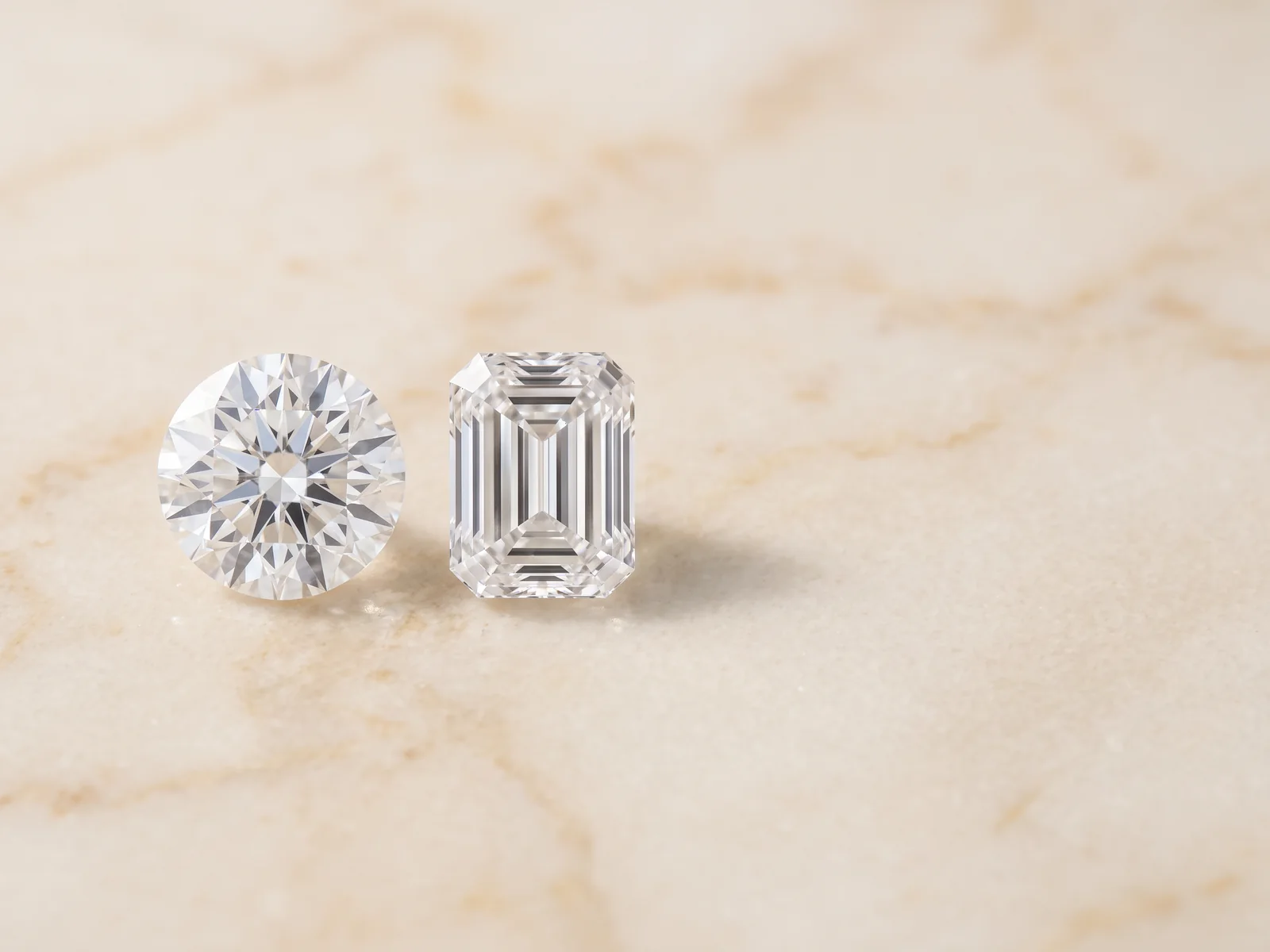
Most people only meet five or six diamond cuts before they buy, but there are many more, and the shape you choose changes the sparkle, the face-up size and the setting. Here are all 34 cuts we stock, grouped into families so you can compare like with like.
 Reviewed by Raj Sood, Graduate Gemologist (GIA), AJP (GIA)Master jeweller and Graduate Gemologist (GIA) · reviewed 4 November 2026
Quick answer
There are dozens of diamond cuts, and GemTrove groups the 34 it stocks into five families: curved brilliants (round, oval, pear, marquise, heart, moval), square and cushion brilliants, step cuts (emerald, Asscher, baguette), geometric side-stone shapes, and antique cuts. Brilliants give the most sparkle; step cuts show clarity and a calm hall-of-mirrors look.
What are the different types of diamond cuts?
In the jewellery trade the word cut means two things. The first is the shape, the outline you see when you look down at the stone: round, oval, emerald and so on. The second is the faceting style, meaning how the small flat polished surfaces (facets) are arranged, and how well they are proportioned. Two diamonds can share a shape and look completely different because of how they are faceted.
Almost every modern shape is a variation on one of two faceting styles. A brilliant cut uses triangular and kite-shaped facets that radiate from the centre and break light into lots of small, lively flashes; our guide to how the round brilliant is cut for maximum sparkle is the reference point for this whole family. A step cut uses long, straight facets running parallel to the edges, like the steps of a staircase, and gives broader, slower flashes. A third group, the antique cuts, were shaped by eye and by hand before modern optics; the Old European cut that came before the modern round is the best-known example.
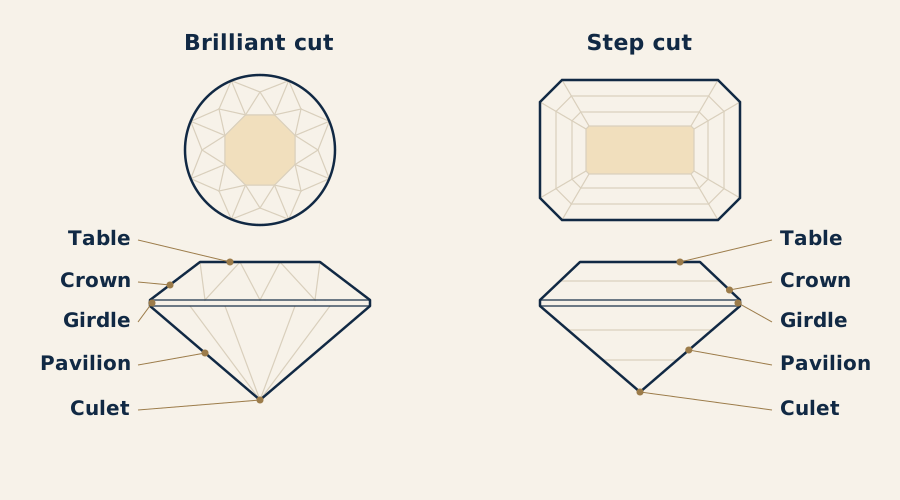
A few parts are shared by nearly every cut. The table is the large flat facet on top. The crown is the sloping upper section, the girdle is the thin outer edge, the pavilion is the pointed lower section and the culet is the tip or tiny facet at the very bottom. Diamond is 10 on the Mohs hardness scale, with a refractive index of about 2.42 and a dispersion of about 0.044, which is why it bends light so strongly and shows flashes of colour (fire). Hardness is not toughness, though: thin points and sharp corners can chip if they take a knock, which is why some shapes need more protective settings than others.
How are diamond cuts grouped into families?
Thirty-four shapes is a lot to hold in your head. Grouping them into diamond cut families makes it easier, because cuts in the same family share a faceting style, behave similarly in light and suit similar settings. Once you know which family appeals to you, you only need to compare a handful of shapes.
| Family | Cuts (number) | Faceting | How it looks | Typical use |
|---|---|---|---|---|
| Curved brilliants | Round, oval, pear, marquise, heart, moval (6) | Brilliant | Bright, busy sparkle | Centre stones, studs, pendants |
| Square and cushion brilliants | Princess, cushion brilliant, cushion modified, elongated cushion, radiant, square radiant, trilliant (7) | Brilliant or mixed | Sparkle with a squarer or softer outline | Centre stones, side stones |
| Step cuts | Emerald, Asscher, baguette, tapered baguette, carré, octagon (6) | Step | Broad flashes, clear and architectural | Centre stones, bands, side stones |
| Geometric fancy shapes | Trapezoid, kite, lozenge, half moon, triangular, hexagon, pentagon, shield, bullet, epaulette (10) | Mostly step | Clean lines, graphic outlines | Side stones, modern and custom designs |
| Antique cuts | Old mine, Old European, rose cut, single cut, briolette (5) | Early brilliant or faceted by eye | Soft, chunky, candle-lit glow | Vintage-style rings, drops, accents |
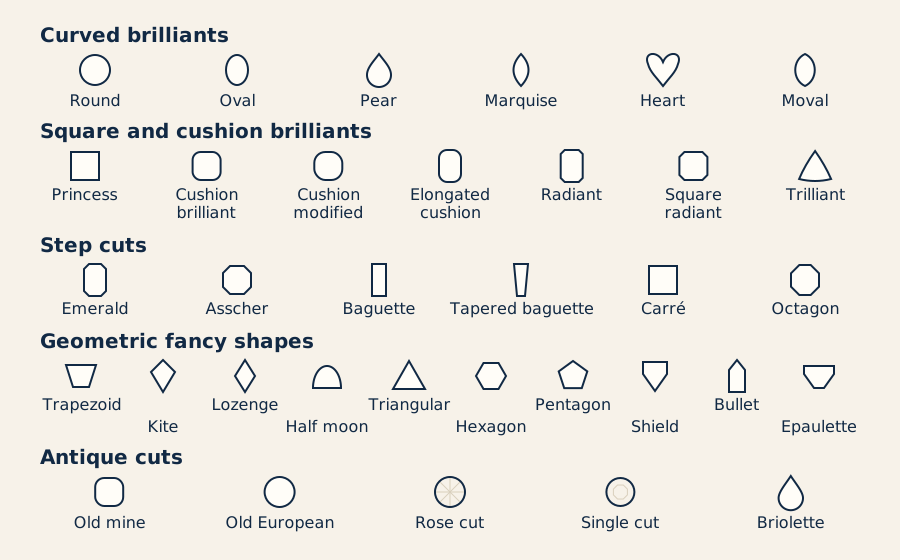
The family is a useful first filter, not a rule. A radiant cut, for example, has a step-cut outline with brilliant faceting underneath, so it sits between two families. Where a cut could belong to more than one group, we have placed it where it behaves most like its neighbours.
Which round and curved brilliant diamond cuts are most popular?
These six shapes are the ones most people picture when they think of an engagement ring. All use brilliant faceting, so they share strong sparkle and hide small inclusions (internal features) well. The main difference between them is the outline and the length-to-width ratio, which is the stone's length divided by its width, taken from the grading report.
| Cut | Look | Facets | Typical L/W | Best use |
|---|---|---|---|---|
| Round brilliant | Circle, the most light return | 57–58 | 1.00–1.03 | Any setting; solitaires and studs |
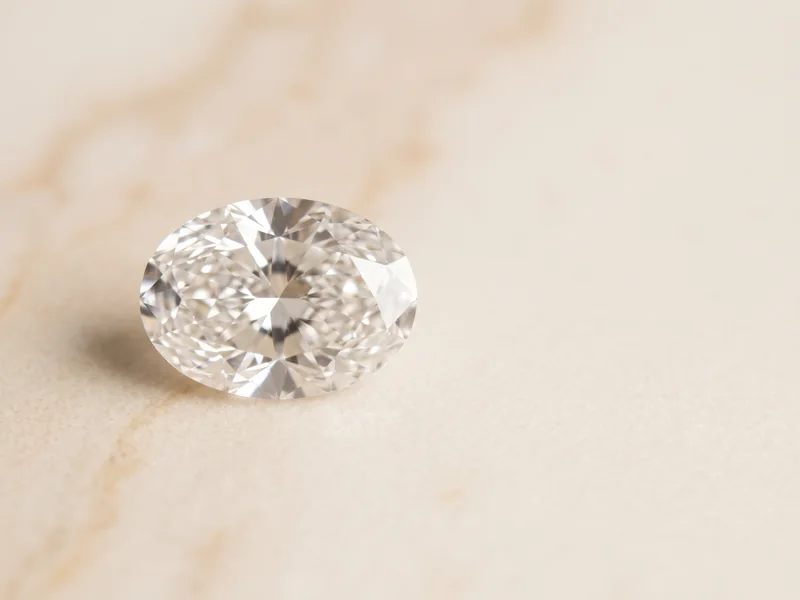
| Oval | Smooth elongated curve | about 56–58 | 1.30–1.50 | Solitaires, halos; lengthens the finger |
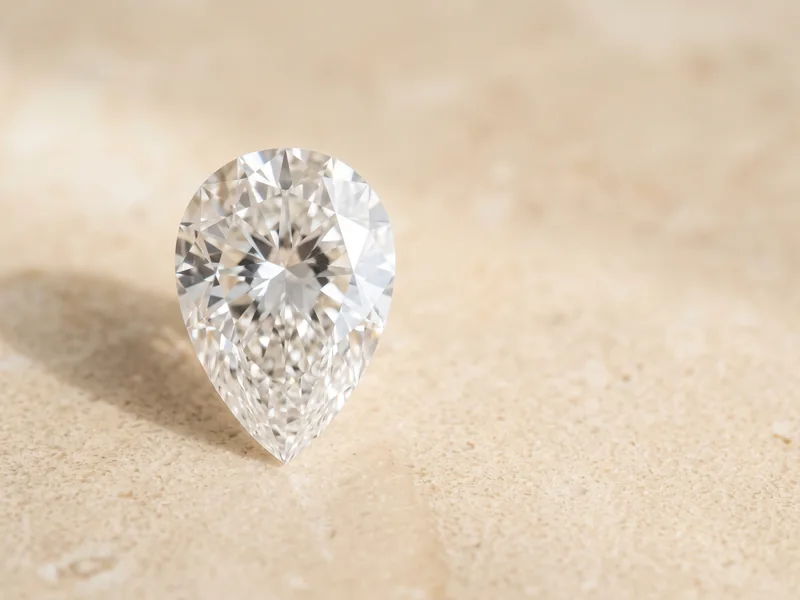
| Pear | One rounded end, one point | about 56–58 | 1.45–1.75 | Rings, pendants, drop earrings |
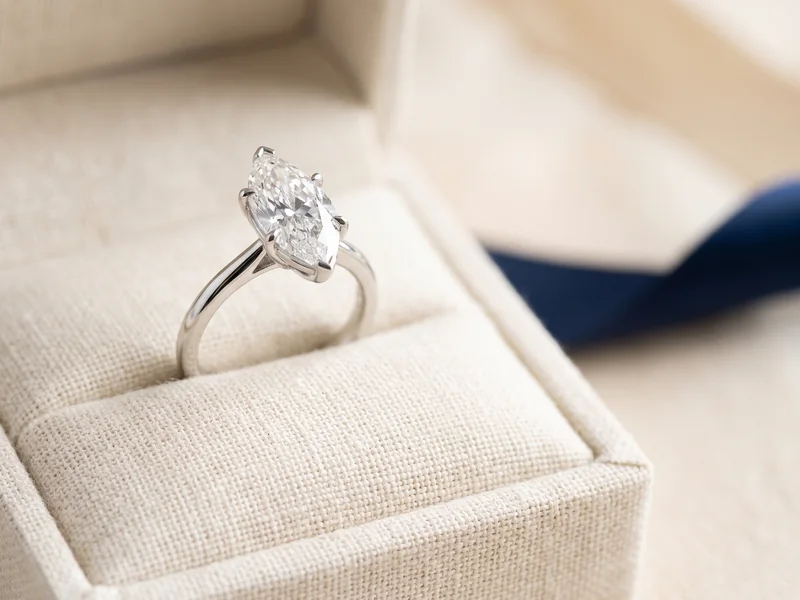
| Marquise | Long, with two points | about 56–58 | 1.85–2.10 | Dramatic solitaires, east-west rings |
| Heart | Two lobes, cleft, point | 56–59 | 0.90–1.10 | Pendants, studs, rings 0.50 ct and up |
| Moval | Between marquise and oval | Brilliant, varies by cutter | about 1.60–1.90 | Modern solitaires |
The round is the benchmark, and it usually costs the most per carat because so much of the rough crystal is lost cutting it. The oval diamond guide explains why an oval can face up larger than a round of the same weight. If you like a point, compare the teardrop-shaped pear cut with the longer boat-shaped marquise diamond, which has two points to protect. The heart shaped diamond guide covers its tricky symmetry, and the newer moval, a hybrid of marquise and oval suits anyone who wants an elongated stone that is a little softer than a marquise.
Every elongated brilliant can show a bow-tie, a dark band across the middle where light leaks out of the stone. A faint one that moves as the stone turns is normal. One that stays dark in every position points to poor proportions, so always ask for a 360° video.
What is the difference between princess, cushion and radiant cuts?
This family takes brilliant-style sparkle and puts it into a square, rectangular, cushion or triangular outline. The differences come down to corners and the pattern of facets underneath.
| Cut | Look | Facets | Typical L/W | Best use |
|---|---|---|---|---|
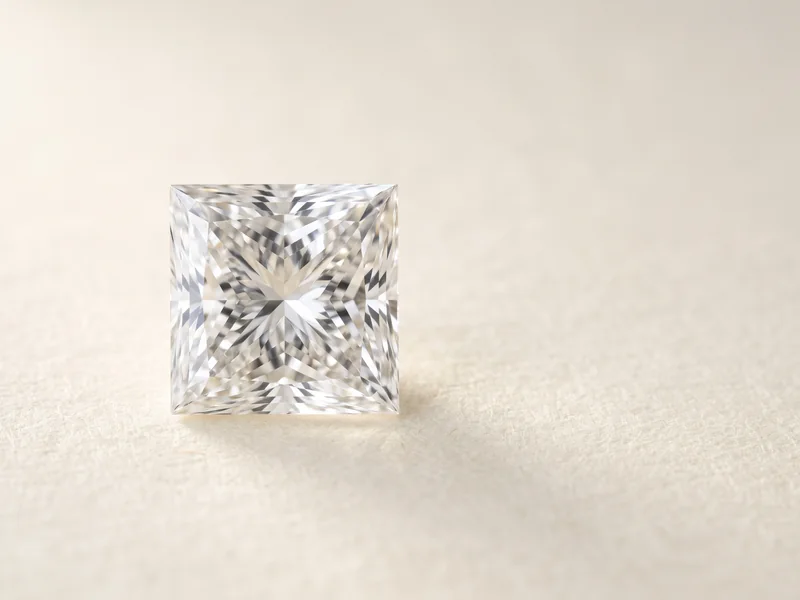
| Princess | Square with sharp corners | about 50–58 | 1.00–1.05 | Modern solitaires; corners need claws |
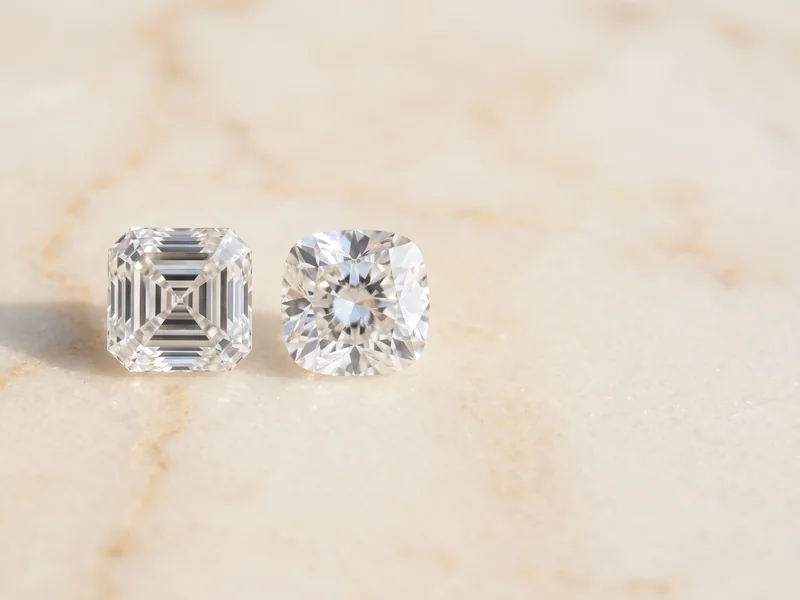
| Cushion brilliant | Square with rounded corners, larger chunky flashes | about 58–64 | 1.00–1.10 | Vintage-style and halo rings |
| Cushion modified (crushed ice) | Rounded square with fine, glittery sparkle | about 60–70+ | 1.00–1.10 | Halo and modern rings |
| Elongated cushion | Rectangular cushion, softer than a radiant | about 58–70 | 1.15–1.35 | Solitaires, three-stone rings |
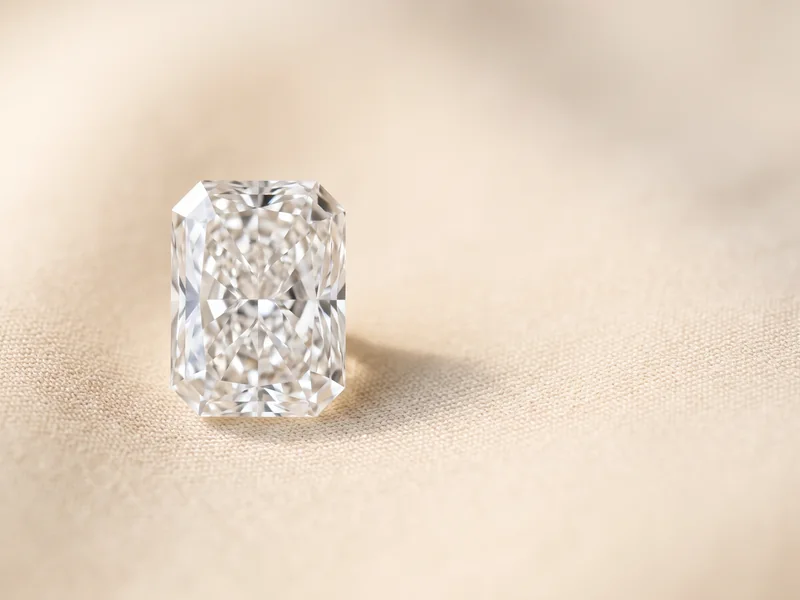
| Radiant | Rectangle with trimmed corners, brilliant facets | about 62–70 | 1.20–1.40 | Rings that need durability and sparkle |
| Square radiant | Square with trimmed corners | about 62–70 | 1.00–1.05 | Solitaires, halos |
| Trilliant | Triangle with curved or straight sides | about 31–50 | 1.00–1.05 | Side stones, bold solitaires |
The square, sharp-cornered princess cut gives the most sparkle of the square shapes, but its four points need protecting with V-claws or a bezel. The rounded corners of the cushion cut, in its brilliant and modified forms are more forgiving. The difference between the two cushion styles is mainly the pavilion: the crushed ice cushion modified cut has an extra row of facets that creates a finely broken, glittery look rather than the bolder flashes of a cushion brilliant.
The rectangular radiant with its trimmed corners is the most practical shape in this family, because cropped corners are less likely to chip than sharp ones. Three-sided stones are covered in our guide to the triangular brilliant known as the trilliant, which is often paired either side of a centre stone.
Related guideSquare Radiant Cut DiamondsNot sure which one is right?
Send us the stones you are looking at and our gemologist will tell you which to choose and why.
What are step-cut diamonds like emerald and Asscher?
Step cuts trade sparkle for clarity and calm. Instead of many small flashes, they give a few broad ones, and the long parallel facets create what gemmologists call a hall-of-mirrors effect as you look down into the stone. Because the facets are large and open, inclusions and body colour are easier to see, so step cuts usually need a higher clarity grade to look clean.
| Cut | Look | Facets | Typical L/W | Best use |
|---|---|---|---|---|
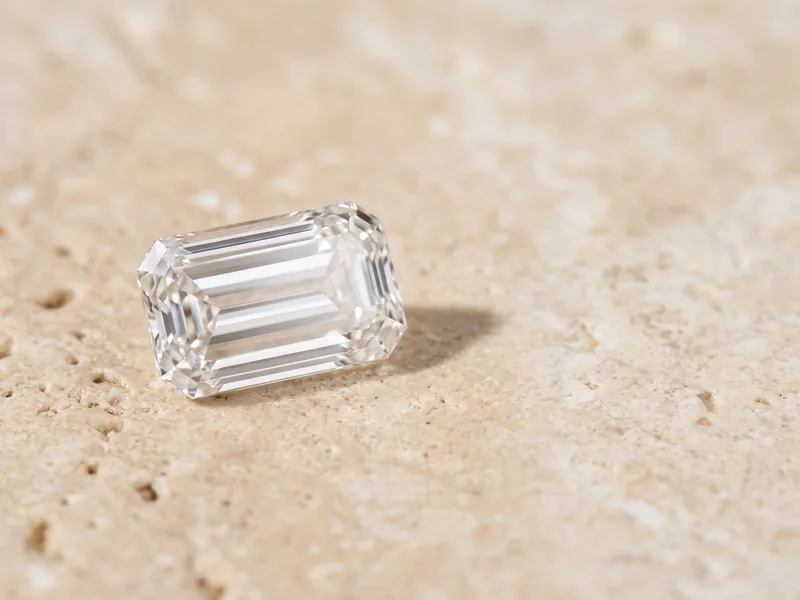
| Emerald | Rectangle, trimmed corners, long steps | about 50–58 | 1.30–1.50 | Solitaires, Art Deco styles |
| Asscher | Square emerald with deep corners, windmill pattern | about 58 | 1.00–1.05 | Vintage and Art Deco rings |
| Baguette | Long thin rectangle | about 14 | 2.00–3.00 | Side stones, bands |
| Tapered baguette | Baguette narrowing at one end | about 14 | Varies, tapering | Side stones pointing to the centre |
| Carré | Small square step cut, sharp corners | Step, varies | 1.00 | Channel-set bands, accents |
| Octagon | Eight-sided step cut | Step, varies | about 1.00–1.50 | Centre stones, custom designs |
The elegant, long-stepped emerald cut is the classic of this family and shows off a high clarity stone beautifully. The square, deep-cornered Asscher cut has a higher crown and a windmill pattern of reflections that many people associate with the 1920s. Smaller step cuts do a lot of quiet work in jewellery; our guide to straight and tapered baguette diamonds covers how they are matched in channel-set bands and three-stone rings.
As a starting point, many people choose VS2 or better in a step cut, compared with VS2–SI1 in a brilliant, and one grade higher in colour if the stone will be set in white gold or platinum.
Which diamond shapes are used as side stones?
The geometric family is where modern and custom designs get interesting. These shapes are mostly step cut, often made in matched pairs, and are chosen for their outline rather than their sparkle. Most are used beside a centre stone, though larger examples make striking solitaires.
| Cut | Look | Facets | Typical L/W | Best use |
|---|---|---|---|---|
| Trapezoid | Four sides, wider at the top | Step, varies | Varies | Pairs beside a centre stone |
| Kite | Four sides, kite outline | Step or brilliant, varies | Varies | Modern solitaires, side stones |
| Lozenge | Long diamond (rhombus) outline | Step, varies | about 1.50–2.50 | Side stones, east-west rings |
| Half moon | Half circle, straight side to the centre | Step or brilliant, varies | about 0.50 (wider than long) | Pairs either side of rounds and ovals |
| Triangular | Straight-sided triangle, step cut | Step, varies | 1.00 | Side stones, geometric rings |
| Hexagon | Six sides | Step, varies | about 1.00–1.50 | Modern solitaires |
| Pentagon | Five sides | Step, varies | about 1.00 | Custom and statement pieces |
| Shield | Shield outline with a point | Step or brilliant, varies | about 1.00 | Side stones, signet styles |
| Bullet | Rectangle with a pointed end | Step, varies | about 1.30–2.00 | Side stones, three-stone rings |
| Epaulette | Five-sided, like a shoulder badge | Step, varies | Varies, wide | Matched pairs beside step cuts |
Matching matters more than any single grade here. A pair of side stones should match each other in size, colour and outline, and their angles should sit neatly against the centre stone. A pair of trapezoid side stones suits an emerald or radiant centre, while half moon diamonds that hug a round or oval follow a curved outline. For something more graphic, the kite cut used in modern designs and the straight-sided triangular step cut both create strong, clean lines.
Because these shapes come in so many proportions, most side-stone rings are designed around the actual stones rather than chosen from a catalogue. That is a job where the setting and the stones are planned together.
What are antique diamond cuts?
Antique diamond cuts come from the centuries before diamond saws and modern optics. Cutters worked by eye to keep as much weight as possible, so these stones tend to have a small table, a high crown, a large open culet and a softer, chunkier sparkle that looks especially warm in low light.
| Cut | Look | Facets | Typical L/W | Best use |
|---|---|---|---|---|
| Old mine | Cushion-like, high crown, open culet | about 58 | 1.00–1.10 | Vintage-style solitaires |
| Old European | Round, small table, visible culet | about 58 | 1.00 | Antique and remodelled rings |
| Rose cut | Flat base, domed top of triangular facets | about 3–24 | Varies (round, oval, pear) | Low, everyday rings, vintage accents |
| Single cut | Simple small round | about 17–18 | 1.00 | Tiny accent stones, old pavé |
| Briolette | Drop shape faceted all over, no table | Varies | Varies | Drop earrings, pendants |
The squarish, hand-cut old mine diamond was the main cut of the 1700s and 1800s and is still much loved for its soft, candle-lit look. Many antique stones you see today are genuine, recovered from old jewellery; others are new stones cut in the antique style. Both are real diamond, and a good report will describe the cut accurately, so ask whether a stone is a period cut or a modern reproduction.
Rose cuts have no table and a flat base, so they show less brilliance but sit low; briolettes have no table and are faceted all over, so they catch light from every angle as they move. Rose cuts are a practical choice for anyone who wants a slim profile that will not snag.
Which diamond cuts sparkle most, look biggest and wear best?
Once you have narrowed it down to a family or two, these are the trade-offs that tend to decide it.
| Curved brilliants | Square and cushion brilliants | Step cuts | Geometric shapes | Antique cuts | |
|---|---|---|---|---|---|
| Sparkle | Highest, especially the round | High; crushed ice is glittery | Broad flashes, less sparkle | Mostly step-like | Soft and warm |
| Hides inclusions | Well | Well | Poorly; needs higher clarity | Poorly to moderately | Moderately |
| Shows body colour | Less in rounds, more in points | More in corners | More | More | Often warmer by nature |
| Face-up size for weight | Ovals, pears, marquises look larger | Princess looks smaller; radiants vary | Emeralds look larger, Asschers smaller | Depends on shape | Often smaller (deep, high crown) |
| Points or corners to protect | Pear, marquise, heart, moval | Princess, trilliant | Emerald and Asscher protected by trimmed corners; baguettes and carrés have sharp corners | Many sharp corners | Few |
| Price per carat | Round highest; others lower | Usually below round | Usually below round | Varies with demand | Varies; genuine antiques vary widely |
Shape also steers the setting. Pointed shapes need a V-claw or bezel on each point, sharp-cornered shapes need corner claws, and long step cuts look best in a setting that keeps the metal slim so the outline stays crisp. Fancy and geometric shapes are often made into custom pieces, where the setting is drawn around the exact stone.
Are all 34 cuts available as natural and lab-grown diamonds?
Every shape on this page can be cut from either natural or laboratory-grown diamond. Lab-grown diamonds are real diamond, with the same hardness (10), refractive index (about 2.42) and appearance as natural diamond, but they are grown in a laboratory rather than mined. They cost much less than natural diamonds and are easier to find in larger and less common shapes. Natural diamonds are rarer, and each one formed over a very long time underground. Both should come with an independent grading report that states clearly whether the stone is natural or lab-grown.
| 1 ct, G–H colour, VS clarity | Natural (approx. AUD) | Lab-grown (approx. AUD) |
|---|---|---|
| Round brilliant | about $9,000–$18,000 | about $1,000–$3,000 |
| Fancy shapes (oval, cushion, emerald and similar) | about $6,000–$14,000 | about $900–$2,500 |
These are broad ranges only and move with the market and with the exact grades. Within any shape, carat, colour, clarity and the quality of the cut move the price most. The rarer geometric and antique shapes are priced individually, because supply is small and matched pairs take extra time to find and cut.
Browse natural and lab-grown diamonds by cut
How do you choose a diamond cut? Step by step
- Pick a family first. Decide whether you want lively sparkle (brilliants), a calm, clear look (step cuts), clean graphic lines (geometric) or a soft vintage glow (antique).
- Narrow to two or three shapes. Compare them in the family tables above by look and typical length-to-width ratio.
- Check the ratio on the report. Divide length by width and make sure it falls in the range you like for that shape.
- Match clarity and colour to the cut. Allow a higher clarity grade for step cuts and watch for colour in points and corners.
- Compare millimetres, not just carats. Face-up size changes a lot between shapes of the same weight.
- Plan the setting around the shape. Make sure every point and sharp corner is protected before you commit to the stone.
- See it moving. Watch a 360° video or view the stone in person, in daylight and indoor light, before deciding.
Free consultation
Talk to a gemologist
Compare stones in person or online with Raj Sood, Graduate Gemologist (GIA), AJP (GIA).
Book a consultationShop this shape
FAQ
Common questions
How many diamond cuts are there?
There is no fixed number, because cutters keep creating new shapes and variations. This page compares the 34 cuts GemTrove stocks, grouped into five families.
What is the difference between a diamond cut and a diamond shape?
The shape is the outline you see from above, such as round or emerald. The cut also describes the faceting style and how well the stone is proportioned, which decides how it handles light.
Which diamond cut sparkles the most?
The round brilliant returns the most light and sparkle, followed by other brilliant shapes such as the oval, cushion and radiant. Step cuts like the emerald and Asscher give broader, calmer flashes rather than sparkle.
Which diamond cut looks biggest for its carat weight?
Elongated shapes such as the marquise, oval, pear and emerald usually face up larger than a round of the same weight. Deep cuts like the Asscher, princess and many antique cuts tend to look smaller.
Which diamond cut is most durable for everyday wear?
Shapes without sharp points or corners, such as the round, oval, cushion and radiant, are the least likely to chip. Pointed and sharp-cornered shapes are fine to wear daily with a protective setting such as V-claws or a bezel.
Are antique diamond cuts real antiques?
Some are genuine stones recovered from old jewellery, and some are new diamonds cut in the antique style. Both are real diamond; ask the seller or the report which one you are looking at.

Ask a gemologist
Not sure which diamond to choose?
Raj Sood is a Graduate Gemologist (GIA) and master jeweller. Bring the stones you are considering, or send the reports, and he will tell you honestly which one is better and why.
Keep learning
Related guides
 Diamond ShapesRound Brilliant Diamonds
 Diamond ShapesOval Diamonds
 Diamond ShapesEmerald Cut Diamonds
 Diamond ShapesCushion Cut Diamonds: Brilliant, Modified & Buying Guide
 Diamond ShapesPear Cut Diamonds
 Diamond ShapesMarquise Cut Diamonds Melbourne
 Diamond ShapesRadiant Cut Diamonds
 Diamond ShapesPrincess Cut Diamonds
Education