
Gemstones
Birthstone Jewellery Guide: The Diamond Birthstone and Every Month's Gem
Birthstone jewellery ties a gem to a month, but some birthstones are far tougher than others. Here is the full Australian list, from the April diamond birthstone to December's blue stones, with what each gem can handle in a ring.
 Reviewed by Raj Sood, Graduate Gemologist (GIA), AJP (GIA)Master jeweller and Graduate Gemologist (GIA) · reviewed 4 November 2026
Quick answer
Birthstone jewellery uses the gem linked to a birth month. The modern list runs garnet (January), amethyst, aquamarine, diamond (April), emerald, pearl/moonstone/alexandrite (June), ruby, peridot/spinel, sapphire, opal/tourmaline, topaz/citrine and tanzanite/zircon/turquoise (December). For everyday rings, favour gems of 7.5 or more on the Mohs scale with good toughness; softer stones suit earrings and pendants.
What is birthstone jewellery?
Birthstone jewellery is any ring, pendant, bracelet or pair of earrings set with the gem linked to the wearer's birth month. People choose it as a birthday gift, to mark a child's birth, or to put a whole family's months into one piece. The gem gives a piece a personal meaning without needing words or initials.
The idea is old. The twelve stones on the breastplate described in the Book of Exodus are usually given as the starting point, and first-century writers such as Josephus linked those twelve stones to the months and the zodiac. The custom of owning one stone for your own birth month is often traced to eighteenth-century Europe. The modern list most jewellers use today was published by the US National Association of Jewelers in 1912, then updated over the following century: tanzanite was added to December in 2002 and spinel to August in 2016.
Australia has no official or legal birthstone list. Most Australian jewellers follow the modern list, and some also offer the older traditional stones as alternatives. Because several months now have two or three choices, you can often pick between a hard, everyday gem and a softer, more delicate one. Our overview of coloured gemstones covers the wider gem family, and any unfamiliar word in this guide is defined in our plain-English jewellery glossary.
What are the birthstones for each month in Australia?
| Month | Modern birthstone(s) | Traditional alternative | Typical colour |
|---|---|---|---|
| January | Garnet | Garnet | Deep red; also orange, green |
| February | Amethyst | Amethyst | Purple |
| March | Aquamarine | Bloodstone | Pale to medium blue |
| April | Diamond | Diamond, clear quartz | Colourless; also fancy colours |
| May | Emerald | Emerald, chrysoprase | Green |
| June | Pearl, moonstone, alexandrite | Pearl | White, sheen, colour-change |
| July | Ruby | Ruby | Red |
| August | Peridot, spinel | Sardonyx | Yellow-green; spinel in many colours |
| September | Sapphire | Sapphire, lapis lazuli | Blue; also every colour but red |
| October | Opal, tourmaline | Opal | Play-of-colour; pink tourmaline |
| November | Topaz, citrine | Topaz | Golden yellow to orange; blue topaz |
| December | Tanzanite, zircon, turquoise | Turquoise, lapis lazuli | Blue and violet-blue |
Each month has its own detailed guide. A quick note on the ones people ask about most:
- January: garnet is a family of related minerals, not one gem, so it comes in more colours than most people expect. See our January garnet guide.
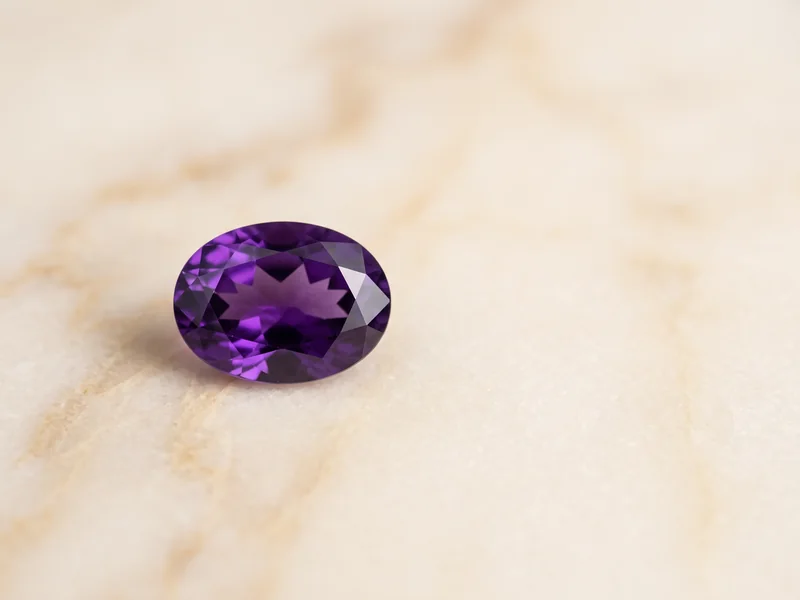
- February: amethyst is purple quartz, 7 on the Mohs scale and inexpensive even in larger sizes. Read about amethyst for February birthdays.
- March: aquamarine is blue beryl, a sister of emerald but far tougher. Our guide to aquamarine explains colour and clarity.
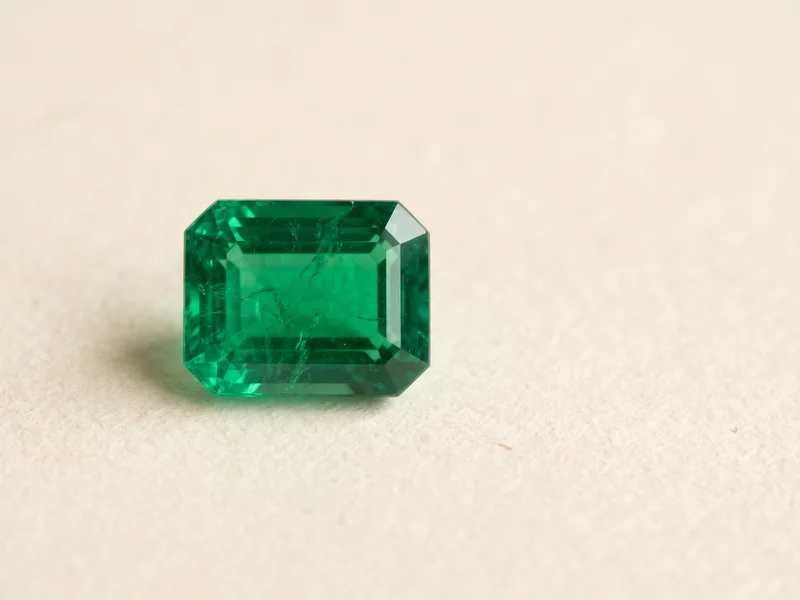
- May: emerald is the classic green, but nearly always included and oiled. Our May emerald guide covers treatments.
- June: three very different choices, from soft organic pearl to colour-change alexandrite. Compare them in our pearl, moonstone and alexandrite guide.
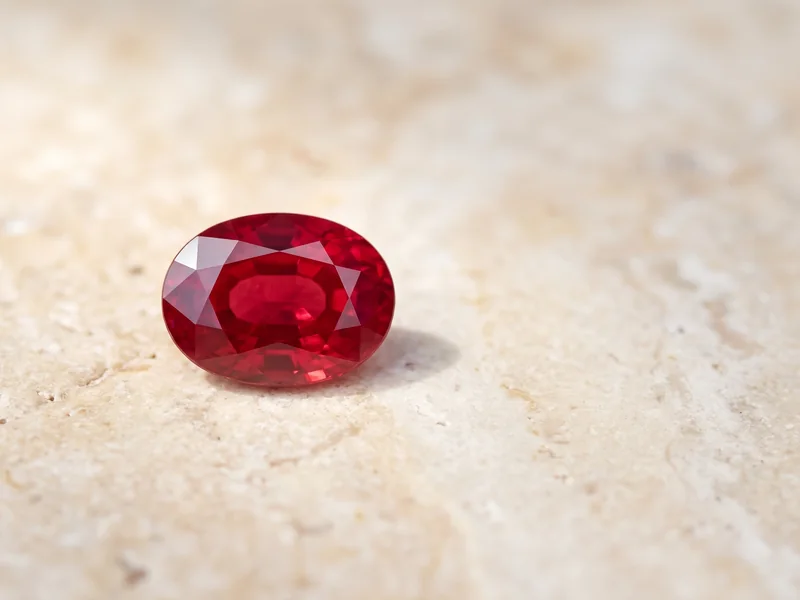
- July: ruby is red corundum, 9 on the Mohs scale. Find out what sets a fine ruby apart in our July ruby guide.
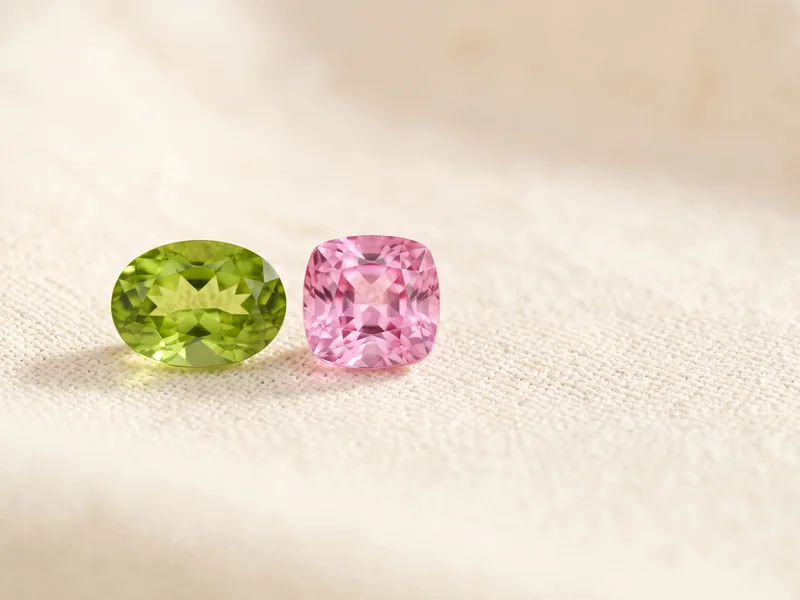
- August: peridot is a bright yellow-green, while spinel is harder and comes in red, pink and blue. See peridot and spinel for August.
- November: golden topaz and citrine look alike but behave differently. Our topaz and citrine comparison explains how.
Why is diamond the April birthstone, and what makes diamond birthstone jewellery different?
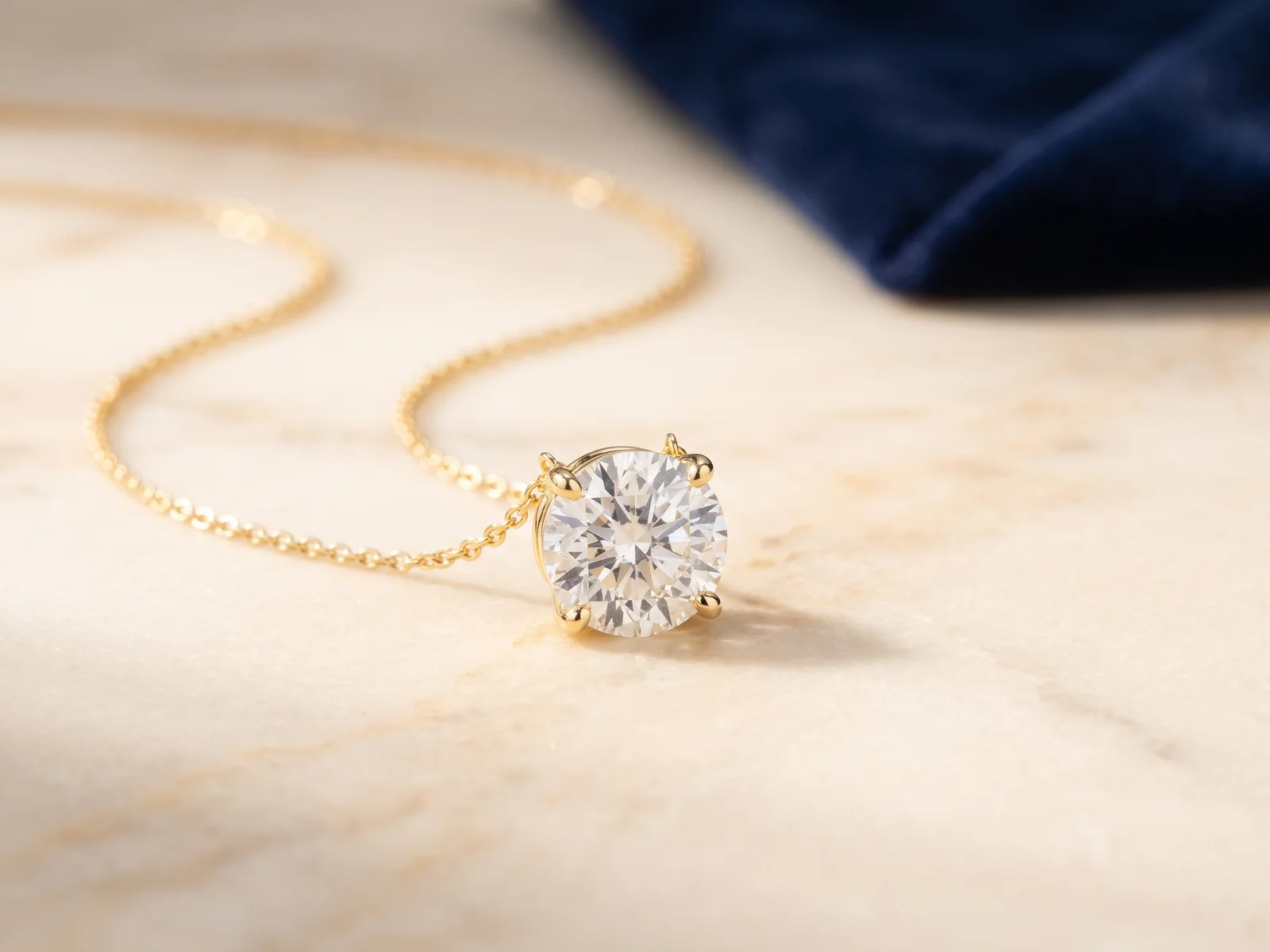
Diamond has been April's stone on every published version of the modern list. It is the only birthstone made of a single element, carbon, and it is the hardest natural material at 10 on the Mohs scale. Its refractive index (how strongly it bends light) is about 2.42, and its dispersion (how much it splits white light into colours) is about 0.044, which is why a well-cut diamond shows both bright white sparkle and flashes of colour.
That hardness changes how diamond birthstone jewellery is designed. A diamond can sit in fine claws, a solitaire ring or a tennis bracelet and keep its polish for generations. It is not unbreakable: diamond has cleavage, meaning planes along which it can split if a sharp knock lands at the wrong angle, so thin points and edges still need protection. But among birthstones it is the one most suited to a ring worn every day.
Diamonds for April come in two kinds. Natural diamonds formed deep in the earth over very long periods and are mined. Lab-grown diamonds are real diamond with the same hardness, refractive index and chemistry, grown in a laboratory over weeks; they cost much less than natural diamonds of the same size and grade. Both should be graded by an independent lab and the report will state which it is. Colourless is traditional, but fancy colours count too, including the pinks Australia's Argyle mine was known for before it closed in 2020. Our full April diamond birthstone guide covers the 4Cs in detail.
Related guideApril Birthstone: DiamondWhich birthstones are hard enough for a ring worn every day?
Two different properties decide how a gem wears. Hardness, measured on the Mohs scale from 1 to 10, is resistance to scratching. Household dust contains quartz at about 7, so anything softer than 7 slowly loses its polish and sharp facet edges. Toughness is resistance to chipping and breaking. A gem can be hard but brittle: topaz is 8 on the Mohs scale but has perfect cleavage, so a hard knock can split it.
| Birthstone | Mohs hardness | Toughness | Everyday ring? |
|---|---|---|---|
| Diamond | 10 | Good (has cleavage) | Yes |
| Ruby, sapphire | 9 | Excellent | Yes |
| Alexandrite | 8.5 | Excellent | Yes |
| Spinel | 8 | Good | Yes |
| Topaz | 8 | Poor (perfect cleavage) | With a protective setting |
| Aquamarine | 7.5–8 | Good | Yes, with some care |
| Emerald | 7.5–8 | Poor to fair | With care and a protective setting |
| Tourmaline | 7–7.5 | Fair | With some care |
| Amethyst, citrine | 7 | Good | Yes, polish wears over years |
| Garnet | 6.5–7.5 | Fair to good | Yes, with some care |
| Peridot | 6.5–7 | Fair | Occasional wear |
| Tanzanite | 6–7 | Poor to fair | Occasional wear |
| Zircon | 6–7.5 | Poor (facet edges chip) | Occasional wear |
| Moonstone | 6–6.5 | Poor | Occasional wear |
| Opal | 5.5–6.5 | Poor to fair | Occasional wear, protective setting |
| Turquoise | 5–6 | Fair; porous | Occasional wear |
| Pearl | 2.5–4.5 | Fair to good, but soft | Occasional wear |
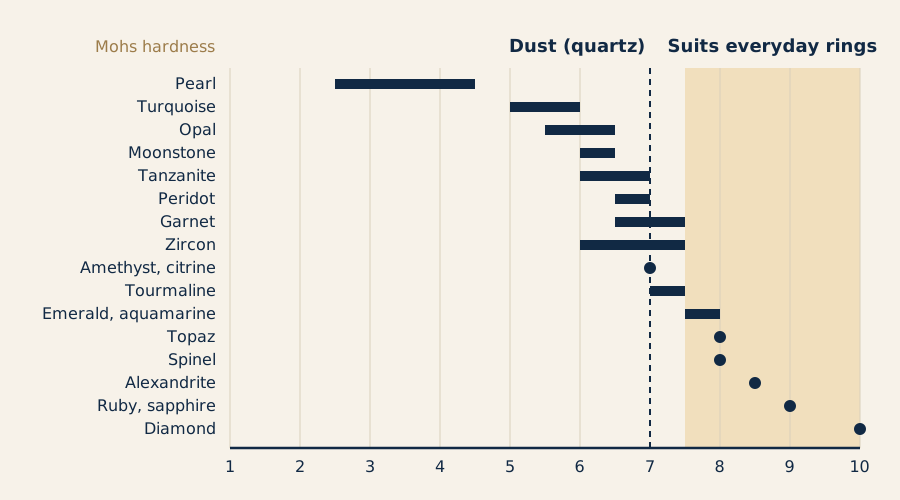
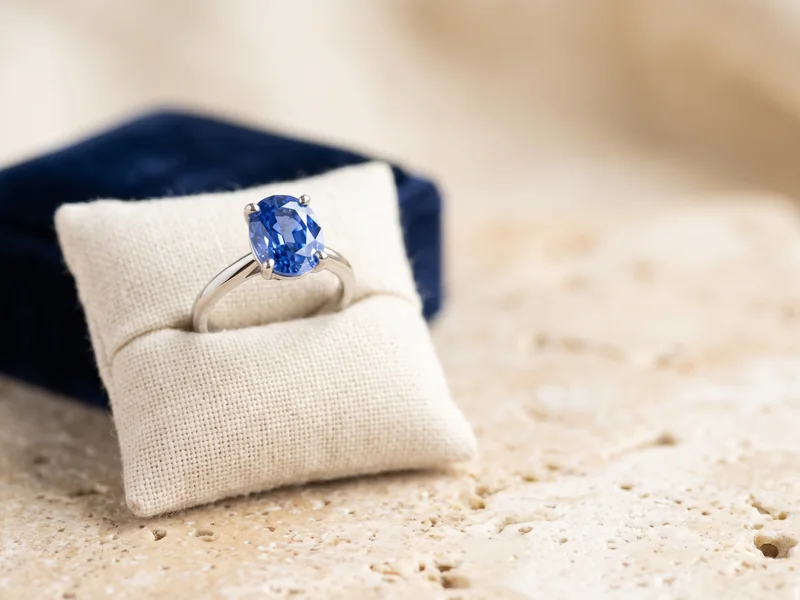
For an engagement or wedding ring that will be worn daily for decades, the strongest choices are diamond, sapphire, ruby, alexandrite and spinel. Our guide to choosing a birthstone engagement ring that lasts goes through the trade-offs month by month, including how to wear a softer stone safely.
Not sure which one is right?
Send us the stones you are looking at and our gemologist will tell you which to choose and why.
Which birthstones come from Australia?
Australia is one of the few countries that produces several birthstones from its own ground, which gives birthstone jewellery here an extra local story:
- Opal (October): Australia produces most of the world's precious opal. Black opal comes from Lightning Ridge in New South Wales, white and crystal opal from Coober Pedy and Andamooka in South Australia, and boulder opal from western Queensland. Our October opal and tourmaline guide explains solid opal, doublets and triplets.
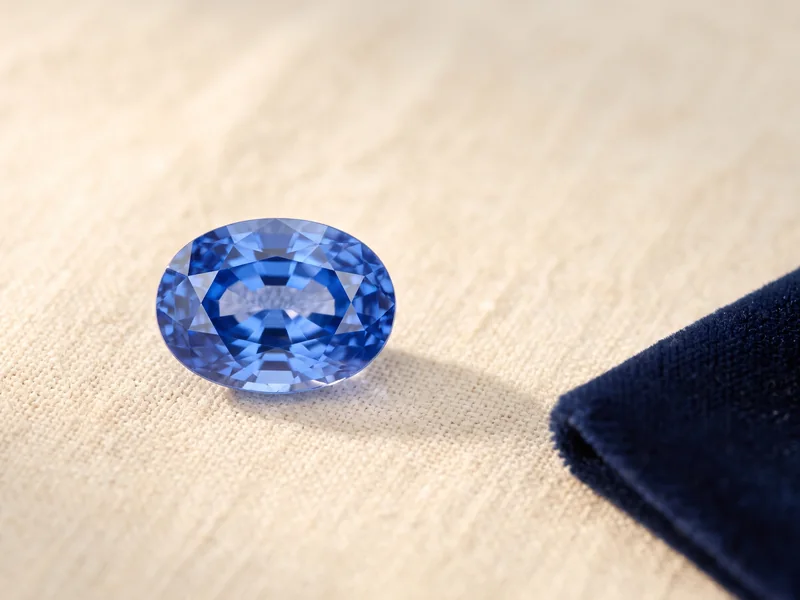
- Sapphire (September): the New England fields around Inverell and Glen Innes in New South Wales, and the Central Queensland Gemfields around Anakie and Rubyvale, produce deep blue, green, yellow and parti-colour sapphires. Read more in our guide to September sapphire.
- Diamond (April): the Argyle mine in Western Australia produced large volumes of diamond, including rare pinks, until it closed in 2020.
- Pearl (June): South Sea pearls are farmed off Western Australia's Kimberley coast around Broome, from the large Pinctada maxima oyster.
- Zircon (December): gem zircon is found in the Harts Range in the Northern Territory and alongside sapphire in eastern Australian fields. Our December birthstone guide covers natural zircon, which is not the same as cubic zirconia.
- Chrysoprase (traditional May): apple-green chalcedony mined in Queensland and Western Australia.
Origin can affect price and is something many buyers value, but it is not a grade in itself. A fine sapphire from any source is judged on colour, clarity and cut first. Where a seller states an origin, ask how it was established, because origin can only be confirmed for some stones by a specialist laboratory.
How does a gemmologist tell natural, lab-created and imitation birthstones apart?
Birthstone jewellery is one of the areas where you most need to know exactly what you are buying, because inexpensive pieces often use something other than the natural gem. There are three categories, and the seller should name them clearly:
- Natural: formed in the earth. It may still be treated, for example heated, oiled or irradiated.
- Lab-created (synthetic): the same chemistry and crystal structure as the natural gem, grown in a laboratory. Lab-created ruby, sapphire, emerald, spinel and alexandrite are all common. For diamond, the term is lab-grown.
- Simulant (imitation): a different material that only looks similar, such as glass, cubic zirconia standing in for diamond, or lab-created spinel standing in for aquamarine.
A gemmologist uses a few standard tools. The refractometer reads the refractive index, which separates many look-alikes: aquamarine reads about 1.57–1.58, blue topaz about 1.61–1.62 and spinel about 1.71–1.72. Under the microscope, flame-fusion lab-created ruby and sapphire often show curved growth lines and round gas bubbles, while natural stones show straight colour banding and natural crystals. Glass shows bubbles and swirls. Lab-grown diamonds usually need laboratory screening equipment, which is why a grading report matters for April stones.
Treatments are routine and must be disclosed. Most blue topaz is irradiated and heated, most tanzanite is heated to remove brown tones, much citrine is heated amethyst, emeralds are usually filled with oil or resin, and much turquoise is stabilised. None of these makes a stone fake, but they affect value and care. Be especially careful with June: much jewellery sold as alexandrite is actually lab-created colour-change corundum or spinel, and natural alexandrite is rare and costly.
Browse natural gemstones for birthstone jewellery
What types of birthstone jewellery suit each gem?
Matching the piece to the gem's toughness is the single biggest decision. Earrings and pendants take very few knocks, so almost any birthstone works there, including pearl, opal and turquoise. Rings and bracelets take the most wear, so they suit the harder gems or need a protective setting.
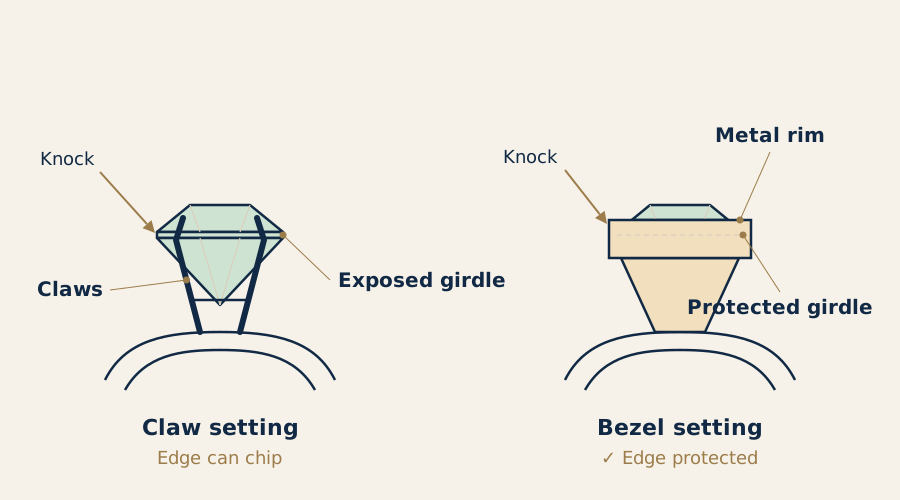
- Claw settings: show the most of the stone and let light in. Best for diamond, sapphire, ruby, spinel and alexandrite.
- Bezel settings: a rim of metal around the edge that protects the girdle (the outer edge) from chips. A good choice for emerald, tanzanite, opal, peridot and topaz in rings.
- Pendants and drops: suit pearls, moonstone cabochons (smooth domed cuts) and opal, which can then be worn often without much risk.
- Family or mothers' rings: several small birthstones in one band. The softest stone sets the care rules for the whole ring, so check each gem on the table above.
- Diamond accents: small diamonds around a coloured birthstone frame it and add sparkle; a halo also shields the centre stone's edge.
How much does birthstone jewellery cost, from garnet to diamond?
Birthstones cover an enormous price range, from gems that cost little more than the metal around them to diamonds and rubies priced in the thousands per carat. The ranges below are approximate, for loose natural stones of good commercial quality, and move a great deal with size, colour and treatment.
| Price tier | Birthstones | Approximate AUD per carat |
|---|---|---|
| Accessible | Amethyst, citrine, blue topaz, most garnets | about $20–$300 |
| Mid-range | Aquamarine, peridot, tourmaline, zircon, moonstone, tanzanite | about $100–$1,500 |
| Higher | Fine sapphire, spinel, emerald | about $500–$5,000+ |
| Highest | Fine ruby, natural alexandrite, natural diamond | about $2,000–$20,000+ |
| Lab-grown and lab-created | Lab-grown diamond; lab-created ruby, sapphire, emerald, alexandrite | a fraction of the natural equivalent |
Opal and pearl are priced differently. Opal depends on body tone, brightness and play-of-colour pattern, so solid Australian opals run from tens of dollars to many thousands. Pearls are priced by size, lustre, surface and matching, usually per pearl or per strand rather than per carat. For any birthstone, the setting and metal can cost more than the stone itself in the accessible tiers, so compare the whole piece, not just the gem.
How do you care for birthstone jewellery?
Care depends on the gem, and mixed pieces such as family rings should be treated by the rules for their most delicate stone.
- Warm soapy water and a soft brush: safe for almost every birthstone. Rinse and dry with a lint-free cloth.
- Ultrasonic and steam cleaners: generally fine for diamond, untreated or heat-treated ruby and sapphire, and spinel. Avoid them for emerald, opal, pearl, turquoise, tanzanite, moonstone, peridot, topaz and any fracture-filled or oiled stone.
- Opal: avoid sudden temperature changes, and never soak doublets or triplets, which are layered and glued.
- Pearl and turquoise: put them on after perfume, hairspray and sunscreen, and wipe them after wearing.
- Light and heat: some amethyst and some yellow-brown topaz can fade with long sun exposure, so store them out of direct light.
Store each piece separately, because diamond will scratch every other birthstone and even sapphire will mark softer gems. Our page on storing jewellery without scratches or tangles has practical options. For when to clean at home and when to bring a piece in, see professional versus home jewellery cleaning, and if your birthstone pieces travel with you, read our tips for travelling with fine jewellery.
How do you choose birthstone jewellery? Step by step
- Confirm the month and options. Check whether the month has more than one stone, and whether a traditional alternative suits you better.
- Decide how often it will be worn. Daily rings suit diamond, sapphire, ruby, spinel or alexandrite; softer gems suit earrings, pendants or occasional rings.
- Ask what the stone is. Natural, lab-created, lab-grown (for diamond) or simulant, and whether it has been treated.
- Check the documents. For diamonds and higher-value gems, ask for an independent laboratory report.
- Match the setting to the gem. Use a bezel or low setting for gems below about 7.5 on the Mohs scale, or with poor toughness.
- Plan the care. Note which cleaning methods are safe before you wear it, especially for opal, emerald, pearl and turquoise.
Birthstones also come into the family through inherited pieces. A grandmother's garnet ring or a parent's sapphire can often be reset into a new design if the stone is sound; our guide to what can be reused safely when remodelling jewellery explains how stones and metal are assessed first.
Free consultation
Talk to a gemologist
Compare stones in person or online with Raj Sood, Graduate Gemologist (GIA), AJP (GIA).
Book a consultationShop this shape
FAQ
Common questions
What is the April birthstone?
Diamond is the April birthstone. It can be natural or lab-grown, and colourless or a fancy colour such as pink or yellow.
Is a diamond birthstone ring suitable for everyday wear?
Yes. At 10 on the Mohs scale, diamond resists scratching better than any other birthstone, though a setting that protects any thin points or edges is still sensible.
Which months have more than one birthstone?
June (pearl, moonstone, alexandrite), August (peridot, spinel), October (opal, tourmaline), November (topaz, citrine) and December (tanzanite, zircon, turquoise) each have more than one stone on the modern list.
Are lab-created birthstones real gems?
Lab-created ruby, sapphire, emerald, spinel and alexandrite have the same chemistry and structure as the natural gems, but are grown in a laboratory. They must be sold as lab-created or synthetic, and they cost much less than natural stones.
Can I wear an opal birthstone ring every day?
Opal is 5.5 to 6.5 on the Mohs scale and can crack or scratch, so daily wear in a ring carries risk. A bezel setting helps, and many people keep opal for pendants, earrings or occasional rings.
Which birthstones suit an engagement ring?
Diamond, sapphire, ruby, alexandrite and spinel are hard and tough enough for decades of daily wear. Emerald and aquamarine can work with a protective setting and some care.

Ask a gemologist
Not sure which diamond to choose?
Raj Sood is a Graduate Gemologist (GIA) and master jeweller. Bring the stones you are considering, or send the reports, and he will tell you honestly which one is better and why.
Keep learning
Related guides
 GemstonesApril Birthstone: Diamond
 GemstonesBirthstone Engagement Rings: Choosing for Durability
 GemstonesSeptember Birthstone: Sapphire
 GemstonesOctober Birthstone: Opal and TourmalineGemstonesGemstones | Coloured Gemstones, Birthstones and Custom Jewellery
 GemstonesFebruary Birthstone: Amethyst
 GemstonesMay Birthstone: Emerald
 GemstonesJuly Birthstone: Ruby
Explore more
More guides on this topic
Education