
- Education
- Fancy Colour Diamonds
- Purple Diamonds: What Causes the Colour, Grades, Rarity and Settings
Fancy Colour Diamonds
Purple Diamonds: What Causes the Colour, Grades, Rarity and Settings
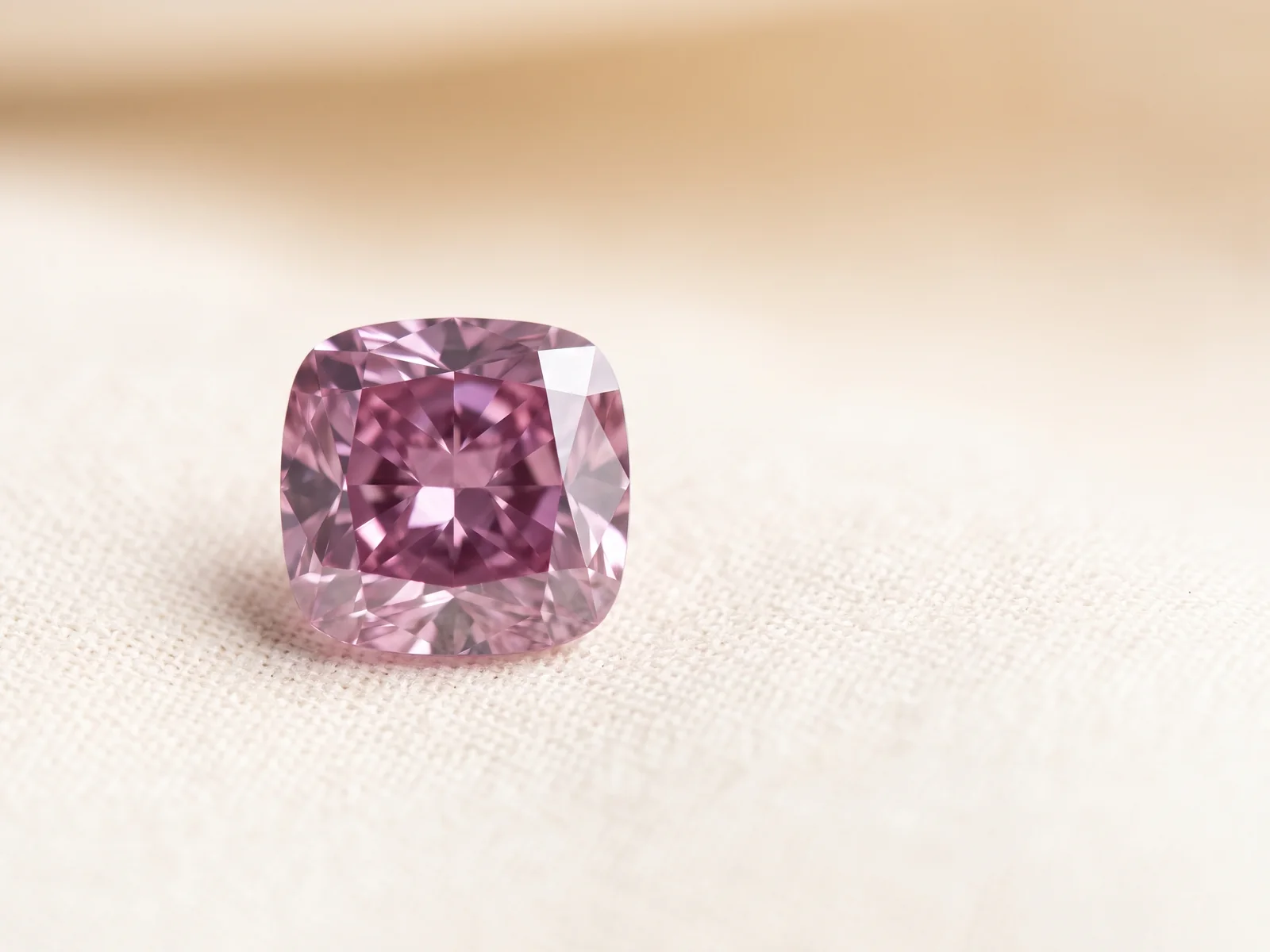
Purple diamonds are among the rarest colours a diamond can be, and among the easiest to misunderstand. Here is what creates the colour, how it is graded, how to tell natural from lab-grown and treated, and how to set one so the colour shows.
 Reviewed by Raj Sood, Graduate Gemologist (GIA), AJP (GIA)Master jeweller and Graduate Gemologist (GIA) · reviewed 4 November 2026
Quick answer
Purple diamonds are fancy colour diamonds whose main hue is purple, usually with a pink modifier. Natural purples get their colour from distortion of the crystal lattice, or from hydrogen in violet stones, and are extremely rare. Lab-grown and treated purples are far more affordable. Always check the grading report for colour origin and intensity.
What are purple diamonds?
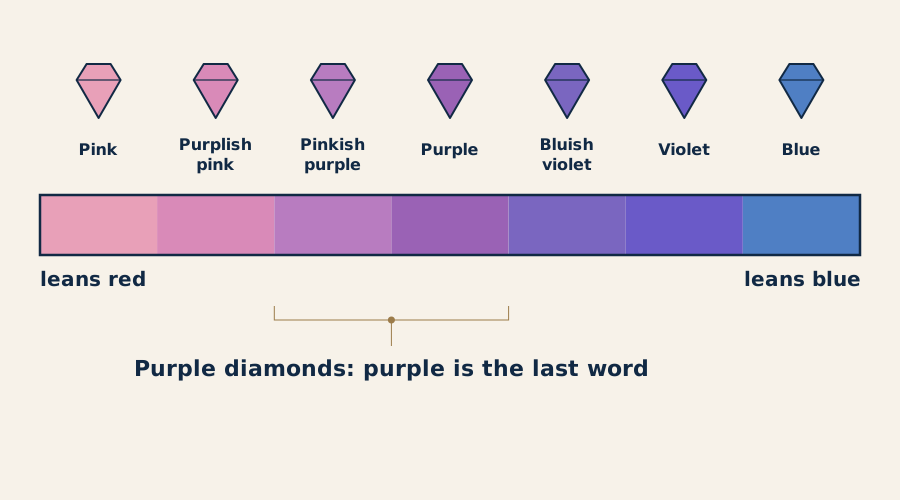
Purple diamonds are fancy colour diamonds. That means their colour is strong enough to be graded on a separate scale from the D-to-Z scale used for white diamonds. On a grading report, a purple diamond is one where purple is the dominant hue, which is always the last word in the colour name. A stone described as 'Fancy Intense Pinkish Purple' is a purple diamond with a pink modifier. One described as 'Fancy Purplish Pink' is a pink diamond with a purple modifier. That word order changes both the look and the price. To see how purple fits among the other colours, start with our complete guide to fancy colour diamonds.
Pure purple, with no modifier at all, is one of the rarest results in coloured diamonds. Most natural purples carry some pink, grey or brown, and most are small, often under half a carat. Physically they are the same as any other diamond: 10 on the Mohs hardness scale, a refractive index (how strongly the stone bends light) of about 2.42, and tough enough for everyday wear in a sensible setting. Any term here that is new to you is explained in our plain-English jewellery glossary.
What causes the colour in purple diamonds?
Most diamond colours come from a trace element. Nitrogen makes yellow and boron makes blue. Purple is different. In most natural purple diamonds the colour comes from plastic deformation: intense pressure deep in the earth bent and slipped the crystal lattice (the regular grid of carbon atoms) along internal planes. That creates defects which absorb light in the yellow-green part of the spectrum, centred around 550 nanometres. Take yellow-green out of white light and what reaches your eye is pink to purple.
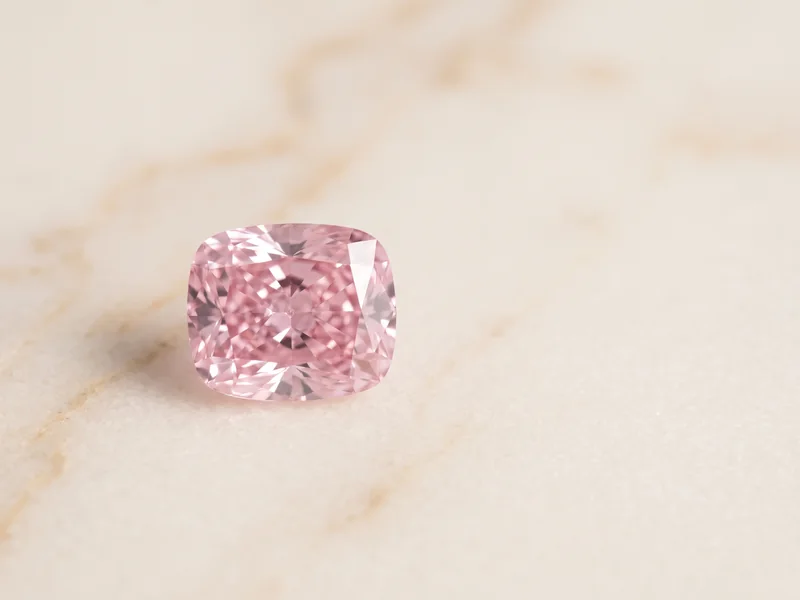
This is the same mechanism behind pink diamonds, purple's closest relative, and the rare red diamonds at the far end of the same spectrum. The differences are in how strong the absorption is and exactly where it sits. Because the colour forms along slip planes, natural purples often show colour graining: thin parallel bands of colour you can see under a loupe (a 10× hand magnifier). Graining is a useful clue that the colour is natural, though it is not proof on its own.
A second group, the violet and greyish violet diamonds, is linked to hydrogen in the crystal alongside nitrogen-related defects. These came mainly from Argyle in Western Australia and tend to look cooler and bluer. Lab-grown and treated purples are coloured by yet another defect, the nitrogen-vacancy (NV) centre, covered further down. For contrast, natural radiation in the earth is what produces green diamonds, coloured by natural radiation, a completely different process again.
What is the difference between purple and violet diamonds?
GIA treats purple and violet as two separate hues. Purple sits between pink and violet on the colour wheel and leans towards red. Violet sits between purple and blue and leans towards blue. In daylight, a purple diamond looks like orchid or grape; a violet diamond looks closer to lavender or a blue-grey.
| Purple | Violet | |
|---|---|---|
| Hue leans towards | Red and pink | Blue |
| Likely cause | Plastic deformation of the lattice | Hydrogen-related defects |
| Common modifiers | Pinkish, greyish, brownish | Greyish, bluish |
| Main natural sources | Russia, Brazil, Argyle and others | Mostly Argyle; very rare elsewhere |
| Typical size | Mostly under 1 ct | Mostly under 0.50 ct |
Violet diamonds are very often greyish, so the grey modifier is common. If you like that muted, smoky look, our page on grey diamonds and the greyish modifier shows how grey changes a colour. A greyish violet is not a lesser stone. It is a distinct look, and Argyle violets have been among the most keenly collected coloured diamonds of the past two decades.
How are purple diamonds graded for intensity?
A lab grades a coloured diamond face-up, under controlled daylight-equivalent lighting, by comparing it with reference colours. It assesses three things: hue (purple, pinkish purple and so on), tone (how light or dark) and saturation (how strong). These combine into a single intensity grade. Our page on how a lab grades a coloured diamond goes through the process step by step.
| GIA intensity grade | What a purple looks like | Relative rarity |
|---|---|---|
| Faint, Very Light, Light | A hint of lilac in a near-colourless stone | Uncommon, modest prices |
| Fancy Light | Soft lavender | Rare |
| Fancy | Clear, recognisable purple | Very rare |
| Fancy Intense | Strong orchid purple | Extremely rare |
| Fancy Vivid | The strongest, most saturated purple | Exceptional |
| Fancy Deep | Rich and darker, still saturated | Extremely rare |
| Fancy Dark | Very dark, often with grey or brown | Rare, usually priced lower than Deep |
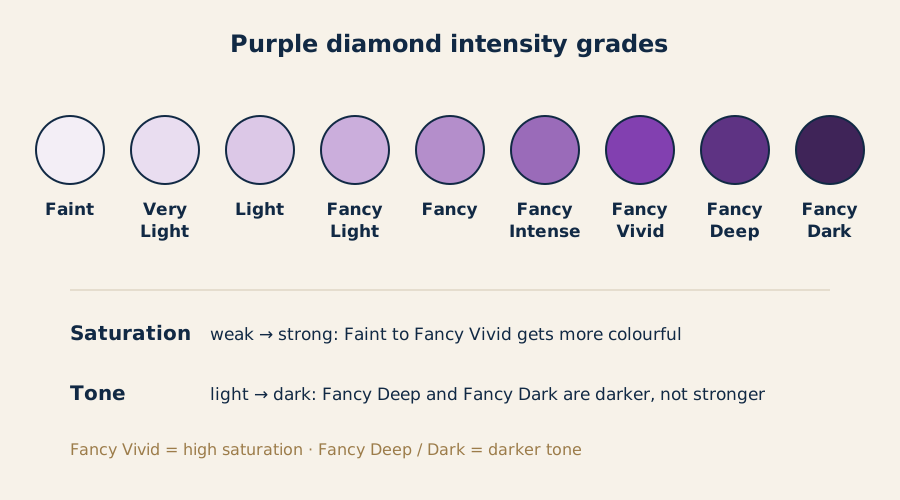
The modifier matters as much as the intensity. Pinkish purple and purplish pink are the most common natural results. A greyish or brownish modifier usually lowers the price, sometimes considerably, because the colour looks less pure. Brown in particular can make purple look muddy; buyers of brown, champagne and cognac diamonds want brown as the main colour, while purple buyers generally avoid it. For the rules on word order, see how modifiers and overtones change a colour name, and for every step on the scale, the full Faint-to-Vivid intensity scale.
Clarity and cut work differently in coloured diamonds. Cutters often choose shapes such as cushion, radiant and pear, which hold colour well, and they will accept lower clarity (SI or even I grades) to keep more colour in the stone. The price is driven mainly by hue, intensity, modifier and carat, with clarity a long way behind.
Not sure which one is right?
Send us the stones you are looking at and our gemologist will tell you which to choose and why.
Where do natural purple diamonds come from? The Argyle story
Natural purple diamonds have come from Russia (Siberia), Brazil and parts of Africa, but Australia has a special place in the story. The Argyle mine in the East Kimberley of Western Australia began production in the 1980s and closed in November 2020. Most of its output was brown diamond, but it also produced, very rarely, the pinks, reds, purples and violets it became famous for. Argyle is widely credited with supplying most of the world's pink diamonds over its life.
Argyle's finest coloured stones were sold each year through an invitation-only tender. Purples and violets appeared only occasionally, and almost always under one carat. The best known is the Argyle Violet, an oval of 2.83 carats graded Fancy Deep Greyish Bluish Violet, cut from rough of about 9.17 carats and offered in 2016. A stone of that size and colour is exceptional; a typical Argyle purple weighs a small fraction of that.
Outside Australia, the largest known Fancy Vivid Purple is the Royal Purple Heart, a heart shape of about 7.34 carats, reported to come from Russia. Stones like these show the ceiling of the category; almost everything on the market is far smaller.
Since the closure, no new Argyle diamonds are being mined, so existing stones move through the secondary market. A genuine Argyle stone normally comes with Argyle documentation and a laser inscription on the girdle (the thin outer edge of the stone). Ask for both, and check that an independent grading report agrees with them.
Natural, lab-grown or treated purple diamonds: how can you tell?
There are three kinds of purple diamond on the market, and they cannot be told apart by eye.
- Natural colour: a mined diamond whose purple formed in the earth. Rarest by a very wide margin.
- Treated natural: a mined diamond whose colour was created or changed after mining, usually by HPHT (high pressure, high temperature) processing followed by irradiation and annealing (controlled heating) to form NV centres. Occasionally a thin surface coating is used, which can wear or be damaged by polishing and heat.
- Lab-grown: a laboratory-grown diamond, made by CVD (chemical vapour deposition) or HPHT growth. Most lab-grown purples leave the growth chamber near-colourless or brownish and are then treated to purple. They are real diamond, with the same hardness and refractive index as natural.
Labs separate them with spectroscopy and UV testing; NV-centre colour, for example, often glows orange-red under ultraviolet light and shows characteristic absorption lines. Our guide to HPHT and irradiation treatments explained covers each process and its durability. What it means for you is simple: the grading report is essential, and the line called colour origin is the most important thing on it.
| What the report says | What it means for you |
|---|---|
| Fancy Intense Pinkish Purple; colour origin: Natural | A mined diamond with natural colour; purple dominant, pink modifier |
| Fancy Deep Purple-Pink; colour origin: Natural | Natural colour, pink dominant with a strong purple component; usually sold as a pink |
| Fancy Vivid Purple; colour origin: Treated | A natural diamond whose colour was produced in a lab; priced at a small fraction of natural colour |
| Laboratory-grown report; Fancy Purple; post-growth treatment noted | A lab-grown diamond whose colour was created after growth |
| Colour origin: Undetermined | The lab could not confirm the cause of colour; ask for further testing before buying as natural |
GIA offers a full coloured diamond grading report (colour grade, clarity, measurements and colour origin) and a shorter identification and origin report, which confirms whether the colour is natural and describes it without a full grade. Lab-grown diamonds graded by GIA or IGI carry reports that clearly state they are laboratory-grown, and the girdle is usually laser-inscribed to match.
Related guidePink DiamondsHow much do purple diamonds cost in Australia?
Natural purple diamonds are priced like the rarest coloured diamonds: per carat, on a steep curve that climbs quickly with intensity and size. Treated and lab-grown purples are a different market entirely, priced at a small fraction of natural colour.
| Purple diamond type, about 0.50 ct, Fancy to Fancy Intense | Approximate price range (AUD) |
|---|---|
| Natural colour, pinkish purple | about $15,000 to well over $100,000 |
| Natural colour with Argyle documentation | usually above a comparable non-Argyle stone |
| Treated natural | about $1,500–$5,000 |
| Lab-grown | about $500–$2,500 |
These are broad ranges only. Natural purples trade so rarely that each stone is priced on its own merits, and the modifier makes a large difference: a strong pinkish purple costs far more than a brownish purple of the same intensity. On rarity, natural purple sits near pink and red, far above yellow and canary diamonds, while pure orange diamonds are another rare colour priced on a similarly steep curve. At the other end, most opaque black diamonds sold today are treated and cost very little per carat.
If you want a strong purple at a modest budget, lab-grown is the realistic route, and it is still real diamond. If natural colour matters to you, expect a small stone, often 0.10–0.30 carat, set where it can be seen up close.
Shop purple diamonds: natural and lab-grown
Purple diamond vs purple sapphire vs amethyst: which suits you?
| Natural purple diamond | Lab-grown purple diamond | Purple sapphire | Amethyst | |
|---|---|---|---|---|
| Material | Diamond (carbon) | Diamond (carbon), grown in a laboratory | Corundum (aluminium oxide) | Quartz (silicon dioxide) |
| Mohs hardness | 10 | 10 | 9 | 7 |
| Refractive index | about 2.42 | about 2.42 | about 1.76–1.77 | about 1.54–1.55 |
| Cause of colour | Lattice deformation or hydrogen | NV centres, usually after growth | Chromium with iron and titanium | Iron and natural irradiation |
| Approx. 1 ct price (AUD) | Rarely available; tens of thousands upwards | about $1,000–$4,000 | about $800–$5,000 | under about $200 |
| Everyday ring wear | Excellent | Excellent | Very good | Fair; scratches more easily, can fade in strong sunlight |
Diamond's high refractive index gives purple diamonds strong sparkle, and that sparkle lightens the colour a little; a purple sapphire of similar tone often looks deeper and more saturated, with less fire. If you want a rich purple in a larger size, our page on purple sapphires as a durable alternative compares origins, treatments and lab-created options. Amethyst gives the biggest purple for the money but is softer at 7 on the Mohs scale, so it suits pendants and earrings better than a daily-wear ring.
What are the best settings and metals for a purple diamond?
Metal colour reflects up through a diamond, so the right metal can strengthen purple and the wrong one can flatten it.
- Rose gold: warms and strengthens pinkish purple. A common choice is rose gold claws on a platinum or white gold ring, so the claws match the stone while the band stays white.
- White gold or platinum: keeps violet and bluish purple cool and crisp, and suits greyish violets.
- Yellow gold: yellow is the opposite of purple on the colour wheel, so reflected yellow can make a light purple look greyish or brownish. It works better with deep, saturated stones.
- Halo: a ring of small white diamonds frames a small purple and adds sparkle; contrast can make the centre colour look stronger.
- Bezel or half-bezel: a thin metal rim that protects small stones and suits fragile corners on pears and hearts.
- Three-stone: a purple centre between white diamonds, or between natural or lab-grown pinks, is a classic three-stone layout.
For side-by-side examples across every coloured diamond, see settings and metals that suit coloured diamonds.
How do you choose a purple diamond? Step by step
- Decide on the hue. Purple dominant, purplish pink or violet: look at examples of each, as they read very differently.
- Read the colour origin first. Natural, treated or laboratory-grown changes the price more than anything else on the report.
- Check intensity and modifier. Fancy Intense and above for strong colour; be cautious with brownish modifiers if you want a clean purple.
- View it in more than one light. Daylight and warm indoor light, in photos or in person.
- Look for treatment clues. Ask about coatings and NV-centre treatment, and read up on signs a coloured diamond has been treated before you compare stones.
- Compare millimetres, not just carats. Small natural purples vary widely in face-up size for their weight.
- Plan the metal and setting. Choose rose, white or yellow metal to suit the hue, and protect any points or thin corners.
Free consultation
Talk to a gemologist
Compare stones in person or online with Raj Sood, Graduate Gemologist (GIA), AJP (GIA).
Book a consultationFAQ
Common questions
Are purple diamonds real diamonds?
Yes. Natural, treated and lab-grown purple diamonds are all real diamond, with a hardness of 10 and a refractive index of about 2.42. The grading report tells you which kind you are looking at.
Why are natural purple diamonds so rare?
Their colour needs a very specific kind of lattice deformation, or hydrogen-related defects for violets, and few diamonds experience it. Most that do turn out pink, so a dominant purple hue is much rarer again.
Did Argyle produce purple diamonds?
Yes, though only occasionally and usually under one carat. Argyle in Western Australia is best known for pinks, but it also produced purples and violets, including the 2.83 carat Argyle Violet offered in 2016.
How much does a lab-grown purple diamond cost in Australia?
A 0.50 carat lab-grown purple is roughly AUD $500–$2,500 and a 1 carat about $1,000–$4,000, depending on intensity and shape. Its colour is usually created by treatment after growth, which the report will state.
What is the difference between a purple and a violet diamond?
Purple leans towards red and pink and usually comes from lattice deformation. Violet leans towards blue, is often greyish and is linked to hydrogen in the crystal.
What metal suits a purple diamond ring?
Rose gold strengthens pinkish purples, while white gold or platinum keeps violets cool and crisp. Yellow gold can make light purples look greyish, so it suits deeper colours better.

Ask a gemologist
Not sure which diamond to choose?
Raj Sood is a Graduate Gemologist (GIA) and master jeweller. Bring the stones you are considering, or send the reports, and he will tell you honestly which one is better and why.
Keep learning
Related guides
 Fancy Colour DiamondsPink Diamonds
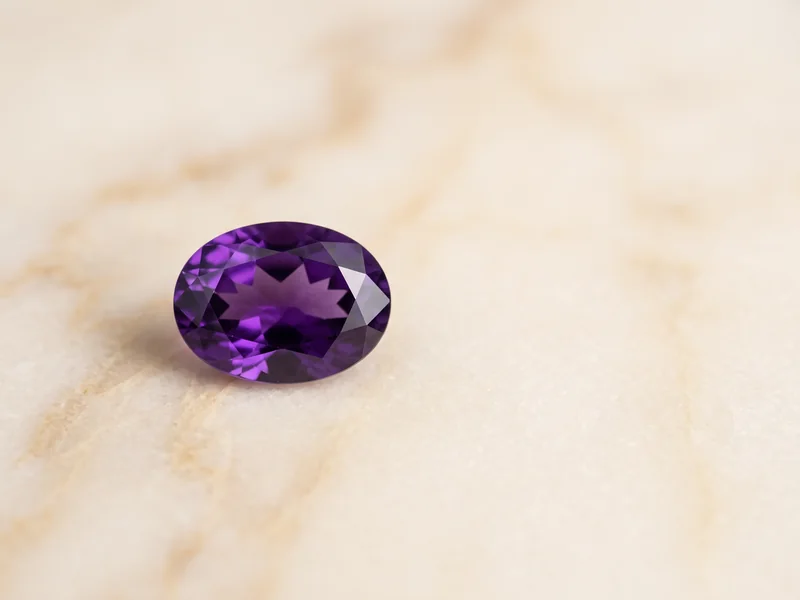 GemstonesPurple Sapphire
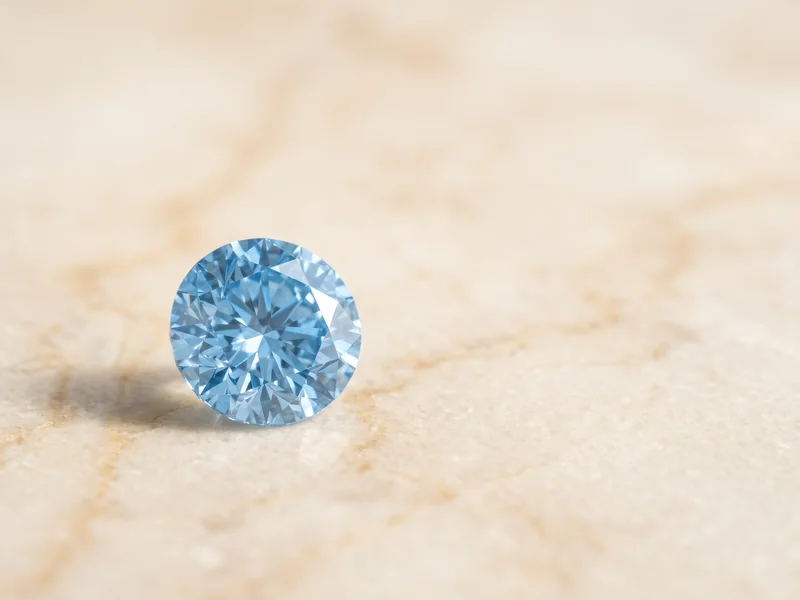 Fancy Colour DiamondsTreated Colour Diamonds (HPHT and Irradiation)
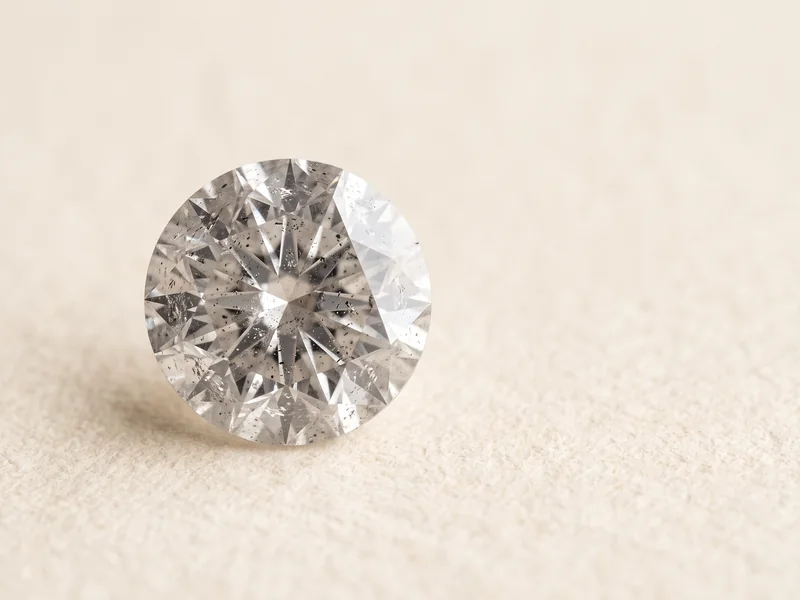 Fancy Colour DiamondsGrey and Salt-and-Pepper Diamonds
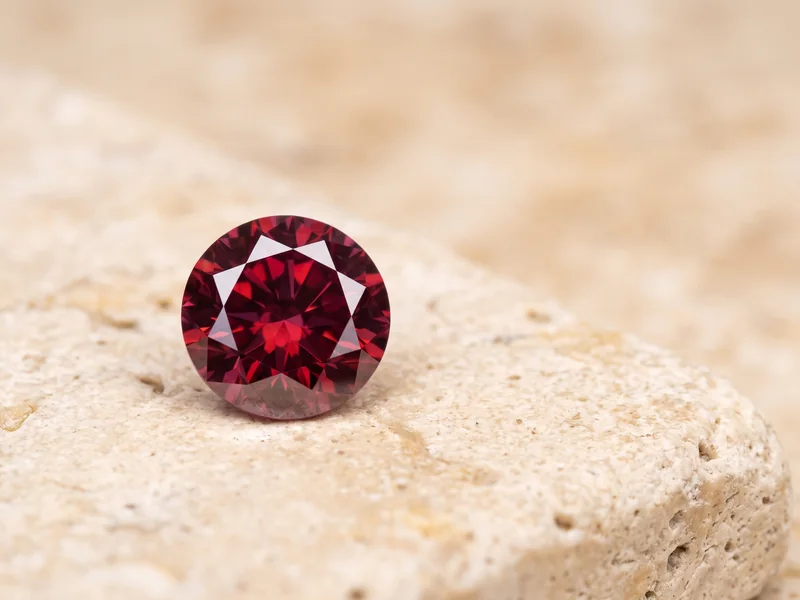 Fancy Colour DiamondsRed Diamonds
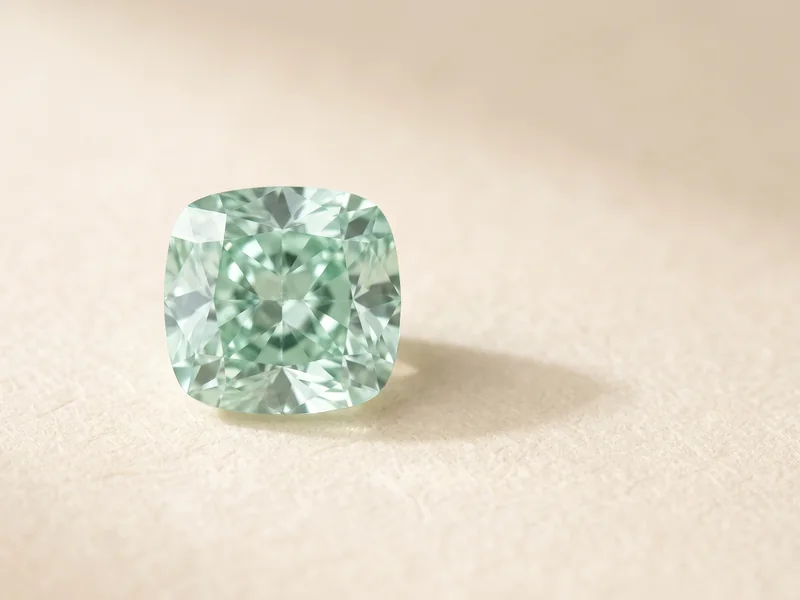 Fancy Colour DiamondsGreen Diamonds
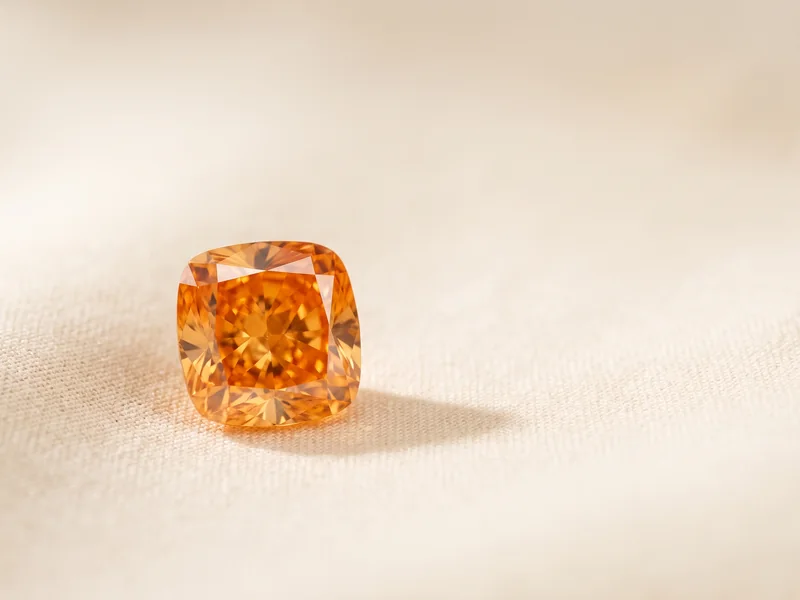 Fancy Colour DiamondsOrange Diamonds
Explore more
More guides on this topic
Education