
- Education
- Fancy Colour Diamonds
- Treated Colour Diamonds: HPHT, Irradiation and What Reports Disclose
Fancy Colour Diamonds
Treated Colour Diamonds: HPHT, Irradiation and What Reports Disclose
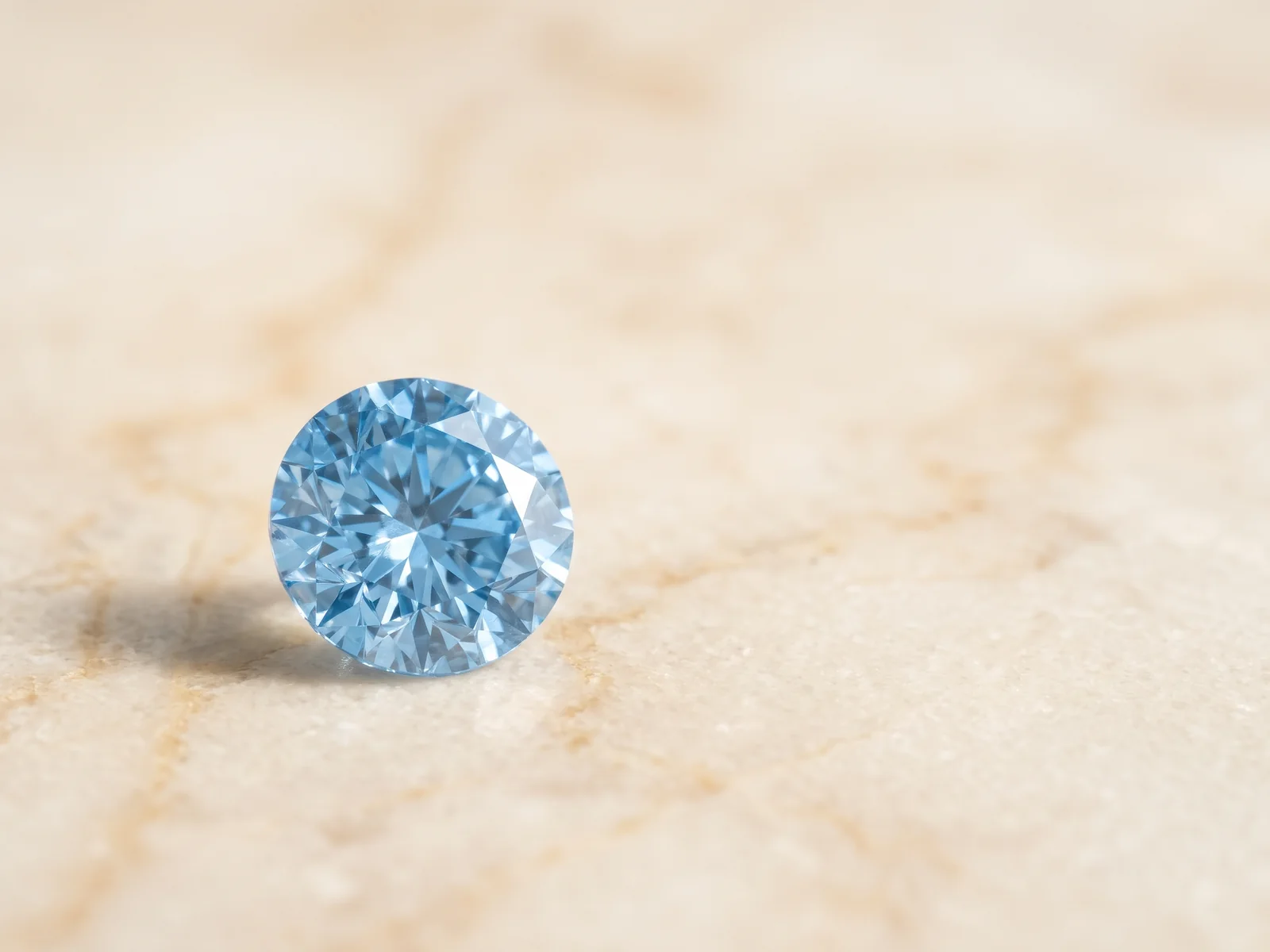
Many of the blue, green, yellow and pink diamonds sold today owe their colour to a laboratory process rather than to nature. Here is how treated colour diamonds are made, how labs identify them, and what that means for price, care and resale.
 Reviewed by Raj Sood, Graduate Gemologist (GIA), AJP (GIA)Master jeweller and Graduate Gemologist (GIA) · reviewed 4 November 2026
Quick answer
Treated colour diamonds are natural (or lab-grown) diamonds whose colour has been changed after mining or growth, mainly by HPHT (high pressure, high temperature) or irradiation followed by heating. The colour is usually permanent and the stone is still real diamond, but it must be disclosed, costs far less than natural colour and needs care during repairs.
What are treated colour diamonds?
A treated colour diamond is a diamond whose body colour has been deliberately changed by a human process after it formed. Most start as natural, mined diamonds with a tint the market does not want, usually brown or a pale yellowish 'cape' colour, and leave the treatment as a saturated yellow, blue, green, pink, orange or even red. If coloured diamonds are new to you, our introduction to fancy colour diamonds covers the full range of natural colours first.
Treatment does not turn a diamond into something else. The stone is still pure carbon in diamond's crystal structure: 10 on the Mohs hardness scale, a refractive index of about 2.42 and the same density as any other diamond. What changes is a tiny number of atomic-scale defects called colour centres. These are spots in the crystal, such as a missing carbon atom or a nitrogen atom sitting next to a gap, that absorb certain wavelengths of light. Remove some wavelengths from white light and the eye sees colour.
Every coloured diamond falls into one of three origins, and a proper grading report states which one:
- Natural colour: a mined diamond whose colour formed in the earth with no human change. The rarest and most expensive.
- Treated colour: a mined diamond whose colour was changed by HPHT, irradiation, annealing (controlled heating) or a combination.
- Lab-grown: a diamond grown in a laboratory. Its colour may come from the growth itself, for example boron for blue, or from treatment after growth, which is how most lab-grown pinks are made.
Treatment is not limited to fancy colours. HPHT is also used to remove brown from near-colourless stones, so it can affect a diamond graded on the D-to-Z colour grading scale just as much as a vivid blue. Any unfamiliar term on this page is also defined in our glossary of jewellery terms.
What causes colour in a diamond, natural or treated?
Treatments work by creating, rearranging or destroying the same colour centres that nature produces. That is why a treated stone can look so close to a natural one, and why only a laboratory can reliably tell them apart. The table matches each colour with its natural cause and the usual treatment route.
| Colour | Natural cause | How treatment produces it |
|---|---|---|
| Yellow | Nitrogen atoms in the crystal (clusters in 'cape' stones, single atoms in canary yellows) | HPHT on brown stones, or irradiation followed by annealing |
| Blue | Boron atoms (Type IIb diamonds) | Irradiation creating 'GR1' vacancy centres; lab-grown blues have boron added during growth |
| Green | Natural radiation exposure over millions of years, often only skin-deep | Electron or neutron irradiation |
| Pink to red | Plastic deformation (distortion) of the crystal, as in Argyle pinks | Irradiation plus annealing to form nitrogen-vacancy (NV) centres, often after HPHT |
| Brown | Plastic deformation and vacancy clusters | HPHT can remove it or turn it yellow-green |
| Orange | Nitrogen-related centres | Irradiation plus annealing |
| Black | Dense dark inclusions such as graphite | Heavy irradiation (a very dark green) or heating that blackens internal fractures |
A treated stone is graded for hue (the colour itself), tone (lightness or darkness) and saturation (strength) on the same scale as a natural one, with intensity names running from Faint, Very Light and Light through Fancy Light, Fancy, Fancy Intense and Fancy Vivid, plus Fancy Deep and Fancy Dark for darker stones. The difference is that its report records the colour origin as treated. Our guide to how labs grade hue, tone and saturation explains each step.
Related guideHow Fancy Colour Diamonds Are GradedHow does HPHT treatment change diamond colour?
HPHT stands for high pressure, high temperature. The diamond is placed in a large press and held at roughly 5–7 gigapascals (about 50,000–70,000 times atmospheric pressure) and 1,800–2,500 °C, for anything from minutes to hours. These conditions are close to those deep in the earth where diamonds form, so the stone stays stable as diamond instead of turning to graphite, while the defects inside it are rearranged.
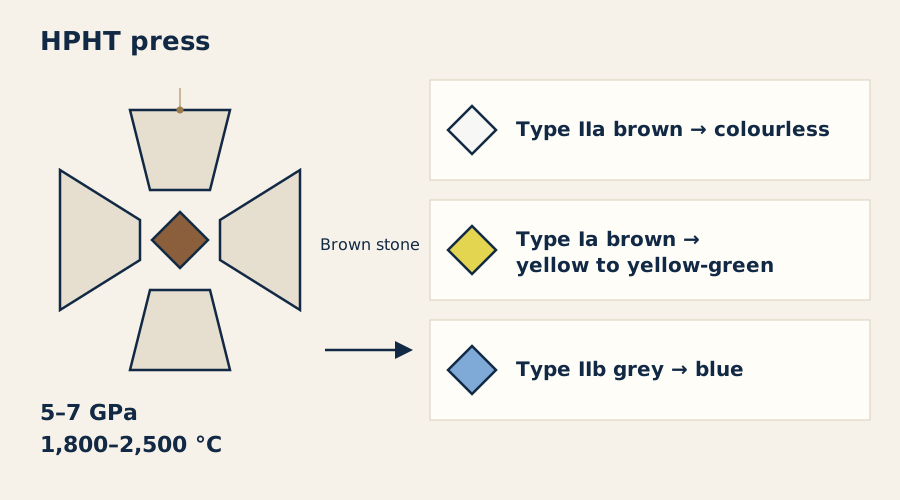
What comes out depends on the diamond's type, a scientific classification based on how much nitrogen or boron the crystal holds:
- Type IIa brown (almost no nitrogen): the brown comes from a distorted crystal lattice, and HPHT 'repairs' it. The result is colourless or near-colourless, occasionally faint pink. Type IIa makes up only around 1–2% of natural diamonds, and commercial HPHT whitening of these stones began around 1999.
- Type Ia brown (nitrogen-rich): HPHT turns them a bright yellow to yellow-green, often with a strong green glow in daylight from H3 colour centres.
- Type IIb grey (boron-bearing): HPHT can lift a dull grey to a clearer blue.
Whitened type IIa stones can grade D colour, E colour, almost indistinguishable from D or F colour in the colourless range, and look exactly like untreated stones of those grades. Our page on HPHT-processed natural diamonds covers that side of the story in detail.
Do not confuse HPHT treatment with HPHT growth. The same type of press is used to grow lab-grown diamonds from scratch, which is a different process with a different end product; see how HPHT and CVD lab growth differ. HPHT treatment colour is permanent: normal wear, cleaning and the heat of a jeweller's torch will not reverse it. Side effects can include etched or frosted surfaces and blackened inclusions, so most stones are repolished afterwards, losing a little weight.
What is an irradiated diamond, and is it safe to wear?
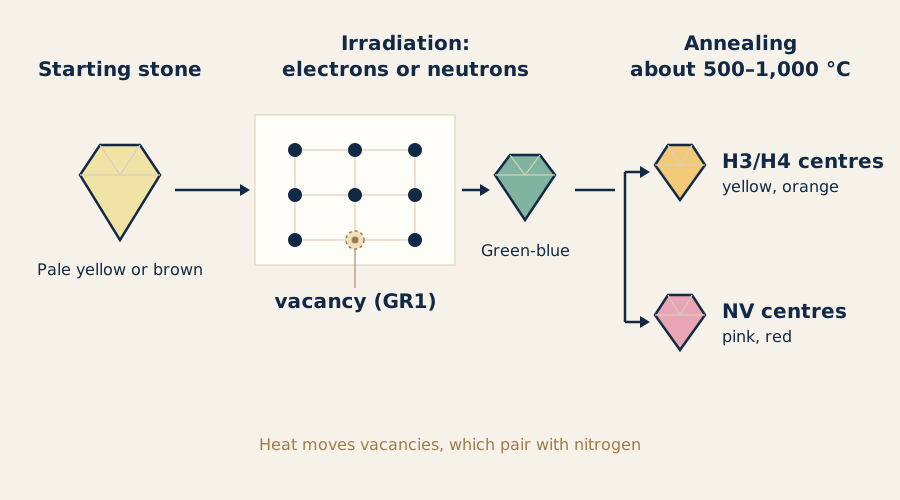
Irradiation means exposing a diamond to a beam of high-energy particles, usually electrons from a linear accelerator or neutrons in a research reactor. The particles knock carbon atoms out of place, leaving vacancies (empty spots in the crystal). A neutral vacancy, known as the GR1 centre, absorbs red light, so a freshly irradiated diamond turns green to blue-green; in a stone with very little nitrogen the colour leans blue.
Most irradiated diamonds are then annealed, heated in a controlled furnace to roughly 500–1,000 °C. The vacancies move through the crystal and pair up with nitrogen atoms, forming new colour centres: H3 and H4 centres give yellow and orange, while nitrogen-vacancy (NV) centres in stones with single nitrogen atoms give pink, red and purple. Many treated pinks and reds go through all three steps: HPHT first, then irradiation, then annealing.
The starting material is usually a low-colour cape diamond or a brown stone that would otherwise sell cheaply. An older method using a cyclotron (a type of particle accelerator) coloured only the surface, and left a tell-tale 'umbrella' of colour around the culet, the tip at the base of the stone.
Is it safe? Modern electron-irradiated diamonds are not radioactive once treatment is finished. Neutron-treated stones can carry brief residual activity, so treaters hold them until it decays to background levels before release. The real exception is a small number of antique diamonds treated with radium in the early 1900s, which remain radioactive. If you inherit an old green diamond of unknown history, have it tested by a lab.
Not sure which one is right?
Send us the stones you are looking at and our gemologist will tell you which to choose and why.
Natural vs treated vs lab-grown colour diamonds: what's the difference?
All three look alike to the eye, and all three are real diamond. What separates them is origin, rarity, price and how the market values them later.
| Natural colour | Treated natural | Lab-grown colour | |
|---|---|---|---|
| Origin | Mined; colour formed in the earth | Mined; colour changed after mining | Grown in a laboratory; colour from growth or post-growth treatment |
| Rarity | About 1 in 10,000 mined diamonds | Plentiful supply | Unlimited supply |
| Typical look | Often softer, can show colour zoning | Saturated and even | Saturated and very even |
| Report states | Colour origin: Natural | Colour origin: Treated | Laboratory-grown, with treatment noted where detected |
| 1 ct Fancy Intense yellow (AUD) | about $8,000–$25,000 | about $2,000–$7,000 | about $800–$3,500 |
| Resale demand | Strongest | Limited | Limited |
The gap widens sharply for rarer colours. A natural Fancy pink or blue of 1 carat can run from tens of thousands of dollars to well into six figures, while a treated or lab-grown stone of similar appearance usually stays within a few thousand. All these figures are broad ranges only; prices move with the market and with exact grades.
Lab-grown blues are a special case: boron is added during growth, so many are untreated, and some colourless HPHT lab-grown stones carry a faint blue from small traces of boron. Our page on the blue tint in some HPHT lab-grown diamonds explains when that shows.
Browse fancy colour diamonds: natural and lab-grown
Are treated pink diamonds the same as Argyle pinks?
No. Australia's Argyle mine in the east Kimberley of Western Australia produced the large majority of the world's natural pink diamonds from the mid-1980s until it closed in November 2020. Argyle pinks owe their colour to plastic deformation: immense pressure deep underground bent the crystal lattice, creating fine pink lines called graining. No treatment is involved. The finest were sold at the annual Argyle Pink Diamonds Tender, each with its own certificate and a laser-inscribed number on the girdle (the thin outer edge).
Argyle also gave the world large quantities of brown diamonds, marketed as champagne and cognac on a C1–C7 scale, from light to dark. These are natural colour too, and many Australian families have one in an older ring. Brown stones like these are exactly the raw material that HPHT and irradiation turn into yellows and pinks, which is why origin matters.
Treated and lab-grown pinks are made to imitate the Argyle look, usually through NV centres rather than deformation. Under a microscope and ultraviolet light the difference often shows: natural Argyle pinks typically show pink graining, while NV-centre pinks often glow a strong orange under UV. With natural Argyle supply finished, the price gap between a genuine Argyle pink and a treated pink is very large, so an Argyle claim should always come with Argyle documentation and an independent report.
How do labs detect treatment, and what does a GIA colour origin report say?
You cannot identify treatment by eye or with a 10× loupe, and most jewellers cannot either. Labs such as GIA use spectroscopy, instruments that measure exactly which wavelengths a diamond absorbs or emits, often with the stone cooled in liquid nitrogen to about −196 °C to sharpen the signals. They look for combinations such as:
- GR1 at 741 nm: vacancies, a strong sign of irradiation when paired with other features.
- The 595 nm line: typical of irradiation followed by annealing.
- H2 at 986 nm and strong H3 at 503 nm: common in HPHT-treated yellow-green stones.
- NV centres at 575 and 637 nm: typical of treated and lab-grown pinks.
- Fluorescence imaging: growth patterns that separate natural, HPHT lab-grown and CVD lab-grown stones.
The same tools separate natural from lab-grown. HPHT lab-grown stones, for example, can contain metal from the growth process; our guide to metallic flux inclusions in HPHT lab-grown stones shows what they look like. Here is how common results appear on a report:
| Stone | What the report shows | What it means |
|---|---|---|
| Natural Argyle pink | Colour origin: Natural; Fancy Intense Pink | No treatment detected |
| Irradiated blue | Colour origin: Treated; girdle inscription stating treatment | Natural diamond, colour man-made |
| HPHT-whitened stone | Colour grade such as E; comment 'HPHT processed'; girdle inscribed 'HPHT PROCESSED' | Natural diamond, brown removed |
| Some natural greens | Colour origin: Undetermined | Lab cannot confirm natural or treated |
| Lab-grown pink | Laboratory-grown; post-growth treatment noted | Lab-grown, colour enhanced after growth |
| Coated or fracture-filled stone | No grade; identification report only | Non-permanent treatment; GIA will not grade it |
Under Australian Consumer Law, leaving out a material fact such as treatment can be misleading, so the treatment should be stated in writing on the receipt as well as on the report. Coatings deserve a special warning: a thin film on the surface can add colour, but it scratches and wears off, which is why the major labs refuse to grade coated stones.
Are treated colour diamonds worth it?
Treated colour diamonds are worth it if you want a strong colour at a sensible price and plan to keep and wear the stone. They are not a good fit if rarity, provenance or resale matter to you, because the trade pays far less for treated stones than for natural colour, and many dealers will not buy them back.
- For: vivid, even colour; permanent in normal wear; real diamond hardness; far less than natural colour.
- Against: low resale demand; irradiated colour can be sensitive to repair heat; some buyers expect natural colour.
- Know first: the exact treatment, the report, and whether the price reflects treatment rather than natural rarity.
If what you really want is a little warmth rather than a strong colour, an untreated near-colourless diamond may suit you better. A G colour diamond or H colour stone faces up white, an I colour diamond with a hint of warmth is a popular middle ground, and a J colour diamond set in yellow gold or the faint warmth of a K colour diamond gives a soft vintage glow with no treatment at all.
How do you care for and set treated colour diamonds?
For daily wear, a treated diamond behaves like any other diamond. HPHT colour is stable, and irradiated and annealed colour does not fade in sunlight or with normal cleaning. Warm soapy water and a soft brush are fine; ultrasonic cleaners are generally fine too, except for coated or fracture-filled stones, which should avoid ultrasonic, steam and harsh chemicals.
The real risk is heat. Irradiated and annealed colour centres are created by radiation and altered by relatively modest heat, so high heat, such as a jeweller's torch during resizing, retipping claws or soldering close to the stone, can shift the colour, sometimes permanently.
The metal changes how the colour reads. Yellow gold strengthens yellows and oranges, rose gold flatters pinks, and white gold or platinum suits blues, greens and cool tones. Treated black diamonds often contain many fractures, so a bezel (a rim of metal around the edge) or a sturdy claw setting protects them better than fine claws. A halo of white diamonds makes a coloured centre look more saturated by contrast.
How do you buy a treated colour diamond with confidence? Step by step
- Ask for an independent report. GIA, IGI or a similar lab, stating colour origin: natural, treated or laboratory-grown.
- Find out the exact treatment. HPHT, irradiation, annealing or a mix, and make sure it is written on the receipt.
- Check the girdle inscription. Under magnification it should match the report number and any treatment wording.
- Compare like with like. Price a treated stone against other treated or lab-grown stones of the same intensity, not against natural colour.
- Rule out coatings. Avoid any stone the lab would not grade.
- Plan the setting and metal. Choose a metal that suits the colour, and record the treatment for future repairs.
Free consultation
Talk to a gemologist
Compare stones in person or online with Raj Sood, Graduate Gemologist (GIA), AJP (GIA).
Book a consultationShop this shape
FAQ
Common questions
Are treated colour diamonds real diamonds?
Yes. Treatment changes only tiny defects in the crystal, so the stone keeps diamond's hardness of 10 on the Mohs scale and its refractive index of about 2.42. The report will state that the colour is treated.
Is diamond colour treatment permanent?
HPHT and irradiation-plus-annealing colours are permanent in normal wear and cleaning. Irradiated colour can change under high repair heat, and surface coatings are not permanent at all.
Are irradiated diamonds radioactive?
Modern irradiated diamonds are not radioactive once released for sale. The exception is a few antique diamonds treated with radium in the early 1900s, which should be tested by a lab.
How can I tell if my coloured diamond is treated?
Only a gemmological laboratory can confirm it, using spectroscopy and fluorescence imaging. If your stone has no report, send it to GIA or a similar lab for a colour origin report.
Are treated diamonds worth less than natural colour diamonds?
Yes, much less. A treated stone usually costs a small fraction of a natural fancy colour of similar appearance and has limited resale demand.
Is it legal to sell treated diamonds in Australia?
Yes, provided the treatment is disclosed. Under Australian Consumer Law, hiding a material fact such as treatment can be misleading conduct.

Ask a gemologist
Not sure which diamond to choose?
Raj Sood is a Graduate Gemologist (GIA) and master jeweller. Bring the stones you are considering, or send the reports, and he will tell you honestly which one is better and why.
Keep learning
Related guides
 Natural DiamondsHPHT Natural Diamonds
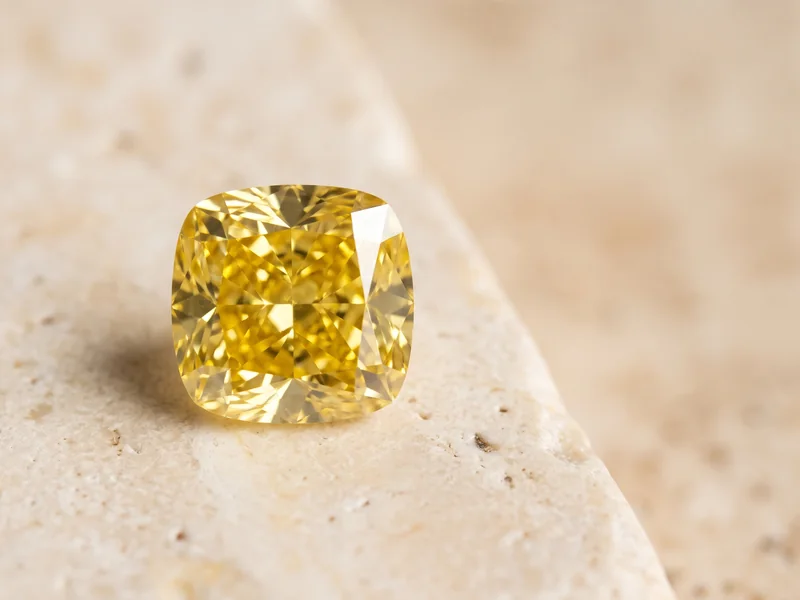 Fancy Colour DiamondsHow Fancy Colour Diamonds Are Graded
 Lab-Grown DiamondsHPHT vs CVD Lab-Grown Diamonds
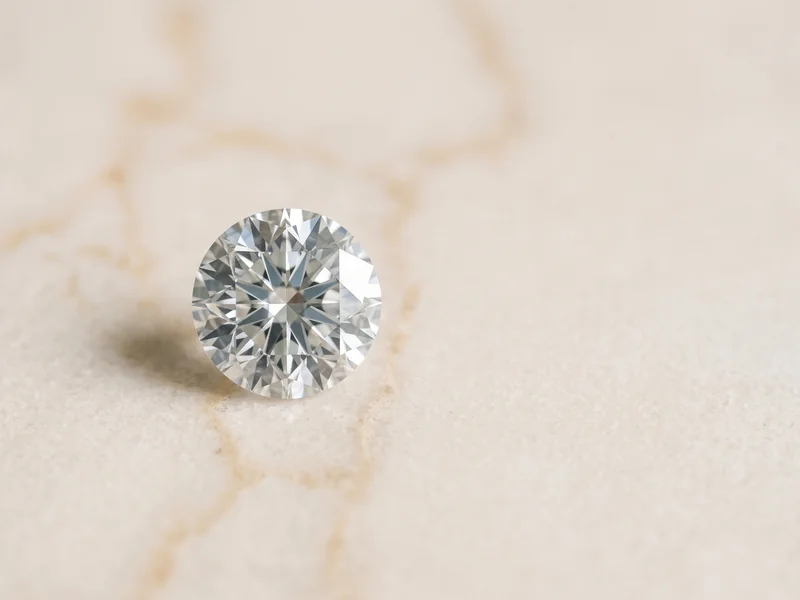 Lab-Grown DiamondsBlue Nuance in HPHT Lab-Grown DiamondsLab-Grown DiamondsMetallic Inclusions in HPHT Lab-Grown Diamonds
 Diamond 4Cs & GradingJ Colour DiamondsDiamond 4Cs & GradingI Colour Diamonds
Explore more
More guides on this topic
Education