
Metals
Silver Tarnish and Patina: Why Silver Darkens and How to Care for It
Silver tarnish worries many people, but it is a normal surface reaction, not a fault. Knowing what tarnish is, how it differs from a deliberate patina and what speeds it up lets you keep silver bright, or dark, exactly as you want it.
 Reviewed by Raj Sood, Graduate Gemologist (GIA), AJP (GIA)Master jeweller and Graduate Gemologist (GIA) · reviewed 4 November 2026
Quick answer
Silver tarnish is a thin dark film of silver sulphide that forms when silver reacts with sulphur compounds in air, skin, food and rubber. It is surface-only and removable. Patina is tarnish left deliberately, or applied with liver of sulphur, to darken recesses and highlight detail. Slow tarnish by wearing silver, storing it airtight and keeping it dry.
What is silver tarnish?
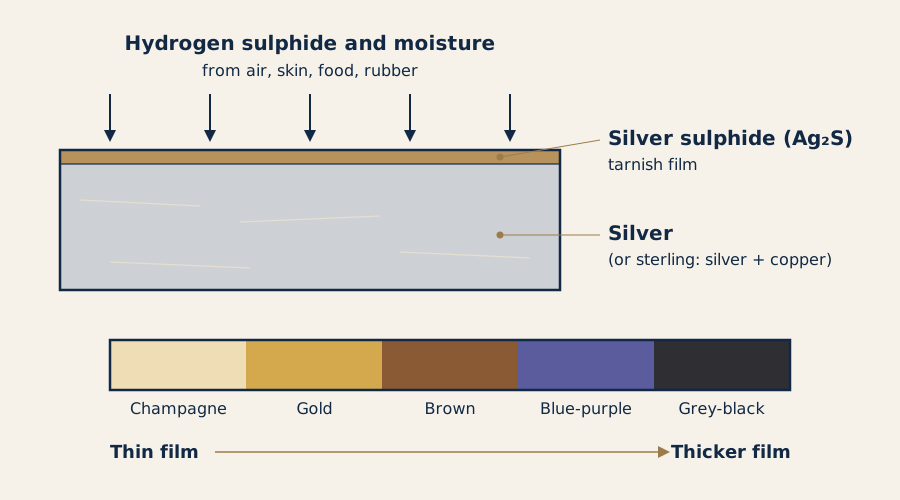
Tarnish is a thin layer of corrosion on the surface of silver. In almost every case it is silver sulphide (Ag2S), formed when silver reacts with sulphur compounds such as hydrogen sulphide in the air. The simplified reaction is 4Ag + 2H2S + O2 → 2Ag2S + 2H2O. Silver barely reacts with oxygen alone at room temperature, so the common name "oxidised silver" is a little misleading: the dark colour is a sulphide, not an oxide.
Tarnish builds in stages you can see. A very thin film looks pale champagne, then golden, then brown, then blue-purple and finally grey-black. Those early colours are an interference effect, the same thing that colours a soap bubble: light bounces off both the top of the film and the silver underneath, and the two reflections mix. Even when silver looks black, the film is extremely thin, far less than a thousandth of a millimetre, which is why tarnish can be removed without taking away much metal.
Most jewellery silver is not pure. Sterling silver is 92.5% silver and 7.5% other metal, usually copper, which makes it hard enough to wear. Copper reacts more readily than silver, so the alloy can tarnish a little faster than pure silver, especially in humid conditions. Our guide to how sterling silver is made, stamped and worn covers the alloy in detail, and any new word on this page is explained in the GemTrove jewellery glossary.
Tarnish is cosmetic. It does not weaken a chain or ring, it is not a sign that the silver is fake and it does not mean the piece is poor quality. In fact, darkening over time is one of the simplest everyday clues that a piece is silver rather than stainless steel, although plated finishes (covered below) can hide it.
What causes silver tarnish to form faster?
Silver will tarnish slowly in any normal home, because traces of sulphur compounds are always in the air. A few conditions speed it up a great deal. Moisture is the big one: water on the surface helps the sulphur compounds react, so silver kept in a steamy bathroom darkens much faster than silver kept in a dry wardrobe.
| Factor | Why it speeds up tarnish | What to do |
|---|---|---|
| Humidity | Moisture on the surface helps sulphur react with silver | Store away from bathrooms and laundries; add silica gel |
| Sulphur-rich foods | Eggs, onions, garlic, mustard and mayonnaise release sulphur compounds | Take rings off when cooking |
| Rubber and latex | Rubber bands, gloves and some underlays give off sulphur | Never store silver with rubber bands |
| Wool, felt and some cardboard | Some fibres, glues and papers release sulphur over time | Use acid-free tissue or anti-tarnish cloth |
| Skin, sweat and cosmetics | Salt, acids, perfume, lotion and sunscreen sit on the metal | Put silver on last and take it off first |
| Chlorine and salt water | Pools, spas, bleach and sea air attack the surface | Remove before swimming or cleaning |
| Polluted air and some gas appliances | Traces of hydrogen sulphide and sulphur dioxide | Keep silver sealed when not worn |
Body chemistry varies too. Some people find a silver ring darkens within days, while the same ring on someone else stays bright for months. Sweat, skin oils and the products you use all play a part, and there is no single reason that applies to everyone.
Where you live makes a difference. Silver kept near the coast, or in humid parts of Queensland and the Northern Territory, usually tarnishes faster than the same piece in a drier inland home, simply because there is more moisture and, near the sea, more salt in the air. In Melbourne, the usual culprits are bathrooms, kitchens and storage boxes lined with felt.
What is the difference between tarnish and patina?
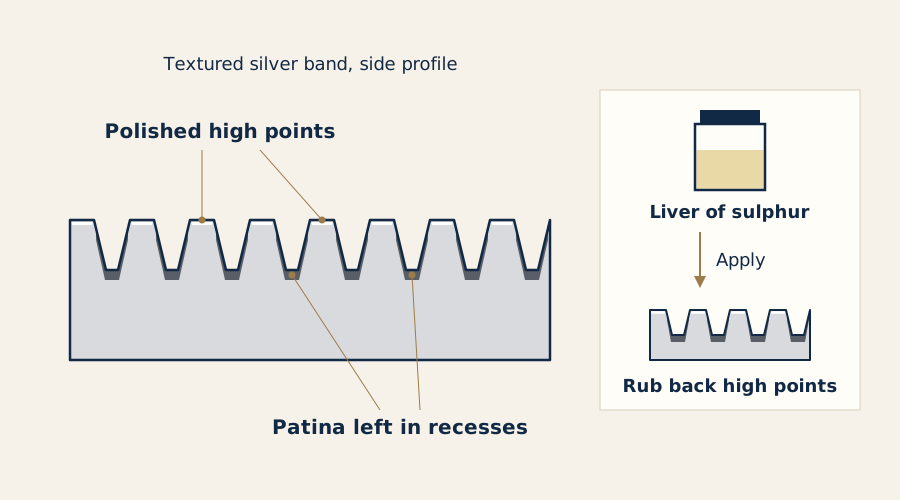
Chemically, there is often no difference: a silver patina is usually silver sulphide too. The difference is intent and control. Tarnish forms by accident and unevenly across the whole surface. A patina is either applied on purpose or left to develop in a way that suits the design, usually dark in the recesses and polished bright on the high points, so engraving, texture and filigree stand out.
| Tarnish | Intentional patina | Firescale | Dirt and grime | |
|---|---|---|---|---|
| What it is | Silver sulphide film | Silver sulphide, applied and controlled | Copper oxide just under the surface of sterling | Skin oil, soap and dust |
| How it forms | Slowly, from air, skin and storage | Liver of sulphur or similar, then selective polishing | Heating sterling during soldering or casting | Everyday wear |
| Colour | Champagne to black, uneven | Grey to black, even, often in recesses | Purplish-grey patches or cloudiness | Dull grey or brown, often behind stones |
| Removed by | Cloth, foil bath or dip | Same methods, so clean with care | Abrasion, polishing or plating, not a cloth | Warm soapy water and a soft brush |
The traditional way to apply a patina is liver of sulphur, a mixture of potassium sulphides sold as lumps, liquid or gel. Dissolved in warm water, it darkens silver within seconds to minutes. A jeweller then rubs back the raised areas with fine abrasive or a polishing cloth, leaving the dark colour only where it adds depth. This is what is meant by oxidised silver jewellery or an "antique finish".
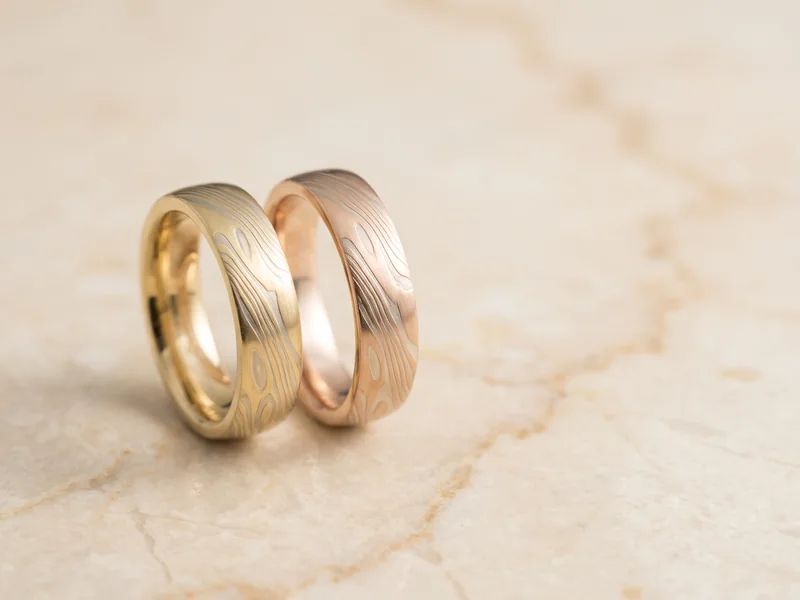
Other metals form patinas too. Copper turns brown and then green (verdigris), and brass and bronze darken with age. In mokume gane rings, with their layered wood-grain pattern, a patina is often applied deliberately so the contrast between the layers of silver, copper or gold shows up clearly.
Does sterling silver tarnish more than other silver?
All alloys that contain silver will tarnish to some degree, but the rate and the look vary. The stamp on the piece tells you what you have.
| Type | Silver content | How it tarnishes | Notes |
|---|---|---|---|
| Fine silver (999) | 99.9% | Slowly, fairly evenly | Very soft; used for some chains, beads and bullion |
| Britannia silver (958) | 95.8% | Slightly slower than sterling | Softer than sterling; mainly British |
| Sterling silver (925) | 92.5% | Normal rate; copper can speed it in humid air | The standard for jewellery |
| Argentium silver (935 or 960) | 93.5% or 96% | Much more slowly | Some copper replaced with germanium, which forms a protective surface layer |
| 800 silver | 80% | Faster, can look warmer | Common in older European pieces |
| Rhodium-plated sterling | 92.5% under plating | Not until the plating wears through | Plating can be redone |
| Silver-plated (EPNS) | Thin silver layer only | Tarnishes; heavy polishing can wear through | Base metal underneath |
| Nickel silver ("German silver") | None | Darkens and can turn skin green | A copper, nickel and zinc alloy |
In Australia, a 925 or "sterling" stamp is how makers state silver content, and our guide to reading Australian hallmarks and metal stamps explains what each mark means and what it does and does not tell you about the maker.
Much modern silver jewellery is plated with rhodium, a bright white platinum-group metal, to stop tarnish and add scratch resistance. It works well until the plating wears through on the high-contact areas, such as the underside of a ring, where the silver starts to show and darken again. Our page on how rhodium plating works and when to redo it covers how long it lasts on different pieces.
Not sure which one is right?
Send us the stones you are looking at and our gemologist will tell you which to choose and why.
Why does silver turn your skin black or green?
A grey or black mark on the finger under a silver ring is usually not an allergy. It is most often fine particles of metal and tarnish rubbed off by friction, sometimes helped along by cosmetics. Products containing zinc oxide or titanium dioxide, such as some sunscreens and make-up, are mildly abrasive and can lift tiny particles from soft metal. Sweat with a high salt content also speeds up tarnish right where the ring touches skin.
A green mark usually comes from copper. Sterling contains copper, so it can happen with sterling in hot, sweaty conditions, but it is much more common with nickel silver, brass and cheap plated pieces where the base metal is showing through.
- Black or grey mark: abrasion of metal and tarnish, often with cosmetics; clean the ring and the skin, and keep lotions off the metal.
- Green mark: copper reacting with sweat; keep the piece dry and clean, or choose a plated or copper-free metal.
- Itch, redness or rash: possibly a reaction to nickel or another metal in the alloy, not to tarnish itself.
Sterling silver does not normally contain nickel, but some lower-grade alloys and plated items do. If you react to jewellery, our guide to metal allergies and nickel-free jewellery options explains which metals are least likely to cause problems.
How do you stop silver from tarnishing?
You cannot stop silver tarnish completely, but you can slow it to the point where a quick wipe every few weeks is all a piece needs. The habits that make the most difference are simple:
- Wear it. Regular wear and contact with clothing gently polish the surface, so worn pieces often stay brighter than stored ones.
- Store it airtight. A small zip-lock bag with the air pressed out cuts off the sulphur compounds and moisture that cause tarnish.
- Use anti-tarnish storage for silver. Anti-tarnish strips or cloths contain chemicals that absorb sulphur compounds before they reach the metal; replace strips as the maker suggests.
- Keep it dry. Add a sachet of silica gel to boxes and avoid storing silver in bathrooms.
- Last on, first off. Put silver on after perfume, hairspray, lotion and sunscreen, and take it off before swimming, cleaning, gardening or the gym.
- Store pieces separately. Silver is soft, so pieces rubbing together scratch; separate bags also stop one tarnished piece affecting others.
- Avoid rubber and felt. Do not wrap silver in rubber bands, newspaper or ordinary felt-lined boxes unless the lining is sold as anti-tarnish.
Some silver is given a clear lacquer or a protective coating to keep it bright. That suits display pieces and silverware that are rarely handled, but on rings and bracelets lacquer tends to wear unevenly and has to be stripped before the piece can be repaired or polished.
How do you remove silver tarnish safely?
The right method depends on how dark the tarnish is, whether the piece has a deliberate patina and what stones are set in it. Start with the gentlest method that works.
| Method | Good for | Watch out for |
|---|---|---|
| Silver polishing cloth | Light to moderate tarnish on plain pieces | Removes patina from the areas you rub; use a separate cloth for gold |
| Warm water, mild soap and a soft brush | Grime and skin oil, before any polishing | Dry thoroughly; does not remove tarnish on its own |
| Aluminium foil and bicarb soda bath | Heavy tarnish on plain silver and chains | Removes patina everywhere; leaves a slightly matte finish; not for porous stones |
| Commercial silver dip | Dark tarnish in fine chains and detail | Acidic; can strip patina, dull the surface if left too long and damage pearls, opal, turquoise and coral |
| Silver polish cream | Larger plain surfaces and silverware | Mildly abrasive; rinse residue out of detail |
| Professional clean and polish | Valuable, set or antique pieces | Polishing removes a tiny amount of metal each time |
The foil bath works by a chemical reaction rather than by rubbing. Silver in contact with aluminium foil in hot water and bicarb soda (sodium bicarbonate) has its sulphide converted back to silver metal, with the sulphur moving to the aluminium. That is why the water smells of rotten egg. Because no metal is scrubbed away, it is gentle on silver, but it cannot tell tarnish from intentional patina.
Avoid toothpaste, baking-soda pastes and scouring products. They are abrasive enough to leave fine scratches, especially on high-polish sterling, and they clog detail. Never put pearls, opals, turquoise, coral, amber or any glued or porous stone into a dip or foil bath. Our step-by-step guide to cleaning silver jewellery at home, piece by piece covers chains, stone-set pieces and oxidised designs separately.
Related guideHow to Clean Silver JewelleryShould you keep the patina on old or oxidised silver?
Often, yes. On antique and vintage silver, the soft grey tone that builds in the recesses over decades is part of the piece's character, and collectors usually prefer it left alone. Aggressive cleaning can make an old piece look flat, and every machine polish removes a little metal, softening hallmarks and fine engraving over time.
On modern oxidised designs, the dark finish is intentional. Dipping or foil-bathing them will strip the contrast the designer created. Clean these with warm soapy water and a soft brush, and only rub the raised areas lightly with a cloth. If the patina does wear off, a jeweller can usually clean the piece back and apply it again with liver of sulphur.
The same idea is used in two-tone and mixed-metal ring designs, where contrast between metals or finishes is part of the look. A blackened silver inlay against polished gold, for example, relies on that darkness staying put, so it needs gentler care than plain polished metal.
Is silver a good metal for rings you wear every day?
Silver is a good choice for fashion rings, stacking bands and pieces you swap often. It is affordable, takes detail well and is easy to resize and repair. For an engagement ring or a ring worn every day for decades, it has two drawbacks: tarnish, which needs regular care, and softness. Pure silver is only 2.5–3 on the Mohs scale and sterling is not much harder, so bands scuff, thin over the years and claws can wear enough to loosen a stone.
| Metal | Tarnishes? | Wear over time | Typical use |
|---|---|---|---|
| Sterling silver | Yes | Scratches and thins fairly quickly | Fashion and stacking rings |
| Yellow gold (9–18 carat) | Barely (lower carat can dull slightly) | Moderate | Engagement rings and bands |
| White gold, rhodium-plated | No, but plating wears | Moderate; replating every so often | Engagement rings and bands |
| Platinum | No | Scratches move metal rather than remove it | Engagement rings, settings for valuable stones |
| Palladium | No | Moderate | Lighter white-metal bands |
| Titanium, tungsten, cobalt | No | Tungsten very scratch resistant; titanium and cobalt harder-wearing than silver; limited resizing | Men's and alternative bands |
If you love the white look of silver but want something you will not need to polish, our guide to choosing a metal for an engagement ring compares the options side by side. Many people end up deciding between white gold and platinum; read about how platinum wears and why it suits settings and the difference between 950 and 900 platinum alloys. For a lighter white metal there are palladium rings, and for modern bands that do not tarnish at all, see lightweight titanium rings, scratch-resistant tungsten and cobalt, tantalum and carbon fibre bands.
On cost, silver is far cheaper than gold or platinum by weight. Over recent decades gold has generally cost somewhere between about 50 and 100 times as much as silver per gram, so a plain sterling band might cost roughly AUD $80–$400 depending on width, weight and finish, while a similar band in 18 carat gold or platinum runs into the low thousands. Prices move with the metal markets, so treat these as rough ranges only.
Browse ring settings by metal
How to care for silver jewellery: step by step
- Check what you have. Look for a 925, 958, 999 or other stamp, and note whether the piece is plated, oxidised on purpose or set with porous stones.
- Wash first. Use warm water, a drop of mild dishwashing liquid and a soft brush to remove skin oil and grime, then rinse and dry completely.
- Polish lightly. Rub plain silver with a silver polishing cloth in straight strokes; leave the recesses of oxidised designs alone.
- Treat heavy tarnish gently. For plain silver with no stones, use a foil and bicarb soda bath or a short dip, then rinse well and dry.
- Store it sealed. Put each piece in its own zip-lock bag with an anti-tarnish strip and keep it out of the bathroom.
- Wear it often and take it off for the hard jobs. Swimming, cleaning, cooking and sunscreen are the moments that tarnish and scratch silver most.
- Have valuable pieces checked. Once a year, have a jeweller look at claws, clasps and plating on silver you wear daily.
Free consultation
Talk to a gemologist
Compare stones in person or online with Raj Sood, Graduate Gemologist (GIA), AJP (GIA).
Book a consultationShop this shape
FAQ
Common questions
Does real silver tarnish?
Yes. Real silver, including sterling, reacts with sulphur in the air and on skin and slowly darkens. Pieces that barely seem to tarnish are usually rhodium-plated, lacquered, Argentium silver or not silver at all.
Is tarnished silver ruined?
No. Tarnish is a very thin surface film and can be removed with a cloth, a foil bath or a professional clean. It does not weaken the metal.
What is the difference between tarnish and patina?
Both are usually silver sulphide. Tarnish forms by accident and unevenly, while a patina is applied or kept deliberately, often dark in the recesses with polished high points to show detail.
Can you shower with sterling silver?
It will not dissolve, but soap residue, hot water and moisture speed up tarnish and dull the surface, and chlorinated or spa water is harsher still. It is better to take silver off before showering and swimming.
How do I stop my silver ring turning my finger black?
Keep the ring clean, let lotions and sunscreen dry fully before putting it on, and wipe it with a polishing cloth regularly. If the mark persists, a rhodium-plated ring or a different metal may suit you better.
Will a silver dip damage gemstones?
It can. Dips are acidic and can damage pearls, opal, turquoise, coral, amber and stones that are glued or treated, so clean those pieces with mild soapy water or ask a jeweller.

Ask a gemologist
Not sure which diamond to choose?
Raj Sood is a Graduate Gemologist (GIA) and master jeweller. Bring the stones you are considering, or send the reports, and he will tell you honestly which one is better and why.
Keep learning
Related guides
 MetalsSterling Silver Jewellery
 Care, Repairs & RemodellingHow to Clean Silver JewelleryMetalsRhodium Plating and Replating
 MetalsMetal Allergies and Nickel-Free OptionsMetalsBest Metal for Engagement RingsMetalsCobalt, Tantalum and Carbon Fibre Rings
 MetalsMokume Gane Rings Melbourne
 MetalsPlatinum 950 vs 900
Explore more
More guides on this topic
Education