
Metals
Rhodium Plating and Replating: How It Works, How Long It Lasts and What It Costs
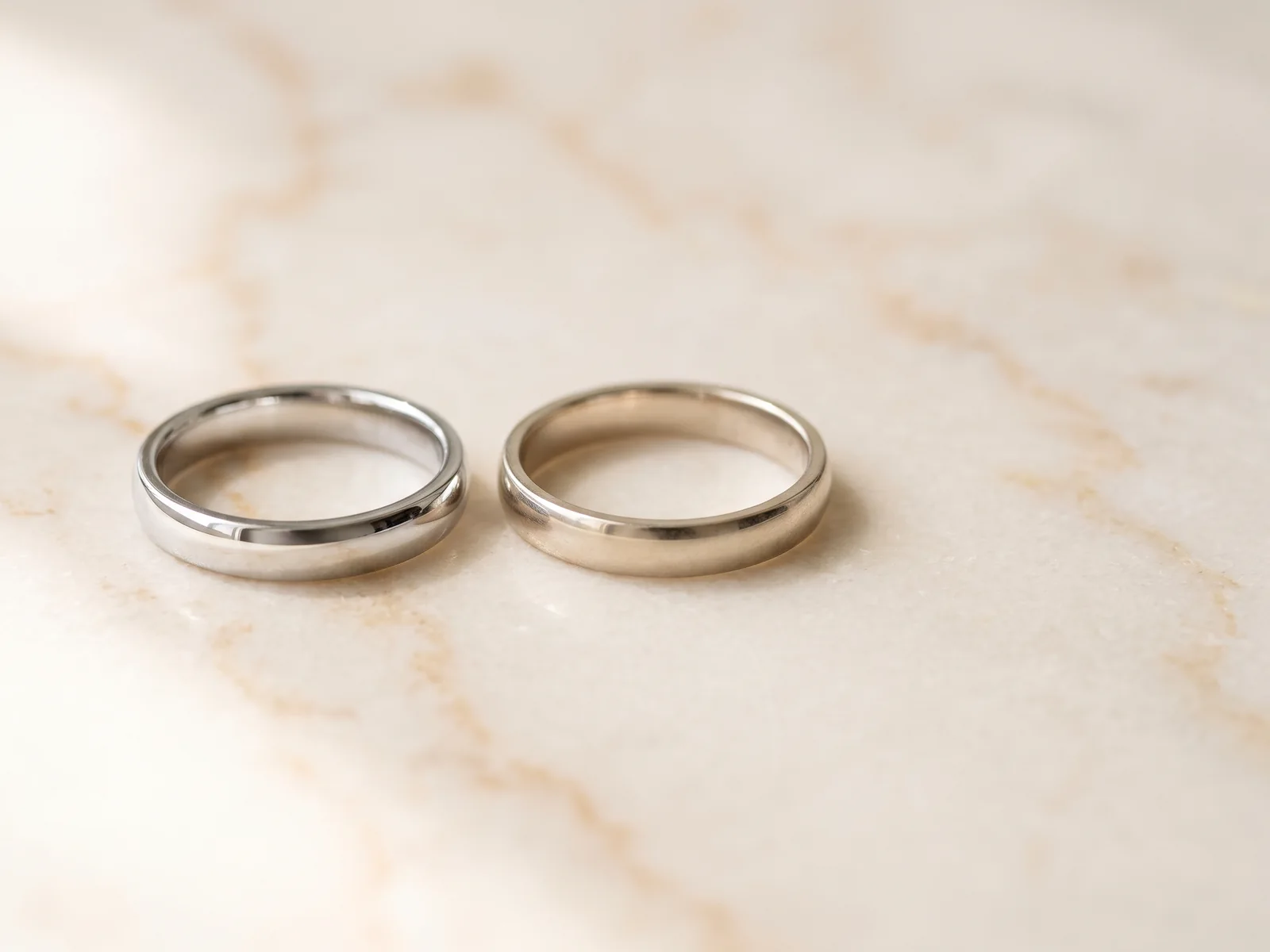
If your white gold ring has started to look faintly yellow, it is almost always the rhodium plating wearing away, not the gold changing. Here is what rhodium plating is, how long it lasts, what it costs and when replating makes sense.
 Reviewed by Raj Sood, Graduate Gemologist (GIA), AJP (GIA)Master jeweller and Graduate Gemologist (GIA) · reviewed 4 November 2026
Quick answer
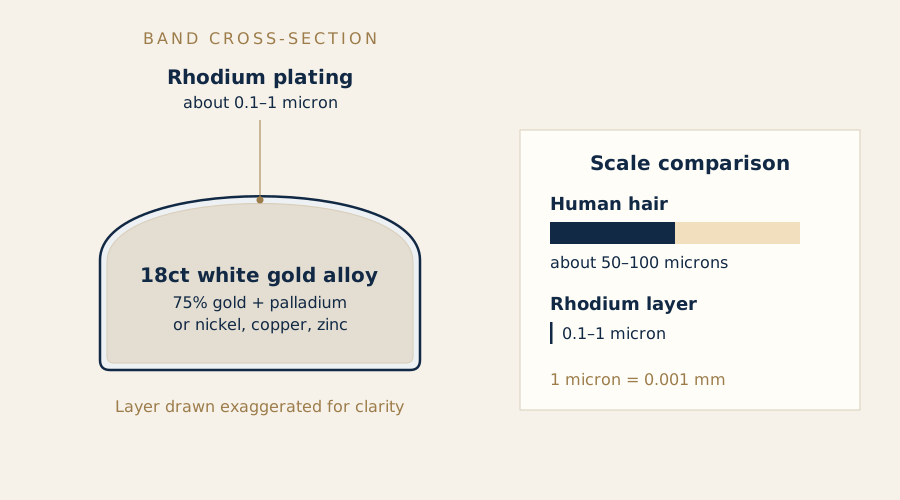
Rhodium plating is a thin electroplated layer of rhodium, a bright white platinum-group metal, usually about 0.1–1 micron thick. It gives white gold its mirror-white colour and adds a hard, scratch-resistant skin. On a ring worn daily it typically wears through in 6–18 months, and replating costs roughly AUD $60–$150.
What is rhodium plating?
Rhodium is a rare, silvery-white metal from the platinum group (the six related metals that include platinum and palladium). It is very reflective, does not tarnish in normal wear and is harder than gold, platinum or silver. It is also far too brittle and expensive to make a whole ring from, so jewellers use it as a coating.
Rhodium plating is the process of putting that coating on. The piece is dipped into a warm rhodium solution and a small electric current is passed through it. This is called electroplating: the current pulls rhodium out of the solution and bonds it to the metal surface in an even, mirror-bright layer. The layer is measured in microns (thousandths of a millimetre), and for jewellery it is usually between about 0.1 and 1 micron thick. For comparison, a human hair is roughly 50–100 microns across.
Plating is a surface finish, not a metal type. A rhodium-plated ring is still 9ct, 14ct or 18ct gold, or sterling silver, underneath. That is why choosing a metal is a separate decision from choosing a finish, and our guide to choosing a metal for an engagement ring covers the bigger picture. Any unfamiliar term here is also explained in the GemTrove jewellery glossary.
Why is white gold rhodium plated?
Pure gold is yellow. To make white gold, the gold is alloyed (melted together) with whitening metals, usually palladium or nickel, plus smaller amounts of silver, copper or zinc. These metals bleach the yellow a long way, but not all the way. Unplated white gold has a soft warm or greyish tint, depending on the recipe. Rhodium plating covers that tint with a bright, cool white.
| Alloy | Gold content | Typical whitening metals | Unplated colour |
|---|---|---|---|
| 9ct white gold (375) | 37.5% | Silver, copper, palladium or nickel | Light warm grey to faintly yellow |
| 14ct white gold (585) | 58.5% | Nickel or palladium, with copper and zinc | Warm white, slight yellow tint |
| 18ct nickel white gold (750) | 75% | Nickel, copper, zinc | Fairly white, faint yellow tint |
| 18ct palladium white gold (750) | 75% | Palladium, silver, copper | Soft steel grey, slightly darker |
The higher the gold content, the harder it is to make the alloy fully white, which is why 18ct white gold is nearly always plated. Palladium white gold is naturally greyer and avoids nickel; nickel white gold is whiter but can cause skin reactions. Our page on the reasons white gold needs a rhodium finish goes deeper into alloy colour.
Plating does not change the gold content or the stamp inside the band. In Australia, marks such as 375, 585, 750 or 18ct are the maker's declaration of fineness, and the plating sits on top of an alloy that still meets that standard. Our guide to reading Australian metal stamps and hallmarks explains what each mark means. If you want a white metal that never needs plating, platinum jewellery is naturally white all the way through.
How thick and how hard is rhodium plating?
Electroplated rhodium is hard: roughly 800–1,000 on the Vickers hardness scale (a lab test that presses a diamond point into the metal). That is several times harder than the gold, platinum or silver underneath. It resists fine scratches well, which is why a freshly plated ring looks so crisp.
| Metal | Approx. Vickers hardness | Approx. Mohs | Colour | Needs plating? |
|---|---|---|---|---|
| Electroplated rhodium | 800–1,000 HV | about 6 | Bright cool white | It is the plating |
| 18ct white gold | 150–250 HV | 2.5–3 | Warm white or grey | Usually yes |
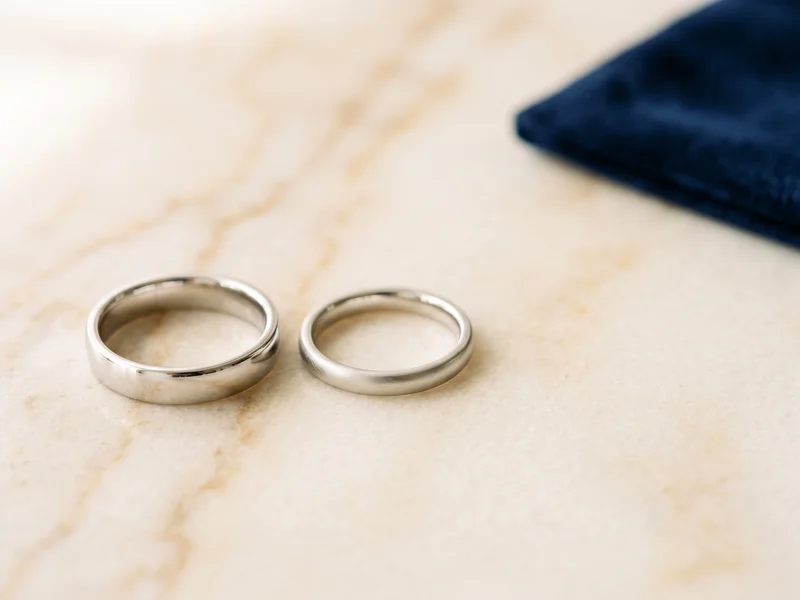
| Platinum 950 | 80–150 HV (annealed) | 4–4.5 | Natural grey-white | No |
| Palladium 950 | 100–140 HV | 4.5–5 | Natural grey-white | No |
| Sterling silver 925 | 75–120 HV | 2.5–3 | Bright white, tarnishes | Optional, to stop tarnish |
The catch is thickness. At well under a micron, the plating is too thin to stop dents, deep scratches or the slow rubbing of a ring against a desk, a steering wheel or the band beside it. Hardness keeps it bright day to day; friction wears it through over months. A thicker deposit lasts longer, but rhodium is costly, and very thick layers can become stressed and prone to cracking, so most workshops plate in the 0.25–1 micron range for rings.
The base metal matters for how a ring wears once the rhodium is gone. Platinum and palladium are white underneath, so wear simply looks a little greyer; see how platinum 950 and 900 differ in hardness and our guide to naturally white palladium rings if you would rather skip plating altogether.
How long does rhodium plating last?
There is no single answer, because it depends on where the piece is worn and how much contact it gets. Rings take the most wear, especially on the palm side of the band. Pendants and earrings barely touch anything and can keep their plating for years.
| Piece | Typical wear | Approximate plating life |
|---|---|---|
| Engagement ring | Worn daily | 6–18 months |
| Wedding band | Worn daily, rubs against the engagement ring | 6–12 months |
| Dress ring | Worn occasionally | 1–3 years |
| Pendant | Light contact | 2–5 years |
| Stud earrings | Very little contact | 3–5 years or more |
| Rhodium-plated sterling ring | Worn daily | Under a year |
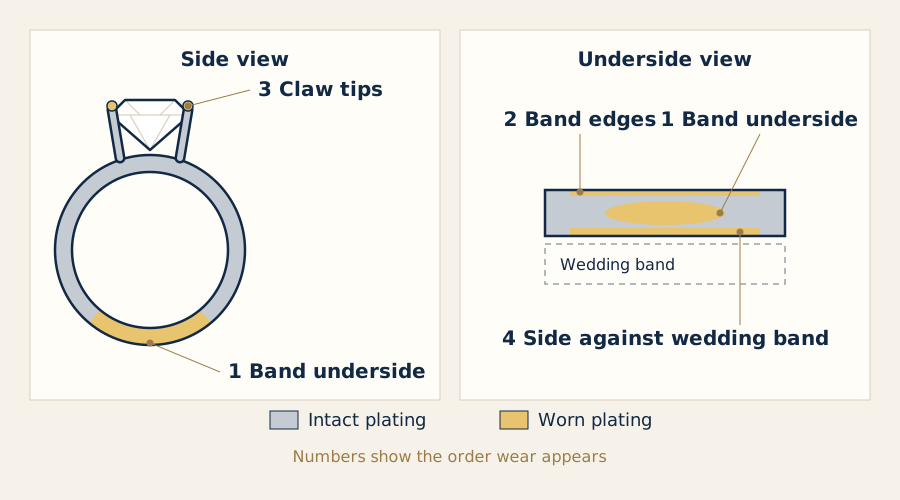
The first sign is a faint yellow or grey patch on the underside of the band, then along the edges. Claw tips go next. People with hard-wearing jobs, or who garden, train at the gym or wash their hands often, usually see it sooner. Skin chemistry also plays a part: some people's sweat and hand creams wear plating faster.
Related guideRhodium Replating ScheduleNot sure which one is right?
Send us the stones you are looking at and our gemologist will tell you which to choose and why.
Is rhodium plating safe if you have a nickel allergy?
Rhodium itself rarely causes reactions; allergy to rhodium is reported but uncommon. The problem is what lies underneath. Nickel allergy is one of the most common contact allergies, and nickel white gold contains it. While the plating is intact it acts as a barrier. Once it wears through, usually on the palm side of the band, skin touches the nickel alloy and a red, itchy rash can appear under the ring.
If you know you react to nickel, the safer path is to choose a base metal without it, so plating wear never matters:
- Palladium white gold: 18ct gold alloyed with palladium instead of nickel. Still usually plated for colour, but the metal underneath is nickel-free.
- Platinum or palladium: naturally white, no plating needed.
- Yellow or rose gold: generally nickel-free in quality alloys, though always check.
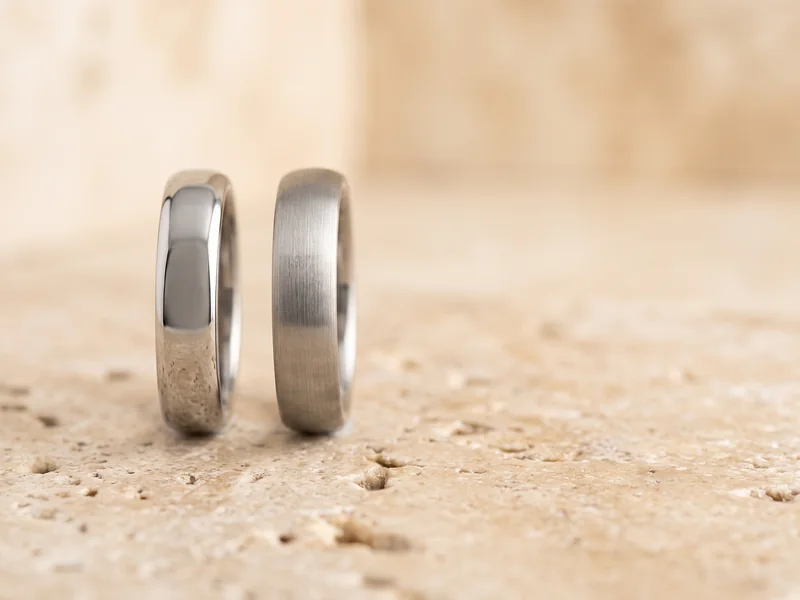
- Titanium and other modern metals: lightweight titanium rings are a common choice for sensitive skin, and cobalt, tantalum and carbon fibre bands are further options.
Keeping up with replating does help someone with a mild sensitivity who already owns a nickel white gold ring, but it is a short-term fix. Our guide to nickel-free metals for sensitive skin compares the alloys in more detail.
Which metals can be rhodium plated?
Almost any precious metal can take rhodium, and plating is used for more than white gold.
- Rhodium plated sterling silver: stops silver from tarnishing (darkening as it reacts with sulphur in the air). It works well on earrings and pendants; on rings it wears quickly and can be awkward to touch up. See our guides to caring for sterling silver jewellery and why silver tarnishes and develops patina.
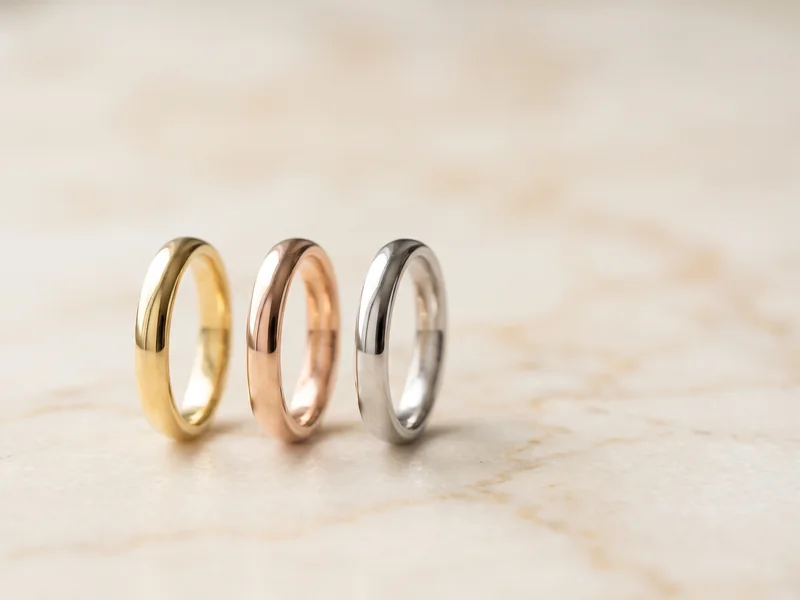
- Yellow and rose gold: a ring can be fully plated to look white, or selectively plated, where parts are masked with a lacquer so only the claws or one band turns white. This is how many two-tone and mixed-metal rings are finished.
- Black rhodium plating: a dark grey to black finish made by adding other metals to the plating bath. It suits vintage-style and men's pieces, but it is often softer and shows wear sooner than white rhodium.
- Platinum: does not need it, though some people ask for a plate after polishing for extra brightness. It wears back to platinum's natural grey-white.
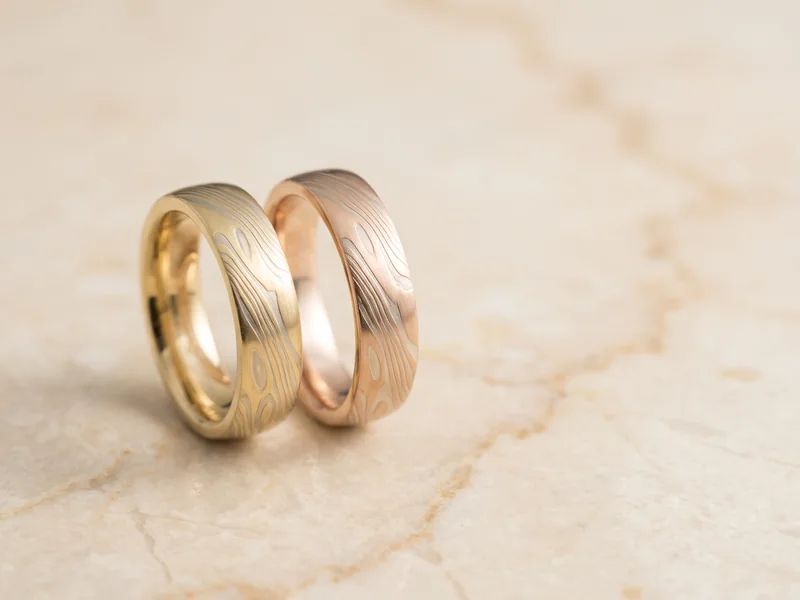
Some metals and finishes are not plated. Patterned mokume gane layered-metal rings rely on the colour contrast between metals, which plating would hide. Titanium, tungsten carbide and cobalt do not tarnish and generally cannot be plated with standard jewellery baths; read about scratch-resistant tungsten carbide jewellery for how those rings are finished instead.
Rhodium plated white gold vs platinum: which suits you?
This is the question most people are really asking when they look up rhodium plating. Both look bright white on day one. The difference is how they age and what upkeep they need.
| 18ct white gold (rhodium plated) | Palladium white gold (plated) | Platinum 950 | Palladium 950 | |
|---|---|---|---|---|
| Colour when new | Bright cool white | Bright cool white | Grey-white | Grey-white |
| As it wears | Warm or yellow patches appear | Greyer patches appear | Soft satin patina | Soft satin patina |
| Upkeep | Replate every 6–18 months on rings | Replate every 6–18 months on rings | Polish occasionally | Polish occasionally |
| Nickel | Often contains nickel | Nickel-free | Nickel-free | Nickel-free |
| Weight | Medium | Medium | Heaviest | Lightest |
| Upfront cost | Lower than platinum | Higher than nickel white gold | Highest | Moderate |
White gold usually costs less upfront, but replating is an ongoing cost over the life of the ring. Platinum costs more at the start and only needs occasional polishing. Neither is right for everyone; many people choose white gold for its colour and accept the replating, while others prefer platinum's lower maintenance.
How much does rhodium plating cost in Australia?
Replating prices depend on the size and complexity of the piece, whether any stones have to be protected from the bath, and the price of rhodium itself, which moves a lot and has at times cost several times more than gold. As a broad guide:
| Job | Approximate price range (AUD) |
|---|---|
| Simple solitaire or plain band, polish and replate | about $60–$150 |
| Halo, pavé or detailed ring | about $100–$200 |
| Pair of earrings or a pendant | about $50–$120 |
| Selective plating (two-tone areas) | about $80–$180 |
| Pen plating around sensitive stones | Quoted per piece |
These are ranges only, and claw re-tipping, resizing or other repairs are priced separately. Ask for a quote that lists the polish and plating together, and check whether stones such as pearls, opals, emeralds or treated gems need extra care, because some can be damaged by the cleaning and plating solutions.
Browse ring settings by metal
How can you make rhodium plating last longer?
You cannot stop rhodium from wearing, but you can slow it down noticeably:
- Take rings off for hard work: gardening, the gym, moving furniture and anything abrasive wear plating fastest.
- Avoid harsh chemicals: chlorine in pools and spas, bleach and household cleaners can attack the alloy under worn plating.
- Clean gently: warm water, a drop of mild detergent and a soft brush. Skip toothpaste and abrasive polishing cloths, which scour the surface.
- Store pieces apart: a separate pouch or compartment stops diamonds scratching neighbouring plated jewellery.
- Consider your band pairing: a wedding band rubbing against an engagement ring wears both; a contoured band or a slightly different metal can reduce contact.
How is a ring replated? Step by step
A proper replate is more than a dip. Here is what happens in a jewellery workshop, so you know what to ask for:
- Inspect the ring. Check claws, settings and stones under magnification and note any repairs needed before plating.
- Repair first. Re-tip worn claws, tighten loose stones or resize, because heat and soldering would damage fresh plating.
- Polish. Remove scratches and the remains of the old rhodium. This takes off a very small amount of metal each time.
- Clean thoroughly. Ultrasonic cleaning, steam and an electrocleaning bath remove polishing compound and skin oils; any residue stops the rhodium bonding.
- Activate and rinse. A brief acid dip and rinse in purified water prepares the surface.
- Plate. The ring goes into the warm rhodium bath with a low current for a minute or two, or delicate stones are protected and the rhodium is applied with a pen.
- Rinse, dry and check. The finish is inspected for even colour, and the ring is cleaned once more before collection.
Plan the next visit when you collect it. Our guide to how often to replate white gold sets out sensible intervals for rings, bands, earrings and pendants.
Free consultation
Talk to a gemologist
Compare stones in person or online with Raj Sood, Graduate Gemologist (GIA), AJP (GIA).
Book a consultationShop this shape
FAQ
Common questions
How often should white gold be rhodium plated?
For an engagement ring or wedding band worn daily, roughly every 6–18 months, or whenever you notice yellow or grey patches. Pendants and earrings can go several years between replates.
Does rhodium plating wear off?
Yes. It is only about 0.1–1 micron thick, so friction gradually wears it through, starting on the underside of a ring. The metal underneath is unchanged and the piece can simply be replated.
Is rhodium plating bad for your ring?
No. The plating itself does no harm, but the polish before each replate removes a very small amount of metal, so a ring replated many times over decades may eventually need claws re-tipped or the band built up.
Can you rhodium plate yellow gold?
Yes. Yellow or rose gold can be fully plated to look white, or selectively plated so only some areas, such as the claws, turn white. The colour returns as the plating wears.
Does rhodium plating cause allergies?
Rhodium allergy is uncommon. Reactions usually come from nickel in the white gold underneath once the plating wears through, so nickel-free alloys, platinum or palladium are safer for people with a known nickel allergy.
Is rhodium plated sterling silver worth it?
For earrings and pendants it keeps silver bright and free of tarnish for years. On rings worn daily it wears off quickly, so many people prefer plain sterling and a polishing cloth.

Ask a gemologist
Not sure which diamond to choose?
Raj Sood is a Graduate Gemologist (GIA) and master jeweller. Bring the stones you are considering, or send the reports, and he will tell you honestly which one is better and why.
Keep learning
Related guides
 MetalsWhy White Gold Is Rhodium Plated
 Care, Repairs & RemodellingRhodium Replating Schedule
 MetalsMetal Allergies and Nickel-Free OptionsMetalsBest Metal for Engagement Rings
 MetalsAustralian Hallmarks and Metal StampsMetalsCobalt, Tantalum and Carbon Fibre Rings
 MetalsMokume Gane Rings Melbourne
 MetalsPlatinum 950 vs 900
Explore more
More guides on this topic
Education