
- Education
- Jewellery Types
- Tennis Bracelets Explained: How to Choose a Tennis Bracelet That Fits and Stays On
Jewellery types
Tennis Bracelets Explained: How to Choose a Tennis Bracelet That Fits and Stays On
A tennis bracelet looks simple, but it is dozens of tiny settings and hinges that move every time you do. Here is how to choose the style, carat weight, length, setting and clasp so it sits well and stays on your wrist.
 Reviewed by Raj Sood, Graduate Gemologist (GIA), AJP (GIA)Master jeweller and Graduate Gemologist (GIA) · reviewed 4 November 2026
Quick answer
A tennis bracelet is a flexible line of individually set, evenly matched diamonds or gemstones joined by small hinged links, closed with a box clasp and safety catch. Most are 17–18 cm long and 1–5 carats total. Check the stones are matched, every claw is even, the links bend freely and the clasp has at least one safety latch.
What is a tennis bracelet?
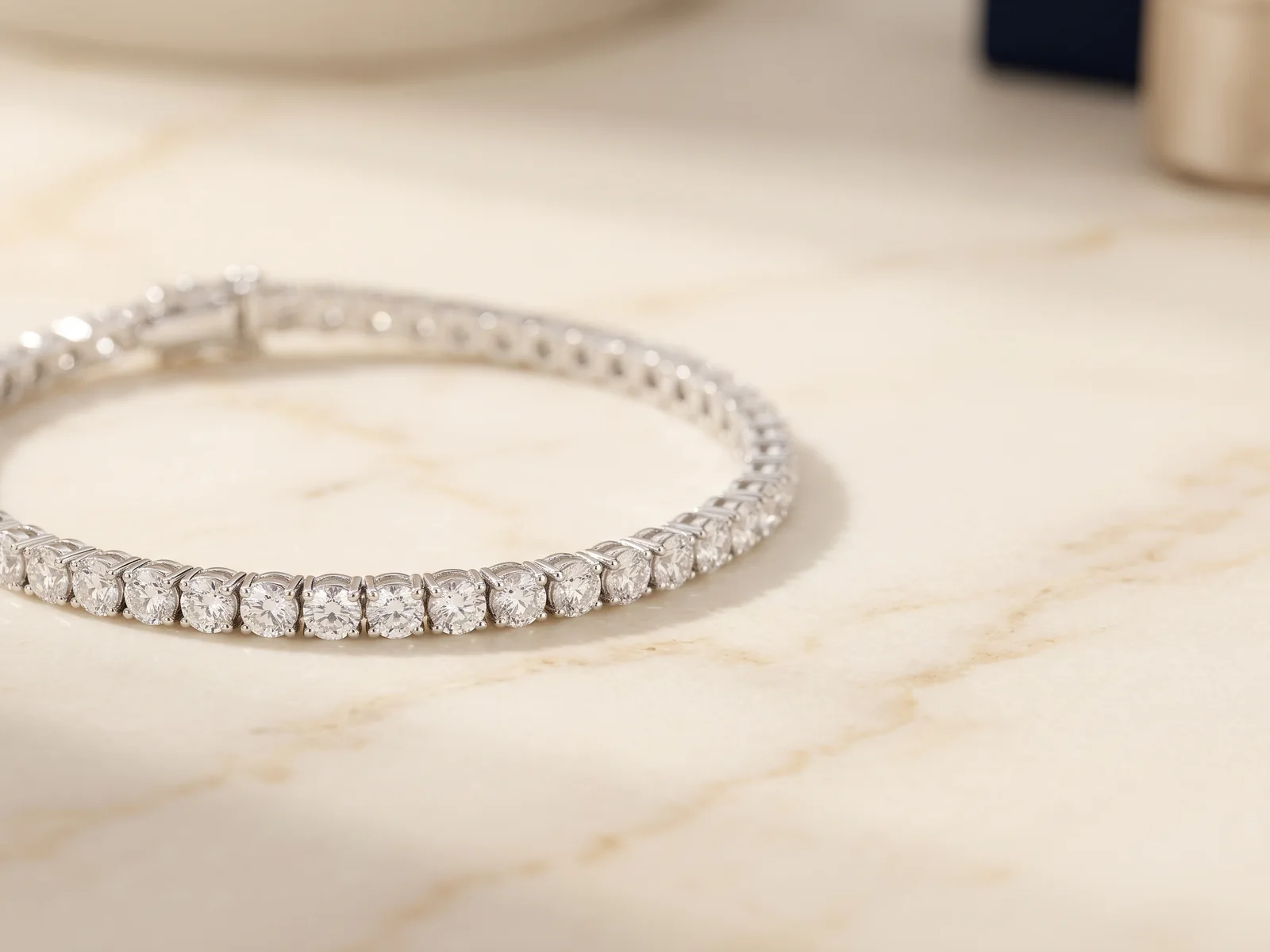
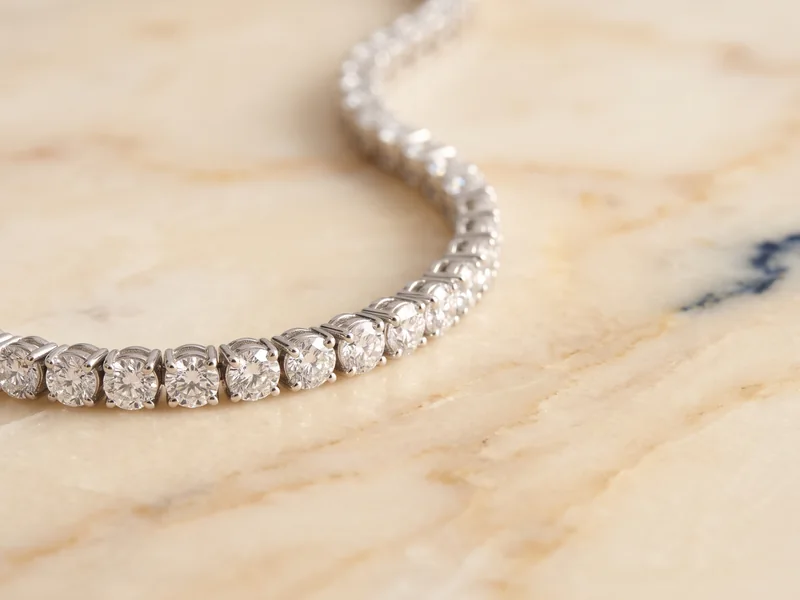
A tennis bracelet is a single, continuous line of stones of the same (or very similar) size, each sitting in its own small setting. The settings are joined by tiny hinges, so the bracelet drapes around the wrist like a chain rather than holding a rigid shape like a bangle. Most are set with round brilliant diamonds, but sapphires, rubies, emeralds and mixed lines of diamonds and coloured stones are common too. It sits alongside rings, pendants and earrings in our guide to the main types of jewellery.
The name comes from a well-known story. Tennis player Chris Evert's diamond line bracelet is said to have broken during a match at the 1987 US Open, and play was paused while she looked for it. Before then these pieces were usually called line or eternity bracelets. The story stuck, and so did the name, along with a lesson every jeweller repeats: the clasp and the links matter as much as the diamonds.
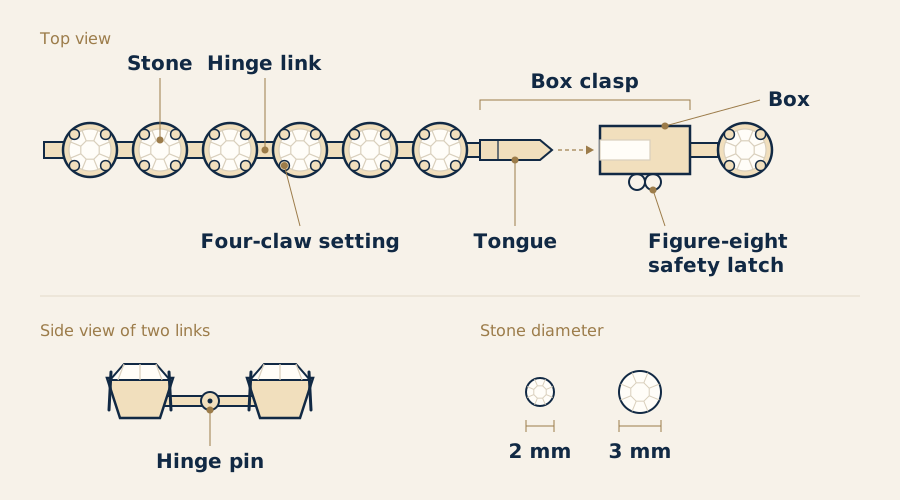
Every tennis bracelet has the same basic parts: the settings (also called cups, baskets or collets) that hold each stone, the links or hinges that join them, and the clasp. The quality of each part decides how the bracelet looks, how comfortably it moves and how likely it is to stay on. Any term below you have not met is also explained in our plain-English jewellery glossary.
Diamond is 10 on the Mohs hardness scale, with a refractive index of about 2.42, which is why a line of small brilliant-cut diamonds throws so much sparkle. But a bracelet takes far more knocks than a necklace or earrings, against desks, door frames and car keys, so toughness of the stones and the strength of the metalwork both count.
What styles of tennis bracelet are there?
The classic is a single row of round diamonds, all the same size, in white gold or platinum. From there, the main variations are:
- Classic round line: identical round brilliants in four-claw settings. The most common and the easiest to match and repair.
- Fancy shapes: princess, emerald, oval or pear cuts set end to end. Ovals and emerald cuts give a longer, more elegant line; princess cuts sit edge to edge with almost no gap.
- Graduated: stones get larger towards the centre, so the bracelet looks fuller on top of the wrist.
- Alternating gemstone: diamonds alternated with sapphires, rubies or emeralds, or a line of coloured stones only.
- Double or triple row: two or three lines set side by side for a wider band.
- Tennis bangle: a rigid or semi-rigid version that holds its round shape and opens on a hinge. Easier to put on one-handed, but less flexible.
- Men's tennis bracelet: usually longer (19–21 cm), with larger stones of about 3–4 mm and heavier links, often in white gold or black-rhodium-plated metal.
For coloured stones, durability matters. Sapphire and ruby (both corundum, 9 on the Mohs scale) suit everyday bracelets well. Emerald is 7.5–8 but usually included and more brittle, so an emerald line is better for occasional wear or in a protective bezel. If you are choosing sapphires or rubies, our page on where sapphires and rubies are mined, from Ceylon to Mozambique explains how origin affects colour and price.
Men's bracelets have become much more common in recent years. If you are looking at one, our overview of men's jewellery styles, from cufflinks to chains shows how a tennis bracelet fits with a watch and other pieces.
Related guideTennis Necklaces ExplainedHow many carats should a diamond tennis bracelet be?
Tennis bracelets are sold by total carat weight (often written tcw or ct tw): the combined weight of every stone. A 3 ct bracelet does not have a 3 ct diamond; it has around 60 diamonds of about 0.05 ct each. What you actually see on the wrist is the size of each stone, so it helps to translate total weight into millimetres.
| Total weight (17.8 cm bracelet) | Approx. size of each round stone | Approx. number of stones | How it reads on the wrist |
|---|---|---|---|
| 1 ct | about 1.5–1.7 mm (0.01–0.02 ct) | about 75–90 | Fine and delicate, an everyday line |
| 2 ct | about 2.0 mm (0.03 ct) | about 65–75 | Clearly visible sparkle, still subtle |
| 3 ct | about 2.3–2.4 mm (0.05 ct) | about 60–65 | The most popular middle ground |
| 5 ct | about 2.9–3.0 mm (0.08–0.10 ct) | about 50–55 | Bold; noticeable from across a room |
| 7 ct | about 3.4 mm (0.15 ct) | about 45–50 | Statement piece |
| 10 ct | about 4.0 mm (0.25 ct) | about 40 | Very bold; often worn on its own |
These are typical figures only. The exact count depends on the stone size and how much metal sits between each stone, usually 0.2–0.4 mm. A bracelet with two-claw settings packs stones closer together, so it carries a little more weight at the same stone size than one with chunkier four-claw baskets.
As a feel for scale, a 3 mm stone is close to the size of a 0.10 ct diamond stud, and a 4 mm stone close to a 0.25 ct stud. Our chart of diamond stud sizes by carat in millimetres is a handy cross-reference if you already know what size studs you like. Many people choose 2–3 ct for a first bracelet worn daily, and 5 ct or more for a piece worn on its own.
What size tennis bracelet do I need?
Length matters more on a tennis bracelet than on most bracelets. Too loose and it slides down over the hand, the clasp spins to the top, and the stones take more knocks. Too tight and the links are under constant tension, which wears the hinges and clasp. Measure your wrist just below the wrist bone with a soft tape or a strip of paper, then add about 1–1.5 cm for a close fit or about 2 cm for a looser drape.
| Wrist measurement | Close fit | Relaxed fit |
|---|---|---|
| 14 cm | 15–15.5 cm | 16 cm |
| 15 cm | 16–16.5 cm | 17 cm |
| 16 cm | 17–17.5 cm | 18 cm |
| 17 cm | 18–18.5 cm | 19 cm |
| 18 cm (common men's) | 19–19.5 cm | 20 cm |
The standard women's length is 7 inches (17.8 cm), with 16.5 cm and 18 cm the next most common. Larger stones and bezel settings take up more room inside the circle, so add a few millimetres extra for bracelets with stones over about 3 mm. Our step-by-step bracelet size guide shows how to measure and how each length sits on the wrist.
A tennis bracelet can usually be shortened by removing links, and because each link holds one stone, every link removed takes off roughly the width of one stone plus its metal, often 2–4 mm. Lengthening means adding matched stones and settings, which is possible but takes more work. If you are buying a matching necklace as well, our necklace lengths from choker to opera covers the same fit questions for the neck.
Not sure which one is right?
Send us the stones you are looking at and our gemologist will tell you which to choose and why.
Four claw vs bezel: which tennis bracelet setting is most secure?
The setting decides how much light reaches each stone, how smooth the bracelet feels and how securely the stones are held. These are the main options:
| Setting | How it holds the stone | Look | Security | Things to know |
|---|---|---|---|---|
| Four-claw (box or basket) | Four claws per stone, in a small square basket | Maximum sparkle; small gaps between stones | High: if one claw lifts, three still hold | The classic choice; claws need checking about once a year |
| Three-claw | Three claws per stone | Slightly more light; a rounder look | Good | Less metal, so less margin if a claw wears |
| Two-claw (shared claw) | Each claw holds two neighbouring stones | Stones sit very close; a continuous line | Fair | One bent claw can loosen two stones |
| Bezel (collet) | A thin rim of metal around each stone | Smooth, modern, catches less on knits | Very high | Shows a little less of each stone and lets in less light |
| Channel | Stones held between two metal rails | Sleek, no claws at all | High | Harder to repair if a rail is bent |
| Illusion | Small stones in a polished metal plate | Makes small stones look larger | Good | Lower cost; less sparkle up close |
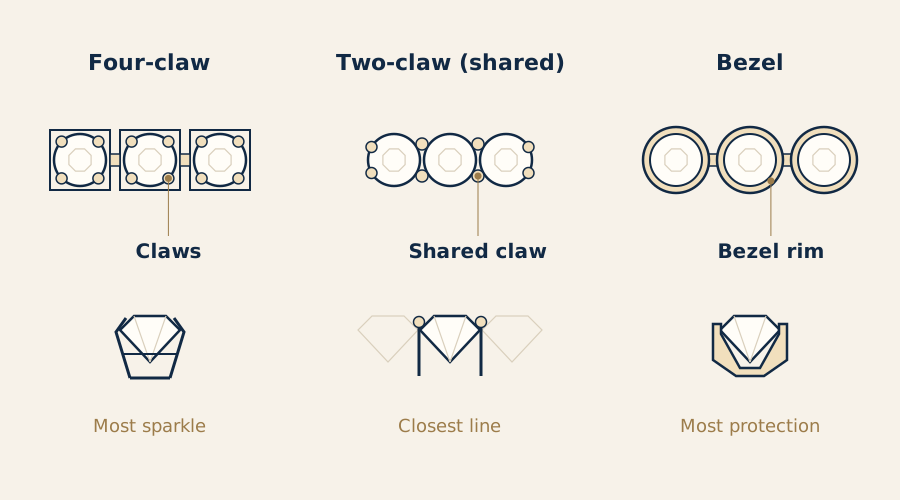
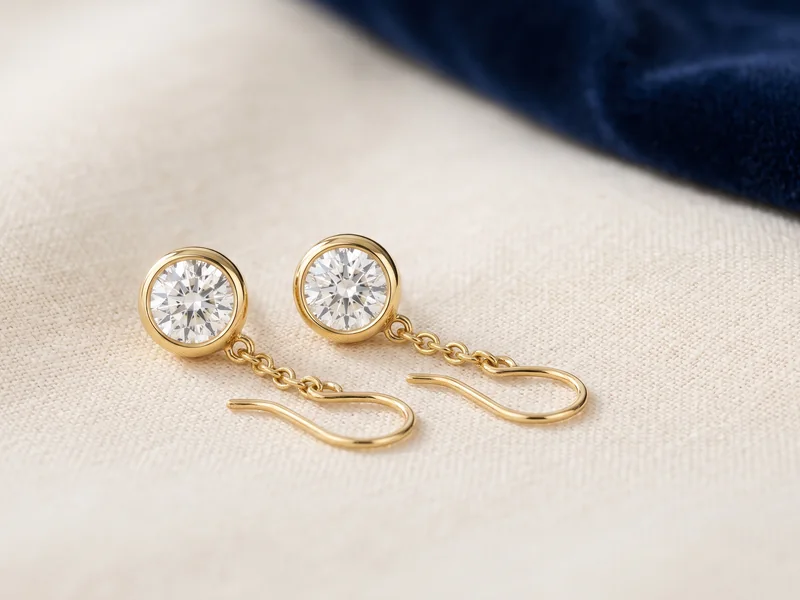
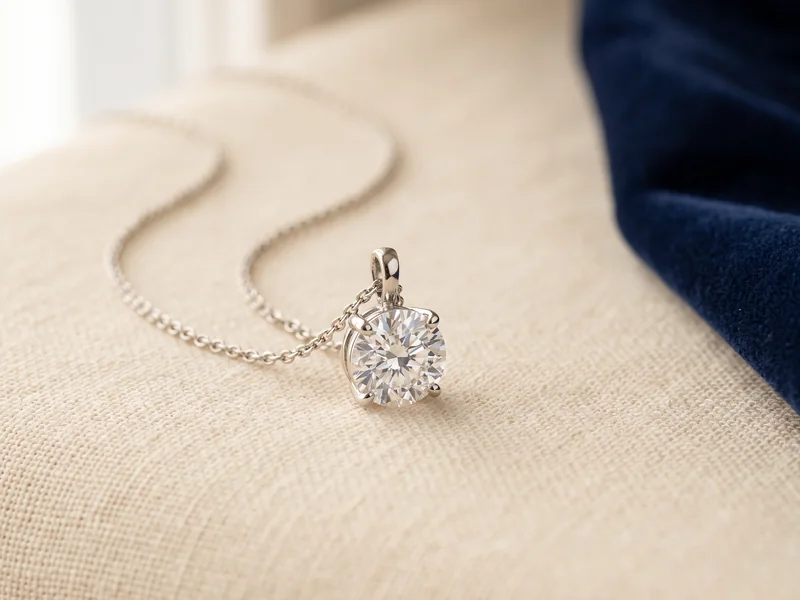
Four-claw is the standard for a reason: each stone is held independently, so if a claw wears or catches, the stone usually stays put until it is repaired. Bezel settings are the most protective and suit people who work with their hands, wear knitwear or want a smoother line. These are the same trade-offs you will see in claw and bezel settings used in drop earrings and in bezel and claw settings for pendants, but a bracelet takes many more knocks, so the security side of the scale counts for more.
How secure is a tennis bracelet clasp?
Most tennis bracelets close with a box clasp: a folded metal tongue that slides into a small box and clicks as it springs open inside. On a good bracelet this is backed up by one or two figure-eight safety latches, small hinged loops on the side that flip over a peg, or by a push-button side catch. If the box clasp opens by accident, the safety latch holds the bracelet on.
- Box clasp alone: fine for light bracelets, but not enough for diamonds you would hate to lose.
- Box clasp plus one figure-eight: the common standard.
- Box clasp plus two figure-eights or a side catch: extra protection for heavier or higher-value bracelets.
- Hidden clasp: the clasp is set with stones so the line looks unbroken. Check the safety catch is still there.
Test the clasp before you buy and every few months after. The tongue should click firmly into the box and not pull out with a gentle tug. If it slides in without resistance, the tongue has flattened; a jeweller can open it out again in a minute, and it is a far cheaper fix than replacing a lost section. The idea is the same as the friction and screw backs explained in our page on how earring backs keep a stud in place. Chains use different fastenings, covered in our guide to necklace chain types and their clasps.
What metal and diamond quality suit a tennis bracelet?
Because the stones are small, a tennis bracelet is much more forgiving on colour and clarity than a solitaire ring. What matters most is that every stone matches its neighbours, since one slightly yellow or cloudy stone in a line of 60 stands out.
- Colour: G–H looks white in white gold or platinum; I–J looks white in yellow or rose gold.
- Clarity: SI1–SI2 is usually eye-clean at 2–3 mm. Look for stones with no visible chips at the girdle (the outer edge).
- Cut: small round diamonds are often called melee (usually under about 0.20 ct). Well-cut melee shows lively sparkle; poorly cut melee looks grey or glassy.
- Matching: look at the whole bracelet in daylight, against white paper, and check every stone shows the same colour and brightness.
For metal, 18 ct white gold (75% gold) is the most common choice. It is usually rhodium plated for a bright white finish, and the plating wears over time, often needing renewal every year or two with daily wear. Platinum (usually 95% pure in Australia) is heavier, naturally white and wears very slowly, which suits claw settings, but it costs more. 9 ct and 14 ct gold are harder and lower in cost, though they hold less gold. Yellow and rose gold give a warmer, vintage look and are kinder to I–J colour diamonds.
How much does a tennis bracelet cost in Australia, natural or lab-grown?
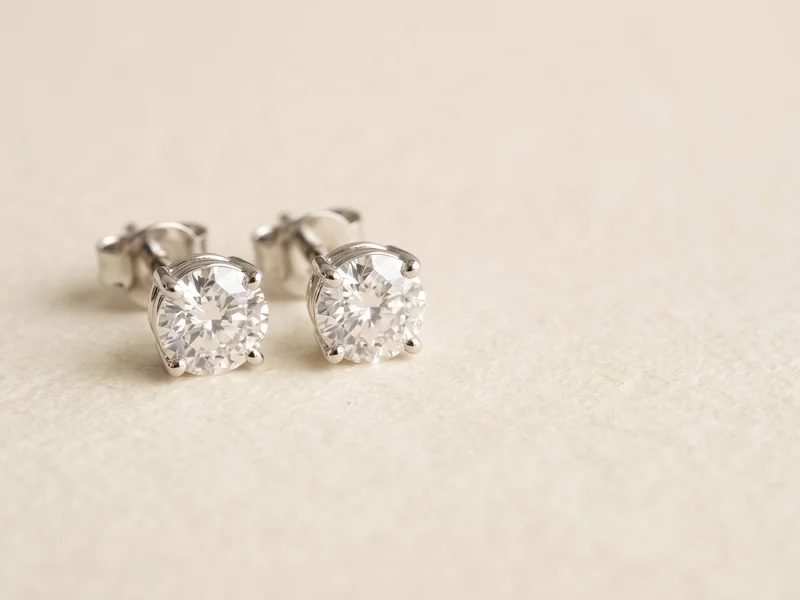
Tennis bracelets are made with both natural and laboratory-grown diamonds. Lab-grown diamonds are real diamond, with the same hardness and sparkle, grown in a laboratory rather than mined. They cost much less than natural diamonds, and because a bracelet needs dozens of matched stones, the difference adds up quickly. Natural diamonds are rarer and priced accordingly. Our page on lab-grown diamonds for tennis bracelets and earrings goes into the pros and cons in detail.
| Total weight, G–H, SI, 18 ct white gold | Lab-grown (approx. AUD) | Natural (approx. AUD) |
|---|---|---|
| 1 ct | about $1,000–$2,500 | about $3,000–$6,000 |
| 3 ct | about $2,000–$5,000 | about $8,000–$16,000 |
| 5 ct | about $3,500–$8,000 | about $15,000–$30,000 |
These are broad ranges only; prices move with the market, the metal price and the exact grades. Several things push the price up or down: total carat weight, stone size (fewer larger stones cost more per carat than many small ones), colour and clarity, the metal and its weight, the setting style, and how carefully the stones are matched. A 4 mm natural line costs far more than the same total weight in 2 mm stones.
Tennis bracelets are a common gift for milestone anniversaries and birthdays. If you are marking a particular year, our list of anniversary jewellery traditions year by year shows which stones and metals go with each one.
Browse jewellery or create your own tennis bracelet
How do you choose and care for a tennis bracelet? Step by step
- Measure your wrist. Add 1–1.5 cm for a close fit or about 2 cm for a relaxed drape.
- Pick a stone size, then the total weight. Decide how large each stone should look (2 mm, 3 mm, 4 mm) and let that guide the carat total.
- Choose natural or lab-grown. Check the paperwork states clearly which it is.
- Choose the setting. Four-claw for maximum sparkle, bezel for the most protection and a smooth feel.
- Check the matching. In daylight, look along the whole line for any stone that looks warmer, duller or smaller.
- Do the flex test. Every link should bend smoothly with no stiff or twisted sections.
- Test the clasp. A firm click, a tongue that resists a gentle tug and at least one figure-eight or side safety catch.
- Plan the upkeep. Have claws, links and the clasp checked about once a year.
For care, take the bracelet off for the gym, gardening, swimming and heavy cleaning, and, despite the name, for tennis. Clean it with warm water, a drop of mild dishwashing liquid and a soft toothbrush, then rinse and pat dry. Diamond lines in good condition usually cope with an ultrasonic cleaner, but emeralds and treated stones should not go in one. Store the bracelet flat in its own pouch so the links do not tangle or scratch other pieces.
A tennis bracelet pairs naturally with matching earrings, from simple studs to diamond hoop and huggie earrings. For men, it often sits beside a watch and a signet ring worn on the little finger.
Free consultation
Talk to a gemologist
Compare stones in person or online with Raj Sood, Graduate Gemologist (GIA), AJP (GIA).
Book a consultationShop this shape
FAQ
Common questions
Can you wear a tennis bracelet every day?
Yes, if it is well made with a secure clasp and a safety catch. Take it off for sport, gardening and heavy work, and have the claws and clasp checked about once a year.
How many carats is a typical tennis bracelet?
Most are between 1 and 5 carats total weight, with 2–3 ct the most popular for everyday wear. That is the combined weight of all the stones, not the size of any single diamond.
Should a tennis bracelet be tight or loose?
It should sit close without pinching: about 1–1.5 cm longer than your wrist for a close fit, or about 2 cm for a looser drape. Too loose and it slides onto the hand and takes more knocks.
Are lab-grown tennis bracelets real diamonds?
Yes. Lab-grown diamonds are real diamond with the same hardness and sparkle as natural, grown in a laboratory rather than mined, and they cost much less. The paperwork should always state that the diamonds are lab-grown.
Can a tennis bracelet be shortened?
Usually, yes. A jeweller removes one or more links, each taking off roughly 2–4 mm depending on stone size, and reattaches the clasp.
Why is it called a tennis bracelet?
The usual story is that Chris Evert's diamond line bracelet broke during a match at the 1987 US Open and play was paused while she found it. Before that, these bracelets were usually called line or eternity bracelets.

Ask a gemologist
Not sure which diamond to choose?
Raj Sood is a Graduate Gemologist (GIA) and master jeweller. Bring the stones you are considering, or send the reports, and he will tell you honestly which one is better and why.
Keep learning
Related guides
 Jewellery TypesBracelet Size Guide
 Lab-Grown DiamondsLab-Grown Diamonds for Earrings and Tennis Bracelets
 Jewellery TypesTennis Necklaces ExplainedJewellery TypesJewellery Types Guide
 Jewellery TypesDrop Earring Settings
 Jewellery TypesPendant and Solitaire Necklace Settings
 Jewellery TypesSignet Rings Explained
 Jewellery TypesAnniversary Jewellery Traditions by Year
Explore more
More guides on this topic
Education