
- Education
- Wedding Bands & Eternity
- Custom Wedding Band for an Heirloom Ring: Fit, Metal and Design
Wedding Bands & Eternity
Custom Wedding Band for an Heirloom Ring: Fit, Metal and Design
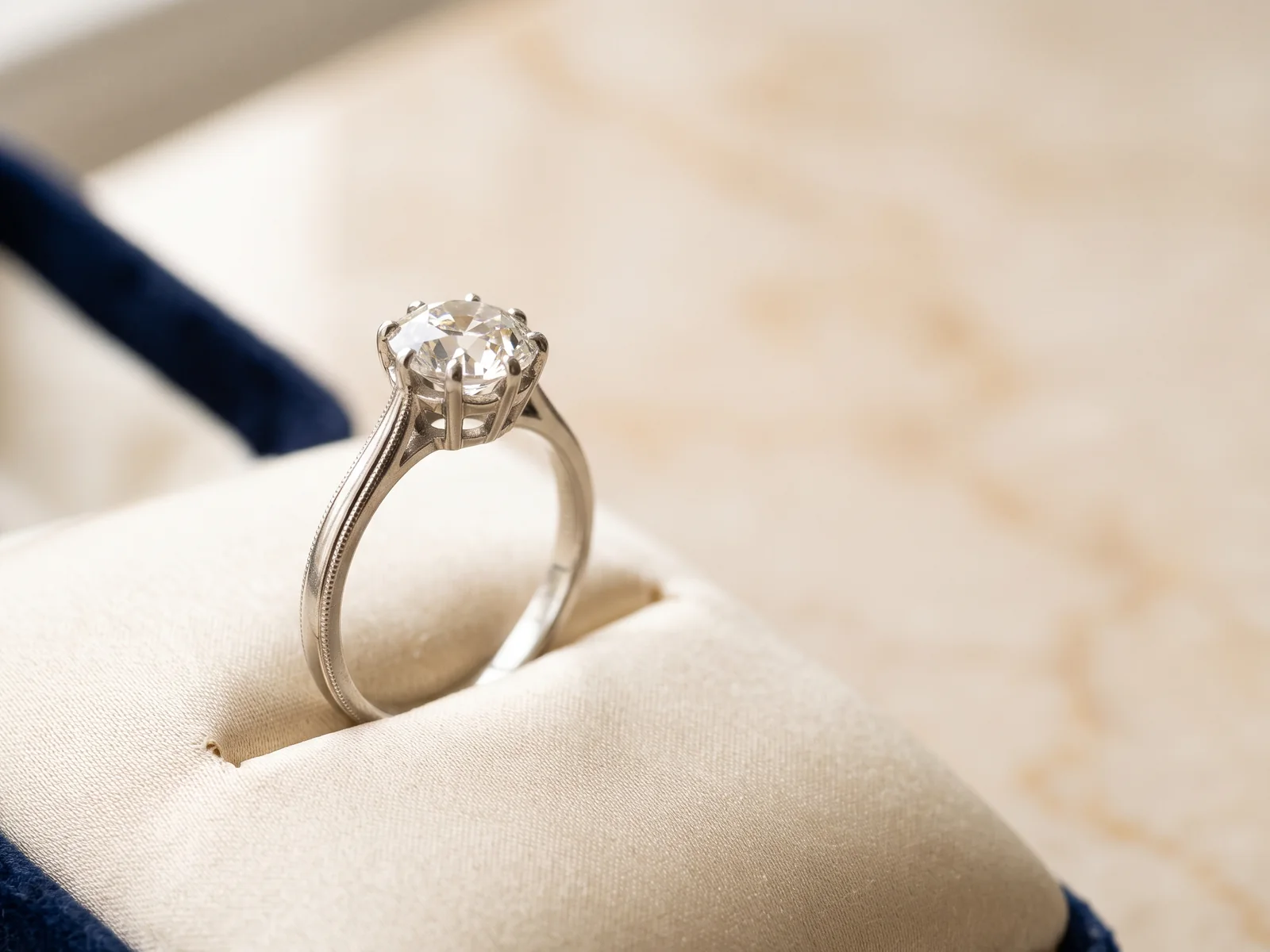
An heirloom engagement ring was made decades ago with no thought for your wedding band. A custom wedding band for an heirloom ring is built around its exact shape, metal and age, so the two sit well together and the old ring stays safe.
 Reviewed by Raj Sood, Graduate Gemologist (GIA), AJP (GIA)Master jeweller and Graduate Gemologist (GIA) · reviewed 4 November 2026
Quick answer
A custom wedding band for an heirloom ring is made to fit that one ring. First have the heirloom checked, resized and repaired. Then choose a flush fit (curved or notched to the setting) or a deliberate gap, match the metal and gold carat, and keep the band about 2–3 mm wide so the old ring stays the focus.
What is a custom wedding band for an heirloom ring?
A custom wedding band is a band made to measure for one particular engagement ring, rather than chosen from a tray of standard sizes. With an heirloom, that matters more than usual. A ring made in the 1920s or the 1960s was designed to be worn alone, or beside a band that has since been lost, so its setting height, shoulder shape and shank (the part of the ring that goes around the finger) rarely line up with a modern straight band. If you are unsure of the wording, here is the difference between a wedding ring and a wedding band.
An heirloom also brings limits a new ring does not. The metal may be worn thin after decades of wear. The claws (the small metal prongs that hold the stone) may be flattened. The alloy may be an older gold or platinum mix that is hard to match exactly. And the stone may be an old cut, such as an Old European cut or old mine cut, which sits lower or higher in its setting than a modern round brilliant (see how Old European cuts differ from modern rounds). A good custom band works with all of that: it either fits snugly or leaves an even gap, it does not rub the old ring thin, and it looks as though the two were always meant to be worn together.
A few bench terms come up throughout this guide: the gallery (the metalwork under the stone), the shoulders (where the shank meets the setting) and the profile (the cross-section shape of a band). Our glossary of jewellery terms explains these and many more.
Is an heirloom engagement ring ready to wear every day?
Before anyone designs a band, the heirloom itself needs a proper check under magnification. The band is made to sit against the ring exactly as it is, so any repair done afterwards (a resize, a new shank section, rebuilt claws) can change the shape and spoil the fit. These are the things a jeweller looks at:
- Shank thickness: a new ring is usually about 1.5–2 mm thick at the base. An old shank worn below about 1 mm is weak and may need a new section of metal before it can take daily wear beside a second ring.
- Claws: flat, thin or lifting claws need re-tipping (adding new metal to the tips) so the stone stays secure.
- Stone security: a stone that rattles or turns when gently tapped needs tightening now, not after the band is made.
- Old repairs and cracks: previous solder joints, porosity (tiny holes in old castings) or hairline cracks at the base of the shank.
- Ring size: Australian ring sizes run in letters (for example M or N). Most rings can be resized by about one or two sizes without major rework.
- The stone itself: worth identifying, because it changes how carefully the band must be fitted.
That last point surprises people. Many rings from the early and mid twentieth century contain a stone that is not diamond: white sapphire, natural zircon, synthetic spinel (a lab-created stone widely used in mid-century jewellery) or glass, sometimes called paste. Diamond is 10 on the Mohs hardness scale with a refractive index (a measure of how strongly a stone bends light) of about 2.42. Synthetic spinel is about 8, zircon about 7.5 with brittle facet edges, and glass about 5.5, so a band that rubs the edge of a glass or zircon centre can scuff it over time. None of this lessens the ring's family value; it simply tells the jeweller how much clearance to leave.
If the ring needs resizing, do it first. The band is shaped to the curve and width of the shank, so changing the size later usually means remaking or reshaping the band too. Our wedding ring buying guide for Australians covers sizing and comfort in more detail.
Should a wedding band sit flush or leave a gap?
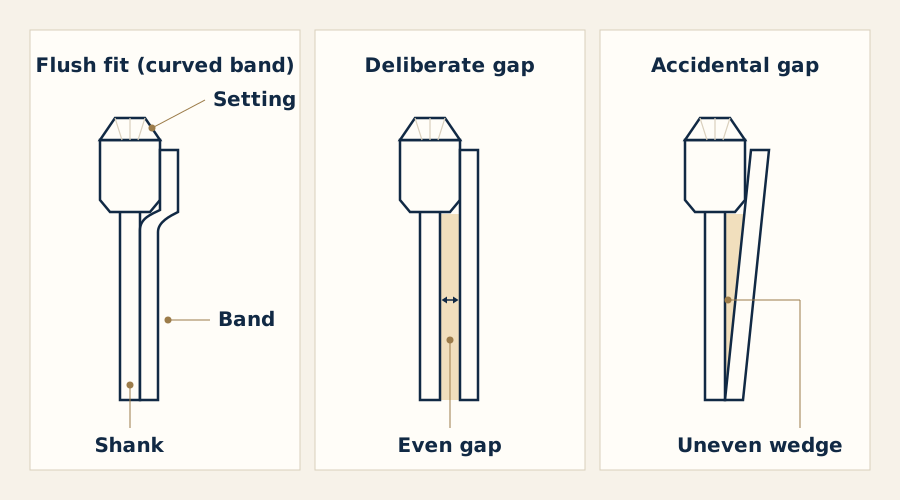
This is the first design decision. A flush fit means the band touches the engagement ring along its whole length, with no visible space between them. A gap fit means there is a small, even space, usually because the engagement ring's setting or shoulders stick out further than the shank. Neither is right or wrong. What looks wrong is an accidental gap: a straight band that touches the shank at the back but sits a few millimetres away at the front, leaving an uneven wedge of space.
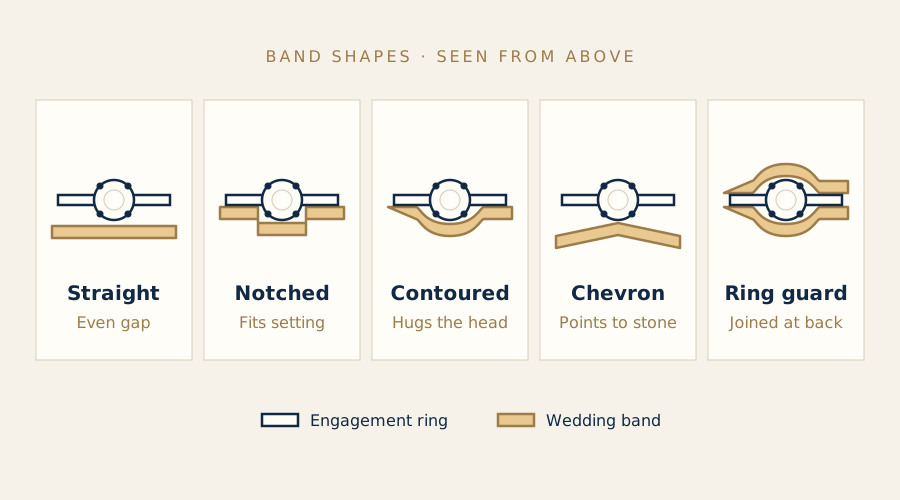
| Fit type | How it works | Suits | Watch out for |
|---|---|---|---|
| Straight flush | Plain straight band sits tight against the shank | High-set solitaires where the setting clears the band | Only works if nothing on the ring sits below the gallery |
| Notched | A small cut-out in the band lets the setting or a low claw drop into it | Low-set old cuts, bezel and illusion settings | The notch must line up exactly, so the band can only face one way |
| Contoured or curved | The band is bent to follow the outline of the setting | Clusters, halos, three-stone and wide heirloom heads | Takes accurate measuring; small heirloom quirks show up in the curve |
| Wishbone or chevron | A V-shaped dip points towards the centre stone | Marquise, pear and Art Deco rings with pointed settings | A strong look; can dominate a small or delicate ring |
| Deliberate gap | A straight band with an even space, sometimes held by a spacer | Retro and Victorian rings with wide shoulders | The gap must be even all the way along to look planned |
| Ring guard or enhancer | A band that wraps both sides of the engagement ring, often joined at the back | Very fine or worn heirloom shanks that need protection | Changes the look of the original ring more than a single band |
Curved and notched bands are often grouped together as fitted bands. To see how the curve is measured and made, read how curved and fitted bands are shaped to a ring. For the general principles that apply to any pairing, not only heirlooms, see our guide to matching a wedding band to an engagement ring.
Related guideFitted Wedding Bands Explained | Custom Curved BandsWhich wedding band suits a vintage engagement ring by era and shape?
Heirloom rings tend to follow the style of their decade, and each style brings its own fitting problems. The era is often visible in the metal, the cut of the stone and small details such as milgrain (a fine beaded edge pressed into the metal). These dates are broad, and plenty of rings mix features from more than one period.
| Era (approx.) | Typical heirloom features | Band approach that often works |
|---|---|---|
| Victorian, 1837–1901 | Yellow gold (often 15ct or 18ct), rose cuts or old mine cuts, clusters and half-hoops | Slim plain yellow gold band, 1.5–2 mm, with a gap or gentle curve |
| Edwardian, about 1901–1915 | Platinum, milgrain, pierced filigree galleries, Old European cuts | Platinum band with a milgrain edge, flush or lightly contoured |
| Art Deco, about 1920–1935 | Platinum or white gold, geometric shapes, small calibré-cut coloured stones | Notched or chevron band, plain or with small diamonds |
| Retro, about 1935–1950 | Rose and yellow gold, bold shoulders, illusion settings | Wider plain band, often with a deliberate even gap |
| Mid-century, about 1950–1975 | Yellow gold shank with a white gold or platinum claw head, high solitaires | Straight flush yellow gold band that slides under the head |
| Late 20th century, 1975–2000 | 18ct yellow or white gold, round or princess solitaires, four or six claws | Straight or slightly contoured band, plain or diamond-set |
Shape matters as much as era. Here is how the common heirloom shapes usually pair:
- High-set round solitaire: often the easiest; a straight flush band usually slides under the claws.
- Low-set old cut or bezel: the setting sits on the shank line, so a notched or curved band is usually needed.
- Cluster or halo: the wide head rarely clears a straight band; a contoured band follows the outline.
- Three-stone: the side stones push the band away; a gentle curve along all three settings keeps it close.
- Princess or square cuts: corner claws often catch a band; see these band options for princess cut engagement rings.
- Heart: the wide lobes and point usually need a contoured band; see bands that sit neatly beside a heart engagement ring.
- Marquise or pear: a chevron or wishbone echoes the pointed tips of a marquise cut diamond or a pear.
- East-west or wide ovals: a straight band may leave a long gap, so a notch or curve works better.
The profile of the band changes how it feels and how it sits beside the ring. A flat profile shows a crisp edge against an Art Deco ring, while a rounded court or half-round profile looks softer beside a Victorian piece. Compare them in band profiles such as court, flat and knife-edge.
Not sure which one is right?
Send us the stones you are looking at and our gemologist will tell you which to choose and why.
How do you match the metal of an old ring?
Start with the hallmark, a small stamp usually found inside the shank. Common marks include 750 or 18ct (75% gold), 585 or 14ct, 375 or 9ct (37.5% gold), and PLAT, Pt900 or Pt950 for platinum. Older Australian rings are often 9ct or 18ct. Some heirlooms are unmarked, worn smooth or carry marks from more than one repair, in which case a jeweller can test the metal.
The general rule is to match both the metal and its purity. Where two rings rub together every day, the softer alloy loses metal faster. A platinum band beside an 18ct gold heirloom, or a 9ct band beside a finer 18ct ring, can gradually wear the heirloom's shank thinner. Matching the alloy means both rings wear at a similar rate, which matters when one of them is irreplaceable.
Colour needs care too. Older white gold was often a nickel alloy with a slightly grey or creamy tone, as many vintage pieces were never plated or their rhodium plating (a thin bright white coating) has long worn away, while most new white gold is plated bright white. You can plate both rings so they match, or leave both unplated for a softer vintage look. Yellow gold also varies: some older 18ct alloys look richer or slightly pinker than modern ones, and a jeweller can adjust the alloy so the new band does not look brassy or pale beside it.
If your partner wants a band to suit yours, metal and finish are the easiest links between the two. Our men's wedding band guide covers widths, profiles and metals for a matching pair.
Should you solder the wedding band to the heirloom ring?
Many people choose to have the band permanently joined to the engagement ring with a small solder join, or a couple of joins, at the base. It is a practical choice for heirlooms, but it has trade-offs:
- For: the rings cannot spin or rub against each other, so the heirloom's shank and claws wear more slowly.
- For: a fitted or notched band always stays perfectly lined up with the setting.
- For: one combined, wider shank is more comfortable and stable for some fingers.
- Against: you can no longer wear the heirloom on its own, or the band alone at the gym or at work.
- Against: future resizing must be done to both rings together.
- Against: the original ring has been altered, which some families would rather avoid. Joins can be cut and cleaned up later, but that is extra bench work.
A sensible approach is to wear the two rings unjoined for a few months first. If they spin, click or you notice the heirloom's shank marking, soldering is easy to add later. If the heirloom came to you with a band already, and it is the engagement ring that is missing, read about designing an engagement ring around an existing band, which covers the reverse situation.
Plain or diamond-set: which wedding band for a vintage engagement ring?
A plain band keeps the attention on the heirloom and is simple to resize. A diamond-set band adds sparkle and can pick up a detail from the original, such as a row of small stones on the shoulders. Our comparison of plain versus diamond-set wedding bands covers wear, comfort and cost in general; with an heirloom, colour matching is the extra thing to think about.
Old cuts were often graded in warmer colours by today's standards, commonly in the J to M range. Put a row of bright modern G colour diamonds right beside an old cut and the centre stone can suddenly look yellower than it did on its own. Choosing side diamonds of a similar warmth, or single-cut melee (small diamonds with about 17 facets rather than the 57 or 58 of a full brilliant), often looks more natural beside an older stone. Side diamonds can be natural or lab-grown; laboratory-grown diamonds are real diamond with the same hardness and sparkle, and they should be disclosed as lab-grown on your paperwork.
For setting style, grain or pavé settings with a milgrain edge suit Edwardian and Art Deco rings, while channel settings (stones held between two walls of metal) suit cleaner mid-century and modern designs. A half-eternity band, with stones only across the top, is easier to resize than a full eternity. Many couples also add a message: a date engraved inside the band, or a name or date laser-inscribed on the new stone's edge, as explained in girdle engraving for names, dates and messages.
How much does a custom wedding band for an heirloom ring cost?
Cost depends mostly on the metal, the weight of metal, whether diamonds are set, and how much work the heirloom itself needs. A fitted band costs more than a straight band of the same weight, because of the measuring, modelling and hand fitting involved. These are broad ranges only, and an individual quote depends on the ring.
| Item | Approximate price range (AUD) |
|---|---|
| Plain fitted band, 9ct gold | about $500–$1,000 |
| Plain fitted band, 18ct gold | about $1,000–$2,200 |
| Plain fitted band, platinum | about $1,300–$2,800 |
| Diamond-set curved band, 18ct gold or platinum | about $2,000–$5,000 |
| Re-tipping heirloom claws | about $60–$150 per claw |
| Resizing the heirloom | about $80–$300 |
| New shank section for a worn heirloom | about $300–$900 |
It is worth budgeting for repairs to the heirloom alongside the band, because the two are usually done together. For the wider decisions on budget, metal and comfort, see our full guide to buying a wedding ring. If you are also replacing or adding a centre diamond as part of the remodel, natural and lab-grown stones can be browsed by shape.
Start a custom band, remodel an heirloom or browse round diamonds
How do you design a custom band around an heirloom? Step by step
- Have the heirloom inspected. Check the claws, the shank thickness, any old repairs and what the stone actually is.
- Repair and resize first. Re-tip claws, rebuild thin metal and set the final ring size before any band design begins.
- Measure and record the ring. The jeweller takes measurements, close-up photos and often an impression or 3D scan of the setting and shoulders.
- Choose the fit. Decide on straight, notched, contoured, chevron, gap or ring guard, based on how the setting sits.
- Match the metal. Read the hallmark, then choose the same metal and purity, and decide whether both rings will be rhodium plated.
- Pick a width and profile. Around 2–3 mm suits most heirlooms; consider a comfortable court or flat profile beside an older shank.
- Approve the CAD design. Check the render against photos of your ring, especially where the band meets the setting.
- Fit, finish and decide on soldering. The band is test-fitted against the heirloom and adjusted by hand; wear them unjoined for a while before deciding whether to solder.
From inspection to finished band usually takes about three to six weeks, longer if the heirloom needs substantial repair first. Before you approve the design, revisit the checks for pairing a band with your engagement ring and bring the heirloom to every appointment, because the band is made for that ring and no other.
Free consultation
Talk to a gemologist
Compare stones in person or online with Raj Sood, Graduate Gemologist (GIA), AJP (GIA).
Book a consultationFAQ
Common questions
Can you get a wedding band made to fit an old engagement ring?
Yes. A custom band is measured against the heirloom itself, then shaped with a curve, notch or even gap so it sits neatly beside the setting. The heirloom should be repaired and resized first so the fit does not change later.
Why does my wedding band leave a gap with my vintage engagement ring?
Older rings often have settings, shoulders or galleries that sit below the line of the shank, so a straight band can only touch at the back. A notched or contoured band closes the gap, or a band with a deliberate, even gap can make it look planned.
Should my wedding band be the same metal as my heirloom ring?
Ideally yes, and the same purity too, such as 18ct with 18ct. When two rings rub every day the softer alloy wears faster, which can thin an irreplaceable heirloom shank.
Is it a good idea to solder a wedding band to an heirloom ring?
It stops the rings spinning and rubbing, which protects the heirloom, but you can no longer wear either ring alone and resizing must be done to both. Many people wear them unjoined for a few months before deciding.
How long does a custom wedding band take to make?
Usually about three to six weeks from inspection to finished band. Allow extra time if the heirloom needs repairs such as new claws or a new shank section first.
Will modern diamonds in a band make my heirloom stone look yellow?
They can. Old cuts are often warmer in colour, so very white modern side diamonds may make the centre look yellower; choosing side stones of similar warmth or single-cut melee usually blends better.
Terms in this guide

Ask a gemologist
Not sure which diamond to choose?
Raj Sood is a Graduate Gemologist (GIA) and master jeweller. Bring the stones you are considering, or send the reports, and he will tell you honestly which one is better and why.
Keep learning
Related guides
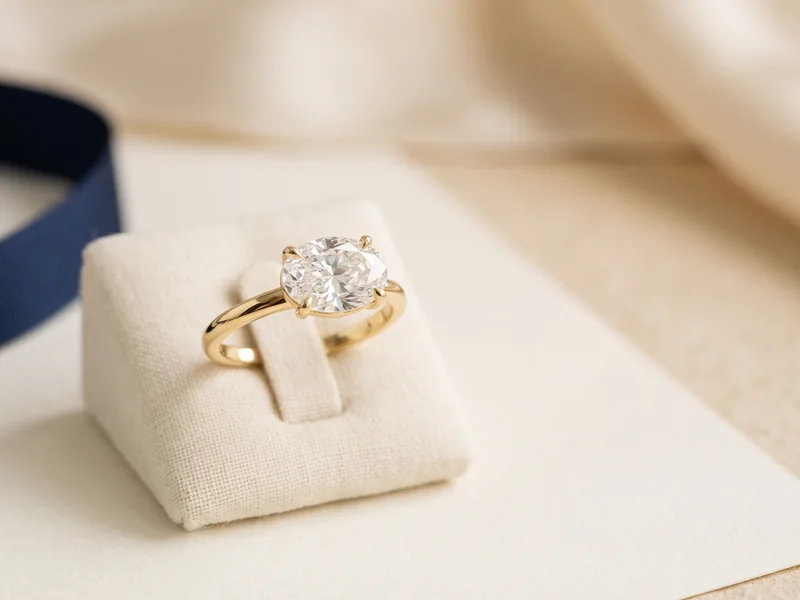
 Wedding Bands & EternityFitted Wedding Bands Explained | Custom Curved Bands
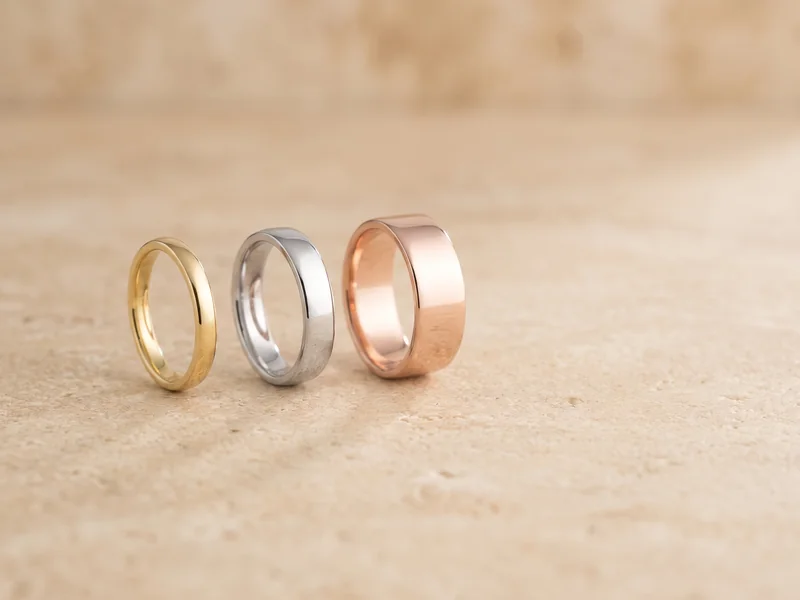
 Wedding Bands & EternityHow to Match a Wedding Band to an Engagement Ring
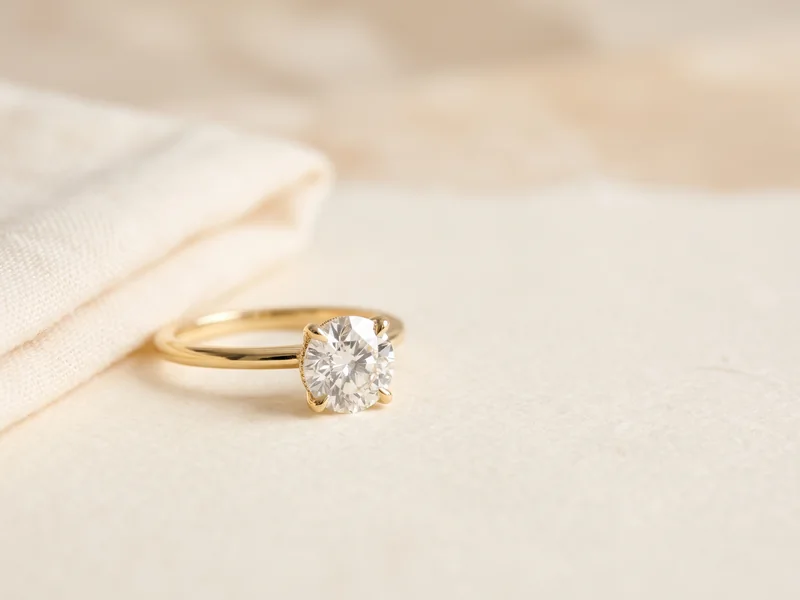
 Wedding Bands & EternityWedding Band Profiles Explained
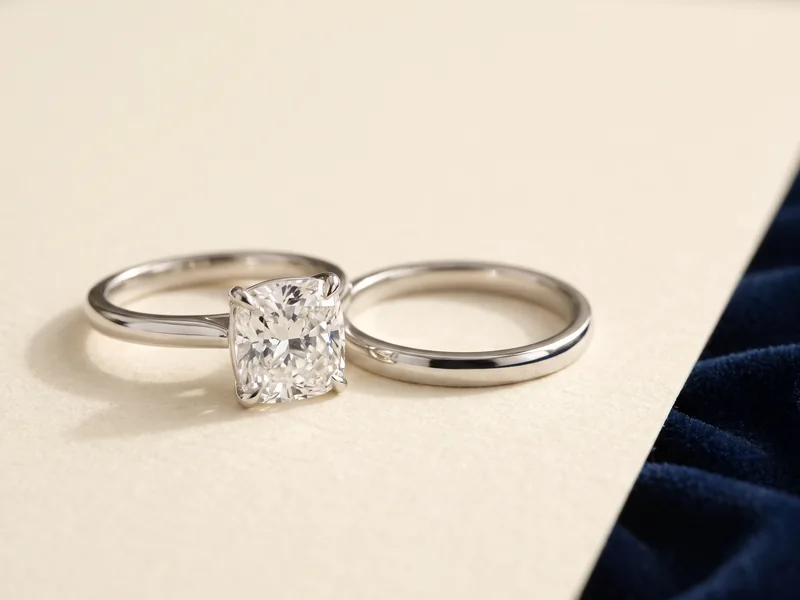
 Wedding Bands & EternityPlain vs Diamond Wedding BandsWedding Bands & EternityWedding Ring Buying Guide
 Wedding Bands & EternityWedding Ring vs Wedding Band
 Wedding Bands & EternityMen’s Wedding Band GuideWedding Bands & EternityDesigning an Engagement Ring Around an Existing Wedding Band
Explore more
More guides on this topic
Education