
- Education
- Engagement Rings & Settings
- Engagement Ring Side Profile Guide: Height, Gallery and Wedding Band Fit
Engagement Rings & Settings
Engagement Ring Side Profile Guide: Height, Gallery and Wedding Band Fit
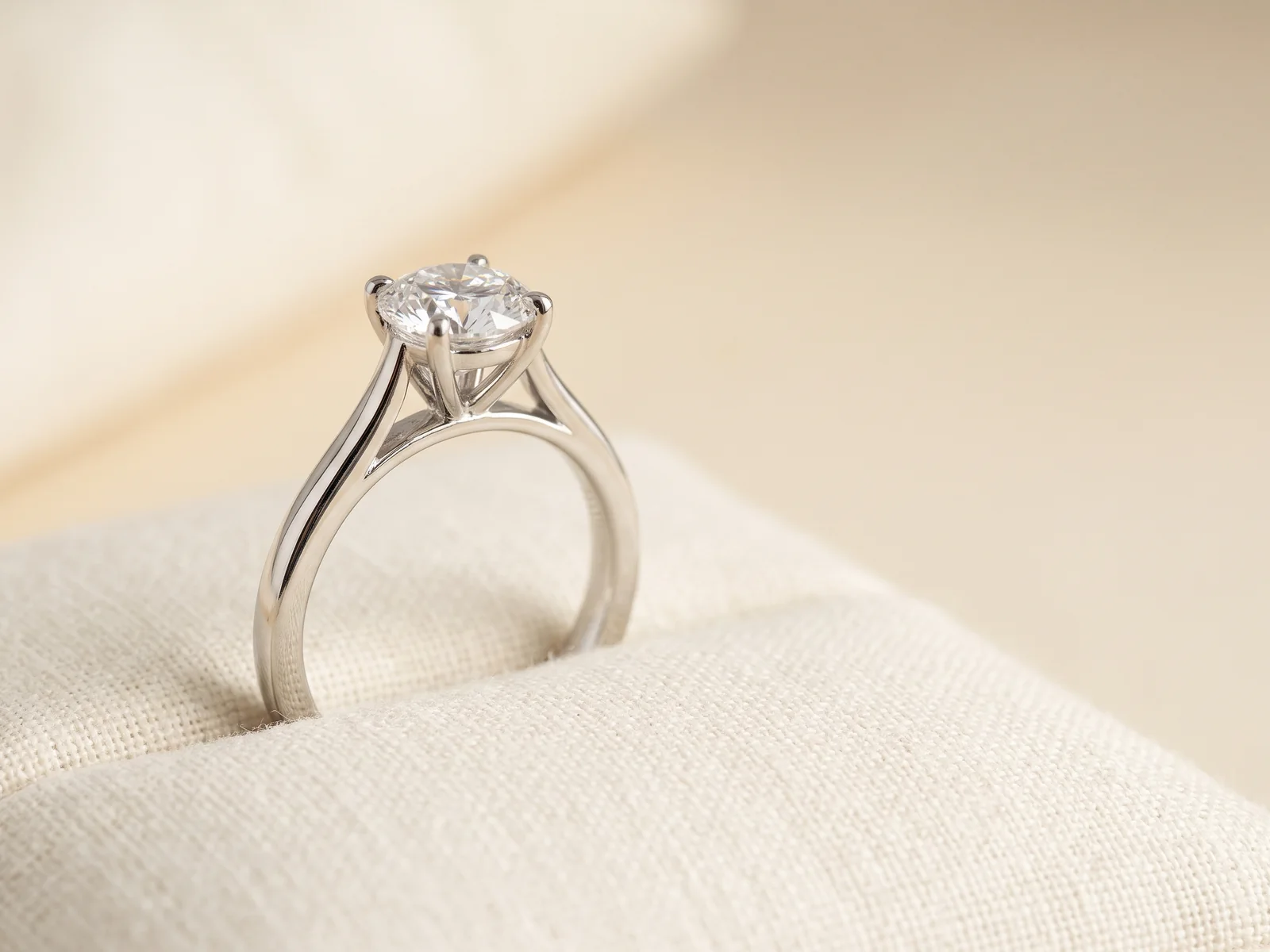
Most people choose a ring from the top view, then live with the engagement ring side profile every day. The side view decides how high the stone sits, how often it catches, whether a wedding band sits flush and how the ring holds up over the years.
 Reviewed by Raj Sood, Graduate Gemologist (GIA), AJP (GIA)Master jeweller and Graduate Gemologist (GIA) · reviewed 4 November 2026
Quick answer
An engagement ring side profile is how the ring looks from the side: how high the centre stone sits, the gallery and claws, and how the shank meets the head. Low settings sit about 5–6 mm above the finger and snag less; high settings sit about 7.5 mm or more, show more stone and often need a contoured band.
What is an engagement ring side profile?
The side profile is the view of a ring from the side, as if you were looking along the top of your hand towards your knuckles. It shows three things the top view hides: how high the centre stone sits above your finger, what supports the stone underneath, and how the band (the shank) rises to meet the head of the ring.
Two rings can look identical from above and feel completely different to wear. One might sit low and smooth, sliding into gloves and pockets without a thought. The other might sit high on a tall cathedral, catching the light from the side but also catching on knitwear. The engagement ring side profile is where those differences live, and it is also where a jeweller doing repairs sees the most wear.
Every setting style has its own side view. If you are still deciding between claw, bezel, halo and the rest, start with our overview of engagement ring setting styles, then come back here to fine-tune the height and gallery. Any unfamiliar word in this guide is also defined in our plain-English jewellery glossary.
What are the parts of a ring's side profile?
From the side, a ring is made of a handful of parts that a jeweller designs separately and then joins together:
- Shank: the band that goes around your finger. Its thickness (top to bottom) and width (across the finger) decide how sturdy it is.
- Shoulders: the part of the shank either side of the head. They can stay flat, taper in, or rise up in a cathedral arch to meet the stone.
- Head: the whole assembly that holds the stone, usually claws plus the structure beneath.
- Claws (prongs): the metal tips that grip the stone at the girdle (its widest edge).
- Gallery: the open area underneath the stone, seen from the side. It can be a simple basket, a decorative trellis, a hidden halo or a plain bezel cup.
- Basket: a ring or rings of metal joining the claws below the stone, giving them support.
- Bridge: a bar of metal under the head that joins the two sides of the shank, often decorated with small diamonds.
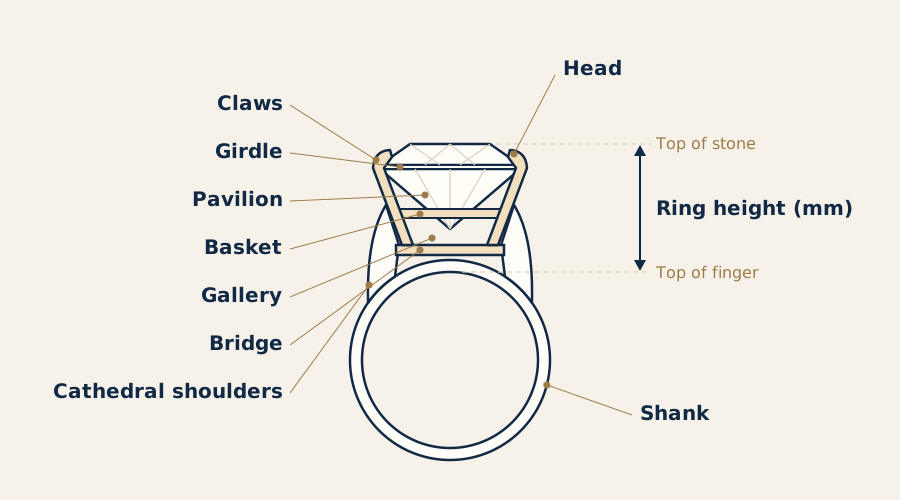
A simple four-claw head on a plain band is the cleanest side view of all, which is why it suits classic solitaire engagement rings. Everything else, from cathedral shoulders to peekaboo stones set in the gallery, adds detail to the side view and changes how the ring wears.
How high should an engagement ring sit? Heights in mm
Ring height is usually measured from the top of the finger (the inside top of the shank) to the top of the stone's table (its flat top facet). Much of that height is the diamond itself. A well-cut 1 carat round is about 6.4 mm across and roughly 3.8–4.0 mm deep, with about 2.7 mm of that being the pavilion (the pointed underside). The setting has to fit that pavilion and the shank underneath it, so even the lowest claw setting for a 1 carat round rarely sits much below 5 mm.
| Profile | Typical height (1 ct round) | What it looks like | Everyday wear |
|---|---|---|---|
| Low | about 5–6 mm | Stone sits just above the band, often a bezel or low basket | Snags least; suits active hands, healthcare, trades |
| Medium | about 6–7.5 mm | Basket or cathedral with a small gap under the stone | A balance of light, presence and comfort |
| High | about 7.5–9 mm+ | Tall claws or cathedral, often with a hidden halo or bridge | Shows the stone and gallery; catches more often |
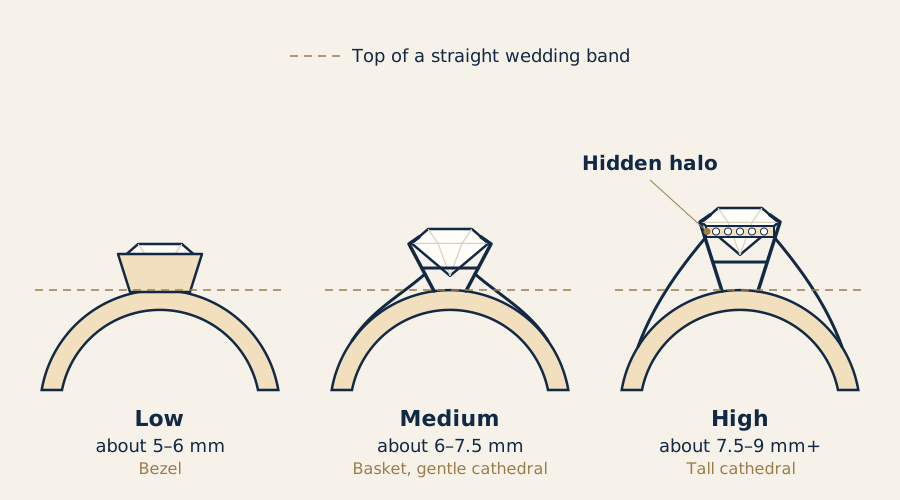
There is a common belief that a high setting engagement ring makes a diamond sparkle more because more light gets in from underneath. In practice, a diamond's sparkle comes mostly from light entering through the top and bouncing back off the pavilion facets, so a well-cut stone looks bright in a low setting too. What height really changes is presence, comfort and how the ring sits with a wedding band. Our guide to low-profile versus high-profile settings compared goes into the trade-offs in more depth.
The stone's own proportions matter as well. Two 1 carat rounds can differ in depth by half a millimetre or more, and a deeper stone pushes the whole setting higher. If you are choosing between stones, comparing two diamonds side by side includes checking the depth on each report, not just the colour and clarity.
Fancy shapes follow the same logic. An elongated oval diamond or a pear cut is often shallower than its length suggests, so it can sit lower for its weight, while a cushion or emerald cut can be deep for its face-up size. Our comparison of which shapes face up largest for their weight explains how depth and spread trade off against each other.
Which engagement ring gallery and basket styles give the cleanest side view?
The gallery is where most of a ring's side-view personality sits. Here is how the common styles compare from the side:
| Gallery style | Side view | Typical height | Wedding band fit | Long-term wear |
|---|---|---|---|---|
| Simple basket | One or two thin rails joining the claws | Low to medium | Often flush if the basket clears the shank | Very good; rails brace the claws |
| Peg or crown head | Claws rise from a single point, no rails | Medium to high | Usually flush | Fair; claws can bend if knocked |
| Cathedral | Shoulders arch up to meet the head | Medium to high | Usually flush | Good; the arch adds strength |
| Trellis | Claws cross over each other in an X | Medium | Usually flush | Good; crossing points support each other |
| Hidden halo | A ring of small diamonds under the stone | Medium to high | Often needs a contoured band | Small stones need regular checks |
| Bezel | Solid metal cup around the stone | Low | Depends on cup width | Very good; edge fully protected |
| Bridge or peekaboo | Bar or small stones under the head | Medium to high | Usually flush | Good; small stones need checks |
A cathedral setting side view is one of the most requested, because the arches lift the stone gracefully and leave room for a straight band underneath. A basket setting engagement ring gives a tidier, more open look, and is one of the simplest designs to repair. A hidden halo side profile adds a flash of sparkle when you look at the hand from an angle, but it widens the head below the stone, which affects how a wedding band sits.
Metal also shows in the side view. Platinum is dense and tends to push aside rather than wear away when scratched, while 18 carat gold is lighter and can wear thinner over decades. Both work well; the difference shows mainly in very thin claws and shanks.
Not sure which one is right?
Send us the stones you are looking at and our gemologist will tell you which to choose and why.
Will a wedding band sit flush with my engagement ring side profile?
This is the question we are asked most often about side profiles. A straight wedding band sits flush only if nothing on the engagement ring dips below the top of the band where the two meet. Three parts usually get in the way: a low basket, the culet (point) of a deep stone, and a hidden halo that sits wider than the shank.
- Flush with a straight band: most cathedral, trellis and raised basket settings, where the head is lifted high enough for the band to slide underneath.
- Small gap with a straight band: low bezels, low baskets and many hidden halos. The gap is often only 1–2 mm but it is visible.
- Needs a contoured or notched band: very low settings, wide halos and many side-stone designs, where a curved band follows the shape of the head.
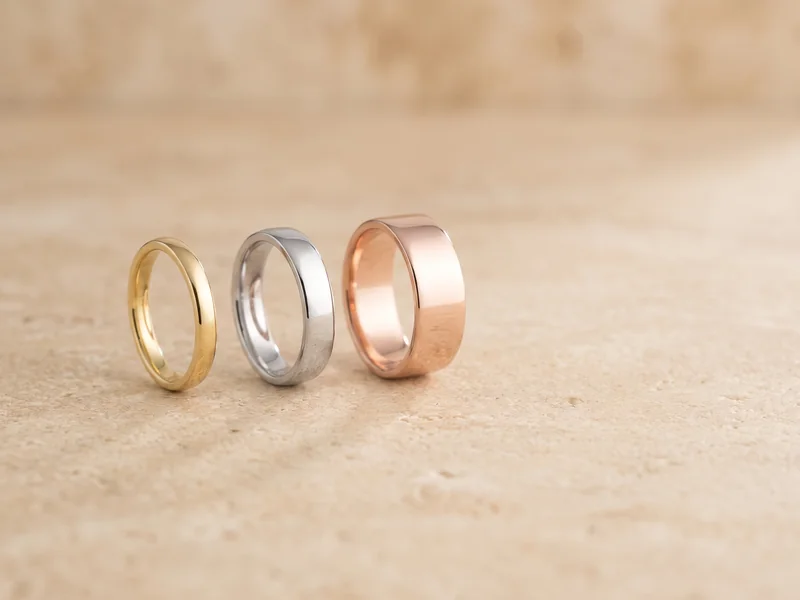
As a rough guide, if the bottom of the head sits above the shank by at least the thickness of the wedding band (usually about 1.5–2 mm), a straight band will tuck underneath. The band's own shape matters too: a court band (rounded inside and out) and a flat band sit differently against a cathedral, and our guide to wedding band profiles such as court, flat and knife-edge shows each one in cross-section.
If you have chosen a low profile engagement ring for comfort, a gap is not a flaw; it is simply how low settings behave. A contoured band or a slim band with a slight curve closes it neatly. Our page on bands that pair with low-set rings has worked examples, and it is worth deciding this before the engagement ring is made, because adjusting the head later is more work than designing it in.
Related guideWedding Bands for Low-Profile Engagement RingsHow do side stones and halos change the side view?
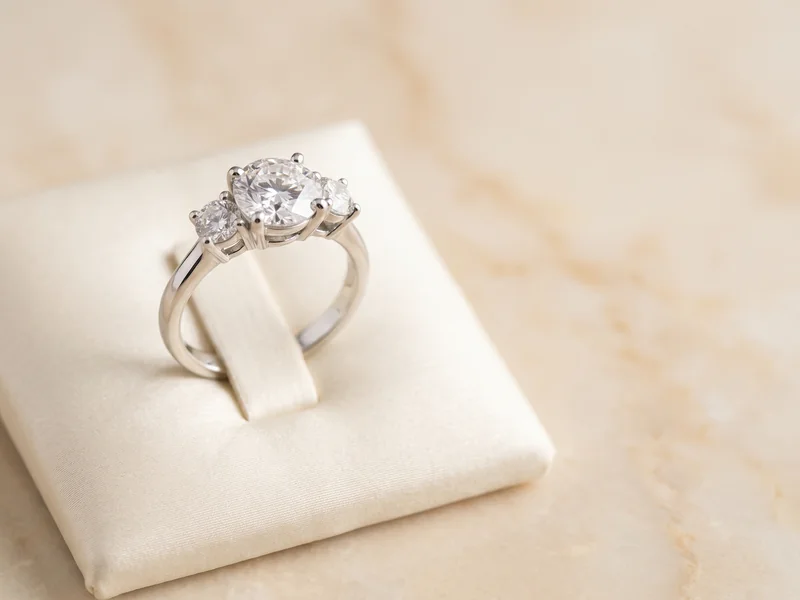
Side stones widen the head and add their own height. A three-stone ring with two 0.30 carat side diamonds, for example, usually sets those stones slightly lower than the centre, so the side view steps down from the middle. That step is what makes a three-stone ring look balanced from the side, but it also means a straight wedding band often meets the side stones before it reaches the centre.
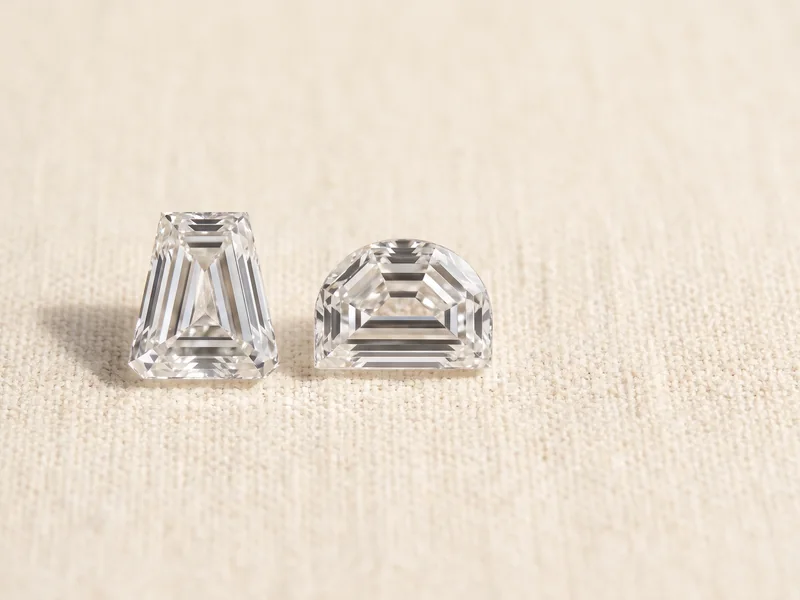
The cut of the side stones matters. Flat step cuts such as straight and tapered baguettes and trapezoids are shallow and sit close to the shank, while brilliant-cut trilliants and pears are deeper and push the setting up. Our guide to trapezoid, half moon, bullet and baguette side stones lists typical depths, and choosing between trilliant or pear side stones compares two of the most popular pairings.
A full halo raises the whole head by roughly the height of the small halo diamonds and their setting, typically about 1–1.5 mm, and makes the head wider at stone level. Pavé shoulders (rows of tiny diamonds set into the band) add little height but make the edge of the shank a working surface that needs checking.
For the full range of designs, browse our guide to side-stone engagement ring designs, which shows how each pairing looks from above and from the side.
How does each side profile wear over the years?
From the repair bench, the side profile tells us most of what a ring has been through. These are the patterns we see most often after several years of daily wear:
| Profile feature | What happens over time | What to check |
|---|---|---|
| High claws | Tips catch on fabric and wear thin or lift | Claw tips every 12 months; retip when thin |
| Low bezel | Edge of the cup scuffs but the stone stays protected | Light polishing; check the rim is still tight |
| Thin shank under about 1.5 mm | Wears thinner at the palm side and can bend out of round | Thickness at the base; reshank if needed |
| Cathedral shoulders | Generally strong; joins can wear where they meet the band | Join points and any pavé on the arches |
| Hidden halo | Tiny claws on small stones wear and stones can loosen | Each small stone for movement |
| Rubbing wedding band | Two rings wear against each other at the contact point | Contact marks on both rings |
None of this means a high setting is a bad choice. It means a high setting is a choice with maintenance attached, and our notes on why tall settings need more upkeep than low ones explain where the extra wear comes from. A simple four-claw solitaire in a medium height, with claws about 0.8–1.0 mm thick and a shank of about 1.6–2.0 mm, is one of the easiest designs to keep in good order for decades, because every part can be retipped or rebuilt.
How can you see the side profile before the ring is made?
Photos of finished rings are almost always taken from above or at a three-quarter angle, so the side view is the hardest part of a ring to judge online. A CAD render (a computer-aided design model) solves that: the ring can be turned to any angle, and the exact height, claw thickness and gallery shape can be checked in millimetres before any metal is cast.
When reviewing a render, ask to see it straight side-on and end-on (looking along the band), with a wedding band placed beside it if you plan to wear one. Ask for the total height above the finger in millimetres and compare it with a ring you already own. A difference of 1 mm sounds small but is easy to feel. This matters even more for three-stone and side-stone layouts, where several stones change the height at once.
Create your ring: browse ring settings and side profiles
How to choose an engagement ring side profile: step by step
- Think about your hands. If you work with your hands, wear gloves or garden, start with a low or medium profile.
- Check the stone's depth. Read the depth in millimetres on the grading report; checking the depth of two candidate diamonds shows how this changes the height.
- Pick the gallery. Basket, cathedral, trellis, hidden halo or bezel, based on the look and the wear notes above.
- Decide on the wedding band now. Straight and flush, straight with a small gap, or contoured; matching a band shape to the head helps you choose.
- Ask for the numbers. Total height above the finger, claw thickness and shank thickness, all in millimetres.
- Review the side-on render. Look at it beside the wedding band and approve the side view, not just the top view.
- Plan the upkeep. Book a claw and stone check about once a year, more often for high or pavé designs.
Free consultation
Talk to a gemologist
Compare stones in person or online with Raj Sood, Graduate Gemologist (GIA), AJP (GIA).
Book a consultationShop this shape
FAQ
Common questions
What is a low profile engagement ring?
A low profile engagement ring sets the centre stone close to the finger, usually about 5–6 mm high for a 1 carat round. It catches less on clothing and gloves, but a straight wedding band may leave a small gap beside it.
Does a high setting make a diamond sparkle more?
Not much. Most of a diamond's sparkle comes from light entering the top and reflecting off the pavilion, so a well-cut diamond looks bright in a low setting too. A high setting mainly adds presence and shows the gallery.
How do I know if my wedding band will sit flush with my engagement ring?
Look at the ring side-on: if the bottom of the head sits above the shank by at least the thickness of the band, a straight band will usually tuck underneath. Low baskets, bezels and hidden halos often need a contoured band.
Are cathedral settings strong?
Yes, the arched shoulders add metal where the head meets the band, which usually makes cathedral settings sturdy. The claws still need checking for wear like any claw setting.
How often should claws be checked?
About once a year for most rings, and more often for high settings, hidden halos and pavé, where small claws wear faster. Retipping thin claws early is simpler than replacing a lost stone.
Can a ring's height be changed later?
Often, by replacing the head with a lower or higher one, but it depends on the design and may affect side stones or engraving. It is easier to get the height right at the design stage.
Terms in this guide

Ask a gemologist
Not sure which diamond to choose?
Raj Sood is a Graduate Gemologist (GIA) and master jeweller. Bring the stones you are considering, or send the reports, and he will tell you honestly which one is better and why.
Keep learning
Related guides
 Engagement Rings & SettingsLow-Profile vs High-Profile Engagement Rings
 Wedding Bands & EternityWedding Band Profiles ExplainedEngagement Rings & SettingsEngagement Ring Setting Styles Guide
 Engagement Rings & SettingsSide-Stone Engagement Rings
 Buying Knowledge & Custom ProcessHow to Compare Two Diamonds Side by SideWedding Bands & EternityWedding Bands for Low-Profile Engagement Rings
 Diamond ShapesTrilliant vs Pear Side StonesDiamond ShapesSide Stone Diamond Cuts: Trapezoid, Half Moon, Bullet, Baguette, Trilliant
Explore more
More guides on this topic
Education